DataMatrix Decoded: A Technical Deep-Dive |
Executive Summary |
In the automotive aftermarket, the phrase 'genuine part' carries immense weight. A counterfeit brake pad can fail catastrophically, a mismatched filter can starve an engine of oil, and a substandard belt can snap at highway speeds, leading to accidents, injuries, and expensive repairs. For garages, distributors, and consumers, verifying that a replacement part is authentic and compatible with a specific vehicle is not just a matter of quality---it is a matter of safety. DataMatrix codes have emerged as the gold standard for addressing this challenge, providing a permanent, machine-readable link between a physical part and its digital identity. |
This application of DataMatrix technology is driven by a combination of regulatory pressure and business necessity. Automotive components are subject to rigorous safety standards, such as European Directive 2007/46/EC and UNECE Regulation R90, which mandate documented traceability of safety-critical parts . In response, leading manufacturers like MAHLE and ATE Continental have implemented sophisticated anti-counterfeiting systems using GS1 DataMatrix codes . These codes encode a unique identifier, often a combination of a Global Trade Item Number (GTIN) and a serial number, which is linked to a secure verification database . When a garage technician scans the code with a mobile app, they can instantly verify the part's authenticity, check its OEM compatibility, and even access its manufacturing history. |
This article explores the technical foundations of DataMatrix in the automotive aftermarket, the standards that ensure interoperability, and the real-world applications that are protecting consumers and brands from the devastating impact of counterfeit parts. |

|
Part One: Technical Foundations of Aftermarket Traceability |
Chapter 1: The Problem of Counterfeit Parts |
The global automotive aftermarket is a lucrative target for counterfeiters. Counterfeit parts range from poorly made replicas of critical components like brake pads and filters to completely substandard products that fail to meet even basic safety standards. The risks are significant: counterfeit parts can lead to vehicle damage, accidents, injuries, and even fatalities. For manufacturers, counterfeiting erodes brand trust, causes lost sales, and exposes them to liability. For garages and distributors, unknowingly selling a counterfeit part can lead to reputational damage, legal liability, and costly warranty claims. |
The challenge is compounded by the sheer scale and fragmentation of the aftermarket. Parts are produced by hundreds of manufacturers in dozens of countries, distributed through complex networks of wholesalers, retailers, and online marketplaces. A reliable, interoperable traceability system is essential to protect the integrity of the supply chain. |

|
Chapter 2: The DataMatrix Solution |
Direct Part Marking using DataMatrix codes provides the technological foundation for combating counterfeiting and ensuring traceability. The DataMatrix code is ideal for automotive aftermarket applications for several reasons: |
High Data Density: A DataMatrix code can encode a substantial amount of data in a very small space, often as small as 5 by 5 millimeters or even less . This allows a single code to store a unique serial number, a Global Trade Item Number (GTIN), lot data, and other critical information. |
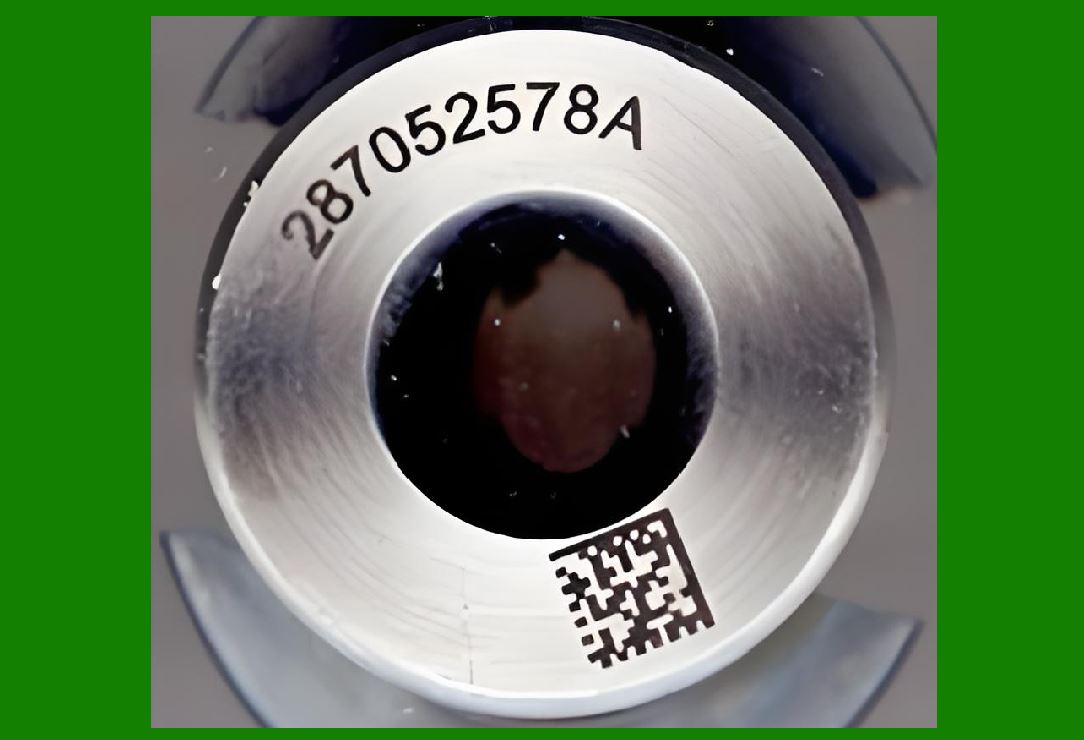
Durability: When laser-etched or printed with durable inks, a DataMatrix code can survive the harsh conditions of the automotive environment, including exposure to heat, oil, abrasion, and chemicals . This ensures the code remains readable throughout the part's lifecycle. |
Error Correction: DataMatrix codes use Reed-Solomon error correction, which allows the code to be read even if up to 30% of the code is damaged. This is crucial for parts that may be scratched, dirty, or poorly illuminated during scanning. |
Direct Marking: Unlike linear barcodes that are printed on labels, DataMatrix codes can be applied directly to the part's surface using methods like laser etching, dot peening, or high-contrast inkjet printing . This eliminates the risk of the label being removed, damaged, or swapped---a common tactic used in counterfeiting. |
|
Chapter 3: The GS1 Standard and the MAPP Code |
To ensure interoperability across the global supply chain, the automotive aftermarket has adopted the GS1 standard for DataMatrix encoding. The GS1 standard defines a common data structure, using Global Trade Item Numbers (GTINs) and serial numbers, that can be read by any compliant scanner worldwide. |
A prominent implementation of this standard in the aftermarket is the MAPP (Manufacturers against Product Piracy) code . Developed in cooperation with the European association of automotive suppliers (CLEPA), the MAPP code is defined as the standard code for the automotive aftermarket . Each product is labelled with a unique identification number in the form of a DataMatrix barcode. Using a mobile scanning app, such as TecAlliance's TecIdentify, technicians can scan the MAPP code on a part to instantly check its authenticity. TecIdentify has been available since at least 2020 and is designed to give users the ability to check whether an automotive replacement part is genuine, anywhere in the world, 24 hours a day. |
|
Chapter 4: Marking Technologies for the Aftermarket |
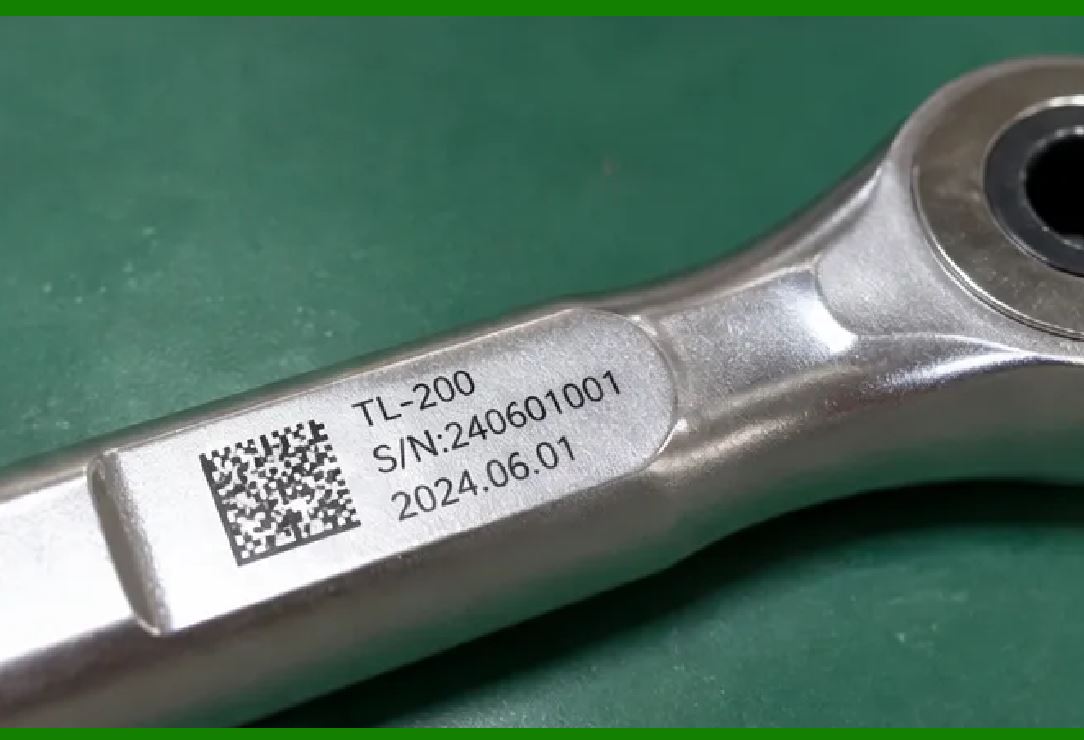
The choice of marking technology is crucial for ensuring the DataMatrix code remains readable throughout the part's life. For components like brake discs, which are exposed to extreme thermal and mechanical stress, manufacturers use fiber laser etching to create a permanent, high-contrast mark that resists wear and corrosion . Brake discs require permanent marking that resists wear, high temperatures and corrosion without compromising the structural properties of the material. Fiber laser technology, with wavelengths around 1064 nm, enables stable optical contrasts on cast iron and metal alloys, engraving readable two-dimensional codes throughout the component's operational life. |
For other components, such as filters and belts, manufacturers might use specialized inkjet printing with pigmented or UV-curable inks. These inks are formulated to resist fading, abrasion, and chemical exposure. For example, high-contrast pigmented inks in white, yellow, or blue are available for light and dark substrates, ensuring readability even under harsh conditions. |

|
Chapter 5: The Verification Ecosystem |
The value of a DataMatrix code on an aftermarket part is realized through a sophisticated verification ecosystem. This ecosystem typically includes the following components: |
The Code: A GS1-compliant DataMatrix code is applied to the part or its packaging. |
The Database: The unique serial number encoded in the code is linked to a secure verification database maintained by the manufacturer. This database contains information about the part's authenticity, production history, and OEM compatibility. |
The Scanner: Garages and distributors use mobile apps like TecIdentify or MAHLE's security app to scan the code and query the database. |
The Verification Result: The app returns a result, often displayed using a traffic light system. A 'green' result confirms the part is genuine, a 'yellow' warning indicates the maximum number of checks for that code has been exceeded, and a 'red' result indicates an invalid code or a suspected counterfeit. |
This ecosystem creates a powerful deterrent to counterfeiting. By making it easy for end users to verify authenticity, manufacturers make it harder for counterfeiters to sell their products. |

|
Part Two: American Applications and the Future of Aftermarket Parts Traceability |
Chapter 6: MAHLE Aftermarket's Security Labels |
MAHLE Aftermarket, a leading manufacturer of engine components, has implemented a robust security labeling system in North America that leverages GS1 DataMatrix codes and VeoMark technology . MAHLE engine components are now available with new security labels, with increased protection against counterfeit products. |
The MAHLE security label includes a GS1 DataMatrix code (MAPP code) that encodes a GTIN and a random code . Users can verify the code's validity online by scanning the 2D DataMatrix code or manually entering both lines of the MAPP code. The system provides a traffic light result: green for a successful verification, yellow if the maximum number of checks has been exceeded, and red for an error. |
In addition to the DataMatrix code, the MAHLE label features an offline verification system called VeoMark. This includes a High Definition Image (HDI) star for high-resolution copy protection, a rainbow-colored MAHLE logo, and a LensCode that becomes visible when a special filter is applied . This multi-layered approach provides both online and offline verification, making it extremely difficult for counterfeiters to replicate. |
|
Chapter 7: ATE Continental's Smartphone Verification |
ATE Continental, a major supplier of braking systems, also uses GS1 DataMatrix codes to combat counterfeiting . ATE, a supplier of aftermarket braking systems, is using GS1 DataMatrix codes to protect its brand and customers. Each ATE part is labelled with a GTIN and a random sequence number, encoded in a DataMatrix code. The code is printed on the part label or directly laser-engraved on the product itself. |
Customers can use the ATE smartphone app to scan the DataMatrix code and verify the part's authenticity. This system protects customers from counterfeit parts and the associated safety risks, while also protecting the brand and its supply chain partners from economic losses. |

|
Chapter 8: Scanning in the Garage |
For a garage technician, the process of verifying a part is straightforward and fast. When a new replacement part arrives, the technician can use a mobile scanning app to scan the DataMatrix code on the part or its packaging . The app instantly queries the manufacturer's database and returns a verification result. This process ensures that the part is genuine and that it is the correct part for the vehicle being serviced. |
This capability is becoming increasingly integrated with workshop management systems. As noted in a GM service bulletin highlighted by the NHTSA, structured barcode and QR workflows can capture part serials at installation, improving traceability for future maintenance and safety reviews. By scanning the DataMatrix code on a replacement part and the VIN of the vehicle, technicians can automatically populate work orders and update the vehicle's digital service history, reducing manual data entry errors and creating an auditable trail. |

|
Chapter 9: Full Lifecycle Traceability |
The DataMatrix code on an aftermarket part is not just a tool for authentication; it is a key to a comprehensive digital record. This record can include the part's manufacturing history, its material test reports, its quality control data, and even its supply chain journey. The ability to trace a part from 'cradle to grave' is essential for regulatory compliance and for managing recalls. |
When a safety issue is identified, a robust traceability system allows a manufacturer to quickly identify exactly which vehicles contain the affected part. For example, a GTIN and serial number can be used to trace a specific brake disc back to its production batch and, ultimately, to the vehicle in which it was installed. This targeted approach minimizes the scope of a recall, reducing costs and protecting consumer trust. |

|
Chapter 10: A Concept Whose Time Has Come |
The adoption of DataMatrix technology in the automotive aftermarket is not a future possibility; it is a current reality. As noted by RVSI's leadership in 2003, the concept of component-level traceability is 'a concept whose time has come.' Major automotive manufacturers have been implementing traceability initiatives for over two decades. In 2003, Robotic Vision Systems, Inc. was selected as the preferred supplier for a worldwide traceability initiative by one of the world's largest automotive companies. The initiative called for the implementation of component-level traceability of all automotive power train components over the next two years. |
The technology has proven its value in protecting consumers and brands. MAHLE's adoption of DataMatrix security labels for its North American aftermarket products is a leading example. KIA Motors, while focused on manufacturing traceability, demonstrated the critical importance of reliable DataMatrix reading in high-volume automotive production, achieving 99% read rates on engine and transmission parts. These examples demonstrate that the technology is mature, reliable, and ready for widespread adoption across the entire aftermarket. |

|
Detailed Summary |
DataMatrix codes have become an essential tool for traceability and anti-counterfeiting in the automotive aftermarket. By permanently marking replacement parts with a unique, machine-readable code, manufacturers are creating a direct link between the physical part and its digital identity, enabling a new level of supply chain transparency and consumer protection. This technology is particularly critical for safety-critical components like brake pads, filters, and belts, where the consequences of failure can be catastrophic. |
The application of DataMatrix codes to aftermarket parts is enabled by several key technical factors. The DataMatrix symbology, standardized under ISO/IEC 16022, offers high data density and robust Reed-Solomon error correction, allowing a substantial amount of data to be stored in a small space and read even if the code is partially damaged . The GS1 standard provides a common data structure, using GTINs and serial numbers, that ensures interoperability across the global supply chain . The MAPP code initiative, developed in cooperation with CLEPA, has further standardized the use of DataMatrix codes for aftermarket authentication . |
The verification ecosystem is the engine that drives this technology. Unique serial numbers encoded in DataMatrix codes are linked to secure verification databases maintained by manufacturers . Garages and distributors can use mobile apps, such as TecIdentify or MAHLE's security app, to scan the code and instantly verify authenticity . These apps return a clear traffic light result (green, yellow, or red), providing an immediate and unambiguous assessment of the part's validity. |
Real-world examples demonstrate the power of this approach. MAHLE Aftermarket has implemented sophisticated security labels for its North American engine components, combining GS1 DataMatrix codes with VeoMark technology for offline verification . ATE Continental uses GS1 DataMatrix codes on its aftermarket braking systems, enabling customers to scan a part and verify its authenticity with a smartphone app. These implementations are part of a broader trend of 'digital transformation' in the automotive industry, where parts are treated as data-rich assets rather than interchangeable commodities. |

|
Looking to the future, the adoption of DataMatrix codes in the aftermarket is set to accelerate. As vehicles become more connected and complex, the need for verifiable part identity will only grow. The technology is moving beyond simple authentication to provide a full 'digital passport' for each component, documenting its entire lifecycle from manufacturing to installation. By treating QR codes as strategic digital transformation tools, automakers and dealers can transform service bays into data engines, driving improvements in safety, efficiency, and customer trust. The role of DataMatrix is no longer just to identify a part---it is to ensure that the part is what it claims to be, and that it is safe to use. |
 cs@easiersoft.com