DataMatrix Decoded: A Technical Deep-Dive |
Executive Summary |
In the high-stakes world of military munitions, knowing the exact identity, provenance, and condition of every shell casing, missile section, and propellant device is a matter of national security and operational safety. A single mismarked or unaccounted-for component can lead to catastrophic equipment failure, a dangerous stockpile discrepancy, or a failure to trace a defect that puts warfighters at risk. |
To meet these demands, the U.S. Department of Defense (DoD) and its contractors have turned to DataMatrix codes. These small, two-dimensional symbols are stamped, laser-etched, or labeled onto munitions components, encoding critical information such as lot numbers, propellant types, manufacturing arsenals, and a globally unique item identifier . This identifier, known as a Unique Item Identifier (UII), serves as a digital 'birth certificate' that links the physical object to its complete digital record in the DoD's IUID Registry, enabling through-life traceability from manufacturing to disposal . |
This application of DataMatrix technology is not merely a matter of convenience; it is a regulatory mandate. Standards like MIL-STD-130 require that qualifying military property be permanently marked with a two-dimensional DataMatrix barcode that meets stringent quality and durability requirements . The use of DataMatrix codes on munitions directly supports stockpile safety by enabling rapid and accurate inventory management, facilitating recalls of defective components, and ensuring that the right ammunition is available for the warfighter when and where it is needed. |

|
Part One: Technical Foundations of Munitions Marking |
Chapter 1: The Challenge of Munitions Identification |
Military munitions present a unique identification challenge. They are produced in massive volumes, often by multiple contractors, and must be stored, handled, and tracked for decades. Munitions components are subjected to extreme environments, from the heat and pressure of firing to years of storage in varying climates. They must be identifiable and traceable at every stage of their lifecycle. |
Traditional identification methods, such as handwritten labels or simple stamped codes, are inadequate. They are prone to human error, can be damaged or become illegible over time, and do not provide the machine-readable data needed for modern automated inventory systems. The DoD required a solution that could provide a globally unique, permanent, and machine-readable identifier for every significant item in its supply chain . |

|
Chapter 2: The DataMatrix Solution and IUID |
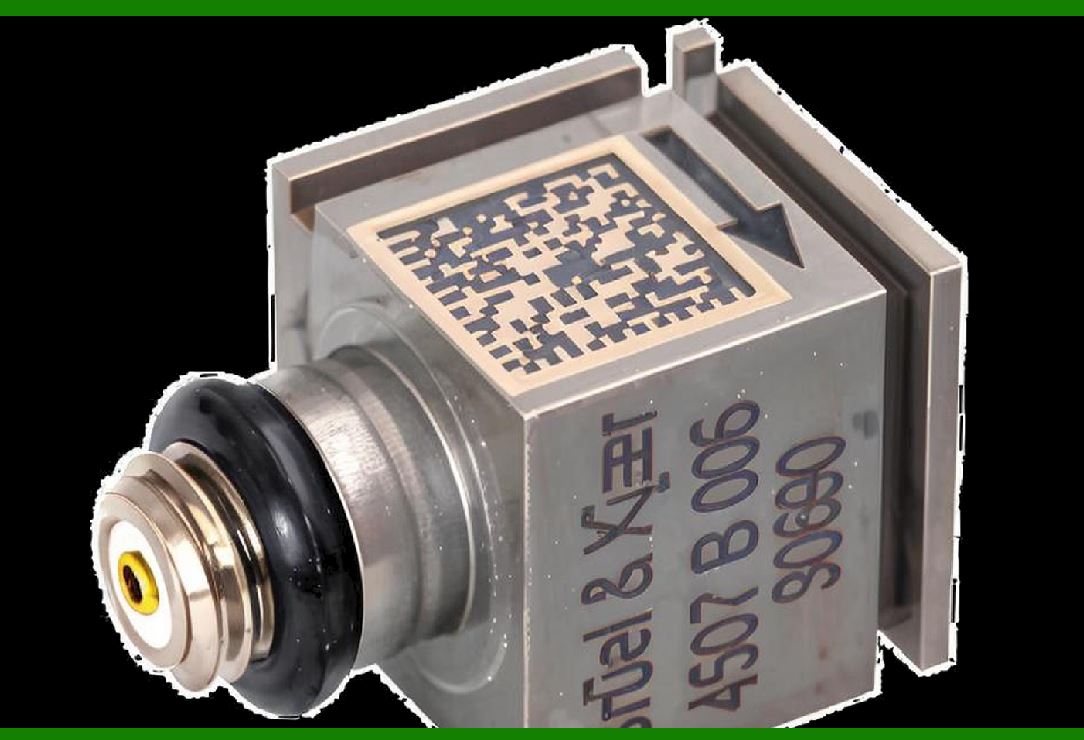
The DoD's solution was Item Unique Identification (IUID), a system based on the DataMatrix symbology. IUID provides a standards-based approach to establishing a Unique Item Identifier (UII) encoded in a machine-readable two-dimensional DataMatrix barcode . This UII is a globally unique number that distinguishes a discrete item from all others, ensuring data integrity and quality throughout the item's lifecycle. |
The DataMatrix code on a munition typically encodes the item's UII, a set of data that can include the National Stock Number (NSN), the manufacturer's CAGE code, a serial number, and a lot number. When combined, these pieces of information make up a unique string of numbers, which can be read by a scanner and then used to query the DoD's IUID Registry for all associated data, including the item's manufacturing history, test results, and location . |
|
Chapter 3: MIL-STD-130 and The Standard for Marking |
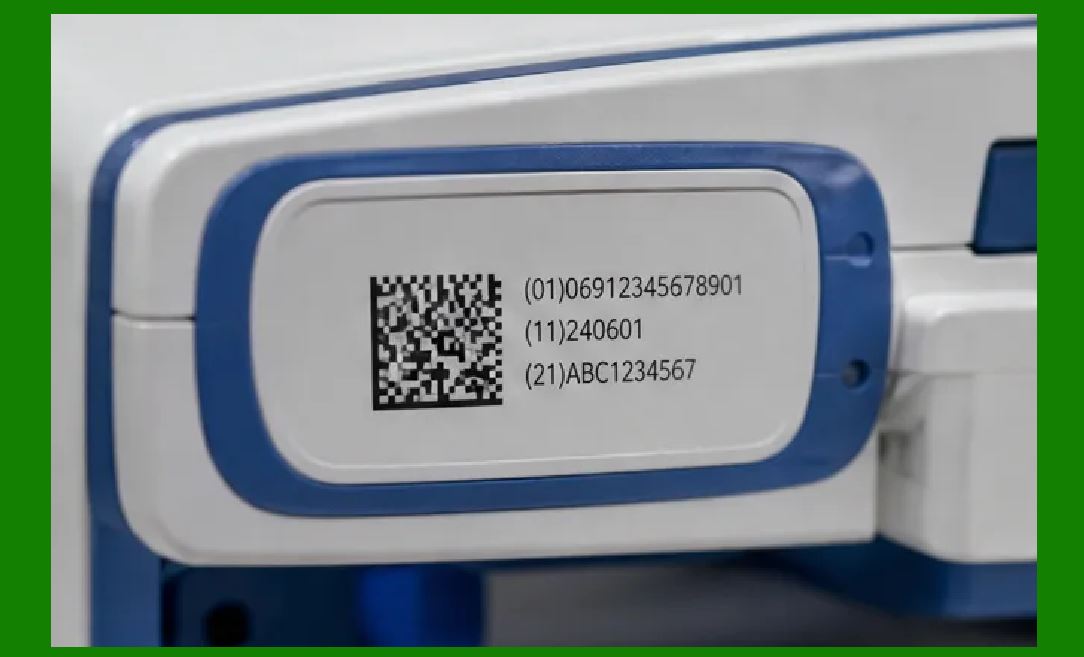
The marking of U.S. military property, including munitions, is governed by MIL-STD-130, 'Department of Defense Standard Practice Identification Marking of U.S. Military Property.' This standard provides the criteria and data content for both free text and machine-readable information applications, including the IUID requirements . |
MIL-STD-130 is explicit about the symbology and quality of the DataMatrix mark. For printed labels, the Data Matrix ECC200 barcode must meet the ISO/IEC 16022 standard with a grade of 'B' or better, tested at a specific wavelength of 660 nm +/- 10 nm . For direct part marking methods like dot peen, laser, or chemical etching, the mark must meet the SAE AS9132 standard . This rigorous quality requirement is critical for munitions, as a non-readable code would defeat the purpose of traceability. |
|
Chapter 4: Marking Technologies for Munitions |
Applying a DataMatrix code to a munition component is a precision operation that must be performed at high speed without damaging the component. Several technologies are used. |
Chapter 4.1: Laser Marking |
Laser marking is the most common method for applying DataMatrix codes to small components like shell casings and bullets. Fiber lasers are particularly effective, as they can produce high-contrast, permanent marks on metals like brass, copper, and steel alloys . |
A modern laser marking system for ammunition is engineered for speed and accuracy, utilizing a vision system to automatically identify the part's geometry and position the laser, often using a high-powered fiber laser to ensure the mark is permanent, abrasion-resistant, and readable in any light condition . |
Chapter 4.2: Dot Peen Marking |
Dot peen marking uses a pneumatic or electromagnetic pin to create a series of tiny indentations on the part's surface. This method is cost-effective and creates a very deep, durable mark that can survive harsh conditions. It is often used for marking larger parts or identification plates where a deep, tactile mark is required. |
Chapter 4.3: Labels |
While direct part marking is preferred, labels are also used for some applications. High-durability polyester or polyimide labels are printed with DataMatrix codes using thermal transfer printers, with costs as low as $3,000 per unit . |

|
Chapter 5: The IUID Registry and Through-Life Traceability |
The DataMatrix code is the key to accessing the DoD's IUID Registry, the central database that stores the UII and associated data for every marked item. When a munition component is manufactured, its UII is entered into the registry, along with information about its manufacturer, lot, and date of manufacture . |
As the item moves through its lifecycle---from storage to issue to use---its status is updated in the registry. This 'through-life traceability' is a key requirement of DoD policy, enabling the military to know the complete history of any given item. For example, if a defect is found in a batch of propellant, the registry allows the military to identify all items containing that propellant and initiate a recall. It also ensures that when an item leaves DoD inventory, its status is changed in the registry, preventing it from being accidentally re-introduced into the supply chain . |

|
Part Two: American Applications in Action |
Chapter 6: Ammunition Depot Inventory Management |
The most widespread application of DataMatrix technology for munitions is in the management of ammunition stockpiles. The DoD's ammunition depots, such as the Blue Grass Army Depot in Kentucky and the Hawthorne Army Depot in Nevada, are massive facilities that store billions of rounds of ammunition. For decades, depot workers had to manually read and record data from ammunition containers, a slow and error-prone process. Paperwork, a heavy reliance on memory, and illegible or damaged labels were constant problems that raised concerns about accountability and safety. |
Beginning in 2008, the Joint Munitions Command (JMC) began upgrading its operations with handheld scanners capable of reading the DataMatrix barcodes on ammunition pallets and containers . These scanners have dramatically improved the speed and accuracy of inventory management. |
When an inventory specialist walks into a storage igloo, they use a scanner to read the DataMatrix barcode on the ammunition container. The scanner decodes the code and instantly retrieves a wealth of data: the content of pallet, stock number, lot number, serial number, quality, hazard identification code, and how the ammunition should be managed . This eliminates data entry errors, speeds up the inventory process, and provides a real-time, accurate picture of the ammunition stockpile. As one depot employee reported, the new scanners allowed them to read barcodes that the older scanner could not read because they had been on the material for so long, and complete inventory tasks faster than ever before . |

|
Chapter 7: Tracking Aircraft Egress Munitions (CADs/PADs) |
A more specialized but critical application of traceability technology is managing Cartridge-Actuated Devices (CADs) and Propellant-Actuated Devices (PADs), the explosive components that power aircraft ejection seats and canopy removal systems. These devices have a limited shelf life and are subject to strict accountability procedures. |
As a 2026 U.S. Army report notes, current management of CADs/PADs is a 'fragmented process' that demands excessive manual effort and creates gaps in ordering, documentation, and turn-ins, often leading to delays, inaccurate records, and compliance issues . |
The report presents a case study in which a battalion completed the required turn-in of expired CADs, but the documents remained unreconciled with the Ammunition Supply Point (ASP) due to a mismatch in the Department of Defense Identification Code (DODIC) . The battalion had turned in MH92 components, but the ASP was tracking them under the newer WB53 DODIC. Because of normal personnel turnover, neither the ASP staff nor the new battalion ammunition managers were aware of the historical DODIC change. As a result, the turn-in could not be cleared even though the battalion followed the correct procedures. |
A DataMatrix-based tracking system could resolve these issues. By giving each CAD/PAD a unique UII encoded in a DataMatrix code, the system would create an unambiguous link between the physical device and its digital record, regardless of DODIC changes. A simple scan of the code by a maintenance worker would reveal the device's correct identification, status, and shelf life, eliminating the DODIC confusion and ensuring that only serviceable items are installed and that expired units are properly turned in. Integrating this capability with the existing systems would allow for end-to-end tracking from the Ammunition Supply Point to the aircraft, significantly improving safety and accountability. |

|
Chapter 8: Ammunition Data Card (ADC) Traceability |
Another crucial application is the creation and maintenance of Ammunition Data Cards (ADCs), detailed records for every munition lot. A recent Statement of Work from the U.S. Air Force and Navy requires contractors to prepare ADCs that adhere to MIL-STD-1168 for the Worldwide Ammunition-data Repository Program (WARP) . |
The ADCs must document all energetic materials used in assemblies, such as pyrotechnics and explosives, with details like common names, manufacturer part numbers, lot numbers, and dates of manufacture. This is a data-rich, paper-heavy process where a mistake can lead to lost traceability. Integrating DataMatrix codes into the ADC workflow would dramatically improve this process. A DataMatrix code on the ADC, or on the ammunition container itself, could encode the lot number, which can then be linked to the original manufacturer documentation like Certificates of Conformance (COC) or Quality Assurance Records (QAR) . This would provide a searchable, auditable link between the physical ammunition and its complete test and manufacturing history, making it far easier to support the critical traceability requirements demanded by military operations. |

|
Chapter 9: The Future of Munitions Traceability |
The integration of DataMatrix codes into the munitions supply chain is an ongoing process. In the future, this technology could be combined with other systems like RFID for even greater efficiency. A 'tandem solution' using DataMatrix at the item level for unique identification and passive RFID at the box level for rapid bulk inventory could provide the most robust and accurate inventory control system . |
Looking ahead, the use of DataMatrix codes in a system of 'global unique identification' will be the cornerstone of munitions safety. As one Army ammunition depot professional noted, the continued ability to fill warfighters' requirements with the right ammo at the right time is a testament to the success of these programs, highlighting the immense value of knowing what is in the stockpile . |

|
Detailed Summary |
DataMatrix codes have become an indispensable tool for ensuring the safety and accountability of military munitions stockpiles in the United States. By permanently marking shell casings, missile sections, and propellant devices with a unique, machine-readable two-dimensional code, the Department of Defense has created a system for through-life traceability that was previously unimaginable. |
The technical foundation for this application is robust. The DataMatrix code's high data density and Reed-Solomon error correction allow it to store and protect a Unique Item Identifier (UII) even under harsh conditions . The UII, governed by standards like MIL-STD-130 and registered in the DoD's IUID Registry, provides a globally unique link between the physical item and its digital history . To create these marks, the military employs a variety of durable direct part marking technologies, including high-precision fiber laser etching and dot peening, often integrated with automated vision systems for speed and accuracy. |
The real-world applications demonstrate the profound impact of this technology. At ammunition depots, handheld scanners have replaced manual data entry, slashing inventory time and dramatically improving accuracy . This ensures that the military always knows exactly what ammunition it has and where it is located. For sensitive aircraft safety systems like CADs/PADs, a DataMatrix-based system could bridge the fragmented data processes, eliminating reconciliation errors and ensuring that life-saving components are properly tracked and maintained. In the high-stakes process of ammunition data card creation, DataMatrix codes can provide a streamlined, auditable link to a component's complete manufacturing history. |

|
The adoption of DataMatrix in munitions is more than a technological upgrade; it is a fundamental shift toward a 'net-centric' logistics environment where every item is a data point in a vast, interconnected network. This network empowers the military to make better decisions, react faster to safety issues, and ultimately, ensure that when a warfighter needs ammunition, it is the right ammunition, in the right place, and it is safe to use. |
 cs@easiersoft.com