DataMatrix Decoded: A Technical Deep-Dive |
Executive Summary |
In commercial aviation, the safety of passengers and crew depends not only on the integrity of the aircraft's engines and flight controls but also on the seemingly mundane details of the cabin interior. Seat tracks, overhead bins, lavatories, galleys, and crew rest modules must all be installed correctly, maintained regularly, and, if a defect is discovered, traced back to their source without ambiguity. This is where DataMatrix technology has become an essential tool. |
DataMatrix codes, permanently laser-etched or marked onto cabin components, serve as the digital 'birth certificate' for each part. They encode a unique identifier that links the physical component to a comprehensive digital record, including its manufacturing date, installation records, maintenance history, and the specific aircraft tail number to which it is assigned. This traceability is not merely a matter of administrative convenience; it is critical for regulatory compliance, safety, and---increasingly---sustainability. |
In the United States, the Federal Aviation Administration (FAA) mandates rigorous traceability for aircraft components, and standards like SAE AS9132 specify the requirements for DataMatrix marking in the aerospace industry . Cabin interior suppliers, such as UUDS Aero, a France-based cabin interior specialist, now use digital platforms to manage complex certification workflows, with complete traceability of processes and information being a fundamental requirement for European Aviation Safety Agency (EASA) approvals . A single scan of a DataMatrix code on a seat track or overhead bin can reveal its entire history, ensuring that maintenance is performed correctly and that, in the event of a problem, the affected parts can be rapidly identified and addressed. |

|
Part One: Technical Foundations of Cabin Component Traceability |
Chapter 1: The Unique Challenges of Cabin Interior Traceability |
Aircraft cabin interiors present unique traceability challenges compared to other aerospace components. The cabin represents approximately 10 to 15 percent of the total empty weight of an aircraft, encompassing a wide variety of materials---metals, composites, plastics, textiles, and electronic systems . Components like seat tracks must withstand immense forces during turbulence and emergency landings, while overhead bins must be securely fastened and fire-resistant. |
The regulatory environment is stringent. The FAA and EASA require that every component installed on an aircraft be traceable to its source. This is typically achieved through a combination of human-readable markings and machine-readable codes. However, the cabin environment also presents physical challenges for marking: surfaces are often curved, made of reflective metals or dark composites, and subject to wear from passenger handling and cleaning chemicals. The DataMatrix code's ability to be read on low-contrast, curved, or partially damaged surfaces makes it particularly suitable for these applications . |
|
Chapter 2: The DataMatrix Solution |
The DataMatrix code is the preferred symbology for direct part marking in aerospace, including cabin interiors. Its advantages include: |
High Data Density: A DataMatrix code can store a significant amount of data in a very small area, often as small as 0.1 mm by 0.1 mm . This allows a unique identifier, part number, serial number, and other critical data to be encoded on a tiny nameplate or directly on a component's surface. |
Error Correction: DataMatrix codes use Reed-Solomon error correction, which allows the code to be read even if up to 30% of it is damaged. This is crucial for parts that may become scratched or contaminated during their service life. |
Permanence: DataMatrix codes can be applied using laser etching, creating a mark that is integral to the component and will not fade, peel, or wear off. Laser etching is used to mark a wide range of materials, including aluminum, titanium, stainless steel, and carbon composites . |
Standardization: The aerospace industry has adopted specific standards for DataMatrix marking, such as SAE AS9132, which specifies requirements for marking quality and durability . This ensures that codes from different suppliers can be read by a single scanning system. |
|
Chapter 3: Marking Technologies for Cabin Components |
Applying a DataMatrix code to a cabin component is a precision operation. The choice of marking technology depends on the material and the application. |
Chapter 3.1: Laser Etching |
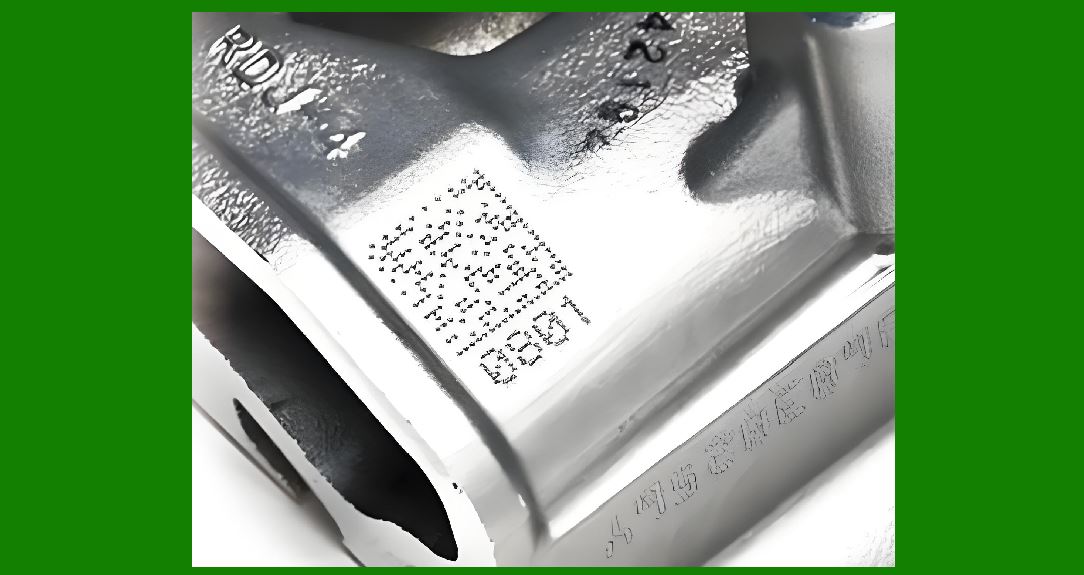
Laser etching is the most common method for applying DataMatrix codes to aerospace components. It uses a focused laser beam to alter the surface of the material, creating a permanent, high-contrast mark. For cabin interiors, laser etching is used on metal components like seat tracks and on composite materials . The laser parameters are carefully optimized for each material to ensure readability without compromising the structural integrity of the part. For example, on stainless steel, a process called 'annealing' can create a dark mark, while on aluminum, the surface is typically etched to create a contrast. |
Chapter 3.2: Labels and Nameplates |
For applications where direct part marking is not feasible, high-durability labels and nameplates are used. These are often made from materials like stainless steel or specialized plastics that are resistant to chemicals, abrasion, and temperature extremes. DataMatrix codes are printed on these labels using thermal transfer or other durable printing methods, and the labels are then applied to the component with strong adhesives . In some cases, the labels are designed to be tamper-evident, providing an additional layer of security. |
|
Chapter 4: The Importance of Standards |
The aerospace industry is governed by a complex web of standards that ensure safety, quality, and interoperability. Several key standards are relevant to DataMatrix marking in cabin interiors. |
Chapter 4.1: SAE AS9132 |
SAE AS9132 is a key standard that specifies the requirements for marking aerospace parts using Data Matrix codes . It covers everything from mark quality and size to verification methods. This standard is widely used in the industry to ensure the legibility, durability, and traceability of critical components. Compliance with AS9132 is often a requirement for suppliers to major OEMs. |
Chapter 4.2: MIL-STD-130 |
For components supplied to the U.S. military, MIL-STD-130 is the governing standard for identification marking of military property . It mandates that qualifying items be permanently marked with a two-dimensional Data Matrix barcode that meets stringent quality and durability requirements. This standard ensures that cabin components used on military aircraft, such as those used for troop transport or VIP transport, are fully traceable. |
Chapter 4.3: OEM-Specific Standards |
Major aircraft manufacturers and subsystem suppliers have their own specific standards. For example, Rolls-Royce has JES131, and SAFRAN has DT05-89, which define authorized marking methods and minimum sizes for components . Cabin interior suppliers must be familiar with and comply with the specific standards of their customers. |

|
Part Two: American and Global Applications in Action |
Chapter 5: Seat Tracks and Passenger Safety |
The FAA's recent Airworthiness Directive (AD) concerning passenger seats on Boeing 737 MAX aircraft serves as a powerful real-world example of why cabin component traceability is so critical. In July 2026, the FAA proposed an AD requiring inspections of 453 U.S.-registered 737 MAX aircraft after reports that some aft-fitting shear plungers, the components that lock seats into the seat tracks, may not have been fully engaged during installation . If left uncorrected, the FAA warned that the seats could detach or shift during severe turbulence or an emergency landing, potentially injuring passengers or blocking the aircraft aisle and slowing evacuation . |
This issue directly highlights the importance of traceability. Had the seat assemblies been marked with DataMatrix codes that linked to detailed installation records, it would have been far easier for airlines to identify which specific aircraft were affected and which batches of seats were involved. A simple scan of the code on a seat track or seat assembly could have revealed the installation date, the responsible mechanic, and the specific components used, enabling a far more efficient and targeted inspection process. This is a prime example of how DataMatrix codes are not just a theoretical concept but a practical tool for ensuring safety. |

|
Chapter 6: UUDS Aero - Connecting Design, Certification, and Manufacturing |
UUDS Aero, a France-based designer and manufacturer of aircraft cabin interiors, provides a clear example of how digital transformation is enabling the traceability of cabin components . UUDS Aero designs, manufactures, and delivers cabin interiors for both business and commercial air travel, including crew rest modules, galleys, and more. It also provides MRO services and holds approvals from multiple aviation authorities. |
To keep pace with the industry's demands, UUDS Aero embarked on a digital transformation journey, implementing Dassault Systemes 3DEXPERIENCE platform to centralize data and establish consistent workflows . The company recognized that EASA approvals for design, production, and maintenance require complete traceability of processes and information. |
As UUDS Aero's CEO stated, 'In our industry, a good design is only valid when it is certifiable' . The company needed a solution that would allow it to design, certify, and communicate effectively with clients and across its supply chain. The 3DEXPERIENCE platform provides this, connecting the entire value chain and ensuring clear traceability of decisions. |
The implications for DataMatrix marking are clear. By digitally linking the design, manufacturing, and certification data for a cabin component, a DataMatrix code on the physical part becomes the key to a complete digital record. A mechanic scanning the code on a crew rest module could instantly access its entire design history, manufacturing specifications, and certification documents, making maintenance and inspections more efficient and accurate. |

|
Chapter 7: Airbus and the Circularise Digital Product Passport Project |
A major step toward enhanced cabin component traceability is the Digital Product Passport (DPP) project initiated by Airbus and Circularise. In June 2023, Airbus and the supply chain traceability platform Circularise brought together a consortium of key players to test the implementation of DPPs for cabin interior components . The project aimed to harness digital traceability technologies to address sustainability issues and minimize the environmental footprint of aviation waste. |
The consortium included raw material manufacturers (Asahi Kasei, Neste, Toray), cabin component manufacturers (Diehl, Stelia, Thales), and end-of-life operators (Lufthansa Technik) . The group combined real product data and simulated data to create a DPP for an Airbus A350-1000 cabin on the Circularise platform. This digital record included 88 nodes representing individual cabin components, from raw materials to the final product, providing detailed lifecycle information . |
The DPP is intended to ensure that materials are effectively reused or recycled at the end of their lifecycle . For a recycler to repurpose a cabin panel made of a complex composite material, they need to know exactly what it is made of. The DPP provides that information, enabling a circular economy. As Mesbah Sabur, founder of Circularise, stated: 'Digital Product Passports built on true supply chain traceability is a key tool in understanding and improving the lifecycle management of aircraft components' . This project demonstrates how DataMatrix codes, as the physical carriers of the UII that links to the DPP, are enabling a new level of transparency and sustainability. |

|
Chapter 8: Honeywell's Blockchain Authentication |
The fight against counterfeit parts is a major concern in aerospace, where a single fake component can have catastrophic consequences. Honeywell has taken a leading role in combating this threat by using DataMatrix codes in combination with blockchain technology. In December 2019, Honeywell announced a partnership with iTRACE and SecureMarking to bring transparency and increased security to the aerospace e-commerce market . |
Under this process, when a part comes off the Honeywell assembly line, its identification plate receives a two-factor authentication marking. First, iTRACE's 2DMI DataMatrix code is laser-etched onto the plate. Then, an invisible, high-security ink is applied. The iTRACE mobile app scans the DataMatrix code and activates a digital authenticity record for the part, which is recorded on Honeywell's digital blockchain ledger . |
This process has a significant impact for cabin interiors, where parts change ownership an average of four times throughout their life cycle . A repair technician can scan a DataMatrix code on a galley component or overhead bin, shine a light on the identification plate to verify the invisible ink, and instantly see where the part has traveled during its lifetime. This blockchain-based traceability system ensures that only genuine parts are installed, and that their complete history is accessible. As iTRACE's founder noted, they can securely connect physical parts to blockchain ledgers with DataMatrix marks ranging in size from 0.1 mm by 0.1 mm to 5 mm by 5 mm . |

|
Chapter 9: Laser Marking for Cabin Ambiance and Traceability |
The use of laser marking in cabin interiors extends beyond pure traceability. Companies like FIMARK, a UK-based specialist, provide laser etching services for a variety of cabin applications, including backlit buttons, fascias, and switch panels . These optical devices require very close control of paint thickness and finish, and positional accuracy of the laser-etched graphics. The ability to integrate a DataMatrix code into these components provides both aesthetic and functional benefits. |
For cabin ambiance, laser marking enables the creation of concealed graphics that only appear when illuminated, enhancing the passenger experience. For traceability, it allows a unique, permanent identifier to be applied to even the smallest components. The flexibility of laser marking allows serial numbers and variable information to be added to almost any surface in the form of a machine-readable code. On steel, the surface might be turned black; on aluminum, the surface would be etched. As FIMARK notes, DataMatrix codes are required for demanding applications where security and accurate reading of information are of high importance, and the codes have a level of redundancy that allows a successful read even when partially damaged . |
|
Detailed Summary |
The application of DataMatrix technology to aircraft cabin interiors is a powerful example of how a simple, machine-readable code can underpin safety, compliance, and sustainability in a complex, highly regulated industry. From the seat tracks that hold passenger seats to the overhead bins that store carry-on luggage, every component in the aircraft cabin must be traceable. DataMatrix codes, permanently applied via laser etching or on durable labels, provide this traceability by creating a unique, machine-readable link between the physical component and its digital record. |
The technical foundation for this application is robust. Standards like SAE AS9132 and MIL-STD-130 mandate the quality and durability of DataMatrix marks, ensuring they remain legible throughout a component's life . Laser etching is the preferred marking method, able to create permanent marks on a wide range of materials, from aluminum and titanium to carbon composites . The DataMatrix code's error correction and high data density allow a substantial amount of information to be encoded in a very small space. |
The real-world applications demonstrate the profound impact of this technology. The FAA's 2026 directive on Boeing 737 MAX seat assemblies underscores the critical importance of traceability for passenger safety . Had the seats been marked with DataMatrix codes linked to detailed installation records, the inspection process would have been far more targeted and efficient. The Airbus and Circularise DPP project shows how DataMatrix codes are being used to drive sustainability, enabling the circular economy by providing detailed lifecycle information for cabin components . Honeywell's blockchain-based authentication system demonstrates how DataMatrix codes are a first line of defense against counterfeit parts, a growing concern in the aviation industry. Companies like UUDS Aero have embraced digital transformation to streamline the design, certification, and manufacturing of cabin interiors, with traceability at the heart of their operations . Companies like FIMARK are extending the use of laser marking to create not only traceability marks but also aesthetic features that enhance the passenger experience. |
|
By creating a direct link between the physical component and its digital history, DataMatrix codes empower manufacturers, airlines, and regulators to ensure that every cabin component is correctly installed, properly maintained, and, when its useful life is over, responsibly recycled. They are a small but essential part of the aviation ecosystem, ensuring that passengers can travel safely and comfortably. |
 cs@easiersoft.com