DataMatrix Decoded: A Technical Deep-Dive |
Executive Summary |
In the rapidly expanding electric vehicle (EV) industry, a single defective battery cell can compromise an entire vehicle battery pack, creating performance issues or serious safety hazards . With each EV requiring hundreds or thousands of individual cells, the ability to trace every cell from manufacturing through its entire lifecycle has become a critical necessity. DataMatrix codes, permanently etched or laser-marked on cylindrical and pouch cells, have emerged as the standard solution for this challenge. |
These compact two-dimensional codes serve as each cell's 'digital birth certificate,' encoding essential information such as the manufacturer, production date, cell chemistry, capacity, and internal resistance data . Unlike printed labels that can peel, fade, or be damaged by electrolyte exposure and heat cycling, laser-etched DataMatrix marks are permanent and machine-readable . They survive the aggressive chemical and thermal processes in battery production and remain readable throughout the cell's operational life. |
The traceability enabled by DataMatrix codes is critical for battery passport initiatives being developed globally. When a battery fails in the field, manufacturers need to trace that specific cell back through coating, calendaring, and slitting operations to identify the root cause . This article explores the technical foundations of DataMatrix marking on EV batteries, the manufacturing processes that create these marks, and real-world American applications that demonstrate how this technology is enabling a safer, more sustainable battery supply chain. |

|
Part One: Technical Foundations of Battery Cell Traceability |
Chapter 1: Why EV Battery Cells Need Traceability |
Electric vehicle batteries are complex assemblies containing hundreds or thousands of individual cells. A single production line may manufacture cells for multiple vehicle models with different performance requirements . As the output of electric vehicles increases, manufacturers need dependable methods to track parts from raw materials to final assembly . |
The scale of EV production makes quality control increasingly complex. A single defective cell can affect an entire pack, and pinpointing the source of the problem without component tracking becomes nearly impossible . When a battery underperforms or fails prematurely, manufacturers need to determine whether the problem stems from materials, manufacturing, or usage patterns. The DataMatrix code on each cell provides the link to this critical data. |

|
Chapter 2: What Is Encoded in the DataMatrix Code |
The DataMatrix code on a battery cell typically encodes information following industry standards. For LiFePO4 cells, the code often follows the GB/T 34014-2017 standard, a 24-character code that reveals the manufacturer, cell chemistry, production date, and serial number . This standard is widely used across major manufacturers including EVE, CATL, BYD, Lishen, and CALB. |
Beyond basic identification, the DataMatrix code links each cell to its full manufacturing history. This includes formation test data---the initial charge-discharge cycles that determine a cell's actual capacity and performance characteristics. It also includes internal resistance measurements, which are critical indicators of cell health and long-term reliability. The code is the key that unlocks this comprehensive digital record. |

|
Chapter 3: The Battery Passport Concept |
The battery passport is the digital identity of a battery, including information about its minerals, components, and ultimately the battery itself . It provides transparency of the battery supply chain as well as the lifecycle of the finished product . This concept was conceived and coordinated by industry experts as part of the Global Battery Alliance (GBA), founded in 2017 at the World Economic Forum to create a sustainable and responsible battery value chain . |
The passport enables stakeholders along the supply chain to verify a battery's material provenance, chemistry, and identity, and to measure its sustainability and environmental impact . It also creates a multi-billion-dollar global market for used batteries by maximizing the recovery of raw materials . For repair garages, auto recyclers, auction houses, and dismantlers, the passport provides visibility to understand a battery's chemistry and history in order to make faster, more informed decisions about how its contents can best be used, sold, or recovered . |

|
Chapter 4: Laser Marking of Cathode Materials |
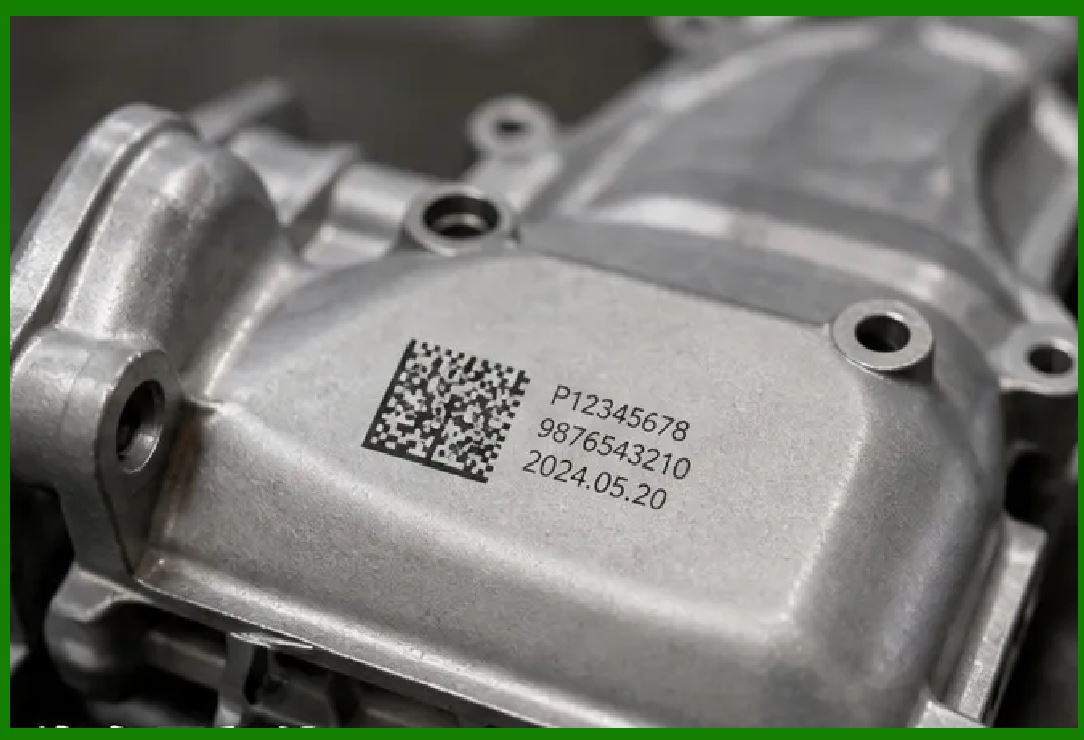
The marking process embeds information permanently into the battery substrate. Unlike printed labels that peel off or fade, laser-etched marks withstand the aggressive chemical and thermal processes in battery production . The marks survive electrolyte exposure, heat cycling, and mechanical stress without degrading or becoming unreadable . |
Cathode foils present unique marking challenges. The aluminum substrate is typically just 15-20 micrometers thick---roughly one-fifth the thickness of a human hair . Excessive laser energy can burn through the foil or create stress concentrations that cause tearing, while insufficient energy produces marks too faint for vision systems to read reliably . The active material coating adds additional complexity because it contains lithium compounds that are chemically sensitive . |
Manufacturers use specialized laser systems with optimized parameters to create readable marks without compromising cell integrity. These systems are designed to operate in clean and dry room environments, with integrated fume extraction to protect workers from potential hazards . |

|
Chapter 5: Marking on Different Cell Formats |
Battery cells come in several form factors, each requiring different marking approaches. For cylindrical cells, DataMatrix codes are typically laser-marked on the cell can or on the sleeve . The curved surface creates challenges for reading, but advanced readers with powerful decoding algorithms and built-in lighting technology can reliably decode codes on cylindrical surfaces . |
For pouch cells, the DataMatrix code is marked on the exterior of the pouch housing . This presents different challenges because the flexible pouch material can be more sensitive to laser energy. Manufacturers must carefully calibrate the marking parameters to create a permanent mark without damaging the pouch seal or the internal components. |
Battery packs, modules, and individual cells all receive DataMatrix codes at various points in production . This multi-level traceability ensures that each component can be tracked throughout the assembly process. |

|
Chapter 6: Reading DataMatrix Codes in Production |
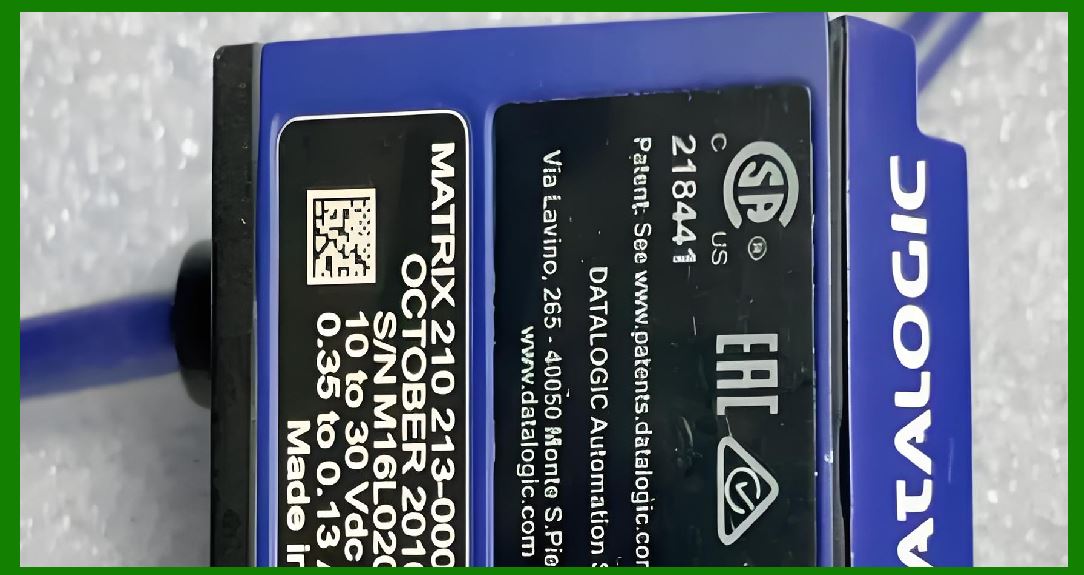
Reading DataMatrix codes on battery production lines presents significant challenges. Multiple cylindrical workpieces flow at high speed on a conveyor, and reading each code individually can slow takt time . Advanced readers with wide fields of view can read multiple DataMatrix codes in a single scan, significantly improving productivity . |
The SR-X Series code reader from KEYENCE, for example, combines a compact body with a wide field of view and long-range reading capabilities. It is resistant to distortions caused by the curved surfaces of cylindrical workpieces, variations in print quality, and the effects of ambient light . The simple auto-tuning function also reduces setup time during installation . |
Vision systems positioned throughout the production line automatically read these marks and log data to manufacturing execution systems. When quality issues arise, engineers can query the database to retrieve the complete history for any marked component . |

|
Chapter 7: Regulatory Pressure for Traceability |
Governments worldwide are implementing regulations requiring detailed tracking of battery materials and manufacturing processes. These regulations are designed to improve recycling, verify ethical sourcing, and enhance safety . The new European Battery Regulation, which came into force in late 2022, requires manufacturers to report on their extended producer responsibility for proper battery recycling . |
Compliance requires documenting the complete supply chain from raw material extraction through end-of-life recycling . This extends to the battery passport concept, which must be released commercially after successful pilot testing . The regulatory environment is a major driver for the adoption of DataMatrix traceability in battery manufacturing. |
|
Part Two: American Applications in Action |
Chapter 8: Ford and Everledger Battery Passport Pilot |
In a landmark American application of DataMatrix technology, Ford Motor Company partnered with digital transparency company Everledger to launch a world-first battery passport pilot in October 2022 . The pilot tracks electric vehicle batteries throughout their lifecycle to ensure responsible management during use and recycling at the end of their useful life . |
The battery passport allows Ford to gain visibility on out-of-warranty batteries, validate responsible end-of-life recycling, and gain access to data such as recycled critical minerals produced and associated CO2 savings . The two parties use the battery passport solution to track batteries in various late and newer EV models for six months, working with U.S. lithium-ion battery recyclers Cirba Solutions and Li-Cycle . |
|
Chapter 9: The Scanning Workflow |
During manufacture, Ford batteries and their inner modules are tagged with two-dimensional DataMatrix codes . These codes are then scanned with a cell phone by each organization as the battery changes hands throughout its lifecycle . |
These scans allow otherwise separated links in the value chain to report on and access information about a battery's location, chemistry, and other attributes and activities, including transportation, disassembly, and recycling . This simple scanning workflow creates a transparent, auditable record of the battery's entire journey. |

|
Chapter 10: Benefits for the Entire Value Chain |
The benefits of the battery passport extend well beyond the OEM. Participating recyclers expect to gain process efficiencies from being able to simply scan the battery to get essential information such as battery chemistry . Cirba Solutions and Li-Cycle, the participating U.S. recyclers, are positioned to benefit from the improved traceability . |
Improved lifecycle management and verified claims of recycling will benefit not just large auto manufacturers, but also battery repair garages, auto recyclers, auction houses, and dismantlers . They will have more visibility to understand a battery's chemistry and history, enabling faster and more informed decisions about how its contents can best be used, sold, or recovered . |

|
Chapter 11: Scope 3 Emissions and Corporate Responsibility |
A fully connected and transparent battery passport, secured by blockchain technology, allows EV manufacturers and owners to track and report not only the lifetime journey of each battery but also where those critical minerals originated and how those mines stack up with the use of renewable energy . This enables brands like Ford to more easily report on climate action and Scope 3 emissions . |
Supply chain transparency matters to consumers and investors. Battery manufacturers face increasing pressure to verify sustainable and ethical sourcing of raw materials . Traceability systems document material origins, creating an auditable record that satisfies corporate responsibility requirements and consumer expectations . |

|
Chapter 12: After the Pilot |
After six months of testing, Everledger released the battery passport commercially . The company confirmed it has a series of other automotive manufacturers and participants in the battery lifecycle interested in adopting and utilizing the technology . This suggests that the Ford pilot is just the beginning of a broader industry-wide adoption of DataMatrix-enabled battery traceability. |

|
Chapter 13: Consumer and DIY Applications |
The use of DataMatrix codes on battery cells is not limited to OEM manufacturing. Consumer applications have also emerged, reflecting the growing interest in DIY battery building and energy storage. The LiFePO4 QR app, available on the Apple App Store, allows users to scan the DataMatrix codes on LiFePO4 cells and instantly decode manufacturer data from major manufacturers including EVE, CATL, BYD, Lishen, and CALB . |
The app reveals manufacturer, cell chemistry (LiFePO4 or NMC), production date, serial number, and traceability specifications . It includes features for rapid continuous scanning, inventory management, and battery pack building---organizing cells into named packs with notes and drag-and-drop reordering . This demonstrates that DataMatrix codes are accessible not only to sophisticated manufacturers but also to individual enthusiasts building their own energy storage systems. |

|
Detailed Summary |
DataMatrix codes have become an essential technology for traceability in the electric vehicle battery industry, enabling manufacturers, recyclers, and regulators to track cells throughout their entire lifecycle. The DataMatrix ECC200 symbology, with its high data density and robust Reed-Solomon error correction, is ideal for the demanding conditions of battery manufacturing and long-term service. |
The technical implementation involves laser marking on multiple cell formats. Cathode foils, just 15-20 micrometers thick, are marked with DataMatrix codes that survive electrolyte exposure, heat cycling, and mechanical stress . Cylindrical and pouch cells receive permanent marks that remain readable through production and service. Advanced readers with wide fields of view decode multiple codes in a single scan, supporting high-speed production lines . |
The regulatory environment is a major driver. The European Battery Regulation requires manufacturers to report on extended producer responsibility for proper battery recycling . The Global Battery Alliance's battery passport concept has established a framework for supply chain transparency that is being adopted globally . |
The Ford and Everledger battery passport pilot, conducted in the North American market, demonstrates the power of DataMatrix-enabled traceability . During manufacture, Ford batteries and their inner modules are tagged with 2D DataMatrix codes, which are then scanned with a cell phone by each organization as the battery changes hands . These scans create a transparent, auditable record of location, chemistry, and activities including transportation, disassembly, and recycling. |
The benefits extend to recyclers, repair garages, auto recyclers, auction houses, and dismantlers . They gain visibility to understand a battery's chemistry and history, enabling faster and more informed decisions about its end-of-life management. A fully transparent battery passport, secured by blockchain, enables reporting on climate action and Scope 3 emissions . |

|
From the manufacturing line to the recycling facility, DataMatrix codes on EV battery cells provide the digital thread that connects a physical product to its complete history. This tiny pattern of dots enables the transparency, accountability, and sustainability that the EV industry---and the planet---depends on. |
 cs@easiersoft.com