DataMatrix Decoded: A Technical Deep-Dive |
Executive Summary |
Museums hold billions of objects that tell the story of human history and the natural world. For these collections to be useful for research, exhibition, and preservation, every object must be accurately identified, located, and documented. Manual labeling systems---handwritten numbers on artifacts or paper tags---are inherently error-prone, time-consuming, and often damage the very objects they are meant to track. Handwriting can fade, labels can fall off, and the risk of transcription errors in manual data entry is significant. DataMatrix codes, printed on tiny adhesive labels and applied non-invasively to the bases of sculptures or other non-visible surfaces, offer a transformative solution. |
These compact two-dimensional codes encode a unique identifier that serves as a key to a comprehensive digital record. When a curator or researcher scans the DataMatrix code on a sculpture's base, they instantly retrieve the object's accession number, provenance, conservation history, and location. This eliminates the need for manual data entry, reducing errors and saving countless hours. |
The application of DataMatrix to museum artifacts requires careful consideration of preservation standards. Labels must be designed to be non-invasive, using conservation-grade materials that can be safely applied and removed without damaging the object. For small artifacts like coins or lithic tools, codes as small as 3 by 3 millimeters can be used, and for pinned insect specimens, temporary barcode labels are used during digitization workflows to create an inventory record without permanently altering the specimen . This article explores the technical foundations of DataMatrix in museum applications, the standards that ensure preservation, and real-world American and global examples demonstrating how this technology is transforming collection management. |

|
Part One: Technical Foundations of Museum DataMatrix Application |
Chapter 1: The Challenge of Collection Management |
Museums of all sizes face a common challenge: knowing what they have, where it is, and what condition it is in. For a large natural history museum with tens of millions of specimens, or a major art museum with thousands of sculptures and paintings, the logistics of inventory management are daunting. Traditional methods rely on manual data entry, handwritten labels, and paper records---systems that are slow, error-prone, and difficult to scale. |
The problem of inaccurate or illegible labels is widespread. In many museum collections, a significant portion of the objects have lost their original identification or have labels that are no longer readable. This forces museums to dedicate considerable resources to re-labeling and re-cataloging collections---time that could be better spent on research and public engagement. Even when labels are present and legible, the process of reading them and entering data into a database is a source of human error. |

|
Chapter 2: The DataMatrix Solution |
DataMatrix codes provide a reliable, efficient, and non-invasive solution to this challenge. The code encodes a unique identifier, typically the object's accession number, in a two-dimensional format that can be read by a simple scanner or smartphone. This identifier is the key to a digital record, stored in a collections management system, that contains the object's complete history: where it came from, how it was acquired, how it has been conserved, and where it is currently located. |
The advantages of DataMatrix over other identification methods are significant. Unlike handwritten labels, which can fade or be misinterpreted, DataMatrix codes are machine-readable and include Reed-Solomon error correction, allowing them to be decoded even if partially damaged. Unlike linear barcodes, which require more space, DataMatrix codes can be incredibly small. They can be printed on labels as tiny as 3 by 3 millimeters, making them suitable for even the smallest artifacts . This compactness is essential for archaeological and natural history collections, where many objects are tiny. |

|
Chapter 3: Non-Invasive Labeling and Conservation Standards |
For museums, the preservation of the artifact is paramount. A label that damages the object, or uses adhesives that degrade over time, is unacceptable. The application of DataMatrix labels to museum artifacts follows strict conservation standards to ensure that the code does not harm the object and can be safely removed if necessary. |
The standard method for applying DataMatrix codes to archaeological and museum objects has been developed and refined by researchers in Spain . The process involves printing the DataMatrix code on a small polypropylene label, which is then attached to the object using an acrylic resin called Paraloid B72, a material widely used in artifact restoration and conservation. This resin creates a reversible bond---if the label needs to be removed, the adhesive can be dissolved without damaging the artifact. This approach has been successfully applied to thousands of objects, demonstrating that DataMatrix labeling is both effective and safe . |

|
Chapter 4: From Manual Recording to Digital Coding |
The shift from manual recording to DataMatrix coding represents a fundamental change in museum workflow. Instead of a curator spending hours handwriting accession numbers on objects and then transcribing them into a database, the process becomes digital from start to finish. A unique code is generated, printed as a DataMatrix label, applied to the object, and scanned to link the physical object to its digital record. The entire process is faster, more accurate, and more reliable. |
Studies have shown that manual coding can have error rates of up to 40% due to transcription mistakes, illegible handwriting, and data entry errors . By automating the data capture process through DataMatrix codes, museums have reduced this error rate to as low as 1% . This dramatic improvement in accuracy has significant implications for research, as it ensures that the provenance and contextual data associated with each object are correct. |

|
Chapter 5: Label Size and Placement |
One of the key advantages of DataMatrix codes is their scalability. The code can be printed at sizes ranging from a tiny 3 by 3 millimeters to larger sizes for easier scanning . For a small sculpture, the code might be placed on the base, where it is unobtrusive. For a coin or a lithic tool, the label might be placed on a non-visible surface or on the bag or box that contains the object. The flexibility of the DataMatrix format allows museums to adapt the labeling system to the specific needs of their collection. |
For larger objects, such as sculptures, the DataMatrix code is typically placed on the base or underside, where it is easily accessible for scanning but does not interfere with the object's aesthetic presentation. The label is often accompanied by a human-readable text label that displays the accession number as a backup. |
|
Chapter 6: Scanning and Data Integration |
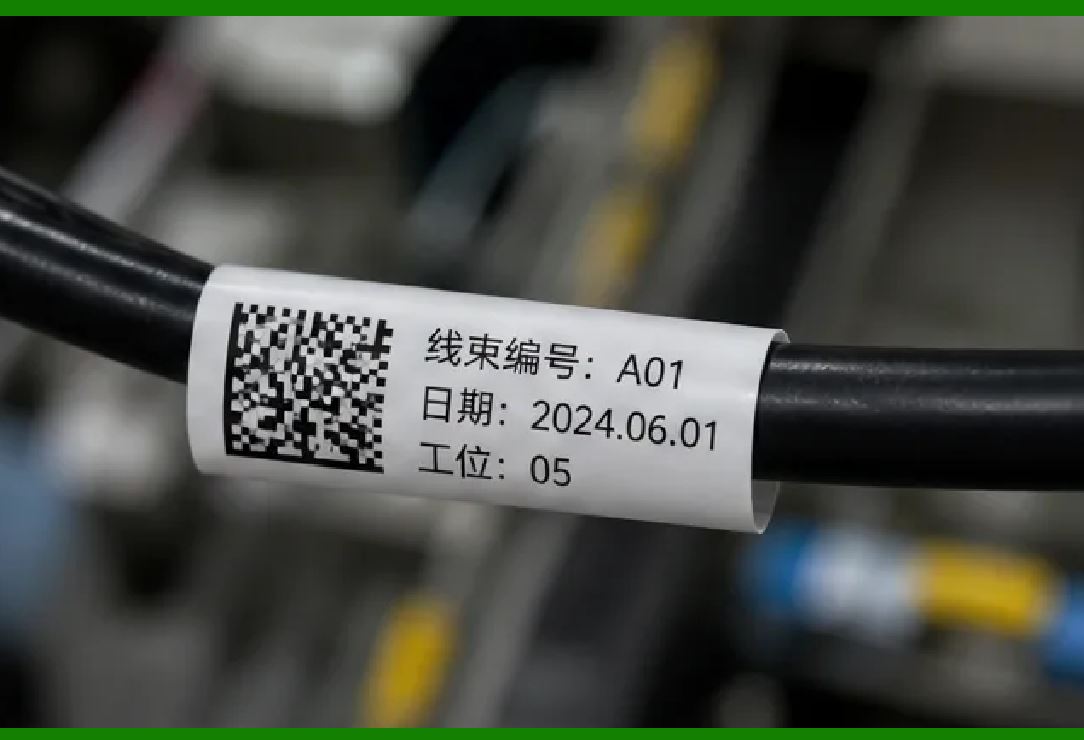
Once a DataMatrix code has been applied to an object, scanning it is a simple process. A handheld barcode reader, a smartphone camera, or a fixed scanner can decode the code and display its contents. The data can then be used to access the object's record in the museum's collections management system. |
Modern collections management platforms, such as MuseumPlus, Axiell Collections, and Argus, integrate barcode scanning directly into their workflows . This allows museum staff to use a mobile app to scan a DataMatrix code and instantly see the object's record, update its location, or add a conservation note. This integration streamlines the entire collections management process, reducing the time and effort required for inventory, movement, and auditing. |
The MuseumPlus Scan app, for example, allows users to track the precise location of every item in the collection by scanning barcodes . It can be used online or offline, making it suitable for fieldwork and remote storage facilities . Similarly, Argus Mobile enables staff to scan an object's barcode and a location's barcode, then tap to update the object's location in the collection management system . This integration ensures that location data is accurate and up to date, a critical requirement for museums with large collections spread across multiple facilities. |
|
Part Two: American and Global Applications in Action |
Chapter 7: Spanish Pioneers in Archaeological DataMatrix |
The most extensive and well-documented application of DataMatrix codes to archaeological and museum collections comes from a research team at the Centre for the Studies of Archaeological and Prehistoric Heritage (CEPAP) at the Universitat Autonoma de Barcelona . Over a two-year period, the team successfully applied DataMatrix codes to thousands of artifacts and bone remains from archaeological sites in Spain (Roca dels Bous and Cova Gran de Santa Linya) and Africa (Olduvai Gorge in Tanzania and Mieso in Ethiopia) . |
The system they developed is a model for museum and archaeological applications. Each artifact receives a small polypropylene label printed with a DataMatrix code, which is applied using Paraloid B72 acrylic resin . The code contains an identifier that links to a database containing the object's site, level or unit, and sequential number . During fieldwork, data can be captured using a laser reader, which inputs the code directly into a computer database, creating an exhaustive and updated field inventory in real time . |
The benefits were profound. The error rate was reduced to just 1%, compared to as high as 40% for manual coding . The speed of data capture was dramatically increased . And the labels proved to be durable, surviving handling and storage without degradation . The researchers have called for the adoption of a unified DataMatrix cataloguing system across Spanish museums, a vision that is now being realized in many institutions . |

|
Chapter 8: The Natural History Museum London - Pinned Insect Digitization |
The Natural History Museum (NHM) in London, one of the world's largest natural history museums with over 25 million pinned insect specimens, has pioneered the use of DataMatrix codes for large-scale digitization . The challenge is enormous: to create a digital inventory of millions of specimens, each with its own labels and data, without damaging the specimens themselves. |
The NHM developed two innovative workflows. The standard method involves carefully removing labels from the pins, placing specimens in an imaging tray, and adding a temporary label with a DataMatrix code that encodes metadata about the specimen . This label is imaged alongside the specimen, and the data is automatically extracted from the label, creating a specimen record in the museum's database . This process allows digitization of up to 200-300 specimens per person per day . |
The ALICE method (Angled Label Image Capture and Extraction) is even more efficient. It eliminates the need to remove labels, instead using six static DSLR cameras to simultaneously capture images of the specimen and its labels from multiple angles . Temporary metadata labels with DataMatrix codes are included in the dorsal image, enabling automated data capture and inventory record creation . This breakthrough has increased the digitization speed to 800-1000 specimens per person per day . |
The NHM's approach demonstrates the power of DataMatrix for natural history collections. By using temporary labels with DataMatrix codes, the museum can automate the creation of specimen records, dramatically speeding up digitization while reducing handling and potential damage to specimens . |
|
Chapter 9: AI-Driven Management of DataMatrix in Entomology Collections |
A recent AI-driven study at the Natural History Museum London has addressed another challenge: estimating the physical expansion of storage infrastructure when adding DataMatrix barcode labels to pinned insect specimens . The museum will rehouse a significant portion of its 36 million entomological specimens, and the addition of small cards with DataMatrix barcodes during digitization can increase drawer occupancy. |
The museum developed a deep learning pipeline to automatically detect drawer objects, including specimens, labels, barcodes, notes, unit trays, and drawers, from high-resolution images . The system was trained on 11,090 digitized pinned Coleoptera drawers and achieved a mean average precision of 85.45% across all classes, with barcode detection reaching 86.63% mAP and unit tray type classification reaching 99.5% accuracy . |
The AI pipeline calculates the footprint increase of adding DataMatrix barcodes, enabling the museum to plan storage expansion and budget accordingly . The tool is modular, allowing individual components to be used independently at different stages of the digitization and curation workflow . For example, specific models can flag missing labels or barcodes during digitization, assist in tracking specimen relocation, and support downstream re-curation decisions . This demonstrates how DataMatrix labeling can be integrated with advanced AI to optimize collection management at scale. |

|
Chapter 10: Direct Marking for Permanent Identification |
While adhesive labels are suitable for many applications, some museums are exploring direct part marking to permanently identify objects. In a workshop on cultural heritage and new technologies, a German company demonstrated the use of ink-jet technology to directly mark exhibits with permanent DataMatrix codes . The advantage of this approach is that no labels are needed, reducing the risk of label detachment or loss. The code is applied directly to the object, creating a permanent mark that remains readable for the life of the object. |
This approach is particularly relevant for objects that are handled frequently, such as archaeological lithic tools or bones. The code can be scanned with a 2D code reader, linking the object to its database record. The same code content can also be used for paper-printed material, such as articles or exhibition labels, allowing visitors to use their phones to access additional information . This demonstrates the versatility of DataMatrix codes as a bridge between the physical and digital worlds. |

|
Chapter 11: American Museum Applications and Digital Transformation |
While specific American museum DataMatrix case studies are less documented in the available search results, the broader trend toward digital transformation in U.S. museum collections is well established . Major American museums, including the Smithsonian Institution, the Metropolitan Museum of Art, and the Getty Museum, have all embraced digital collections management systems and are actively exploring the use of 2D barcodes and other technologies for inventory management, movement tracking, and visitor engagement. |
The integration of DataMatrix codes with modern museum collection management systems is made possible through platforms like MuseumPlus, Axiell, and Argus. These platforms enable barcode scanning via mobile apps, allowing staff to update object locations, perform audits, and conduct spot checks quickly and accurately . As more American museums adopt these systems, the use of DataMatrix codes for collection management is likely to increase significantly. |

|
Chapter 12: The Future of Museum DataMatrix |
The application of DataMatrix to museum collections is still in its early stages, but the trend is clear. As museums continue to digitize their collections and embrace digital workflows, the need for reliable, non-invasive, and machine-readable identification will only grow. DataMatrix codes, with their proven durability, data density, and compatibility with mobile devices, are well-positioned to become the standard. |
Future developments may include the use of invisible or barely visible DataMatrix codes for aesthetic objects where a visible label is unacceptable. Techniques like laser etching could be used to apply DataMatrix codes to materials without visible alteration. And the integration of DataMatrix codes with blockchain technology could provide an immutable record of provenance and conservation history, adding an extra layer of security to the digital record. |

|
Detailed Summary |
DataMatrix codes have become an essential tool for museum and archaeological collections, enabling the creation of durable, machine-readable, and non-invasive links between physical objects and their digital records. The DataMatrix symbology, with its compact footprint, high data density, and robust Reed-Solomon error correction, is ideal for the diverse range of objects found in museum collections, from tiny lithic tools to large sculptures. |
The technical implementation relies on conservation-grade materials and methods. Labels are typically printed on polypropylene and applied using Paraloid B72 acrylic resin, a material widely used in artifact restoration that creates a reversible bond . This ensures the code can be safely removed without damaging the object. For small artifacts, codes as small as 3 by 3 millimeters can be applied, while for larger objects, the code can be placed on a non-visible surface such as the base . For pinned insect specimens, temporary DataMatrix labels are used during digitization workflows, eliminating the need for permanent marking . |
Real-world applications demonstrate the technology's transformative impact. Spanish archaeological researchers pioneered the use of DataMatrix for artifact labeling, reducing error rates from up to 40% with manual methods to just 1% . The Natural History Museum London uses DataMatrix labels to digitize its 25-million-strong insect collection, automating the creation of specimen records and increasing digitization speed by up to fourfold . AI-driven analysis at the NHM also uses DataMatrix barcode detection to estimate storage expansion and support budget planning . |
Museum collections management platforms, including MuseumPlus, Axiell, and Argus, integrate barcode scanning via mobile apps, allowing staff to update object locations, perform audits, and track movements with a simple scan . This integration supports both online and offline workflows, making it suitable for fieldwork and remote storage facilities . |

|
From the archaeological field site to the museum storage facility, DataMatrix codes provide the digital thread that connects each physical object to its complete history. This tiny pattern of dots enables the transparency, accountability, and accessibility that modern museum collections depend on, ensuring that humanity's cultural and natural heritage is preserved and shareable for future generations. |
 cs@easiersoft.com