DataMatrix Decoded: A Technical Deep-Dive |
Executive Summary |
Reed-Solomon error correction is the engine that makes DataMatrix barcodes exceptionally reliable. This mathematical technique, invented in 1960 by Irving Reed and Gustave Solomon, allows a DataMatrix scanner to reconstruct the original data even if up to 30% of the code is damaged, dirty, or obscured . When a barcode on a pharmaceutical vial gets scratched in transit, or a direct part mark on a jet engine component becomes worn, the Reed-Solomon algorithm fills in the missing pieces. The technology originated in deep-space communications---the Voyager spacecraft used it to transmit data from billions of miles away---and was later adapted for 2D barcodes . In the United States, this error correction capability has made DataMatrix the mandatory standard for applications where data accuracy is critical: the FDA requires it for pharmaceutical serialization and medical device identification, the Department of Defense mandates it for equipment tracking, and the aerospace industry depends on it for part traceability. This article explains how Reed-Solomon error correction works in plain language and presents dozens of real-world American applications where this technology quietly ensures safety and reliability. |
|
Part One: The Origin and Principles of Reed-Solomon Error Correction |
Chapter 1: The 1960 Invention |
In 1960, two researchers at MIT Lincoln Laboratory, Irving Reed and Gustave Solomon, published a five-page paper titled 'Polynomial Codes over Certain Finite Fields' . They were working on the SAGE air defense system, exploring ways to fix errors in radar data sent over noisy communication links. At the time, the standard method for detecting errors was to send the same message multiple times and let the decoder spot anomalies---an inefficient and not always accurate approach . Reed and Solomon proposed something radically different. |
Chapter 2: The Core Idea |
Reed and Solomon's insight was that information bits could be grouped together rather than checked individually. In their scheme, a message consists of several groups (for example, groups of eight bits, now called bytes). The encoder adds redundant groups to the message based on a mathematical polynomial. When the decoder receives the transmission, it applies the same polynomial, which recreates the redundant groups. If the recreated groups do not match the message, an error remains in the transmission. Another polynomial function then determines the positions of the erroneous bits and corrects them . |
Chapter 3: The Space Age Connection |
The Reed-Solomon codes were mathematically elegant but computationally intensive for the computers of 1960. Interest remained mainly academic for several years. However, in 1977, NASA's Voyager program adopted Reed-Solomon codes for deep-space communication . Voyager transmitted data from two billion miles away at 21,600 bits per second using less energy than a wristwatch battery, and Reed-Solomon made the data reliable . The Hubble Space Telescope, launched in 1990, continues to use Reed-Solomon codes today . This space heritage gave the technology an aura of proven reliability. |

|
Chapter 4: Why Reed-Solomon Handles Burst Errors Well |
Reed-Solomon codes are particularly good at handling burst errors---where a series of bits in the codeword are received incorrectly . This is exactly what happens when a barcode is scratched across multiple modules, or when dirt obscures a contiguous area of the code. A single symbol error occurs when one bit in a symbol is wrong, or when all bits in a symbol are wrong. Reed-Solomon can correct a certain number of these symbol errors, making it ideal for barcode applications where physical damage is common . |
Chapter 5: The Transition to Barcodes |
In the early 1980s, the commercial sector began adopting Reed-Solomon codes for digital recording---CDs and DVDs use them to play sound and video unaffected by scratches . The technology proved perfect for 2D barcodes as well. A scanner can parse a DataMatrix code even if pieces are damaged---for example, by getting wet on a package or being crumpled in a magazine . When 2D symbologies were developed, Reed-Solomon was adopted as the method for addressing missing modules (erasures) or codewords that were incorrectly decoded (errors) . |
Chapter 6: How DataMatrix Uses Reed-Solomon |
In DataMatrix, the encoder takes the data codewords and adds error correction codewords using the Reed-Solomon algorithm. Depending on the symbol size, the data is first split into interleaved blocks . For each block, an error code is computed. These codes are then placed into the matrix. The interleaving ensures that if one area of the code is damaged, the damage is spread across different blocks, improving the chance of recovery. The decoder uses a syndrome-based approach to detect errors, compute error locations, and correct the values . |

|
Chapter 7: The Fixed Error Correction Level of DataMatrix |
Unlike QR codes, which allow the user to select an error correction level of 7%, 15%, 25%, or 30%, DataMatrix ECC 200 has a fixed error correction capacity determined by the symbol size . For DataMatrix ECC 200, the error correction level is approximately 30%, varying slightly with the matrix size . This fixed level simplifies implementation and ensures consistent performance. Smaller symbols have a higher proportion of error correction codewords relative to data, making them more robust for their size. |
Chapter 8: The 30% Recovery Capability |
Industry sources consistently state that DataMatrix can reconstruct up to 30% of a damaged code image . Other sources cite approximately 20% for GS1 DataMatrix specifically . The variation likely reflects different symbol sizes and damage types, but the key point is that DataMatrix offers exceptional robustness. This capability allows DataMatrix codes to be read even with poor print quality, low contrast, or significant physical damage . |
Chapter 9: Data Accuracy Rates |
The error correction of DataMatrix translates into extremely low data substitution rates. A 2018 study at the University of Memphis scanned more than 23 million 2D barcodes, including DataMatrix, QR Code, PDF417, and Aztec Code, across five different scanners. The results showed that Reed-Solomon enabled symbologies achieved at least a 1 in 797 million error rate, making them suitable for applications where decoded data accuracy is imperative . For comparison, the older UPC-A symbology, which lacks robust error correction, had a worst-case substitution rate of 1 in 394,003 characters . |

|
Chapter 10: The Decoding Outcomes |
When a DataMatrix decoder processes a damaged code, there are three possible outcomes. First, if the number of errors and erasures is within the correction capacity, the original transmitted code word will always be recovered. Second, if the damage exceeds the capacity, the decoder will detect that it cannot recover the original and indicate this fact. Third, in rare cases, the decoder may mis-decode and recover an incorrect code word without any indication---but the extremely low substitution rates show this is vanishingly rare . |
Chapter 11: Coding Gain |
The advantage of using Reed-Solomon error correction is often described as coding gain. The probability of an error remaining in the decoded data is much lower than the probability of an error if Reed-Solomon is not used. In digital communication systems, this allows the system to achieve a target bit error ratio with lower transmitter power . In barcode applications, it allows codes to be printed smaller, on harsher surfaces, and with lower contrast while still being readable. |
Chapter 12: Reed-Solomon in the AIDC Industry |
The automatic identification and data capture (AIDC) industry adopted Reed-Solomon when 2D symbologies were developed . Today, Data Matrix, QR Code, PDF417, and Aztec Code all use Reed-Solomon error correction. Among these, Data Matrix is the most efficient---given the same data and the same module size, Aztec Code requires 1.7 times more space, QR Code requires 3.2 times more space, and PDF417 requires 29.2 times more space . This efficiency, combined with Reed-Solomon's robustness, makes DataMatrix ideal for space-constrained applications. |

|
Part Two: American Applications Where Error Correction is Critical |
Chapter 13: Department of Defense Item Unique Identification |
The U.S. Department of Defense requires DataMatrix for Item Unique Identification (IUID) marking under MIL-STD-130. This mandate, effective since the early 2000s, requires all items above a specified value to receive a unique identifier . DataMatrix is specifically listed as an acceptable method of marking required items . The error correction is essential because military equipment is exposed to harsh environments---battlefield conditions, extreme temperatures, and rough handling. Codes must remain readable throughout the equipment's lifecycle, sometimes decades. |
Chapter 14: The Defense Supply Chain |
The DoD's IUID program tracks equipment from acquisition through maintenance to disposal. Suppliers across the American defense industrial base mark components with DataMatrix codes. The Reed-Solomon error correction ensures that codes on munitions, vehicles, aircraft, and ships remain readable despite exposure to sand, moisture, and physical abrasion. This traceability supports military readiness and accountability. |
Chapter 15: FDA Unique Device Identification |
In 2013, the FDA released a final rule requiring Unique Device Identification (UDI) for medical devices . The rule requires all devices not under exemption to carry a label with both human-readable text and an automatic identification and data capture (AIDC) form . DataMatrix is the standard AIDC format. The FDA's mandate implicitly requires error correction because the data accuracy needs of the medical industry are imperative . |

|
Chapter 16: Medical Implants |
American medical implant manufacturers use DataMatrix codes on hip stems, pacemaker cases, and dental screws. These codes are laser-etched and must survive the implant's lifetime inside the body. The Reed-Solomon error correction ensures that the code remains readable even if the marking surface is small, the contrast is low, or the code is partially obscured by tissue or bone. Hospitals use these codes to verify implant identity before surgery and to track patients post-implantation. |
Chapter 17: Pharmaceutical Serialization |
The Drug Supply Chain Security Act requires serialization of prescription drugs. Each package carries a GS1 DataMatrix code encoding the National Drug Code, lot number, and expiration date. The error correction is essential because pharmaceutical packages are handled frequently, labels can be scratched or smudged, and codes must be readable through the distribution chain from manufacturer to pharmacy to patient. |
Chapter 18: Hospital Medication Administration |
American hospitals scan DataMatrix codes on medication packages and patient wristbands. The five-rights verification (right patient, right drug, right dose, right route, right time) depends on accurate code reading. The Reed-Solomon error correction provides an additional safety layer. If a code is partially obscured by a label fold, moisture, or handling, the decoder can still reconstruct the data, ensuring that medication errors are avoided. |

|
Chapter 19: Laboratory Sample Tracking |
Clinical laboratories use DataMatrix on specimen containers, slides, and test tubes. The codes are often tiny, printed on curved surfaces, and exposed to chemicals and temperature changes. The error correction ensures that patient samples are correctly identified even if the label is partially damaged. A substitution error in a laboratory sample could lead to misdiagnosis or incorrect treatment, making data accuracy imperative. |
Chapter 20: Aerospace Parts Marking |
The American aerospace industry uses DataMatrix for part marking on turbine blades, engine housings, and airframe structures. These codes must survive extreme temperatures, vibration, and chemical exposure. The Reed-Solomon error correction is essential because even a small scratch on a turbine blade marking could otherwise render it unreadable. The FAA relies on these codes for safety traceability. |
Chapter 21: NASA and Space Applications |
NASA has issued guidance on the application of DataMatrix to aerospace parts. The agency's Handbook 6003 specifies DataMatrix for part identification. Given NASA's long history with Reed-Solomon codes---from Voyager to Hubble to current missions---the choice of DataMatrix reflects confidence in the error correction technology that originated at Lincoln Laboratory. |

|
Chapter 22: Automotive Manufacturing |
American automotive manufacturers use DataMatrix on engine blocks, transmissions, and electronic control units. The codes are laser-etched and survive the assembly process, including exposure to oils, high temperatures, and robot handling. The error correction ensures that codes remain readable through the entire vehicle's life, supporting recall management and warranty tracking. |
Chapter 23: The Automotive Industry Action Group |
The Automotive Industry Action Group (AIAG) has established standards for DataMatrix marking in the automotive supply chain. The standards specify ECC 200 with Reed-Solomon error correction. American automakers rely on this standardization to ensure that parts from different suppliers can be read by the same scanners on assembly lines. |
Chapter 24: Electronics Manufacturing |
American electronics manufacturers use DataMatrix on PCBs, semiconductor packages, and components. The codes are often extremely small---10 by 10 modules, or about 2.5 millimeters square. The Reed-Solomon error correction compensates for the challenges of printing tiny codes with high precision. A single misread component could lead to product failure, making accuracy imperative. |

|
Chapter 25: Semiconductor Wafers |
DataMatrix codes are etched onto semiconductor dies and wafer frames. The codes are incredibly small and must be readable under microscope inspection. The error correction ensures that even with the tiny module size and low contrast of silicon etching, the code remains decodable. This enables traceability from wafer fabrication through packaging and final product assembly. |
Chapter 26: USPS Package Routing |
The United States Postal Service uses a DataMatrix-based symbol called the Intelligent Mail Matrix Barcode (IMmb) for package routing. The codes are read by high-speed tunnel scanners at mail processing facilities. Packages often arrive with damaged, smudged, or partially obscured labels. The Reed-Solomon error correction allows the scanners to reconstruct the routing data even when the label is compromised. |
Chapter 27: Private Parcel Carriers |
FedEx, UPS, and other private carriers use DataMatrix on shipping labels alongside traditional barcodes. The codes are read by automated sorting equipment. The error correction is essential because packages are handled roughly, labels can be torn or smudged, and the sorting equipment reads codes at high speed from various angles. |

|
Chapter 28: Warehouse Inventory |
American warehouses use DataMatrix on rack beams and storage locations. Forklift-mounted scanners read the codes to confirm bin locations. The codes are exposed to dust, vibration, and occasional impacts. The error correction ensures that inventory accuracy is maintained even if the codes are partially obscured or worn. |
Chapter 29: Retail Sunrise 2027 |
The American retail industry's Sunrise 2027 initiative aims to enable scanning of 2D barcodes at point-of-sale. DataMatrix codes on product packaging will be read by consumer smartphones and checkout scanners. The error correction ensures that codes remain readable despite package handling, moisture, and the challenges of consumer-grade scanning equipment. |
Chapter 30: Apparel and General Merchandise |
American apparel brands use DataMatrix on care labels and garment tags. The codes encode style numbers, sizes, and dye lots. The error correction ensures that codes on fabric labels remain readable despite washing, folding, and handling. This supports automated sorting in distribution centers. |

|
Chapter 31: Food Safety and Traceability |
American food producers use DataMatrix on packaging to encode farm origin, harvest dates, and batch information. The codes are often printed on flexible packaging that is handled, refrigerated, and transported. The error correction ensures that in the event of a foodborne illness outbreak, investigators can read the codes even if the packaging is damaged. |
Chapter 32: Dairy and Meat Processing |
Vacuum-packed meat and dairy products carry DataMatrix codes storing slaughterhouse ID, temperature logs, and best-before dates. The codes are printed on packaging that may be wet, cold, and handled frequently. The error correction ensures readability through the cold chain. |
Chapter 33: Surgical Instrument Tracking |
American hospitals use DataMatrix codes on surgical instruments. The codes are laser-etched and survive sterilization cycles, including autoclaving, chemical disinfection, and physical handling. The error correction ensures that instruments can be tracked through their lifecycle, supporting maintenance schedules and recall response. |

|
Chapter 34: EV Battery Manufacturing |
American electric vehicle battery manufacturers use DataMatrix on battery cells and modules. The codes link to formation test data, capacity, and internal resistance readings. The codes are applied to cylindrical or pouch cells and must survive assembly and decades of vehicle operation. The Reed-Solomon error correction compensates for the challenges of marking on curved, reflective surfaces. |
Chapter 35: Solar Panel Manufacturing |
American solar panel manufacturers use DataMatrix on panel frames and junction boxes. The codes are exposed to sunlight, rain, temperature extremes, and physical handling during installation. The error correction ensures that panels can be identified for warranty claims and performance monitoring even after years of outdoor exposure. |
Chapter 36: Aerospace Cabin Interiors |
American aerospace manufacturers use DataMatrix on cabin interior components, including seat tracks and overhead bins. The codes are read during installation and maintenance. The error correction ensures that codes survive the cabin environment, including cleaning chemicals, passenger handling, and pressurization cycles. |

|
Chapter 37: Defense Munitions |
The U.S. military uses DataMatrix on shell casings and missile sections. The codes encode lot, propellant type, and manufacturing arsenal. The codes must survive extreme conditions---battlefield handling, temperature extremes, and long-term storage. The Reed-Solomon error correction is essential because a misread munitions code could have catastrophic consequences. |
Chapter 38: 3D Printed Parts |
American manufacturers of 3D printed parts embed DataMatrix codes directly into the CAD model. After printing, the code is integral to the part. The error correction ensures that the code remains readable despite the layer-by-layer printing process, which can introduce minor imperfections. This is especially important for aerospace and medical applications where parts must be permanently identifiable. |
Chapter 39: Construction Structural Steel |
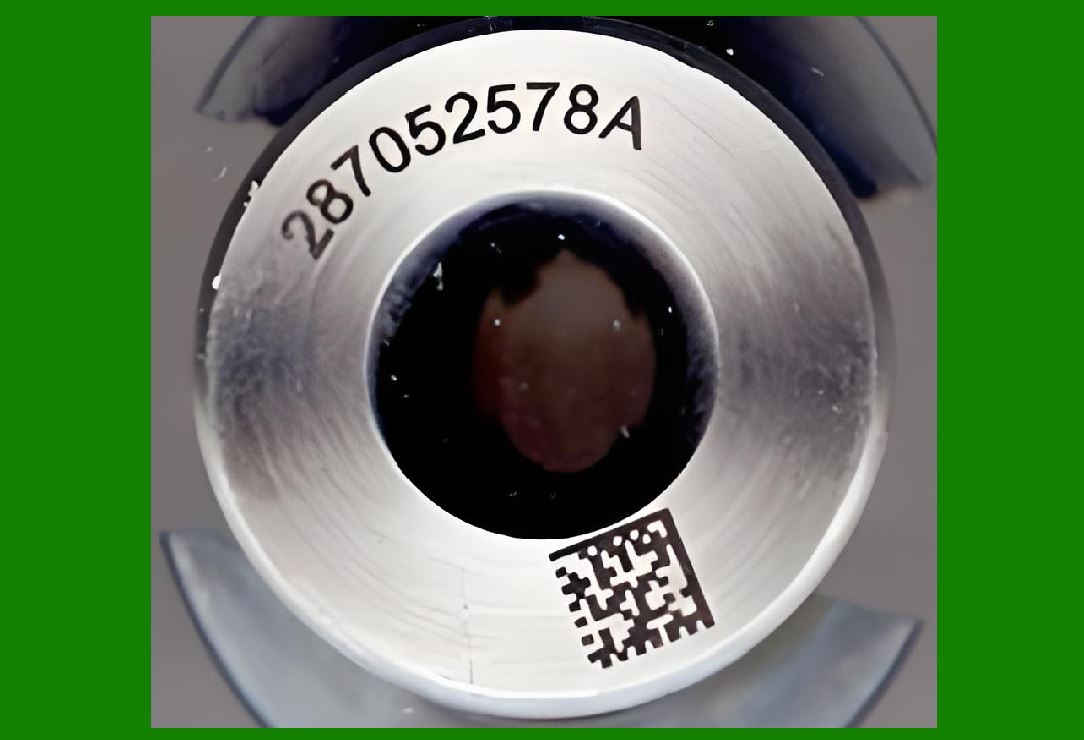
American steel fabricators apply DataMatrix to structural steel beams using dot-peen markers. The codes encode yield strength and mill certification data. Structural engineers scan the codes on-site to verify materials. The codes are exposed to construction handling, weather, and decades of service. The error correction ensures that the codes remain readable despite abrasion and corrosion. |
|
Chapter 40: Industrial Tools and Equipment |
American manufacturers of industrial tools use DataMatrix for asset tracking. The codes are applied to tools, engine components, and motor parts. They are exposed to oils, dirt, vibration, and impacts. The Reed-Solomon error correction ensures that maintenance history and calibration records can be accessed even when the code is partially worn. |
Chapter 41: Chemical and Biomedical Instruments |
American manufacturers of chemical and biomedical analysis instruments use DataMatrix on consumables, reagents, and instrument parts. The codes enable traceability of test results back to specific components. The error correction ensures that codes on often-handled laboratory items remain readable, supporting quality control and regulatory compliance. |
Chapter 42: Document Management |
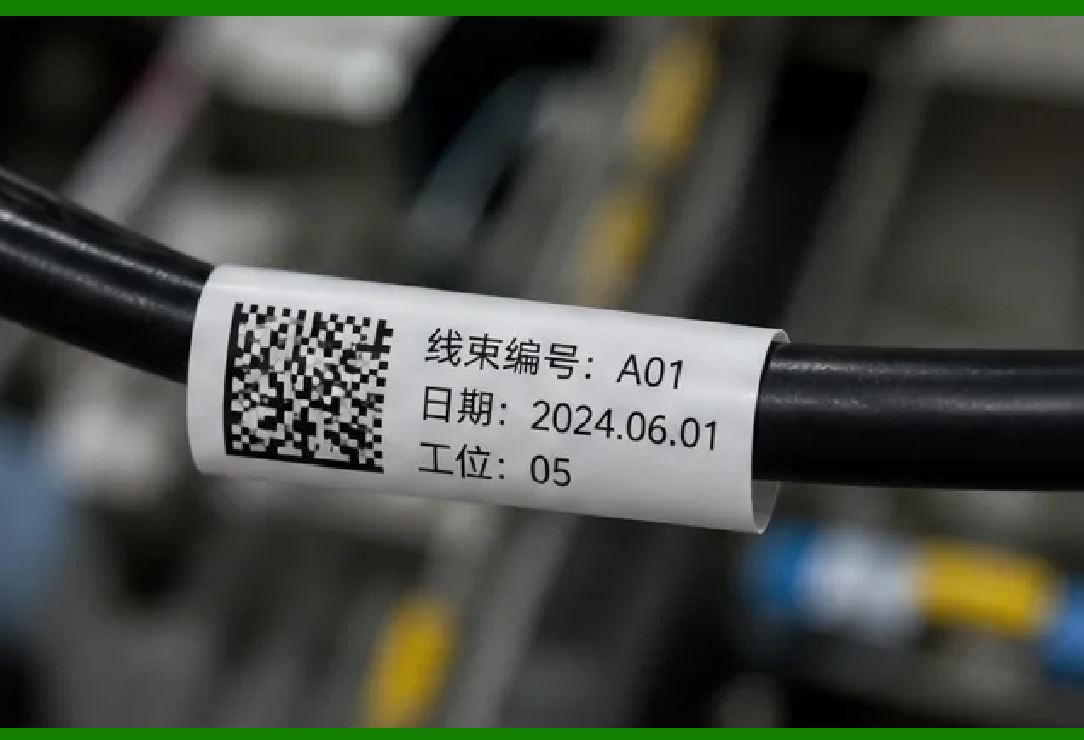
American government agencies and corporations use DataMatrix on archival folders and documents. The codes link physical documents to scanned digital copies. The error correction ensures that codes on aged or handled documents remain readable, enabling retrieval without optical character recognition errors. |
|
Chapter 43: Access Control |
American organizations use DataMatrix on identification badges, access cards, and visitor passes. The codes encode user credentials and access permissions. The error correction ensures that access is not denied due to a worn or partially obscured code, supporting security and operational efficiency. |
Chapter 44: Event Ticketing |
American event venues use DataMatrix on wristbands and paper tickets. The codes encode ticket identifiers, seat assignments, and attendee information. The error correction ensures that entry validation works even if the ticket is folded, crumpled, or worn. This supports efficient entry management and fraud prevention. |
Chapter 45: Mail and Document Tracing |
The USPS and private couriers use DataMatrix on envelopes and packages for automated routing and tracking. The error correction ensures that the small codes on envelopes remain readable despite postal handling, including sorting machines and weather exposure. |

|
Chapter 46: Jewelry and Luxury Goods |
American jewelry retailers engrave DataMatrix on the inside of rings, watch clasps, and other luxury items. The codes store SKU, carat weight, and certificate numbers. The error correction ensures that the tiny codes remain readable despite wear from daily use, enabling authentication and inventory management. |
Chapter 47: Paint and Chemical Safety |
DataMatrix on paint and chemical containers in the United States encode batch numbers, formulations, and hazard classifications. The codes are exposed to chemicals, moisture, and handling. The error correction ensures that safety data sheets can be accessed even if the label is partially damaged, supporting workplace safety and regulatory compliance. |
Chapter 48: Library and Archive Management |
American libraries and archives use DataMatrix on book spines, archival boxes, and artifacts. The codes link physical items to digital records. The error correction ensures that the codes remain readable over decades of handling, enabling efficient retrieval and inventory management. |

|
Chapter 49: Museum Artifact Preservation |
American museums use non-invasive DataMatrix labels on the bases of sculptures and artifacts. The codes store accession numbers, provenance, and conservation history. The error correction ensures that the codes remain readable despite handling, environmental conditions, and the passage of time, supporting curatorial work and research. |
Chapter 50: The Future of Error Correction |
The Reed-Solomon error correction at the heart of DataMatrix has been proven over six decades of use, from deep space to factory floors. As DataMatrix continues to evolve, the error correction capabilities will remain central to its value proposition. The 2024 revision of ISO/IEC 16022 has reinforced ECC 200 as the standard, ensuring that future DataMatrix codes will continue to benefit from the reliability that Reed-Solomon provides. With emerging applications including blockchain traceability, digital twins, and AI-enhanced decoding, the need for robust error correction will only grow. DataMatrix, with its heritage of space-grade reliability, is ready. |

|
Detailed Summary |
Reed-Solomon error correction is the heart of DataMatrix. This mathematical technique, invented in 1960 at MIT Lincoln Laboratory, allows DataMatrix codes to recover up to 30% of their data even when partially damaged, dirty, or obscured. The technology originated in deep-space communications---NASA's Voyager and Hubble missions used it to transmit reliable data from billions of miles away---and was later adapted for CDs, DVDs, and 2D barcodes . |
The core principle is elegant. The encoder groups data bits and adds redundant codewords based on a polynomial. The decoder applies the same polynomial to reconstruct the original data. If some codewords are missing or corrupted, the mathematical properties allow the decoder to fill in the gaps. Reed-Solomon is particularly good at handling burst errors---contiguous areas of damage---which is exactly what happens when a barcode is scratched or smudged . |
DataMatrix ECC 200 has a fixed error correction level of approximately 30%, varying with symbol size . This simplifies implementation and ensures consistent performance. The data is interleaved across the symbol, so damage is spread across multiple blocks, improving recovery. The result is an extremely low data substitution rate. A 2018 study showed Reed-Solomon enabled 2D symbologies achieve at least a 1 in 797 million error rate, making them suitable for applications where data accuracy is imperative . |

|
In the United States, this error correction capability has made DataMatrix the mandatory standard for critical applications. The Department of Defense requires DataMatrix for Item Unique Identification marking, ensuring military equipment remains traceable through harsh environments . The FDA requires DataMatrix for Unique Device Identification on medical devices and for pharmaceutical serialization under the Drug Supply Chain Security Act . The aerospace industry relies on DataMatrix for part marking, with NASA issuing guidance on its application. |
Hospitals use DataMatrix on medication packages and patient wristbands for the five-rights verification, reducing medication errors. Clinical laboratories use it on specimen containers to ensure accurate patient sample identification. The USPS uses DataMatrix for package routing, with the error correction compensating for damaged labels. Private carriers, warehouse operators, retailers, and manufacturers across the American economy depend on the reliability that Reed-Solomon provides. |
From surgical implants to jet engines, from semiconductor dies to structural steel beams, DataMatrix codes with Reed-Solomon error correction silently ensure that data is accurate and readable despite damage, dirt, or obscuration. The technology that began in a five-page paper in 1960, used to communicate with spacecraft billions of miles away, now protects patient safety, military readiness, and supply chain integrity in applications across the United States. It is a testament to the power of mathematical innovation applied to practical challenges, and it will continue to secure our material world for decades to come. |
 cs@easiersoft.com