A Technical Deep-Dive into QR Codes and Their Multispectral Industrial Applications |
Chapter 17: Industry 4 - Automotive Parts Traceability |
Short Summary |
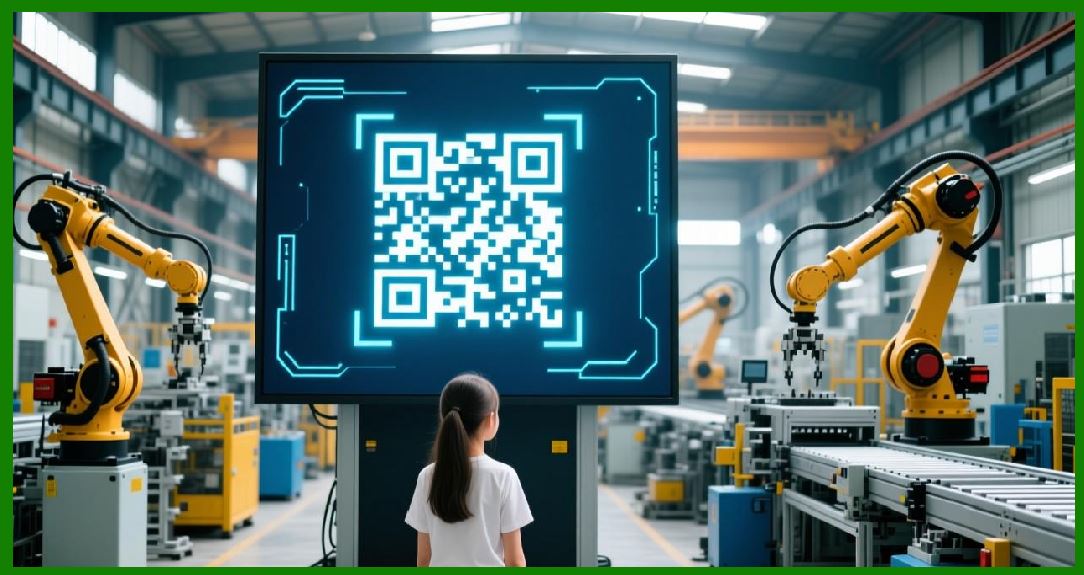
This chapter explores the critical role of QR codes in the American automotive industry for parts traceability, quality control, and recall management. Engine components and other critical parts carry laser-etched QR codes using high-temperature ceramic ink, storing production dates, torque specifications, and unique serial numbers. These codes enable unprecedented recall precision---manufacturers can identify exactly which batch of parts went into which vehicle, dramatically reducing recall scope and cost. We examine how General Motors has implemented its Replacement Parts Traceability (RPT) system using QR codes scanned through the Certified Service Mobile Toolbox app, how Mercedes-Benz USA uses the PartScan app for component documentation, and the broader ecosystem of direct part marking and blockchain-based verification. The chapter also covers the technology behind durable QR codes---laser marking methods, ceramic inks, and the physics of creating codes that survive extreme heat, corrosion, and wear throughout a vehicle's lifetime. |
|
Introduction: The Anatomy of a Recall |
In September 2025, a major automotive recall made headlines. Citron vehicles were affected by a brake system issue that required immediate attention from owners . The scale and complexity of such recalls are staggering---involving millions of vehicles, thousands of dealerships, and countless replacement parts. The cost, both financial and reputational, can be enormous. |
But what if there was a way to know, with certainty, exactly which parts were installed in which vehiclesWhat if a manufacturer could trace a faulty component back to its specific production batch, identify every vehicle that received it, and target the recall to only those vehiclesThis is precisely what QR codes enable in modern automotive manufacturing. |
The automotive industry has embraced QR codes for parts traceability with remarkable thoroughness. Engine components, brake systems, transmissions, and safety-critical parts carry laser-etched QR codes that encode production dates, torque specifications, batch numbers, and unique serial numbers. These codes are designed to survive the harshest conditions---extreme heat, corrosive fluids, mechanical wear, and decades of use. |
When a defect is discovered, the manufacturer can scan the QR code on the suspect part, trace it back to its origin, and identify exactly which vehicles received parts from that batch. The result is recall precision that was unimaginable just a generation ago. |
This chapter explores the technology behind automotive QR codes, how American manufacturers implement them, and the real-world systems that make traceability possible. |
|
The Technology: Laser Etching and Durable QR Codes |
Automotive QR codes face conditions that would destroy ordinary printed labels. Engine compartments reach temperatures exceeding 200 degrees Celsius. Components are exposed to oil, brake fluid, coolant, and corrosive chemicals. Parts experience constant vibration and mechanical wear. A QR code on an engine component must remain readable for the life of the vehicle---often 15 years or more. |
The solution is direct part marking (DPM), where the QR code is physically marked onto the part itself rather than printed on a label . DPM uses several methods: laser engraving, laser etching, dot peening, chemical etching, casting, engraving, or abrasive blasting . The preferred code types for DPM are 2D Data Matrix and QR codes . |
Laser marking is the most common method for automotive QR codes. Laser printing machines create permanent, machine-readable identifiers such as QR codes, barcodes, serial numbers, or company logos directly on products . This enables seamless tracking across every stage of the supply chain, strengthening quality control, counterfeiting defenses, and customer safety . |

|
The advantages of laser marking are compelling: |
Permanence: Laser marks endure extreme conditions---heat, corrosion, wear---where ink or decals fail . |
Ultra-high precision: Micron-level accuracy enables crisp, scan-ready QR codes even on complex geometries . |
Material versatility: Suitable for metals, plastics, ceramics, glass, and rubber . |
Non-contact operation: No mechanical pressure is applied, making it ideal for delicate or regulated items . |
Consumable-free: No inks or labels, which reduces waste and ongoing costs . |
Automation-ready: Integrates smoothly into conveyor lines, robotic cells, and manufacturing execution systems . |

|
The physics of laser marking is fascinating. A laser beam is directed at the part surface, causing localized heating that changes the material's appearance or texture. Different laser types produce different effects. Fiber laser engraving physically alters the substrate, creating indelible marks that resist abrasion, heat, chemicals, and fading . Laser bonding uses an additive material bonded via laser, providing marks as durable as the substrate itself---tested even in space environments on stainless steel under extreme conditions . |
High-temperature ceramic inks are another technology used for automotive QR codes. These specialized pigmented inks in white, yellow, or blue support high readability on light and dark substrates . Their formula resists fading, abrasion, UV exposure, chemicals, and solvents common in production and post-print processes . For the most demanding environments, UV-cure inks are applied and then cured under UV light to form hard films that resist aggressive solvents, oils, and cleaning agents . |
The goal is a traceability code that matches the lifespan of the component itself. As one manufacturer explains, traceability marks should remain intact through wear, servicing, and end-use; laser marks remain legible for the lifetime of the part, while inkjet inks may fade or abrade over time . |

|
The Data Payload: What the QR Code Stores |
A typical automotive QR code encodes several critical data elements: |
Production Date: The exact date the part was manufactured, enabling batch tracking. |
Torque Specifications: The required tightening torque for bolts and fasteners, ensuring proper installation. |
Serial Number: A unique identifier for the individual part, enabling single-part traceability. |
Batch Number: The production batch identifier, linking the part to its raw materials and manufacturing conditions. |
Part Number: The manufacturer's part number, identifying the specific component type. |
Supplier Information: The supplier or plant where the part was manufactured. |
The data payload is typically 200 to 500 alphanumeric characters, requiring QR versions 8 to 15 depending on the error correction level. High error correction (H-level) is essential because the codes may be partially damaged during the part's lifetime. |
The QR codes are stored in a database, linking the part's physical identity to its digital record. This digital record includes the complete lifecycle history: raw materials, manufacturing parameters, quality control test results, shipping information, and ultimately, the vehicle in which the part was installed. |

|
US Application Examples: Traceability in Practice |
Example 1: General Motors - Replacement Parts Traceability |
General Motors has implemented one of the most comprehensive QR-based traceability systems in the American automotive industry. The Replacement Parts Traceability (RPT) process is a method to aid in tracking certain part replacements on a vehicle . |
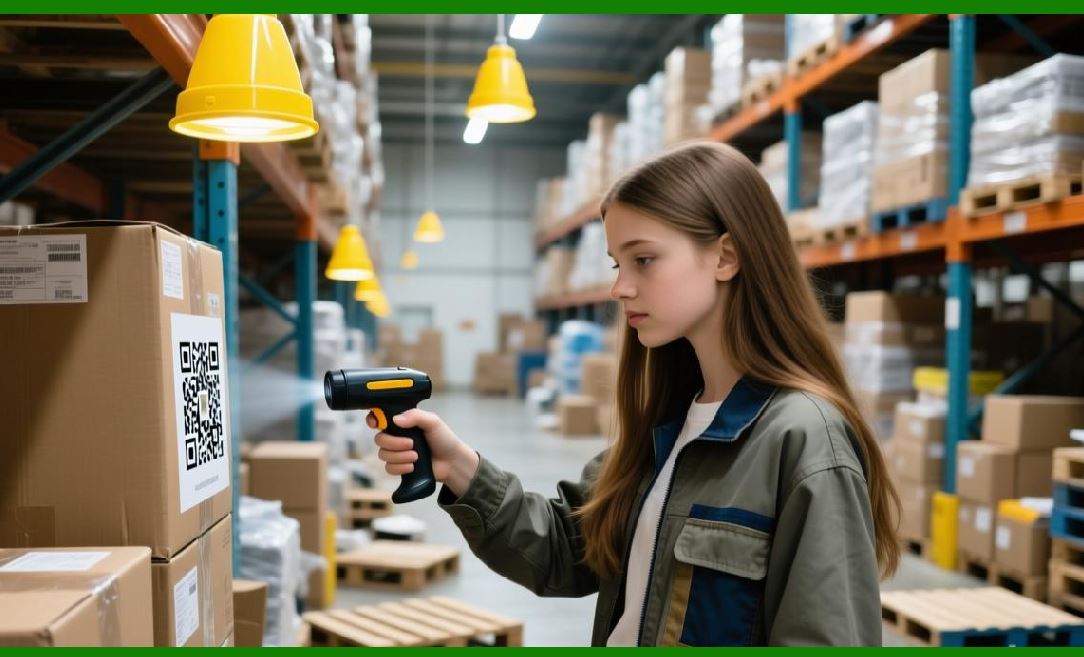
The RPT process is elegantly simple. Using the Certified Service Mobile Toolbox (CSMT) application, a technician scans the VIN of the vehicle and the barcode or QR code of the new part being installed . Once submitted, this information is then stored in a database where key stakeholders can reference replaced parts for future use . |
The fundamental steps are : |
1. The dealer receives communication to document specific part serial numbers, typically through a bulletin, field action, or recall. |
2. The technician uses CSMT to scan the VIN of the vehicle and the dealer-installed part serial number/barcode. |
3. The technician submits the information through the CSMT application. |
4. Data is sent to the GM database where VIN and part serial number are stored for potential future use. |
By using the Replacement Part Traceability function, General Motors can know exactly which parts are on a vehicle, even after a service part replacement . This capability is revolutionary for recall management. Instead of a broad recall affecting millions of vehicles, GM can target only those vehicles that actually received the defective parts. |
The CSMT app is available for free on Google Play and the Apple App Store . Technicians simply scan the VIN through the windshield or the QR code on the door jamb, then scan the barcode or QR code on the part . The app automatically populates the required fields, and a single 'Submit' button completes the process . |
The RPT process also simplifies the repair and claim submission processes. It eliminates the need for technicians to write down the 16-character serial number on a job card and for warranty administrators to input the serial number into the warranty system . This saves time and reduces the risk of manual data entry errors. |
Not every part replacement requires an RPT submission. General Motors specifies that only critical parts will require an RPT, and the relevant bulletin, field action, or recall will note that the technician must use the Replacement Part Traceability function . This targeted approach balances traceability requirements with operational efficiency. |

|
Example 2: Mercedes-Benz USA - PartScan Application |
Mercedes-Benz USA has developed the PartScan app for service representatives to document vehicle components . The app provides a fast and reliable solution for scanning and transferring the vehicle identification number (VIN) as well as the serial number of the old and new component . |
The app supports multiple input methods: barcode scan, QR code scan, optical character recognition (OCR), and manual entry . The application is restricted to service representatives and partners of Mercedes-Benz, requiring successful authentication during the login step . Based in Sandy Springs, Georgia, Mercedes-Benz USA has implemented this system across its service network . |

|
Example 3: Marketpoint Recall - AI-Powered Recall Management |
Marketpoint Recall has launched a cloud-based platform designed to help brands manage product recalls with speed, control, and clarity . The platform combines consumer engagement, AI, communications, and analytics in a single system so teams can act faster, prove compliance, and protect trust . |
The platform links consumers, manufacturers, retailers, and regulators in one central, cloud-based workflow. Brands can configure, launch, and track every stage of a recall in one place, while customer outreach, case handling, evidence capture, and compliance reporting are all managed in the platform . |
Branded self-serve portals and QR codes help turn anonymous buyers into known contacts who can confirm actions, upload photos, and check status in real time. Every action is logged to create a live, defensible audit trail from day one . AI-powered agents triage inbound queries in 31 languages, deflecting calls from busy support teams and keeping responses consistent . |
The platform is particularly relevant to the automotive sector, where the scale and impact of recent recalls have underlined the need for faster, more transparent processes . Pete Gillett, the founder, noted that many companies are still running recalls with posters, PDFs, and spreadsheets---'analog processes in a digital world' . The platform addresses this gap by providing a system that is ready the moment a recall happens. |
The impact is measurable: recall costs can be cut by up to 40%, and brands can maintain transparency and control throughout the process . |

|
Example 4: Blockchain-Secured Tracking |
Counterfeit automotive parts are a persistent problem in the aftermarket industry. A 2026 IEEE study proposed a Blockchain Secured Tracking System that uses QR codes to authenticate spare parts . Each spare part is assigned a unique digital identity via QR codes, with all events in the part's lifecycle---from manufacturing through distribution to purchase---recorded immutably on a decentralized blockchain ledger . |
The system also includes an AI Chatbot that provides consumer support on spare part specifications, warranty information, and historical data . Smart contracts automate essential engagements such as ownership transfer, warranty transfer, and certification verification . Simulation results demonstrate that the proposed system enhances traceability and reduces the circulation of counterfeits in the supply chain . |
While this system is still in research, it points toward the future of automotive parts traceability. The combination of QR codes, blockchain, and AI creates a transparent, immutable, and user-friendly system for verifying part authenticity. |
The Role of Direct Part Marking |
Direct Part Marking (DPM) is the foundation of automotive QR code traceability. Unlike labels that can peel, fade, or be removed, DPM codes are physically part of the component . |

|
The advantages of DPM are significant : |
Permanent visibility: The code remains on the part for its entire lifecycle. |
Safety and warranty: DPM enables tracking for warranty, safety, and quality control. |
Traceability after accidents: Faulty parts can be traced to determine their origin and cause. |
However, DPM codes present scanning challenges. Printing on parts generally does not allow for traditional black markings on a white background, so DPM codes tend to be low contrast regardless of the marking method used . Surface curvature, reflectivity, and texture can impact readability, and specialized image-based readers may be required for accurate scanning . |
In the automotive industry, DPM is used for engine components, safety-critical parts, transmission parts, and any component that requires lifetime traceability . The industry has established best practices for marking and scanning DPM codes, including recommendations for matte surface patches on reflective parts to improve contrast . |

|
The Supply Chain Perspective |
The automotive supply chain is a complex web of manufacturers, suppliers, logistics providers, and dealers. QR codes enable visibility across this entire chain . |
A vehicle consists of tens of thousands of parts. Each part has its own unique 'digital identity'---a QR code that records the part's complete history: supplier information, production batch, quality inspection reports, logistics tracking, and even the vehicle model in which it was installed . |
At the dealership level, QR codes enable fast and reliable part identification. When a service technician needs to replace a part, they can scan the new part's QR code and link it to the vehicle's VIN. The system verifies that the part is compatible, authentic, and correctly installed. |
In the aftermarket, QR codes help prevent counterfeiting and ensure that customers receive genuine parts. 'One part, one code' systems integrate anti-counterfeiting, traceability, and supply chain management, providing consumers with transparency and trust . |

|
The Future of Automotive QR Codes |
The future of automotive QR codes lies in deeper integration with digital technologies: |
Industrial Internet of Things (IIoT): Laser marking systems are integrating with IIoT systems for real-time production logging, enabling seamless data capture and traceability . |
Blockchain Integration: Blockchain-secured tracking systems provide immutable records of part provenance, reducing counterfeiting and enhancing consumer trust . |
AI-Powered Recall Management: AI platforms like Marketpoint Recall automate recall communication, case handling, and compliance reporting, reducing costs and protecting brand reputation . |
Vehicle-to-Everything (V2X): As vehicles become more connected, QR codes could serve as a bridge between physical parts and digital maintenance records, enabling predictive maintenance and real-time diagnostics. |
Cross-Industry Standards: Initiatives like the Responsible Business Alliance's Interoperable Data Exchange are working toward standards that allow traceability across the automotive, electronics, and related sectors . This interoperability will enable n-tier traceability---tracking parts not just from manufacturer to vehicle, but from raw materials through every step of the supply chain. |

|
Detailed Closing Summary |
Let us now consolidate everything we have covered in this chapter, reflecting on the significance of QR codes in the American automotive industry. |
QR codes on automotive components enable unprecedented traceability and recall precision. Engine components, brake systems, transmissions, and safety-critical parts carry laser-etched QR codes that encode production dates, torque specifications, batch numbers, and unique serial numbers . These codes are designed to survive extreme conditions---heat, corrosion, wear, and chemical exposure---throughout the vehicle's lifetime. |
The technology behind these durable codes is direct part marking (DPM), with laser marking being the preferred method . Laser-engraved or etched QR codes are permanent, tamper-resistant, and readable even on complex geometries . High-temperature ceramic inks and UV-cure inks provide additional durability for parts that are marked rather than laser-etched . |
General Motors has implemented the Replacement Parts Traceability (RPT) process, where technicians scan the VIN and the QR code on replacement parts using the Certified Service Mobile Toolbox application . The data is stored in a GM database, enabling the company to know exactly which parts are on which vehicles---even after service replacements. This capability dramatically improves recall precision, allowing targeted recalls that affect only vehicles with defective parts. |
Mercedes-Benz USA uses the PartScan app for component documentation, supporting QR code scanning, barcode scanning, and optical character recognition . The app is used by service representatives across the Mercedes-Benz dealer network. |
Marketpoint Recall has launched an AI-powered platform that uses QR codes to turn anonymous buyers into known contacts during recalls . The platform can reduce recall costs by up to 40% and provides a live, defensible audit trail for compliance. |

|
Blockchain-secured tracking systems are emerging as the next frontier in automotive parts traceability . Each part is assigned a unique QR code, and all lifecycle events are recorded immutably on a blockchain ledger. Smart contracts automate ownership transfer, warranty transfer, and certification verification. |
The supply chain benefits of QR code traceability are substantial. Manufacturers can track parts from raw materials to final installation, reducing counterfeiting, improving quality control, and optimizing inventory management . |
For the consumer, the QR code on an automotive part is an invisible guarantee of authenticity and quality. For the manufacturer, it is a tool for precision recall management that protects both brand reputation and public safety. For the industry as a whole, it is a step toward a future where every component has a complete digital history, from the raw material to the scrap yard. |
 cs@easiersoft.com