A Technical Deep-Dive into QR Codes and Their Multispectral Industrial Applications |
Chapter 19: Industry 6 - Logistics: Smart Parcels |
Short Summary |
This chapter explores the transformative role of QR codes in modern logistics, where they have largely replaced traditional paper waybills. In high-speed sorting hubs, automated systems read thousands of QR codes per minute, routing packages with remarkable accuracy. We examine how major American carriers---USPS, UPS, FedEx, and Amazon---have integrated QR codes into their operations for tracking, sorting, and customer engagement. The chapter covers consumer-facing applications like mobile apps for shipment tracking and label-free returns, as well as behind-the-scenes automation such as Amazon's AI-powered sorting technology. We also explore innovative use cases including DHL's driver self-service portal and Amazon's Fulfillment by Amazon (FBA) QR code system for inbound inventory. Real-world data demonstrates significant efficiency gains: DHL reduced load check-in times by 50%, and Amazon's VASS system promises substantial improvements in sorting accuracy and speed. |
|
Introduction: The Invisible Journey of Every Package |
Every day, millions of packages traverse the United States, moving from fulfillment centers to sorting hubs, onto delivery trucks, and finally to front doors. Behind each package lies a complex journey involving multiple handoffs, countless scans, and vast amounts of data. At the heart of this system is a humble square---the QR code. |
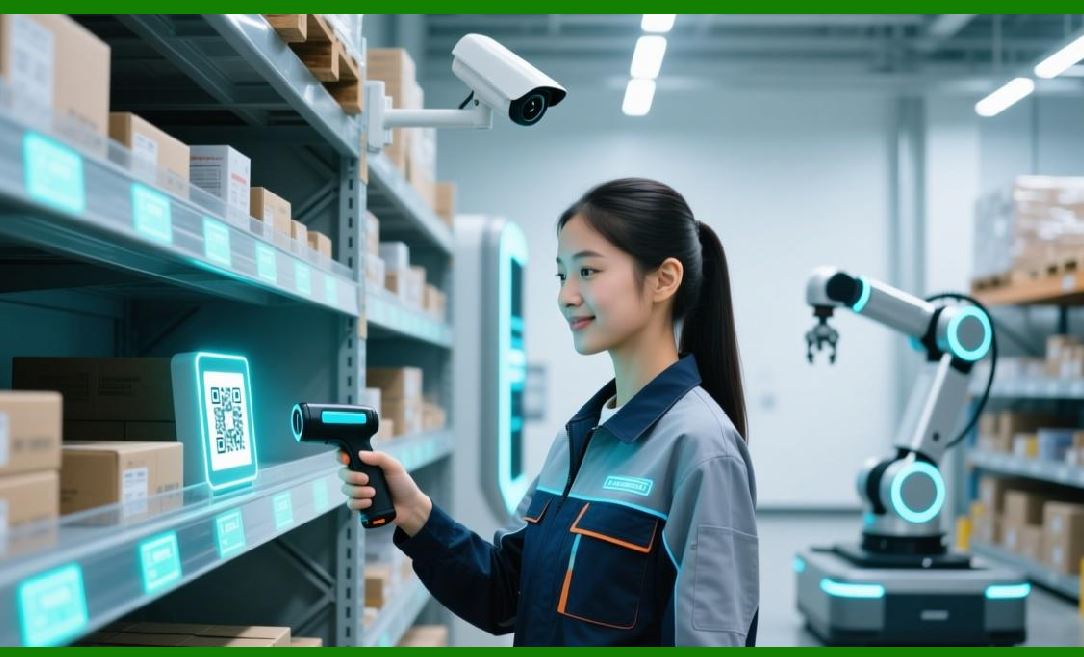
The logistics industry has been transformed by QR codes. They have replaced the paper waybills that once accompanied every shipment, reducing waste and eliminating manual data entry. They enable automated sorting at speeds that human workers could never match. They give consumers real-time visibility into their packages' locations. And they provide carriers with the data needed to optimize routes, predict delays, and ensure accuracy. |
This chapter explores the many ways QR codes power the American logistics industry. We will look at the consumer experience---how apps from USPS, UPS, and FedEx let you track packages and print labels with a simple scan. We will examine the automated systems behind the scenes, where QR codes are read at high speed to route packages with precision. And we will explore innovations like Amazon's AI-powered sorting technology and DHL's driver self-service portals that are reshaping the logistics landscape. |
|
The Consumer Experience: Tracking, Shipping, and Returns |
For consumers, QR codes have made shipping and tracking remarkably simple. Major carriers have integrated QR codes into their mobile apps, enabling a range of self-service functions. |
USPS Rapid Drop and Informed Delivery |
The United States Postal Service has embraced QR codes through several consumer-facing applications. The USPS Rapid Drop app allows customers to prepare shipping label information in advance and easily drop off multiple packages at once by creating Dropoff Groups. The in-app scanner consolidates multiple printed shipping labels into a single Dropoff Group for self-service package acceptance. At the Rapid Dropoff Station, customers scan the generated Dropoff Group code, select their receipt option, and drop their packages in the parcel drum or at the Retail counter. All packages in the Dropoff Group receive an acceptance scan, eliminating the need for individual package processing. |
The app also allows users to add QR codes to store Label Broker codes in one place for easy accessibility and label printing at the Rapid Dropoff Station, Self-Service Kiosk, or Smart Parcel Locker. This functionality streamlines the drop-off experience, reducing time spent at the Post Office. |
The USPS Informed Delivery service, now available as a standalone mobile app, provides customers with previews of incoming letter-size mail and package delivery management. The app offers enhanced package tracking capabilities, including scanning tracking numbers and barcodes, and sharing package status. This gives consumers unprecedented visibility into their mail and packages. |
The USPS Mobile app further extends these capabilities, allowing customers to check the status of shipments, calculate shipping prices, find Post Office locations, and schedule next-day pickups. The app's barcode scanning feature lets users scan shipping labels with their device's camera, automatically storing the label number for easy tracking. |
|
UPS Mobile App and QR Code Printing |
UPS has similarly integrated QR codes into its consumer experience. After completing a shipment in the UPS app, the shipping confirmation includes a barcode that customers can take to any The UPS Store location to easily print their shipping label. This eliminates the need for customers to own a printer or to manually enter shipping information at the store. |
The app also provides a personalized QR code accessible through the Store tab, which gives customers easy access to their UPS address book, saved shipping information, and past receipts and tracking updates after they leave the store. This personalized code streamlines the shipping process for frequent shippers. |
The UPS app offers comprehensive tracking features, including the ability to track packages and freight shipments, enter or scan tracking or InfoNotice numbers to view package status, nickname shipments for future reference, and save up to 50 tracking numbers in a tracking list. For shipping, customers can create shipments quickly using their ups.com shipping and payment preferences, use their UPS Address Book for quick entry, and access Mobile Barcode functionality for onsite printing of labels at UPS Access Points. |

|
FedEx Mobile App and Delivery Manager |
FedEx offers a similarly robust mobile experience. The FedEx Mobile app allows customers to track the status of all incoming or outgoing packages, create a mobile shipment label and request a pickup, enable push notifications for shipment updates, scan a barcode for easy tracking, and find a FedEx location nearby. |
For customers who enroll in FedEx Delivery Manager, additional features are available: holding a package at a preferred FedEx location, leaving delivery instructions for the courier, signing for packages requiring a signature, and requesting a holiday hold. The app also allows customers to reroute packages to a FedEx location for pickup at their convenience and to scan door tags to get information and options regarding missed shipments. Photo proof of residential delivery is available once a package arrives. |
The FedEx app also supports shipping: users can create a domestic or international mobile shipment label and then print it from their phone or get a QR code and let FedEx print it for them. The app can also use the phone's camera to measure packages for the most accurate rates. |

|
Printerless Returns: The USPS Label Broker |
A significant innovation in consumer logistics is the printerless return. DHL eCommerce Americas, in partnership with the USPS, offers a printerless return experience via the USPS Label Broker. When a return label is created in QR format, the response provides an image containing the USPS Label ID and QR code. The retailer or logistics provider then emails the customer with the QR code and instructions. |
The customer brings the QR code image and the ready-to-ship package to a participating Post Office location. The USPS retail associate scans the QR code, prints the shipping label, and provides the customer with a receipt. If the customer has a printer at home, they can instead print the label directly from the USPS Label Broker website. This system eliminates the need for customers to own a printer while still providing access to the full USPS shipping network. |

|
FedEx Digital Solutions: QR Code Shipping in China |
While the primary focus is on the US market, it is worth noting that FedEx offers digital solutions in other regions that use QR codes for shipping. In China, FedEx provides pre-printed QR code waybills for e-commerce customers. Customers scan the QR code using WeChat, fill in the shipment information, and attach the QR code waybill to the package. A FedEx courier then picks up the package. This demonstrates the global applicability of QR code-based shipping solutions. |
Behind the Scenes: Automated Sorting and AI Integration |
While consumer-facing applications are visible, the real power of QR codes in logistics lies behind the scenes. Automated sorting systems read QR codes at high speed, routing packages with remarkable precision. |

|
Amazon: VASS and VAPR AI Sorting Technology |
Amazon has been at the forefront of integrating QR codes with AI-powered sorting technology. The company's Vision Assisted Sort Station (VASS) is a groundbreaking system that uses computer vision and projection technology to help employees at delivery stations more efficiently identify and sort packages. |
When packages arrive at Amazon delivery stations from local fulfillment and sortation centers, employees sort and stow them into bags which then get loaded into vans by delivery route. During this process, VASS creates a static buffer area, holding multiple packages, where it spotlights packages with visual cues to help employees quickly identify the right ones without the need to look at a screen or device. Destination bags are brought to the employees, so they no longer have to walk. |
The technology's cameras scan packages on a conveyor belt. When packages arrive at a stow station, VASS shines a green 'O' on the package that needs to be picked and a red shape on those that should not be picked, indicating the corresponding destination bag. This dramatically simplifies decision-making for employees and speeds up the sorting process. |
Chris Harris, Amazon's director of logistics engineering, explained: 'VASS is a powerful example of how we're innovating at Amazon to make work easier for our teams. VASS helps simplify decision-making for our employees and speeds up the process of getting packages where they need to go'. |

|
Early testing of VASS at Amazon's Innovation Center DNZ3 showed promising results: |
Reduced mental load: Employees no longer need to memorize destinations or constantly reference their handheld devices or screens. |
Increased accuracy: A substantial decrease in missorts in pilot stations. |
Greater efficiency: Improved sort time per package, with employees able to manage a buffer of up to 10 packages simultaneously, versus just two with conventional methods. |

|
Enhanced flexibility: The system decouples sorting performance from machine sequencing, allowing employees to work at their own pace. |
VASS builds on Amazon's Vision-Assisted Package Retrieval (VAPR) system for delivery vans. VAPR automatically projects a green 'O' on all packages that need to be delivered once the van arrives at a delivery location, and red shapes on all other packages. Through audio and visual cues, the system prompts the driver to confirm it has found the right packages before the driver even needs to enter the cargo area. Based on early VAPR tests, Amazon teams saw a 67% reduction in perceived physical and mental effort for drivers and more than 30 minutes saved per route. |

|
DHL: Driver Self Service Portal |
DHL Supply Chain has launched a driver self-service portal that uses QR codes to dramatically reduce check-in and check-out times for truck drivers at facilities. The digital offering automates the load check-in/check-out process, which was previously paper-based, labor-intensive, and required drivers to exit their truck and interact with security or warehouse personnel. |
At select sites, both DHL and non-DHL drivers scan a QR code when passing the entry gate of a facility. This allows them to complete necessary paperwork using their mobile phones or tablets. Drivers are then assigned a dock door via text message and provided periodic updates on the status of the unloading/loading process---all without ever having to leave their cab. For those drivers who require physical paperwork, the same process can be followed using an onsite kiosk. |
The results are significant: for locations currently utilizing DHL Driver Self Service, load check-in and check-out times have decreased by 50%. The application also includes additional safety, security, and sustainability benefits: it more accurately captures driver's license and equipment information and tracks power unit details for carbon emission reporting. |
Jim Monkmeyer, President of Transportation at DHL Supply Chain North America, emphasized the importance of this innovation: 'Our drivers are essential to the efficiency of our customers' supply chains. We are committed to continually improving driver experience and quality of life. As our industry continues to face a labor crunch, it's more than ever important to deliver the technology advancements, like Driver Self Service, that attract and retain qualified talent and ensure we can place more drivers behind the wheel and keep supply chains running smoothly'. |

|
Amazon FBA: QR Codes for Inbound Inventory |
QR codes are not only used for outbound shipping but also for inbound inventory management. Amazon's Fulfillment by Amazon (FBA) program uses QR codes to provide (carton content information) for inbound shipments. |
Sellers can generate QR codes for each carton in their shipment. The QR code encodes the Amazon shipment ID, product identifiers (ASIN, UPC, EAN, ISBN, or FNSKU), quantity, and expiration date (if applicable). When the carton arrives at an Amazon fulfillment center, associates scan the QR code to determine the contents without having to open the carton or manually enter data. |
The QR code requirements are specific: Amazon accepts PDF417, Data Matrix, or QR codes with specific module width and error correction requirements. The codes must be printed with black ink on a white background at a resolution of at least 600 dpi, and thermal or laser printers are recommended over inkjet printers. The data in the QR code must follow a specific format: starting with 'AMZN,' followed by the PO (Amazon shipment ID), product identifiers and quantities, and expiration dates if applicable. |
Amazon notes that using QR codes may result in longer processing times compared to shipments where carton content information is provided through Seller Central or API, but the system enables suppliers to provide carton content information without having to obtain detailed information about the Amazon FBA shipment. This makes it easier to scale to larger shipments, especially for vendors who are drop-shipping directly to Amazon. |

|
Technical Challenges and Solutions |
While QR codes have revolutionized logistics, their implementation is not without challenges. The logistics environment is harsh: labels may be smudged, torn, or obscured; lighting conditions vary; and scanning must be fast. |
Reading Speed and Accuracy |
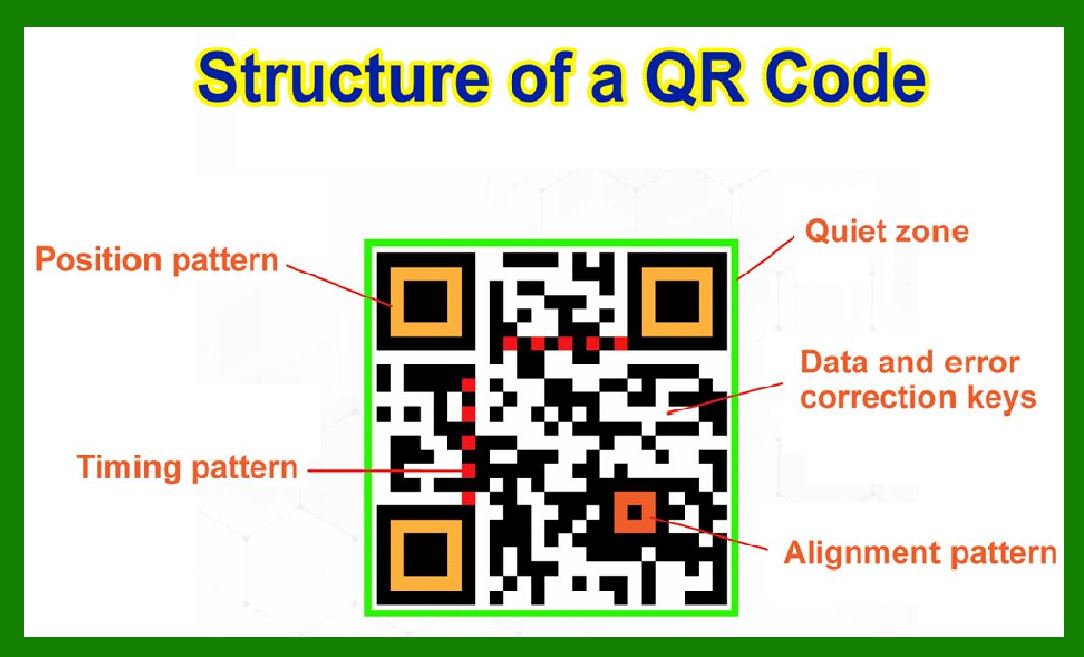
In high-speed sorting hubs, systems must read thousands of QR codes per minute. This requires high-resolution cameras, powerful image processing algorithms, and robust error correction. QR codes' built-in error correction---up to 30% recovery with H-level---is essential for handling damaged labels. The Reed-Solomon error correction enables decoders to recover data even when modules are partially obscured or missing. |
Amazon's VASS system uses computer vision and machine learning to locate and decipher multiple barcodes in real time. The technology was built by training machine learning models to recognize different labels and packages in various lighting conditions and package characteristics. This represents a significant advancement over traditional barcode readers, which rely on more rigid scanning parameters. |

|
Label Placement and Orientation |
QR codes are rotation-invariant---they can be read from any orientation---which is a significant advantage over one-dimensional barcodes. This makes them ideal for logistics applications where packages may be oriented at any angle on a conveyor belt. The finder patterns, present in all QR codes, enable decoders to locate and orient the code regardless of its rotation. |
However, label placement is still important. Codes should be placed on a flat, accessible surface, away from seams, folds, and other obstructions. For automated systems, consistent label placement helps maintain high read rates. |
Error Correction and Damage Recovery |
The logistics environment is hard on labels. They may be scratched, torn, smudged, or partially obscured by tape or other labels. QR codes' error correction capability is particularly valuable in this context. With H-level error correction, up to 30% of the code can be damaged and the data can still be recovered. This provides a significant margin of safety, reducing the likelihood of a package being misread or rejected. |

|
Future Directions |
The integration of QR codes with logistics is likely to continue evolving. Several trends are worth watching. |
AI and Machine Learning. Amazon's VASS and VAPR systems demonstrate the potential of AI to enhance QR code scanning and package sorting. As machine learning models improve, we can expect even faster, more accurate scanning in challenging conditions. |
Augmented Reality. AR glasses, similar to those used in aerospace maintenance, could be used in logistics to provide pickers and sorters with visual cues and instructions overlaid on packages. |
Blockchain for Supply Chain Transparency. Blockchain technology could provide immutable records of package movements, with QR codes serving as the physical interface to the digital ledger. |
Internet of Things (IoT). Smart labels that combine QR codes with sensors could provide real-time data on temperature, humidity, and shock, enabling better monitoring of sensitive shipments. |
Drones and Autonomous Vehicles. QR codes could serve as landing markers for delivery drones, providing precise location and identification information. |

|
Detailed Closing Summary |
Let us now consolidate everything we have covered in this chapter, reflecting on the significance of QR codes in the American logistics industry. |
QR codes have become the backbone of modern logistics, replacing paper waybills and enabling automated sorting at unprecedented speeds. In high-speed sorting hubs, automated systems read thousands of QR codes per minute, routing packages with 99.99% accuracy. |
Major carriers have integrated QR codes into their consumer-facing applications. The USPS Rapid Drop app allows customers to consolidate multiple packages into a single Dropoff Group, streamlining the drop-off process. The USPS Informed Delivery app provides previews of incoming mail and package tracking. The UPS app offers a personalized QR code for easy access to shipping information and printing. The FedEx app enables shipment creation, tracking, and QR code-based label printing. |
Printerless returns, enabled by the USPS Label Broker, allow customers to return packages without a printer, simply by presenting a QR code at a Post Office. This innovation reduces barriers for consumers and streamlines the returns process. |
Behind the scenes, QR codes power automated sorting systems. Amazon's VASS technology uses computer vision and projection to help employees sort packages more efficiently, with early tests showing the ability to manage a buffer of up to 10 packages simultaneously, versus just two with conventional methods. Amazon's VAPR system for delivery vans projects visual cues onto packages, reducing driver effort and saving more than 30 minutes per route. DHL's Driver Self Service portal uses QR codes to automate load check-in and check-out, reducing times by 50%. |

|
Amazon FBA uses QR codes for inbound inventory management, enabling suppliers to provide carton content information without having to enter data through Seller Central. This simplifies the shipping process for vendors and helps Amazon process incoming inventory more quickly. |
The technical challenges of logistics scanning---damaged labels, varying lighting, and high-speed requirements---are addressed by QR codes' robust error correction and rotation-invariance. H-level error correction provides up to 30% recovery, reducing the risk of misreads. |
The future of QR codes in logistics lies in deeper integration with AI, augmented reality, blockchain, and IoT technologies. As these technologies mature, the logistics system will become even faster, more accurate, and more transparent. |
For the consumer, the QR code on a shipping label or return slip is a gateway to convenience---a small square that enables tracking, returns, and delivery management. For the logistics provider, it is a tool for automation, accuracy, and efficiency. For the industry as a whole, it is the invisible thread that connects every package to its journey, from the moment it is shipped to the moment it arrives at the doorstep. |
 cs@easiersoft.com