A Technical Deep-Dive into QR Codes and Their Multispectral Industrial Applications |
Chapter 24: Industry 11 - Insurance: Claims Processing |
Short Summary |
This chapter explores the transformative role of QR codes in the insurance industry, with a primary focus on automating and streamlining claims processing. QR codes on windshields, insurance cards, and policy documents link directly to digital claim portals, enabling policyholders and adjusters to auto-populate claim forms with policy numbers, accident locations, and other critical data. We examine how this technology reduces manual data entry errors, accelerates claim resolution, and improves the customer experience. The chapter presents real-world American applications: The General's integration of digital claims payments that saved over $1 million annually, UC San Diego Health's pilot of SMART health insurance QR codes for streamlined patient check-in, patented systems for QR-enabled windshield claims and rental car proof-of-insurance verification, and emerging applications of blockchain-based insurance credentials that enhance security and reduce fraud. We also explore how QR codes enable insurers to proactively reach customers following an incident and facilitate policy renewals. |
|
Introduction: The Friction of Paper Claims |
Filing an insurance claim is rarely a pleasant experience. It often involves lengthy phone calls, pages of paperwork, and the frustration of manually entering information that the insurance company already possesses. For the insurer, the process is equally inefficient: manual data entry is prone to errors, paper-based workflows are slow, and the cost of processing a claim can be substantial. |
The problem is particularly acute for auto glass claims. When a windshield is damaged, policyholders typically need to contact their insurer, provide policy details, describe the damage, and often wait for an adjuster to inspect the vehicle before a repair or replacement can be authorized. As one patent filing notes, this 'can require considerable time and effort, and slow the process of eventually getting your glass fixed through repair or replacement' . |
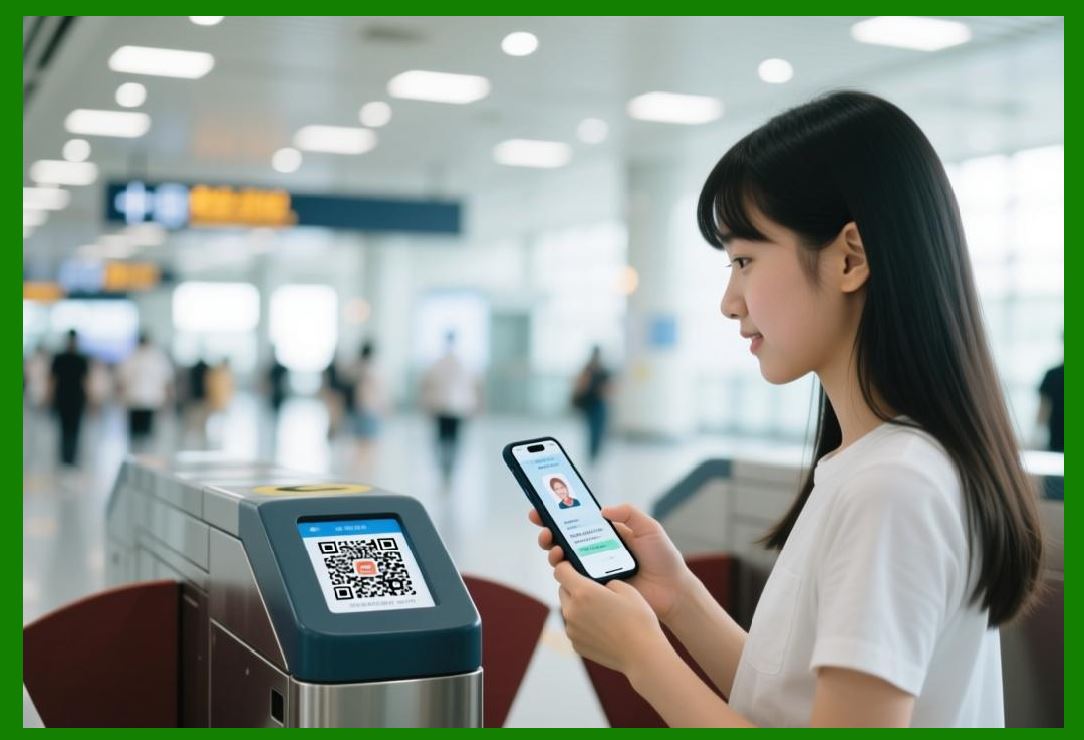
QR codes are emerging as a solution to this friction. By placing a QR code on a windshield, an insurance card, or a policy document, insurers can create a direct digital link between the policyholder and the claims system. A simple scan auto-populates claim forms with policy numbers, accident locations, and other data, reducing errors and accelerating the process. For auto glass claims, the technology can be further enhanced with image processing to assess damage and flag potential fraud . |
The benefits extend beyond claims initiation to the entire claims lifecycle: from first notice of loss to digital payment disbursement. This chapter explores how American insurers are leveraging QR codes and related digital technologies to transform the claims experience. |
|
The Technology: QR Codes in Claims Processing |
The application of QR codes in insurance claims processing follows a consistent pattern across different use cases. At its core, the QR code serves as a digital key that unlocks a secure, pre-populated claims portal. |
Claims Initiation |
The workflow for QR-enabled claims initiation typically proceeds as follows: |
1. QR Code Placement: A unique QR code is printed on the policyholder's insurance card, policy document, or physical asset (such as a windshield) . |
2. Scan and Redirect: The policyholder scans the code using their smartphone camera, which redirects them to a secure online claims form . |
3. Pre-Filled Information: The form is pre-populated with key policyholder details, including policy number, name, and contact information, reducing manual input . |
4. Guided Submission: The client is guided through the process with prompts for required documents and information, including photos and descriptions of the damage . |
5. Instant Confirmation: Once submitted, the client receives confirmation and a reference number for tracking . |
For auto glass claims, the process can be further automated. Patent filings describe systems where the policyholder is prompted to take multiple images of the damaged glass. The system then performs image processing operations to 'determine one or more of glass damage, glass type, and/or claim fraud' . Based on this analysis, the claim may be automatically approved for repair or replacement, or flagged for further review. |
|
Decentralized Identity and Credential Verification |
An emerging innovation is the use of QR codes in conjunction with decentralized identity (DID) and cryptographic credentials. In this model, the QR code encodes a uniform resource identifier (URI) that initiates a secure claim request . |
When scanned, the mobile device transmits a claim request that includes the user's cryptographic key and security data. The insurer's system verifies the claim based on the cryptographic key and security data, then returns an attestation response---a cryptographically-signed credential---that the user can store in a digital wallet . |
This approach has several advantages: |
Security: The cryptographic signature provides tamper-proof verification of the credential. |
Privacy: The credential is stored on the user's device, not a central database. |
Portability: The credential can be presented to multiple service providers (e.g., rental car companies, repair shops) without requiring them to contact the insurer directly. |
Efficiency: The authentication process is automated, reducing manual verification steps. |
This model has been demonstrated for proof-of-insurance verification at rental car companies and for auto glass claims . |

|
Proactive Claims Processing |
Another application of QR codes in insurance is proactive claims processing. When a policyholder scans a QR code---for example, on their insurance card or vehicle---the insurance system receives a scan message that includes the time, date, and location of the scan . |
The system can then analyze this scan message in several ways: |
1. Comparison with Other Scans: If multiple policyholders scanned their codes on the same day, at similar times, and in similar locations, the system may determine they were involved in the same incident . |
2. Comparison with Telematics Data: If the policyholder's vehicle experienced a sudden stop, hard braking, or hard turning event around the same time and location as the scan, the system may determine an incident occurred . |
3. Automated Response: In response, the insurer may notify an insurance agent, transmit a set of follow-up questions to the policyholder's mobile app, or automatically create a placeholder insurance claim with basic customer information . |
This proactive approach transforms the claims process from a reactive ('the customer calls us') to a proactive ('we reach out to the customer') model. Policyholders can receive immediate assistance following an incident, and claims can be initiated before the customer even contacts the insurer. |

|
US Application Examples: QR Codes in Insurance Practice |
Example 1: The General - Digital Claims Payments |
The General, a Nashville-based personal auto insurer, provides a compelling example of how digital transformation---including QR code-enabled claims---can improve customer experience while reducing costs. |
The company recognized that its check printing and delivery process for claims payments had three challenges: it did not meet customer expectations, it created inefficiencies, and it generated waste . As Molly Cook, Director of Claims, explained, 'By leveraging Guidewire ClaimCenter and moving the claim payment process to InsurPay, claim payment costs and cycle times have been reduced, saving time and money for the business and improving the customer experience' . |
The integrated solution, implemented in 2018, provided The General with the ability to offer digital claim payments via funds transfer, direct deposit, prepaid card, and traditional checks . The results were significant: |
Reduced cycle time: Issue-to-receipt cycle time reduced by nearly five business days for each payment. |
Annual savings: More than $1 million saved annually in processing time and speed. |
Efficiency: 60% of claim payments were projected to go through methods other than check issuance . |
While the primary focus of this case study is on claims payments rather than claims initiation, it illustrates the broader trend toward digitalization in the insurance claims process. The same digital platform that enables fast payments can also support QR-enabled claims initiation and tracking. |

|
Example 2: UC San Diego Health - SMART Health Insurance QR Codes |
While not a property/casualty insurance example, UC San Diego Health's pilot of SMART Health Insurance Cards demonstrates the power of QR codes for streamlining insurance-related administrative processes. The health system was the first in the nation to pilot this approach, which uses QR codes on digital health insurance cards to automate patient check-in . |
The challenge is clear: 'There are more than 1,000 health insurance companies in the United States, each with their own insurance card format. It takes weeks to train new staff members to decipher all those different card formats, and there are often typos, which can lead to rejected insurance claims' . |
The SMART Health Insurance Card standard, based on the SMART Health Card QR code standard adopted for COVID-19 vaccination records, solves this problem. When a patient scans the QR code at a check-in kiosk, their medical insurance information is 'retrieved and verified in real time, including copay amounts' . |
UC San Diego Health, UC Irvine Health, UCLA Health, UCSF Health, UCR Health, and UC Davis Health have all conducted or planned pilots of the model . The Healthcare Financial Management Association (HFMA) has formed a working group of large health systems to collaborate on piloting the model . |
This application is directly relevant to health insurance claims processing, as accurate patient identification and insurance verification are essential for claims to be processed correctly. By reducing errors at check-in, the SMART Health Insurance Card approach reduces rejected claims and administrative burden. |

|
Example 3: Neural Claim System - Automated Windshield Claims |
A patent application from Neural Claim System, based in Chandler, Arizona, describes a comprehensive system for submitting and processing insurance claims for damaged motor vehicle glass using QR codes and image processing . |
The system works as follows: The policyholder is prompted for initial claim submission information and then asked to provide multiple images of the damaged motor vehicle glass. The system performs image processing operations to determine the extent of damage, the type of glass, and potential signs of claim fraud . |
Based on this automated analysis, the system can either: |
- Submit an insurance claim for glass repair or replacement , or |
- Flag the claim for fraud review . |
The patent notes that 'glass vendors may be granted access to the systems and methods of the present disclosure and prompted to complete replacements as well' , creating a seamless end-to-end process from claim initiation to repair completion. |
This application demonstrates the power of combining QR codes with AI-powered image analysis. The QR code provides the digital link to the policyholder's information; the image processing provides the objective damage assessment; and the automated workflow accelerates the entire process. |

|
Example 4: Interactive Patent - Rental Car Proof of Insurance |
A 2024 patent application from Interactive Patents LLC describes a system where QR codes are used to provide cryptographically-signed proof of insurance credentials for rental car companies and other service providers . |
The system works as follows: |
1. The user scans a QR code using their mobile device . |
2. The QR code directs the user to a Uniform Resource Identifier (URI) and extracts identifying information . |
3. A claim request is transmitted to the URI, including the user's cryptographic key and security data . |
4. The insurer's system verifies the claim based on the cryptographic key and security data . |
5. An attestation response, including a cryptographically-signed credential, is returned to the user . |
6. The user stores the signed credential in their digital wallet . |
The patent describes the credential as proof of insurance, which can include policy number, named insured, policy effective and expiration dates, vehicle identification number (VIN), vehicle make, and year . The user can then present this credential to service providers---such as rental car companies, repair shops, or law enforcement---by scanning another QR code or through other digital means. |

|
Example 5: MSIG USA - QR Code for Auto Claims |
MSIG USA, the American subsidiary of Mitsui Sumitomo Insurance Group, provides a simple but practical example of QR code adoption in claims processing. The company's claims reporting page offers multiple options for reporting a claim, including a QR code specifically for auto claims . |
The QR code provides a direct digital channel for policyholders to initiate an auto claim, enabling them to skip the phone call or paper form and proceed directly to an online claims portal. This simple addition represents a low-cost, high-impact digital transformation. |

|
Example 6: Murphy Insurance Agency - QR Code for App Download |
Murphy Insurance Agency, a Massachusetts-based independent insurance agency, uses QR codes to facilitate app downloads and policyholder engagement . The agency's 'Murphy Insurance 24' app allows clients to access insurance information, contact the agency, report a claim, make payments, and more . |
The QR code is featured prominently on the agency's app page, enabling clients to 'scan the QR code now to download Murphy Insurance 24' . This approach makes it easy for clients to access digital services, including claims reporting, without navigating app stores or searching for the app manually. |
The Broader Landscape: QR Codes in Insurance Claims |
Beyond these specific examples, QR codes are being adopted across the insurance industry for a range of claims-related applications. |
Simplifying Claims Submission. QR codes placed on insurance cards or policy documents link directly to online claim forms. Policyholders can 'scan a QR code to access online claim forms instantly' and 'upload photos and documents directly through a linked portal' . This eliminates the need for customers to search for forms or call customer service. |
Automated Data Entry. By pre-populating forms with policy information, QR codes reduce manual input. As one industry source notes, 'automated data entry means less manual processing on your end' . This reduces errors and speeds up claim approvals. |
Renewal Simplification. QR codes can also be used for policy renewals. Including a QR code in renewal notices that, when scanned, 'pre-populates the renewal form with the client's existing information' encourages timely client action and reduces administrative burden . |
Inventory Management and Claims Documentation. Patent filings describe systems where purchase receipts with QR codes are used to automatically create an inventory of belongings. In the event of a claim, 'the client can identify all things in question and instantly generate a claims report for the insurance carrier' . This is particularly valuable for homeowners' and renters' insurance claims, where documenting lost or damaged possessions is often a major challenge. |

|
Security and Fraud Prevention |
QR codes also play a role in fraud prevention in insurance claims. The Neural Claim System patent specifically mentions using image processing to 'determine one or more of glass damage, glass type, and/or claim fraud' . By analyzing images of damaged property, the system can identify signs of fraud---such as staged damage or pre-existing damage being claimed as new. |
Additionally, the use of cryptographic credentials with QR codes provides a secure verification mechanism. The Interactive Patents system uses the user's cryptographic key and security data to verify claims, making it more difficult for unauthorized parties to submit fraudulent claims or impersonate policyholders . |
Challenges and Considerations |
Despite the benefits of QR codes in insurance claims processing, several challenges remain: |
Adoption. Policyholders need to be aware of the QR code option and comfortable using it. Older policyholders or those less tech-savvy may prefer traditional methods. |
Security. QR codes can be spoofed or replaced by malicious actors. Insurers must ensure that QR codes point to secure, authenticated portals and that the data transmitted is encrypted. |
Integration. QR code systems must integrate with existing claims management systems (like Guidewire ClaimCenter) and policy administration systems. |
Image Quality. Automated damage assessment systems depend on high-quality images. Policyholders may not take photos from the optimal angles or with sufficient clarity, requiring manual review. |
Regulatory Compliance. Insurance claims are regulated at the state level, and insurers must ensure that QR-based claims processes comply with applicable regulations, including data privacy and record-keeping requirements. |

|
The Future of QR Codes in Insurance |
The future of QR codes in insurance claims processing is likely to involve deeper integration with emerging technologies: |
AI-Powered Damage Assessment. As image processing and machine learning models improve, QR-based claims systems will become more accurate in assessing damage, reducing the need for adjuster visits. |
Blockchain Integration. Blockchain technology could provide an immutable record of claims, reducing fraud and increasing trust. The combination of QR codes, cryptographic credentials, and blockchain could create a truly decentralized and secure claims ecosystem. |
Integration with Telematics. QR codes could be integrated with vehicle telematics to provide real-time data on accidents, including location, speed, and impact severity. This would enable even more automated claims processing. |
Embedded Insurance. QR codes could be embedded directly in products at the point of purchase, enabling instant insurance activation and simplified claims processing. |

|
Detailed Closing Summary |
Let us now consolidate everything we have covered in this chapter, reflecting on the significance of QR codes in insurance claims processing. |
QR codes are transforming insurance claims by providing a direct digital link between policyholders and claims systems. A QR code on a windshield, insurance card, or policy document enables a policyholder to initiate a claim with a single scan, with the claim form auto-populated with policy details . This reduces manual data entry errors, accelerates claim initiation, and improves the customer experience. |
For auto glass claims, the technology extends beyond simple claims initiation. Patent filings describe systems where policyholders take images of the damage, and AI-powered image processing determines the extent of damage, the type of glass, and potential fraud indicators . This enables automated claim approval and assignment to qualified glass vendors. |
The integration of cryptographic credentials with QR codes provides enhanced security and fraud prevention. Systems described in recent patents enable policyholders to store cryptographically-signed insurance credentials in a digital wallet and present them to service providers via QR code scan . |
American insurers are actively adopting these technologies. The General implemented digital claims payments through its integration with Guidewire ClaimCenter and InsurPay, reducing cycle times by nearly five business days and saving over $1 million annually . UC San Diego Health demonstrated the SMART Health Insurance Card, which uses QR codes to automate patient check-in and reduce billing errors . Neural Claim Systems and Interactive Patents have filed patents describing QR-enabled auto glass claims and proof-of-insurance verification systems . |

|
The adoption of QR codes in insurance claims processing provides multiple benefits: |
For policyholders: Convenience, speed, clarity, transparency, and accessibility . |
For insurers: Reduced manual processing, fewer errors, faster claim resolution, and improved customer satisfaction . |
For the industry: Enhanced fraud prevention through image analysis and cryptographic verification . |
Challenges remain, including adoption, security, integration with legacy systems, image quality, and regulatory compliance. However, as the technology matures and becomes more widely adopted, these challenges can be addressed through standardization, education, and continuous improvement. |
The future of QR codes in insurance claims is likely to involve deeper integration with AI for damage assessment, blockchain for fraud prevention, telematics for real-time incident data, and embedded insurance at the point of purchase. |
For the policyholder, the QR code on their insurance card or windshield represents a direct line to claims resolution---a small square that turns a potentially stressful experience into a simple, digital process. For the insurer, it is a tool for operational efficiency, customer satisfaction, and fraud prevention. In an industry where customer experience is the new battleground, QR codes are becoming an essential weapon. |
 cs@easiersoft.com