A Technical Deep-Dive into QR Codes and Their Multispectral Industrial Applications |
Chapter 26: Industry 13 - Museums & Galleries: Audio Guides |
Short Summary |
This chapter explores the transformative role of QR codes in museums and galleries across the United States, where they have become the standard for delivering audio guides and multimedia content without requiring dedicated hardware. QR codes placed next to exhibits stream curator narratives, artist interviews, behind-the-scenes stories, and educational content---often in multiple languages---directly to visitors' smartphones. We examine how this technology has democratized access to museum content, enabling institutions to provide rich, layered interpretation without the cost and maintenance of traditional handheld audio guide devices. The chapter presents real-world American applications: the Denver Art Museum's extensive Bloomberg Connects audio guide program with tours for all ages, the National Museum of Nuclear Science & History's innovative 'For Kids, By Kids' audio tour created by elementary students, the National Archives Museum's AI-powered personalized exhibition journey, the Yale Peabody Museum's integration of indoor positioning with QR-triggered content, and accessibility innovations such as NaviLens at the Boise Watershed and a Girl Scout's Gold Award project at the East Tennessee History Center. We also explore how QR codes enable self-guided walking tours in historic districts and the broader trend toward app-based, browser-based, and accessible museum guides. |
|
Introduction: The Museum in Your Pocket |
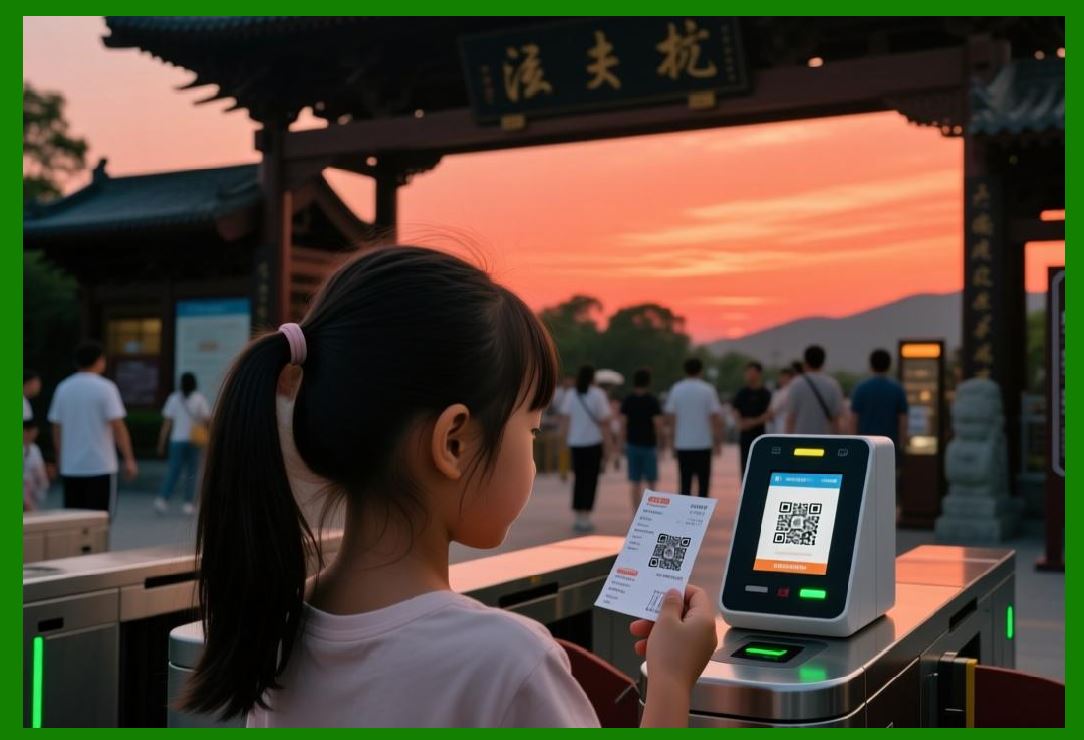
Visit any major museum in the United States today, and you will notice a familiar sight: small QR codes placed beside artworks, artifacts, and exhibit panels. A quick scan with a smartphone unlocks a world of content---curator narratives, artist interviews, historical context, and behind-the-scenes stories---without the need for bulky handheld devices or expensive audio guide rentals. |
This transformation represents a fundamental shift in how museums engage with visitors. Traditional audio guides required visitors to check out dedicated devices at the front desk, navigate clunky keypads, and return the devices before leaving. The experience was often frustrating: devices were heavy, batteries died, and the audio quality was inconsistent. QR codes have eliminated these barriers entirely. Visitors use their own smartphones, listen through their own headphones, and access content at their own pace. |
The benefits extend beyond convenience. QR code-based audio guides are more accessible---they can include transcripts for visitors with hearing impairments, translations into dozens of languages, and descriptive audio for visitors with visual impairments. They are more cost-effective for museums, eliminating the expense of purchasing, maintaining, and replacing hundreds of audio guide devices. And they are more flexible---content can be updated instantly, new tours can be added without printing new materials, and visitor engagement can be tracked through analytics. |
As the Denver Art Museum explains on its Bloomberg Connects guide page, 'Our guide offers fresh ways to experience the permanent collections by connecting ideas, stories, and artworks across the museum. Check back often as new audio tours are added---there's a journey for everyone that will inspire wonder and curiosity' . |
This chapter explores the many ways American museums and cultural institutions are leveraging QR codes to enrich the visitor experience, from world-class art museums to local history centers, from audio tours narrated by curators to accessibility innovations that make museums welcoming for all. |
|
The Technology: QR Codes as Museum Gateways |
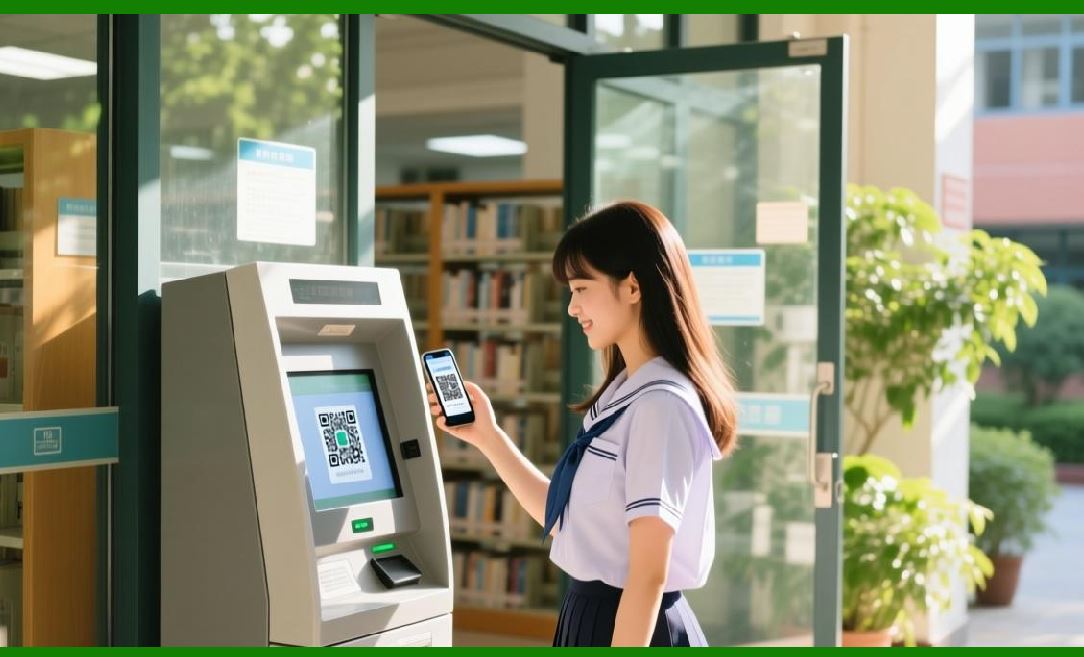
The technology behind QR code-based museum audio guides is elegantly simple. A QR code printed on an exhibit label or wall panel contains a URL that points to an audio file, a web page, or a dedicated mobile app. When a visitor scans the code with their smartphone's camera, the device automatically navigates to the content---no app download required, no password creation, no complex setup. |
App-Based vs. Browser-Based Solutions |
Museums typically adopt one of two approaches to QR code audio guides: app-based or browser-based. |
App-based solutions require visitors to download a dedicated mobile app, such as Bloomberg Connects, which is used by the Denver Art Museum, the Orlando Museum of Art, and over 100 other cultural institutions worldwide . The app provides a more integrated experience: content is cached for offline access, the interface can be optimized for the museum's branding, and visitor analytics can be collected. However, the requirement to download an app can be a barrier for some visitors. |
Browser-based solutions use standard QR codes that open a web page in the visitor's browser. This approach is more accessible---no app download is required, and the content works on any smartphone with a camera and internet connection. The National Museum of Nuclear Science & History's 'For Kids, By Kids' audio tour uses this approach, with QR codes that link directly to student-created recordings . |
Some museums, like the Orlando Museum of Art, offer both options. Visitors can scan QR codes in the galleries to access content through their browser, or they can download the Bloomberg Connects app for a richer experience . |
|
Multi-Language Support |
One of the most powerful features of QR code-based audio guides is the ability to provide content in multiple languages without printing separate labels or offering different devices. The Boise Watershed's NaviLens system can translate content into 38 different languages, including American Sign Language . The Orlando Museum of Art notes that its digital guide 'is available in English and all text content can be translated into 46 different languages' . |
This multilingual capability is particularly valuable in museums that attract international visitors. A single QR code can serve visitors from around the world, each accessing content in their preferred language. |

|
Indoor Positioning and Context-Aware Content |
A more advanced application of QR codes in museums combines scanning with indoor positioning technology. The Yale Peabody Museum in New Haven, Connecticut, has implemented a system that uses beacons and sensors throughout the museum to enable precise indoor positioning . When visitors scan a QR code or open the Amuse app, the system delivers content tailored to their specific location. |
The project partners, Amuse and Navigine, installed beacons and sensors throughout the museum to enable real-time location tracking. Content tailored to each exhibit---including short videos, interactive trivia, and fun facts---is linked to specific locations via QR codes. As visitors move through the museum, the system delivers contextually appropriate information . |
This integration of QR codes with indoor positioning enables features that standalone audio guides cannot provide: personalized tour recommendations, wayfinding assistance, and analytics on which exhibits visitors engage with most. |

|
US Application Examples: QR Audio Guides in Practice |
Example 1: Denver Art Museum - Bloomberg Connects Audio Tours |
The Denver Art Museum (DAM) offers one of the most comprehensive QR code-based audio guide programs in the United States. Through its partnership with Bloomberg Connects, the museum provides a free digital guide available on both web and mobile app platforms . |
The guide features a diverse range of audio tours designed for different audiences: |
General interest tours include 'Provenance Stories: Uncovering an Artwork's Journey,' which traces the fascinating history of ownership of artworks across the collection, and 'Seen/Unseen: African Diaspora Across Collections,' narrated by a member of the museum's Black Arts Collective . |
Accessibility tours include a verbal description guide for the Indigenous Arts of North America Collection, designed to help visitors with blindness or low vision engage with the collection . |
Family tours include 'The Awesome Powers of Hanuman,' which follows a young girl and her aunt as they explore the Arts of Asia galleries and recall stories of the Hindu monkey god, and 'Get Moovin' with Outdoor Sculpture!' which invites children to move, stretch, dance, and pose while discovering the stories of the museum's outdoor sculptures . |
Themed tours include 'Oh, the Horror: Exploring Fear,' which brings together objects that might give a fright, and 'Staff Picks: Sparks of Joy,' where DAM staff guide visitors to favorite artworks . |
The museum encourages visitors to bring headphones for the best listening experience. The guide can be accessed online or by scanning QR codes placed throughout the museum . |

|
Example 2: National Museum of Nuclear Science & History - 'For Kids, By Kids' Audio Tour |
The National Museum of Nuclear Science & History in Albuquerque, New Mexico, has launched a remarkable audio tour created and narrated by local elementary students . The 'For Kids, By Kids' project, which debuted in May 2026, offers a child's-eye view of some of the museum's most complex objects. |
Third-grade students from Lavaland Elementary School, guided by teacher Abby Flores and co-teacher Michelle Cordova, selected objects that captured their curiosity, independently researched each topic, and recorded 1-2 minute audio explanations in their own words . The project began when the students were in second grade and was completed the following year. |
The 15 student recordings are accessible via QR codes placed in the museum's Periodic Hall with a special 'For Kids, By Kids' icon identifying each featured object . Topics span from the science and history of the atomic bomb to the USS James K. Polk submarine sail and the work of Marie Curie. |
Gabriel Nemiroff, the museum's Chief Operations Officer and Director of Education, explained the inspiration: 'The story of the Atomic Age is full of big, impactful scientific concepts and events---some beneficial to humanity and others deeply destructive---and that complexity can feel overwhelming, especially for families with young children. The For Kids, By Kids Audio Tour was inspired by a desire to help families feel more comfortable engaging with these topics by hearing them explained through the voices of children' . |
The tour opens with a welcome from a student and closes with a reminder---delivered with kid-level humor---that 'like a uranium atom, we hope you don't split' . Teacher Abby Flores noted, 'What began as a cool project for my young students to practice their research and speaking skills quickly blossomed into something truly profound. Through this audio tour, these students didn't just share facts---they proved that their voices carry just as much power and importance as the incredible history that they study' . |
The project has been recognized for its educational and community impact. As Jennifer Hayden, President and CEO of the Museum, said, 'This project shows what's possible when students are trusted to lead learning experiences. The For Kids, By Kids Audio Tour deepens visitor engagement, supports family learning, and demonstrates how the museum can serve as a platform for curiosity, understanding, and community voices' . |

|
Example 3: National Archives Museum - AI-Powered Personalized Exhibition |
The National Archives Museum in Washington, D.C., has pushed the boundaries of QR code-based museum experiences with its new permanent exhibition, 'The American Story' . Scheduled to open after a $40 million renovation, the exhibition uses artificial intelligence to put visitors in the driver's seat as they explore the records held in the National Archives. |
At the start of the experience, visitors scan a QR code and select three subjects that interest them . As they meander through the 10,000-square-foot galleries, AI displays documents related to the topics they choose and adds them to a virtual folder. When visitors leave the museum, they can share their personalized collection with the world. |
The exhibition features digital display cases and media stations, some equipped with glass that displays touchable, moveable animations overlaying the documents housed inside. Immersive 'mediascapes' showcase music, oral histories, photos, and videos. Visitors can imagine themselves as historical figures, making decisions with the help of archival texts, and learn how the collection was used to inform popular movies and books . |
Franck Cordes, the capital campaign project director at the National Archives Foundation, explained the motivation: 'These records are the evidence of who we are as a nation. Everybody has an entry point to that' . The exhibition focuses on two million of the more than 13 billion records housed at the National Archives, using interactive design to make the documents more engaging and intriguing. |
The QR code serves as the entry point to this personalized journey, capturing visitors' interests and enabling the AI to deliver relevant content throughout their visit. This represents a significant evolution from traditional audio guides---the experience is not just listening to audio, but actively shaping the content based on personal interests. |

|
Example 4: Yale Peabody Museum - Indoor Positioning and Interactive Content |
The Yale Peabody Museum in New Haven, Connecticut, reopened in April 2024 after a four-year renovation with a new digital engagement system that combines QR codes, indoor positioning, and a mobile app . The project, a collaboration between Amuse and Navigine, aims to transform how visitors engage with the museum's collections. |
The system uses beacons and sensors installed throughout the museum to enable precise indoor positioning and real-time location tracking using Navigine's Indoor Navigation SDK. This SDK was integrated into the Amuse app, which provided the interactive digital map and content delivery . |
Content tailored to each exhibit---including short videos, interactive trivia, and fun facts---is developed by the museum and linked to specific locations via QR codes. As visitors move through the museum, the system delivers contextually appropriate information, enhancing their engagement and learning experience . |
The project has already produced impressive results: thousands of user testers have actively engaged with the enhanced features, the initiative has produced over 200 videos, and the content includes insights from over 40 distinct voices . The combination of QR codes and indoor positioning ensures visitors receive a seamless and enriched educational journey as they explore the museum. |

|
Example 5: Orlando Museum of Art - Multilingual Digital Guide |
The Orlando Museum of Art has joined the Bloomberg Connects network, offering a free digital guide that enriches the visitor experience with audio and visual content . The guide includes: |
Audio and Video Content featuring curators, artists, and experts sharing insights and behind-the-scenes stories. |
Text Guides exploring selected artworks with stories about the artists, historical context, and interesting details. |
Family Experiences with two interactive guides designed specifically for families, encouraging young visitors to look closely, talk together, and create meaningful connections with art . |
Visitors can access the guide in the gallery by scanning QR codes from informational placards. The guide is available in English, and all text content can be translated into 46 different languages . The museum encourages visitors to bring headphones or earbuds for the best listening experience. |
The Orlando Museum's guide is regularly updated to reflect new exhibitions and featured pieces, demonstrating the flexibility of the QR code approach . |

|
Example 6: Boise Watershed - NaviLens Accessibility Technology |
The Boise Watershed in West Boise, Idaho, has implemented NaviLens technology to improve accessibility for visitors with visual impairments . NaviLens uses special QR codes that can be scanned from a distance (up to 10 meters) and at a wide angle, making them easier to locate for visitors with low vision. |
The technology works through special codes placed throughout the exhibit hall. Using the NaviLens app, visitors can scan the codes to hear wayfinding directions and information about the exhibits. The app can translate material into 38 different languages, including American Sign Language . |
Dianna Willis, a member of the City of Boise Disability Task Force who is totally blind, described the experience: 'It brings it to life, it brings the Boise watershed or a space to life to me. It gives it dimension, and I can kind of picture it in my mind's eye what's around me' . |
Cindy Busche, who leads the Water Shed education program, noted that 'We are one of the first centers and museums in the United States to utilize this technology' . The system enables visitors with visual impairments to navigate and understand the content, providing 'an equal opportunity in experience within this exhibit space' . |
Carol Baron, who has low vision, emphasized the broader significance: 'Boise's city motto is a city for everyone and if people can't access different facilities and events, then it's not for everyone. So having the NaviLens technology installed here at the watershed makes it accessible for everybody' . |

|
Example 7: East Tennessee History Center - Girl Scout Gold Award Accessibility Project |
A Girl Scout's Gold Award project has made the East Tennessee History Center in Knoxville more accessible for people with visual impairments . Mia Warren created the MIA project---'Museums Increasing Accessibility'---which consists of QR codes placed around the museum that link to an audio tour. |
The audio not only describes exhibits but also gives users directions to guide them physically around the museum. Warren was inspired by a family friend, Campbell Rutherford, who is blind. 'I've seen so many amazing things she's done on Facebook like learn to play the piano, and just stuff I never thought possible for someone who can't see, and I always wondered how she was able to experience certain exhibits like the museum,' Warren said. 'She never really was able to the same way we can visually and so I wanted to do something to help that' . |
Rutherford, who worked with Warren on the codes, said, 'The information that's provided through the QR codes, I think it's great. I'm hopeful that my fellow blind people will find it useful' . |
Adam Alfrey with the museum explained the broader mission: 'All these objects that East Tennesseans have created through time, we hold those to share them with future East Tennesseans, and there's no restriction on that, that's for all East Tennesseans. So, anytime we can take a step toward accessibility and making these stories available to everyone, that's really at the heart of what we do' . |
Warren hopes to leave a lasting impact: 'Giving someone the option to go to a place alone if they can't see and to not have to be held back from a group because someone is going through and reading off to them all the descriptions. It's not fair and so I wanted to make it more accessible for everyone' . The project earned Warren the Gold Award, the highest achievement within the Girl Scouts of the USA. |

|
Example 8: Historic Downtown Gulfport - QR Code Walking Tour |
Beyond museums, QR codes are being used to create self-guided walking tours of historic districts. A University of Southern Mississippi student, Aidan Graves, launched a virtual walking tour of historic structures in downtown Gulfport, Mississippi, in partnership with the Gulfport Museum of History . |
The tour includes 20 structures and sights, with information drawn from the museum's archives. The website is accessible via QR code, enabling tourists and locals to explore over 120 years of Gulfport history 'pretty much at your fingertips,' according to Graves . |
The museum had been trying to make archival information more accessible, and Graves' website provides a solution that can be used as an at-home educational tool or as an interactive walk through the city. The tour is particularly timely with the return of Amtrak Rail Service to the area, which will drop travelers near the museum . |
Accessibility and Inclusion: QR Codes as Equalizers |
A recurring theme across American museum QR code applications is accessibility. QR codes have become a powerful tool for making museum content accessible to visitors with disabilities. |

|
Audio Description for Visitors with Visual Impairments |
Several museums have used QR codes to provide audio description for visitors with visual impairments. The Denver Art Museum offers a verbal description guide for its Indigenous Arts of North America Collection . The Boise Watershed's NaviLens system provides wayfinding directions and exhibit information, enabling visitors who are blind or have low vision to navigate independently . The East Tennessee History Center's MIA project includes both exhibit descriptions and physical directions . |
The GitHub 'Accessible Buildings' project, which provides a framework for museum accessibility, specifically recommends QR codes that link to accessible HTML (not PDFs or app prompts) with attention to placement, sizing, and WCAG requirements . The framework also recommends a layered verbal description model: a short label text (2-4 sentences), a short audio tour stop (90-120 seconds), an extended audio full interpretation (3-5 minutes), and a tactile replica for touch-based understanding . |
Multi-Language Translation |
QR codes enable museums to provide content in multiple languages without printing separate labels or offering different devices. The Boise Watershed's NaviLens system can translate content into 38 different languages, including American Sign Language . The Orlando Museum of Art's digital guide can translate text into 46 languages . |
This multilingual capability is particularly valuable in museums that attract international visitors. A single QR code can serve visitors from around the world, each accessing content in their preferred language. |

|
Cost-Effective Accessibility |
An important advantage of QR code-based accessibility solutions is their low cost. Traditional accessibility features---tactile models, dedicated audio guide devices, Braille labels---can be expensive to produce and maintain. QR codes, by contrast, are inexpensive to print and can be updated without reprinting. The Girl Scout project at the East Tennessee History Center demonstrates how a low-cost QR code solution can significantly improve accessibility for visitors with visual impairments . |
The GitHub accessibility framework notes that museums have developed repeatable accessibility solutions---tactile maps, mobile web audio tours, QR-linked exhibit descriptions, sensory profiles, verbal description methodology---that transfer directly to other building types . These solutions, originally developed for museums, are now being adopted in hospitals, libraries, transit hubs, and civic centers. |
The Business Case: Why Museums Adopt QR Audio Guides |
The adoption of QR codes for audio guides is not just a technological trend---it makes business sense for museums. Several factors drive this adoption: |
Cost Savings. Traditional audio guide devices are expensive to purchase, maintain, and replace. A single device can cost hundreds of dollars, and museums with large visitor volumes may need hundreds of devices. QR codes eliminate this capital expenditure entirely . |
Reduced Friction. Visitors no longer need to wait in line to check out audio guides, return them at the end of the visit, or deal with dead batteries and malfunctioning devices. The experience is frictionless, improving visitor satisfaction. |
Analytics and Insights. QR code-based guides provide data on which exhibits visitors engage with, how long they listen, and what content is most popular. The Yale Peabody Museum's system uses this data to adapt content in real-time . This information can inform exhibition design, marketing, and fundraising. |
Flexibility. QR code content can be updated instantly---new tours, new languages, corrections, and additions can be made without reprinting labels or replacing devices. The Denver Art Museum notes that its guide is 'updated regularly' . |
Accessibility Compliance. QR code audio guides help museums comply with accessibility requirements by providing audio description, transcripts, and multi-language content. The Boise Watershed's NaviLens system is a direct response to accessibility needs . |
Community Engagement. The National Museum of Nuclear Science & History's 'For Kids, By Kids' project demonstrates how QR codes can engage the local community in creating content, building relationships and fostering a sense of ownership . |

|
Challenges and Considerations |
Despite the benefits, QR code audio guides present several challenges: |
Reliance on Visitor Devices. QR code guides require visitors to have smartphones with cameras and internet access. Not all visitors have smartphones, and connectivity may be limited in some museum spaces. Offline caching---available through apps like Bloomberg Connects---addresses this challenge . |
App Download Requirements. Some QR code guides require visitors to download an app, which can be a barrier. Browser-based solutions eliminate this requirement but may offer a less integrated experience . |
Accessibility of QR Codes. QR codes themselves are not universally accessible. Visitors with visual impairments may have difficulty locating and scanning codes, as noted in the GitHub accessibility framework . The Boise Watershed's NaviLens system addresses this by using codes that can be scanned from a distance and at a wide angle . |
Content Maintenance. QR code content must be maintained---broken links, outdated information, and expired audio files can create a poor visitor experience. Museums must commit to ongoing content management. |
Visitor Education. Not all visitors know how to scan QR codes or understand what they offer. Museums need clear signage and instructions to help visitors use the technology effectively. |

|
The Future of QR Codes in Museums |
The future of QR codes in museums is likely to involve deeper integration with emerging technologies: |
AI-Powered Personalization. The National Archives Museum's AI-powered exhibition demonstrates the potential of QR codes to trigger personalized content . Future systems will likely use machine learning to recommend exhibits based on visitor interests, past behavior, and real-time engagement. |
Augmented Reality. QR codes already serve as triggers for AR experiences, as seen in the Smithsonian's collaboration with Verizon . As AR becomes more accessible, QR codes will increasingly be used to overlay digital content onto physical exhibits. |
Indoor Positioning Integration. The Yale Peabody Museum's use of beacons and sensors with QR codes demonstrates the potential of location-based content . Future systems will likely integrate QR codes with indoor positioning to deliver contextually relevant information as visitors move through the museum. |
Community-Created Content. The 'For Kids, By Kids' project at the National Museum of Nuclear Science & History shows how QR codes can enable community participation in content creation . This trend is likely to expand, with museums inviting visitors, students, and community members to contribute audio tours and interpretive content. |
Accessibility Innovations. NaviLens technology and similar solutions will make QR codes more accessible to visitors with visual impairments . Future systems will likely incorporate voice activation, gesture control, and other assistive technologies. |
Analytics and Machine Learning. As museums collect more data on visitor engagement through QR code scans, machine learning will enable predictive analytics---identifying which exhibits are underperforming, which content resonates with different audiences, and how to improve the visitor experience. |

|
Detailed Closing Summary |
Let us now consolidate everything we have covered in this chapter, reflecting on the significance of QR codes in museums and cultural institutions across the United States. |
QR codes have revolutionized the museum audio guide experience, eliminating the need for dedicated hardware and enabling visitors to access rich multimedia content using their own smartphones. QR codes placed next to exhibits stream curator narratives, artist interviews, historical context, and educational content---often in multiple languages---directly to visitors' devices . |
American museums have been leaders in QR code adoption. The Denver Art Museum offers an extensive Bloomberg Connects audio guide program with tours for all ages, including general interest tours, accessibility tours, family tours, and themed tours . The National Museum of Nuclear Science & History launched the 'For Kids, By Kids' audio tour, created and narrated by elementary students, demonstrating how QR codes can enable community participation in content creation . |
The National Archives Museum has pushed the boundaries with an AI-powered personalized exhibition where visitors scan a QR code, select interests, and receive tailored content as they explore the galleries . The Yale Peabody Museum integrated QR codes with indoor positioning technology, delivering contextually appropriate content as visitors move through the museum . |
Accessibility has been a major driver of QR code adoption. The Boise Watershed implemented NaviLens technology, which uses special codes that can be scanned from a distance and at a wide angle, enabling visitors with visual impairments to navigate and access content independently . The East Tennessee History Center's MIA project, a Girl Scout Gold Award initiative, placed QR codes throughout the museum linking to audio tours that provide both exhibit descriptions and physical directions . |
QR codes are also enabling self-guided walking tours in historic districts, as demonstrated by a University of Southern Mississippi student's virtual tour of downtown Gulfport . This extends the museum experience beyond the museum walls, engaging visitors with local history. |

|
The benefits of QR code audio guides are substantial: cost savings, reduced friction, analytics and insights, flexibility, and accessibility compliance. However, challenges remain: reliance on visitor devices, app download requirements, accessibility of QR codes themselves, content maintenance, and visitor education . |
The future of QR codes in museums lies in deeper integration with AI-powered personalization, augmented reality, indoor positioning, community-created content, and accessibility innovations. As one museum educator noted, 'These records are the evidence of who we are as a nation. Everybody has an entry point to that' . QR codes are providing that entry point, making museum content accessible to everyone, regardless of language, ability, or prior knowledge. |
For the museum visitor, the QR code on an exhibit label is a gateway to deeper understanding---a small square that transforms a static display into a rich, interactive learning experience. For the museum, it is a tool for engagement, accessibility, and data-driven improvement. For the cultural sector as a whole, it represents a fundamental shift toward a more inclusive, responsive, and digitally empowered visitor experience. |
 cs@easiersoft.com