The Humble QR Code: A Technical Deep-Dive and Its Multispectral Industrial Applications |
Chapter 31 | Industry 18 - Postal Services - E-commerce Returns |
Brief Summary: This chapter explores the ubiquitous Quick Response (QR) code, tracing its evolution from a simple automotive tracking tool to a critical enabler of modern e-commerce logistics. It provides a technical yet accessible overview of how QR codes work and focuses heavily on their revolutionary application in the United States postal and parcel industry, specifically for e-commerce returns. The chapter details how the 'prepaid return QR code' is eliminating the need for customer-owned printers, allowing couriers to scan codes and generate shipping labels on the spot at physical retail locations. This single innovation is dismantling traditional friction points in the reverse logistics chain, demonstrating the profound impact of merging a mature digital technology with complex industrial workflows. |
|
Introduction: The Square That Changed the World |
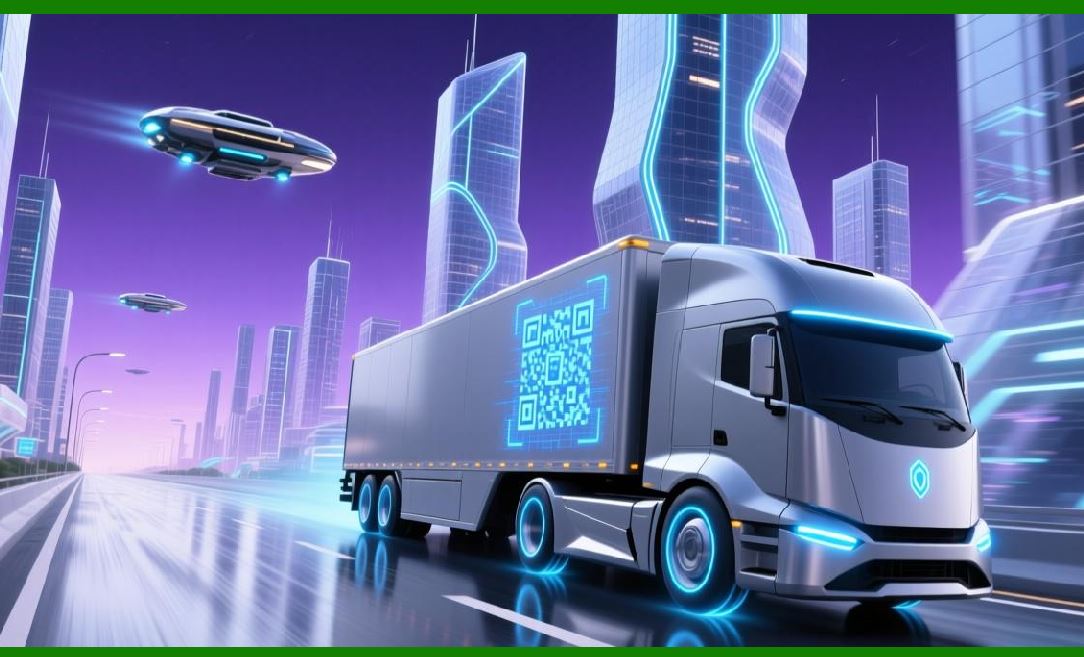
In the grand narrative of technological evolution, few symbols have achieved the ubiquitous presence of the Quick Response code, or QR code. It is a small, pixelated square that has become a silent conduit between the physical and digital worlds. Since its invention in 1994 by the Japanese corporation Denso Wave for tracking automotive parts, the QR code has undergone a remarkable journey. It has moved from factory floors to restaurant menus, from marketing brochures to payment systems, and, most critically for our discussion, to the heart of global supply chains and postal services. |
At its core, the QR code is a type of two-dimensional barcode. Unlike its predecessor, the linear or one-dimensional barcode, which encodes data horizontally, a QR code stores information both horizontally and vertically. This two-dimensional matrix allows it to hold a significantly larger amount of data---hundreds of times more than a standard UPC barcode. This leap in data density was the key to its initial success in manufacturing, where it could encode complex parts information, and is the foundation of its current dominance in modern logistics. |
This chapter provides a technical deep-dive into the QR code, demystifying its structure and functionality for a general audience. We will explore how a simple pattern of black and white modules can represent complex data. More importantly, we will shift our focus to a specific, high-impact application: its use in the postal services and e-commerce sector. We will see how the humble QR code is being used to solve one of the biggest headaches in modern retail---the e-commerce return---by enabling a 'printerless' returns process. Through a series of real-world examples from major U.S. carriers, we will illustrate how the 'prepaid return QR code' is a definitive example of multispectral industrial applications: a simple technology applied across a vast and complex physical network to create massive operational and user-experience improvements. By the end of this chapter, the QR code will no longer appear as a simple graphic, but as a powerful, layered system of information management that is reshaping the world of commerce. |
|
Part I: The Architecture of a Pixelated Puzzle |
To understand the power of the QR code in an industrial setting, one must first understand its internal architecture. It is not a random collection of black and white squares; it is a meticulously designed system of symbols. It includes functional patterns that help scanners locate and read the code, and data regions that carry the actual payload. |
1.1. The Building Blocks |
A standard QR code consists of several key structural elements: |
Quiet Zone: This is a blank, white margin surrounding the code. It ensures that the scanner can identify the edges of the code and distinguish it from its surroundings. Without this buffer, the scanner might struggle to find the pattern. |
Finder Patterns: These are the three identical square patterns located in the top-left, top-right, and bottom-left corners of the code. They look like a smaller box within a larger box within an even larger box. Their purpose is to tell the scanner which way is up. They allow the code to be read regardless of its orientation---even if it is upside down or tilted. |
Alignment Patterns: Similar to the finder patterns, these smaller square patterns are located near the bottom-right corner of the code. They ensure that the image can be corrected for distortion. If a QR code is printed on a curved surface, like a parcel or a bottle, the alignment pattern helps the scanner 'straighten' the image digitally to accurately read the data. |
Timing Patterns: These are alternating black and white modules that run horizontally and vertically between the finder patterns. They act like a ruler, allowing the scanner to determine the size of each individual module (the small black or white squares that make up the code). This is crucial for establishing a consistent grid for data extraction. |
Version Information: QR codes come in different sizes, or 'versions.' A version 1 code is a 21x21 grid, and each subsequent version increases the grid size by 4 modules, up to version 40, which is a 177x177 grid. The version information area tells the scanner which of these 40 different sizes it is dealing with so it knows how many modules to expect. |
Format Information: This area contains error correction level and the mask pattern used for the data. Error correction is a key feature; even if a portion of the QR code is damaged, the data can still be recovered. This is achieved by using algorithms like Reed-Solomon error correction. There are four levels: L (Low), M (Medium), Q (Quartile), and H (High), capable of recovering approximately 7%, 15%, 25%, and 30% of the data, respectively. |
Data and Error Correction Codewords: The remaining space is filled with the actual data, which is stored in a specific binary format, combined with the error correction code. This is the payload of the QR code, and it can be a URL, text, a phone number, or, in our case, a unique identifier for a shipping label. |
|
1.2. Beyond Black and White: The Rise of Multispectral QR Codes |
While the traditional black-and-white QR code is widely used, the technology is not standing still. The term 'multispectral industrial applications' refers to the exploitation of different parts of the electromagnetic spectrum or the use of multiple layers of information to create advanced QR codes that are more secure and data-rich. |
Invisible QR Codes: Some advanced applications use materials that are only visible under specific light conditions, such as ultraviolet (UV) or infrared (IR) light. These 'invisible' codes are used for security and authentication. For example, a product might have a visible QR code for general product information and an invisible, 'hidden' QR code for anti-counterfeiting purposes. This dual-mode approach makes forgery extremely difficult. |
Color Multiplexing: Research has been conducted into QR codes that use multiple colors instead of just black and white. By using red, green, and blue channels to encode different data streams, a single code can hold significantly more information. This technique leverages color to 'multiplex' or combine several codes into one image, dramatically increasing data density. |
Spectral and Molecular Encoding: At the most advanced level, researchers are integrating QR codes with molecular fingerprinting techniques like Raman spectroscopy. This involves creating microscopic QR codes using special dyes that, when hit with a laser, produce a unique spectral signature. This is akin to a 'super' QR code that can be read both visually and through its molecular composition, creating an incredibly robust security system. These ultra-high-density microscale QR codes are being developed for applications like pharmaceutical tracking, secure authentication, and IoT tagging, where security and miniaturization are paramount . |

|
Part II: The Problem with Returns and the Printer Barrier |
The e-commerce boom has brought with it a massive logistical challenge: product returns. In the United States, the rate of returns for online purchases is significantly higher than for in-store purchases, often hovering around 20-30% for certain categories like apparel. This 'reverse logistics' chain is costly and complex for retailers and carriers alike. A major pain point in this process for the consumer is the need to print a return shipping label. |
For decades, the standard process involved a retailer including a pre-printed return label in the original shipment. While simple, this was wasteful. A large percentage of packages are never returned, meaning the label is printed and shipped unnecessarily, increasing costs and environmental waste. Another model involves the consumer going to a website, requesting a return, and then printing a label from their home. |
This creates a significant barrier for a large segment of the population: those without printers. While it may be easy to assume everyone has access to a printer, a substantial number of U.S. households do not own one, or their printer may be out of ink or broken. This forces consumers into a frustrating loop of trying to print at a friend's house, a library, or a local print shop, which adds steps and friction to the return process. This friction can negatively impact the customer experience and a retailer's brand loyalty. This is where the QR code has emerged as a game-changing solution. |

|
Part III: The Multispectral Solution: The Prepaid Return QR Code |
The solution to the 'printer problem' is elegant in its simplicity: instead of a physical label, the customer receives a QR code via email. This QR code is a digital token, a unique identifier that is linked to a prepaid shipping label in the carrier's system. This system is what the United States Postal Service calls 'USPS Label Broker' . |
The process works as follows: |
1. Initiation: The customer initiates a return on a retailer's website. They choose the carrier and drop-off location. |
2. Generation: The retailer's system generates a unique QR code that is linked to a prepaid return label stored in the carrier's secure system. |
3. Delivery: This QR code is sent to the customer via email or text message, often alongside a scannable barcode. |
4. Drop-off: The customer packs their item and brings their phone displaying the QR code to a designated carrier location. They don't need to print anything. |
5. Scan and Print: At the carrier location, a staff member scans the QR code using their handheld scanner. The scanner reads the unique identifier in the QR code. |
6. Label Generation: The carrier's system looks up the identifier, retrieves the associated prepaid shipping label data, and prints it on the spot at the store. |
7. Shipment: The staff member affixes the new label to the package and accepts it into the shipping network. The customer receives a receipt and tracking information. |
This process is a perfect example of a 'scan-based' return, where the customer is only charged for the label when it is actually scanned and used. This drastically reduces costs for retailers who previously had to prepay for labels that might never be used . |

|
Part IV: Real-World Application: The Big Three U.S. Carriers |
The adoption of QR code-based returns has been widespread across the major U.S. parcel carriers. Each has implemented its own version of the system, leveraging the same core technology to streamline the returns process for their clients and consumers. |
4.1. United States Postal Service (USPS) and Label Broker |
The USPS has been a pioneer in this space with its USPS Label Broker program . The USPS has been investing heavily in modernizing its operations with digital tools, and Label Broker is a cornerstone of this effort . It is designed to make it easier for online shoppers to return items by simply bringing their QR code to a Post Office. |
How it Works for USPS: |
A participating merchant or e-commerce platform can generate a unique Label Broker ID with a QR code for a customer. When the customer brings their sealed, ready-to-ship package to a Post Office, the retail associate scans the QR code at the counter. The system immediately prints the correct shipping label. The customer can also use a self-service kiosk to scan the code and print their own label if they prefer . |
Key Advantages in the USPS System: |
No Printer Required: This is the primary benefit, specifically targeting the 'unserved' population without home printers. |
Scan-Based Billing: The merchant is only charged for the return postage when the USPS actually scans the QR code and generates the label. This is a major financial improvement over traditional pre-printed labels. As Shippo, a shipping platform, notes, these labels are valid for a full 365 days from creation, allowing for extremely flexible return windows . |
Seamless Integration: The USPS system integrates with major e-commerce platforms and shipping software, making it easy for businesses to offer this option. |
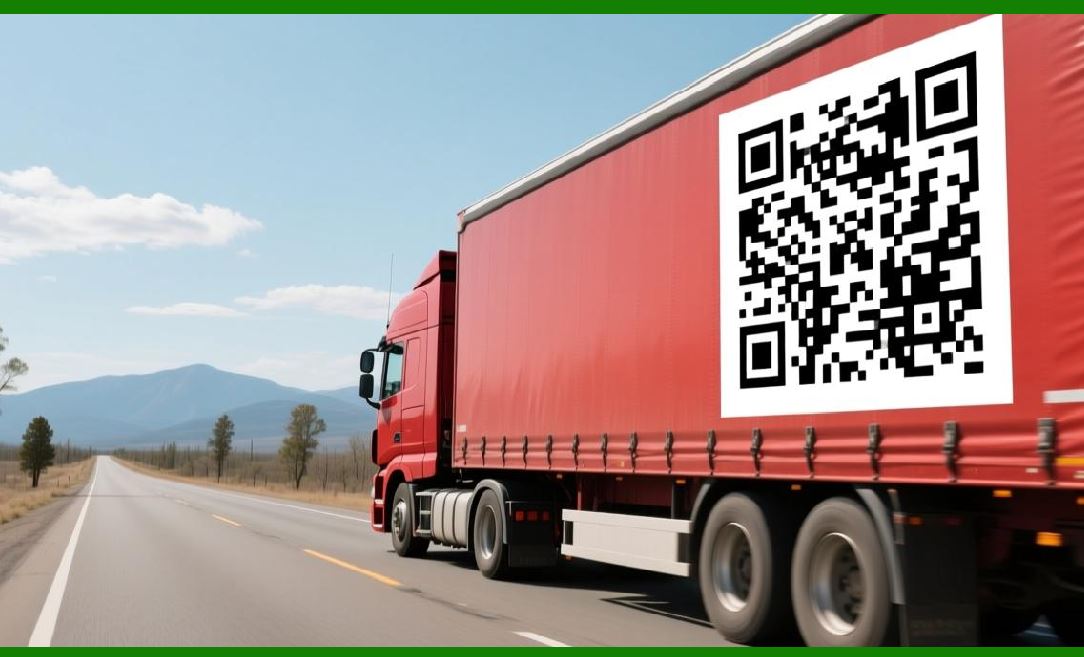
USPS has also extended the use of QR codes beyond customer-facing returns. In a significant internal logistics upgrade, the USPS has been installing QR codes on its fleet of leased trucks and trailers since 2023. These codes, when scanned, provide the vehicle's identification number, type, and dimensions. This allows the USPS to associate specific package containers with the vehicles they are loaded onto, providing unparalleled visibility of packages as they move through the network. This is a powerful example of using the same simple technology for different purposes: one QR code streamlines the consumer return, while another optimizes the internal machinery of the entire postal system. |

|
4.2. FedEx Office and Ship Center QR Code Returns |
FedEx has also heavily invested in QR code technology to simplify returns. The company has a robust system that integrates QR codes into its customer-facing operations . |
How it Works for FedEx: |
Like the USPS process, a retailer sends a customer a QR code via email . The customer then brings their packed item to a FedEx location that accepts QR code returns, such as a FedEx Office print and ship center, a FedEx Ship Center, or a participating retail location. The store team member scans the QR code, prints the label, and accepts the package. |
Practical Application: |
This system is particularly useful for customers who live near a FedEx Office location but don't have a printer. It effectively turns every FedEx Office location into a potential return drop-off point, removing the need for the customer to do any prep work beyond packing the item. |

|
4.3. UPS Returns and Drop-Off Programs |
UPS offers a comprehensive suite of return solutions that heavily leverage QR codes and mobile barcodes. Their system is designed to be flexible, catering to both customers with and without printers . |
How it Works for UPS: |
The process is straightforward. A customer initiates a return, receives a QR code, and takes the item to a UPS location. If the customer doesn't have a label, they can use the mobile barcode at the store to have the staff print one . The 'UPS Access Point' network, which includes hundreds of neighborhood retail locations like pharmacies and grocery stores, is a key part of this strategy. The customer brings the pre-boxed return item to an Access Point location; the staff scans the QR code, finds the business in the system, prints and attaches the label, and provides a tracking receipt . This is particularly convenient for customers who might not be near a major UPS facility. |
Additional Services: |
UPS also offers a 'UPS Returns Plus' service, where a driver comes to the customer's door to collect the return. In some cases, the driver will bring a return label with them, further simplifying the process . |
|
Part V: Why This Works: The Technical and Operational Synergy |
The success of the QR code in e-commerce returns isn't just about convenience; it's a triumph of technical synergy. |
Information Density vs. Simple Action: The QR code can store a long string of alphanumeric characters that perfectly represent a complex shipping label. However, the action required from the user is as simple as showing a square on their phone. The scanner translates the complex data instantaneously into a physical action (label printing). |
Error Correction as a Safety Net: In the real world, there are many variables. A customer's screen might be cracked. The light in a store might be dim. The scanner might be old. The QR code's built-in error correction is a crucial safety net. If a part of the QR code is obscured or damaged, the scanner can still reconstruct the data. This robustness is a key reason why QR codes, rather than a barcode, are preferred for this application. A damaged barcode is often unreadable, but a partially obscured QR code can often be successfully decoded. |
Standardization: The QR code is an open-source standard. This means any carrier, any retailer, and any software developer can use it. This has allowed for the rapid, multi-party ecosystem we see today. FedEx, UPS, and USPS can all use the same core QR code technology because it's not locked behind a proprietary wall . |

|
Part VI: Conclusion: The End of the Return Hassle |
The application of QR codes in postal services, particularly for e-commerce returns, is a textbook example of how a mature technology can be innovatively adapted to solve a persistent real-world problem. It demonstrates a key principle: the best technological solutions are often those that remove friction from a process, not those that add new, complicated steps. |
The 'prepaid return QR code' has effectively dismantled the 'printer barrier,' one of the last significant hurdles in the e-commerce return experience. It has empowered consumers, saved retailers money, and increased the efficiency of the carriers' operations. By turning a shipping label into a digital token, the entire process has become more agile and data-driven . |
We have seen how each of the 'big three' U.S. carriers---USPS, FedEx, and UPS---has embraced and adapted this technology. From the USPS Label Broker and its internal fleet tracking to the drop-off points and retail networks of FedEx and UPS, the QR code has become the common language of returns. The process is simple: show the code on your phone, drop off the package, and leave without a scrap of paper . |
Looking ahead, the applications of QR codes will only expand. We may see wider adoption of invisible QR codes for authentication, ensuring that a returned item is genuine. We could see color-multiplexed QR codes that encode more sophisticated return instructions for customs or processing centers. But for now, the simple, humble, black-and-white QR code is a quiet hero of the modern economy, ensuring that the items we love are just as easy to send back as they were to order. |

|
Detailed Summary: |
This chapter has explored the QR code from its technical architecture to its most impactful modern industrial application. We began by dissecting the QR code itself, showing how its finder patterns, alignment markers, timing patterns, and error correction capabilities create a robust and high-density data carrier. We emphasized that the QR code is far from a 'dumb' barcode; it is a sophisticated, fault-tolerant system designed for the messy physical world. |
We then pivoted to its application in the U.S. postal services, a use case that perfectly illustrates the concept of a 'multispectral industrial application.' While the term can refer to advanced security features like invisible inks or color multiplexing, we used it to illustrate how a single technology---the QR code---addresses a spectrum of industrial needs. In this context, the QR code solves the 'spectrum' of problems from user convenience and retailer cost to carrier efficiency. |

|
The core of the narrative revolved around the 'prepaid return QR code,' a system that has revolutionized reverse logistics. By replacing the need for a physical label with a scannable digital token, the QR code has: |
1. Eliminated the 'Printer Barrier': By far, the most significant user-centric benefit. Returns are no longer the exclusive domain of those with home printers, leveling the playing field and making returns truly accessible to everyone. |
2. Enabled Scan-Based Billing: This is a critical economic shift. Retailers are no longer paying for labels that end up unused. Carriers bill only when the service is rendered, aligning costs with actual consumption. |
3. Simplified the Process: The customer's action is reduced to its core components: pack the item, show the code, drop it off. The complexity of printing and affixing the correct label is seamlessly transferred to the carrier's store staff, who have the correct tools and training. |

|
Through detailed examples, we saw how the 'big three' U.S. carriers have each integrated this technology: |
USPS leverages its Label Broker system and a vast network of Post Offices, even using QR codes internally to track its fleet, showcasing the technology's versatility. |
FedEx uses its extensive network of FedEx Office and Ship Center locations to provide on-the-spot label generation from QR codes. |
UPS utilizes its Access Point network, turning local stores into return hubs, and offers driver collection services where labels are brought directly to the customer. |
In conclusion, the QR code's journey from the automotive factory floor to the U.S. Post Office counter is a testament to its elegant design and enduring utility. It is a silent workhorse, a pixelated puzzle that solves a trillion-dollar problem by turning a physical process into a digital, frictionless interaction. It demonstrates that the most profound technological impacts often come not from the newest, flashiest innovations, but from the thoughtful, large-scale application of proven, reliable tools. |
 cs@easiersoft.com