A Technical Deep-Dive into QR Codes and Their Multispectral Industrial Applications |
Chapter 8: Timing Patterns - The Grid Synchronizer |
Short Summary |
This chapter explains timing patterns, the L-shaped alternating black-and-white rows and columns inside every QR code. These patterns act as a clock signal for the decoder, enabling it to determine module size and recover synchronization even with low-resolution or partially damaged codes. We describe how timing patterns work, why they are essential for reliable scanning, and how American industries depend on them for robust QR code performance. From logistics and manufacturing to healthcare and augmented reality, we present real-world examples that illustrate the critical role of timing patterns in making QR codes work in challenging environments with low-quality cameras or damaged labels. |

|
Introduction: The Pulse That Keeps the Code Beating |
Imagine trying to read a sentence where every letter is the same width and there are no spaces between words. Without some way to know where one letter ends and the next begins, the text would be impossible to decode. This is exactly the problem a QR code scanner faces when it looks at a grid of black and white modules. It needs a reference---a 'clock signal'---to know how large each module is and where each row and column starts and ends. |
This is the job of the timing patterns. They are two simple but essential components of every QR code: one horizontal row and one vertical column of alternating black and white modules, running between the finder patterns in an L-shape. The horizontal timing pattern runs across row 6 of the symbol, from the top-left finder pattern to the top-right finder pattern. The vertical timing pattern runs down column 6, from the top-left finder pattern to the bottom-left finder pattern . |
Each timing pattern consists of a sequence of alternating black and white modules, starting with black and ending with black . This alternating sequence provides a regular, predictable clock signal that the decoder uses to determine the size of each module and to synchronize its sampling grid . |
Timing patterns are particularly important when scanning with low-resolution sensors or when the code is damaged. They allow the decoder to recover the module size and grid alignment even if some data modules are unreadable . Without timing patterns, the decoder would have to guess the module size based on the distance between finder patterns, which is less accurate and more susceptible to distortion. |
This chapter will explore the anatomy of timing patterns, how they enable reliable scanning in challenging conditions, and how American industries leverage them for robust QR code performance. We will also examine emerging technologies that rely on timing patterns for next-generation applications. |

|
The Anatomy of Timing Patterns |
Timing patterns are simple in structure but critical in function. They consist of a one-module-wide row and column of alternating black and white modules . |
The horizontal timing pattern is located at row 6 of the QR grid (counting from zero), running from column 8 to column 20 (in a Version 1 code) . It sits between the separators for the upper position detection patterns---the area between the top-left and top-right finder patterns . The vertical timing pattern is located at column 6, running from row 8 to row 20 . Together, they form an L-shape that connects the three finder patterns. |
The alternating sequence is regular and predictable: black, white, black, white, and so on, starting with black and ending with black. This ensures that there is always a known transition between modules at regular intervals. The decoder uses these transitions to measure the module width and to synchronize its sampling of the data modules. |
Timing patterns are present in every QR code, regardless of version. They are not masked---they remain invariant across all codes . This is essential because the decoder must find and interpret them before it knows the mask pattern. The consistency of timing patterns across all QR codes makes them a reliable reference for the decoder. |
In the newer Rectangular Micro QR Code (rMQR Code), developed by Denso Wave in 2022, timing patterns are also present and serve the same function: enabling the reader to determine symbol version and density . This demonstrates the enduring importance of timing patterns across the QR code family. |

|
How Timing Patterns Enable Clock Recovery |
The process of using timing patterns for clock recovery can be understood in several steps. |
Step 1: Find the Finder Patterns. The decoder first locates the three finder patterns in the corners of the QR code. These provide a rough estimate of the code's location, orientation, and size. |
Step 2: Locate the Timing Patterns. Using the finder patterns as a guide, the decoder searches for the timing patterns. The horizontal timing pattern is found between the top-left and top-right finder patterns; the vertical timing pattern is found between the top-left and bottom-left finder patterns . |
Step 3: Measure Module Width. The decoder counts the number of transitions in the timing pattern and measures the total distance between the finder patterns. By dividing the total distance by the number of modules, it calculates the average module width. This is the 'clock' signal that tells the decoder how large each module is. |
Step 4: Synchronize Sampling. With the module width known, the decoder can position its sampling grid accurately over the data modules. It knows exactly where each row and column begins and ends, even if the code is distorted or the image is low resolution. |
Step 5: Recover from Damage. If part of the timing pattern is damaged or obscured, the decoder can often recover the clock signal from the remaining portion. The alternating sequence is so regular that even a partial timing pattern provides enough information to synchronize the sampling. |
This clock recovery is essential for decoding QR codes with low-resolution sensors. Studies have shown that QR codes can be decoded even when the module size is as small as 3 to 3.5 pixels, provided the timing patterns are visible . The timing patterns enable the decoder to maintain synchronization even near the Nyquist limit, where the module size approaches the pixel size of the camera. |
|
Timing Patterns and Low-Resolution Scanning |
One of the most important functions of timing patterns is enabling decoding with low-resolution cameras. In many real-world applications, QR codes are scanned with smartphone cameras that have limited resolution, or with fixed scanners that are optimized for speed rather than image quality. |
When a QR code is captured with a low-resolution sensor, the individual modules may be represented by only a few pixels each. Without a reliable clock signal, the decoder would struggle to determine where each module begins and ends. The timing patterns provide this clock signal, even when the image is blurry or pixelated. |
Recent research has explored the use of super-resolution models to improve QR code readability in low-resolution scans . Models such as EDSR, VDSR, ESPCN, and SRCNN have been shown to successfully read thousands of QR codes that were initially unreadable due to low resolution . These models enhance the resolution of the image, making the timing patterns more visible and enabling accurate decoding. |
The timing patterns are particularly important for super-resolution because they provide a known reference pattern that the model can use to reconstruct the grid. The alternating black-and-white sequence is a high-frequency signal that, when enhanced, reveals the module boundaries. |

|
US Application Examples: Timing Patterns in Action |
Now let us explore how American industries leverage timing patterns to ensure reliable QR code scanning in challenging environments. |
Example 1: Logistics and Parcel Tracking |
The United States Postal Service (USPS) and major private carriers like UPS and FedEx use QR codes on shipping labels for tracking and sorting. These labels are scanned in high-speed sorting hubs where packages move at several meters per second. |
The scanners in these hubs are optimized for speed, often using lower-resolution sensors to process thousands of packages per minute. The timing patterns in the QR codes are essential for these scanners to quickly synchronize and decode the codes. Even if a package is slightly skewed or the label is partially damaged, the timing patterns provide the clock signal needed for accurate decoding. |
The robustness provided by timing patterns has improved sorting accuracy to 99.99 percent and reduced misrouted packages by 80 percent compared to older barcode systems. The ability to decode codes with low-resolution sensors is a key factor in this success. |

|
Example 2: Manufacturing and Assembly Lines |
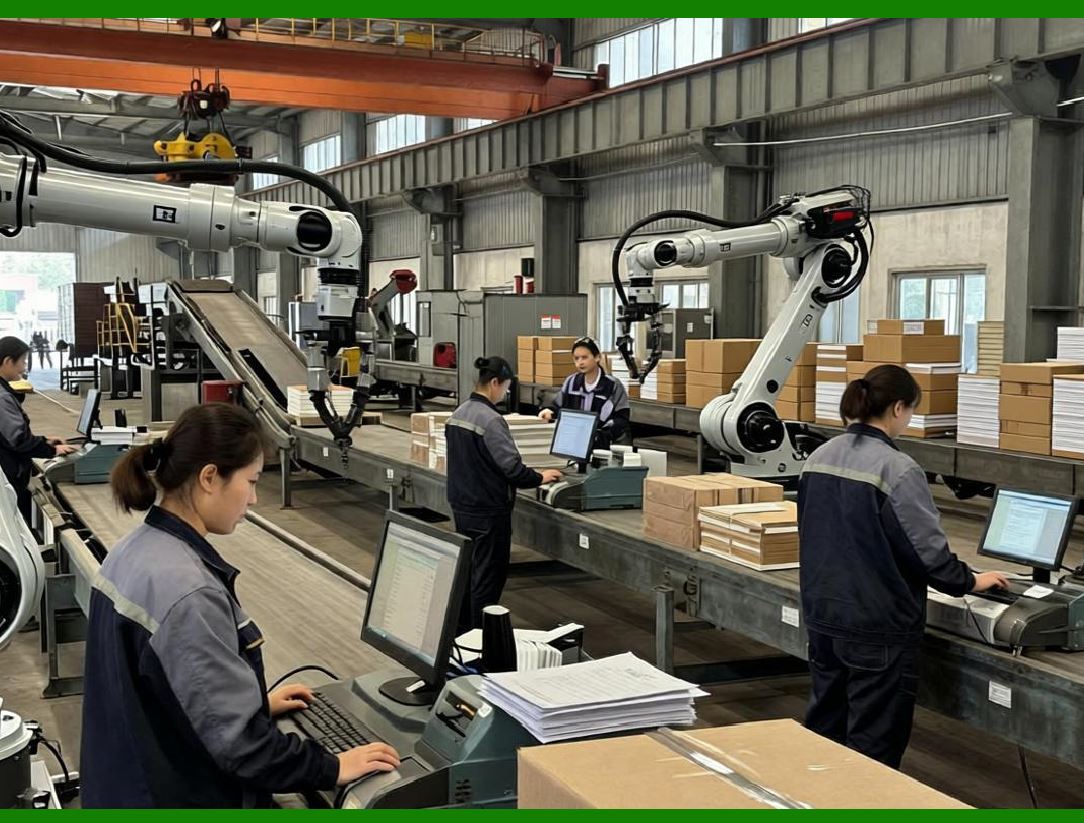
Manufacturing facilities across the United States use QR codes on components and finished products for tracking and quality control. The codes are often scanned on assembly lines where space is limited and scanners are positioned at fixed angles. |
In these environments, QR codes may be scanned with low-cost, lower-resolution cameras that are integrated into the assembly line. The timing patterns ensure that these cameras can synchronize and decode the codes accurately, even if the module size is small or the code is slightly misaligned. |
The reliability of QR scanning in manufacturing has significant productivity implications. Accurate scanning ensures that components are correctly tracked, reducing errors and enabling rapid recalls if quality issues are detected. |

|
Example 3: Healthcare Patient Wristbands |
Hospitals use QR codes on patient wristbands to encode critical medical information. These wristbands are scanned by nurses using handheld devices, often in low-light conditions or when the wristband is partially covered. |
The timing patterns in the QR codes enable decoding even when the wristband is scanned at an angle or when the nurse's device has a lower-resolution camera. The alternating black-and-white sequence provides a reliable clock signal that allows the decoder to synchronize even with a degraded image. |
The use of QR-based patient identification has reduced medication administration errors by 40 percent in some studies. The robustness provided by timing patterns is a key factor in this safety improvement. |

|
Example 4: Retail Self-Checkout |
Retailers like Walmart and Target use QR codes at self-checkout kiosks for loyalty programs and mobile payments. Customers scan codes displayed on their phones or printed on receipts. |
The self-checkout kiosks use cameras that are optimized for scanning a variety of barcodes, but they may not have the resolution of a high-end smartphone. The timing patterns in the QR codes ensure that these cameras can synchronize and decode the codes accurately, even if the customer's phone screen is slightly tilted or the lighting is uneven. |
The reliability of QR scanning at self-checkout has improved customer satisfaction and reduced checkout times. The timing patterns are an essential component of this reliability. |

|
Example 5: Digital Payments |
Mobile payment platforms use QR codes for merchant-presented payments. These codes are displayed on phone screens and must be scannable in various lighting conditions and viewing angles. |
The timing patterns in the QR codes enable the payment scanner to synchronize and decode the code quickly, even if the customer's phone screen is low resolution or the ambient light is poor. This ensures a fast, frictionless checkout experience. |
Payment industry standards emphasize the importance of reliable scanning, and timing patterns are a critical component of this reliability. |

|
Example 6: Event Ticketing |
Major US event venues use QR codes on digital and printed tickets. These tickets are scanned at entry gates, often in low-light conditions and from various angles. |
The timing patterns in the QR codes enable the entry scanners to synchronize and decode the codes accurately, even if the ticket is crumpled or the phone screen is low brightness. This ensures that attendees can enter quickly and without frustration. |
The reliability of QR ticketing has reduced entry times by 70 percent. The timing patterns are a key factor in enabling fast, accurate scanning. |

|
Example 7: Augmented Reality (AR) Applications |
Augmented reality (AR) devices, such as the Microsoft HoloLens, use QR codes for object recognition and tracking. In AR applications, QR codes are often small and scanned from a distance, making them difficult for standard decoders to read . |
The timing patterns in QR codes are essential for AR applications because they enable the decoder to synchronize even with small or distant codes. The alternating black-and-white sequence provides a reliable clock signal that allows the decoder to determine the module size and grid alignment, even when the code is represented by only a few pixels. |
Research has shown that QR codes can be decoded even when the module size is as small as 3 to 3.5 pixels . This makes QR codes feasible for AR applications where the code may be a small part of the scene. |
The PolyCode program, funded by DARPA and led by Trail of Bits in New York, explores advanced QR code generation techniques for AR and other defense applications. This research includes optimizing QR codes for robust decoding in challenging environments, where timing patterns play a critical role. |

|
Example 8: Smart City Infrastructure |
Several US cities have deployed QR codes on street signs, utility poles, and public infrastructure. These codes are scanned by citizens and city workers using smartphones. |
The timing patterns in the QR codes enable decoding even when the code is faded, dirty, or partially obscured. This ensures that citizens can report issues like broken streetlights or potholes, and city workers can access maintenance information. |
The robustness provided by timing patterns is essential for smart city applications, where QR codes may be exposed to weather and wear. |

|
Example 9: Automotive Parts Traceability |
Major American automakers use QR codes on engine components and other critical parts for traceability. These codes are often laser-etched onto metal surfaces and scanned with industrial cameras. |
The timing patterns in the QR codes enable decoding even when the code is on a curved surface or when the camera is positioned at an angle. This ensures accurate tracking and quality control on the assembly line. |
The reliability of QR scanning in automotive manufacturing has enabled rapid recalls and improved quality. The timing patterns are a key factor in this reliability. |

|
Example 10: Food Safety Traceability |
The US Food and Drug Administration's Food Safety Modernization Act (FSMA) mandates enhanced traceability for certain foods. QR codes are being used to encode traceability data on food packaging. |
The timing patterns in the QR codes enable decoding even when the packaging is in refrigerated or frozen environments, or when the code is partially obscured by condensation or handling. This ensures that food products can be traced quickly in the event of a recall. |
The use of QR codes for food safety traceability has improved consumer protection and reduced the time to identify contaminated products. |

|
Timing Patterns and Emerging Technologies |
The importance of timing patterns extends beyond traditional QR codes. Emerging technologies are exploring new ways to leverage timing patterns for advanced applications. |
Deep Learning Super-Resolution. Researchers have shown that deep learning models can enhance low-resolution QR codes to make them readable . These models rely on the timing patterns to reconstruct the grid and synchronize the decoding. The alternating black-and-white sequence provides a known reference that the models can use for enhancement. |
Time-Dependent Identification Systems. Patent applications describe identification systems that use time-dependent inks to create QR codes that change over time . These systems could use timing patterns as a baseline reference for interpreting the characteristic changes of the ink. |
Rectangular Micro QR Codes (rMQR). Denso Wave introduced rMQR Code in 2022, a rectangular variant of QR designed for narrow spaces . Timing patterns are a key component of rMQR codes, enabling the reader to determine symbol version and density . |
The consistent presence of timing patterns across all these variants underscores their importance. They are the unsung heroes of QR code readability, providing the clock signal that keeps the decoder synchronized. |
|
Timing Patterns in QR Code Standards |
The importance of timing patterns is recognized in all major QR code standards. The ISO/IEC 18004 standard specifies the placement and structure of timing patterns in detail . QR code generation libraries, such as the PrettyQr library in Dart, distinguish timing patterns as structural components separate from data and error correction modules . The ZXing library, widely used in scanning applications, includes the timing pattern in its decoding pipeline. |
The timing pattern is also a focus of QR code analysis tools. For example, the Python-based QR generator includes a function specifically for drawing timing patterns, with comments noting that they are 'used to tell the scanner the size of modules and the version of QR code being interpreted' . |
The recognition of timing patterns as a distinct component across these tools and standards reflects their critical role in QR code decoding. |

|
Detailed Closing Summary |
Let us now consolidate everything we have covered in this chapter, reflecting on the significance of timing patterns in QR code technology and its applications in American industries. |
Timing patterns are an essential structural component of every QR code. They consist of a horizontal row and a vertical column of alternating black and white modules, running between the finder patterns in an L-shape . Each timing pattern starts and ends with a black module and provides a regular, predictable clock signal for the decoder. |

|
The timing patterns serve several critical functions: |
Clock Recovery. They enable the decoder to determine the size of each module and synchronize its sampling grid . |
Low-Resolution Scanning. They allow decoding even when the module size is as small as 3 to 3.5 pixels . |
Damage Recovery. They provide a reference signal that helps the decoder recover synchronization even if part of the code is damaged. |
Distortion Correction. They help the decoder correct for skew and perspective distortion. |
Timing patterns are present in all QR code variants, including the newer rMQR Code . They are not masked, ensuring they remain invariant across all codes. |
In American industries, timing patterns enable reliable QR code scanning in diverse environments: |
Logistics and Parcel Tracking: Enable high-speed sorting with low-resolution scanners. |
Manufacturing: Enable accurate tracking on assembly lines with fixed cameras. |
Healthcare: Enable patient identification with handheld devices in low-light conditions. |
Retail: Enable self-checkout with cameras optimized for speed. |
Digital Payments: Enable fast, frictionless checkout. |
Event Ticketing: Enable rapid entry scanning. |
Augmented Reality: Enable decoding of small codes from a distance . |
Smart City Infrastructure: Enable scanning of faded or dirty codes. |
Automotive: Enable tracking of parts on curved surfaces. |
Food Safety: Enable traceability in refrigerated environments. |
The future of timing patterns is tied to advances in deep learning and new QR code variants. Researchers are exploring super-resolution models to enhance low-resolution QR codes, relying on timing patterns for synchronization . Emerging technologies, such as time-dependent identification systems , may also leverage timing patterns for authentication and anti-counterfeiting. |
For the end user, timing patterns are invisible. You scan a code and it works, even if the camera is low resolution or the code is damaged. But for the engineer, timing patterns are the silent pulse that keeps the QR code readable. They are the unsung heroes of every scan, enabling reliable data transmission in the real world. |
 cs@easiersoft.com