Chapter 10: Read Range Variability |
A Short Summary at the Start |
Read range is one of the most practical and most misunderstood ideas in the world of automatic identification. A barcode scanner and an RFID reader both need to 'see' a tag before they can do anything useful. But how far away can that seeing happenThe answer is never a single number. It changes with the frequency being used, the power coming out of the reader, the angle of the tag, and the materials nearby. Metal reflects and detunes RFID signals. Water absorbs them. Even the human body, which is mostly water, can block a tag. This chapter explains why read range varies so much, and it gives many real examples from warehouses, stores, hospitals, farms, libraries, airports, factories, and more. The goal is not to make you an RF engineer. The goal is to help you understand why a tag that reads at ten meters in an open field might read at only one meter near a stack of metal cans, and why a barcode that scans perfectly on a flat label might fail on a curved, wet, or shiny surface. By the end, you will see that read range is not a fixed property of a tag. It is a relationship between the tag, the reader, the environment, and the job you are trying to do. |
|
The Basic Idea of Read Range |
Every automatic identification system has a moment of truth: the moment when the reader and the tag communicate. For barcodes, that moment is optical. Light from a scanner or an imager bounces off the barcode and returns to a sensor. For RFID, that moment is electromagnetic. The reader sends out radio waves, and the tag responds either by reflecting those waves back, in the case of passive RFID, or by using its own power source to transmit a signal, in the case of active RFID. In both cases, distance matters. But distance is not simply a matter of 'how far.' It is a matter of how much energy reaches the tag, how much energy returns, and how much noise or interference exists along the way. |
For barcodes, read range is usually measured in centimeters or, at most, a few meters. A typical handheld scanner works best at a few inches to a couple of feet. A long-range barcode scanner, often used in warehouses or on loading docks, might read a label from twenty or thirty feet away, but only if the label is large, flat, clean, and well lit. For RFID, read range can be anywhere from a few millimeters to dozens of meters, depending on the type of system. A passive ultra-high-frequency tag on a box of cereal might read from three to ten meters in a clear aisle. The same tag on a metal shelf might read from only a few centimeters. An active RFID tag with a battery can read from a hundred meters or more, but it costs more and has a limited battery life. |
The key point is that read range is not a single specification. It is a range of possibilities. Manufacturers often print a 'typical' read range on a datasheet, but that number assumes ideal conditions. Real conditions are rarely ideal. That is why experienced engineers and technicians always test in the actual environment. They know that a tag that works perfectly in the lab might fail completely in a warehouse full of metal racks and moving forklifts. |
|
Frequency: The First Big Factor |
The frequency of an RFID system is one of the biggest determinants of read range. In general, lower frequencies travel shorter distances but penetrate materials better. Higher frequencies travel longer distances but are more easily blocked or absorbed. Let us look at the main categories. |
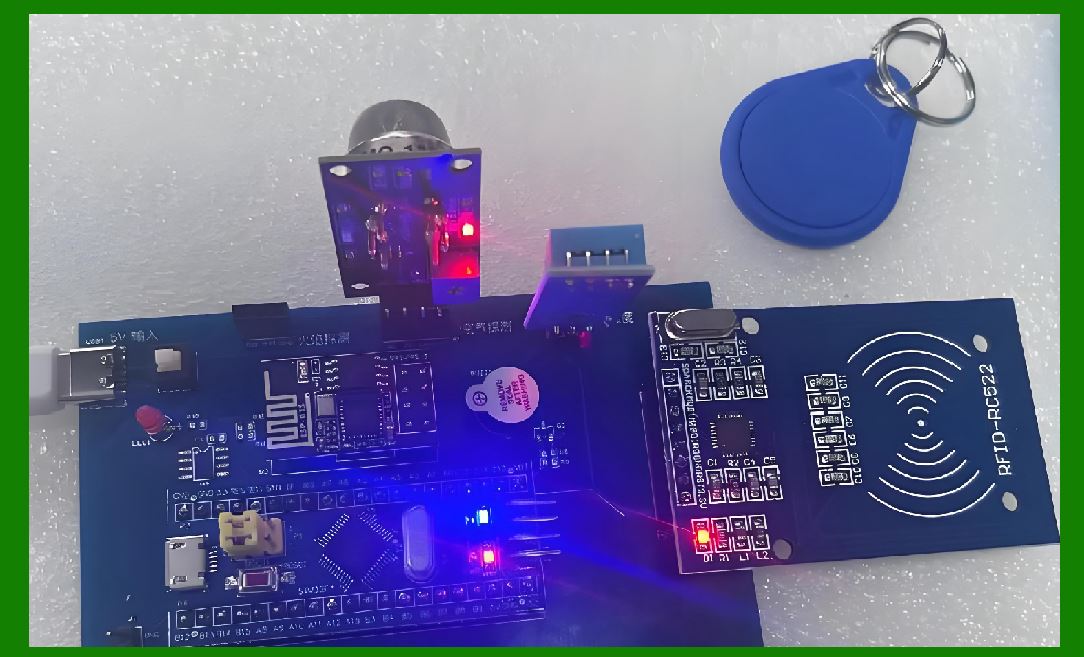
Low-frequency RFID, usually around 125 kilohertz or 134 kilohertz, has a very short read range. Typically, it is only a few centimeters. You have to bring the tag very close to the reader. This is the technology used in many access cards, animal microchips, and some library books. Because the range is so short, it is hard to accidentally read a tag you do not want to read. But it also means you have to be close. In a veterinary clinic, a handheld reader must be passed within a few centimeters of the animal's shoulder to read the microchip. In a library, a staff member might need to pass each book over a pad. There is no 'walk-through' reading at low frequency. |
High-frequency RFID, usually 13.56 megahertz, has a slightly longer read range. Typically, it is a few centimeters to about one meter. This is the technology used in many smart cards, passports, and near-field communication systems in phones. It is also used in some library systems and in certain manufacturing processes. The read range is still short enough that you usually need to bring the tag close to the reader, but it is long enough for a convenient tap or a short hover. In a retail store, a customer might tap a phone to a payment terminal. In a factory, a worker might hold a tool near a reader to confirm its identity. The range is limited, but that limitation is often a feature, not a bug, because it prevents unwanted reads. |
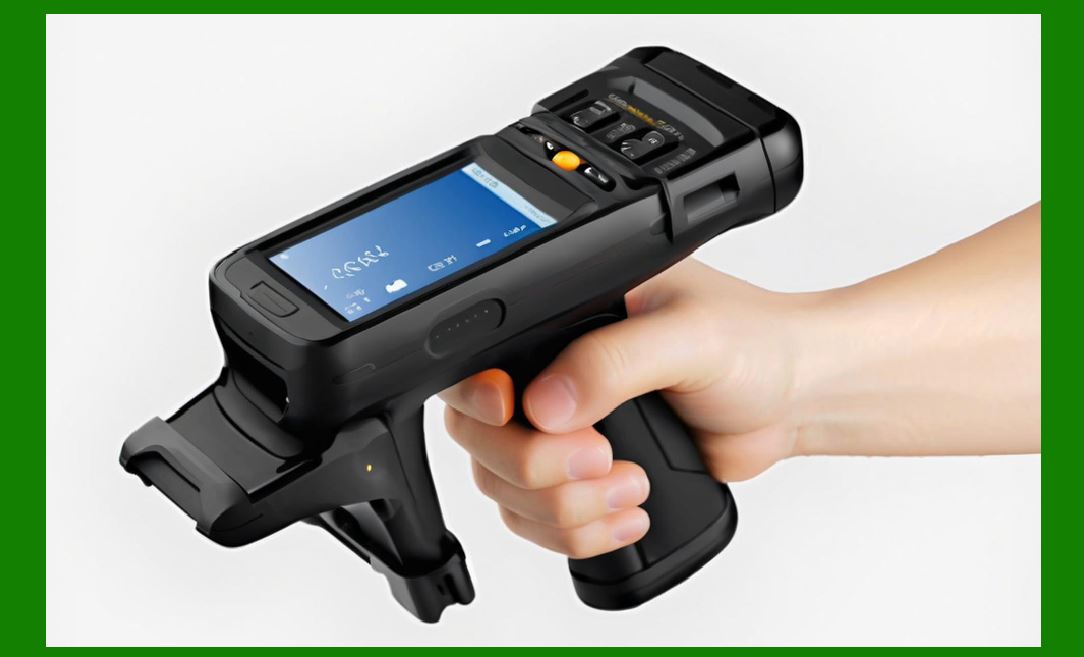
Ultra-high-frequency RFID, usually between 860 and 960 megahertz, has the longest read range for passive tags. Typically, it can be several meters, and in ideal conditions, it can reach ten or even fifteen meters. This is the technology used in supply chain and inventory management. A reader on a dock door can read hundreds of tags on pallets as they pass by. A drone can fly over a field and read tags on crops or livestock. A handheld reader can scan a shelf from a few feet away. But ultra-high-frequency is also the most sensitive to environmental factors. Metal reflects it. Water absorbs it. The human body blocks it. So while the potential range is long, the actual range in a real environment can be much shorter. |
Microwave RFID, often around 2.45 gigahertz, is similar to ultra-high-frequency but even more directional. It can have a long range, but it is easily blocked by walls and other obstacles. It is used in some toll collection systems and in certain industrial applications. The trade-off is always the same: higher frequency means longer potential range but less ability to penetrate materials. |
For barcodes, frequency is not the right word, because barcodes use light, not radio waves. But the same principle applies. Laser scanners use a single wavelength of light, usually red. Imagers use a broader spectrum, often including infrared. The wavelength affects how well the light reflects off different surfaces. A red laser might struggle with a red barcode on a red background because there is not enough contrast. An imager with infrared might read a barcode that is invisible to the human eye. But in general, barcode read range is limited by the optics of the scanner and the size of the barcode, not by frequency in the radio sense. |

|
Power Output: How Loud Is the Reader |
The power output of an RFID reader is another major factor. In simple terms, the more power the reader sends out, the more energy reaches the tag, and the stronger the response. But power is regulated. In most countries, there are legal limits on how much power an RFID reader can emit. These limits are set to prevent interference with other devices and to protect human health. In Europe, the limit is typically 2 watts effective radiated power. In the United States, it is 4 watts. In some countries, it is lower. So you cannot simply crank up the power to get more range. |
Within the legal limits, however, power output can be adjusted. A reader might have a high-power mode for long-range reading and a low-power mode for short-range reading. In a warehouse, a fixed reader on a dock door might be set to full power to read tags on pallets as they pass. A handheld reader might be set to lower power to avoid reading tags on nearby shelves that are not part of the current task. This is called 'power ramping' or 'power control.' It is a way to shape the read zone. |
For barcodes, power output is not usually a variable. A laser scanner has a fixed power level, and an imager has a fixed illumination level. But the effective range can be changed by adjusting the focus or the aperture. A long-range scanner might have a narrow beam and a high magnification, allowing it to read a small barcode from far away. A short-range scanner might have a wide beam and a low magnification, allowing it to read a large barcode from close up. The trade-off is similar: you can optimize for distance or for width, but not both at the same time. |
|
Tag Orientation: Which Way Is It Facing |
Tag orientation is a huge factor in RFID read range. Radio waves are not perfectly uniform in all directions. A tag has a preferred direction, and a reader has a preferred direction. If the tag is facing the reader directly, the read range is maximized. If the tag is turned sideways, the read range drops. If the tag is turned edge-on, the read range might drop to zero. |
This is because RFID tags use antennas, and antennas have polarization. A linear polarized antenna, for example, sends out waves in a single plane. If the tag's antenna is in the same plane, it receives the signal well. If it is perpendicular, it receives almost nothing. Circular polarized antennas are more forgiving. They send out waves that rotate, so they can read tags in any orientation, but they lose some range in the process. This is a classic trade-off: circular polarization gives you orientation tolerance but reduces maximum distance. Linear polarization gives you maximum distance but requires the tag to be aligned. |
In the real world, tag orientation is often unpredictable. A box might be placed on a pallet in any direction. A book might be shelved with its spine facing out or its cover facing out. A tool might be lying flat or standing up. That is why many systems use circular polarized readers. They give up some range to gain reliability. But even circular polarization has limits. If the tag is close to metal, the metal can change the tag's polarization and detune it. |
For barcodes, orientation is also important, but for different reasons. A barcode is a pattern of lines. A laser scanner reads the pattern by sweeping a beam across it. If the barcode is tilted too much, the beam might not cross all the lines. If the barcode is rotated ninety degrees, the scanner might not read it at all. That is why many scanners have a 'omnidirectional' mode, which uses a complex pattern of laser lines to read barcodes in any orientation. Imagers are even better at this because they take a picture of the barcode and then decode it in software. But even imagers have limits. If the barcode is curved or wrinkled, the image might be distorted. If the barcode is shiny, the light might reflect away from the sensor. |

|
Environmental Materials: Metal and Water |
The environment is where read range gets really complicated. Two materials cause the most trouble: metal and water. Both interact strongly with radio waves, but in different ways. |
Metal is a conductor. When radio waves hit metal, they induce electrical currents in the metal. These currents create their own magnetic fields, which oppose the original field. The result is that the metal reflects the radio waves, and it also detunes the tag. A tag placed directly on a metal surface will often have its read range reduced to nearly zero. The metal acts like a mirror, but a mirror that also changes the tag's electrical properties. To solve this, engineers have developed 'metal-mount' tags. These tags have a spacer or a special antenna design that keeps the tag's fields away from the metal. They are thicker and more expensive, but they work. You see them on metal containers, metal tools, metal shelves, and metal parts in factories. |
Water is a different problem. Water is a polar molecule. It absorbs radio waves, especially at higher frequencies. When radio waves hit water, the water molecules rotate and generate heat. This takes energy out of the wave, so less energy reaches the tag and less energy returns. A tag placed on a bottle of water or a carton of milk will have a reduced read range. The more water there is, the worse it gets. A single water bottle might reduce the range by half. A pallet of water bottles might block the signal completely. This is why RFID is difficult in grocery stores, where many products are liquid. It is also why RFID is difficult in hospitals, where bags of saline and blood are common. |
The human body is mostly water, so it also absorbs radio waves. If you hold a tag in your hand, your hand can block the signal. If you wear a tag on your chest, your body can block the signal from a reader behind you. This is why wearable RFID tags are often designed with a spacer or a reflector to keep the tag's fields away from the body. |
Other materials can also affect read range. Glass is mostly transparent to radio waves, but it can reflect them at certain angles. Plastic is usually transparent, but some plastics contain carbon or metal particles that can absorb or reflect. Wood is usually transparent when dry, but wet wood absorbs. Concrete is usually transparent, but reinforced concrete contains metal mesh that reflects. So the environment is never neutral. It is always part of the system. |
Barcodes have their own environmental challenges. Metal is a problem for barcodes because it is often shiny. A shiny surface reflects light in a single direction, so the scanner might not see the barcode. This is why metal surfaces often need a matte label or a special coating. Water is a problem for barcodes because it can distort the image or create reflections. A wet label might be unreadable. A label behind a curved glass bottle might be distorted. A label on a frozen package might be covered in frost. So barcodes also have to be designed for the environment. |

|
Real-World Examples: Retail |
Retail is one of the most visible places where read range variability matters. In a clothing store, RFID tags are often used to track inventory. A tag might be attached to a garment. The read range in open air might be five meters. But when the garment is on a rack with many other garments, the range drops. The tags are close together, and the human body of the shopper can block the signal. A handheld reader might need to be passed within a meter of the rack. In a fitting room, a reader might be mounted on the wall to detect tags as shoppers enter. But if the shopper is standing between the reader and the tag, the read might fail. So the system has to be designed with redundancy. Multiple readers might be used. The tags might be placed on the garment in a specific orientation. |
In a grocery store, RFID is used for some items, but it is challenging because of liquids and metals. A can of soda is metal. A bottle of juice is liquid. A bag of chips is mostly air, so it reads well. A frozen pizza is a mix of water and cardboard. The read range varies wildly from item to item. That is why many grocery stores still rely on barcodes for point-of-sale. Barcodes are slower because each item must be scanned individually, but they are more reliable in that environment. However, some stores are experimenting with RFID for inventory. They might use a robot that moves through the aisles at night, reading tags on shelves. The robot can get close to the shelves, so the read range is not a problem. But the robot has to deal with metal shelves and liquid products. So the tags must be carefully chosen and placed. |
|
Real-World Examples: Warehousing and Logistics |
Warehousing and logistics are where RFID has found its biggest success. A typical warehouse has thousands of pallets and boxes. A fixed reader on a dock door can read tags on pallets as they are loaded onto trucks. The read range here might be five to ten meters. But the pallets are often stacked high, and the tags on the far side of the pallet might be blocked by the pallet itself. The pallet might be wood, which is mostly transparent, or plastic, which is also mostly transparent, or metal, which is not. If the pallet is metal, the tags on the far side might not be read. So the system might use multiple readers or multiple antennas to cover all angles. |
In a warehouse aisle, a forklift might have a reader mounted on it. The reader can read tags on shelves as the forklift passes. The read range here might be two to three meters. But the shelves are metal, and the boxes are close together. The tags might be oriented in different directions. So the system must be designed to handle these variations. Sometimes the tags are placed on the front of the box, facing the aisle. Sometimes they are placed on the side. Sometimes they are placed on the top. The best placement depends on the reader's position and the environment. |
In a cross-docking facility, where goods move directly from one truck to another, speed is critical. A reader on a dock door might read a pallet in less than a second. The read range must be long enough to cover the width of the door, but not so long that it reads tags on the wrong truck. This is a balance. If the power is too high, the reader might read tags on a truck in the next bay. If the power is too low, it might miss tags on the edge of the pallet. So the power and the antenna placement must be tuned carefully. |
|
Real-World Examples: Manufacturing |
Manufacturing is another area where read range variability is a daily reality. On an assembly line, a car body might move past a reader. The car body is metal, so the tag must be a metal-mount tag. The read range might be only a few centimeters. The tag might be placed on a specific spot on the chassis. The reader might be mounted on a robot arm that moves close to the tag. This is a short-range application, but it is highly reliable because the tag and reader are always in the same relative position. |
In a factory that makes electronics, the products are small and often contain metal. A tag might be placed on a circuit board. The read range might be only a few millimeters. The reader might be a near-field reader that requires the tag to be almost touching. This is slow, but it is accurate. In a factory that makes furniture, the products are large and mostly wood. A tag might be placed on a chair or a table. The read range might be several meters. A reader on a conveyor belt can read the tag as the furniture passes. But if the furniture is stacked, the tags might be blocked. |
In a chemical plant, the environment is harsh. There might be metal pipes, metal tanks, and liquids. RFID tags must be ruggedized. They might be encased in plastic or metal. The read range might be reduced because of the metal and the liquids. But the tags can still be read from a few meters away. This allows the plant to track assets and materials without human intervention. |
|
Real-World Examples: Healthcare |
Healthcare is a place where read range variability can have life-or-death consequences. In a hospital, RFID tags are used to track patients, staff, equipment, and supplies. A patient wristband might have an RFID tag. The read range might be a few meters. A reader at a door might detect when a patient leaves a room. But if the patient is lying on a metal bed, the metal can detune the tag. If the patient is covered by a blanket, the blanket can block the signal. If the patient is holding a metal object, the object can reflect the signal. So the system must be designed with these factors in mind. Sometimes multiple readers are used. Sometimes the tag is placed on the patient's chest instead of the wrist. |
Equipment tracking is another challenge. A hospital might have thousands of infusion pumps, wheelchairs, and monitors. Each might have an RFID tag. The read range in an open hallway might be ten meters. But in a storage room, the equipment is packed tightly. The tags are close together. The metal in the equipment can reflect the signal. The result is that the read range might drop to one meter. So the hospital might install readers in the storage room to track items as they are moved in and out. Or they might use handheld readers for inventory. The handheld reader requires a person to walk around and point it at the equipment. This is slower, but it is more reliable. |
In a pharmacy, RFID is used to track medications. A bottle of pills might have a tag. The read range might be a few meters. But the bottle might be on a metal shelf. The pills might be in a plastic bottle. The plastic is mostly transparent, but the metal shelf is not. So the tag might need to be placed on the top of the bottle, facing away from the shelf. Or the shelf might be covered with a special material that reduces reflections. This is a detail that can make or break a system. |
|
Real-World Examples: Agriculture |
Agriculture is a place where read range variability is a natural part of the job. A farmer might put an RFID tag on a cow's ear. The read range in an open field might be ten meters. But if the cow is standing in a group, the other cows can block the signal. If the cow is standing near a metal fence, the fence can reflect the signal. If the cow is wet from rain, the water can absorb the signal. So the farmer might use a handheld reader that is brought close to the cow. Or the farmer might use a fixed reader at a water trough or a feeding station, where the cow has to come close anyway. |
In a greenhouse, RFID tags might be used to track plants. The read range might be a few meters. But the plants are full of water, and the greenhouse is full of metal pipes and glass. The water absorbs the signal. The metal reflects it. The glass reflects it. So the read range might be much shorter than expected. The solution might be to use low-frequency tags, which have a shorter range but are less affected by water. Or the solution might be to place the reader close to the plants. |
In a vineyard, RFID tags might be used to track grapevines. The read range might be several meters. But the vines are full of water, and the soil is full of water. The water absorbs the signal. The metal posts that hold the vines reflect the signal. So the read range might vary from vine to vine. The farmer might need to use a handheld reader and walk the rows. This is labor-intensive, but it is accurate. |
|
Real-World Examples: Libraries |
Libraries were one of the early adopters of RFID. A library book might have a tag inside the cover. The read range at a self-checkout station might be a few centimeters. The patron places the book on a pad, and the tag is read. The range is short, so the patron must place the book in the right spot. But this is acceptable because the patron is already handling the book. At the library exit, a reader might be mounted on a gate. The read range might be a meter or two. The reader detects if a book is being removed without being checked out. But if the patron is carrying a stack of books, the books can block each other. If the patron is carrying a metal laptop bag, the bag can reflect the signal. So the gate reader must be sensitive enough to read a single book, but not so sensitive that it reads books on the shelf behind the gate. This is a delicate balance. |
In a library storage room, books are packed tightly on shelves. The read range might be only a few centimeters. A staff member might need to use a handheld reader and pass it along the shelf. This is slow, but it is the only way to get a reliable read. Some libraries use a 'smart shelf' with a reader built into the shelf. The reader can read the tags on the books directly above it. But if the books are moved, the read might fail. So the system must be designed to handle these variations. |

|
Real-World Examples: Airports and Transportation |
Airports are a place where read range variability can affect millions of people. Baggage handling is a classic example. A bag might have an RFID tag on its handle. The read range on a conveyor belt might be a few meters. But the bags are moving fast, and they are close together. The tags might be oriented in different directions. The metal in the conveyor belt can reflect the signal. The liquids in the bags can absorb the signal. So the system must use multiple readers and antennas to cover all angles. The read rate must be high, because a missed bag can end up on the wrong flight. This is why airports invest heavily in testing and tuning their RFID systems. |
In a toll collection system, a car might have an RFID tag on its windshield. The read range at the toll booth might be ten meters. The reader is mounted above the lane. The tag is designed to be read through glass. But if the windshield has a metallic tint, the read might fail. If the car is dirty, the dirt can block the signal. If the car is towing a trailer, the trailer can block the signal. So the system must be designed to handle these variations. Some toll systems use multiple readers and antennas to cover the lane. Some use cameras to read license plates as a backup. |
In a bus or train system, a passenger might have an RFID card. The read range at the turnstile might be a few centimeters. The passenger taps the card on the reader. The range is short, so the passenger must tap the right spot. But this is acceptable because the passenger is already holding the card. At a fare gate, the reader might be mounted on the gate. The read range might be a meter. The passenger can walk through with the card in a pocket or a bag. But if the bag is metal, the signal might be blocked. So the system must be designed to handle these variations. |

|
Real-World Examples: Asset Tracking |
Asset tracking is a broad category that includes tools, equipment, and valuable items. In a construction site, a tool might have an RFID tag. The read range in an open area might be ten meters. But the site is full of metal, concrete, and water. The metal reflects the signal. The concrete absorbs it. The water absorbs it. So the read range might be only a few meters. A worker might need to use a handheld reader to find a specific tool. The reader might have a directional antenna that can pinpoint the tool's location. This is called 'geiger counter' mode. The worker sweeps the reader around, and the signal gets stronger as the reader gets closer. This is a slow process, but it is reliable. |
In a data center, a server might have an RFID tag. The read range in an open rack might be a few meters. But the rack is metal, and the servers are metal. The tags are close together. The read range might be only a few centimeters. So the data center might use a handheld reader that is passed in front of each server. Or the data center might use a 'smart rack' with a reader built into the rack. The reader can read the tags on the servers directly above it. This is fast, but it requires a special rack. |
In a museum, a valuable artifact might have an RFID tag. The read range in a display case might be a few meters. But the case is glass, and the artifact might be metal or stone. The glass reflects the signal. The metal reflects it. The stone absorbs it. So the read range might be only a few centimeters. The museum might use a reader that is built into the display case. The reader can read the tag when the artifact is placed in the case. If the artifact is moved, the read fails. So the system can detect theft or tampering. |

|
Real-World Examples: Barcodes in the Real World |
Barcodes have their own read range stories. In a supermarket, a cashier scans a barcode on a product. The read range is a few inches. The scanner must be aimed at the barcode. If the barcode is curved, the scanner might not read it. If the barcode is wet, the scanner might not read it. If the barcode is dirty, the scanner might not read it. So the cashier might have to try multiple times. This is a small inconvenience, but it adds up over millions of transactions. |
In a warehouse, a worker might use a long-range barcode scanner to read a label on a pallet. The read range might be twenty feet. The worker points the scanner at the label. The scanner has a laser beam that helps with aiming. But if the label is on the far side of the pallet, the worker might need to walk around. If the label is on a metal surface, the worker might need to use a different scanner. If the label is damaged, the worker might need to use a handheld computer to type in the number. So even barcodes have variability. |
In a library, a barcode on a book might be scanned at a checkout desk. The read range is a few inches. The barcode is on the inside cover. The book must be opened to the right page. If the book is thick, the barcode might be curved. If the book is old, the barcode might be worn. So the librarian might need to use a handheld scanner instead of a fixed scanner. This is a small example, but it shows that read range is not just about distance. It is about the whole interaction. |
In a hospital, a barcode on a patient wristband might be scanned. The read range is a few inches. The wristband is curved around the wrist. The barcode might be wrinkled or covered by a sleeve. The nurse might need to use a handheld scanner and rotate the wrist to get a good angle. If the patient is moving, the scan might fail. So the nurse might need to try again. This is a case where read range variability can affect patient care. |
In a manufacturing plant, a barcode on a part might be scanned. The read range is a few inches. The part might be oily or dusty. The barcode might be etched into metal. The scanner might need to be a special type that can read etched codes. If the part is moving on a conveyor, the scanner might need to be triggered at the right moment. So the system must be designed to handle these variations. |
|
The Role of Antennas |
Antennas are the unsung heroes of read range. In RFID, the reader antenna and the tag antenna work together. The reader antenna can be linear or circular, as we discussed. It can be high gain or low gain. A high-gain antenna focuses the energy into a narrow beam, which can travel farther but covers a smaller area. A low-gain antenna spreads the energy into a wide beam, which covers a larger area but travels a shorter distance. The choice depends on the application. In a dock door, a high-gain antenna might be used to read pallets as they pass through a narrow opening. In a room, a low-gain antenna might be used to cover a wide area. The tag antenna can also be designed for different purposes. A dipole antenna is simple and works well in open air. A patch antenna is more directional and works well on metal. A loop antenna is used for low-frequency and high-frequency tags. The size and shape of the tag antenna affect its read range. A larger antenna generally has a longer read range, but it also takes up more space and costs more. |
In barcodes, the 'antenna' is the optics. A laser scanner has a lens that focuses the beam. A long-range scanner has a lens with a long focal length. A short-range scanner has a lens with a short focal length. An imager has a lens that focuses the image onto a sensor. The quality of the lens affects the read range. A cheap lens might have distortion or chromatic aberration, which can blur the barcode. A high-quality lens can read a barcode from farther away or at a steeper angle. The illumination also matters. A scanner with a bright light can read a barcode in a dark environment. A scanner with a dim light might struggle. So the 'antenna' of a barcode system is really the whole optical train. |
|
The Role of the Tag Itself |
The tag itself is a variable. In RFID, tags come in many shapes and sizes. A tiny tag might have a read range of a few millimeters. A large tag might have a read range of ten meters. The tag's chip also matters. A chip with high sensitivity can detect weaker signals, which means it can be read from farther away. A chip with low sensitivity might need a stronger signal. The tag's memory and processing power also matter, but those are secondary to the read range. The tag's packaging matters too. A tag in a plastic case might be protected from water, but the plastic might affect the signal. A tag with a metal backing might be designed for metal surfaces, but it might be thicker and more expensive. So the tag is not a passive component. It is an active part of the system. |
In barcodes, the tag is the label. The label's material matters. A paper label is cheap but can be damaged by water or abrasion. A plastic label is more durable but might be shiny. A metal label might be etched or laser-marked. The label's adhesive matters. A strong adhesive might hold up in harsh conditions, but it might be hard to remove. The label's size matters. A larger barcode can be read from farther away. A smaller barcode requires a closer read. The label's contrast matters. A black barcode on a white background is ideal. A low-contrast barcode might be unreadable. So the label is not just a piece of paper. It is a designed component. |
|
The Role of the Reader |
The reader is the other half of the equation. In RFID, the reader's power output, antenna, and sensitivity all affect read range. A reader with a high-power output can read tags from farther away. A reader with a sensitive receiver can detect weaker signals. A reader with multiple antennas can cover more angles. A reader with a fast processor can read more tags per second. So the reader is not a commodity. It is a critical part of the system. |
In barcodes, the reader is the scanner. A laser scanner has a moving mirror that sweeps the beam. An imager has a sensor that captures the image. A laser scanner might be faster, but an imager might be more tolerant of motion. A laser scanner might read a barcode from farther away, but an imager might read a barcode that is damaged or curved. So the choice of scanner depends on the application. |
|
The Role of the Environment |
The environment is the wild card. In a laboratory, the environment is controlled. In the real world, it is not. Temperature, humidity, dust, vibration, and electromagnetic interference can all affect read range. In a freezer, the cold can affect the tag's performance. In a factory, the noise from motors can interfere with the reader. In a hospital, the signals from other devices can cause collisions. So the system must be designed to handle these variations. This is why testing in the actual environment is so important. A system that works in the lab might fail in the field. |

|
The Importance of Testing |
Testing is the only way to know the real read range. A manufacturer's datasheet might say ten meters, but that is in ideal conditions. In your environment, it might be two meters. So you must test. You must test with the actual tags, the actual reader, and the actual products. You must test with the products in different orientations. You must test with the products in different positions. You must test with the environment at different times of day. You must test with the environment at different temperatures. This is tedious, but it is necessary. A system that is not tested is a system that will fail. |
|
The Future of Read Range |
The future of read range is likely to be more of the same, but better. Engineers are always working on new antennas, new chips, and new materials. They are working on tags that can be read on metal and through water. They are working on readers that can adapt to the environment. They are working on software that can predict the read range based on the environment. But the fundamental physics will not change. Metal will still reflect. Water will still absorb. Orientation will still matter. So the future will be about better engineering, not about breaking the laws of physics. |

|
A Detailed Summary at the End |
Read range variability is a fundamental concept in automatic identification. It is the reason why a tag that works in one place might not work in another. It is the reason why a barcode that scans at the checkout might not scan in the warehouse. It is the reason why RFID systems must be designed with care and tested in the real world. In this chapter, we have explored the many factors that affect read range. We have seen that frequency is a major factor. Low-frequency RFID has a short range but penetrates materials well. High-frequency RFID has a medium range. Ultra-high-frequency RFID has a long range but is sensitive to metal and water. Microwave RFID has a long range but is easily blocked. Barcodes use light, so their range is limited by optics and contrast. We have seen that power output matters. More power means more range, but power is regulated. We have seen that tag orientation matters. A tag facing the reader reads farther than a tag turned sideways. We have seen that environmental materials matter. Metal reflects and detunes. Water absorbs. The human body blocks. We have seen that the tag itself matters. A large tag reads farther than a small tag. A metal-mount tag reads on metal. A paper label reads on a flat surface. We have seen that the reader matters. A high-gain antenna reads farther than a low-gain antenna. A sensitive receiver reads weaker signals. We have seen that the environment matters. Temperature, humidity, dust, and interference all play a role. We have seen many real-world examples. In retail, RFID helps with inventory, but liquids and metals cause problems. In warehousing, RFID helps with logistics, but pallets and shelves cause problems. In manufacturing, RFID helps with assembly, but metal parts cause problems. In healthcare, RFID helps with tracking, but the human body causes problems. In agriculture, RFID helps with livestock, but water and metal cause problems. In libraries, RFID helps with checkout, but tight shelves cause problems. In airports, RFID helps with baggage, but fast movement and metal cause problems. In asset tracking, RFID helps with tools, but the environment causes problems. Barcodes have their own stories. They work well on flat, clean, dry surfaces. They struggle on curved, wet, dirty, or shiny surfaces. They are slow because each item must be scanned individually. But they are cheap and reliable. The key lesson is that read range is not a number. It is a relationship. It is the result of the interaction between the tag, the reader, the environment, and the job. To design a successful system, you must understand this relationship. You must test in the real world. You must choose the right frequency, the right power, the right tag, the right reader, and the right placement. You must accept that there will be variability, and you must design for it. You must have redundancy. You must have backup plans. You must have patience. In the end, read range variability is not a bug. It is a feature of the physical world. It is a reminder that the world is not a laboratory. It is a messy, complex, and wonderful place. And it is the job of the silent network to map it, one tag at a time. |
 cs@easiersoft.com