Chapter 11: The Wartime Ancestor |
Summary |
The Identification Friend or Foe system, developed under urgent wartime pressure during the Second World War, represents the conceptual grandfather of modern RFID. Before this innovation, radar operators could detect approaching aircraft but could not determine whether those aircraft carried friendly pilots or enemy bombers. The solution---placing a transmitter on friendly aircraft that would respond to radar interrogation with a coded signal---established the fundamental architecture that RFID systems still use today: a reader sends a signal, a tag responds with identifying information. This chapter traces the evolution from crude wartime identification methods to the sophisticated applications that now span retail, healthcare, agriculture, aviation, and beyond. The journey from the skies over Britain to the shelves of modern supermarkets is a story of how a military necessity became a foundation for mapping the physical world. |
|
The Problem That Started Everything |
In the late 1930s, as Europe edged toward war, a technological revolution was unfolding in secret. Radar---the use of radio waves to detect objects at a distance---had emerged as a potentially decisive military tool. By 1935, the Scottish physicist Sir Robert Alexander Watson-Watt had demonstrated that radio waves could be used to detect aircraft long before they became visible to the naked eye or audible to the ear. Britain rushed to build a chain of radar stations along its eastern coast, creating an early warning network that would prove crucial during the Battle of Britain. |
But radar had a fundamental limitation that became painfully apparent as soon as the technology entered operational use. A radar operator could see that aircraft were approaching. The blip on the screen told them something was there. What the screen could not tell them was whether those aircraft were German bombers coming to destroy British cities or British fighters returning from a mission. The radar pulse that bounced off an aircraft carried no information about the aircraft's identity. In the chaos of aerial combat, with seconds available to make life-or-death decisions, this ambiguity posed an intolerable risk. |
Friendly aircraft could be---and sometimes were---shot down by their own side's anti-aircraft defenses. Enemy aircraft could slip through because defenders hesitated, uncertain whether the approaching planes were their own. The problem demanded a solution, and the solution that emerged would plant the seed for a technology that now touches nearly every aspect of modern commerce and logistics. |

|
Two Solutions, Two Philosophies |
The wartime powers approached the identification problem from different angles, and their divergent solutions inadvertently previewed the two fundamental approaches to RFID that persist today. |
The Germans developed what might be called a passive method. Pilots returning to base were instructed to roll their aircraft in a specific pattern as they approached. This maneuver changed the shape of the radar signal reflected back to the ground station in a recognizable way. The radar operator, seeing this distinctive signature, could infer that the aircraft was friendly. This crude technique required no additional equipment on the aircraft beyond the pilot's cooperation, but it was unreliable, easily mimicked if the enemy discovered the pattern, and dependent on pilot behavior under stress. |
The British, working under Watson-Watt's direction, took a more sophisticated approach. Rather than relying on passive changes in reflected signals, they developed an active system. A transmitter, called an interrogator, sent out a coded radio signal. An aircraft equipped with the new IFF system carried a transponder---a device that received the interrogation signal and automatically broadcast a reply. If the reply carried the correct code, the aircraft was identified as friendly. This was the first active identification friend or foe system, and it established the template for what we now call active RFID. |
The conceptual leap was profound. Instead of merely reflecting energy back to a radar station, the friendly aircraft was now an active participant in its own identification. It carried a device that could receive a query and respond with information. This bidirectional communication---reader to tag, tag to reader---is the essence of RFID. |
The technical challenges were formidable. The early IFF systems were bulky, expensive, and temperamental. The American and British efforts, developed independently and with limited coordination, produced incompatible designs. The American system operated on a single carrier frequency and was compatible with the new plan-position indicator displays that were revolutionizing radar operation. The British Mk. III system used a swept frequency band that provided greater resistance to jamming but was slower and incompatible with the latest display technology. The two allies found themselves in an awkward position: they needed their IFF systems to be interoperable for combined operations, but each side had invested heavily in its own approach and neither wanted to abandon years of work. |
The bureaucratic and technical wrangling that followed---involving figures like Vannevar Bush on the American side and Sir Robert Watson-Watt traveling to Washington to negotiate---previews another enduring theme in the history of RFID: the tension between proprietary systems and the need for standards. IFF, by its very nature, demanded identical equipment across all friendly forces. An identification system that only works for one nation's aircraft is not much of an identification system at all. The eventual resolution, achieved through compromise and the pressure of operational necessity, established the principle that identification technologies must be interoperable to be useful. |

|
From the Skies to the Earth Below |
The war ended, but the technology did not disappear. The IFF systems developed during the conflict found new applications in civilian air traffic control, where the ability to identify aircraft and track their positions became essential as commercial aviation expanded. The basic architecture---an interrogator on the ground, a transponder on the aircraft---remained the same, though the equipment became smaller, cheaper, and more reliable. |
But the conceptual leap from identifying aircraft to identifying everything else took decades to complete. The wartime IFF systems were expensive, power-hungry, and designed for military aircraft. The idea that a similar principle could be applied to tracking inventory in a warehouse, monitoring surgical instruments in a hospital, or tracing food through a supply chain would have seemed fanciful to the engineers who built the first IFF sets. |
Yet the underlying physics was the same. Radio waves could carry information. A tag could respond to a query. An identification system could be built on the principle of interrogation and response. The challenge was miniaturization, cost reduction, and the development of standards that would allow different systems to work together. |
The first commercial RFID applications emerged in the 1970s and 1980s, but adoption was slow. The technology remained too expensive for most uses, and the lack of standards meant that each deployment was a custom project. The 1990s brought advances in integrated circuits and antenna design that reduced costs and improved performance. The 2000s saw the emergence of the EPC Gen2 standard, which finally created a common language for RFID systems, much as the wartime allies had eventually been forced to standardize their IFF systems. |

|
Applications Across Industries: The Descendants of IFF |
Retail and Apparel: The Largest Deployment |
The retail industry has become the most visible arena for RFID adoption, and apparel has led the way. Fashion brands, facing the dual pressures of fast inventory turnover and omnichannel retail expectations, have turned to item-level RFID tagging as a solution to problems that barcodes alone cannot solve. |
Consider a boutique fashion brand operating at the intersection of speed and scale. The company releases new styles every week, manages design, production, fulfillment, and retail in-house, and distributes to stores across multiple continents. With weekly product drops and dozens of new SKUs per collection, manual inventory processes become a bottleneck. Staff members armed with barcodes must scan each item individually, and the process is slow, error-prone, and expensive. |
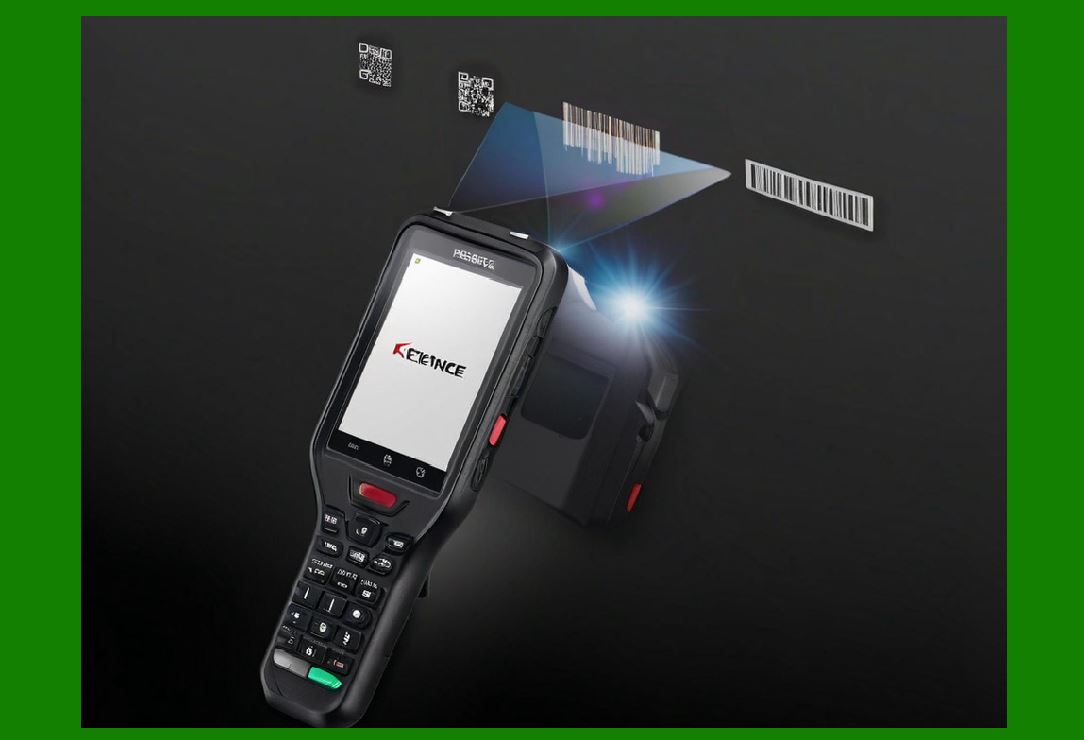
RFID changes the equation. Instead of scanning items one at a time, staff can read hundreds of tags simultaneously with a single handheld reader. Instead of relying on manual counts that are outdated the moment they are completed, the system can provide near-real-time visibility into what is on the shelf and what is in the back room. The fashion brand in question deployed washable RFID tags, woven labels, and hang tags that could survive the rigors of textile processing while supporting serialized encoding that integrates with the company's warehouse management system. The result was item-level traceability from factory to retail floor, with the potential to support emerging regulatory requirements like the European Digital Product Passport, which will require brands to provide transparency into each garment's origin and lifecycle. |
The scale of these deployments is remarkable. For one fashion brand, the implementation involved scheduled bi-monthly deliveries of three hundred thousand RFID tags and labels, with the flexibility to scale up as volume increased. This is not a pilot project or a niche application. It is the industrial-scale deployment of a technology whose conceptual roots lie in the urgent need to identify friendly aircraft over the English Channel. |

|
Loss Prevention and Retail Intelligence |
Traditional electronic article surveillance systems have long been a fixture at retail exits. These systems trigger an alarm when an item carrying a special tag passes through a gate, but they suffer from a fundamental limitation: they know something has passed, but not what. An alarm sounds, staff respond, and by the time they arrive at the exit, the thief is gone and the inventory system has no record of what was taken. |
The integration of RFID with loss prevention systems transforms this dynamic. Dual-technology tags combine an EAS component for alarm triggering with an RFID chip storing a unique Electronic Product Code. When an item passes through an exit portal, the system captures not just the fact that something has passed but the specific identity of that item---its SKU, its size, its color, and any other data encoded in the tag. |
This changes loss prevention from a reactive exercise into a data-driven discipline. The inventory system can be automatically adjusted to reflect the loss. Patterns of theft can be identified---the same SKUs repeatedly targeted, specific stores or zones with elevated shrink rates, organized retail crime operations involving coordinated multi-item thefts. The alarm becomes not just a signal to staff but a structured data record that can be analyzed, correlated with video surveillance, and used to build cases for law enforcement. |
The operational implications extend beyond security. When every exit event is captured as item-level data, retailers gain a more accurate picture of inventory flow. Out-of-stocks caused by shrink can be identified and corrected more quickly. Replenishment decisions can be based on real-time data rather than periodic manual counts. The RFID-EAS integration represents a shift from security as a standalone function to security as one component of a broader retail intelligence system. |
|
Healthcare: Tracking the Tools of Surgery |
The operating room is a high-stakes environment where errors can have fatal consequences. Surgical instruments must be sterile, complete, and available when needed. A missing instrument in a surgical set can delay a procedure while staff search for it. A contaminated instrument can cause infection. An instrument that has reached the end of its useful life may fail during surgery. |
Manual tracking of surgical instruments is labor-intensive and error-prone. A typical hospital may process thousands of instruments per day through sterilization, storage, and surgical use. Staff members visually inspect sets, count instruments, and document their movement. The process consumes time that could be spent on patient care, and the potential for human error is ever-present. |
RFID offers a solution. Research has demonstrated that a fully functional RFID system can identify individual instruments within a metallic sieve, even when the instruments are arranged chaotically and the tags are partially covered by other instruments. The technology must overcome significant challenges: metal interferes with radio waves, and instruments must survive the high temperatures and pressures of sterilization. But the payoff is substantial. A surgical set can be scanned in seconds, with each instrument identified automatically. Missing instruments are detected immediately. The complete flow of instruments from hospital to sterile processing facility and back can be monitored, with bottlenecks identified before they disrupt scheduled procedures. |
The safety implications are significant. Automated verification reduces the risk of incomplete or contaminated sets reaching the operating room. The tracking data creates a record of each instrument's lifecycle, supporting quality control and regulatory compliance. And by automating the mundane work of counting and documentation, the technology allows nurses and technicians to focus on higher-value tasks that require human judgment and skill. |

|
Libraries: The Quiet Revolution |
Libraries may not be the first application that comes to mind when considering RFID, but they have been among the most enthusiastic adopters. The reasons are straightforward: libraries manage large collections of relatively uniform items that circulate frequently and must be tracked accurately. The barcode technology that libraries have used for decades requires line-of-sight scanning and manual handling of each item. RFID eliminates these constraints. |
A library patron using a self-checkout kiosk can place a stack of books on a reader pad and have all of them checked out simultaneously. Returns are processed automatically, with the system identifying each item and updating the catalog without staff intervention. Shelf inventory---the process of verifying that items are where they should be---becomes dramatically faster. Instead of scanning each book individually, staff can walk through the stacks with a handheld reader and capture the status of an entire shelf in seconds. |
The applications extend beyond basic circulation. Libraries use RFID to track media and devices---DVDs, tablets, laptops---that circulate between service desks and storage rooms. Special collections, including rare books and archives, can be monitored with precise location tracking that ensures their security while allowing authorized access. Multi-floor monitoring supports flow analysis across mezzanines, study halls, and quiet rooms, helping libraries understand how their spaces are used and where resources should be distributed. |
For a major metropolitan library network in New York City, the implementation of RFID and related technologies for automated book identification, circulation tracking, and self-checkout enabled faster processing of media returns and improved collection management efficiency across multiple branches. The technology did not replace library staff; it freed them from repetitive tasks so they could focus on the work that libraries exist to do: connecting people with information. |

|
Agriculture and Food Safety: From Farm to Table |
Food safety is a concern that touches everyone. When an outbreak of foodborne illness occurs, the ability to trace contaminated products back to their source quickly can mean the difference between a contained incident and a widespread crisis. Traditional paper-based traceability systems are slow, incomplete, and vulnerable to errors. RFID offers a more robust alternative. |
In the rice industry, for example, researchers have developed RFID-based traceability systems that track rice through production, processing, distribution, and sales. The system provides information about the entire food chain, allowing rapid identification of the cause of any quality or safety problem. For a product like rice that forms the foundation of food security in many countries, the ability to verify origin, monitor handling, and ensure authenticity has significant value. |
The principles extend to other agricultural products. RFID tags can be attached to individual items, pallets, or containers, creating a record of where food has been, who handled it, and under what conditions it was stored. For consumers increasingly concerned about food safety and quality, this traceability provides assurance. For regulators investigating an outbreak, it provides a rapid path to the source. For producers, it provides a way to demonstrate compliance with safety standards and differentiate their products in the market. |

|
Aviation and Complex Component Management |
The aviation industry has a particular need for the kind of identification and tracking that RFID provides. Modern aircraft are assemblies of millions of components, each with its own history of manufacture, installation, maintenance, and replacement. When a component fails, it is essential to know its provenance---whether it was manufactured correctly, whether it has been properly maintained, whether other components from the same batch or production run might be affected. |
RFID tags on aircraft components can store identifier information that links to a wealth of data: maintenance instructions, maintenance history, fabrication history, assembly history, spare part availability, and service bulletins. A maintenance technician with an RFID reader can access this information instantly, without searching through paper records or navigating multiple computer systems. If maintenance information is updated after a procedure, the system can record the change and make it available to other readers and other maintenance facilities. |
The aviation use case illustrates an important principle: RFID is not just about identifying what something is. It is about connecting that identity to information that makes the identity useful. A serial number alone is of limited value. A serial number that unlocks a complete lifecycle record is powerful. |

|
What the Wartime Engineers Could Not Have Known |
The engineers who developed the first IFF systems were solving an immediate, pressing problem: how to prevent friendly aircraft from being shot down by their own side. They were not thinking about inventory management or food safety or library circulation. The technology they created was a means to an end, and that end was survival in a brutal war. |
Yet the architecture they established---the interrogation and response, the tag and reader, the identification of something at a distance---proved to be a general solution to a wide range of problems that had not yet been recognized. The physical principles that allowed a transponder to respond to a radar pulse are the same principles that allow a tag to respond to an RFID reader. The wartime challenge of distinguishing friend from foe became the peacetime challenge of distinguishing one item from another, one component from its neighbor, one product from an identical-looking counterfeit. |
The evolution from IFF to RFID is a story of generalization. The wartime system was designed for a specific purpose: identifying aircraft. The modern RFID system is a general-purpose technology that can identify anything that can carry a tag. The constraints that limited wartime adoption---cost, size, power consumption---have been progressively relaxed by advances in microelectronics, materials science, and manufacturing. The result is a technology that has become ubiquitous, embedded in supply chains, healthcare systems, libraries, and countless other applications. |
|
Detailed Summary |
The Identification Friend or Foe system of World War II represents the conceptual foundation of modern RFID technology. Faced with the problem of distinguishing friendly aircraft from enemy aircraft on radar screens, the wartime powers developed solutions that previewed the two fundamental approaches to RFID: passive systems that rely on modifications to reflected signals, and active systems that use transponders to broadcast identification signals in response to interrogation. |
The German solution---instructing pilots to roll their aircraft in a distinctive pattern---was crude, unreliable, and easily mimicked. It required no additional equipment but depended entirely on pilot behavior and the enemy's ignorance of the technique. The British solution, developed under Watson-Watt, was more sophisticated: a transponder on each friendly aircraft that received coded radar signals and broadcast a reply identifying the aircraft as friendly. This active IFF system established the basic architecture that RFID systems still use: a reader sends a signal, a tag responds with identifying information. |
The development of IFF was marked by technical challenges and bureaucratic conflict. American and British systems were incompatible, and the need for interoperability---a friendly aircraft must be identifiable by any allied radar---created pressure for standardization. The resolution of this conflict, achieved through negotiation and operational necessity, established a principle that remains central to RFID: identification systems must be interoperable to be useful. |
After the war, IFF technology found new applications in civilian air traffic control, but the leap to commercial RFID took decades. The 1970s and 1980s saw the first commercial applications, but adoption was limited by cost and the lack of standards. The 1990s brought technological advances that reduced costs and improved performance. The 2000s saw the emergence of the EPC Gen2 standard, which created a common language for RFID systems and enabled the large-scale deployments that characterize the technology today. |
Modern RFID applications span an extraordinary range of industries. In retail and apparel, item-level tagging supports fast inventory turnover, omnichannel fulfillment, and compliance with emerging traceability regulations. The integration of RFID with electronic article surveillance transforms loss prevention from a reactive alarm function into a data-driven discipline that captures item-level information about every exit event. In healthcare, RFID tracks surgical instruments through sterilization and use, reducing the risk of incomplete or contaminated sets and freeing clinical staff from manual counting. Libraries use RFID for self-checkout, automated returns, and shelf inventory, improving circulation efficiency and allowing staff to focus on patron services. In agriculture, RFID traceability systems track food from production through distribution, supporting food safety investigations and consumer confidence. In aviation, RFID tags on components link physical parts to digital records of maintenance history, fabrication data, and regulatory compliance. |
|
The wartime engineers who developed IFF could not have foreseen these applications. They were solving a specific problem under urgent conditions. But the architecture they created---a reader that interrogates, a tag that responds, an identity that travels through the air---proved to be a general solution. The journey from the skies over Britain to the shelves of supermarkets, the operating rooms of hospitals, and the rice paddies of Asia is a story of how a technology designed for war became a foundation for mapping the physical world. The silent network of RFID tags and barcode labels that now surrounds us is, in a sense, the peacetime descendant of the IFF transponders that once helped pilots survive the journey home. |
 cs@easiersoft.com