Chapter 14: The 1973 Patent |
Summary |
In 1973, a single patent filing quietly set in motion a technological revolution that would take decades to fully unfold. Mario Cardullo, an entrepreneur and inventor working in New York, submitted a patent application for a passive radio transponder with rewritable memory---what many historians consider the first true ancestor of modern RFID. This chapter explores the origins of that patent, the technical breakthrough it represented, and the remarkable breadth of applications that have emerged in the fifty-plus years since. From retail supply chains and healthcare to agriculture, aerospace, and libraries, the passive read-write tag has become an invisible infrastructure that maps the physical world. |
|
The Man Behind the Patent |
Mario Cardullo was not a physicist at a national laboratory. He was not a professor at a prestigious university. He was an entrepreneur with a vision. In the late 1960s, Cardullo was working on transportation and security problems, and he saw a need that existing technology could not fill. Barcodes were becoming common in retail, but they had a fundamental limitation: they had to be seen. A barcode scanner required a clear line of sight, a clean label, and a human or machine to position the item correctly. If a box was turned the wrong way, or if a label was smudged, the barcode was useless. |
Radio waves, Cardullo realized, did not have that limitation. Radio could travel through materials. It could reach tags that were hidden inside boxes, behind walls, or buried under layers of other products. And unlike the electronic article surveillance tags that were beginning to appear in stores---simple one-bit devices that were either on or off---radio waves could carry actual information. |
In 1969, Cardullo presented a business plan to investors that outlined a remarkable range of potential applications. The plan described uses in transportation (automotive vehicle identification, automatic toll systems, electronic license plates, vehicle routing), banking (electronic checkbooks, electronic credit cards), security (personnel identification, automatic gates, surveillance), and medicine (patient identification and history). This was years before the personal computer, decades before the smartphone. Cardullo was describing a world in which everyday objects could carry digital identities and communicate wirelessly. |
The patent itself, U.S. Patent 3,713,148, was filed in 1973 and granted later that decade. It covered a passive radio transponder with memory---a device that could receive a radio signal, use that signal's energy to power itself, and then transmit back stored information. The patent explicitly covered radio, sound, and light as transmission media, a scope that was remarkably broad for its time. |
It is worth noting that Cardullo was not alone in this early work. That same year, Charles Walton, a California entrepreneur, received a patent for a passive transponder used to unlock a door without a key. Walton's system used a card with an embedded transponder that communicated with a reader near the door. When the reader detected a valid identity number, the door unlocked. Walton licensed his technology to Schlage, a lock manufacturer, and other companies. This was the beginning of the keyless entry systems that are now commonplace in offices, hotels, and cars. Walton would later be remembered as the 'father of RFID' by some, though the terminology itself would not come into common use for another decade. |
But Cardullo's patent was different in a crucial way. Walton's transponder was essentially a fixed identifier---a number that could be read but not changed. Cardullo's design included rewritable memory. The tag could store information that could be updated. This might seem like a small distinction, but it was the difference between a simple electronic key and a true data carrier. A rewritable tag could track a product through multiple stages of a supply chain, recording each handoff. It could store maintenance history, expiration dates, or any other information that might change over time. |
The technology was demonstrated in 1971 to the New York Port Authority and other potential users. The demonstration system consisted of a transponder with sixteen bits of memory, intended for use as a toll device. Sixteen bits is not much---barely enough to store a few numbers---but it proved the concept. Radio waves could power a remote device, and that device could send back stored data. |
|
From World War II to the Patent |
The story of RFID did not begin with Cardullo. The roots of the technology stretch back to World War II, when radar was first deployed on a large scale. Radar, discovered in 1935 by Scottish physicist Sir Robert Alexander Watson-Watt, allowed military forces to detect approaching aircraft from miles away. But radar had a critical limitation: it could tell you that something was out there, but not who it was. A returning bomber and an attacking fighter looked the same on a radar screen. |
The British developed the first active identify friend or foe system, placing a transmitter on each aircraft. When the plane received signals from ground radar stations, it broadcast a signal back that identified the aircraft as friendly. The Germans developed a cruder but clever solution: pilots returning to base would roll their planes, changing the radio signal reflected back to the ground. This simple maneuver alerted the radar crew that these were German planes, not Allied aircraft. This technique---using the reflection of radio waves to convey information---was essentially the first passive RFID system. |
After the war, radar and radio frequency communications continued to advance. Scientists in the United States, Europe, and Japan researched how radio energy could be used to identify objects remotely. In the 1960s, companies began commercializing anti-theft systems that used radio waves. These electronic article surveillance tags, still used in retail packaging today, were simple one-bit devices. The bit was either on or off. If a customer paid for an item, the bit was turned off, and the customer could leave the store. If the item was not paid for, readers at the door detected the tag and sounded an alarm. |
These anti-theft tags were a commercial success, but they were not true RFID. They could not store and transmit unique identifiers. They could only say 'this item is protected' or 'this item is not protected.' Cardullo's patent represented a leap forward: a tag that could carry meaningful data, that could be powered by the reader's signal, and that could have its memory rewritten. |
Meanwhile, the U.S. government was pursuing its own RFID research. In the 1970s, the Department of Energy asked Los Alamos National Laboratory to develop a system for tracking nuclear materials. A group of scientists proposed putting a transponder in a truck and readers at the gates of secure facilities. The gate antenna would wake up the transponder, which would respond with an ID and potentially other data, such as the driver's ID. This system was commercialized in the mid-1980s when the Los Alamos scientists left to form a company developing automated toll payment systems. |
At the request of the Department of Agriculture, Los Alamos also developed a passive RFID tag to track cattle. The problem was that cows were being given hormones and medicines when they were ill, but it was difficult to ensure each cow received the correct dosage without accidental double-dosing. Los Alamos created a passive UHF system that drew energy from a reader and reflected back a modulated signal using a technique known as backscatter. Later, companies developed low-frequency systems with smaller transponders that could be injected under the skin of cattle. This system is still used around the world today. |
The work at Los Alamos demonstrated that passive RFID could work reliably in real-world conditions. But the commercial applications that would transform industries were still years away. |

|
What Made the 1973 Patent Different |
To understand why the 1973 patent matters, it helps to understand what passive RFID actually does. A passive RFID tag has no battery. It has no internal power source of its own. It sits inert, sometimes for years, waiting. When a reader sends out a radio signal, the tag's antenna captures some of that energy. The tag uses that energy to power its internal circuitry, retrieves stored data from its memory, and then reflects a modified version of the signal back to the reader. This technique is called backscatter. |
The tag is essentially a mirror that can modulate its reflection. By changing how it reflects the incoming radio waves, the tag encodes information---typically a unique identifier, but potentially much more. The reader receives this reflected signal and decodes the information. |
This is fundamentally different from a barcode. A barcode is passive in a different sense: it reflects light, but it cannot change what it reflects. A barcode always says the same thing until it is replaced. An RFID tag can be read, and in Cardullo's design, rewritten. It can be updated as circumstances change. |
The rewritable memory was the key innovation. A product moving through a supply chain could have its tag updated at each stage: manufactured, shipped, received, stocked, sold. A maintenance record could be appended to a tool's tag each time it was serviced. A patient's tag could be updated with new information as their condition changed. |
The patent also covered the use of sound and light as transmission media, not just radio waves. This was a prescient recognition that the fundamental concept---a powered transponder with memory---could be implemented in multiple ways. |
Cardullo's original business plan from 1969 had described applications in transportation, banking, security, and medicine. It would take decades for most of these applications to become practical and widespread. The technology was ahead of its time. The integrated circuits of the early 1970s were too large, too power-hungry, and too expensive to make passive RFID tags practical for most uses. But the conceptual foundation had been laid. |
It is also worth noting that the acronym 'RFID' did not appear in Cardullo's patent. The term would not come into common use until the 1980s. The first patent to be explicitly associated with the acronym RFID was granted to Charles Walton in 1983. But the technology described in Cardullo's 1973 patent is recognizably the same technology that powers billions of tags today. |
|
The Slow Spread of a Good Idea |
For the first two decades after the 1973 patent, RFID remained a niche technology. It was used in toll collection, animal tracking, and access control. These were applications where the value of automatic identification justified the relatively high cost of tags and readers. |
The toll collection application was particularly important. In the 1980s, the Los Alamos scientists who had worked on nuclear materials tracking founded a company to develop automated toll payment systems. These systems allowed drivers to pass through toll plazas without stopping, with the toll automatically deducted from a prepaid account. The technology worked, and it demonstrated that passive RFID could function reliably in harsh outdoor environments, at highway speeds, with tags mounted on windshields. |
Animal tracking was another early success. The low-frequency systems developed at Los Alamos and later commercialized by companies like Destron were used to track livestock, pets, and wildlife. A glass-encapsulated transponder about the size of a grain of rice could be injected under an animal's skin. When a reader was brought near, the transponder would transmit its unique identifier. This allowed farmers to track individual animals through their lives, ensuring proper medication and breeding records. It also allowed lost pets to be reunited with their owners. |
Access control was the third major early application. Walton's patent had covered keyless door entry, and by the 1980s, RFID cards were becoming common in office buildings, hotels, and secure facilities. These systems used low-frequency tags embedded in plastic cards, similar in size and shape to credit cards. The user would hold the card near a reader, and the door would unlock if the card's identifier matched an authorized list. |
These applications were important not just for their own sake but because they drove the development of RFID technology. Each application required solving specific technical challenges: making tags that could survive harsh environments, readers that could work reliably in noisy electromagnetic conditions, and systems that could manage thousands or millions of unique identifiers. The lessons learned in these early deployments would prove invaluable when RFID began to spread to other industries. |

|
Retail and the Supply Chain Revolution |
The application that truly transformed RFID from a niche technology into a global infrastructure was retail supply chain management. This transformation began in earnest in the early 2000s, when Walmart and other major retailers began mandating that their suppliers apply RFID tags to pallets and cases. |
The problem that RFID solved was simple but enormous. Retail supply chains are complex, global, and fast-moving. Products are manufactured in one part of the world, shipped across oceans, distributed through regional warehouses, and finally delivered to individual stores. At each step, inventory must be counted, tracked, and managed. Barcodes required manual scanning, one item at a time. A warehouse worker had to find each box, turn it so the barcode faced the scanner, and pull the trigger. This was slow, labor-intensive, and prone to error. |
RFID changed that. A single reader could scan hundreds of tags in seconds, without line of sight, without manual positioning. A worker could walk down an aisle with a handheld reader and instantly know what was on every shelf. A portal reader at a warehouse door could record every item passing through, automatically and without human intervention. |
The impact on inventory accuracy was dramatic. Studies have consistently shown that RFID improves inventory accuracy from around 60 to 70 percent with manual methods to 95 percent or higher. For a large retailer, this means fewer out-of-stocks (products that customers want but cannot find), less excess inventory (products that sit unsold), and more efficient use of labor. |
Walmart was an early and aggressive adopter. In 2003, the company announced that its top 100 suppliers would be required to put RFID tags on cases and pallets. The mandate was controversial at the time, and Walmart later scaled back its ambitions for case-level tagging. But the initiative had a lasting effect: it forced the entire retail supply chain to take RFID seriously, and it drove down the cost of tags and readers through economies of scale. |
The real breakthrough came when retailers began moving from tagging cases and pallets to tagging individual items. Item-level tagging is more challenging---each individual product needs its own tag, and the cost per tag becomes a significant factor. But the benefits are correspondingly greater. With item-level tagging, a retailer knows not just that a case of shirts arrived at the store, but exactly which sizes and colors are on the shelf at any given moment. |
Apparel was the first major category to adopt item-level RFID at scale. Fast-fashion retailers like Zara, Uniqlo, and Decathlon began tagging individual garments in the 2010s. The results were impressive: inventory accuracy improved, out-of-stocks decreased, and omnichannel capabilities became possible. When a customer orders online for store pickup, the retailer can know with confidence whether the item is actually in stock. When a customer returns an item, the tag can be read instantly to process the return. |
The technology has continued to expand into new categories. In 2025, Walmart and Avery Dennison announced a breakthrough: RFID tags for fresh food categories, including bakery, meat, and deli. This was technically challenging because radio waves behave differently around dense, liquid-rich products like meat. The adhesive construction also had to be designed to work in refrigerated and frozen environments. But the solution allows Walmart associates to track inventory faster and more accurately, with digital use-by dates that help rotate products efficiently and reduce food waste. |
The collaboration ties into Walmart's sustainability goals, including its aim to cut global operational food loss and waste intensity in half by 2030. By giving each item its own digital identity, associates instantly know the freshness of the foods they are handling, enabling better inventory management and resulting in less waste. As Julie Vargas, VP and GM of Avery Dennison Identification Solutions, put it, 'This is a landmark moment for the industry'. |
Kroger, another major grocery chain, has also rolled out RFID systems with passive UHF tags applied to the packaging of freshly baked bread, muffins, and cookies across most of its 2,750 stores. The technology that began with toll collection and cattle tracking is now helping grocery stores sell fresh bread more efficiently. |
The apparel supply chain has also seen sophisticated implementations. A boutique fashion brand profiled in a 2025 case study used washable RFID tags, woven labels, and hang tags to achieve item-level traceability from factory to retail floor. The brand releases new styles every week, manages design, production, fulfillment, and retail in-house, and operates across the United States, Europe, and Australia. With weekly product drops and dozens of SKUs per collection, manual inventory processes were slowing down throughput and data accuracy. |
The solution involved RFID labels that could withstand textile processing---handling, washing, and folding---as well as woven labels made from soft, sewable nylon with integrated UHF antennas. These tags provide permanent item-level identification through the product lifecycle. The implementation was designed to scale, with scheduled bi-monthly deliveries of 300,000 RFID tags. |
The brand also had an eye on forthcoming Digital Product Passport regulations in Europe, which will require brands to provide transparency into each item's origin, composition, and lifecycle. RFID offered a scalable way to associate serialized product data with each garment, forming the foundation for traceability, circularity programs, and brand accountability. |
|
Healthcare: Tracking Patients, Medications, and Equipment |
Healthcare is an industry where the stakes of inventory management are measured in human lives. A missing medication, a misplaced surgical instrument, or a misidentified patient can have catastrophic consequences. RFID is increasingly being deployed to reduce these risks and improve efficiency. |
One of the most important applications is medication management. In pharmacies and hospital medication rooms, RFID enables automatic analysis of inventory without manual counting. Each medication product can be affixed with an RFID tag, allowing pharmacists to precisely track inventory and automatically initiate reorder processes when stock runs low. The system can also notify pharmacists when a medication is approaching expiration or has been recalled, allowing for prompt stock rotation and reducing financial losses. |
But the benefits go beyond inventory efficiency. RFID ensures medications are authentic in real time, mitigating the threat of counterfeit products entering the pharmacy workflow. The technology can optimize storage parameters for biologics and vaccines, which often require precise temperature control. It can create a digital history of drug access to deter diversion and support regulatory compliance. |
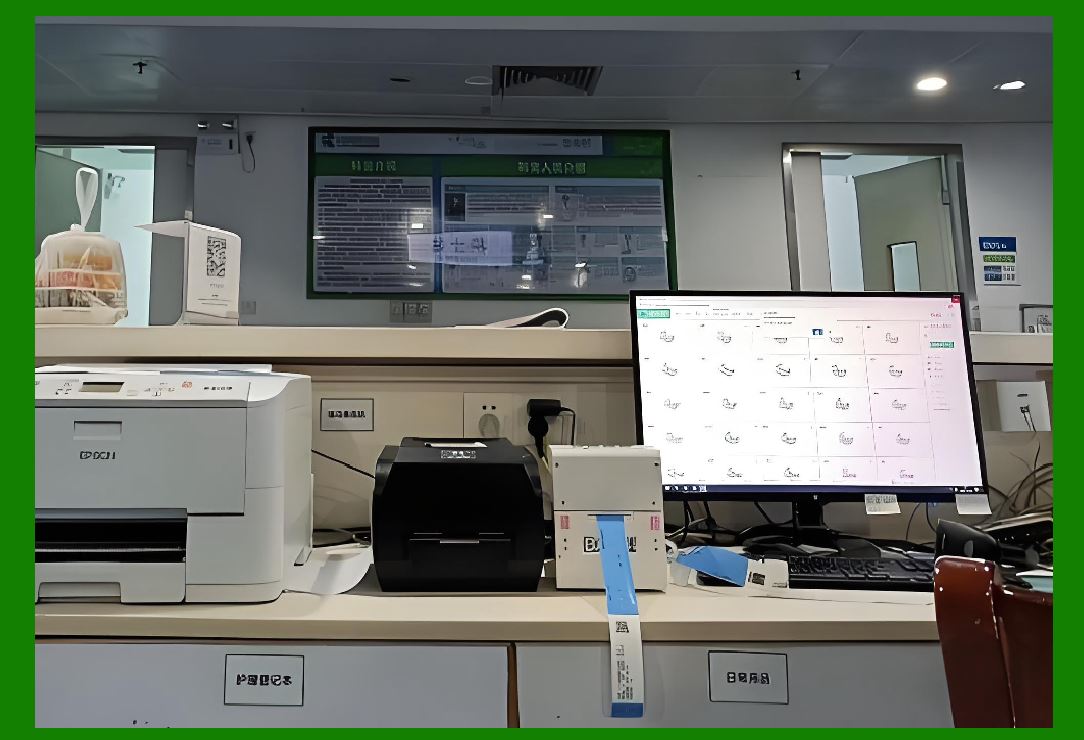
Patient identification is another critical application. RFID tags can be embedded in wristbands, allowing healthcare providers to verify a patient's identity before administering medication or performing procedures. This reduces the risk of misidentification and the medication errors that can result. RFID can also assist in remote and real-time monitoring of vital signs, including blood pressure, heart rate, and body temperature. |
In operating rooms, RFID is being used to detect and track surgical materials, monitoring their usage rate and preventing items from being left inside patients. The technology is also used in infection prevention and control, with RFID-enabled sensors that can detect when wounds are healing or worsening through noncontact electronic readings. |
The broader healthcare ecosystem is also benefiting from RFID. The Internet of Health Things concept describes a network that enables seamless connection and communication of a vast array of devices. Within this framework, massive machine-type communication supports an extremely high connection density of online devices. Remote patient monitoring allows healthcare practitioners to consistently observe essential indicators and physiological information, enabling timely identification of potential health issues and personalized medical interventions. Smart healthcare infrastructure enables real-time monitoring of medical equipment, efficient inventory management, and automation of operations, reducing waiting times and improving the delivery of healthcare services. |
As one pharmacy expert put it, RFID technology 'can help us focus on what's important without truly worrying about the labor or the staff that's needed to do that work safely'. The technology supplements how healthcare professionals do what they do, safely and effectively, for their patients. |

|
Manufacturing and Aerospace: Tracking Work in Progress |
Manufacturing environments present unique challenges for asset tracking. Work-in-progress items move through multiple stages of production, often across different buildings or even different countries. Tools and fixtures must be available when needed, and their calibration and maintenance histories must be tracked. In regulated industries like aerospace, the documentation requirements are especially stringent. |
Collins Aerospace, a major supplier to the aviation industry, has deployed RFID across multiple facilities for work-in-progress tracking. At a facility in Miami, gates installed around the facility scan passive RFID tags on parts as they move through maintenance, repair, and overhaul operations. The parts are small, and many can be on a single cart, but the gates can scan all passive tags on a cart, even overlapping tags, with greater than 90 percent accuracy. |
At another Collins facility in Oakville, each work order on the floor is fitted with an active tag for tracking the physical location of the part and its traveler within the facility. Materials planning staff use the tracking platform from a browser to find parts throughout the facility and move them to their next operation. At a facility in Wolverhampton, passive and active tags are used to track work in progress and kits throughout the shop floor and staging area, understanding third-party logistics turnaround times. |
In the aerospace industry, RFID is also being used to store service history per Boeing and Airbus contract requirements. Passive RFID tag memory can store the maintenance and service record of a component, ensuring that this critical information travels with the part throughout its lifecycle. This is a direct descendant of Cardullo's rewritable memory concept: the tag is not just an identifier but a data carrier that accumulates information over time. |
A study of mold production in Korea demonstrated how RFID can be used in manufacturing environments beyond simple inventory control. Active RFID tags were attached to the main parts of molds, and their positions on the factory floor were tracked with routers. Workers could use mobile devices with RFID readers to inquire about molds on the spot, accessing 3D design data and basic mold data. The study noted that while RFID was already accepted in logistics and inventory control, manufacturing environments presented additional challenges and opportunities. |
In logistics centers, RFID is being used to automate loading and material flow. A 2025 study described an automated logistics loading system using carts equipped with RFID tags. RFID card keys recognize the carts, and a distance measurement sensor detects whether items are present. If items are detected, a DC motor operates to move the goods via a conveyor. Infrared sensors detect empty carts and ensure they stop. The system automates and optimizes workflow, saving time and cost while improving accuracy and efficiency. |

|
Agriculture and Food Traceability |
The food supply chain is another area where RFID is providing value, particularly for traceability and food safety. Consumers increasingly want to know where their food comes from, and regulators are imposing stricter requirements for tracking food products from farm to table. |
A pilot project in the Netherlands is testing permanent RFID tags on fruit crates that last for at least ten years and can be automatically read during every harvest. Currently, many fruit growers use paper barcodes that must be reapplied every season. These stickers can peel off, get wet, become soiled, or be damaged, resulting in lost or unreadable information. The manual processes represent a bottleneck in harvest logistics, especially during the busy picking period. |
The RFID labels being tested feature an integrated QR code, so crates can also be identified manually with a smartphone when necessary. The label is applied to the crate once, costs around €0.75, and comes with a ten-year guarantee. The difference compared with a traditional barcode is that the RFID chip can be read automatically and wirelessly. |
The Pluk-O-Trak, a harvesting platform widely used in the Netherlands, is equipped with an RFID reader that automatically records which crate is on the machine at any given time. This information is directly linked to the plot, location, date, time, and fruit variety. The result is automatic registration without the need to apply stickers or manually scan codes. If the field trials prove successful, permanent RFID tags could put an end to the annual application of thousands of crate stickers, reducing administrative work, lowering the risk of errors, and providing more reliable traceability data. |
Livestock tracking was one of the earliest applications of passive RFID, and it remains important today. The glass-encapsulated transponders injected under the skin of cattle provide a permanent, tamper-resistant identifier that travels with the animal throughout its life. This allows farmers to maintain accurate medication records, breeding histories, and movement tracking, which is essential for food safety and regulatory compliance. |

|
Libraries and Archives: Preserving Knowledge |
Libraries and archives face a distinctive challenge: managing vast collections of items that must be findable, trackable, and secure. A large university library may hold millions of volumes, and a national archive may hold documents and artifacts of irreplaceable value. Traditional barcode systems require each item to be handled individually for check-in, check-out, and inventory. |
UHF RFID is transforming library operations. RFID tags can be placed in books, media, and archival materials, enabling fast and accurate inventory audits. Library staff can scan multiple items simultaneously, significantly reducing the time needed for inventory checks. With this streamlined process, institutions can maintain up-to-date records, preventing lost or misplaced items. |
Automated check-in and check-out is another major benefit. As books and materials pass through RFID-enabled kiosks or gates, the system instantly records their status, minimizing manual entry errors and enabling smoother patron experiences. Self-service stations allow patrons to independently check out and return materials, reducing queues and freeing up staff for other tasks. |
Security is also enhanced. Security gates equipped with RFID readers can detect any unauthorized removal of tagged items, protecting valuable collections. This is particularly important for rare or high-value archival items. But RFID also helps with the less dramatic but equally important task of shelf management. RFID readers can scan entire shelves, identifying misplaced or incorrectly shelved books. Libraries can maintain proper organization of resources, making items easier for patrons to locate and reducing the workload of library staff. |
For archives, environmental monitoring is a critical concern. Environmental sensors paired with RFID tags can monitor temperature, humidity, and light exposure, which is essential for preserving sensitive materials. This application helps libraries maintain optimal storage conditions and prolongs the life of their collections by alerting staff to unfavorable environmental changes. |
Usage analytics is another benefit. RFID systems can track which items are frequently accessed, helping libraries analyze usage patterns and make data-driven decisions about collections. These insights assist in identifying high-demand resources, guiding acquisition strategies, and optimizing storage for high-use items. |

|
The Technical Foundation: How It Actually Works |
Throughout this chapter, we have described applications of RFID without delving deeply into the technical details. But understanding the basic principles helps explain why RFID can do things that barcodes cannot. |
A passive RFID system consists of three main components: a tag, a reader, and an antenna. The tag contains a microchip and an antenna. The reader also contains an antenna and a radio transceiver. When the reader transmits a radio signal, the tag's antenna captures some of that energy. The tag's microchip uses this energy to power up, retrieve data from its memory, and modulate the reflected signal. The reader receives this modulated signal and decodes the data. |
The key difference from a barcode is that the tag does not need to be visible. Radio waves can penetrate materials that light cannot. A tag inside a cardboard box can be read without opening the box. A tag on a pallet can be read even if the pallet is wrapped in plastic. This is why RFID is so valuable for supply chain applications: items can be identified without being physically handled. |
RFID systems operate at different frequencies, each with its own characteristics. Low-frequency systems, typically around 125 kilohertz, have short read ranges but can penetrate liquids and metals relatively well. They are commonly used for animal tracking and access control. High-frequency systems, at 13.56 megahertz, offer greater range and faster data transfer. They are used in library systems, smart cards, and some retail applications. Ultra-high-frequency systems, typically in the 860 to 960 megahertz range, offer the longest read ranges and are used for supply chain and logistics applications. |
The choice of frequency depends on the application. For reading many tags quickly at a distance, UHF is usually best. For reading tags near liquids or metals, low frequency may be necessary. For applications requiring secure transactions, high frequency may be preferred. |
The read-write capability that Cardullo patented is now standard in many RFID tags. A read-only tag contains a fixed identifier that cannot be changed. A read-write tag can have its memory updated by the reader. This enables applications where information needs to change over time: a work-in-progress tag that records each production step, a maintenance tag that accumulates service history, or a patient tag that is updated with new medical information. |

|
The Quiet Revolution |
Looking back from the vantage point of the mid-2020s, the 1973 patent appears as a turning point. Before Cardullo, radio frequency identification was a collection of experimental techniques and simple anti-theft devices. After Cardullo, it was a technology with a clear conceptual foundation: a passive transponder with memory that could be read and rewritten wirelessly. |
The patent did not immediately change the world. The technology was ahead of its time, and it would take decades of incremental progress in integrated circuits, materials science, and radio engineering before passive RFID became practical for widespread use. The first applications were in toll collection, animal tracking, and access control---important but limited. |
The real transformation came when RFID moved into the supply chain. Retailers like Walmart and apparel brands like Zara and Uniqlo demonstrated that item-level RFID could improve inventory accuracy, reduce out-of-stocks, and enable omnichannel retail. The technology spread from apparel to other categories, including fresh food, where Walmart and Avery Dennison have recently achieved a breakthrough. |
Healthcare has adopted RFID for medication management, patient identification, surgical instrument tracking, and equipment monitoring. The technology improves safety, reduces errors, and frees healthcare professionals to focus on patient care. Manufacturing and aerospace use RFID for work-in-progress tracking, tool management, and service history documentation. Agriculture uses RFID for livestock tracking and, increasingly, for produce traceability. Libraries and archives use RFID for inventory management, self-service, security, and environmental monitoring. |
The common thread across all these applications is the ability to map the physical world. Every tagged object has a digital identity. Every reader is a point of data capture. Together, they create a network of information that mirrors the movement of physical goods and people. This is the silent network: invisible radio waves carrying data, quietly keeping track of the things that matter. |

|
A Detailed Summary of the 1973 Patent and Its Legacy |
Mario Cardullo's 1973 patent, U.S. Patent 3,713,148, represented the first true ancestor of modern RFID: a passive radio transponder with rewritable memory. The patent covered the use of radio, sound, and light as transmission media, and the original business plan described potential applications in transportation, banking, security, and medicine. A demonstration system with sixteen bits of memory was shown to the New York Port Authority in 1971. |
The patent built on decades of research in radar and radio communications, dating back to the identify friend or foe systems of World War II. It also paralleled work by Charles Walton, who received a patent in 1973 for a passive transponder used for keyless door entry. Walton's technology was licensed to Schlage and other companies, and he would later be remembered as a pioneer of RFID. |
The decades following the patent saw gradual commercial adoption. Toll collection systems, animal tracking, and access control were early applications. The Los Alamos National Laboratory developed RFID systems for tracking nuclear materials and cattle, and the scientists who worked on these projects later commercialized automated toll payment systems. |
The retail supply chain revolution began in the early 2000s, when Walmart and other retailers began mandating RFID tags on cases and pallets. Item-level tagging in apparel followed in the 2010s, with fast-fashion retailers demonstrating significant improvements in inventory accuracy and omnichannel capabilities. In 2025, Walmart and Avery Dennison extended RFID to fresh food categories including bakery, meat, and deli, overcoming technical challenges related to dense, liquid-rich products. |
Healthcare applications include medication management, patient identification, surgical instrument tracking, and equipment monitoring. RFID improves safety, reduces errors, and enables remote patient monitoring and smart healthcare infrastructure. Manufacturing and aerospace use RFID for work-in-progress tracking, tool management, and service history documentation, with companies like Collins Aerospace deploying the technology across multiple facilities. Agriculture uses RFID for livestock tracking and produce traceability, with pilot projects testing permanent tags on fruit crates. Libraries and archives use RFID for inventory management, self-service, security, shelf management, and environmental monitoring. |
The technical foundation of RFID is the passive transponder with memory: a device that draws power from the reader's signal, retrieves stored data, and reflects a modulated signal back. Different frequencies serve different applications, from low-frequency animal tracking to ultra-high-frequency supply chain management. The read-write capability that Cardullo patented enables applications where information must change over time, from work-in-progress tracking to service history documentation. |

|
From a single patent filed in 1973, RFID has grown into a global infrastructure that maps the physical world. The technology is now so pervasive that it often goes unnoticed---a quiet, invisible network that keeps track of the things that matter, from the food on our plates to the medications in our hospitals to the books on our shelves. The 1973 patent was not the beginning of the story, but it was the moment when the fundamental concept of modern RFID was first clearly articulated and protected. Everything that followed built on that foundation. |
 cs@easiersoft.com