Chapter 2: The Core Principle of RFID |
Summary in Brief |
Radio Frequency Identification (RFID) is a wireless technology that uses electromagnetic fields to automatically identify and track tags attached to objects. Unlike barcodes, which require a direct line of sight and manual scanning, RFID works through non-contact, batch-readable, and data-rich identification. The system consists of three core components: tags (containing a chip and antenna), readers (which emit signals and capture responses), and a backend data processing system. RFID operates across different frequency bands---low, high, ultra-high, and microwave---each suited to specific use cases. Its applications span retail, logistics, healthcare, transportation, manufacturing, animal husbandry, and beyond. This chapter unpacks the physics, components, and real-world impact of this silent network that helps map the physical world. |
|
2.1 Introduction: The Invisible Network |
Imagine walking into a clothing store, picking up an armful of shirts, and simply walking out through a doorway that instantly registers every item you have taken, charges your account, and updates the store's inventory---all without a single beep from a barcode scanner. Or picture a shipping warehouse where thousands of packages move along conveyor belts, each one automatically identified and routed to the correct truck without ever being touched by a human hand. Envision a hospital where surgical instruments are tracked from the sterilization room to the operating table, ensuring that no sponge or scalpel is ever left behind in a patient. |
These scenarios are not science fiction. They are everyday realities made possible by a technology that operates silently, invisibly, and continuously in the background of modern life: Radio Frequency Identification, or RFID. |
RFID belongs to a family of technologies known as automatic identification and data capture (AIDC). Its cousins include the familiar barcode, the magnetic stripe on credit cards, and biometric systems like fingerprint scanners. But RFID stands apart in several critical ways. It does not require line-of-sight. It can read hundreds of tags simultaneously. It can store and rewrite data. And it can work in environments where other identification methods fail---in dusty factories, under water, inside shipping containers, or on items moving at high speed. |
This chapter explores the core principle of RFID: how it works, what it is made of, and why it has become one of the most transformative technologies of the twenty-first century. We will examine the physics that make it possible, the engineering that makes it practical, and the countless ways it is reshaping industries and everyday life. |

|
2.2 The Historical Roots: From Radar to Tags |
The story of RFID begins not with retail or logistics, but with warfare. During the Second World War, the British Royal Air Force developed a system called Identification Friend or Foe (IFF) to distinguish friendly aircraft from enemy planes. German pilots would sometimes fly their aircraft in formation with British planes to avoid detection. To solve this problem, the British fitted their aircraft with a transponder---a device that received radar signals and transmitted a coded response back. If the radar operator received the correct code, the aircraft was identified as friendly. If not, it was considered hostile. |
This basic principle---a reader emits a signal, a tag responds with identifying information, and the reader interprets that response---remains the heart of RFID today. The technology remained largely military and specialized for decades. In the 1970s, researchers began exploring commercial applications, such as tracking livestock and toll collection. But it was not until the 1990s and 2000s, with the miniaturization of microchips and the falling cost of electronics, that RFID became economically viable for mass-market use. |
Today, RFID is everywhere. It is in your passport, your credit card, your car keys, the clothes you wear, the packages delivered to your door, the books in your library, and even the pets in your neighborhood. The technology has evolved from a military secret into a ubiquitous utility that quietly maps the physical world. |
|
2.3 The Anatomy of an RFID System |
To understand how RFID works, we must first understand its three fundamental components: the tag, the reader, and the backend system. These components work together in a seamless dance of electromagnetic energy and information exchange. |
The Tag: The Digital Identity |
The RFID tag, sometimes called a transponder, is the small device attached to the object being identified. Despite its diminutive size---often no larger than a grain of rice or a fingernail---each tag contains a surprising amount of engineering. |
At its core, every RFID tag consists of two elements: an integrated circuit (the chip) and an antenna. The chip stores information, typically a unique identifier number, but often much more---manufacturing date, batch number, temperature history, or even sensor readings. The antenna enables the chip to communicate wirelessly with the reader. |
Tags come in three main varieties, distinguished by how they obtain power: |
Passive tags have no internal battery. They harvest energy from the electromagnetic field emitted by the reader. When a passive tag enters the reader's field, the antenna captures a tiny amount of energy---measured in microwatts---which is sufficient to power up the chip and transmit a response. Passive tags are inexpensive, lightweight, and have an essentially unlimited lifespan. They are the workhorses of retail, logistics, and most commercial applications. However, they have a shorter read range (typically up to 10 meters) and require a reader with enough power to energize them. |
Active tags contain their own battery. They can broadcast their signal over much greater distances---up to 100 meters or more---and can be equipped with sensors to monitor temperature, humidity, shock, or other conditions. Active tags are used for high-value asset tracking, container monitoring in shipping, and vehicle toll collection. They are larger and more expensive than passive tags, and their batteries must be replaced periodically. |
Semi-passive or battery-assisted tags strike a middle ground. They have a battery to power the chip but rely on the reader's field for communication. This extends their read range compared to passive tags while preserving some cost advantages. |
Tags also vary by frequency, which we will discuss in detail later. But in essence, each tag is a tiny computer with a radio, powered either by a battery or by the energy it receives from the outside world. |
The Reader: The Interrogator |
The reader, also called an interrogator, is the device that communicates with the tags. It transmits a radio signal that energizes the tags and listens for their responses. A reader typically consists of a radio frequency module, a control unit, and one or more antennas. |
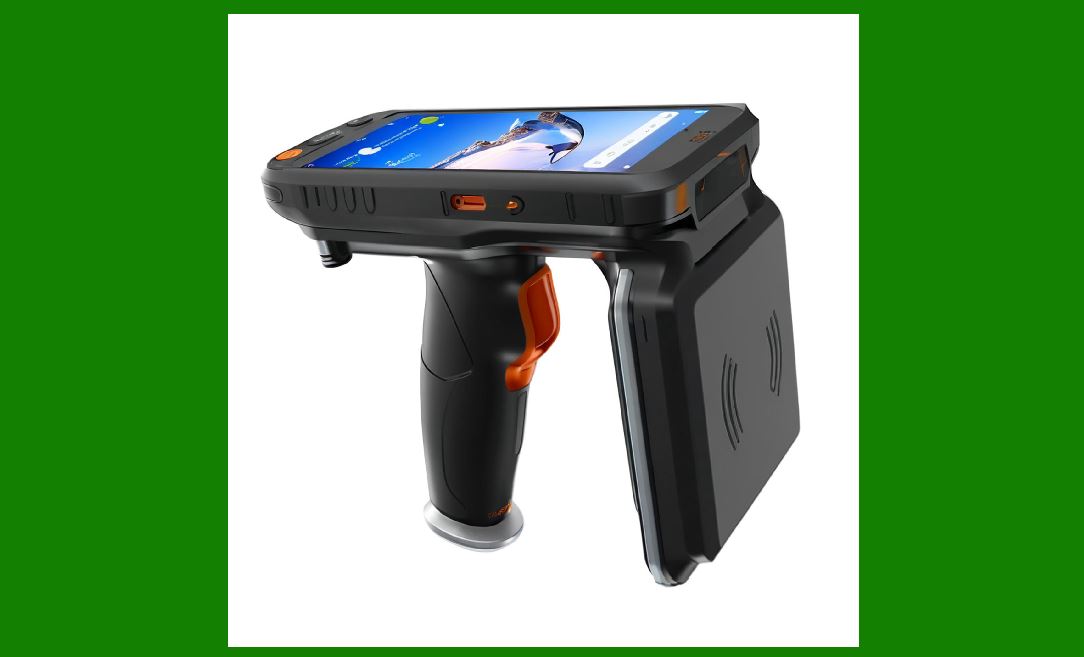
Readers come in many shapes and sizes. Fixed readers are mounted on doorways, conveyor belts, or warehouse shelves. Handheld readers are portable devices that workers carry around to scan items. Some readers are integrated into point-of-sale terminals, enabling instant checkout. Others are built into smartphones with Near Field Communication (NFC) capabilities. |
The reader's job is more complex than it might seem. It must generate a clean radio signal at a precise frequency, modulate that signal to convey commands to the tags, receive the tags' extremely weak return signals, filter out noise and interference, decode the data, and transmit that data to a backend system for processing. In addition, modern readers can handle multiple tags simultaneously, resolving collisions when many tags respond at once. |
The Backend System: The Brain |
The third component is the information technology infrastructure that processes and acts upon the data captured by the readers. This includes middleware that aggregates and filters data from multiple readers, databases that store tag information, and applications that use this data for inventory management, supply chain optimization, security, or customer service. |
The backend system is where raw tag readings are transformed into actionable intelligence. For example, when a reader at a warehouse door detects a tag on a pallet, the backend system can check the database to identify the product, verify that it was expected at that location, update inventory counts, and trigger a restocking alert if needed. Without this software layer, RFID would be just a stream of numbers with no meaning. |
|
2.4 The Physics of RFID: Electromagnetic Fields and Data Transfer |
At its heart, RFID is an application of electromagnetism. But the specific physics involved depends on the frequency of operation. RFID systems generally operate in one of four frequency bands, and the transition from lower to higher frequencies represents a profound shift in how the technology works. |
Low Frequency and High Frequency: The Near Field |
Low Frequency (LF) systems operate around 125 kHz, and High Frequency (HF) systems operate at 13.56 MHz. In this range, RFID relies on a principle called inductive coupling. This is essentially the same physics that makes a transformer work. |
The reader's antenna is a coil of wire. When alternating current flows through this coil, it generates a magnetic field. When a tag with its own coil enters this magnetic field, the changing magnetic flux induces a voltage in the tag's coil---this is Faraday's law of electromagnetic induction. The tag uses this induced voltage to power its chip and to send data back to the reader by modulating the load on its coil, which causes a measurable change in the current flowing through the reader's coil. |
This is why proximity cards, such as building access badges and some transit cards, work when you hold them close to a reader---typically within 10 centimeters for LF and up to 1 meter for HF. The magnetic field drops off rapidly with distance, but within its range, it is highly reliable and can penetrate water, human tissue, and many non-metallic materials. |
The most familiar example of HF RFID is Near Field Communication (NFC), which operates at 13.56 MHz and is built into most modern smartphones. NFC enables contactless payments, smartphone pairing, and information exchange between devices. |
Ultra-High Frequency and Microwave: The Far Field |
As we move to Ultra-High Frequency (UHF) systems in the 860-960 MHz range and microwave systems at 2.45 GHz or higher, the physics changes fundamentally. This is no longer inductive coupling; it is radiative coupling, also known as backscatter modulation. |
In the far field, the reader emits an electromagnetic wave that travels through space. When this wave encounters a tag, a portion of the wave is reflected back to the reader, much like light reflecting off a mirror. The tag alters the reflection---by changing the impedance of its antenna, it can modulate the reflected signal, encoding its data into the echo that returns to the reader. |
This is a remarkably efficient system. The tag does not need to generate its own radio signal; it simply modifies a signal that the reader has already produced. This is why passive UHF tags can operate at distances of 5 to 10 meters despite having no battery. The tag is like a tiny mirror that can reflect light differently depending on whether it is 'winking' to send data. |
The shift from near-field coupling to far-field backscatter is one of the most interesting aspects of RFID. It represents a different way of using the same underlying physics---electromagnetism---to solve different problems. Near-field systems excel in close-range, secure, and penetration-tolerant applications. Far-field systems excel in long-range, high-throughput, and batch-scanning applications. |
Frequency Bands and Their Trade-offs |
Each frequency band brings distinct advantages and limitations: |
Low Frequency (125-134 kHz): Short read range (under 10 cm), slow data rate, excellent penetration through water and metals. Used for animal identification, key fobs, and some industrial applications. The tags are relatively large and cannot be read quickly in batch mode. |
High Frequency (13.56 MHz): Medium read range (up to 1 meter), moderate data rate, good penetration. Used for library books, ticketing, and NFC payments. The global standardization of 13.56 MHz makes it a popular choice for interoperable systems. |
Ultra-High Frequency (860-960 MHz): Long read range (up to 10 meters or more), high data rate, capable of reading hundreds of tags per second. Less effective in the presence of liquids and metals. This is the workhorse of supply chain and retail applications. |
Microwave (2.45 GHz and above): Longest range (potentially over 10 meters), very high data rate, but poor penetration and higher cost. Used for specialized applications like electronic toll collection (ETC) and some vehicle tracking. |
The choice of frequency depends on the application: what must be identified, at what distance, in what environment, and at what cost. |

|
2.5 The Communication Process: A Step-by-Step Walkthrough |
Let us walk through a typical RFID interaction to see how all these pieces come together. |
Step 1: The Reader Transmits. The reader generates a radio signal at its operating frequency and sends it out through its antenna. This signal serves two purposes: it provides energy for any passive tags in the area, and it can contain commands that instruct tags what to do---for example, 'all tags in range, identify yourselves.' |
Step 2: The Tag Energizes. A passive tag in the reader's field captures some of the transmitted energy through its antenna. The energy is rectified and regulated to produce a small DC voltage that powers the tag's chip. |
Step 3: The Tag Responds. Using the power it has harvested, the tag's chip wakes up, reads its stored data, and begins transmitting. It does this either by modulating its load coil (in near-field systems) or by changing its antenna impedance to alter the reflected signal (in far-field systems). The tag sends its unique identifier, and possibly additional data such as sensor readings or stored history. |
Step 4: The Reader Receives. The reader detects the tag's response, which is typically a very weak signal---much weaker than the original transmission. It must filter out its own transmitted signal and amplify the returned signal. This is technically demanding, akin to hearing a whisper while shouting. |
Step 5: The Reader Decodes. The reader demodulates and decodes the signal to extract the tag's data. It may perform error checking to ensure the data was received correctly. |
Step 6: The Reader Reports. The reader sends the decoded data to the backend system, typically via a wired or wireless network connection. |
Step 7: The Backend System Acts. The backend system processes the data: it looks up the tag ID in a database, logs the reading, updates inventory counts, triggers alerts, or initiates other business logic. |
This entire sequence happens in a fraction of a second---often in less than 100 milliseconds. A single reader can repeat this process hundreds of times per second, cycling through all the tags in its field. |

|
2.6 Key Advantages of RFID |
Why has RFID become so widespread when other identification technologies already existedThe answer lies in several compelling advantages. |
Non-contact operation. RFID does not require line of sight. A reader can interrogate a tag that is inside a box, behind a panel, covered in dirt, or moving rapidly. This enables automation in situations where barcode scanning would be impossible or impractical. |
Batch reading. A single reader can detect and identify hundreds of tags simultaneously. This transforms inventory management from a tedious manual process into a near-instantaneous automated one. A warehouse worker with a handheld UHF reader can scan an entire pallet of goods in seconds. |
Data storage and rewriting. Unlike a barcode, which is a static printed pattern, an RFID tag can store variable data that can be updated over time. A tag might record the date it was manufactured, the temperature it has experienced during shipping, and the location where it was last scanned---all in a memory that can be rewritten throughout the product's lifecycle. |
Durability. RFID tags can be encapsulated in rugged materials to withstand extreme temperatures, moisture, chemicals, and physical shock. They can be embedded into products during manufacturing, surviving harsh processes that would destroy a printed label. |
Security. RFID tags can incorporate encryption and authentication mechanisms, making them much harder to counterfeit than barcodes or QR codes. This is why many governments have adopted RFID-enabled passports and ID cards. |
Automation and efficiency. The combination of non-contact reading, batch processing, and automated data capture means that RFID can run continuously with little human intervention. This reduces labor costs, speeds up operations, and eliminates human error. |

|
2.7 Limitations and Challenges |
RFID is not a panacea. It has real limitations that must be understood to apply it effectively. |
Cost. While passive RFID tags now cost only a few cents each in large volumes, this is still more expensive than a printed barcode, which costs virtually nothing. For low-value items, the economics may not justify RFID tagging. This is why RFID is most common on higher-value goods like electronics, apparel, and pharmaceuticals, or on reusable assets like pallets and containers. |
Signal interference. Radio waves can be absorbed or reflected by metals and liquids. A tag attached to a metal surface or placed near water may not function reliably at UHF frequencies, requiring specialized tags with special antenna designs or a shift to lower frequencies. |
Privacy concerns. RFID tags can be read without the holder's knowledge. An unauthorized reader could potentially scan a person's passport, credit card, or clothing to gather information. This has raised legitimate privacy concerns, leading to features like shielding sleeves for passports and kill commands that can disable tags after purchase. |
Standards fragmentation. The RFID industry has made progress on standardization, but different frequency bands and protocols are still used in different regions and applications. A tag that works with one reader system may not work with another, complicating global supply chains. |
Data management complexity. RFID generates vast amounts of data. A single warehouse might produce millions of tag readings per day. The challenge is not just reading tags; it is making sense of the data and integrating it into existing business systems. |
|
2.8 Applications Across Industries |
The true power of RFID emerges in its applications. Across industries, RFID is transforming how we track, manage, and interact with physical objects. Let us explore some of the most impactful use cases. |
Retail and Apparel |
The retail industry has been one of the earliest and largest adopters of RFID, particularly in apparel. |
At the point of sale, RFID enables frictionless checkout. A customer places a shopping basket on an RFID reader pad, and every item is recognized instantly. The total is calculated, payment processed, and the sale recorded---all in seconds. Companies like Uniqlo and ZARA have deployed RFID-enabled checkouts to reduce queue times and improve customer experience. One report notes that with RFID, picking up multiple items and placing them on the counter results in automatic identification and settlement in under three seconds . |
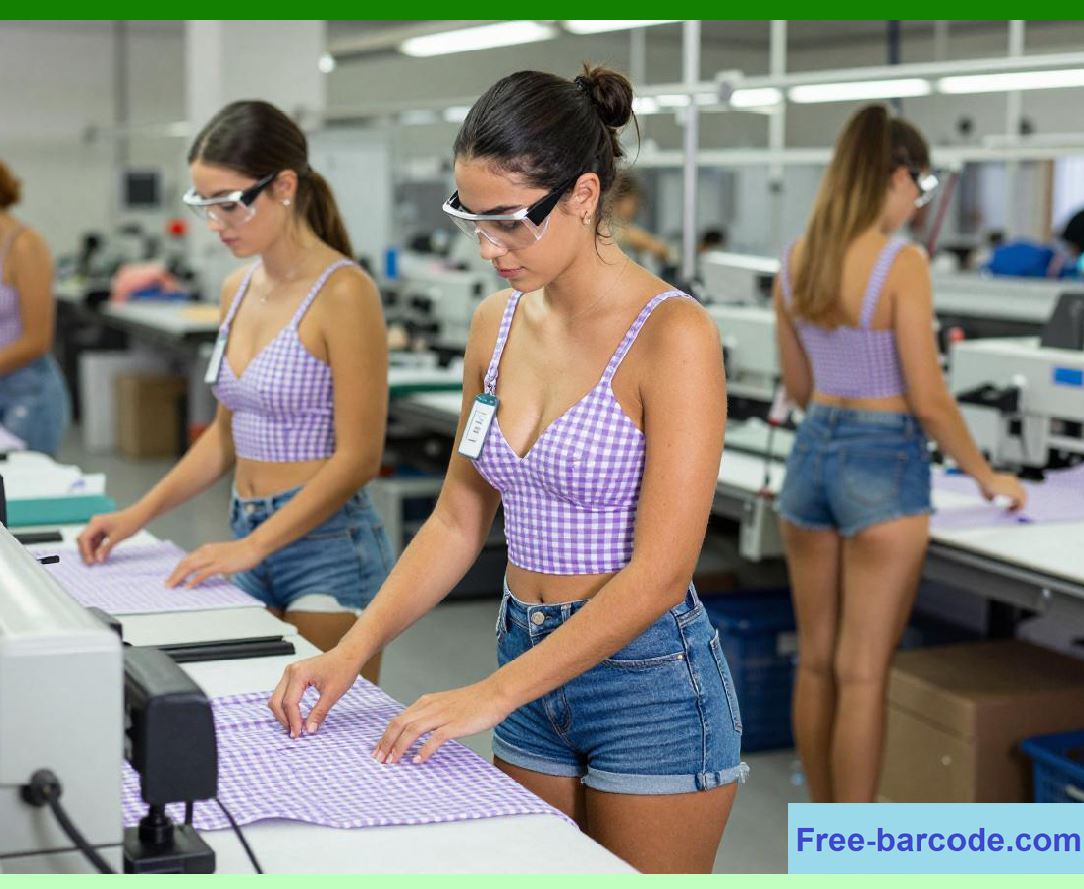
Inventory management is another game-changer. In a typical clothing store, workers armed with handheld RFID readers can scan the entire store in minutes rather than hours. What once took a team of staff several days to count can now be completed in about thirty minutes with near-perfect accuracy . Every item on the sales floor, in the stockroom, and on the shelves is accounted for. This real-time visibility helps retailers reduce stockouts, optimize replenishment, and improve profitability. |
|
Loss prevention is also enhanced. RFID readers at store exits can detect items that have not been properly deactivated or purchased, alerting staff to potential theft. |
Logistics and Supply Chain |
The logistics industry was an early adopter of RFID because the technology directly addresses the need for tracking huge volumes of goods moving through complex networks. |
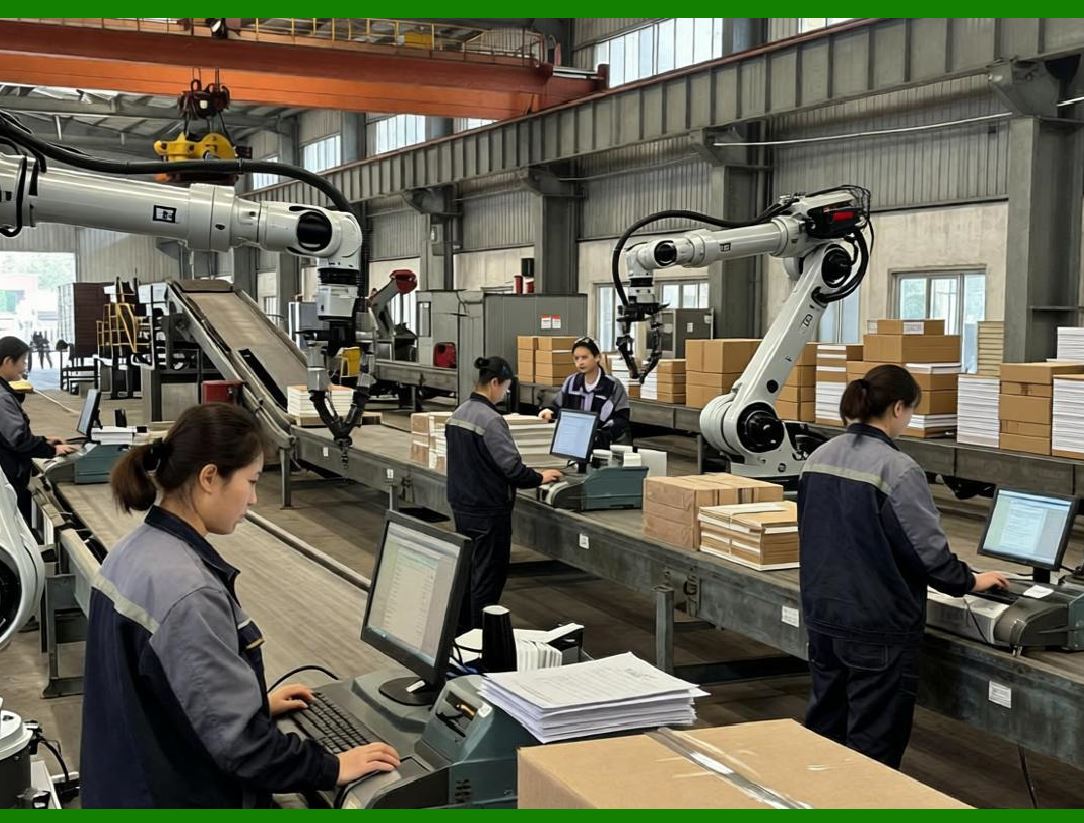
In large warehouses, RFID-enabled systems automate receiving, put-away, picking, and shipping. Conveyor belts fitted with readers identify packages as they move, routing them automatically to the correct destination. Forklifts equipped with readers and positioning systems can locate and pick specific pallets with precision. Some advanced facilities have implemented robot-assisted inventory systems that can operate around the clock, using RFID to maintain continuous awareness of stock levels . |
The shipping industry uses active RFID tags to track containers across oceans. These tags can include sensors that report if a container has been opened, if the temperature has exceeded safe limits, or if it has experienced excessive shock. This is particularly important for pharmaceuticals, fresh produce, and other sensitive cargo. |

|
Healthcare |
Hospitals are complex environments where the wrong identification can have life-or-death consequences. RFID helps ensure that the right patient receives the right treatment at the right time. |
Patient wristbands with RFID tags can be scanned to confirm identity before medication is administered, blood is drawn, or surgery is performed. This reduces medication errors and improves patient safety. |
Asset tracking is another major application. Hospitals have thousands of valuable items---wheelchairs, infusion pumps, defibrillators, surgical instruments---that are often moved around and lost. RFID enables staff to quickly locate equipment, reducing time spent searching and lowering the cost of replacing lost items. |
Surgical instrument tracking is especially critical. RFID tags embedded in surgical tools allow the hospital to count instruments before and after surgery, ensuring that no item is accidentally left inside a patient . The tags can also record sterilization cycles, confirming that instruments have been properly processed before use. |
|
Manufacturing |
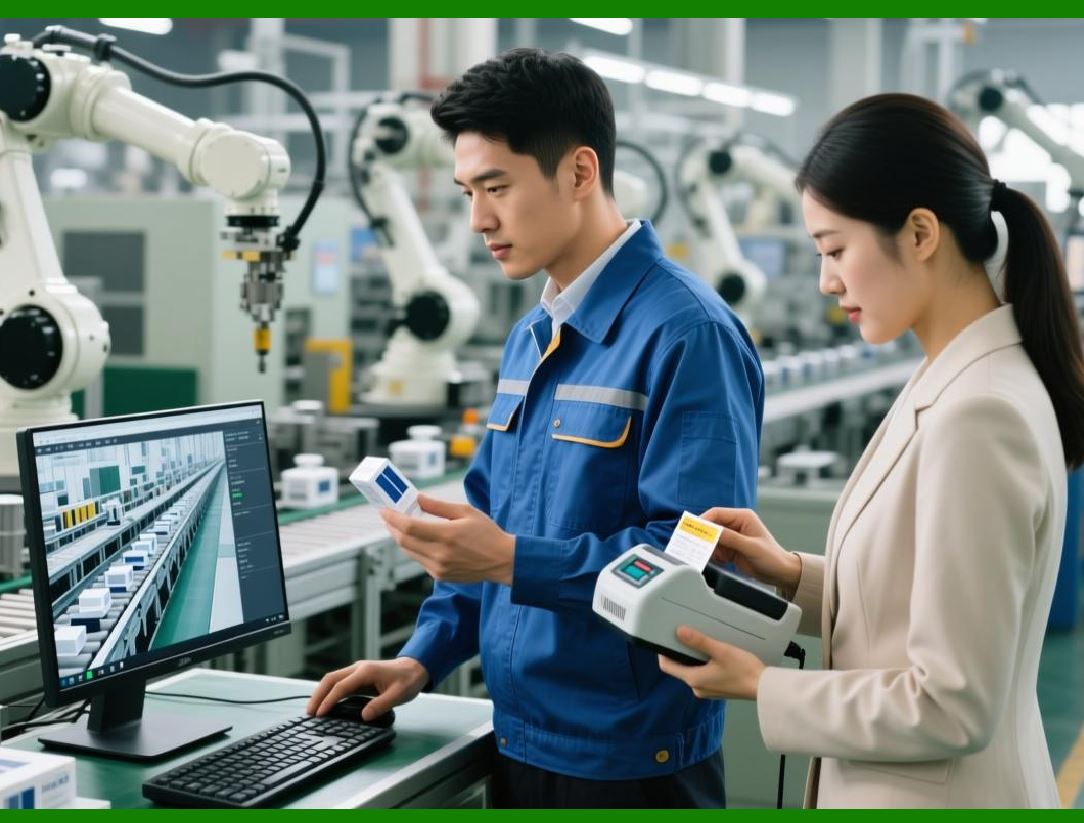
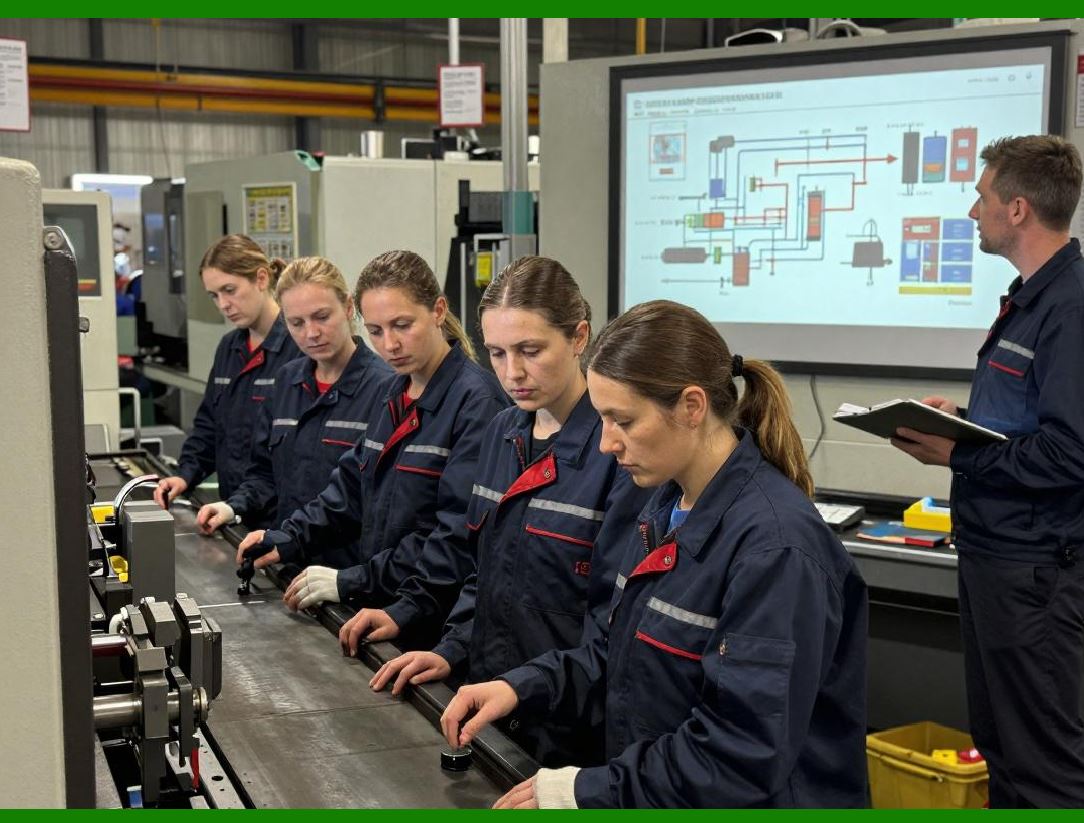
In factories, RFID provides visibility into work-in-progress and finished goods. As a product moves through the assembly line, RFID readers at each station record its progress, helping managers optimize flow and identify bottlenecks. |
High-value components, such as aircraft parts or automotive engines, are tracked throughout their lifecycle. The tag records when it was manufactured, who installed it, what inspections it passed, and when it may need maintenance. This creates a digital provenance that is invaluable for quality assurance and regulatory compliance. |
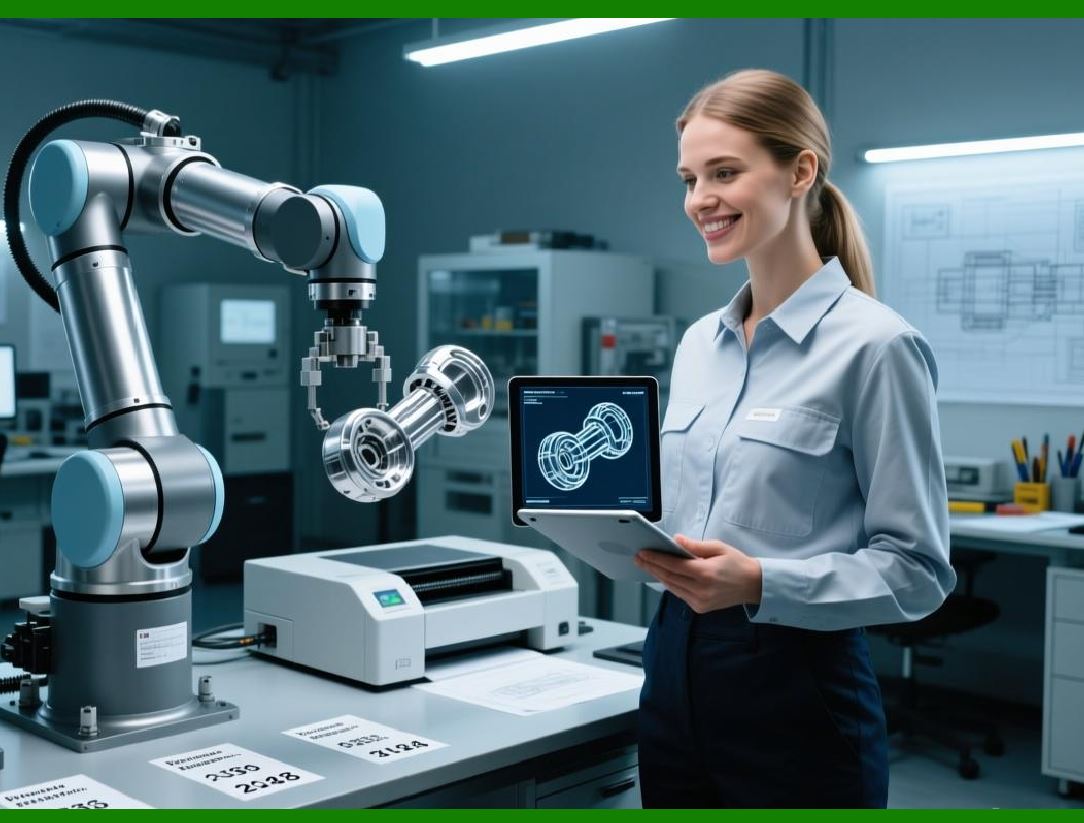
Some manufacturers use RFID to manage tools and dies---expensive reusable assets that are essential to production. By tracking where these assets are and when they were last maintained, factories can reduce downtime and avoid costly delays . |

|
Transportation and Tolling |
Electronic toll collection is one of the most visible RFID applications. Systems like E-ZPass, FasTrak, and similar systems use active tags mounted on windshields to enable vehicles to pass through toll plazas without stopping. The tag is read as the vehicle approaches, and the toll is deducted from a pre-paid account. This reduces congestion, lowers emissions, and saves drivers time. |
Some cities use RFID for congestion pricing, automatically charging vehicles that enter designated zones during peak hours. RFID is also used in public transit, where passengers tap RFID-enabled cards on readers to board buses and trains. |

|
Animal Identification |
RFID has been used to track animals for decades. Farmers use LF tags in ear implants or rumen boluses to identify livestock, track health records, and manage breeding programs. The unique identification number on each tag helps farmers maintain accurate records for each animal, which is important for disease control and quality assurance. |
An interesting application is for companion animals---pets implanted with RFID microchips can be identified if they are lost and found. The chip contains a unique number that links to a database with the owner's contact information. Shelters and veterinarians routinely scan lost pets for these chips to reunite them with their families. |
The technology has advanced to overcome practical challenges. For example, some companies have developed specialized tags for pigs that can be read regardless of the animal's posture, addressing a common problem where traditional tags failed when the pig was lying down . |
|
Access Control and Identification |
Building access cards are one of the most familiar RFID applications. Employees hold a card or key fob near a reader to unlock doors, granting entry only to authorized personnel. The system logs who entered which area and when, providing a security audit trail. |
Government-issued identification documents increasingly incorporate RFID. Many modern passports include an RFID chip that stores the holder's biographic information and a digital photo. This enables faster processing at border crossings and makes the passport more difficult to counterfeit. The same technology is used in national ID cards and driver's licenses in some countries. |

|
Libraries |
Public and academic libraries were early adopters of HF RFID. Each book, CD, or DVD has a tag, and readers at checkout stations can process multiple items at once. Self-service kiosks allow patrons to check out or return items without librarian assistance. |
The same tags serve as security devices---if a patron tries to leave the library with an item that has not been checked out, sensors at the exit trigger an alarm. Inventory management is also improved, as librarians can quickly scan shelves to identify books that are out of place or missing. |
|
Aviation |
The aviation industry uses RFID to track baggage and manage spare parts. Baggage tags with RFID chips can be read as bags move through the airport's conveyor system, reducing lost luggage and ensuring bags are loaded onto the correct flights. Airlines have reported significant improvements in baggage tracking accuracy after deploying RFID, reducing the costly problem of mishandled bags. |
Aircraft maintenance relies heavily on RFID to track parts and tools. Each component of a commercial aircraft has a serial number and maintenance history. RFID helps mechanics ensure that the correct part is installed on the correct aircraft and that all scheduled inspections have been performed. |
|
Food and Agriculture |
Fresh food supply chains benefit from RFID's ability to track temperature and storage conditions. Sensors on perishable goods can record temperature fluctuations during transport, ensuring that the cold chain has not been broken. If a shipment of produce arrives spoiled, the RFID data can help pinpoint where and when the problem occurred. |
In agriculture, RFID tags on livestock enable traceability from farm to fork. This is not just about inventory; it is about food safety. If an outbreak of disease occurs, officials can quickly trace affected animals back to their source, isolating the problem and preventing wider contamination. |

|
Sports and Entertainment |
Major sporting events use RFID to enhance fan experiences and manage operations. Runners in marathons wear RFID chips on their shoes or bibs. When they cross timing mats along the course and at the finish line, the chips are read automatically, recording their split times and official finishing time. This eliminates the need for manual timing and provides accurate results even for thousands of participants. |
Ski resorts use RFID to manage lift tickets. Skiers pass through gates with RFID readers, which verify their passes and open the turnstile. This speeds up access, reduces fraud, and provides resort operators with data on lift usage and skier traffic. |

|
The Promise of the Internet of Things |
RFID is often described as the foundation of the Internet of Things (IoT)---the vision of a world where physical objects are connected to the internet and can be sensed and controlled remotely. Each RFID tag provides a unique identifier that can be linked to a digital representation of the object in a computer system. This is the bridge from the physical world to the digital world. |
As more items are tagged and more readers are deployed, the network becomes richer and more capable. Eventually, we may live in a world where almost everything has a digital identity, enabling unprecedented levels of automation, efficiency, and insight . |
|
2.9 RFID and Barcodes: Partners, Not Rivals |
One might assume that RFID is simply a replacement for barcodes. But the reality is more nuanced: the two technologies are complementary. |
Barcodes are cheap, simple, and universal. A barcode can be printed at virtually no cost and read by almost any smartphone. They work perfectly for millions of low-cost items where the value of the item does not justify a more expensive tag. RFID excels where automation, batch reading, or rewriting capability is needed. |
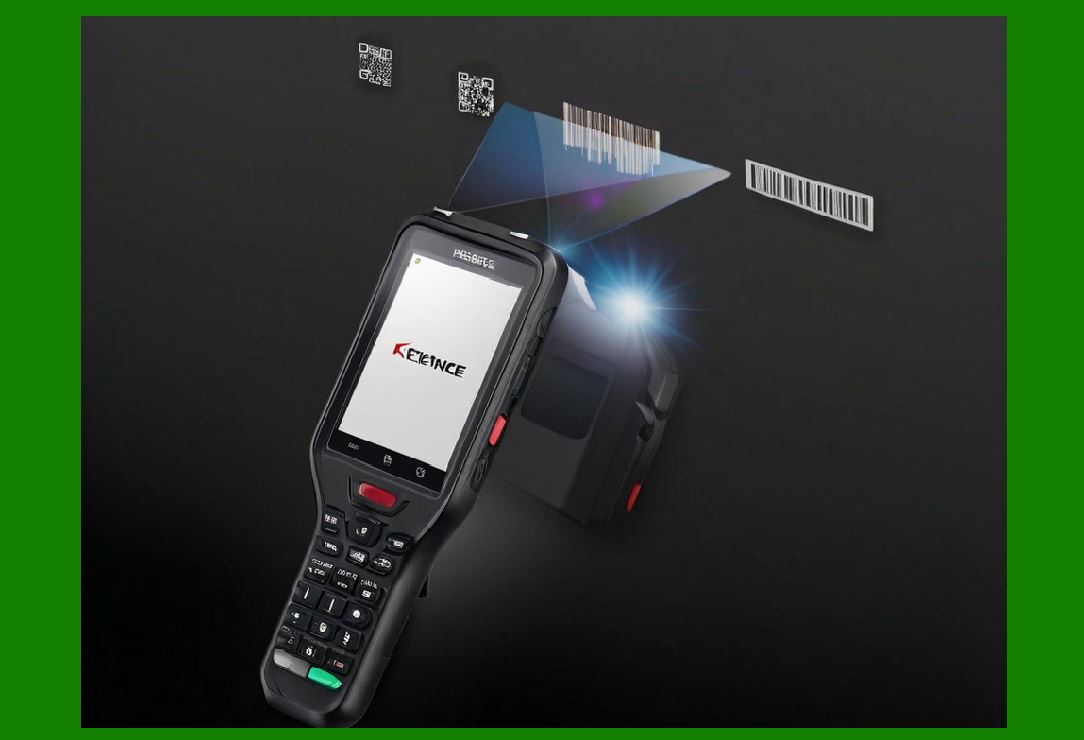
In a modern retail or supply chain environment, both technologies often coexist. A product might have both a barcode (for conventional scanning) and an RFID tag (for automated inventory management). Warehouse workers might use barcodes for certain operations and RFID for others. A single reader might incorporate both a barcode scanner and an RFID reader. |
The choice between barcode and RFID depends on the application, the environment, and the economics. Both have roles to play in the silent network that maps the physical world. |

|
2.10 Challenges and the Future |
Despite its many successes, RFID still faces challenges that will shape its future evolution. |
Cost reduction. Passive RFID tags have fallen in price from dollars to cents, but for very low-cost items, even a few cents per tag is too expensive. Researchers are working on printable tags that could be produced using conductive ink, reducing costs to fractions of a cent. If successful, this could extend RFID to disposable packaging, fast-moving consumer goods, and other mass-market applications. |
Privacy protection. As RFID becomes more ubiquitous, the privacy implications grow. Techniques to address this include kill commands that disable tags after purchase, selective reading protocols, and encryption of tag data. Public awareness and regulatory frameworks will also play a role in ensuring that RFID is deployed responsibly. |
Standards harmonization. While the industry has made progress, the fragmentation of standards across regions and frequency bands still creates friction. A unified global framework would simplify cross-border logistics and equipment manufacturing. |
Energy harvesting. The ability of passive tags to harvest energy is limited by physics. Innovations in antenna design, chip architecture, and power management could extend read ranges and enable more sensor functions on tags. |
Integration with other technologies. RFID is increasingly combined with sensors, GPS, cellular communications, and artificial intelligence. Tags that can sense temperature, motion, or chemical presence, and report this data automatically, will open entirely new applications in environmental monitoring, smart buildings, and healthcare. |
Sustainability. With billions of RFID tags manufactured each year, the environmental impact of their production and disposal is a growing concern. Developing biodegradable, recyclable, or more sustainable tags is an active area of research. |

|
2.11 Conclusion: The Silent Network |
RFID is a technology of remarkable elegance and utility. Drawing on the fundamental laws of electromagnetism, it enables machines to identify physical objects automatically, reliably, and at scale. It operates silently in the background, invisible to the human eye, yet it shapes how goods move through the economy, how patients are cared for, how livestock is managed, how tolls are collected, how books are borrowed, and how athletes are timed. |
The core principle of RFID is simple: every object gets a digital identity, and that identity can be read without contact, without line of sight, and without manual intervention. From this simple idea flows a cascade of capabilities---batch reading, rewritable data, durability, security, and automation---that distinguish RFID from all previous identification technologies. |
Yet RFID is not a standalone solution. It works best when integrated with other technologies: barcodes for simplicity and ubiquity, sensors for condition monitoring, networks for communication, and data analytics for insight. Together, these technologies form the silent network that maps the physical world, bridging the gap between atoms and bits. |
As we look to the future, RFID will only become more pervasive. The falling cost of tags, the growing sophistication of readers, and the relentless demand for efficiency and visibility will drive adoption into new domains. The technology that began as a military transponder has become a global utility---and its story is still being written. |
|
Detailed Summary |
RFID is a wireless, non-contact identification technology that uses electromagnetic fields to read information from tags attached to objects. The system has three core components: tags (passive, active, or semi-passive), readers (fixed or handheld), and backend processing systems that turn raw readings into useful information. The physics of RFID varies by frequency: low-frequency and high-frequency systems operate through inductive coupling in the near field, while ultra-high-frequency and microwave systems use backscatter modulation in the far field. Each frequency band has distinct read range, data rate, and penetration characteristics, making it suitable for different applications. |
RFID offers significant advantages over barcodes: it does not require line of sight, can read many tags simultaneously, stores and rewrites data, works in harsh environments, and provides security and automation capabilities. These advantages enable applications across retail (frictionless checkout, real-time inventory), logistics (automated sorting, tracking), healthcare (patient safety, asset tracking), manufacturing (work-in-progress tracking, tool management), transportation (toll collection, transit), animal identification, access control, libraries, aviation, and food safety. |
However, RFID also has limitations: cost remains higher than barcodes, signal interference can occur near metals and liquids, privacy concerns arise from unauthorized reading, standards fragmentation persists, and data management is complex. The future of RFID lies in cost reduction, privacy protection, integration with sensors and AI, and sustainability improvements. RFID and barcodes are complementary technologies, each suited to different applications. Together, they form the invisible infrastructure that maps the physical world, enabling automation, efficiency, and new forms of interaction between humans and the objects around them. |
 cs@easiersoft.com