Chapter 25: The Line-of-Sight Requirement |
Summary |
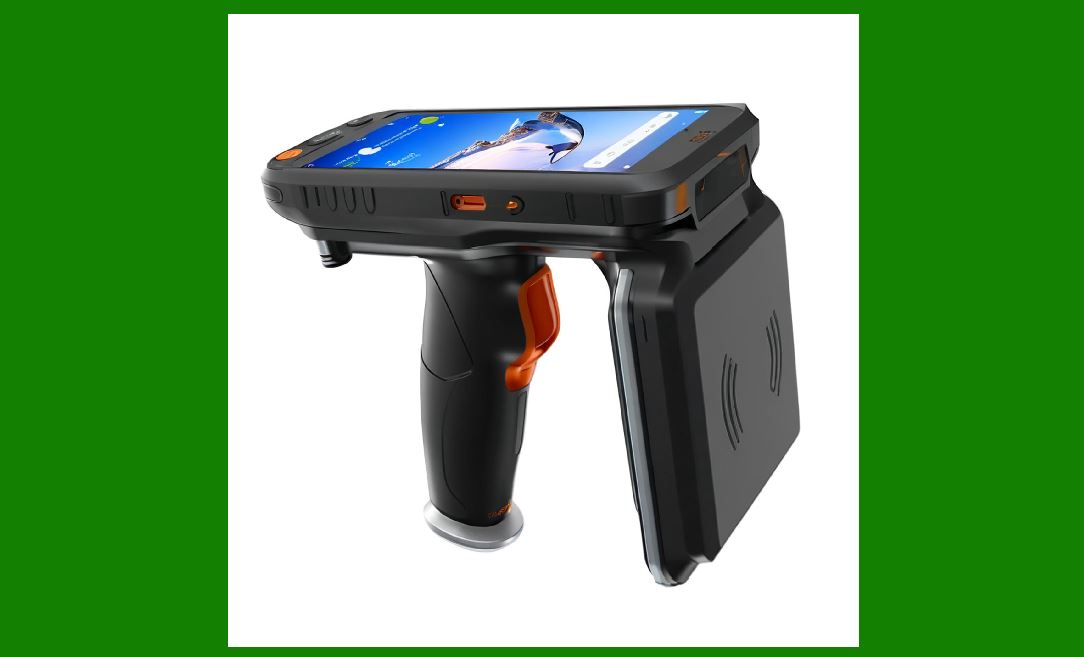
Barcodes and RFID tags both identify objects, but they do so under very different physical rules. A barcode is an optical technology. It needs a clear, direct, unbroken visual path between the printed symbol and the scanner. A laser or camera must see the bars and spaces, and the symbol must be clean, flat enough, and properly oriented. RFID, by contrast, is a radio technology. A reader sends out electromagnetic waves, and a tag responds with its stored data. There is no need for the tag to be visible. It can be inside a box, behind a wall, under a layer of paint, inside a garment, or buried in a pile of goods. This chapter explores what the line-of-sight requirement means in practice. It looks at how barcodes work, where they fail, how RFID overcomes those limits, and why both technologies still coexist. The central argument is simple: line-of-sight is not a minor technical detail. It shapes warehouse design, retail checkout, hospital workflows, library systems, manufacturing lines, and even how we think about the boundary between the physical and digital worlds. |
|
What Line-of-Sight Means |
In everyday language, line-of-sight means you can see something directly. If a tree is between you and a friend, you do not have line-of-sight to your friend. If a wall blocks your view, you do not have line-of-sight. For barcodes, the same idea applies, but with stricter conditions. The scanner must not only see the barcode. It must see it clearly enough to distinguish the dark bars from the light spaces. The barcode must be within the scanner's field of view. It must be at a suitable angle. It must not be wrinkled, torn, smudged, or covered by dust, water, or plastic film that distorts the light. The lighting must be adequate, but not so harsh that it creates glare. The scanner must be close enough, or the barcode large enough, for the optical system to resolve the pattern. |
This is why a cashier at a supermarket sometimes has to turn a product around, flatten a crushed box, or wipe a label. The barcode is there, but the line-of-sight is not good enough. The scanner cannot read what it cannot see clearly. RFID changes this. An RFID reader does not need to see the tag. It needs the tag to be within radio range and to be able to receive enough energy to respond. The tag can be hidden. It can be inside a sealed carton. It can be behind a stack of other items. It can be embedded in a plastic pallet. As long as the radio waves can reach it and the tag can send a signal back, the reader can identify it. |
|
How Barcodes Depend on Optics |
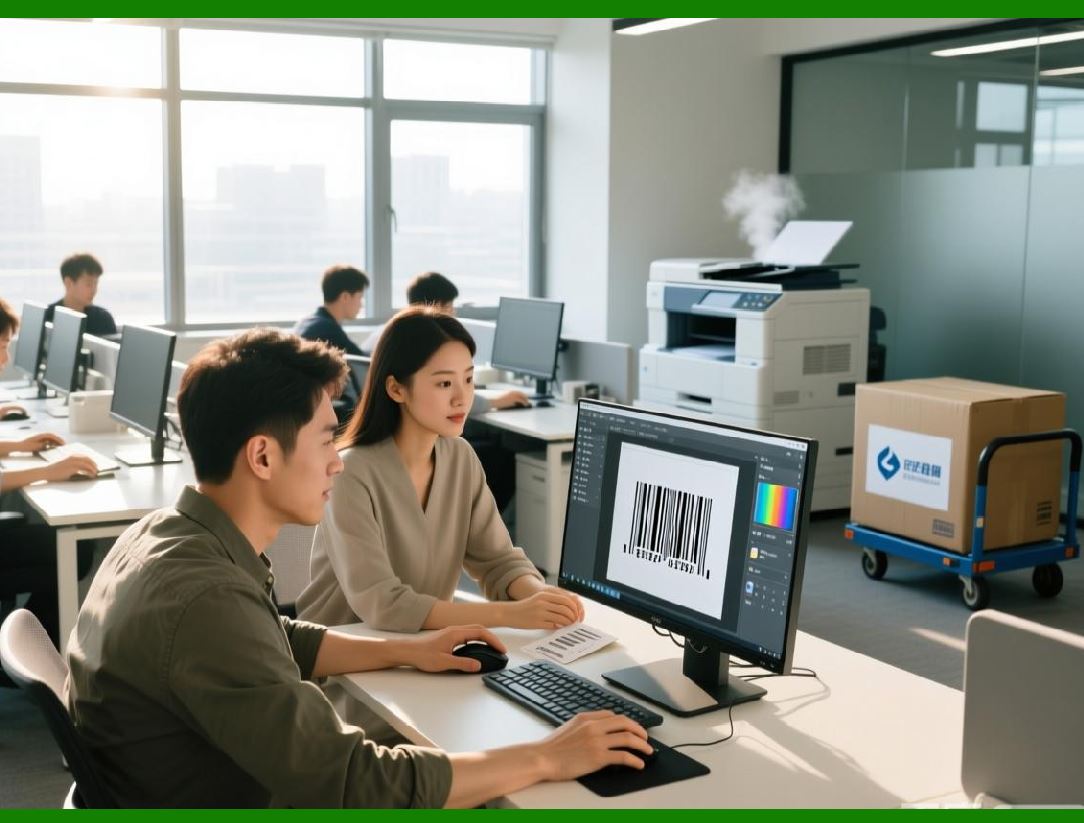
A barcode is a pattern of dark and light elements. A one-dimensional barcode, such as the familiar Universal Product Code, stores data in the widths of bars and spaces. A two-dimensional barcode, such as a QR code or a Data Matrix code, stores data in a grid of dark and light modules. In both cases, the information is encoded in a visual pattern. To read that pattern, a scanner must capture light reflected from the symbol. A laser scanner sweeps a beam across the barcode and measures the reflected light. A camera-based scanner takes a picture and processes it with software. |
The optical nature of barcodes creates several hard requirements. First, the barcode must be visible. If it is covered by a label, tape, or another object, it cannot be read. Second, the barcode must have contrast. If the bars and spaces are too similar in color, or if the printing is faded, the scanner may fail. Third, the barcode must be within the scanner's depth of field. A laser scanner has a limited range of distances over which it can focus. A camera scanner has a field of view and a resolution limit. Fourth, the barcode must be oriented correctly. Some scanners can read at an angle, but extreme angles can distort the pattern. Fifth, the barcode must be clean. Dirt, grease, condensation, and scratches can all interfere with reading. |
These requirements are not flaws. They are the natural consequence of using light as the carrier of information. Barcodes are cheap, reliable, and universally understood. They can be printed on almost any surface. They do not need batteries. They do not emit radio waves. They do not interfere with other systems. But they do require line-of-sight, and that requirement has real consequences. |

|
Where Barcodes Struggle |
Consider a large warehouse. Pallets are stacked high with boxes. Each box has a barcode label. A worker with a handheld scanner must walk up to each pallet, find the label, and scan it. If the label is on the side of a box that is facing a wall, the worker must move the box or climb around the pallet. If the boxes are wrapped in stretch film, the film may reflect light and confuse the scanner. If the warehouse is cold, condensation may form on the labels. If the warehouse is dusty, the labels may be covered. In each case, the barcode is present, but the line-of-sight is compromised. The worker must spend time and effort to create a clear optical path. This is labor. It is also a source of errors. A worker who is tired or rushed may scan the wrong label or skip a box entirely. |
Consider a retail store. At the checkout, a cashier scans each item. The barcode must be facing the scanner. If the item is a bag of produce, the barcode may be on a small sticker that is hard to find. If the item is a piece of clothing, the barcode may be on a tag that is tucked inside a sleeve. If the item is a box of cereal, the barcode may be on the bottom. The cashier must rotate the item, find the barcode, and scan it. This takes time. It also creates a bottleneck. During peak hours, customers wait in line. Self-checkout systems have the same problem. The customer must find the barcode and present it to the scanner. If the barcode is damaged or missing, the customer must enter the number manually. |
Consider a hospital. A nurse must administer medication to a patient. The medication has a barcode. The patient has a wristband with a barcode. The nurse must scan both. The medication barcode may be on a small vial that is difficult to orient. The patient's wristband may be covered by a blanket or a sleeve. The nurse must move the blanket, find the wristband, and scan it. If the patient is asleep or uncooperative, this can be difficult. If the barcode is smudged or wet, the scanner may fail. In a busy hospital, these small delays add up. They also create opportunities for error. If the nurse cannot scan the barcode, they may bypass the system and rely on memory or handwritten notes. That is exactly what the barcode system was designed to prevent. |
Consider a library. Each book has a barcode. To check out a book, the librarian must open the cover, find the barcode, and scan it. To return a book, the librarian must do the same. To inventory the shelves, a librarian must pull each book off the shelf, find the barcode, and scan it. This is slow and tedious. It also means that books that are misshelved or hidden behind other books may be missed. Some libraries have moved to RFID, which allows them to scan multiple books at once without removing them from the shelf. The RFID tag can be inside the book, so there is no need to open the cover. The librarian can walk down the aisle with a handheld reader and capture the identities of all the books nearby. This is a direct consequence of removing the line-of-sight requirement. |
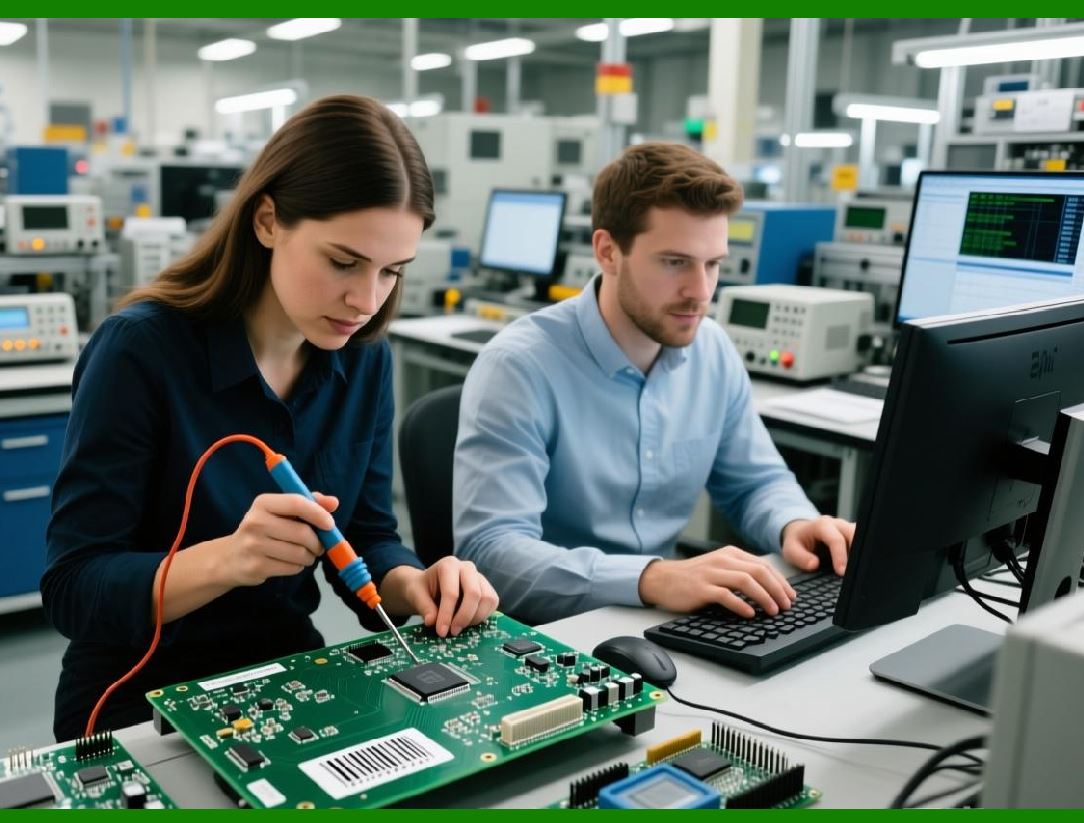
Consider manufacturing. A product moves down an assembly line. At each station, a barcode is scanned to track progress. If the barcode is on the bottom of the product, the scanner must be positioned below the line. If the barcode is on the side, the scanner must be positioned to the side. If the product rotates or vibrates, the barcode may move out of view. If the environment is dirty or hot, the barcode may become unreadable. RFID tags can be embedded in the product or attached to a carrier. They can be read from a distance, through debris, and without precise alignment. This makes automation easier and more reliable. |
|
How RFID Escapes the Line-of-Sight Trap |
RFID stands for radio frequency identification. An RFID system has three main parts: a tag, a reader, and an antenna. The tag contains a microchip and an antenna. The reader contains a radio transmitter and receiver. The reader sends out a radio signal. The tag receives that signal, uses some of its energy to power its microchip, and sends back a signal containing its unique identifier and possibly other data. The reader receives that signal and passes the data to a computer system. |
The key point is that radio waves do not need a clear line of sight. They can pass through many materials. They can bend around obstacles. They can reflect off surfaces. They can penetrate boxes, clothing, plastic, wood, and even concrete, depending on the frequency and power. This means an RFID tag can be read even when it is hidden. It can be inside a sealed carton. It can be behind a stack of other cartons. It can be embedded in a pallet. It can be sewn into a garment. It can be implanted in an animal. It can be attached to a tool. It can be placed on a shelf, and a reader can scan the entire shelf at once. |
This does not mean RFID is magic. Radio waves are affected by materials. Metal reflects radio waves. Water absorbs them. Liquids and dense materials can block or weaken the signal. The range of RFID depends on the frequency, the power of the reader, the size of the tag antenna, and the environment. Low-frequency RFID, such as 125 kilohertz, has a short range, often just a few centimeters. High-frequency RFID, such as 13.56 megahertz, has a range of about a meter. Ultra-high-frequency RFID, such as 860 to 960 megahertz, can have a range of several meters, but it is more affected by water and metal. Microwave RFID, such as 2.45 gigahertz, has even longer range but is less common. |
Even with these limitations, RFID offers a fundamental advantage: it does not require the tag to be visible. This changes the design of systems. It changes the workflow. It changes what is possible. |

|
Warehouse and Logistics |
In a warehouse, RFID can be used to track pallets, cases, and individual items. A forklift equipped with an RFID reader can drive past a stack of pallets and read all the tags at once. There is no need to stop, find a label, and scan it. A worker with a handheld reader can walk down an aisle and inventory the entire shelf without touching a single box. A conveyor belt can be equipped with an RFID tunnel that reads every item as it passes through. There is no need to orient the item or ensure that the barcode is facing the scanner. |
This has a dramatic effect on efficiency. A warehouse that uses barcodes might need to scan each pallet individually. A warehouse that uses RFID can scan an entire truckload in minutes. The data is more accurate because there is less human error. The labor cost is lower because workers do not have to spend time finding and scanning labels. The inventory is more visible because the system can update in real time. |
Consider a large online retailer. Millions of items are stored in a fulfillment center. Each item has a barcode. When a customer places an order, a worker must find the item, pick it, and scan it. The worker must locate the barcode on the item. If the item is small, the barcode may be tiny. If the item is in a bin with other items, the worker may have to dig through the bin. If the barcode is damaged, the worker may have to enter the number manually. RFID tags can be attached to each item. A reader on the picking cart can verify that the correct item has been picked. A reader at the packing station can verify that the correct items are in the box. A reader at the loading dock can verify that the correct box is on the correct truck. In each case, the tag does not need to be visible. The worker can pick the item and place it in the cart without worrying about the orientation of the tag. |
This is not just about speed. It is also about accuracy. A barcode system depends on the worker to find and scan the correct barcode. If the worker is tired or distracted, they may scan the wrong barcode. An RFID system can read all the tags in a cart and compare them to the expected list. If an item is missing or extra, the system can alert the worker. This kind of verification is difficult with barcodes because each barcode must be scanned individually. |

|
Retail |
In retail, RFID is used to track inventory from the distribution center to the store shelf. A box of clothing arrives at the store. Each item has an RFID tag. A store employee can take a handheld reader and scan the entire box without opening it. They know exactly what is inside. They can then scan the shelf to see what is missing. They can scan the fitting room to see what items customers have taken in. They can scan the checkout area to see what items are waiting to be purchased. |
This is a major change from barcodes. With barcodes, a store employee must open each box, find each item, and scan each barcode. This is time-consuming. It also means that inventory counts are often inaccurate. A store might think it has ten red shirts in size medium, but actually it has eight. The discrepancy is not discovered until a customer tries to buy one and the system says it is out of stock. With RFID, the store can take inventory more frequently and more accurately. The employee can scan the entire store in a few hours instead of a few days. The data is more reliable. The store can replenish stock more quickly. The customer is more likely to find what they want. |
Consider a clothing store. A customer picks up a shirt and takes it to the fitting room. An RFID reader in the fitting room can detect the shirt and display information about it on a screen. The customer can see the price, the available sizes, and the available colors. They can request a different size without leaving the fitting room. This is only possible because the RFID tag does not need line-of-sight. The shirt can be on a hanger, inside a bag, or in a pile. The reader can still detect it. |
Consider a grocery store. A customer fills a cart with items. At the checkout, an RFID reader can read all the tags in the cart at once. There is no need to unload the cart and scan each item individually. The customer can simply push the cart through a reader and pay. This is faster and more convenient. It also reduces the risk of errors. The reader can detect every item, even if it is at the bottom of the cart or inside a bag. This is not yet common in grocery stores because of the cost of tagging individual items, but it is technically feasible and is being tested in some locations. |
|
Healthcare |
In healthcare, RFID is used to track patients, staff, equipment, and medications. A patient wears an RFID wristband. A nurse can scan the wristband with a handheld reader without touching the patient. The wristband can be under a blanket or a sleeve. The reader can still read it. This is important for patient safety. It reduces the risk of misidentification. It also saves time. The nurse does not have to wake the patient or move the blanket. |
Medications can be tagged with RFID. A nurse can scan a tray of medications and verify that the correct medications are being administered to the correct patient at the correct time. The tags do not need to be visible. The nurse can scan the entire tray at once. This reduces the risk of medication errors. It also saves time. The nurse does not have to find and scan each individual barcode. |
Equipment can be tagged with RFID. A hospital has thousands of pieces of equipment: wheelchairs, infusion pumps, ventilators, monitors. Staff spend a lot of time looking for equipment. With RFID, a staff member can use a handheld reader to locate a piece of equipment in a room or down a hallway. The tag does not need to be visible. It can be behind a curtain or under a bed. This saves time and improves patient care. It also reduces the need to rent or buy extra equipment because the hospital can find what it already has. |
Consider a surgical suite. Instruments are tagged with RFID. Before surgery, a nurse can scan the tray to verify that all the instruments are present. After surgery, the nurse can scan the tray again to verify that no instruments were left inside the patient. This is a critical safety check. With barcodes, each instrument would have to be scanned individually. With RFID, the entire tray can be read at once. The tags can be embedded in the instruments, so they do not interfere with sterilization. This is a direct benefit of removing the line-of-sight requirement. |
|
Libraries |
In libraries, RFID is used to check out books, return books, and take inventory. Each book has an RFID tag inside the cover. A patron can check out a stack of books by placing them on a reader pad. The reader reads all the tags at once. There is no need to open each book and scan a barcode. A librarian can return a stack of books the same way. A librarian can take inventory by walking down an aisle with a handheld reader. The reader can detect the tags inside the books on the shelf. There is no need to pull each book off the shelf. |
This is a major improvement over barcodes. With barcodes, a librarian must open each book, find the barcode, and scan it. This is slow and repetitive. It also causes wear and tear on the books. With RFID, the process is faster and gentler. The librarian can scan an entire shelf in seconds. The data is more accurate. The library can know exactly what it has and where it is. This makes it easier for patrons to find what they want. It also makes it easier for the library to manage its collection. |
Consider a large university library. It has millions of books. A student wants to find a specific book. The catalog says it is on the shelf. But when the student goes to the shelf, the book is not there. It may be misshelved. It may be on a cart waiting to be reshelved. It may be in a study room. With RFID, the library can take inventory more frequently. It can track books as they move through the library. It can help the student find the book. This is only possible because the RFID tag does not need line-of-sight. The book can be on a shelf, in a pile, or in a backpack. The reader can still detect it. |

|
Manufacturing |
In manufacturing, RFID is used to track parts, tools, and products. A part can be tagged with RFID. As it moves down the assembly line, readers at each station can identify it and record its progress. There is no need for a clear line of sight. The tag can be inside the part or behind it. The reader can still read it. This makes automation easier and more reliable. It also makes it possible to track each individual part, not just the batch. This is important for quality control. If a defect is found, the manufacturer can trace it back to the specific part and the specific machine that made it. |
Consider an automotive assembly line. A car body moves down the line. It has an RFID tag. Readers at each station read the tag and tell the robots what to do. The tag can be covered with dirt, grease, or paint. The reader can still read it. This is not possible with barcodes. A barcode would be obscured by the paint. The line would have to be stopped. The barcode would have to be cleaned or replaced. This would cost time and money. RFID avoids this problem. |
Consider a pharmaceutical manufacturing plant. Batches of drugs are tagged with RFID. The tags can be read through the packaging. The plant can track the batch from raw materials to finished product. It can verify that the correct ingredients were used. It can verify that the correct procedures were followed. It can verify that the correct labels were applied. This is important for regulatory compliance. It is also important for patient safety. If a problem is found, the plant can recall the specific batch. It can trace the batch to the specific patients who received it. |

|
Agriculture and Food |
In agriculture, RFID is used to track livestock, crops, and food products. A cow can have an RFID tag in its ear or in its stomach. A reader can identify the cow from a distance. There is no need to restrain the cow or find a barcode. This makes it easier to track the health and history of each animal. It also makes it easier to manage breeding and feeding. If a disease outbreak occurs, the farmer can quickly identify which animals are affected and which are not. |
Consider a dairy farm. Each cow has an RFID tag. When the cow enters the milking parlor, a reader identifies it. The system records how much milk the cow produces. It can also record other data, such as the cow's temperature or activity level. This data can be used to monitor the cow's health. If the cow is sick, the farmer can treat it early. This improves animal welfare and reduces costs. With barcodes, the farmer would have to find the barcode on each cow and scan it. This would be slow and stressful for the animals. RFID avoids this problem. |
Consider a food processing plant. Meat, produce, and packaged goods are tagged with RFID. The tags can be read through the packaging. The plant can track the food from the farm to the store. It can verify that the food was kept at the correct temperature. It can verify that it was not contaminated. If a problem is found, the plant can recall the specific product. It can trace the product to the specific farm and the specific animal. This is important for food safety. It is also important for consumer confidence. |
|
Transportation and Tolling |
In transportation, RFID is used for toll collection, parking, and fleet management. A car with an RFID tag can pass through a toll booth without stopping. A reader at the toll booth reads the tag and deducts the toll from the driver's account. There is no need for the driver to roll down the window or hand cash to an attendant. There is no need for a clear line of sight. The tag can be on the windshield, behind the rearview mirror, or on the license plate. The reader can still read it. |
This is a major improvement over barcodes. A barcode would require the car to stop, the driver to present the barcode, and the scanner to read it. This would cause traffic jams. It would also be less convenient. RFID allows the car to pass through at highway speeds. The toll is collected automatically. The driver does not have to do anything. This is only possible because the RFID tag does not need line-of-sight. |
Consider a parking garage. A car with an RFID tag can enter and exit without stopping. The gate opens automatically. The parking fee is deducted from the driver's account. This is faster and more convenient. It also reduces the need for parking attendants. It reduces the risk of theft. It reduces the risk of errors. The system can track how long each car is parked. It can charge the correct amount. It can also help the driver find their car. If the driver forgets where they parked, they can use a kiosk to locate their car by reading the RFID tag. This is not possible with barcodes because the barcode would be inside the car and would need to be visible. |
Consider a fleet of trucks. Each truck has an RFID tag. A reader at the depot can identify each truck as it enters and leaves. The system can track the truck's location, fuel usage, and maintenance history. It can also track the cargo. If a truck is late, the dispatcher can see where it is. If a truck is speeding, the system can alert the driver. If a truck needs maintenance, the system can schedule it. This improves efficiency and safety. It also reduces costs. With barcodes, the driver would have to stop and scan a barcode. This would take time and could be forgotten. RFID automates the process. |
|
Access Control and Security |
In access control, RFID is used to grant or deny access to buildings, rooms, and events. An employee wears an RFID badge. A reader at the door reads the badge and unlocks the door if the employee is authorized. There is no need for the employee to insert the badge into a slot or press it against a scanner. The badge can be in a pocket, a purse, or a wallet. The reader can still read it. This is faster and more convenient. It also reduces the risk of damage to the badge. It reduces the risk of theft. It reduces the risk of errors. |
Consider a data center. Only authorized personnel are allowed to enter. Each employee has an RFID badge. The door unlocks automatically when the employee approaches. The system records who entered and when. If an unauthorized person tries to enter, the door remains locked. The system can also track the employee's movement inside the data center. It can verify that the employee is following the correct procedures. This is important for security. It is also important for compliance. With barcodes, the employee would have to find the barcode on the badge and scan it. This would be slower and less secure. The employee could share the barcode with someone else. The RFID badge is harder to copy. |
Consider a concert or sporting event. Attendees wear RFID wristbands. A reader at the gate reads the wristband and verifies that the attendee has a valid ticket. There is no need for the attendee to hand over a paper ticket or a barcode. The wristband can be on the attendee's wrist. The reader can read it from a distance. This speeds up entry. It reduces the risk of counterfeit tickets. It also allows the event organizer to track attendance and manage crowd flow. This is not possible with barcodes because the barcode would need to be visible and scanned individually. |
|
Challenges and Limitations of RFID |
RFID is not perfect. It has its own challenges and limitations. Radio waves can be blocked by metal and absorbed by water. This means that RFID tags on metal objects or in liquids may be difficult to read. Special tags and techniques are needed to overcome this. For example, a tag can be mounted on a spacer to keep it away from metal. A tag can be designed to operate at a frequency that penetrates water. But these solutions add cost and complexity. |
RFID readers can also interfere with each other. If two readers are operating in the same area, they may interfere with each other's signals. This can cause tags to be missed or read incorrectly. This is a problem in dense environments, such as a warehouse with many readers. Engineers must carefully design the system to avoid interference. They must control the power and timing of the readers. They must use shielding and filtering. This adds cost and complexity. |
RFID tags can also be read by unauthorized readers. This is a privacy concern. If a person is carrying an RFID tag, someone else might be able to read it without their knowledge. This is why some RFID tags have a kill command that permanently disables them. This is why some tags have encryption and authentication. This is why some countries have laws about how RFID can be used. These measures add cost and complexity. |
RFID is also more expensive than barcodes. A barcode is essentially free. It is printed on the package. An RFID tag costs a few cents to a few dollars, depending on the type and quantity. This is why RFID is not used for every item. It is used for items that are valuable enough to justify the cost. It is used for items that are difficult to track with barcodes. It is used for items that need to be tracked in large quantities or at a distance. |

|
Why Barcodes Still Matter |
Despite the advantages of RFID, barcodes are not going away. They are too cheap, too reliable, and too universal. Every smartphone has a camera that can read a QR code. Every retail store has a barcode scanner. Every package has a barcode. The infrastructure is everywhere. The standards are mature. The training is minimal. Barcodes are often the best choice for low-cost, high-volume applications. They are also the best choice for applications where line-of-sight is not a problem. If you are scanning a single item at a checkout counter, a barcode is fine. If you are scanning a package on a conveyor belt, a barcode is fine. If you are scanning a document, a barcode is fine. |
Barcodes also have some advantages over RFID. They do not emit radio waves, so they do not interfere with other systems. They do not have privacy concerns. They do not need batteries. They can be printed on almost any surface. They can be read by a human if necessary. They can be used in environments where radio waves are not allowed, such as near sensitive medical equipment. They can be used in environments where radio waves are not practical, such as underwater or in space. They are simple and robust. |
The line-of-sight requirement is a limitation, but it is also a feature. It means that the barcode can only be read when it is intentionally presented. This can be a security benefit. It can also be a privacy benefit. It means that the barcode is not broadcasting its presence. It is passive. It is silent. It waits to be read. This is why barcodes are still used for applications where privacy and security are important. |

|
The Complementary Nature of Barcodes and RFID |
The title of this book is 'The Silent Network: How RFID and Barcodes Together Map the Physical World.' The word 'together' is important. Barcodes and RFID are not competitors. They are complements. They each have strengths and weaknesses. They each have a role to play. The line-of-sight requirement is one of the key differences between them. It determines when each technology is used. |
In a typical supply chain, both technologies are used. A pallet might have an RFID tag. The cases on the pallet might have barcodes. The individual items might have barcodes. The RFID tag on the pallet allows the entire pallet to be tracked without opening it. The barcodes on the cases and items allow individual items to be tracked at a lower cost. The system uses the right technology for the right level of granularity. |
In a hospital, both technologies are used. A patient might have an RFID wristband. A medication might have a barcode. The RFID wristband allows the patient to be identified without waking them. The barcode on the medication allows the nurse to verify the medication at the bedside. The system uses the right technology for the right task. |
In a retail store, both technologies are used. High-value items might have RFID tags. Low-value items might have barcodes. The RFID tags allow the store to take inventory quickly. The barcodes allow the store to check out items at a low cost. The system uses the right technology for the right item. |
This is the essence of the silent network. It is not a single technology. It is a combination of technologies. It is a layer of digital information that is mapped onto the physical world. Barcodes provide a cheap, reliable, line-of-sight link. RFID provides a flexible, long-range, non-line-of-sight link. Together, they cover more ground than either could alone. |

|
Detailed Summary |
The line-of-sight requirement is a fundamental difference between barcodes and RFID. Barcodes are optical. They require a clear, direct visual path between the symbol and the scanner. The symbol must be visible, clean, flat enough, and properly oriented. The scanner must be within range and able to resolve the pattern. These requirements are the natural consequence of using light as the carrier of information. They make barcodes cheap, reliable, and universal, but they also create limitations. |
RFID is radio-based. It does not require a clear line of sight. The tag can be hidden inside a box, behind a wall, under a layer of paint, inside a garment, or buried in a pile of goods. The reader sends out radio waves, and the tag responds with its stored data. This makes RFID more flexible than barcodes. It allows for faster inventory, more accurate tracking, and new workflows that are not possible with barcodes. |
In warehouses and logistics, RFID allows entire pallets and truckloads to be scanned at once. Workers do not have to find and scan individual barcodes. This saves time and reduces errors. In retail, RFID allows stores to take inventory quickly and accurately. Customers can check out faster. In healthcare, RFID allows patients, medications, and equipment to be tracked without line-of-sight. This improves safety and saves time. In libraries, RFID allows books to be checked out and inventoried without opening them. In manufacturing, RFID allows parts and products to be tracked through dirt, grease, and paint. In agriculture, RFID allows livestock and food to be tracked from farm to store. In transportation, RFID allows tolls to be collected and fleets to be managed without stopping. In access control, RFID allows doors to be unlocked without inserting a badge. |
RFID has its own challenges. Radio waves can be blocked by metal and absorbed by water. Readers can interfere with each other. Tags can be read by unauthorized readers. Tags are more expensive than barcodes. These challenges mean that RFID is not always the best choice. Barcodes are still used for low-cost, high-volume applications where line-of-sight is not a problem. Barcodes are also used where privacy and security are important. |
|
The silent network is a combination of barcodes and RFID. Each technology has a role. Barcodes provide a cheap, reliable, line-of-sight link. RFID provides a flexible, long-range, non-line-of-sight link. Together, they map the physical world. They allow computers to know where things are, what they are, and what is happening to them. They allow the physical and digital worlds to be connected. The line-of-sight requirement is one of the key design constraints that determines which technology is used. Understanding this constraint is essential for anyone who wants to understand how the silent network works. |
 cs@easiersoft.com