Chapter 4: The Tag's Anatomy of RFID |
Summary Brief: This chapter dissects the physical and functional components of the RFID tag, revealing that its apparent simplicity--a chip and an antenna--belies a sophisticated engineering ecosystem. We will explore how these two fundamental elements, in their various material forms and power configurations, enable the silent identification of trillions of objects. More importantly, we will journey through a vast array of industries to see how this miniature anatomy is adapted, abused, and relied upon to map the physical world in ways that barcodes alone could never achieve. |
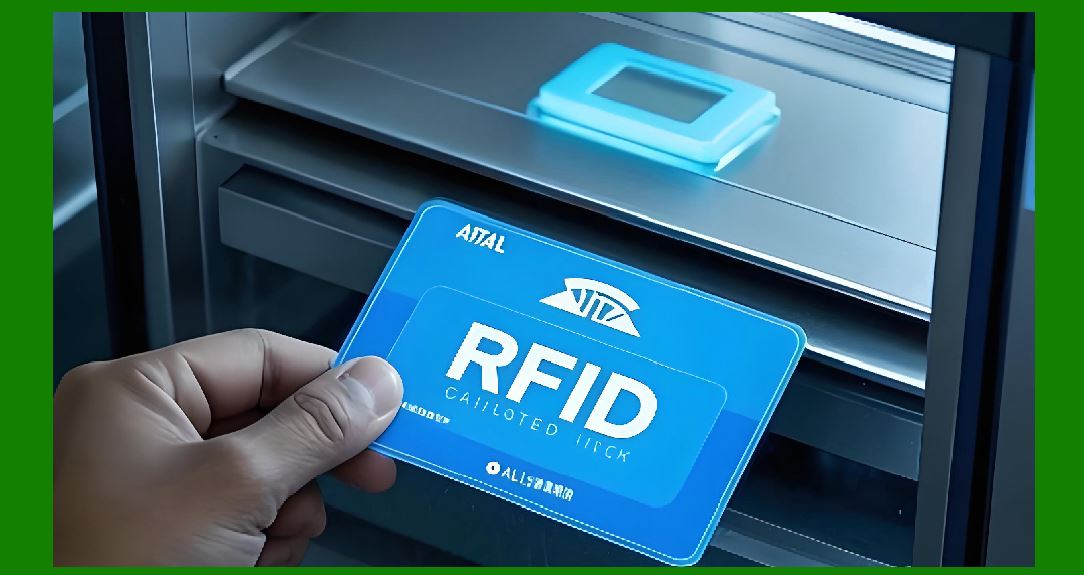
If you have ever held an RFID tag in your hand, your first impression was likely one of underwhelming simplicity. It looks like a piece of plastic, a thin sticker, a small glass cylinder, or even a stiff piece of paper embedded in a cardboard shipping label. It weighs almost nothing. It has no screen, no buttons, no visible power source, and no moving parts. Yet, this unassuming object is one of the most profound technological bridges between the digital realm of computers and the physical realm of atoms, molecules, and manufacturing. |
To understand the silent network, we must first understand the soldier in the field: the tag. The tag is the physical embodiment of identity. It is the voice that whispers, 'I am here, and I am this,' to a waiting reader. But a whisper is only useful if the listener can hear it, and the whisperer can form the words. The anatomy of an RFID tag is the anatomy of that whisper. It is a study in minimalism, efficiency, and resilience. |
At its core, the anatomy of a passive RFID tag can be distilled into two primary components: the integrated circuit, commonly called the chip, and the antenna. That is it. Two physical structures, working in concert, to achieve a miracle of wireless data transfer. However, this simplicity is deceptive. The chip is not a simple memory stick; it is a miniature computer with a state machine, power-harvesting circuitry, and a radio modulator. The antenna is not a piece of wire; it is a finely tuned electromagnetic structure designed to capture energy from the air and reflect it back with encoded data. The marriage of these two parts, and the materials that house them, determines the tag's cost, read range, durability, and application. |
We will begin by dissecting the chip, the brain of the operation. Then we will unravel the antenna, the ears and mouth. Finally, we will explore how these two elements are packaged into the myriad form factors we see in the wild, and we will spend the bulk of our journey walking through the industries where this anatomy comes to life. |
|
The Integrated Circuit: The Silent Processor |
The chip is the heart of the RFID tag's intelligence. In the context of passive Ultra-High Frequency (UHF) tags, which are the most common type used in supply chain and retail, the chip is a sliver of silicon, often smaller than a grain of rice. Its manufacturing process is a marvel of photolithography, carving millions of transistors onto a wafer that is later diced into individual chips. But for all its microscopic size, the chip is a complete system on a chip, or SoC. |
When you hold a tag, you are holding a chip that performs four critical functions: power harvesting, signal demodulation, data processing, and backscatter modulation. The beauty of this architecture is that it requires no battery. The chip is a parasitic device that feeds on the energy of the interrogating reader. |
First, power harvesting. The antenna captures the incoming radio frequency (RF) energy from the reader. This energy is an oscillating electromagnetic wave. The chip contains a rectifier circuit, which converts this alternating current (AC) into a direct current (DC) voltage. This is essentially a miniature power plant. It charges a small capacitor within the chip, which acts like a tiny reservoir. Once the voltage in this reservoir reaches a threshold--typically around one to two volts--the chip 'wakes up.' This process is known as cold start. The chip must achieve this startup in a fraction of a microsecond, using only the energy that can be scavenged from the air. If the tag is too far from the reader, the harvested energy is insufficient, and the tag remains silent. |
Second, signal demodulation. Once the chip is powered, it listens to the incoming signal. The reader is not just sending a continuous wave; it is modulating that wave with commands. The chip has a demodulator that strips away the carrier frequency to extract the data being sent. This is akin to tuning your ear to a specific voice in a crowded room. The chip listens for specific commands, such as 'Select,' 'Query,' or 'Read.' These commands initiate the inventory process. |
Third, data processing. The chip contains a finite state machine and a small amount of memory. The memory is typically divided into reserved memory, which stores the kill and access passwords; EPC memory, which holds the Electronic Product Code (the serialized identity); TID memory, which holds the Tag ID (a factory-locked unique identifier); and user memory, which is a reserved area for custom data. The state machine handles the anti-collision protocol. This is a critical function. In a real-world scenario, hundreds of tags may be in the reader's field. The chip must follow a sophisticated algorithm, often based on a slotted Aloha protocol, to respond at a random time to avoid colliding with its neighbors. It processes instructions, decides when to respond, and prepares its data for transmission. |
Fourth, backscatter modulation. This is the most fascinating part of the chip's operation. The tag does not generate its own radio signal; that would require too much power. Instead, it reflects the continuous wave from the reader. Think of a mirror reflecting sunlight. If you tilt the mirror, you change the angle of the reflection. The chip does something similar, but electronically. It changes the impedance of its antenna port, alternating between a matched state (which reflects the wave) and a mismatched state (which reflects the wave with a phase shift). This change in impedance causes a change in the amplitude or phase of the reflected wave. This is called backscatter. The chip encodes its data (the EPC number) into this pattern of impedance changes, transmitting it back to the reader at a speed of up to hundreds of kilobits per second. The chip is effectively 'talking' to the reader without making any sound of its own, just modulating the reader's own voice. |

|
The Antenna: The Sensory Organ |
If the chip is the brain, the antenna is the sensory organ that connects it to the outside world. The antenna is responsible for two critical tasks: collecting enough energy to power the chip and transmitting the backscattered signal back to the reader. The design of the antenna is an exercise in compromise. It must be resonant at the operating frequency, which for UHF RFID is typically in the 860-960 MHz range, depending on the region. |
The shape of the antenna is the most visually distinguishing feature of an RFID label. You will often see it as a coiled or zigzag pattern of metallic ink or copper. This is not an arbitrary design; it is a dipole antenna. A dipole consists of two conductive elements that are aligned to resonate with the wavelength of the radio wave. The total length of a half-wave dipole at 915 MHz is roughly 16 centimeters. However, tags used on small items like pharmaceuticals or jewelry cannot be 16 centimeters long. To overcome this, engineers use meandering lines, folding, and capacitive loading to shrink the physical size of the antenna while maintaining an electrical length that is resonant. These designs are carefully simulated in software to ensure they capture the maximum amount of energy, which is known as gain. |
The material of the antenna is just as important as its shape. In high-volume, low-cost labels, the antenna is etched from aluminum foil. This is a subtractive process: a thin layer of aluminum is bonded to a plastic substrate, and the unwanted metal is chemically removed, leaving the antenna pattern. For slightly higher performance or where conductivity is paramount, copper is used, often through an additive process like plating. However, the most common method for mass-market retail labels is printing with conductive ink, a process that is continuously improving in terms of conductivity and resolution. The antenna is deposited onto a substrate, typically PET (polyethylene terephthalate), and a thin layer of dielectric material covers it for protection. |
The connection between the antenna and the chip is a highly sensitive junction. The chip has two contact pads, which are connected to the antenna's two terminals. This connection is known as the strap or the interposer. In a typical assembly process, the chip is flipped and attached to the antenna via a highly conductive adhesive, an anisotropic conductive paste that only conducts electricity in one direction, allowing for precise bonding. This junction must have an impedance that matches the chip's input impedance. If the impedance is mismatched, power transfer is inefficient, and the read range plummets. The chip and antenna are a matched pair; you cannot arbitrarily swap a chip from one tag design to another. |
The antenna also dictates the tag's sensitivity to the environment. A tag that is attached to a metallic surface, such as a metal drum or a car part, faces a problem. The metal reflects radio waves and detunes the antenna. This is why we have specialized 'on-metal' tags. These tags feature a layer of foam or ferrite material between the antenna and the mounting surface, which acts as an electromagnetic band gap, isolating the antenna from the metal's disruptive effects. Similarly, tags on liquid containers (bottles of water or soft drinks) face detuning because water absorbs UHF energy. Engineers compensate by designing antennas that are detuned in free air but become resonant when placed against the liquid. This tailoring is the hidden art of RFID engineering. |

|
The Packaging: The Body of the Tag |
The naked chip and antenna are fragile. They need a protective housing, and this housing defines the tag's form factor. We can categorize these into a few major families. |
The inlay is the base level. This is the chip and antenna mounted on a thin PET substrate. It is essentially a sticker without the final paper or plastic covering. Inlays are sold in rolls to label converters, who then print barcode information on the face stock and laminate the inlay between layers of paper or plastic to create a finished smart label. |
The wet inlay is an inlay with a layer of pressure-sensitive adhesive already applied, ready to be peeled and stuck onto an item. The dry inlay lacks this adhesive and is typically laminated into a larger label or inserted into a package. |
The hard tag is a ruggedized version. The chip and antenna are encased in plastic, ceramic, or epoxy resin. These are designed for durability and are often used in applications like returnable asset tracking (pallets, totes, gas cylinders) or laundry (where they are sewn into uniforms and must survive high temperatures and caustic chemicals). |
The glass tag is a small glass cylinder, typically used for animal identification, medical implants, or tracking pipeline inspection tools. The chip and a coiled antenna are encapsulated in a biocompatible glass tube. In animal tracking, these are injected under the skin of pets or livestock. In industry, they are embedded in concrete or attached to metal pipes. |
The on-metal tag, as mentioned, is a specific hard tag with a ferrite or foam backing to isolate the antenna from the metal surface. These often look like thick plastic rectangles or pucks. |
The flexible tag is used in textile applications, such as tracking hospital linens. These can be sewn into a hem or heat-pressed onto a garment, with an antenna woven from conductive threads. |
The form factor is not just about protection; it is about integration. How the tag is attached to the item affects the read reliability. A tag that hangs loosely from a metal rack will perform differently than one that is glued flat to a cardboard box. The orientation of the tag relative to the reader's antenna is also crucial. A tag placed edge-on to the reader may be invisible, while one placed broadside will be easily read. |

|
Application: The Anatomy in Action |
Now that we understand the internal components, we can appreciate how the anatomy adapts to the environment. The following sections will explore the silent network across a spectrum of industries, highlighting how the chip and antenna are tailored to solve specific physical world challenges. |
Retail and Apparel: The Ubiquitous Smart Label |
The most visible application of the RFID anatomy is in the retail sector, specifically apparel. Walk into any major clothing retailer, and you will find that every piece of clothing has a tiny, discreet tag sewn into the side seam or stuck on the cardboard price label. These are typically UHF inlays, with an aluminum antenna meandered to fit within a label footprint of about 40 by 80 millimeters. |
The anatomy here is optimized for two things: cost and read speed. The chip contains a memory bank that holds a unique EPC number, which ties the specific shirt to its size, color, and style in the retailer's database. The antenna is designed to be omni-directional enough to be read from a distance of three to five meters, regardless of whether the shirt is folded, hanging, or piled on a table. |
The actual application begins at the manufacturing source. When a factory in Bangladesh produces a batch of jeans, they apply a smart label with a barcode printed on the outside. The chip is encoded with the item's Global Trade Item Number (GTIN) and a unique serial number. This is the marriage of the physical jean and the digital record. |
At the distribution center, readers in conveyor portals interrogate the tags as boxes pass by. The antenna on the label harvests energy from the portal's antenna array. The chip wakes up, responds with its EPC, and the reader sends the serial number to the warehouse management system. The system knows that this box contains 24 pairs of a specific style. This happens without the box being opened or scanned with a laser barcode gun. The efficiency is staggering: hundreds of boxes can be read per minute. |
In the back room of the store, a staff member walks around with a handheld reader. The reader emits a continuous wave. The tags on the shelves harvest this energy, and the chips respond. The staff member can take a physical inventory count in minutes, a task that used to take hours with barcode scanners. The reader picks up tags on high shelves, low shelves, and in tangled piles. The antenna's meander pattern is critical here; it allows the tag to have a consistent read pattern even when the clothing is stacked tightly. |
At the point of sale (POS), things get even more interesting. Traditional POS uses a barcode scanner. RFID-enabled POS, however, uses a desktop reader embedded in the counter. As a customer places a pile of clothes on the counter, the reader energizes all the tags. The chips respond simultaneously, and the anti-collision algorithm kicks in. The reader identifies all items in the pile in less than a second. The clerk simply confirms the total on the screen, and the transaction is complete. The customer receives a receipt, and the store's inventory is updated instantaneously to show that these specific serial numbers have left the store. This combats shrinkage and improves stock availability. |
Furthermore, the same tag enables a post-purchase security function. The chip has a bit in its memory called the EAS (Electronic Article Surveillance) bit. If the transaction is not processed properly, this bit remains active. As the customer walks out the door, the EAS pedestals at the exit detect the active bit and trigger an alarm. This eliminates the need for separate hard plastic security tags. The anatomy of the single tag serves both inventory management and loss prevention. |

|
Supply Chain and Logistics: The Cardboard Box's Voice |
Beyond apparel, the most crucial domain for RFID is the corrugated cardboard box. In a global supply chain, a pallet of boxes is a silent entity until we give it a voice. That voice is the RFID tag strapped to the pallet or attached to the individual cases. Here, the anatomy of the tag is often a dry inlay with a large, meandered dipole antenna printed on a flexible label, laminated over the existing shipping label. |
The challenge here is range and density. Warehouses are massive, metallic structures with high ceilings. The readers are mounted on overhead beams, at heights of 8 to 10 meters. The tag's antenna must be large enough to capture energy at that distance, often requiring a full half-wave dipole length. The chip must have high sensitivity, often with a read sensitivity of -20 dBm or better. This means the tag can start working with extremely low power. |
Consider a pharmaceutical distributor. They receive pallets of medicine from manufacturers. Each case of medicine has an RFID tag on it. The chip's user memory is often loaded with critical data: the batch number, expiration date, and storage temperature requirements. The distributor's receiving dock has a reader tunnel. As a forklift driver brings a pallet through the tunnel, the reader interrogates the tags. The chips harvest energy and backscatter their data. The system instantly verifies that the drugs are authentic, that they haven't been recalled, and that they are still within their shelf life. It also reconciles the physical receipt against the advance shipping notice. If a case is missing, the discrepancy is flagged in real time. |
The anatomy of the tag also allows for dynamic item-level tracking. In a high-end electronics warehouse, individual laptops have RFID tags on their packaging. These tags are on-metal types because the packaging contains foil shielding. The antenna in this case is a 'near-field' antenna, designed to work inductively at close range or a 'far-field' dipole designed to work in the UHF band. When a worker pulls a laptop for an order, the worker's handheld reader illuminates the shelf. The tag on the specific laptop responds. The worker confirms the pick by scanning the tag, and the warehouse system updates the inventory. This minimizes the dreaded 'out-of-stock' or 'lost item' scenario. |
The most impressive logistical feat is the automated conveyor belt sorting. Parcel carriers like UPS and FedEx handle millions of packages per day. They use RFID to augment their barcode systems. A barcode scanner on a conveyor can only read one label at a time, and only if the label is facing the scanner. An RFID reader array around the conveyor, however, can read tags from all sides. As a package moves down the belt at high speed, the antenna on the tag captures energy from the reader. The chip sends its EPC. The sorting system instantly routes the package to the correct chute for the delivery truck. This reduces mis-sorts and increases throughput dramatically. The tag's anatomy doesn't care if the label is upside down or scuffed; the radio waves penetrate dirt and printed text. |

|
Healthcare: Patient Safety and Asset Tracking |
The healthcare industry has adopted RFID with a specific focus on patient safety and surgical instrument tracking. Here, the anatomy of the tag must be biocompatible, small, and resistant to fluids and high temperatures. |
Consider the wristband for a newborn baby. This is a passive UHF tag embedded in a soft, flexible plastic band. The antenna is a small, folded dipole printed with silver ink. The chip is encoded with a unique patient identifier. The moment the baby is born, the wristband is placed on the baby's ankle or wrist. This tag is the baby's permanent digital identity within the hospital. |
The application here is a combination of safety and access control. The maternity ward has readers at the entrances and exits. If a baby is carried toward an exit without the nurse's permission, the reader detects the tag and triggers an alarm. The tag's chip has a dedicated memory bank for security. The nurse carries a mobile reader to confirm the identity of the baby before giving medication or performing procedures. This eliminates the risk of switching babies, a tragic but real possibility in a busy ward. |
For surgical instruments, the challenge is extreme. A scalpel or a clamp must be sterilized at temperatures over 134 degrees Celsius in an autoclave, exposed to steam and harsh chemicals. The tag cannot be a standard plastic label; it would melt. Instead, the tag is a hard ceramic or glass cylinder. The chip is a high-temperature variant, and the antenna is a coiled wire made of nickel or special alloy. The tag is physically embedded into the handle of the instrument via a hole or a riveted pocket. |
The hospital's central sterile supply department uses these tags to track the surgical tray. A tray contains dozens of instruments. Each instrument has its own unique tag. The tray is passed through a reader portal before and after surgery. The system knows exactly which instruments were used on which patient. This is critical for tracing infections, managing inventory, and ensuring that the tray is complete before sterilization. The chip's memory stores not only the ID but also the number of sterilization cycles the instrument has undergone. When the instrument reaches its maximum cycle count, the chip can be interrogated to alert the staff that the instrument must be retired. This prolongs the life of expensive tools and ensures patient safety. |
In pharmaceutical storage, RFID tags are used on high-value medications. These tags often include a tamper-evident feature. The antenna is designed as a continuous loop that weaves through the packaging. If the package is opened, the antenna is physically broken, rendering the chip unreadable. This is a simple but powerful way to prove that the medication has not been altered, a vital function in the fight against counterfeit drugs. |
|
Manufacturing and Automotive: The Digital Twin on the Assembly Line |
In an automotive plant, the anatomy of the RFID tag is often a hard, ruggedized tag with a ceramic or plastic housing, mounted to a metal carrier. This is the 'on-metal' tag we discussed earlier. Its antenna is tuned to work specifically against a metallic background, which would detune a standard tag. |
The manufacturing process for a car involves thousands of steps. An RFID tag is attached to the car's body-in-white (the basic skeleton of the car) as it moves through the assembly line. This tag is the car's digital twin. It travels with the car through paint shops, welding stations, and final assembly. The tag contains a chip with memory that is updated at each station. |
When the car enters a painting robot cell, a reader at the entrance interrogates the tag. The chip wakes up and reports the car's model and color code. The painting system uses this data to set the correct spray pattern and paint color for that specific vehicle. The memory bank on the chip can be used to store process parameters, like the exact amount of paint applied. This creates a granular record of the build process, which is invaluable for warranty claims and quality control. |
In an engine assembly plant, the components (pistons, camshafts, and valves) are tracked individually. Here, the tags are extremely small, often high-frequency (HF) tags with a coiled antenna and a ferrite core. These are attached to the metal components via a dot of epoxy or inserted into a drilled hole. The read range for these is short, typically less than a few centimeters, which is perfect for close-proximity reading on the assembly station. The chip on this tag contains a secure memory area that cannot be reprogrammed after the engine is assembled, ensuring a permanent chain of custody. |
In the tire manufacturing industry, RFID tags are embedded into the tire itself during the curing process. The tag is a small, robust inlay that can withstand the 200-degree heat and the high pressure of the vulcanization process. The antenna is a circular patch that is embedded in the rubber. When the tire is mounted on a vehicle, it carries its entire history. The tire's tag can be read by a handheld scanner to verify its age, pressure, and tread wear. Fleet managers use this data to predict maintenance schedules. The tag's anatomy in this case is an extreme example of resilience; the chip and antenna must survive the chemical and mechanical stresses of the road for up to several years. |

|
Aviation and Aerospace: Safety Through Traceability |
The aviation industry is arguably the most stringent adopter of RFID, not just for baggage but for the maintenance of aircraft parts. The cost of a failed part is measured not just in dollars but in human lives. |
The tags used in this industry are robust, high-temperature, and often hermetically sealed. The antenna is typically a ceramic patch antenna or a copper wire embedded in a high-performance polymer. The chip is often an 'extended memory' variant with a capacity of several kilobits, enough to store a maintenance log directly on the tag, not just in a remote database. This is known as 'on-board' data. |
Aircraft engines contain thousands of life-limited parts. Each part has an RFID tag attached via a metallic strap or embedded in a composite bracket. When a maintenance technician inspects the engine, they use a handheld reader to interrogate the tag. The chip responds with the part number, serial number, and maintenance history. The technician can then write new data to the tag, recording the inspection date, the technician's ID, and any observed anomalies. This creates a distributed, secure ledger of the component's life. |
Consider a critical component like a landing gear actuator. It has a tag on its metal housing. The antenna is a 'slot' antenna, which is a cutout in the metal housing itself, acting as the radiator. This is a specialized design that eliminates the need for a separate protruding antenna. The chip is mounted to the back of this slot. The reader, mounted on a maintenance cart, energizes the tag from about a meter away. The chip's memory stores the actuator's torque calibration settings and its operational hours. When the aircraft lands, the maintenance system automatically reads the tag and updates the airframe's health monitoring system, alerting the ground crew if the actuator is nearing its service interval. |
In the baggage handling system, RFID tags on luggage labels are now common. These are standard UHF inlays with aluminum antennas. However, the application is unique because the baggage moves on conveyor belts, through tunnels, and across X-ray machines. The antenna on the label must be readable from any angle. To achieve this, the baggage tag often has two antennas: a 'near-field' antenna for short-range reading at the check-in desk and a 'far-field' antenna for long-range reading on the conveyor. The chip switches between these antennas depending on the frequency of the reader. This dual-antenna anatomy ensures that the bag is tracked from the moment the passenger prints the tag to the moment it is loaded onto the aircraft. |

|
Agriculture and Livestock: The Ear Tag |
In agriculture, the RFID tag is a familiar sight on the ear of a cow or the leg of a sheep. This is typically a low-frequency (LF) tag operating at 125 kHz or 134.2 kHz. The anatomy here differs significantly from UHF. The antenna is a coil of copper wire wrapped around a ferrite core, making it inductive. The chip is a simple, low-power device with a small memory. |
The reason for using LF is the presence of water and dense tissue. UHF signals are absorbed by the animal's body, but LF signals are less affected. The read range is short, only about 30 to 50 centimeters, which is ideal for a farmer using a handheld wand to read the tag close to the animal's ear. The chip stores a unique 15-digit animal identification number. |
The application is the management of the herd. When a cow enters the milking parlor, a reader at the entrance reads the ear tag. The chip wakes up and sends its ID. The automated milking system then looks up this ID in its local database and knows the cow's milk production history, health status, and feeding regimen. It adjusts the milking parameters accordingly. This individual-level care improves milk yield and animal welfare. |
In more advanced farms, the ear tag is used to monitor feeding behavior. A reader is embedded in the feeding trough. The tag on the cow's ear is read continuously. The system tracks how long the cow spends eating, alerting the farmer to potential illnesses, such as rumen acidosis. The chip's memory can also be used to store a calving date or vaccination records, so the tag acts as a mobile medical record attached to the animal. |
For sheep and goats in rugged terrain, the ear tag must be durable and resistant to entanglement. The tag is often a flexible yellow or orange plastic flag with the coil embedded inside. The chip is potted in epoxy to prevent moisture ingress. When the animals are herded through a race (a narrow corridor), the farmer uses a fixed reader to scan each animal's tag, automatically recording weights and health checks without the need to catch and restrain each animal individually. |

|
Wine and Spirits: Authenticity and the Consumer Experience |
The wine industry is a fascinating case study for RFID anatomy because the tag must be small, discreet, and often integrated into a metal foil capsule covering the cork. This is a high-frequency (HF) near-field tag, operating at 13.56 MHz, with a coiled antenna. The chip is typically an NFC (Near Field Communication) variant, which is compatible with smartphones. |
The challenge here is the presence of metal foil and liquid. The antenna is a spiral coil printed with silver ink on the inside of the capsule. The chip is mounted to the coil. The reader is an NFC-enabled smartphone, which is held very close to the capsule (within 2-4 centimeters). This short range is acceptable for a consumer interaction. |
The application is twofold: anti-counterfeiting and consumer engagement. A bottle of premium wine costs hundreds or thousands of dollars. Counterfeiters produce fake bottles. The RFID tag contains a cryptographic signature that is nearly impossible to clone. When a consumer taps their phone to the capsule, the phone reads the tag's chip and verifies the signature against the winery's secure database. The consumer instantly sees a confirmation that the bottle is authentic. This gives the buyer peace of mind. |
The second application is provenance and storytelling. The chip's user memory can store data about the vintage, the specific vineyard block where the grapes were grown, the winemaker's notes, and even a link to a video of the harvest. When the consumer taps the bottle, they are not just authenticating it; they are unlocking a digital experience. This enhances the brand value. The winery can also track which bottles are being opened and where, providing valuable market intelligence. The anatomy of this tag is a tiny bridge between the physical bottle and the digital narrative. |

|
Smart Packaging and Parcel Delivery: The Active-Passive Hybrid |
While we have focused on passive tags, there is a hybrid called a battery-assisted passive (BAP) tag. This tag has a thin battery, usually a printed battery, integrated into the substrate. The battery does not power the transmission of the backscatter signal; that is still done via the reflected energy from the reader. Instead, the battery powers the chip's internal logic and memory. |
The advantage of a BAP tag is a significantly longer read range (up to 30-40 meters) and the ability to power sensors. In the anatomy of a BAP tag, you have the chip, the antenna, and a thin, flexible lithium-polymer cell. This is used in smart packaging for high-value parcels where you need to monitor temperature or shock during shipping. |
Imagine shipping a heart transplant organ. The package has a BAP tag with a temperature sensor integrated into the chip. The chip is continuously powered by the battery, so it can sample the temperature inside the box every minute and store the readings in its user memory. When the package arrives at the hospital, the receiving staff uses a reader to interrogate the tag. The tag backscatters the stored temperature profile. The staff can verify that the organ was kept at the precise required temperature throughout the entire journey. If there was a deviation, they can reject the delivery. The antenna on this BAP tag is large, often a patch antenna, to maximize the range for the backscatter link. |
In the construction industry, BAP tags are embedded in concrete to track the curing process. The temperature sensor data is stored on the chip. Workers use a long-range reader to check the cure status without needing to drill into the concrete. The chip's memory stores the entire temperature-time history, ensuring the structural integrity of the building. |

|
Document and Library Tracking: The Invisible Spine |
Libraries have been using HF RFID tags for decades. These tags are often hidden inside the spine of a book or on the back cover. The tag is a thin inlay with a coiled antenna. The chip contains the book's unique identifier. The application is self-service check-out and inventory management. |
A patron places a stack of books on a self-checkout pad. The pad contains an HF reader. The reader's near-field magnetic field energizes the coiled antennas on the tags. Each chip responds with its ID. The system checks out all the books at once. The patron walks out the door. The library's security gate reads the tags and checks the issue status. If a tag's EAS bit is still active, the alarm sounds. |
The anatomy is invisible to the user. The tag is thin enough to be laminated into the paper cover. The antenna is a multi-turn spiral, which allows for a small footprint while maintaining resonance at 13.56 MHz. The chip has a 1-kilobyte memory, which is ample for storing a book ID and a few status flags. The library also uses handheld readers for shelf sweeping. A librarian walks down the aisle with a reader wand. The wand energizes the tags on the books. The system inventories the entire shelf in seconds, identifying books that are out of place. This is the silent network in the quietest of environments. |

|
Waste Management and Recycling: The Trash Can's Secret |
Even the lowly waste management industry has embraced RFID. Municipalities use RFID tags on garbage bins and dumpsters. The tag is a ruggedized passive UHF tag, usually an on-metal design because the bin is plastic or metal. The antenna is a sturdy dipole embedded in a hard plastic housing that is bolted or riveted to the side of the bin. The chip stores the bin's unique ID, which corresponds to a specific household or business address. |
The application is the automatic recording of collection. When a garbage truck lifts the bin to empty it, an RFID reader on the truck's arm interrogates the tag. The chip wakes up, backscatters the ID, and the truck's system records the date, time, and location of the service. This verifies that the bin was actually emptied, which prevents disputes with customers. It also allows the waste management company to bill accurately based on the weight of the load (if the truck has a scale) and the frequency of collection. |
In a more advanced scenario, recycling plants use RFID to sort materials. Tags are applied to reusable plastic crates and pallets used in the food supply chain. When these crates are returned to the depot, they pass through a reader portal. The tag's chip identifies the owner of the crate, and the system routes it back to the correct supplier. This reduces losses and improves the efficiency of the circular economy. |
The tag's anatomy in this environment must survive mechanical shock, extreme temperatures, and exposure to food waste. The chip is encapsulated in a high-durometer epoxy that is IP68 rated (dust-tight and waterproof). The antenna is often a silver-coated copper wire embedded in the epoxy, which provides both flexibility and conductivity. |
|
Luxury Goods and Art: The Invisible Fingerprint |
The world of luxury handbags, watches, and fine art has a unique requirement: the tag must be invisible and impossible to remove without destroying the item. Here, the tag is often a very small HF or UHF die that is embedded in a label that is sewn into the lining of a handbag or glued behind the crystal of a watch. |
These tags use a chip with a random number generator and a cryptographic engine. The antenna is printed with a highly conductive silver ink on a flexible film. The tag is so thin that it is undetectable by touch. The application is authentication for the secondary market. A potential buyer can use an NFC phone to tap the item. The chip responds with a cryptographically signed token. The phone app verifies the token against the brand's cloud server. This ensures that the bag is not a sophisticated fake. |
The anatomy here is all about stealth. The antenna is often a fractal pattern, which is a self-similar geometric design that allows a long electrical length to be folded into a tiny area. This maintains resonance while fitting into a space the size of a postage stamp. The chip is a secure element, similar to what is found in a credit card, with hardware-level protection against tampering. If someone tries to physically remove the tag, the antenna breaks, rendering the chip useless. This creates a tamper-evident seal. |

|
Aviation Baggage and Sports Events: The Crowd and the Luggage |
Finally, let's consider large-scale event management. At a marathon, thousands of runners wear a timing tag. This is a passive UHF tag attached to the back of the race bib. The antenna is a simple dipole printed on the bib. The chip contains a unique ID assigned to the runner. |
When runners cross the start line, a mat embedded with an RFID reader array energizes the tags. The chip on each runner's bib wakes up and sends the ID to the reader. This happens for thousands of runners in a matter of seconds. The system records the exact time the runner crossed the line. This data is used to generate official race times. The same technology is used in ski resorts to track lift passes and in theme parks to manage visitor access and photo services. In these applications, the tag's antenna is designed to be read from the front or back, with a wide beam pattern to capture all orientations as the runner moves dynamically. |
For airline baggage, the tags are standard UHF inlays, but they are printed on a label that is folded and attached to the bag's handle. The reader at the check-in counter encodes the chip with the passenger's flight number and destination. The bag is then sent through the conveyor system. The readers at various sorting nodes read the tag, not the barcode. The chip's fast data transfer rate allows the bag to be sorted even when the conveyor is moving at high speed, ensuring that the bag goes to the correct aircraft. |

|
Summary Detailed: The Ecosystem of the Tag |
As we conclude our dissection, we return to the fundamental truth: the RFID tag is a masterpiece of minimalist engineering. Its anatomy, composed of a chip for data processing and an antenna for energy harvesting and communication, is a testament to the power of simplicity. However, this simplicity is a platform for infinite adaptation. |
We have seen that the chip is not just a piece of memory; it is a power plant, a radio, and a state machine all rolled into a sliver of silicon. It can harvest microwatts of power from the air, manage complex anti-collision protocols to speak in a crowd, and backscatter its identity with cryptographic security. The antenna, in turn, is not a generic piece of metal; it is a sculpted electromagnetic structure that is painstakingly designed to be resonant, efficient, and resilient against the detuning effects of metal, liquid, and human tissue. |
The industry applications we have explored demonstrate that the 'same' tag is vastly different across use cases. In retail, it is a disposable smart label costing a few cents, optimized for speed and volume, where the antenna is meandered to fit on a shirt price tag. In aviation, it is a ruggedized, high-temperature ceramic block bolted to a jet engine, storing thousands of maintenance records, where the antenna is a slot cut into metal. In agriculture, it is a coiled inductor on a cow's ear, communicating at low frequencies to penetrate tissue. In wine, it is a tiny NFC spiral hidden under a foil capsule, engaging a consumer's smartphone. In logistics, it is a large dipole on a cardboard box, screaming its identity to a reader ten meters away. |
The silent network is not built on a single, one-size-fits-all tag. It is built on a modular anatomy where the chip and antenna are reconfigured, repackaged, and re-tuned for each physical challenge. The physical world is chaotic, with reflections, absorptions, and interferences. The tag's anatomy must be a reflection of that chaos, designed to work not in a laboratory but in a truck, a warehouse, a surgery room, a wine cellar, or a garbage bin. |
This chapter has also shown that the tag is often the first point of data creation in the digital lifecycle of an object. Whether it is a car, a baby, or a parcel, the tag is the catalyst that transforms a physical entity into a digital record. The chip's memory can be read, written, and locked, making the tag a living data carrier that travels with the item, not just a passive reference to a remote database. |
Furthermore, the convergence of RFID with other technologies is beginning to redefine the tag's anatomy. Sensors are being integrated into the chip, enabling it to monitor temperature, humidity, shock, and even gas composition. The addition of a battery creates a BAP tag that can act as an active data logger. The integration of cryptography makes the tag a tool for security and authentication. The tag is evolving from a simple identifier into a complete 'edge device' in the Internet of Things. |
The barcode, our companion technology, is the visual, passive map of the physical world, readable by cameras and human eyes. But the RFID tag is the auditory, active map, readable by machines regardless of line-of-sight. Together, they form a hybrid system: the barcode for the human-readable interface and the RFID tag for the machine-speed interface. The anatomy of the tag provides the 'hearing' and 'speaking' capabilities that the barcode lacks. |

|
In the end, the success of the silent network hinges on the tag's ability to be cheap, durable, and reliable. As we push to read millions of tags per hour in a supply chain or read a tag through a layer of concrete, we are asking the chip and antenna to perform near-miracles. The engineering behind the tag's anatomy---the matching of impedance, the design of the meander line, the sensitivity of the rectifier---is the unsung hero of our automated world. |
This chapter should leave you with a profound respect for the humble tag. It is the silent soldier in the war against inefficiency, the quiet watchdog of patient safety, and the invisible bridge between the physical thing you hold in your hand and the digital data that defines its existence. As we move forward into the next chapter, we will look at the readers and the network infrastructure that interrogate these tags, but we will always remember that the conversation starts with the tag, in its silent, chip-and-antenna anatomy, whispering to the world, 'I am here.' |
 cs@easiersoft.com