Chapter 42: RFID Advantage - Security and Authentication |
A Quick Summary at the Start |
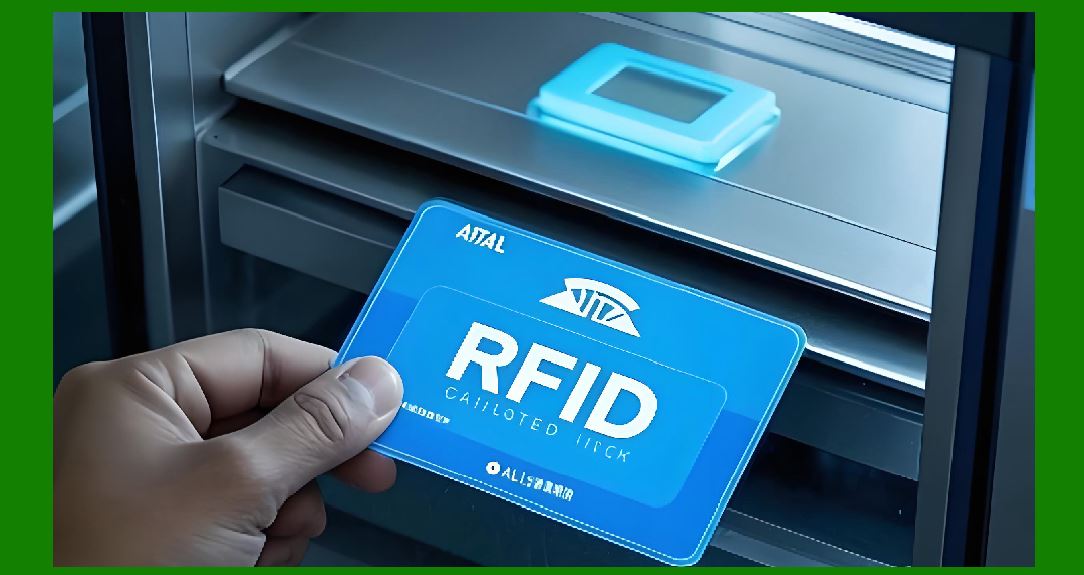
Barcodes are printed lines. Anyone with a camera, a printer, and a few minutes of free time can copy them. A barcode has no memory, no secret, and no way to prove that it is genuine. It is a label, not a lock. RFID tags, especially those with cryptographic features, are different. They can carry secrets, perform calculations, and answer challenges in ways that a simple copy cannot reproduce. This chapter explains why that difference matters, and then walks through real examples from many industries: pharmaceuticals, luxury goods, passports, event tickets, vehicle tolling, cargo shipping, food supply chains, hospitals, libraries, casinos, and more. The goal is not to turn you into a cryptographer. The goal is to show you, in plain language, why a tag that can think is fundamentally harder to fake than a label that cannot. |
|
The Core Difference: A Label Versus a Lock |
Imagine two ways to protect a room. The first way is to paint a number on the door. Anyone who sees the number can paint the same number on another door. The number is public, permanent, and meaningless on its own. The second way is to install a lock that changes its combination every time you use it, and only the real key knows the next combination. A copied key will fail on the second try. |
A barcode is the painted number. An RFID tag with cryptographic features is the changing lock. This is the heart of the security advantage. |
A barcode encodes data in a visual pattern. The pattern is designed to be read by a machine, not to be secret. In fact, barcodes are often printed in plain sight, on the outside of a product, precisely so that any scanner can read them. There is no hidden key inside a barcode. There is no challenge and response. There is no memory of past reads. If you photograph a barcode, you can print it again. If you print it again, every scanner in the world will accept it as the same barcode. That is not a flaw in barcodes. That is their design. Barcodes were built for speed, low cost, and universal readability. Security was never the point. |
RFID tags, by contrast, contain a small chip. Some chips are simple. They hold a fixed number and nothing else. Those simple tags are almost as easy to clone as barcodes, because the number is fixed and can be copied. But other RFID chips contain a tiny computer. That computer can store secret keys, run calculations, generate random numbers, and respond differently each time it is asked a question. When a reader sends a challenge, the tag computes an answer using its secret key. The reader checks the answer. A cloned tag that does not know the secret key cannot produce the correct answer. This is the essence of cryptographic authentication. |

|
Why Cloning a Barcode Is Trivial |
To clone a barcode, you need three things: a way to see it, a way to reproduce it, and a way to place it on an object. All three are easy. |
First, seeing it. A barcode is visible light. A smartphone camera can capture it. A photocopier can copy it. A person can write down the numbers underneath it. There is no barrier to observation. |
Second, reproducing it. A barcode is a pattern of dark and light bars. A printer can reproduce that pattern on paper, on plastic, on a sticker, or on a metal plate. The cost is fractions of a cent. The equipment is everywhere. |
Third, placing it. A sticker can be peeled and moved. A printed label can be glued onto a counterfeit box. A copied barcode can be attached to a different item. Nothing in the barcode itself prevents this. |
This is why barcodes are said to be trivial to copy. The word trivial is not an insult. It is a precise description. The effort required is so low that it is not worth measuring. A child with a printer can clone a barcode. A criminal with a printer can clone a barcode. There is no skill barrier, no cost barrier, and no technical barrier. |

|
What Cryptography Adds to RFID |
Cryptography is the art of using secrets and mathematics to prove identity, protect data, and detect tampering. When you add cryptography to an RFID tag, you add several powerful properties. |
The first property is a secret key. The tag holds a key that is never transmitted over the air. The reader also knows the key, or knows a related key. An attacker who listens to the conversation cannot learn the key, because the key is never spoken aloud. This is different from a barcode, where the entire content is spoken aloud to anyone who looks. |
The second property is a challenge-response exchange. The reader sends a random number, called a challenge. The tag combines that challenge with its secret key and produces a response. The reader does the same calculation and compares. If the response matches, the tag is genuine. If an attacker clones the tag but does not know the key, the attacker cannot produce the correct response for a new random challenge. The attacker might have recorded an old challenge and an old response, but that old pair is useless for a new challenge. |
The third property is a changing output. Even if an attacker records every conversation, the next conversation will be different because the challenge is different. There is no fixed password to steal. There is no fixed number to copy. The tag behaves like a living thing that answers differently each time. |
The fourth property is tamper detection. Some RFID tags can detect when they have been physically opened, probed, or altered. If the tag is tampered with, it can refuse to authenticate, or it can report that it has been compromised. A barcode cannot do this. A barcode that is cut in half is simply two barcodes, or one broken barcode. It has no awareness of its own condition. |
The fifth property is mutual authentication. In many systems, not only does the tag prove itself to the reader, but the reader also proves itself to the tag. This prevents a fake reader from tricking a real tag into revealing information. A barcode has no ability to challenge the reader. It simply gives up its data to anyone who asks. |
These five properties together make cloning difficult. Not impossible, but difficult. The difficulty can be raised by using longer keys, stronger algorithms, and better physical protection. The point is that the difficulty is under the control of the system designer. With a barcode, the difficulty is always zero. |

|
A Simple Analogy: The Photocopy Versus the Passport |
Think of a barcode as a photocopy of a document. Anyone can make a photocopy. The photocopy looks the same. It can be passed around. It can be used in place of the original in many situations. No one can tell the difference without checking something else. |
Now think of an RFID tag with cryptography as a passport with a digital chip. The passport has a photo, but it also has a chip that contains a secret. When a border officer reads the chip, the chip and the officer's reader perform a cryptographic handshake. A photocopy of the passport photo will not satisfy the chip. A blank chip will not satisfy the reader. A cloned chip that does not know the secret will fail the handshake. The passport is not just a picture. It is a picture plus a proof. |
This is exactly the difference between a barcode and a secure RFID tag. The barcode is the picture. The secure RFID tag is the picture plus the proof. |

|
Industry Example: Pharmaceuticals and Anti-Counterfeiting |
The pharmaceutical industry loses billions of dollars every year to counterfeit drugs. Fake medicines harm patients, damage brands, and undermine trust in healthcare. Barcodes on medicine boxes are easy to copy. A counterfeiter can print a box that looks identical, including the barcode. When the box is scanned at a pharmacy, the barcode returns the same number as the real product. The scan succeeds. The counterfeit passes. |
RFID tags with cryptographic authentication change this. In a secure pharmaceutical system, each RFID tag on a medicine bottle or box contains a unique secret key. When the pharmacist scans the tag, the reader sends a challenge. The tag responds with a cryptographic answer. The reader verifies the answer against a secure database or against a key stored in the reader. A counterfeit tag that does not know the secret key cannot produce the correct answer. The pharmacist sees a red light instead of a green light. |
Several countries have implemented track-and-trace systems for pharmaceuticals. In these systems, the RFID tag is not just a number. It is a secure token that travels with the drug from the factory to the wholesaler to the pharmacy. At each step, the tag is authenticated. If a tag fails authentication, the drug is quarantined. This makes it much harder for counterfeiters to introduce fake drugs into the legitimate supply chain. |
The same principle applies to medical devices. A counterfeit surgical implant can cause infection, rejection, or death. A secure RFID tag on the implant can prove that it came from the real manufacturer. A barcode on the packaging cannot prove this, because the packaging can be copied. |

|
Industry Example: Luxury Goods and Brand Protection |
Luxury brands face a constant battle against counterfeits. A fake handbag, watch, or pair of shoes can be sold for hundreds or thousands of dollars. The counterfeiters are skilled. They can copy leather, stitching, logos, and packaging. They can also copy barcodes. A barcode on a luxury item is often just a price tag or a inventory number. It is not a proof of authenticity. |
Secure RFID tags are different. A luxury brand can embed an RFID tag in the lining of a handbag or inside the case of a watch. The tag contains a secret key that is known only to the brand. When a customer or a store clerk scans the tag with a brand-approved app, the app performs a cryptographic challenge-response with the tag. If the tag is genuine, the app displays a confirmation. If the tag is a clone, the app displays a warning. |
This does not stop a counterfeiter from making a fake bag. But it makes it much harder to pass the fake bag off as real. The counterfeiter would need to extract the secret key from a real tag, which is designed to be difficult. The counterfeiter would need to replicate the cryptographic behavior, which requires expensive equipment and expertise. The counterfeiter would need to do this for every bag, because each tag has a unique key. The economics of counterfeiting change. The cost of faking the tag may exceed the profit from selling the fake bag. |
Some luxury brands go further. They use RFID tags that can be read by a smartphone, so that the customer can verify the product at the point of purchase. The customer does not need a special reader. The customer's phone becomes the verifier. This empowers the customer and makes the brand's promise of authenticity tangible. |
|
Industry Example: Passports and Identity Documents |
Electronic passports, often called e-passports, contain an RFID chip. The chip stores the passport holder's personal data and a digital signature. The digital signature is created by the issuing government. When a border officer scans the passport, the reader verifies the signature. If the signature is valid, the data is genuine. If the signature is invalid, the passport is fake or has been tampered with. |
The RFID chip in an e-passport also supports a cryptographic protocol called Basic Access Control, and in newer passports, Extended Access Control. These protocols prevent unauthorized reading of the passport. They also prevent cloning. A cloned chip that does not have the correct keys cannot pass the verification. |
A barcode on a passport would be useless for this purpose. A barcode can be copied. A barcode cannot hold a digital signature that is verified by a reader. A barcode cannot perform a challenge-response. The security of the e-passport depends on the RFID chip's cryptographic capabilities. |
The same technology is used in national identity cards, driver's licenses, and residence permits in many countries. The goal is to make it difficult to forge or clone the document. The RFID chip is not just a storage device. It is a security device. |

|
Industry Example: Event Tickets and Access Control |
Concert tickets, sports tickets, and theme park passes are often counterfeited. A barcode ticket can be photocopied. Two people can show up with the same barcode. The first one enters. The second one is turned away, or both are turned away if the system detects the duplicate. But the damage is done. The venue loses revenue. The legitimate ticket holder is upset. |
RFID tickets with cryptographic authentication solve this problem. Each ticket has a unique RFID tag with a secret key. When the ticket is scanned at the gate, the reader challenges the tag. The tag responds. The reader verifies. If the tag is genuine and has not been used, the gate opens. If the tag is a clone, the gate stays closed. If the tag has already been used, the gate stays closed. |
Because the tag's response changes with each challenge, a recording of a previous entry cannot be replayed. The attacker cannot capture the conversation and use it again. This is called replay protection, and it is a natural feature of challenge-response authentication. |
Some event systems also use RFID tags to track attendance and manage crowd flow. The same tag that proves authenticity also provides data. This dual purpose makes RFID attractive to venues. A barcode can provide data, but it cannot provide proof. |

|
Industry Example: Vehicle Tolling and Parking |
Electronic toll collection systems use RFID tags on vehicles. The tag identifies the vehicle to the toll plaza. In simple systems, the tag is just a number. In secure systems, the tag uses cryptography to prove that it is genuine. This prevents people from cloning tags and avoiding tolls. |
Imagine a toll system where the tag is just a barcode. A driver could copy the barcode, place it on another car, and the toll would be charged to the original driver. This is fraud. With a cryptographic RFID tag, the clone would fail authentication. The toll system would reject the clone and possibly alert authorities. |
The same principle applies to parking garages, gated communities, and fleet management. A secure RFID tag ensures that only authorized vehicles enter. A barcode cannot provide this assurance. |

|
Industry Example: Cargo Shipping and Supply Chain Security |
Global supply chains move millions of containers every day. A single container can carry goods worth millions of dollars. Thieves and smugglers target these containers. They may open a container, steal goods, and reseal it. They may introduce counterfeit goods. They may replace a genuine container with a fake one. |
RFID tags with cryptographic authentication can help. A secure RFID tag can be attached to the container door. The tag can record when the door is opened and closed. The tag can authenticate itself to readers along the route. If the tag fails authentication, or if the door has been opened without authorization, the system raises an alarm. |
A barcode on a container is just a label. It can be copied. It can be replaced. It cannot detect tampering. It cannot prove that the container is the same one that left the factory. The RFID tag, with its secret key and its tamper detection, provides a much stronger guarantee. |
Some systems combine RFID with sensors. The tag can monitor temperature, humidity, shock, and light. If the conditions change beyond a threshold, the tag records the event. When the container arrives, the reader checks the tag's log and its authentication. This provides a complete picture of the journey. A barcode cannot do this. A barcode is blind, deaf, and mute. |

|
Industry Example: Food Safety and Traceability |
Food safety is a matter of life and death. Contaminated food can cause illness and death. Tracing food back to its source is essential for recalls. Barcodes are used for traceability, but they have limits. A barcode on a box of spinach can be copied. A barcode on a fish can be swapped. A barcode does not prove that the fish is the same fish that was caught. |
RFID tags with cryptographic authentication can provide stronger traceability. A tag on a fish can be authenticated at the dock, at the processing plant, at the wholesaler, and at the retailer. If the tag fails authentication, the fish is rejected. If the tag's data shows that the fish was caught in a prohibited area, the fish is rejected. The tag becomes a trusted record of the fish's journey. |
The same applies to meat, dairy, produce, and wine. In the wine industry, counterfeit wine is a serious problem. A secure RFID tag on a bottle can prove that the wine is genuine. A barcode on the label cannot. |

|
Industry Example: Healthcare and Patient Safety |
Hospitals use RFID tags to track patients, staff, equipment, and medications. Security and authentication are critical. A counterfeit RFID tag on a patient wristband could lead to the wrong medication being given. A counterfeit tag on a surgical instrument could lead to a fake instrument being used. A counterfeit tag on a blood bag could lead to the wrong blood being transfused. |
Secure RFID tags prevent this. Each tag has a secret key. The hospital's readers authenticate the tag before trusting its data. If the tag fails authentication, the staff is alerted. The barcode on a wristband can be copied. The RFID tag cannot be easily cloned. |
Some hospitals use RFID tags to track expensive equipment. A secure tag ensures that the equipment is genuine and that it has not been replaced with a cheaper model. This protects the hospital's investment and the patient's safety. |

|
Industry Example: Libraries and Archives |
Libraries use RFID tags to track books and media. Security is a concern. A thief might try to clone a tag or replace a tag to sneak a book out of the library. A simple RFID tag with a fixed number is vulnerable. A secure RFID tag with cryptographic authentication is not. |
In a secure library system, the tag on a book authenticates itself to the library's readers. If a book is taken out without being checked out, the gate reader detects the tag and alarms. If a thief tries to clone the tag, the clone fails authentication. The library's collection is protected. |
Archives and museums have similar needs. A valuable manuscript or artifact can be tagged with a secure RFID tag. The tag proves that the item is genuine and that it has not been removed without authorization. A barcode can be copied. A secure RFID tag cannot. |

|
Industry Example: Casinos and Gaming |
Casinos use RFID tags in chips, cards, and tokens. Security is paramount. A counterfeit chip can be used to cheat the casino. A cloned chip can be used to steal money. A secure RFID tag in a casino chip can prove that the chip is genuine. The tag can also store a value that is updated by the casino's system. A barcode on a chip would be useless, because it can be copied and because it cannot store changing value. |
Casinos also use RFID to track bets and player behavior. The same tag that provides security also provides data. This dual purpose is a common theme in RFID adoption. |

|
Industry Example: Automotive and Keyless Entry |
Modern cars use RFID tags in key fobs. The key fob communicates with the car. If the fob is genuine, the car opens and starts. If the fob is a clone, the car refuses. Early systems were vulnerable to relay attacks, where an attacker extends the range of the signal. Newer systems use cryptographic challenge-response to prevent this. The fob and the car perform a mutual authentication. A clone cannot participate. |
A barcode on a key fob would be trivial to copy. A photograph of the barcode would be enough. The cryptographic RFID tag is much harder to clone. This is why keyless entry systems use RFID, not barcodes. |

|
Industry Example: Sports and Marathon Timing |
Marathon runners wear RFID tags on their shoes or bibs. The tags record their times at checkpoints. Security is less of a concern in amateur races, but in professional races, cheating is a concern. A runner might try to swap tags or clone a tag to get a better time. A secure RFID tag with cryptographic authentication can prevent this. The tag proves that it is the same tag that was issued to the runner. A barcode on a bib can be copied. A secure RFID tag cannot. |

|
Industry Example: Retail and Loss Prevention |
Retail stores use RFID tags for inventory and loss prevention. A secure RFID tag can prove that an item is genuine and that it has been paid for. A thief might try to remove or clone a tag. A secure tag resists this. A barcode on an item can be copied. A secure RFID tag cannot. |
Some retailers use RFID tags to enable self-checkout. The customer scans the items, and the system authenticates the tags. If a tag fails authentication, the system alerts the staff. This reduces theft and improves the customer experience. |

|
Industry Example: Government and Defense |
Governments and militaries use RFID tags to track assets, weapons, and supplies. Security is critical. A counterfeit tag could lead to the wrong asset being used. A cloned tag could lead to theft. Secure RFID tags with cryptographic authentication prevent this. A barcode can be copied. A secure RFID tag cannot. |
The same technology is used in border control, law enforcement, and intelligence. The goal is to ensure that only authorized people and assets are allowed access. |

|
The Limits of RFID Security |
It is important to be honest about the limits. RFID security is not magic. A determined attacker with physical access to a tag can try to extract the key. This is called a side-channel attack. The attacker might measure the power consumption of the tag, or the time it takes to respond, or the electromagnetic emissions. If the attacker succeeds, the key is compromised. The attacker can then clone the tag. |
To defend against this, secure RFID tags use countermeasures. They use shielded packaging. They use constant power consumption. They use random delays. They use tamper detection. They make the attack expensive and time-consuming. The goal is not to make cloning impossible. The goal is to make cloning more expensive than the value of the item being protected. |
There is also the problem of key management. If the secret keys are stored in a database, the database must be protected. If the keys are stolen, the system is broken. Key management is often the weakest link in the chain. A barcode has no keys, so it has no key management problem. But a barcode also has no security. The trade-off is clear. |
There is also the problem of cost. A secure RFID tag costs more than a barcode. The reader costs more. The system costs more. For low-value items, a barcode may be sufficient. For high-value items, the extra cost is justified. The decision depends on the value of the item and the cost of counterfeiting. |
There is also the problem of privacy. RFID tags can be read without the holder's knowledge. This raises concerns about tracking and surveillance. Secure RFID tags can use privacy-protecting protocols, such as rotating keys or anonymous authentication. But these protocols add complexity. The designer must balance security, privacy, and cost. |

|
A Detailed Summary at the End |
Barcodes and RFID tags both identify objects, but they do so in fundamentally different ways. A barcode is a visual pattern that encodes data. It has no memory, no secret, and no ability to prove that it is genuine. Anyone who can see a barcode can copy it. Anyone who can print can reproduce it. Anyone who can stick a label can place it on another object. This is why barcodes are trivial to copy. It is not a flaw. It is a design choice that makes barcodes cheap, universal, and fast. |
RFID tags, especially those with cryptographic features, are different. They contain a chip. The chip can store a secret key. The chip can perform calculations. The chip can respond to a challenge with a cryptographic answer. The chip can change its response each time. The chip can detect tampering. The chip can authenticate itself to a reader, and the reader can authenticate itself to the chip. These capabilities make cloning difficult. An attacker who does not know the secret key cannot produce the correct response. An attacker who records a previous conversation cannot replay it, because the next challenge is different. An attacker who tries to open the tag can trigger tamper detection. |
The security advantage of RFID is not absolute. It depends on the strength of the cryptography, the quality of the key management, the physical protection of the tag, and the determination of the attacker. But compared to a barcode, the difference is enormous. A barcode offers zero security. A secure RFID tag offers a level of security that can be tuned to the value of the item being protected. |
This chapter has surveyed many industries. In pharmaceuticals, secure RFID tags fight counterfeit drugs. In luxury goods, they fight counterfeit handbags and watches. In passports, they prevent forgery and cloning. In event tickets, they prevent duplication and replay. In tolling, they prevent fraud. In shipping, they protect cargo and detect tampering. In food, they provide trustworthy traceability. In healthcare, they protect patients and equipment. In libraries, they protect collections. In casinos, they protect chips and tokens. In automotive, they protect keyless entry. In sports, they prevent cheating. In retail, they prevent theft. In government and defense, they protect assets and access. |

|
The common thread is that these applications require proof, not just identification. A barcode can identify. It cannot prove. A secure RFID tag can identify and prove. That is the RFID advantage in security and authentication. |
As the physical world becomes more connected, the need for trustworthy identification will grow. Barcodes will continue to be used for low-value, low-risk items. Secure RFID tags will be used for high-value, high-risk items. The two technologies will coexist, each doing what it does best. Barcodes will map the world cheaply. Secure RFID tags will map the world trustworthily. Together, they will form a silent network that is both broad and deep, both fast and safe. |
The silent network is not just about reading labels. It is about knowing which labels can be trusted. That is the lesson of this chapter. A barcode is a claim. A secure RFID tag is a proof. In a world full of claims, proofs are precious. |
 cs@easiersoft.com