Chapter 49: Barcode Weakness - Manual Labor | Every scan requires human intervention or precise robotic positioning. | A Summary at the Outset | Barcodes have become so deeply embedded in modern life that we rarely stop to think about what makes them work. A barcode is, at its core, a simple optical label. It contains no battery, no radio, no processor, and no memory. It cannot announce itself, verify its own data, or correct an error on its own. It simply sits there, waiting to be read. And that reading almost always requires a deliberate human act or an expensive robotic system engineered to mimic that act with mechanical precision. | This chapter examines one of the most persistent and underappreciated weaknesses of barcode technology: its dependence on manual labor or precise robotic positioning. Every scan is a transaction that demands a physical alignment between a reader and a label. Someone or something must hold the scanner, aim it, bring it close enough, and trigger the read. In warehouses, retail stores, hospitals, libraries, factories, farms, and logistics hubs around the world, this requirement translates into millions of hours of human effort every single day. It also translates into errors, fatigue, repetitive strain injuries, bottlenecks, and limits on how fast and how accurately the physical world can be mapped into digital systems. | The purpose of this chapter is not to dismiss barcodes. They are among the most successful and cost-effective data capture technologies ever invented. Rather, the purpose is to understand precisely where their limits lie, because those limits explain why other technologies, especially RFID, have emerged to complement them. By walking through real applications across many industries, we will see a consistent pattern: the barcode is brilliant at identifying an object when a human or robot can successfully present that object to a scanner, and it is helpless when that presentation cannot be guaranteed. The silent network of the physical world needs both barcodes and RFID precisely because each covers the other's blind spots. This chapter focuses on the barcode side of that partnership and on the labor that keeps it running. | 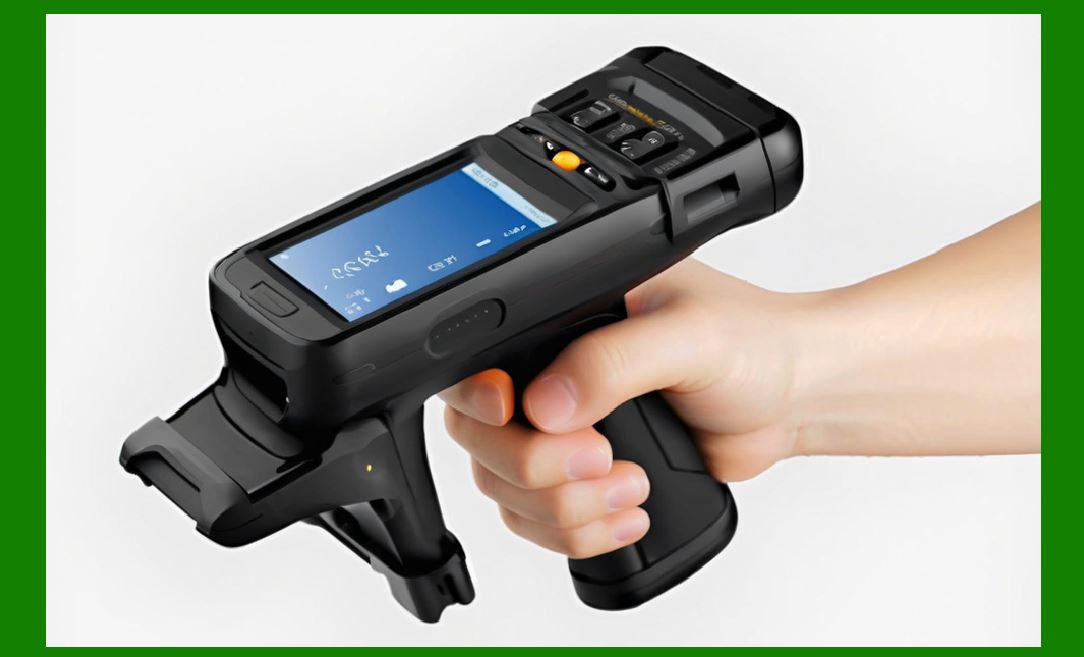
| The Nature of the Barcode Read | To understand why manual labor is so central to barcode systems, it helps to recall what actually happens during a scan. A barcode is a pattern of dark and light bars. A scanner shines light onto the pattern and measures the reflected light. The dark bars absorb light; the light spaces reflect it. The scanner converts this pattern of reflections into an electrical signal, which it then decodes into characters. For the decode to succeed, several conditions must be met at the same moment. | First, the scanner must be pointed at the barcode. Second, the barcode must be within the scanner's working range, which varies from a few centimeters for a contact scanner to several meters for a long-range laser scanner. Third, the barcode must be oriented correctly; most scanners require the scan line to cross the bars at a suitable angle, and a barcode that is rotated too far or presented at too steep an angle may fail. Fourth, the barcode must be clean, undamaged, and sufficiently contrasted. Fifth, there must be enough light, or the scanner must supply its own illumination. Sixth, the barcode must be large enough and close enough for the scanner's optics to resolve the individual bars. | Every one of these conditions depends on positioning. Someone must place the object and the scanner in the right spatial relationship. In a small number of cases, the object is fixed and the scanner moves, as when a cashier sweeps a handheld scanner across a product. In other cases, the scanner is fixed and the object moves, as on a conveyor belt at a checkout counter. In still other cases, both are fixed and a human simply inserts a card or a badge into a slot. But in all cases, the alignment is deliberate. Nothing happens by itself. | This is the essential weakness. A barcode cannot be read from a distance of several meters while sitting inside a box, behind other items, or on a shelf where no one is looking. It cannot be read in bulk. It cannot be read while the object is moving quickly past a reader unless the geometry has been carefully engineered. It cannot tell you where it is. It cannot tell you whether it has been read before. It is a passive label that depends entirely on the world around it to bring it into view. | 
| Manual Scanning in Retail | Retail is the most familiar setting for barcode scanning, and it is also one of the clearest illustrations of the manual labor problem. At a typical supermarket checkout, a cashier picks up each item, finds the barcode, rotates the item until the barcode faces the scanner, and passes it across the scan window. This sequence takes only a second or two per item, but it must be repeated for every single product. A busy cashier may scan hundreds or even thousands of items in a shift. Each scan is a small act of manual alignment. | The labor extends beyond the checkout lane. Store employees use handheld scanners to check inventory on shelves, to receive shipments, to mark down items, and to process returns. Each of these tasks requires walking to a location, finding the item, and scanning its barcode. In a large store with tens of thousands of distinct products, a full inventory count can take many employees many hours, and the process is repeated periodically because the data goes stale as soon as items are sold, moved, or stolen. | The dependence on manual scanning shapes store design and staffing in ways that are easy to overlook. Checkout lanes are laid out to make scanning ergonomic. Shelves are stocked so that barcodes face outward. Products are designed with barcodes in predictable places. Cashiers are trained in scanning techniques. All of this is a workaround for the fact that the barcode itself cannot be read without a person or a machine deliberately presenting it to a reader. | Self-checkout is sometimes presented as a solution to the labor problem, but it merely shifts the labor from a paid cashier to an unpaid customer. The customer must still find the barcode, orient it, and scan it. When the scan fails, which happens often with crumpled packaging, curved surfaces, or damaged labels, the customer must try again or call for help. The result is a new kind of bottleneck and a new kind of frustration. The barcode has not become self-reading. It has simply been handed to someone else to read. | 
| Manual Scanning in Warehousing and Logistics | If retail is the most visible arena for barcode scanning, warehousing and logistics is the most intensive. Modern supply chains move enormous volumes of goods through distribution centers, and barcodes are the primary means of tracking those goods. Every carton, pallet, tote, and parcel may carry one or more barcode labels. Every time an item moves, someone is expected to scan it. | Consider a typical distribution center. A truck arrives with pallets of cartons. A receiving clerk scans each pallet label, then each carton label, then perhaps each item label. The goods are put away, and the put-away location is scanned to link the item to its storage place. When an order arrives, a picker walks through the aisles, finds each item, scans it, and places it in a tote. The tote is scanned at packing, the shipping label is scanned, and the parcel is scanned again at the loading dock. Each scan is a manual act, performed by a worker who must locate the label and present it to a scanner. | The scale is staggering. A large fulfillment center may process millions of items per day, and each item may be scanned several times. The labor cost of scanning is a significant fraction of total operating cost. Companies invest heavily in scanner ergonomics, training, and process design to shave fractions of a second off each scan, because those fractions multiply into enormous savings or losses across millions of transactions. | Yet even the best-designed manual process has limits. Workers get tired. They make mistakes. They scan the wrong label, or they scan the same label twice, or they forget to scan at all. They suffer repetitive strain injuries from repeatedly gripping and triggering scanners. They slow down as their shifts progress. They take breaks. They call in sick. The barcode system cannot function without them, and their human limitations become the limitations of the system. | Attempts to automate scanning in warehouses have produced impressive machines, but they also illustrate the difficulty of the problem. Automated conveyor systems use fixed scanners positioned at precise angles to read barcodes on parcels moving at high speed. These systems work well when every parcel is a similar size and shape and when every barcode is placed in a predictable location. They struggle when parcels vary, when labels are wrinkled or poorly printed, or when a barcode faces the wrong direction. Many facilities still employ workers to manually scan the parcels that the automated systems miss, a role sometimes called an exception handler. The machine handles the easy cases; the human handles the hard ones. The barcode remains dependent on positioning, and positioning remains dependent on labor. | 
| Manual Scanning in Manufacturing | Manufacturing is another domain where barcode scanning is pervasive and where manual labor is deeply embedded. On a factory floor, barcodes track raw materials, work-in-progress, components, subassemblies, and finished goods. A worker may scan a barcode to confirm that the correct part has been picked for an assembly, to record that a process step has been completed, to associate a serial number with a test result, or to release a finished product to shipping. | Each of these scans serves a quality and traceability purpose. If a defect is discovered later, the manufacturer wants to know exactly which components went into which product and which processes were applied. Barcodes make this possible, but only if someone scans them at each step. The discipline required is considerable. Workers under time pressure may skip scans, scan the wrong item, or scan a batch label instead of an individual label. Supervisors must audit and correct. The data is only as good as the scanning behavior, and scanning behavior is only as good as the humans performing it. | In some factories, automation has reduced the manual burden. A machine vision system may read a barcode on a part as it moves along a conveyor, eliminating the need for a worker to scan it. But such systems require precise part positioning, consistent lighting, and careful maintenance. They are cost-effective for high-volume, low-variety production, where the same part passes the same point in the same orientation millions of times. They are far less effective for high-variety, low-volume production, where parts change frequently and orientations vary. In those settings, manual scanning remains the norm. | The labor problem in manufacturing is compounded by the fact that barcodes are often placed on parts that are difficult to access. A barcode on the inside of a machine frame, on the underside of a component, or on a curved surface may be hard to see and hard to scan. Workers must contort themselves, use mirrors, or disassemble parts to reach the label. Each of these workarounds adds time and risk. The barcode was supposed to make tracking easier, and it does, but only at the cost of constant manual effort. | 
| Manual Scanning in Healthcare | Healthcare is a domain where barcode scanning has saved countless lives, and where the manual labor problem has life-and-death consequences. Barcodes are used to identify patients, medications, blood products, specimens, and medical devices. The idea is simple and powerful: before administering a medication, a nurse scans the patient's wristband and the medication label. The system checks that the right patient is receiving the right drug in the right dose at the right time. If there is a mismatch, an alert sounds. | This process, known as barcode medication administration, has been shown to reduce medication errors substantially. But it depends entirely on the nurse performing the scan correctly. The nurse must find the patient's wristband, which may be covered by a sleeve or a blanket. The nurse must find the medication's barcode, which may be small, curved, or poorly printed. The nurse must hold the scanner steady and wait for the confirmation beep. In an emergency, when seconds matter, the nurse may be tempted to skip the scan and rely on memory. Every skipped scan is a gap in the safety net. | Similar issues arise with specimen tracking. A blood sample or tissue biopsy must be labeled with a barcode that links it to the patient. If the label is placed incorrectly, if it falls off, or if it is smudged, the specimen may become unidentifiable. Laboratory staff must then either discard the specimen, which may require an invasive procedure to obtain another, or attempt to trace it manually, which is time-consuming and error-prone. The barcode is only as reliable as the human who applied it and the human who scans it. | Medical devices add another layer of complexity. A hospital may have thousands of infusion pumps, ventilators, monitors, and other devices, each with a barcode for asset tracking and maintenance. Biomedical technicians must scan each device during inspections and repairs. Nurses must scan devices when associating them with patients. Each scan is a manual act, and each missed scan is a gap in the device history. In a large hospital, the cumulative labor of scanning devices, medications, patients, and specimens is enormous, and it competes with direct patient care for nurses' time. | 
| Manual Scanning in Libraries | Libraries were among the earliest adopters of barcodes, and they remain a clear example of the manual labor problem. Every book, DVD, and other item in a library carries a barcode linked to a catalog record. When a patron checks out an item, a librarian or self-service machine scans the barcode. When an item is returned, it is scanned again. When items are shelved, staff may scan them to verify that they are in the right place. When an inventory is conducted, staff walk the shelves with portable scanners, reading each barcode one by one. | A large library may hold millions of items. A full inventory, if conducted at all, can take weeks of staff time. Even routine tasks such as checking in a cart of returned books require hundreds of individual scans. Each scan demands that the staff member find the barcode, open the book if necessary, and present it to the scanner. The work is repetitive, physical, and time-consuming. It is also difficult to automate, because books vary in size and shape, and because barcodes are often placed inside the cover where they are not visible without opening the book. | Some libraries have experimented with RFID tags, which can be read without opening the book and without precise alignment. A staff member can wave a stack of books past a reader and check them all in at once. This is a direct response to the manual labor weakness of barcodes. It does not eliminate labor entirely, but it dramatically reduces the time and effort required per item. The success of RFID in libraries is a testament to how significant the barcode's manual labor burden really is. | 
| Manual Scanning in Agriculture and Food | Agriculture and food production present some of the hardest conditions for barcode scanning. Barcodes are used to track produce from farm to table, to manage livestock, to record harvests, and to comply with food safety regulations. But the environments are harsh. Labels get wet, dirty, torn, or covered in mud. Sunlight can wash out a scanner's illumination. Temperatures range from freezing to scorching. Workers wear gloves that make handling small labels difficult. | Consider a produce packing house. Fruit arrives from the field in bins. Each bin may have a barcode that identifies the grower, the field, and the harvest date. A worker must scan the bin label as it enters the line. The label may be covered in dust or juice. The worker may be wearing gloves. The scan may fail, requiring the worker to wipe the label or try a different angle. Multiply this by thousands of bins per day, and the labor burden becomes clear. | In livestock management, barcodes on ear tags are used to identify animals. A rancher or veterinarian must scan the tag, which may require restraining the animal, getting close enough to the tag, and holding the scanner steady while the animal moves. This is physically demanding and sometimes dangerous. The barcode cannot be read from a distance, and it cannot be read while the animal is moving freely. The result is that many animals are not scanned as often as would be ideal, and data gaps appear in the traceability chain. | Food safety regulations increasingly require detailed traceability. If a contaminated batch of produce is discovered, authorities want to know where it came from and where it went. Barcodes can provide this information, but only if they were scanned at each step. In practice, the manual labor required to scan every item at every step is often more than operations can bear. Compromises are made. Batches are scanned instead of individual items. Some steps are not scanned at all. The traceability chain has holes, and those holes are a direct consequence of the barcode's dependence on manual labor. | 
| Manual Scanning in Transportation and Ticketing | Transportation and ticketing offer another rich set of examples. Airline boarding passes, train tickets, bus passes, and event tickets all commonly use barcodes. At an airport gate, a passenger presents a boarding pass to a scanner. The gate agent or the passenger must align the barcode with the reader. If the barcode is on a phone screen, the brightness and screen reflections may cause problems. If it is on paper, it may be crumpled or folded. The scan may fail, and the passenger must try again while a queue builds behind them. | At a train station, a conductor may walk through the carriage scanning tickets with a handheld device. Each passenger must find their ticket, and the conductor must scan it. This is a manual process that scales linearly with the number of passengers. On a busy train, the conductor may not reach every passenger before the journey ends. Some passengers ride without their tickets being scanned. The barcode system cannot enforce compliance without a human to perform the scan. | Event venues face similar challenges. A large stadium may have tens of thousands of attendees, each with a barcode ticket. At the gates, staff scan each ticket. The process must be fast enough to avoid massive queues, which puts pressure on staff to scan quickly and accurately. Failures and duplicates must be handled on the spot. The entire system depends on a small army of temporary workers, each performing thousands of manual scans in a short period. The barcode is cheap and effective, but it is not self-sufficient. | 
| Manual Scanning in Postal and Parcel Services | Postal and parcel services handle enormous volumes of mail and packages, and barcodes are central to their operations. Every parcel carries a tracking barcode. Every step in the journey, from pickup to sorting to delivery, may involve a scan. Some of these scans are automated, performed by fixed scanners as parcels move along conveyor belts. But many are manual, performed by postal workers who pick up each parcel and scan it. | The manual scans are the ones that cause bottlenecks. A mail carrier delivering packages may scan each package at the doorstep. A sorting facility worker may scan parcels that the automated system could not read. A customer service agent may scan a parcel to answer a query. Each scan is a small act of labor, and the total labor across a national postal network is immense. | The problem is compounded by the variety of parcels. Letters, flats, small packets, large boxes, tubes, and irregularly shaped items all pass through the system. A barcode on a curved tube may be hard to scan. A barcode under a layer of tape may be unreadable. A barcode on a soft envelope may wrinkle and distort. The automated systems handle the standard cases, and the manual workers handle the exceptions. The barcode's weakness creates a permanent need for human exception handling. | 
| Manual Scanning in Field Services and Utilities | Field services and utilities provide yet another set of examples. Technicians who install, maintain, and repair equipment in the field use barcodes to identify assets, record work, and order parts. A technician arriving at a site may scan a barcode on a meter, a transformer, an air conditioning unit, or a piece of industrial machinery. The scan links the asset to its history and to the work order. | The conditions in the field are rarely ideal. The barcode may be faded, dirty, or damaged by weather. It may be located in an awkward position, requiring the technician to climb, kneel, or reach into a confined space. The technician may be wearing gloves or safety equipment that makes handling a scanner difficult. The scan may fail, and the technician may spend several minutes troubleshooting instead of doing the actual work. | In utilities, meter reading is a classic example. For decades, meter readers walked from house to house, reading dials and recording numbers. Barcodes and handheld computers replaced paper, but they did not eliminate the walking or the manual scanning. A meter reader still must approach each meter, find the barcode, and scan it. Some utilities have moved to RFID or wireless meters that can be read from a distance, precisely because the manual labor of walking and scanning is so costly. | 
| Manual Scanning in Construction and Asset Management | Construction sites and asset management present some of the most difficult conditions for barcode scanning. Construction materials, tools, and equipment move frequently and are often stored in chaotic environments. A barcode on a pallet of bricks may be covered by other materials. A barcode on a tool may be worn off. A barcode on a piece of heavy equipment may be inaccessible without a ladder. | Asset management in large organizations faces similar issues. A hospital, a university, or a government agency may have tens of thousands of assets, from computers to furniture to vehicles. Each asset may have a barcode. Conducting an inventory requires staff to physically visit each asset, find the barcode, and scan it. This can take weeks or months, and the data begins to age as soon as the inventory is complete. Assets move, are loaned, are repaired, or are disposed of, and the barcode system cannot keep up without continuous manual scanning. | Some organizations have turned to RFID for asset management precisely because it reduces the labor burden. An RFID reader can read many tags at once, without line of sight, and without precise positioning. A staff member can walk through a room with a handheld reader and capture hundreds of assets in minutes. This is a direct response to the manual labor weakness of barcodes. It does not eliminate the need for physical presence, but it eliminates the need to find and align each barcode individually. | 
| The Economics of Manual Scanning | The manual labor required by barcodes has a direct economic cost, and understanding that cost helps explain why alternatives are so attractive. Every scan takes time. The time may be small, perhaps a second or two, but multiplied by millions or billions of scans, it becomes a significant fraction of global labor. Add the time spent finding labels, opening packages, cleaning smudged barcodes, retrying failed scans, and handling exceptions, and the total becomes enormous. | There are also indirect costs. Manual scanning is error-prone, and errors have consequences. A mis-scanned item may be shipped to the wrong customer. A missed scan may leave a gap in a traceability record. A duplicate scan may inflate inventory counts. Correcting these errors requires additional labor, and in some industries, such as healthcare and aerospace, the consequences can be severe. | There are also human costs. Repetitive scanning causes strain injuries to hands, wrists, and shoulders. Workers who scan all day report fatigue, boredom, and discomfort. High turnover in scanning-intensive jobs is common. Companies spend money on ergonomic scanners, training, and injury prevention, all of which are costs attributable to the barcode's reliance on manual labor. | Finally, there is the cost of opportunity. Time spent scanning is time not spent on other tasks. A nurse scanning medications is not at the bedside. A warehouse worker scanning parcels is not solving problems. A librarian scanning books is not helping patrons. The manual labor burden of barcodes absorbs human attention that could be directed elsewhere. | 
| Attempts to Reduce Manual Labor | Recognizing these costs, industry has developed many ways to reduce the manual labor of barcode scanning. Fixed scanners on conveyor belts automate the scanning of parcels and products that pass a known point. Presentation scanners let a cashier or customer hold an item in front of a reader without precise alignment. Omnidirectional scanners read barcodes in any orientation, reducing the need to rotate items. Long-range scanners read barcodes from a distance, reducing the need to approach them. Mobile computers with integrated scanners combine scanning with other tasks. | These improvements have made barcode scanning faster and easier, but they have not eliminated the fundamental requirement for positioning. A fixed scanner still requires the object to pass in front of it. A presentation scanner still requires the object to be brought close. An omnidirectional scanner still requires the barcode to be visible. A long-range scanner still requires line of sight. In every case, someone or something must bring the barcode and the reader into the right relationship. | Robotics represents the most ambitious attempt to eliminate manual labor from barcode scanning. Robots can pick up objects, rotate them, and present them to scanners with precision and consistency. In some warehouses, robotic arms and automated guided vehicles move totes and parcels to scanning stations. In some factories, robotic systems read barcodes on parts as they are assembled. These systems are impressive, but they are also expensive, complex, and inflexible. They work best in controlled environments with standardized objects. They struggle in the messy, variable, unpredictable real world where most barcodes live. | 
| The Limits of Automation | The limits of automation are worth examining closely, because they define the boundary of what barcodes can achieve. Automation works when the environment is structured. If every object is the same size, if every barcode is in the same place, if every movement is predictable, then a machine can be built to perform the scan. But most real-world environments are not structured. Objects vary. Barcodes are placed inconsistently. Movements are unpredictable. People, animals, weather, and accidents introduce chaos. | Consider a farm. A robotic system might be able to scan barcodes on standardized crates in a packing house, but it cannot easily scan barcodes on animals in a field, on produce still on the plant, or on equipment scattered across uneven terrain. Consider a hospital. A robot might deliver medications to a nursing station, but it cannot scan a patient's wristband under a blanket or a medication vial inside a locked cabinet. Consider a construction site. A robot might inventory materials in a laydown yard, but it cannot scan a barcode on a beam being welded into place. | In all these cases, the barcode still requires a human. The human may be assisted by better tools, but the human is still essential. This is the persistent weakness of barcodes: they are cheap, reliable, and ubiquitous, but they cannot escape their dependence on positioning, and positioning in the real world usually means people. | 
| The Consequences of Dependence | The consequences of this dependence ripple through organizations and societies. In industries where scanning is mandatory, labor costs are higher than they would be otherwise. In industries where scanning is optional, data gaps appear. In industries where scanning is rushed, errors occur. In all industries, the pace of operations is limited by the speed at which humans can present barcodes to readers. | These consequences are not always visible. A retail customer may not notice the cashier's wrist strain. A patient may not know that a medication scan was skipped. A consumer may not realize that the traceability record for their food has holes. But the consequences are real, and they accumulate. They are the hidden tax of the barcode's success. | 
| The Complementarity of RFID | This is where RFID enters the story. RFID tags, unlike barcodes, can be read without line of sight, without precise alignment, and without human intervention. A reader can interrogate many tags at once, from a distance, through packaging and around obstacles. RFID does not eliminate labor entirely, but it changes the nature of the labor. Instead of scanning each item individually, a worker can move through an area and capture many items at once. Instead of finding and aligning each barcode, a worker can rely on the tags to announce themselves. | This complementarity is the heart of the silent network. Barcodes are cheap, mature, and universally understood. RFID is more expensive but far more capable in situations where manual scanning is impractical. Together, they cover a wider range of physical world mapping than either could alone. Barcodes handle the high-volume, low-cost, structured cases. RFID handles the high-value, hard-to-reach, unstructured cases. The two technologies are not rivals so much as partners, each compensating for the other's weaknesses. | 
| A Detailed Summary at the End | To summarize, the weakness of barcodes examined in this chapter is their dependence on manual labor or precise robotic positioning. Every scan requires that a barcode and a reader be brought into the correct spatial relationship, and in the vast majority of real-world cases, that relationship is established by a human being. This dependence is not a minor inconvenience. It is a fundamental characteristic that shapes how barcodes are used, where they fail, and why other technologies are needed to complement them. | In retail, cashiers and customers must find, orient, and scan each barcode, one item at a time. In warehousing and logistics, workers scan pallets, cartons, totes, and parcels at every step, and automated systems still require human exception handlers. In manufacturing, workers scan components and assemblies to maintain traceability, and automation works only in structured, high-volume settings. In healthcare, nurses scan patients, medications, specimens, and devices, and every skipped scan is a gap in safety. In libraries, staff scan books one by one, and full inventories take weeks. In agriculture and food, labels are dirty, wet, and hard to reach, and traceability chains have holes. In transportation and ticketing, passengers and staff must present barcodes to readers under time pressure. In postal and parcel services, manual scans handle the exceptions that machines cannot. In field services and utilities, technicians struggle with faded, dirty, and awkwardly placed barcodes. In construction and asset management, inventories require physically visiting and scanning each asset. | Across all these domains, the pattern is the same. Barcodes are cheap, reliable, and effective when a human or a robot can present them correctly. They are helpless when presentation cannot be guaranteed. The labor required is enormous, repetitive, and error-prone. It causes injuries, consumes time, limits speed, and creates data gaps. Attempts to reduce the labor through better scanners, fixed readers, and robotics have made progress but have not eliminated the fundamental requirement for positioning. | 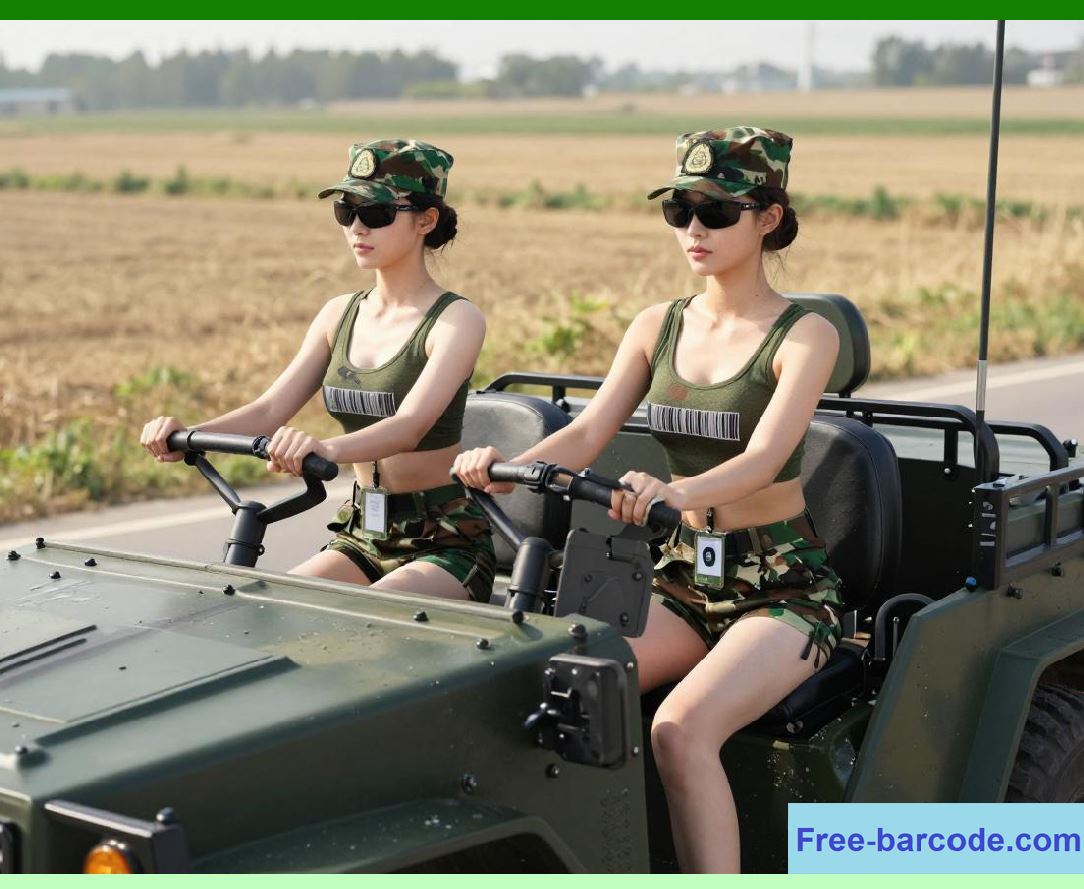
| The economic, human, and operational costs of this dependence are significant. They explain why RFID has become so valuable in applications where manual scanning is impractical. RFID does not replace barcodes everywhere. It complements them. The silent network of the physical world is built from both technologies: barcodes for the cases where a human or a machine can reliably present a label to a reader, and RFID for the cases where the world is too messy, too fast, or too vast for that to be possible. Understanding the manual labor weakness of barcodes is essential to understanding why the network is silent, why it is hybrid, and why it continues to evolve. The barcode taught the world how to map objects with a simple pattern of bars. The next chapter in that story is about teaching objects to announce themselves. |
|
 cs@easiersoft.com