Chapter 52: The Layered Approach |
A Short Summary at the Start |
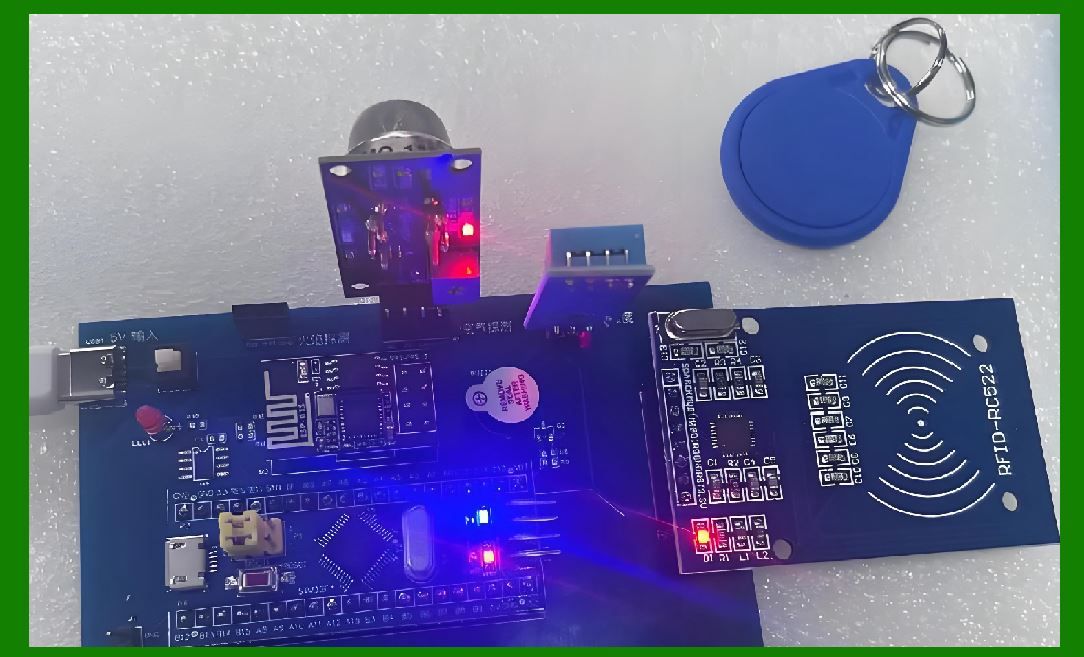
The layered approach is one of the most practical and widely used strategies in the world of automatic identification. In simple terms, it means using different technologies for different jobs, based on what each technology does best. Specifically, this chapter focuses on a powerful combination: using barcodes at the point of sale, where a customer checks out, and using RFID in the back-end warehouse, where inventory is counted and managed. |
Why does this matterBecause barcodes and RFID each have strengths and weaknesses. Barcodes are cheap, universal, and perfectly suited for scanning one item at a time. RFID tags are more expensive but can be read in bulk, without line of sight, and can store more data. By layering them, a business gets the best of both worlds. The customer enjoys the familiar, fast, and low-cost experience of a barcode scan at the register. The warehouse team enjoys the speed and accuracy of RFID for counting hundreds of items in seconds. |
This chapter will explore how this layered approach works in practice across many industries. We will look at retail, grocery, apparel, electronics, pharmaceuticals, automotive, logistics, libraries, and more. We will see why companies do not simply choose one technology over the other, but instead build a layered system that plays to each technology's strengths. By the end, you will understand that the silent network of the physical world is not built on a single technology, but on a smart combination of many. |
|
Why Not Just One Technology |
Before diving into examples, it is worth asking a basic question: why not just use RFID everywhereWhy not put an RFID tag on every single item and read everything instantly |
The answer comes down to cost, physics, and practicality. |
First, cost. A simple barcode label can cost a fraction of a cent. An RFID tag, even a simple passive one, costs several cents or more. For a low-cost item like a can of soda or a pack of gum, adding an RFID tag would wipe out the profit margin. Barcodes are essentially free by comparison. |
Second, physics. RFID readers can struggle with liquids and metals. A can of soup or a bottle of water can absorb or reflect radio waves, making tags hard to read. Barcodes, being optical, work fine on these items as long as the label is visible. RFID also has issues with dense packing, where many tags close together can interfere with each other. |
Third, practicality. At a customer checkout, you usually have one customer with a small number of items. Scanning each barcode takes a second or two. That is perfectly acceptable. But in a warehouse with ten thousand items, scanning each barcode one by one would take hours. RFID can read hundreds of tags per second, making it ideal for bulk counting. |
So the layered approach is not a compromise. It is an optimization. Use the cheap, reliable, line-of-sight technology where it makes sense. Use the faster, bulk-reading, non-line-of-sight technology where it makes sense. Together, they cover the entire supply chain. |
|
How the Layered Approach Works in Practice |
Let us walk through a typical retail supply chain to see the layers in action. |
A product is manufactured in a factory. The factory attaches a barcode label to each item. This barcode contains a unique identifier, such as a Universal Product Code or a European Article Number. The factory also may attach an RFID tag to the case or pallet that contains many items. The case-level RFID tag helps the factory track how many cases it has produced and shipped. |
The product travels by truck or ship to a distribution center. At the distribution center, workers use RFID readers to quickly count incoming cases. A single handheld reader can scan an entire pallet of cases in seconds. This is far faster than scanning each case barcode individually. |
The product then moves to a retail store. In the back room, or back-end warehouse, workers use RFID to count inventory. They can walk through the storage area with a handheld reader and get an accurate count of everything in minutes. This is called a cycle count, and it used to take hours or days with barcodes. |
Finally, the product goes to the sales floor. When a customer buys it, the cashier scans the barcode at the point of sale. The barcode is cheap, reliable, and already printed on the packaging. There is no need for an RFID reader at every register, which would be expensive and unnecessary. |
This is the layered approach: barcode at the point of sale, RFID in the back-end warehouse. Each technology does what it does best. |

|
Industry Examples: Retail |
Retail is the classic example of the layered approach. Let us look at several types of retailers. |
Department Stores |
A large department store sells clothing, cosmetics, home goods, and electronics. Each item has a barcode for checkout. The store also uses RFID tags on higher-value items, especially apparel. In the back-end warehouse, staff use RFID to count stock. They know exactly how many blue medium shirts they have, how many are in the stockroom, and how many are on the floor. When stock runs low, the system automatically reorders. |
At the point of sale, the cashier scans the barcode. The barcode is printed on the tag or label. The RFID tag, if present, is disabled or removed at checkout to protect customer privacy. This is a key part of the layered approach: RFID for internal operations, barcode for customer-facing transactions. |
Grocery Stores |
Grocery stores deal with thousands of low-cost items. RFID on every can of beans would be too expensive. So grocery stores rely heavily on barcodes at checkout. However, they use RFID in the back-end warehouse for pallets and cases. When a truck arrives with a thousand cases of cereal, an RFID reader at the loading dock can count them all in seconds. The store knows immediately if the shipment is complete or if something is missing. |
Some grocery stores also use RFID for high-value items like expensive cheeses, wines, or electronics. But for the majority of products, barcodes remain the standard at the point of sale. |

|
Apparel and Fashion |
Apparel is one of the biggest adopters of RFID. Clothing items are relatively high-value, and they come in many sizes and colors. Keeping track of inventory is a nightmare with barcodes alone. A customer might take a shirt into a fitting room and leave it there. A barcode system would not know the shirt is missing from the shelf until someone manually scans every item. |
With RFID, the store can count everything in the back-end warehouse and on the sales floor in minutes. They know exactly what is missing, what is selling, and what needs to be reordered. At the point of sale, the cashier scans the barcode. Some stores are experimenting with RFID at checkout as well, but barcodes remain dominant because they are cheaper and already on the tag. |
Electronics Stores |
Electronics are high-value and often small. A single store might have thousands of items, from cables to laptops. Barcodes are used at checkout. RFID is used in the back-end warehouse to prevent theft and to count inventory. Some electronics stores use RFID to track items from the stockroom to the sales floor. If an item is removed from the store without being paid for, an RFID gate at the exit can detect it. |
At the point of sale, the cashier scans the barcode. The RFID tag is deactivated or removed. This layered approach gives the store security and inventory accuracy without slowing down the checkout line. |

|
Industry Examples: Logistics and Warehousing |
Logistics and warehousing are where RFID truly shines. But even here, barcodes have not disappeared. The layered approach is common. |
Third-Party Logistics Providers |
A third-party logistics provider stores and ships goods for many different companies. These warehouses are massive, often covering hundreds of thousands of square feet. Counting inventory with barcodes would take days. With RFID, workers can count entire racks of pallets in minutes. |
However, when a package is ready to ship, a barcode label is printed and attached. The barcode is used by the shipping carrier to track the package. The carrier scans the barcode at each step of the journey. RFID might be used inside the warehouse, but barcodes are used for the final mile. |
Cold Chain Logistics |
Cold chain logistics involves transporting temperature-sensitive goods like food and pharmaceuticals. RFID tags can be equipped with temperature sensors. In the back-end warehouse, workers use RFID to read the temperature history of each pallet. This ensures that the cold chain has not been broken. |
At the point of sale, or at the point of delivery, a barcode is scanned. The barcode provides the basic identifier. The RFID tag provides the rich data about temperature and handling. This is another layer: RFID for rich data, barcode for simple identification. |
Cross-Docking |
Cross-docking is a logistics practice where goods are unloaded from one truck and loaded directly onto another, with little or no storage in between. Speed is critical. RFID readers at the dock doors can read entire pallets as they move. This allows the warehouse management system to know exactly what is on each truck in real time. |
Barcodes are still used for individual packages. When a worker needs to confirm a specific item, they scan the barcode. The layered approach combines the speed of RFID for bulk movement with the precision of barcodes for individual items. |

|
Industry Examples: Healthcare |
Healthcare is a fascinating case for the layered approach. Patient safety, inventory accuracy, and regulatory compliance are all critical. |
Hospital Inventory Management |
Hospitals stock thousands of items, from bandages to surgical implants. Barcodes are used at the point of care. A nurse scans a barcode on a medication or supply to record that it was used. This ensures accurate billing and inventory tracking. |
In the back-end warehouse, or central supply room, RFID is used to count inventory. A hospital can know in minutes how many boxes of gloves it has, how many surgical kits, and how many pacemakers. This is especially important for high-value items like implants, which must be tracked individually. |
Pharmaceutical Tracking |
Pharmaceuticals are highly regulated. In many countries, each package must have a unique barcode that can be tracked through the supply chain. This is called serialization. The barcode at the point of sale, or point of dispensing, is scanned to verify that the drug is authentic and has not expired. |
In the back-end warehouse, RFID is used to count and track pallets of drugs. Some RFID tags can even monitor temperature. The layered approach ensures that the patient gets the right drug, while the pharmacy or hospital knows exactly what is in stock. |
Surgical Instrument Tracking |
Surgical instruments are expensive and must be sterilized and tracked. Each instrument may have a barcode for identification. But in the back-end warehouse, RFID is used to count entire trays of instruments. After surgery, the tray goes to sterilization. An RFID reader can confirm that all instruments are present. If one is missing, the staff knows immediately. |
At the point of use, a nurse scans the barcode on the tray to record that it was used for a specific patient. This layered approach improves patient safety and reduces the risk of retained surgical items. |

|
Industry Examples: Automotive |
The automotive industry uses the layered approach in manufacturing, parts distribution, and dealerships. |
Manufacturing |
A car factory produces thousands of vehicles per day. Each vehicle has a barcode that identifies it. As the car moves down the assembly line, barcode scanners read the identifier at each station. This tells the robots and workers what parts to install. |
In the back-end warehouse, RFID is used to track parts. A bin of bolts might have an RFID tag. When the bin is empty, the warehouse knows to replenish it. RFID is also used to track expensive components like engines and transmissions. |
Parts Distribution |
Auto parts distributors stock millions of parts. Barcodes are used at the point of sale, whether it is a dealership or a repair shop. The counter person scans the barcode to look up the part and price. |
In the back-end warehouse, RFID is used to count inventory. A distributor can know in minutes how many brake pads, oil filters, and spark plugs it has. This reduces stockouts and overstocking. |
Dealerships |
A car dealership sells cars and services them. The car itself has a barcode, often on the windshield or door jamb. When a customer buys a car, the barcode is scanned for the paperwork. In the service department, the barcode is scanned to pull up the vehicle's history. |
In the back-end warehouse, the dealership uses RFID to track parts and accessories. This ensures that the service department has the parts it needs. The layered approach keeps the customer-facing process simple and the back-end process efficient. |

|
Industry Examples: Libraries |
Libraries were early adopters of barcodes and have more recently adopted RFID. The layered approach is very common. |
Book Checkout |
At the point of sale, or point of checkout, a librarian scans the barcode on the book. This links the book to the patron's account. The barcode is cheap and durable. It has been on library books for decades. |
In the back-end warehouse, or the stacks, RFID is used to count inventory. A librarian can walk through the aisles with a handheld reader and know which books are on the shelf and which are missing. This is called shelf reading, and it used to take weeks. With RFID, it takes hours. |
Security |
RFID is also used for security. A gate at the library exit can detect if a book has not been checked out. The RFID tag is deactivated at checkout. If the tag is still active, the alarm sounds. The barcode is used for identification, and the RFID tag is used for security and inventory. This is a perfect example of layering. |

|
Industry Examples: Food and Agriculture |
Food and agriculture have unique challenges. Products are often perishable, and traceability is important for safety. |
Farm to Fork Traceability |
A package of lettuce might have a barcode that tells the consumer where it was grown. This is called farm to fork traceability. The barcode is at the point of sale. The consumer can scan it with a smartphone to learn more. |
In the back-end warehouse, RFID is used to track pallets of produce. Some RFID tags can monitor temperature and humidity. If a pallet gets too warm, the warehouse knows to move it or discard it. The layered approach ensures food safety and reduces waste. |
Livestock Tracking |
Farmers use RFID ear tags to track cattle, sheep, and pigs. The RFID tag is read when the animal is vaccinated, fed, or moved. This helps the farmer manage the herd. |
At the point of sale, or the auction, a barcode is used. The barcode is printed on a tag or paperwork. The buyer scans the barcode to record the purchase. The RFID tag provides the animal's history, and the barcode provides the transaction record. |
|
Industry Examples: Museums and Cultural Heritage |
Museums and cultural institutions use the layered approach to track artifacts and manage visitors. |
Artifact Tracking |
A museum may have millions of artifacts in storage. Each artifact has a barcode for identification. But in the back-end warehouse, RFID is used to count and locate items. A curator can walk through the storage area with a handheld reader and know exactly what is there. |
At the point of display, a barcode is used to link the artifact to its description. A visitor can scan the barcode with a smartphone to learn more. The layered approach improves both management and visitor experience. |
Visitor Tracking |
Some museums use RFID wristbands for visitors. The wristband allows access to special exhibits and can be used to pay for food or merchandise. At the point of sale, a barcode is scanned. The RFID wristband is used for access control. This is another layer: RFID for access, barcode for transactions. |

|
Industry Examples: Event Management |
Event management, from concerts to conferences, uses the layered approach. |
Ticketing |
A concert ticket often has a barcode. The barcode is scanned at the gate. This is fast, cheap, and reliable. The barcode can be printed at home or on a smartphone. |
In the back-end warehouse, or the event office, RFID is used to track inventory. Wristbands, merchandise, and equipment can all have RFID tags. This helps the event staff know what they have and what they need. |
Access Control |
Some events use RFID wristbands for access control. The wristband is read at the gate. This is faster than scanning a barcode, especially for large crowds. But at the point of sale, for merchandise or food, a barcode is used. The layered approach keeps the lines moving. |

|
Industry Examples: Construction |
Construction sites are chaotic and dynamic. Tracking materials and tools is a challenge. |
Tool Tracking |
A construction company may have thousands of tools. Each tool has a barcode for identification. But in the back-end warehouse, RFID is used to count tools. A supervisor can walk through the site with a handheld reader and know which tools are present and which are missing. |
At the point of sale, or the rental counter, a barcode is scanned. The barcode links the tool to the rental agreement. The RFID tag is used for inventory. This reduces theft and loss. |
Material Tracking |
Construction materials, like pipes, beams, and bricks, are often stored outdoors. Barcodes can be damaged by weather. RFID tags can be more durable. In the back-end warehouse, RFID is used to count materials. At the point of sale, a barcode is used for the invoice. The layered approach ensures accuracy and durability. |

|
Industry Examples: Airlines and Airports |
Airlines and airports use the layered approach for baggage and cargo. |
Baggage Handling |
A bag tag has a barcode. The barcode is scanned at check-in, at the gate, and at the destination. This is the point of sale, or point of service. The barcode is cheap and universal. |
In the back-end warehouse, or the baggage handling system, RFID is used to sort bags. An RFID reader can read many bags at once. This is faster and more accurate than barcodes. Some airlines are moving to RFID bag tags, but barcodes remain common. The layered approach combines the two. |
Cargo |
Air cargo uses barcodes for tracking. Each package has a barcode. In the back-end warehouse, RFID is used to count pallets and containers. This speeds up loading and unloading. The layered approach improves efficiency and accuracy. |

|
Industry Examples: Government and Defense |
Government and defense organizations use the layered approach for asset tracking and supply chain management. |
Asset Tracking |
A government agency may have thousands of assets, from computers to vehicles. Each asset has a barcode for identification. In the back-end warehouse, RFID is used to count assets. This is faster and more accurate than manual barcode scanning. |
At the point of sale, or the point of issue, a barcode is scanned. The barcode links the asset to the employee. The RFID tag is used for inventory. This reduces loss and improves accountability. |
Supply Chain |
The military uses RFID to track supplies in the back-end warehouse. A pallet of food, fuel, or ammunition can be read in seconds. At the point of sale, or the point of delivery, a barcode is scanned. The barcode provides the transaction record. The layered approach ensures that the right supplies reach the right place at the right time. |
|
The Benefits of the Layered Approach |
Why is the layered approach so popularLet us summarize the benefits. |
First, cost savings. Barcodes are cheap. Using them at the point of sale keeps costs low. RFID is more expensive, so it is used only where it adds the most value, such as in the back-end warehouse. |
Second, speed. RFID is fast for bulk reading. Barcodes are fast for individual scanning. Each technology is used where it is fastest. |
Third, accuracy. RFID improves inventory accuracy in the back-end warehouse. Barcodes improve transaction accuracy at the point of sale. Together, they create a more accurate system. |
Fourth, flexibility. The layered approach allows businesses to adopt RFID gradually. They can start with barcodes and add RFID where it makes sense. They do not have to replace everything at once. |
Fifth, privacy. Barcodes at the point of sale do not raise the same privacy concerns as RFID. A barcode is just a printed label. An RFID tag can be read from a distance. By using barcodes at checkout and disabling or removing RFID tags, businesses can address customer privacy concerns. |

|
Challenges and Considerations |
The layered approach is not without challenges. Let us look at a few. |
First, integration. Barcodes and RFID use different hardware and software. Integrating them into a single system can be complex. Businesses need to choose the right middleware and database systems. |
Second, training. Staff need to be trained on both technologies. A cashier needs to know how to scan a barcode. A warehouse worker needs to know how to use an RFID reader. This requires time and resources. |
Third, data management. RFID generates a lot of data. A single reader can read hundreds of tags per second. This data must be managed and analyzed. Barcodes generate less data, but still need to be integrated. |
Fourth, standards. Barcodes have universal standards, such as UPC and EAN. RFID standards are still evolving. This can create compatibility issues. |
Fifth, cost of RFID tags. While RFID tags are getting cheaper, they are still more expensive than barcodes. For low-cost items, this can be a barrier. |
Despite these challenges, the layered approach is widely adopted because the benefits outweigh the costs. |
|
The Future of the Layered Approach |
What does the future holdSeveral trends are shaping the layered approach. |
First, RFID tags are getting cheaper. As they become cheaper, they will be used on more items. This may eventually lead to RFID at the point of sale for some products. But barcodes will remain for low-cost items. |
Second, barcodes are getting smarter. Two-dimensional barcodes, like QR codes, can store more data. They can be read by smartphones. This makes them more useful at the point of sale. |
Third, the Internet of Things is growing. More and more devices are connected. RFID and barcodes are both part of this network. They provide the identity and location of physical objects. The layered approach will become even more important as the physical and digital worlds merge. |
Fourth, artificial intelligence and machine learning are being used to analyze data from both barcodes and RFID. This can improve forecasting, reduce waste, and optimize supply chains. |
Fifth, sustainability is becoming more important. Barcodes are paper-based, but digital barcodes can reduce paper. RFID tags can be recycled. The layered approach can be designed with sustainability in mind. |

|
A Detailed Summary at the End |
The layered approach is a powerful strategy for mapping the physical world. It combines barcodes at the point of sale with RFID in the back-end warehouse. This chapter has explored why this combination works, how it works, and where it is used. |
We began with a short summary. We explained that barcodes are cheap, universal, and perfect for individual scanning. RFID is faster, can read in bulk, and does not require line of sight. By layering them, businesses get the best of both worlds. |
We then looked at why not just use one technology. Cost, physics, and practicality all play a role. Barcodes are essentially free, while RFID tags cost money. RFID struggles with liquids and metals. Barcodes work fine. At the point of sale, you have one customer with a few items. In the back-end warehouse, you have thousands of items. Each technology is suited to its environment. |
We walked through a typical retail supply chain. The factory attaches barcodes to items and RFID tags to cases. The distribution center uses RFID to count incoming cases. The retail store uses RFID in the back room and barcodes at the register. This is the layered approach in action. |
We then explored many industry examples. In retail, department stores, grocery stores, apparel stores, and electronics stores all use the layered approach. In logistics, third-party providers, cold chain logistics, and cross-docking all benefit. In healthcare, hospitals, pharmaceutical tracking, and surgical instrument tracking all use layers. In automotive, manufacturing, parts distribution, and dealerships all rely on layers. In libraries, book checkout and security use layers. In food and agriculture, farm to fork traceability and livestock tracking use layers. In museums, artifact tracking and visitor tracking use layers. In event management, ticketing and access control use layers. In construction, tool tracking and material tracking use layers. In airlines, baggage handling and cargo use layers. In government and defense, asset tracking and supply chain use layers. |
We discussed the benefits. Cost savings, speed, accuracy, flexibility, and privacy are all reasons why the layered approach is popular. We also discussed the challenges. Integration, training, data management, standards, and the cost of RFID tags are all considerations. |

|
Finally, we looked at the future. RFID tags are getting cheaper. Barcodes are getting smarter. The Internet of Things is growing. Artificial intelligence is being used. Sustainability is becoming more important. The layered approach will continue to evolve. |
In conclusion, the layered approach is not just a technical strategy. It is a practical philosophy. It recognizes that no single technology is perfect for every job. By combining barcodes and RFID, businesses can map the physical world with greater accuracy, speed, and efficiency. The silent network of the physical world is built on layers. Barcodes and RFID are two of the most important layers. Together, they create a system that is greater than the sum of its parts. |
This chapter has provided a comprehensive overview of the layered approach. It is our hope that you will see this pattern in the world around you. When you check out at a store, you are using a barcode. When a warehouse worker counts inventory, they are using RFID. These two technologies work together, silently, to map the physical world. And that is the power of the layered approach. |
 cs@easiersoft.com