Chapter 52: The Layered Approach |
A Short Summary at the Start |
The layered approach is one of the most practical and widely used strategies in the world of automatic identification. In simple terms, it means using different technologies for different jobs, based on what each technology does best. Barcodes are cheap, fast, and perfect for scanning one item at a time at a checkout counter. RFID tags are more expensive per unit, but they can be read in bulk, from a distance, and without a direct line of sight. By layering these two technologies, a business can get the best of both worlds. Barcodes handle the customer-facing point-of-sale moment, while RFID handles the behind-the-scenes work of counting, tracking, and managing inventory in the warehouse. |
This chapter explores how the layered approach works in practice. We will look at why it makes sense, how it solves real problems, and then dive into dozens of examples across many industries. From retail stores and grocery chains to libraries, hospitals, factories, and even farms, the pattern repeats: barcode at the point of sale or customer interaction, RFID in the back end for inventory and logistics. By the end, you will understand why this hybrid strategy has become a quiet standard in modern supply chains, and how it maps the physical world in a way that neither technology could do alone. |
|
Why Layering Makes Sense |
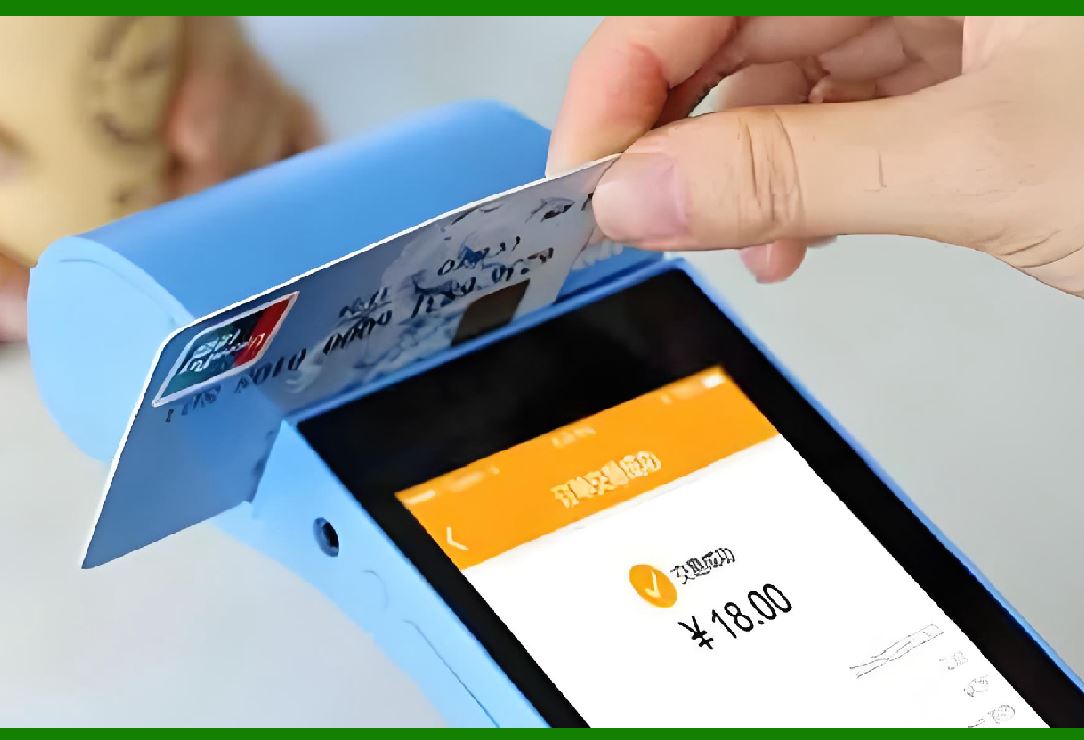
Imagine a large retail store. At the front, customers bring items to a cashier. The cashier scans a barcode on each item. This is fast, reliable, and costs almost nothing because the barcode is just ink printed on paper or plastic. The scanner reads the black and white lines, looks up the price in a database, and adds it to the receipt. This process happens millions of times a day around the world. It is simple, mature, and incredibly cheap. |
Now imagine the back room of that same store. There are thousands of items in boxes, on shelves, in bins, and in storage rooms. Every week, employees need to count how many of each item are left. With barcodes, they would have to pick up each item, find the barcode, and scan it one by one. That could take hours or even days. With RFID, they can walk through the room with a handheld reader or even stand at the door with a fixed reader. The reader sends out radio waves, and every RFID tag in range responds with its unique identifier. In minutes, the entire inventory is counted. No line of sight needed. No picking up items. No human error from missing a barcode. |
This is the heart of the layered approach. Barcodes are for the moment of sale, where speed and cost per scan matter most. RFID is for the moment of inventory, where speed and cost per count matter most. Together, they cover the entire life of a product from the warehouse to the customer's hands. |
The same logic applies far beyond retail. In a hospital, a barcode on a patient wristband can be scanned before giving medication to ensure the right patient gets the right dose. But RFID tags on expensive medical equipment can be tracked in real time so that nurses can find a pump or a wheelchair in seconds. In a library, a barcode on a book is scanned at the checkout desk. But RFID tags inside the books allow a librarian to wave a reader over a shelf and know which books are missing or misplaced. In a factory, a barcode on a finished product is scanned at shipping. But RFID tags on pallets and containers allow the warehouse to know exactly what is inside each pallet without opening it. |
The layered approach is not about replacing one technology with another. It is about using each technology where it shines. Barcodes are like a precise pencil mark on a single page. RFID is like a flashlight that illuminates a whole room at once. You need both to get the full picture. |

|
The Economics of Layering |
One of the main reasons the layered approach exists is cost. A barcode label can cost less than a cent. An RFID tag can cost anywhere from a few cents to several dollars, depending on the type, the size, and the features. For a low-cost item like a candy bar or a greeting card, putting an RFID tag on every single unit would eat up the profit margin. But putting a barcode on every unit is trivial. So the candy bar gets a barcode. It is scanned at the checkout. The store knows it was sold. The inventory system subtracts one from the count. That is enough for that item. |
Now consider a high-value item like a laptop or a designer handbag. The cost of an RFID tag is negligible compared to the price of the item. So the item can have both a barcode and an RFID tag. The barcode is used at the point of sale because the checkout system is already built for barcodes. The RFID tag is used in the back room for inventory counts, for loss prevention, and for finding the item if it is misplaced. The layered approach gives the best of both worlds without breaking the bank. |
There is also the cost of infrastructure. Barcode scanners are everywhere. They are built into point-of-sale terminals, handheld devices, and even smartphones. The software to read barcodes is mature and cheap. RFID readers are more expensive, but they are getting cheaper. A fixed RFID reader at a warehouse door might cost a few hundred dollars. A handheld RFID reader might cost a thousand dollars or more. But one reader can read thousands of tags in seconds. So the cost per read is very low when you have many items. This is why RFID is used in the back end where there are many items to count, and barcodes are used at the front end where there is one item at a time. |
The layered approach also reduces risk. If the RFID system fails, the barcode system still works. If the barcode scanner breaks, the cashier can type in the number manually. If the RFID reader misses a tag because of interference from metal or liquid, the barcode is still there as a backup. Having two technologies means having two chances to get it right. In supply chains where errors are costly, this redundancy is valuable. |
|
How the Layered Approach Works in Practice |
Let us walk through a typical retail scenario step by step. A shipment of shoes arrives at a store's warehouse. Each shoe box has a barcode on the outside. Inside the box, the shoes themselves have RFID tags attached to the soles or the tongue. The warehouse worker receives the shipment. They scan the barcode on the outside of the carton to log the shipment into the system. Then they open the carton and use an RFID reader to scan all the shoe boxes inside at once. The reader tells the system that, say, twenty pairs of shoes have arrived. The system checks that against the expected shipment. If there is a mismatch, the worker knows immediately. |
The shoes are then put on shelves in the back room. Later, when it is time to restock the sales floor, a worker uses the RFID reader to find the exact shoes needed. They wave the reader over the shelves, and the reader beeps when it finds the right tag. They take the shoes to the sales floor. On the sales floor, the shoes are displayed. A customer picks a pair and takes it to the cashier. The cashier scans the barcode on the shoe box. The point-of-sale system looks up the price, processes the payment, and marks the item as sold. The RFID tag is still on the shoe, but it is not used at the point of sale. It might be removed by the customer later, or it might be deactivated at the door to prevent theft. |
This is the layered approach in action. The barcode is used for the customer transaction. The RFID is used for the back-end inventory. The two systems talk to each other through the store's inventory management software. When the barcode is scanned at the point of sale, the system knows that one item has left the store. When the RFID reader counts the back room, the system knows how many are left. The store manager can look at a dashboard and see exactly what is in stock, what is selling, and what needs to be reordered. |
Now let us look at a more complex example: a grocery store. Grocery stores have thousands of products, many of which are low-cost and perishable. Barcodes are on every can, box, and bottle. At the checkout, the cashier scans each barcode. This is fast and accurate. But in the back room, the store needs to manage inventory of everything from milk to bananas. RFID is not practical for a single banana because the tag would cost more than the banana. But RFID can be used on reusable plastic crates that hold bananas. The crate has an RFID tag. When the crate arrives at the store, the reader logs it in. When the crate is emptied and sent back to the distribution center, the reader logs it out. This helps the store track how many crates it has and where they are. The bananas themselves are tracked by barcode at the checkout and by manual counting in the back room. The layered approach is applied selectively, based on the value and nature of the item. |
Another example is a clothing store. Clothing has barcodes on the price tags. At the checkout, the cashier scans the barcode. But clothing stores also have a huge problem with inventory accuracy. Items get misplaced, stolen, or lost in the back room. RFID tags can be attached to the price tags or sewn into the garments. With RFID, a store employee can do a full inventory count in an hour instead of a week. They can also use RFID to find items that are in the wrong place. For example, if a customer asks for a blue shirt in size medium, the employee can use a handheld RFID reader to search the store. The reader will beep when it gets close to the tag. This is much faster than looking through every rack. At the point of sale, the barcode is still used because it is cheaper and the checkout system is already set up for it. But the RFID tag is used for everything else. |
The layered approach is also common in logistics and shipping. A package might have a barcode label on the outside. The barcode is scanned at each step of the journey: when it is picked up, when it arrives at a sorting facility, when it is put on a truck, and when it is delivered. The barcode is cheap and easy to print. But inside the truck or the warehouse, RFID tags on pallets or on individual packages can be read in bulk. For example, a truck loaded with a thousand packages can be driven through an RFID portal at the warehouse exit. The portal reads all the RFID tags at once and confirms that the correct packages are on the truck. This is much faster than scanning each barcode individually. The barcode is still used for the final delivery scan because the delivery driver has a handheld barcode scanner. The layered approach combines the cheap, universal barcode with the fast, bulk-reading RFID. |

|
Industry Examples: Retail |
Retail is the most visible example of the layered approach. Let us look at several types of retailers. |
Department stores: A department store sells everything from cosmetics to furniture. Cosmetics have barcodes on the packaging. At the makeup counter, the salesperson scans the barcode to ring up the sale. Furniture has barcodes on the tags. But furniture is also expensive, so it might have an RFID tag as well. The RFID tag helps the store track the furniture in the warehouse and on the sales floor. If a customer wants a specific sofa, the salesperson can use an RFID reader to find it in the back. At the checkout, the barcode is used because the point-of-sale system is designed for barcodes. |
Supermarkets: As mentioned, supermarkets use barcodes at the checkout for every item. But they also use RFID for reusable containers, for high-value items like electronics, and for tracking inventory in the back room. Some supermarkets use RFID on shopping carts to prevent theft. The cart has an RFID tag, and if it leaves the store without being paid for, an alarm goes off. But the groceries themselves are scanned by barcode. |
Electronics stores: An electronics store sells laptops, phones, cameras, and accessories. These items are high-value, so they often have both barcodes and RFID tags. The barcode is on the box. The RFID tag is inside the box or on the item itself. At the checkout, the cashier scans the barcode. In the back room, the RFID reader counts the inventory. If a customer returns an item, the RFID tag can be read to confirm that it is the same item that was sold. This helps prevent return fraud. |
Apparel stores: Clothing stores are one of the biggest adopters of RFID. The barcode is on the price tag. The RFID tag is on the same tag or sewn into the garment. At the checkout, the cashier scans the barcode. But the store uses RFID for inventory counts, for finding items, and for loss prevention. Some stores have RFID readers at the fitting rooms to see which items are taken in and out. This helps them know what is being tried on and what might be stolen. |
Convenience stores: Convenience stores have a small footprint and a limited number of items. Barcodes are on everything. The cashier scans each item at the checkout. RFID is not usually used at the item level because the items are low-cost. But RFID might be used on the shelves to track inventory. A smart shelf with an RFID reader can tell when an item is taken off the shelf. This helps the store know when to restock. The barcode is still used at the point of sale. |
|
Industry Examples: Healthcare |
Healthcare is another area where the layered approach is saving lives and money. |
Hospitals: In a hospital, barcodes are used on patient wristbands. Before giving a patient medication, the nurse scans the wristband and the medication barcode. The system checks that the right patient is getting the right drug at the right dose. This is a critical safety feature. But RFID is used for tracking medical equipment. Wheelchairs, infusion pumps, and heart monitors have RFID tags. Nurses can use a handheld reader to find a piece of equipment in seconds. This saves time and improves patient care. The layered approach means barcodes for patient identification and medication safety, and RFID for equipment tracking. |
Pharmacies: A pharmacy uses barcodes on prescription bottles. When a patient picks up a prescription, the pharmacist scans the barcode to verify the medication. But RFID is used for inventory management. The pharmacy can use an RFID reader to count how many bottles of a certain drug are in stock. This is faster and more accurate than manual counting. The layered approach helps the pharmacy avoid running out of critical medications. |
Blood banks: Blood banks use barcodes on blood bags. The barcode identifies the blood type, the donor, and the expiration date. At the point of transfusion, the nurse scans the barcode to ensure the right blood is given to the right patient. But RFID is used to track the blood bags in storage. The blood bank can use an RFID reader to monitor the temperature and location of each bag. If a bag gets too warm, the system alerts the staff. The layered approach combines the precision of barcodes with the bulk tracking of RFID. |
Medical device manufacturers: Companies that make medical devices use barcodes on the packaging. The barcode is scanned at the hospital to log the device into inventory. But RFID is used in the manufacturing plant to track the devices as they are assembled. The RFID tag can store more information than a barcode, such as the batch number and the date of manufacture. The layered approach helps the manufacturer ensure quality and traceability. |

|
Industry Examples: Libraries |
Libraries are a classic example of the layered approach. |
Public libraries: A public library has thousands of books. Each book has a barcode on the inside cover. At the checkout desk, the librarian scans the barcode to check the book out to the patron. But the library also has an RFID tag inside the book. The RFID tag is used for inventory. The librarian can walk down the aisles with a handheld reader and know which books are on the shelf and which are missing. The RFID tag is also used for security. If someone tries to leave the library without checking out a book, the RFID reader at the door detects the tag and sounds an alarm. The barcode is used for the transaction, and the RFID is used for inventory and security. |
Academic libraries: An academic library might have millions of books. Barcodes are on every book. But RFID is used for high-value items like rare books and reference materials. The RFID tag helps the library track these items and prevent theft. The layered approach allows the library to use the cheap barcode for everyday transactions and the more expensive RFID for special collections. |
Library sorting systems: Some libraries use automated sorting systems. When a book is returned, the barcode is scanned to identify it. Then the book is placed on a conveyor belt. An RFID reader reads the tag and tells the system which bin the book should go into. The layered approach combines the barcode for identification and the RFID for sorting. |

|
Industry Examples: Manufacturing |
Manufacturing is a complex environment where the layered approach is essential. |
Automotive manufacturing: A car factory uses barcodes on individual parts. As the car moves down the assembly line, the barcode is scanned at each station to ensure the right part is installed. But RFID is used on the car body itself. The RFID tag travels with the car through the entire assembly process. At each station, the RFID reader reads the tag and tells the workers what to do next. The barcode is used for the small parts, and the RFID is used for the large assembly. The layered approach helps the factory keep track of thousands of parts and ensure quality. |
Electronics manufacturing: A factory that makes smartphones uses barcodes on the circuit boards. The barcode is scanned to track the board through the soldering and testing process. But RFID is used on the boxes of finished phones. The RFID tag helps the factory track the boxes in the warehouse and during shipping. The layered approach allows the factory to use barcodes for the tiny components and RFID for the larger containers. |
Food and beverage manufacturing: A food factory uses barcodes on the packaging. The barcode is scanned at the checkout in the grocery store. But RFID is used on the pallets of food. The RFID tag helps the factory and the distributor track the pallets as they move through the supply chain. The layered approach helps ensure that the food is fresh and that it arrives at the right place at the right time. |
Pharmaceutical manufacturing: A pharmaceutical factory uses barcodes on the bottles. The barcode is scanned at the pharmacy. But RFID is used on the cases of bottles. The RFID tag helps the factory track the cases and prevent counterfeiting. The layered approach helps ensure that the drugs are safe and effective. |

|
Industry Examples: Logistics and Supply Chain |
Logistics is where the layered approach really shines. |
Warehousing: A warehouse receives goods from many suppliers. Each pallet has an RFID tag. When the pallet arrives, the RFID reader at the door reads the tag and logs the pallet into the warehouse management system. The individual boxes on the pallet have barcodes. When an order comes in, a worker picks the boxes and scans the barcodes to confirm the order. The RFID tag on the pallet is used for bulk tracking, and the barcode on the box is used for order picking. The layered approach makes the warehouse efficient and accurate. |
Shipping: A shipping company picks up packages from a business. Each package has a barcode label. The driver scans the barcode when picking up the package. The package goes to a sorting facility. There, an RFID reader reads the tag on the package (if it has one) or the barcode is scanned. The package is sorted and put on a truck. At the destination, the driver scans the barcode again to confirm delivery. The layered approach uses barcodes for the individual package tracking and RFID for the bulk sorting. |
Freight: A freight company moves large containers. Each container has an RFID tag. The RFID reader at the port reads the tag as the container is loaded onto the ship. The barcode on the individual boxes inside the container is used for customs declarations. The layered approach helps the freight company track the container across the ocean and the boxes through customs. |
Air cargo: An air cargo company uses barcodes on the air waybill. The barcode is scanned at each airport. But RFID is used on the unit load devices (the containers that hold the cargo). The RFID tag helps the airline track the containers and ensure they are loaded onto the right plane. The layered approach helps the airline avoid lost cargo and delays. |

|
Industry Examples: Agriculture |
Agriculture is an unexpected but growing area for the layered approach. |
Livestock: A farmer uses barcodes on ear tags for cattle. The barcode is scanned when the cattle are vaccinated or weighed. But RFID is used for tracking the cattle in the field. The RFID tag can be read from a distance, so the farmer can count the herd without rounding them up. The layered approach helps the farmer manage the health and location of the animals. |
Crops: A farmer uses barcodes on the bags of seeds. The barcode is scanned when the seeds are planted. But RFID is used on the crates of harvested crops. The RFID tag helps the farmer track the crates from the field to the warehouse. The layered approach helps the farmer manage the harvest and the inventory. |
Food traceability: A food company uses barcodes on the individual packages of meat. The barcode is scanned at the grocery store. But RFID is used on the pallets of meat. The RFID tag helps the company trace the meat back to the farm if there is a recall. The layered approach helps ensure food safety. |

|
Industry Examples: Other Sectors |
The layered approach is also used in many other sectors. |
Airlines: An airline uses barcodes on boarding passes. The barcode is scanned at the gate. But RFID is used on the luggage tags. The RFID tag helps the airline track the luggage and ensure it gets on the right plane. The layered approach helps the airline reduce lost luggage. |
Hotels: A hotel uses barcodes on room keys. The barcode is scanned at the door. But RFID is used on the minibar items. The RFID tag helps the hotel know when an item is taken from the minibar. The layered approach helps the hotel manage inventory and billing. |
Car rental: A car rental company uses barcodes on the keys. The barcode is scanned when the customer picks up the car. But RFID is used on the cars themselves. The RFID tag helps the company track the cars in the lot. The layered approach helps the company find the cars quickly. |
Event management: An event organizer uses barcodes on tickets. The barcode is scanned at the entrance. But RFID is used on the wristbands for VIP guests. The RFID tag allows the guest to enter special areas without scanning. The layered approach helps the event manage access and security. |
Museums: A museum uses barcodes on the admission tickets. The barcode is scanned at the door. But RFID is used on the artifacts. The RFID tag helps the museum track the artifacts and prevent theft. The layered approach helps the museum protect its collection. |
|
The Benefits of the Layered Approach |
The layered approach offers many benefits. Let us summarize them. |
Cost efficiency: Barcodes are cheap, so they are used for low-cost items and for the point of sale. RFID is more expensive, so it is used for high-value items and for bulk inventory. |
Speed: Barcodes are fast for single-item scanning. RFID is fast for bulk scanning. Using both means you get the right speed for the right task. |
Accuracy: Barcodes are very accurate when scanned properly. RFID is very accurate when reading multiple items. Using both reduces errors. |
Redundancy: If one technology fails, the other can serve as a backup. This is important in critical applications like healthcare and logistics. |
Scalability: Barcodes can be printed anywhere. RFID readers can read thousands of tags. The layered approach scales from a small shop to a global supply chain. |
Flexibility: Different items can use different technologies. A store can use barcodes for some items and RFID for others. This flexibility is key in complex environments. |

|
The Challenges of the Layered Approach |
Of course, the layered approach is not without challenges. |
Integration: The barcode system and the RFID system need to talk to each other. This requires software integration. If the systems are not integrated, the data can become inconsistent. |
Training: Employees need to be trained on both systems. They need to know when to use a barcode scanner and when to use an RFID reader. This can take time. |
Cost: While barcodes are cheap, RFID readers and tags can be expensive. The initial investment can be high. But the long-term savings often justify the cost. |
Interference: RFID can be affected by metal and liquid. This can cause missed reads. Barcodes can be affected by dirt and damage. Using both can help overcome these issues, but it requires careful planning. |
Standards: There are many different RFID standards. Choosing the right one can be confusing. Barcodes have more universal standards. The layered approach requires careful selection of standards. |

|
The Future of the Layered Approach |
The layered approach is likely to continue and even grow. As RFID tags get cheaper, they will be used on more items. But barcodes will not disappear. They are too cheap and too ubiquitous. The layered approach will evolve. |
One trend is the use of smartphones as readers. Many smartphones can read barcodes. Some can read RFID tags. This means that customers can scan items themselves. A customer can scan a barcode to check the price. A store employee can use a smartphone with an RFID reader to count inventory. The layered approach becomes more accessible. |
Another trend is the Internet of Things. RFID tags can be connected to the internet. They can send data automatically. Barcodes are passive, but they can be scanned by connected devices. The layered approach will be part of the IoT ecosystem. |
A third trend is sustainability. Barcodes are paper-based, but they can be printed on recycled paper. RFID tags can be made from biodegradable materials. The layered approach can be designed to be environmentally friendly. |

|
Conclusion: A Detailed Summary at the End |
The layered approach is a strategy of using barcodes at the point of sale and RFID in the back-end warehouse for inventory counts. This chapter has explored this strategy in depth. We began with a short summary, explaining that barcodes are cheap and perfect for single-item scanning at the checkout, while RFID is more expensive but perfect for bulk reading in the warehouse. By layering these technologies, businesses get the best of both worlds. |
We then looked at why layering makes sense. Barcodes are inexpensive, mature, and universally supported. RFID is fast, can read many items at once, and does not require line of sight. The economics of layering are clear: use the cheaper technology where it is sufficient, and the more expensive technology where it adds value. The layered approach also provides redundancy and flexibility. |
We walked through a typical retail scenario. A shipment arrives. The barcode on the carton is scanned to log the shipment. The RFID tags inside are read to count the items. The items are put on shelves. The RFID reader is used to find items for restocking. The customer brings the item to the checkout. The barcode is scanned. The sale is recorded. The RFID tag is used for inventory and security. This is the layered approach in action. |
We then explored many industry examples. In retail, department stores, supermarkets, electronics stores, apparel stores, and convenience stores all use barcodes at the point of sale and RFID in the back end. In healthcare, hospitals use barcodes for patient identification and RFID for equipment tracking. Pharmacies use barcodes for prescriptions and RFID for inventory. Blood banks use barcodes for blood bags and RFID for storage tracking. In libraries, public and academic libraries use barcodes for checkout and RFID for inventory and security. In manufacturing, automotive, electronics, food, and pharmaceutical factories use barcodes for individual parts and RFID for larger assemblies. In logistics, warehousing, shipping, freight, and air cargo use barcodes for individual packages and RFID for bulk tracking. In agriculture, livestock, crops, and food traceability use barcodes for individual items and RFID for bulk management. Other sectors like airlines, hotels, car rental, event management, and museums also use the layered approach. |

|
We discussed the benefits: cost efficiency, speed, accuracy, redundancy, scalability, and flexibility. We also discussed the challenges: integration, training, cost, interference, and standards. Finally, we looked at the future: smartphones as readers, the Internet of Things, and sustainability. |
The layered approach is not a compromise. It is a smart strategy. It recognizes that no single technology is perfect for every task. Barcodes and RFID are complementary. Barcodes are like a scalpel, precise and cheap. RFID is like a floodlight, illuminating everything at once. Together, they map the physical world in a way that neither could do alone. They are the silent network that keeps our stores stocked, our hospitals safe, our libraries organized, and our supply chains moving. The layered approach is here to stay, and it will continue to evolve as technology advances. |
 cs@easiersoft.com