Chapter 55: The Data Handshake |
A Quick Summary at the Start |
A barcode and an RFID tag are often described as competing technologies, but that framing misses the point. The barcode is a label that carries a fixed identity. It tells a computer that this object belongs to a known category: this is a specific product, with a specific stock keeping unit, a specific price, a specific manufacturer, and a specific description in the master database. The RFID tag carries something different. It carries an identity that is unique to the individual item, and it can carry or point to data that changes over time: a serial number, a batch code, an expiration date, a warranty start date, a maintenance history, a location, a chain of custody. |
The barcode answers the question, What is this thingThe RFID tag answers the question, Which one is this, and what has happened to itWhen the two are used together, they form a data handshake. The static product master data flows from the barcode into the enterprise system. The dynamic instance data flows from the RFID tag into the same system. The system joins the two streams and creates a complete picture of the physical world: not just what was sold, but which individual unit was sold, when it was made, where it has been, and what should happen to it next. |
This chapter is about that handshake. It is not about the physics of radio waves or the chemistry of thermal printing. It is about the practical, everyday work of mapping physical objects into digital systems. It is about the ways in which a fixed product code and a unique item code complement each other across retail, healthcare, manufacturing, logistics, agriculture, libraries, aviation, automotive, food safety, fashion, electronics, and government. It is about the quiet infrastructure that makes modern supply chains visible. |
The chapter is written for a general reader. There are no formulas, no tables, and no non-ASCII characters. The goal is to explain, through stories and examples, why the barcode never disappeared when RFID arrived, and why RFID never replaced the barcode. Instead, the two technologies settled into a division of labor. The barcode became the anchor of the product catalog. The RFID tag became the anchor of the individual item. Together, they created a bridge between the world of databases and the world of physical things. |
|
Part One: The Two Kinds of Identity |
To understand the handshake, we need to understand the difference between a class and an instance. In object-oriented programming, a class is a blueprint. An instance is a specific object built from that blueprint. In the physical world, a product class is a type of item: a particular brand of toothpaste, a particular model of smartphone, a particular size of shirt. A product instance is the individual tube of toothpaste, the individual phone, the individual shirt. |
A barcode identifies the class. When a cashier scans a barcode on a box of cereal, the point-of-sale system looks up the stock keeping unit and finds the price, the description, the tax category, and the inventory record. The system does not know whether this is the first box of that cereal ever sold or the thousandth. It does not know whether this particular box was manufactured in January or June. It does not know whether this box has been recalled. The barcode is a name, not a biography. |
An RFID tag identifies the instance. When a reader interrogates an RFID tag on a box of cereal, the tag can return a unique serial number. That serial number can be linked in a database to a specific production run, a specific expiration date, a specific warehouse, a specific shipment, and a specific store. The RFID tag is a biography, not just a name. |
The handshake occurs when the system uses the barcode to retrieve the product master data and the RFID tag to retrieve the instance data. The barcode says, This is a box of cereal from Brand X, size 500 grams, with a list price of 4.99. The RFID tag says, This is box number 000123456789, produced on March 15, expires on March 15 of next year, and was shipped through the regional distribution center in the southern region. The system joins these two facts and knows both what the product is and which specific unit is in front of the reader. |
This may sound simple, but the implications are enormous. It means that a company can track individual items without losing the rich, standardized product information that barcodes already provide. It means that a hospital can know the exact expiration date of a specific vial of medication, not just the product code. It means that a grocery store can trace a specific head of lettuce back to a specific farm plot. It means that an airline can know the maintenance history of a specific part on a specific aircraft. It means that a library can know which copy of a book is on which shelf, even if all copies share the same ISBN. |

|
Part Two: Why the Barcode Did Not Die |
When RFID became commercially viable in the late 1990s and early 2000s, many observers predicted the end of the barcode. RFID offered wireless reading, bulk scanning, and unique identification. It seemed superior in every way. But the barcode survived, and it survived for good reasons. |
The first reason is cost. A printed barcode costs a fraction of a cent. An RFID tag costs several cents to several dollars, depending on the type, the frequency, the memory, and the packaging. For a low-value item like a can of soda or a box of paper clips, the economics of RFID do not work. The barcode is essentially free at the point of use. It can be printed on a label, directly on a package, or even on a product itself. RFID requires a chip, an antenna, and a substrate, and those components have a minimum cost that cannot be reduced to zero. |
The second reason is universality. Barcodes are standardized across industries. The Universal Product Code, the European Article Number, the International Standard Book Number, the Global Trade Item Number, and many other formats are governed by international standards. A barcode printed in one country can be read in another. A barcode scanner from one manufacturer can read a barcode printed by another. RFID standards also exist, but they are more fragmented. Different frequencies, different protocols, and different data formats create compatibility challenges. Barcodes are the lingua franca of product identification. |
The third reason is simplicity. A barcode is a visual pattern. It can be read by a machine, but it can also be read by a human with a lookup table. It does not require a power source. It does not require a reader to be within a certain range. It does not suffer from interference from metal or liquid in the same way that RFID does. It can be printed on almost any surface. It can survive harsh environments if it is printed with the right materials. It is, in short, a remarkably robust and forgiving technology. |
The fourth reason is that barcodes are already embedded in the infrastructure. Point-of-sale systems, warehouse management systems, inventory databases, and supply chain networks are built around barcodes. Replacing all of that infrastructure would be enormously expensive. Adding RFID to the existing barcode infrastructure is much more practical. The handshake allows companies to keep their barcode-based master data and add RFID-based instance data on top. |
|
Part Three: The Anatomy of the Handshake |
The handshake can be understood as a sequence of steps. First, the barcode is scanned or the RFID tag is read. Second, the identifier is sent to a software system. Third, the system looks up the identifier in a database. Fourth, the system retrieves the associated data. Fifth, the system combines the data from multiple sources. Sixth, the system presents the combined data to a user or uses it to trigger an action. |
In a retail setting, the sequence might look like this. A customer brings a shirt to the checkout. The cashier scans the barcode on the price tag. The point-of-sale system retrieves the product master data: the shirt is a medium, blue, cotton shirt from a particular brand, with a price of 29.99. The system also reads the RFID tag embedded in the price tag. The tag returns a unique serial number. The system looks up that serial number in the inventory database and finds that this specific shirt was received from the distribution center on a particular date, was placed on the sales floor on another date, and was tried on in the fitting room three times. The system can now offer the customer a return policy that is tied to the specific item, not just the product class. It can also update the inventory record to show that this specific shirt has been sold. |
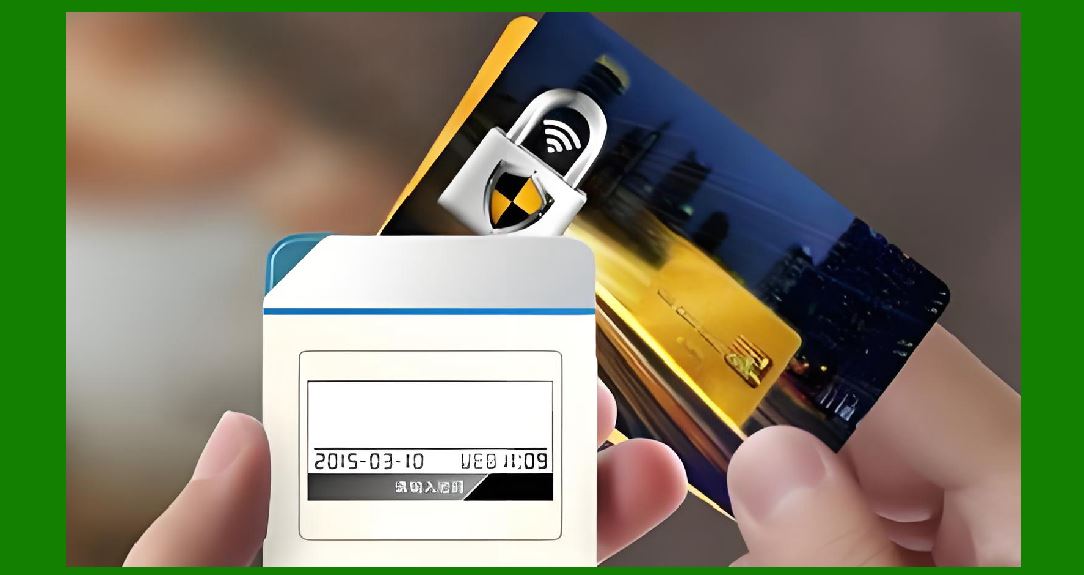
In a hospital setting, the sequence might look like this. A nurse prepares to administer a medication. The nurse scans the barcode on the patient's wristband. The system retrieves the patient's master data: name, date of birth, medical record number, allergies, and current medications. The nurse then scans the barcode on the medication package. The system retrieves the medication's master data: drug name, dosage, route, and manufacturer. The nurse then reads the RFID tag on the medication vial. The tag returns a unique serial number and, in some systems, the expiration date and the batch number. The system checks that the medication is not expired, that the batch has not been recalled, and that the drug is appropriate for the patient. If everything matches, the system records the administration. If something does not match, the system alerts the nurse. The handshake prevents medication errors. |
In a manufacturing setting, the sequence might look like this. A worker picks up a component to install on an assembly line. The component has a barcode that identifies its part number. The worker scans the barcode, and the system retrieves the part master data: description, supplier, and specifications. The component also has an RFID tag that identifies its unique serial number and its production history. The system retrieves the instance data: when the part was made, which machine made it, which operator was on duty, and what tests it passed. The system then checks that this specific part is the correct one for this specific assembly. If it is, the system records the installation. If it is not, the system stops the line. The handshake ensures traceability. |
|
Part Four: Retail and the Omnichannel World |
Retail is the most visible arena for the data handshake. Barcodes have been used in retail since the 1970s. RFID has been used in retail since the 2000s, first in pilot projects and later in large-scale deployments. The handshake between the two is what makes omnichannel retail possible. |
Consider a clothing retailer with both physical stores and an online shop. The online shop displays product master data: the style, the color, the size, the price, and the available quantities. That master data comes from the barcode-based product catalog. When a customer orders a shirt online, the retailer needs to know which specific shirt to ship. If the retailer uses RFID, it can locate the specific item in a specific store or warehouse. The RFID tag provides the instance data: this is the exact shirt, in this exact size and color, and it is currently on a shelf in a particular store. The retailer can then ship that shirt to the customer. The handshake allows the retailer to use store inventory as online inventory, which is the foundation of buy-online-pickup-in-store, ship-from-store, and same-day delivery. |
Consider a grocery store. Barcodes are used at the checkout to identify products and prices. RFID is used in the supply chain to track pallets and cases. The handshake occurs when a pallet arrives at the store. The pallet has an RFID tag that identifies the shipment. The cases on the pallet have RFID tags that identify the individual cases. The items in the cases have barcodes that identify the products. When the pallet is received, the system reads the pallet tag and the case tags. It retrieves the shipment data and the case data. It then compares the received quantities with the expected quantities from the purchase order. If everything matches, the system updates the inventory. The barcodes on the individual items are used later at the point of sale. The handshake provides both efficiency and accuracy. |
Consider a consumer electronics store. A customer wants to buy a laptop. The barcode on the box identifies the model, the configuration, and the price. The RFID tag on the box identifies the specific unit. The system can tell the customer when this specific unit was manufactured, what firmware version it has, and whether it has been recalled. If the customer buys the laptop, the system can register the warranty for that specific serial number. If the customer returns the laptop, the system can verify that the returned unit is the same one that was sold. The handshake prevents return fraud and improves customer service. |
|
Part Five: Healthcare and Patient Safety |
Healthcare is an area where the data handshake can literally save lives. Hospitals deal with thousands of medications, thousands of patients, and thousands of medical devices. Errors can be catastrophic. Barcodes and RFID together create a system of checks and balances. |
Consider medication administration. The traditional five rights of medication administration are the right patient, the right drug, the right dose, the right route, and the right time. Barcodes can verify the right patient, the right drug, the right dose, and the right route. RFID can verify the right time and the right batch. The handshake between the two ensures that all five rights are checked. |
The patient's wristband has a barcode that identifies the patient. The medication package has a barcode that identifies the drug and the dose. The medication vial has an RFID tag that identifies the specific vial, its expiration date, and its batch number. When the nurse scans the wristband and the package and reads the vial, the system checks that the drug is not expired, that the batch is not recalled, that the dose is correct for the patient, and that the time is within the prescribed window. If any check fails, the system alerts the nurse. The handshake is a safety net. |
Consider medical devices. A hospital may have thousands of infusion pumps, ventilators, and monitors. Each device has a barcode that identifies the model and the manufacturer. Each device also has an RFID tag that identifies the specific unit. The handshake allows the hospital to track the location of each device, its maintenance history, and its usage. If a device is recalled, the hospital can quickly find the specific units affected. If a device needs preventive maintenance, the hospital can schedule it based on the device's actual usage, not just a calendar. The handshake improves patient safety and reduces costs. |
Consider blood banks. A unit of blood has a barcode that identifies the blood type and the product code. It also has an RFID tag that identifies the specific unit, its collection date, and its expiration date. The handshake allows the blood bank to track the unit from donor to recipient. If a donor later tests positive for an infectious disease, the blood bank can quickly identify which recipients received blood from that donor. The handshake is a traceability system. |

|
Part Six: Manufacturing and Industry 4.0 |
Manufacturing is the birthplace of many identification technologies. Barcodes were used in factories before they were used in stores. RFID was used in factories before it was used in retail. The handshake between the two is at the heart of what is often called Industry 4.0, the fourth industrial revolution. |
Consider automotive manufacturing. A car has thousands of parts. Each part has a barcode that identifies the part number. Many parts also have RFID tags that identify the specific part. The handshake allows the manufacturer to build a genealogy of the car. The barcode tells the system what kind of part was installed. The RFID tag tells the system which specific part was installed. If a defect is found in a batch of parts, the manufacturer can trace the defect to the specific cars that received those parts. If a customer reports a problem, the manufacturer can look up the car's genealogy and see exactly which parts were installed. The handshake enables targeted recalls and faster repairs. |
Consider aerospace manufacturing. An aircraft has millions of parts. The traceability requirements are extreme. Every part must be traceable from raw material to installation. Barcodes provide the part number and the specification. RFID tags provide the unique serial number and the history. The handshake allows the manufacturer to prove that every part meets the requirements. If a part fails, the manufacturer can trace it back to the raw material and the production process. The handshake is a matter of safety and certification. |
Consider electronics manufacturing. A circuit board has hundreds of components. Each component has a barcode that identifies its part number. Some components, especially expensive ones, also have RFID tags that identify the specific component. The handshake allows the manufacturer to track the components through the assembly process. If a component is counterfeit, the system can detect it. If a component is damaged, the system can trace it. The handshake improves quality and reduces waste. |
|
Part Seven: Logistics and Supply Chain Visibility |
Logistics is the art and science of moving things from one place to another. Barcodes and RFID are the eyes and ears of logistics. The handshake between the two provides visibility. |
Consider a shipping container. The container has a barcode that identifies the container number. It also has an RFID tag that identifies the specific container and can be read from a distance. The handshake allows the port to know which container is arriving, what is inside it, and where it should go. The barcode provides the manifest data. The RFID tag provides the real-time location. The handshake speeds up customs clearance and reduces congestion. |
Consider a parcel delivery network. A package has a barcode that identifies the tracking number. It also has an RFID tag that identifies the specific package. The handshake allows the network to track the package at every step. The barcode is scanned at pickup, at sorting, and at delivery. The RFID tag is read at automated gates and on conveyor belts. The handshake provides both detailed tracking and high-speed sorting. The customer can see exactly where the package is and when it will arrive. |
Consider a cold chain. A shipment of vaccines or fresh food must be kept within a temperature range. The shipment has a barcode that identifies the product. It also has an RFID tag with a temperature sensor. The handshake allows the system to know what the product is and whether it has been exposed to unacceptable temperatures. If the temperature goes out of range, the system can flag the shipment. The handshake protects product quality and consumer safety. |

|
Part Eight: Agriculture and Food Safety |
Agriculture and food safety are areas where traceability is increasingly important. Consumers want to know where their food comes from. Regulators want to be able to trace outbreaks. Barcodes and RFID together provide the necessary traceability. |
Consider a produce farm. Each case of lettuce has a barcode that identifies the product and the grower. Each case also has an RFID tag that identifies the specific case and the harvest date. The handshake allows the farm to track the case from the field to the packing house to the distributor to the store. If there is an outbreak of foodborne illness, the regulator can use the handshake to trace the contaminated lettuce back to the specific field and the specific harvest date. The handshake can save lives and prevent widespread recalls. |
Consider a cattle ranch. Each animal has an ear tag with a barcode that identifies the animal. Some animals also have an RFID tag that identifies the specific animal and its health history. The handshake allows the rancher to track the animal from birth to slaughter. If a animal is sick, the rancher can treat it and record the treatment. If the animal is sold, the buyer can see the animal's history. The handshake improves food safety and animal welfare. |
Consider a fishery. Each fish has a tag that identifies the species and the catch area. Some fish also have an RFID tag that identifies the specific fish and its journey through the supply chain. The handshake allows the buyer to verify that the fish was caught legally and sustainably. The handshake combats illegal fishing and fraud. |

|
Part Nine: Libraries and Museums |
Libraries and museums are surprising places to find the data handshake, but they are natural fits. Libraries have used barcodes for decades. Museums have used barcodes for inventory. RFID is now used in both. |
Consider a library. Each book has a barcode that identifies the title. Each book also has an RFID tag that identifies the specific copy. The handshake allows the library to know which copy is on which shelf. The barcode provides the catalog data: title, author, subject, and call number. The RFID tag provides the item data: which copy, which branch, and which status. The handshake speeds up checkout and check-in. It also enables inventory management. A librarian can walk through the stacks with a handheld reader and know which books are present and which are missing. The handshake improves service and reduces costs. |
Consider a museum. Each artifact has a barcode that identifies the object. Each artifact also has an RFID tag that identifies the specific item. The handshake allows the museum to track the artifact's location, its condition, and its history. The barcode provides the curatorial data: artist, date, medium, and provenance. The RFID tag provides the item data: which storage room, which display case, and which conservation treatment. The handshake improves collection management and security. |
|
Part Ten: Aviation and Automotive |
Aviation and automotive are industries where safety and traceability are paramount. The data handshake is used extensively in both. |
Consider an airline. An aircraft has thousands of parts. Each part has a barcode that identifies the part number. Each part also has an RFID tag that identifies the specific part. The handshake allows the airline to track the part from manufacture to installation to maintenance to retirement. The barcode provides the part master data: manufacturer, part number, and specifications. The RFID tag provides the instance data: serial number, installation date, and maintenance history. The handshake enables predictive maintenance and improves safety. |
Consider an automotive repair shop. A car has thousands of parts. Each part has a barcode that identifies the part number. Some parts also have an RFID tag that identifies the specific part. The handshake allows the shop to order the correct part and verify that it is the correct part when it arrives. The barcode provides the catalog data. The RFID tag provides the serial number and the warranty status. The handshake reduces errors and improves customer satisfaction. |

|
Part Eleven: Fashion and Apparel |
Fashion and apparel are industries where inventory accuracy is a major challenge. A single store may have thousands of items in hundreds of styles, colors, and sizes. Barcodes and RFID together improve accuracy. |
Consider a fashion retailer. Each item has a barcode that identifies the style, color, and size. Each item also has an RFID tag that identifies the specific item. The handshake allows the retailer to know exactly what is in stock. The barcode provides the product master data: style, color, size, and price. The RFID tag provides the instance data: which specific item, which store, and which status. The handshake enables accurate inventory counts, faster replenishment, and better customer service. The retailer can also use the handshake to prevent theft and to manage returns. |
Consider a luxury brand. Each handbag has a barcode that identifies the model. Each handbag also has an RFID tag that identifies the specific item and can be used for authentication. The handshake allows the brand to verify that the handbag is genuine. The barcode provides the model data. The RFID tag provides the unique identity. The handshake combats counterfeiting and protects the brand. |
|
Part Twelve: Electronics and Consumer Goods |
Electronics and consumer goods are industries where product returns and warranty claims are common. Barcodes and RFID together improve warranty management. |
Consider a smartphone manufacturer. Each phone has a barcode that identifies the model and the configuration. Each phone also has an RFID tag that identifies the specific unit. The handshake allows the manufacturer to register the warranty for the specific phone. The barcode provides the model data. The RFID tag provides the serial number and the manufacturing date. The handshake enables the manufacturer to provide better customer service and to track quality issues. |
Consider a home appliance manufacturer. Each appliance has a barcode that identifies the model. Each appliance also has an RFID tag that identifies the specific unit. The handshake allows the manufacturer to know when the appliance was made, where it was sold, and what repairs have been performed. The barcode provides the model data. The RFID tag provides the instance data. The handshake enables predictive maintenance and improves product design. |
|
Part Thirteen: Government and Public Services |
Government and public services use barcodes and RFID for identification, tracking, and security. The handshake improves efficiency and accountability. |
Consider a motor vehicle department. Each license plate has a barcode that identifies the plate number. Each license plate also has an RFID tag that identifies the specific plate. The handshake allows the department to track the plate from issuance to renewal to cancellation. The barcode provides the plate data. The RFID tag provides the instance data. The handshake improves enforcement and reduces fraud. |
Consider a public transit system. Each fare card has a barcode that identifies the card type. Each fare card also has an RFID tag that identifies the specific card. The handshake allows the system to track the card's usage and balance. The barcode provides the card data. The RFID tag provides the instance data. The handshake improves fare collection and reduces waste. |
Consider a national identification system. Each identification card has a barcode that identifies the card type. Each card also has an RFID tag that identifies the specific card and can be used for verification. The handshake allows the government to verify identity and to prevent fraud. The barcode provides the card data. The RFID tag provides the instance data. The handshake improves security and efficiency. |
|
Part Fourteen: The Technical Middleware |
The data handshake does not happen by magic. It requires middleware, software that sits between the readers and the enterprise systems. The middleware performs several functions. It reads the barcode and the RFID tag. It parses the data. It looks up the identifiers in the appropriate databases. It joins the data. It applies business rules. It sends the result to the enterprise system. It may also write data back to the RFID tag. |
The middleware must handle different data formats. Barcodes may use different symbologies. RFID tags may use different protocols. The middleware must translate between them. The middleware must also handle errors. If a barcode is unreadable, the middleware must alert the operator. If an RFID tag is missing, the middleware must decide whether to proceed. The middleware is the glue that holds the handshake together. |

|
Part Fifteen: The Challenges |
The data handshake is not without challenges. One challenge is data quality. If the product master data is wrong, the handshake will produce wrong results. If the instance data is missing, the handshake will be incomplete. Companies must invest in data governance to ensure that both sides of the handshake are accurate. |
Another challenge is interoperability. Different vendors use different standards. Different systems use different data models. The handshake requires agreement on how data is formatted and exchanged. Standards organizations are working on this, but progress is slow. |
Another challenge is privacy. RFID tags can be read without the knowledge of the person carrying them. This raises concerns about surveillance and tracking. Companies must implement privacy protections, such as killing tags at the point of sale or encrypting data. |
Another challenge is cost. RFID tags are more expensive than barcodes. The handshake requires readers, antennas, middleware, and integration. The return on investment must be clear. For high-value items, the return is often clear. For low-value items, the return may be uncertain. |
Another challenge is change management. The handshake changes workflows. It changes job roles. It changes the way people work. Companies must invest in training and support to ensure that the handshake is adopted successfully. |

|
Part Sixteen: The Future |
The future of the data handshake is likely to be shaped by several trends. One trend is the Internet of Things. As more objects become connected, the handshake will become more automated. RFID tags will communicate with each other and with the cloud. Barcodes will be printed with invisible inks and read by smartphones. The handshake will become invisible. |
Another trend is artificial intelligence. AI can analyze the data from the handshake to predict demand, optimize inventory, and detect fraud. AI can also improve the accuracy of the handshake by learning from errors. |
Another trend is blockchain. Blockchain can provide a tamper-proof record of the handshake. It can prove that a product is genuine and that it has been handled properly. Blockchain can improve trust in the handshake. |
Another trend is sustainability. The handshake can help companies track the environmental impact of their products. It can prove that a product is recycled or that it was made with sustainable materials. The handshake can support the circular economy. |
|
Part Seventeen: A Detailed Summary at the End |
The data handshake between barcodes and RFID is one of the quiet foundations of the modern physical world. It is not a single technology. It is a pattern of use. It is the practice of combining the static product master data from a barcode with the dynamic instance data from an RFID tag. The barcode provides the identity of the class. The RFID tag provides the identity of the instance. The system joins the two and creates a complete digital representation of a physical object. |
In retail, the handshake enables omnichannel commerce. It allows a retailer to know what product is in stock and which specific item is available. It enables buy-online-pickup-in-store, ship-from-store, and same-day delivery. It reduces inventory errors and improves customer satisfaction. |
In healthcare, the handshake improves patient safety. It ensures that the right patient receives the right drug at the right dose at the right time. It tracks medical devices and blood products. It prevents errors and saves lives. |
In manufacturing, the handshake enables traceability. It allows a manufacturer to build a genealogy of a product. It enables targeted recalls and faster repairs. It improves quality and reduces waste. |
In logistics, the handshake provides visibility. It allows a shipper to track a package from pickup to delivery. It speeds up customs clearance and reduces congestion. It protects cold chain shipments. |
In agriculture and food safety, the handshake provides traceability. It allows a regulator to trace a contaminated product back to the farm. It improves food safety and reduces recalls. It combats illegal fishing and fraud. |
In libraries and museums, the handshake improves collection management. It allows a library to know which copy is on which shelf. It allows a museum to track an artifact's location and condition. |
|
In aviation and automotive, the handshake improves safety. It allows an airline to track a part from manufacture to retirement. It allows a repair shop to order the correct part and verify it. |
In fashion and apparel, the handshake improves inventory accuracy. It allows a retailer to know exactly what is in stock. It combats counterfeiting and improves customer service. |
In electronics and consumer goods, the handshake improves warranty management. It allows a manufacturer to register a warranty for a specific unit. It enables predictive maintenance and improves product design. |
In government and public services, the handshake improves efficiency and accountability. It allows a government to track licenses, fare cards, and identification cards. |
The handshake is supported by middleware that reads the identifiers, looks up the data, joins the data, and sends the result to the enterprise system. The middleware must handle different data formats, errors, and business rules. |
The handshake faces challenges. Data quality, interoperability, privacy, cost, and change management are all significant. But the benefits are large. The handshake provides visibility, traceability, safety, and efficiency. |
|
The future of the handshake is likely to be shaped by the Internet of Things, artificial intelligence, blockchain, and sustainability. As these trends develop, the handshake will become more automated, more intelligent, more trustworthy, and more sustainable. |
The barcode and the RFID tag are not competitors. They are partners. The barcode is the anchor of the product catalog. The RFID tag is the anchor of the individual item. Together, they map the physical world into the digital world. They are the silent network that makes modern life possible. |
 cs@easiersoft.com