Chapter 58: Hybrid Labels |
Summary |
A hybrid label is a single physical label that carries two identification technologies at once: a printed barcode on its surface and an embedded RFID inlay beneath or within it. One item, one label, two ways to be read. This chapter explains why such labels exist, how they are constructed, where they are used, and what practical benefits and challenges they bring. The central idea is simple. Barcodes and RFID are good at different things. Barcodes are cheap, universal, human-readable, and require no power or radio infrastructure. RFID is fast, automatic, bulk-readable, and does not require line of sight. By combining them on one label, organizations can enjoy the strengths of both while easing the transition from one technology to the other. The chapter explores real applications in retail, healthcare, logistics, manufacturing, libraries, food safety, aviation, automotive, and government. It also discusses design choices, printing and encoding workflows, cost considerations, standards, privacy questions, and common mistakes. The goal is to show that hybrid labels are not a compromise but a practical bridge between two worlds, and often the most sensible choice for organizations that live in both. |
|
Why Put Two Technologies on One Label |
Imagine a warehouse worker scanning a box with a handheld laser. The barcode works perfectly. Now imagine a forklift passing through a portal with hundreds of boxes. The barcode cannot be read without stopping and aiming. RFID can read all of them at once, but the boxes might not have RFID tags. A hybrid label solves this. The same box can be scanned manually by a worker with a barcode reader, or read automatically by an RFID gate. Neither capability is lost. |
This is the core reason hybrid labels exist. They allow an organization to move at its own pace. A supplier may not be ready to invest in RFID readers, but a retailer may require RFID for inventory accuracy. A hybrid label lets the supplier print barcodes as usual while the retailer benefits from RFID. Later, when the supplier adopts RFID, the same label still works. Nothing needs to be reprinted or relabeled. |
Another reason is redundancy. If the RFID inlay fails, the barcode still identifies the item. If the barcode is damaged or obscured, the RFID can still be read. In critical supply chains, such as pharmaceuticals or aviation parts, this redundancy can be the difference between a smooth operation and a costly recall. |
A third reason is human readability. RFID is invisible. A worker cannot look at a tag and know what it contains. A barcode, especially a linear barcode with human-readable text beneath it, can be read by a person. Hybrid labels preserve this human-friendly aspect while adding machine automation. |
Finally, hybrid labels can carry more data in total. A barcode might encode a product number. An RFID inlay might carry a unique serial number, a batch code, an expiration date, and more. Together, they provide both a universal identifier and rich, item-level data. |

|
How a Hybrid Label Is Built |
A hybrid label is typically a pressure-sensitive label with several layers. The top layer is the facestock, usually paper or a synthetic material such as polypropylene or polyester. The facestock is printed with the barcode, human-readable text, logos, and other information. Beneath the facestock is an adhesive layer. Embedded within or beneath the adhesive is the RFID inlay. The inlay consists of a small chip and an antenna, usually made of aluminum or copper, mounted on a thin plastic substrate. The bottom layer is a release liner, which protects the adhesive until the label is applied. |
There are two common constructions. In one, the RFID inlay is placed on top of the facestock, and then a protective overlay is applied. This is sometimes called a 'wet inlay on label' or 'label with embedded inlay.' In the other, the inlay is sandwiched between the facestock and the adhesive, so it is completely hidden. The second construction is more common for retail and healthcare because it looks like a normal label and is harder to tamper with. |
The chip in the RFID inlay can be read-only, write-once, or read-write. Most hybrid labels use read-write chips so that data can be updated, such as when an item moves through different stages of a supply chain. The antenna is designed for a specific frequency. Most hybrid labels use ultra-high frequency, or UHF, because UHF offers the longest read range and the fastest bulk reading. High frequency, or HF, is used when the label needs to be read near a phone or when the environment contains metal or liquid. Near-field communication, or NFC, is a subset of HF often used for consumer-facing applications. |
The barcode on a hybrid label can be linear, such as a UPC or EAN code, or two-dimensional, such as a QR code or Data Matrix. Linear barcodes are still the most common because they are universally readable by inexpensive scanners. Two-dimensional barcodes can hold more data and can be read even if partially damaged. Some hybrid labels include both a linear barcode and a two-dimensional barcode, plus RFID, making them triple-technology labels. |
Printing a hybrid label requires a printer that can encode the RFID inlay while printing the barcode. These are called RFID label printers. They look like ordinary thermal printers but have an RFID module that writes to the chip as the label passes through. The printer must know the data to write, which usually comes from a database or a software system. The barcode and the RFID data are typically linked, so that scanning either one retrieves the same record. |

|
The Workflow of a Hybrid Label |
The lifecycle of a hybrid label begins with data. A company decides what should be encoded. The barcode might contain a Global Trade Item Number, or GTIN. The RFID might contain an Electronic Product Code, or EPC, which includes the GTIN plus a unique serial number. The company's software generates the data and sends it to the printer. The printer prints the barcode and writes the RFID chip in one pass. The label is then applied to the item, either by hand or by an automatic label applicator. |
Once applied, the label can be read in multiple ways. A worker with a handheld scanner can read the barcode. An RFID reader at a dock door can read the RFID automatically. A robot in a warehouse can read the RFID as it moves. A consumer with a smartphone can read the barcode or, if the label includes NFC, tap the phone to read the RFID. The same label serves all these use cases. |
When the item reaches the end of its life, the label may be removed or destroyed. If the item is returned or recycled, the label might be read again. In some cases, the RFID chip can be killed or locked to protect privacy. The barcode remains visible until the label is removed. |

|
Retail: The Most Visible Use Case |
Retail is where hybrid labels have become most common. Large apparel retailers, department stores, and specialty shops use hybrid labels to manage inventory. A shirt might have a label with a barcode for the point-of-sale system and an RFID inlay for inventory counting. The barcode is used at the cash register, where a scanner reads it to look up the price. The RFID is used on the sales floor, where staff walk around with handheld readers and count every item in minutes. |
The benefits are significant. Inventory accuracy improves from around 60 to 70 percent with barcodes alone to over 95 percent with RFID. Out-of-stock situations decrease because staff can quickly find items in the back room. Cycle counts that once took hours now take minutes. The barcode ensures that the point-of-sale system remains compatible with existing infrastructure, while the RFID provides the automation. |
Hybrid labels also help with loss prevention. If an item is stolen, the RFID can trigger an alarm at the exit. The barcode can be used to verify the item at the register. Some retailers use the RFID to track items from the distribution center to the store to the fitting room. The barcode remains as a backup. |
In grocery and consumer goods, hybrid labels are used on cases and pallets. A case of canned soup might have a barcode for the retailer's ordering system and an RFID for the warehouse's automated receiving. The barcode is read by a worker with a handheld scanner, while the RFID is read by a portal as the pallet enters the store. This dual approach allows the supplier to use barcodes on the production line and the retailer to use RFID in the back room. |

|
Healthcare: Safety and Traceability |
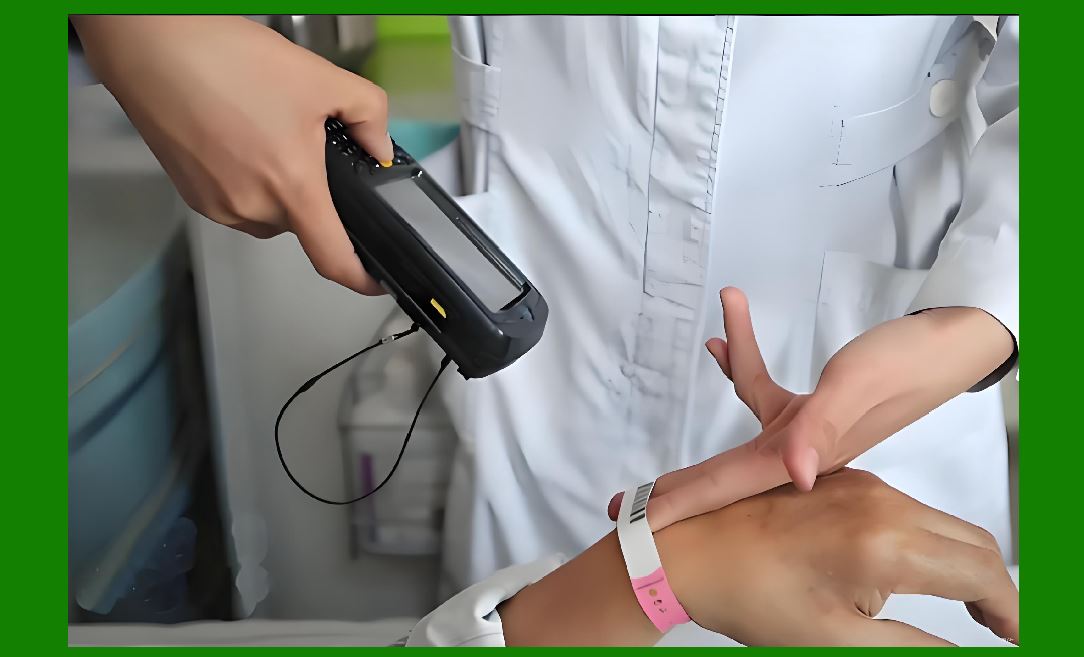
Healthcare is another major user of hybrid labels. Hospitals, clinics, and pharmacies use them on medication, specimens, medical devices, and patient wristbands. A medication vial might have a barcode for the nurse to scan before administering and an RFID inlay for automated dispensing cabinets. The barcode ensures the right drug and dose, while the RFID helps the cabinet track inventory and expiration dates. |
In operating rooms, hybrid labels are used on surgical instruments. The barcode is used for manual logging, while the RFID is used for automated counting. After surgery, a nurse can wave a reader over the instruments to confirm that none are missing. This is faster and more accurate than counting by hand. The barcode remains as a backup if the RFID reader fails. |
Blood banks use hybrid labels on blood bags. The barcode encodes the blood type and unit number. The RFID encodes the same information plus donation date and expiration. When a blood bag is issued, the barcode is scanned into the patient's record, and the RFID is read by the storage refrigerator to update inventory. This dual system reduces the risk of human error. |
Pharmaceutical companies use hybrid labels on clinical trial materials. The barcode is used for dispensing, while the RFID is used for tracking the materials through the trial. This helps ensure that the right patient receives the right drug at the right time. It also helps with recalls, because the RFID can quickly identify all affected units. |

|
Logistics and Supply Chain: Bridging the Gap |
Logistics is all about moving goods efficiently. Hybrid labels are used on pallets, cartons, and individual items. A pallet might have a barcode for the warehouse management system and an RFID for the automated conveyor. The barcode is read by a worker with a handheld scanner, while the RFID is read by a portal as the pallet moves through the facility. |
In international shipping, hybrid labels help with customs. The barcode is used by customs officers who may not have RFID readers. The RFID is used by the shipping company to track the container. This is especially important when goods move between countries with different levels of technology adoption. A hybrid label ensures that the goods can be identified regardless of the infrastructure. |
Third-party logistics providers use hybrid labels to manage inventory for multiple clients. Each client may have different requirements. One client may require barcodes only, while another may require RFID. A hybrid label allows the provider to serve both with a single label. This reduces complexity and cost. |
In e-commerce, hybrid labels are used on packages. The barcode is used by the postal service or courier for sorting and delivery. The RFID is used by the fulfillment center to track the package through the picking and packing process. Some companies also use the RFID to provide real-time tracking to customers. The barcode remains as a backup for the final mile. |

|
Manufacturing: Work-in-Progress and Asset Tracking |
Manufacturers use hybrid labels on work-in-progress, tools, and finished goods. On a production line, a hybrid label might be attached to a tray of components. The barcode is used by the machine operator to verify the correct part. The RFID is used by the conveyor system to route the tray to the correct station. This dual approach allows the manufacturer to use barcodes for manual processes and RFID for automated ones. |
In automotive manufacturing, hybrid labels are used on engines, transmissions, and other major components. The barcode is used for manual inspection, while the RFID is used for automated tracking. This helps ensure that the right parts are installed in the right vehicles. It also helps with recalls, because the manufacturer can quickly identify which vehicles contain a defective part. |
In electronics manufacturing, hybrid labels are used on circuit boards and finished devices. The barcode is used for manual testing, while the RFID is used for automated inventory. Some manufacturers use the RFID to store test results and firmware versions. The barcode remains as a simple identifier. |

|
Libraries: Books and Media |
Libraries were early adopters of hybrid labels. A library book might have a barcode for the checkout system and an RFID inlay for inventory and security. The barcode is used by the librarian at the desk, while the RFID is used by a handheld reader to scan the shelves. This allows the library to know which books are on the shelf and which are checked out. |
The RFID also serves as a security tag. If a book is not properly checked out, the RFID triggers an alarm at the exit. The barcode remains as a backup for the checkout system. Some libraries also use the RFID to sort books automatically. A book returned to a drop box is read by an RFID reader, and a machine sorts it into the correct bin. The barcode is used when the book is checked out to a patron. |
Museums and archives use hybrid labels on artifacts and documents. The barcode is used for cataloging, while the RFID is used for tracking movement within the building. This helps ensure that valuable items are not lost or stolen. The barcode remains as a human-readable identifier. |

|
Food Safety and Agriculture |
In food safety, hybrid labels are used on produce, meat, and packaged goods. A crate of apples might have a barcode for the retailer and an RFID for the cold chain. The barcode is used at the point of sale, while the RFID is used to monitor temperature and humidity. If the temperature rises above a safe level, the RFID can trigger an alert. The barcode remains as a backup for manual inspection. |
In agriculture, hybrid labels are used on livestock. An ear tag might have a barcode for manual recording and an RFID for automated feeding. The barcode is used by the farmer with a handheld scanner, while the RFID is used by the feeding system to dispense the right amount of feed. This helps improve animal health and reduce waste. |
In fishing, hybrid labels are used on catches. The barcode is used for manual recording, while the RFID is used for automated tracking. This helps ensure that the fish are caught legally and sustainably. The barcode remains as a backup for inspection. |

|
Aviation: Parts and Baggage |
Aviation uses hybrid labels on parts and baggage. An aircraft part might have a barcode for manual inspection and an RFID for automated tracking. The barcode is used by the mechanic, while the RFID is used by the airline to track the part through its lifecycle. This helps ensure that the right part is installed on the right aircraft. |
Baggage handling is another major use case. An airline bag tag might have a barcode for the automated sortation system and an RFID for tracking. The barcode is read by the scanner at the check-in counter, while the RFID is read by the conveyor system. This helps reduce lost baggage. Some airlines also use the RFID to provide real-time tracking to passengers. The barcode remains as a backup for airports that do not have RFID readers. |

|
Automotive: Vehicles and Parts |
In the automotive industry, hybrid labels are used on vehicles and parts. A new car might have a barcode on the windshield for the dealer and an RFID for the factory. The barcode is used for inventory, while the RFID is used for tracking the car through the assembly line. This helps ensure that the car is built correctly. |
In aftermarket parts, hybrid labels are used on replacement parts. The barcode is used by the mechanic, while the RFID is used by the distributor. This helps ensure that the right part is delivered to the right customer. The barcode remains as a backup for manual ordering. |

|
Government and Identification |
Governments use hybrid labels on documents, vehicles, and assets. A passport might have a barcode for manual processing and an RFID for automated border control. The barcode is used by the officer, while the RFID is used by the e-gate. This helps speed up border crossings while maintaining security. |
Vehicle registration stickers often have both a barcode and an RFID. The barcode is used by the police officer, while the RFID is used by the toll booth. This helps with enforcement and revenue collection. The barcode remains as a backup for manual checks. |
Government assets, such as computers and furniture, use hybrid labels for inventory. The barcode is used for manual audits, while the RFID is used for automated audits. This helps ensure that assets are not lost or stolen. |

|
Design Considerations |
Designing a hybrid label requires careful thought. The first consideration is frequency. UHF is best for long-range, bulk reading. HF is best for short-range, secure reading. NFC is best for consumer interaction. The choice depends on the use case. A retail label might use UHF for inventory and a barcode for point of sale. A healthcare label might use HF for bedside reading and a barcode for manual checks. |
The second consideration is size. The RFID antenna must be large enough to be read reliably. The barcode must be large enough to be scanned. Both must fit on the label. This can be challenging for small items, such as jewelry or vials. In these cases, the label may be folded or the antenna may be designed to fit around the barcode. |
The third consideration is material. The label must adhere to the item and survive the environment. A label on a metal surface may need a spacer to prevent interference. A label on a liquid-filled container may need a specific antenna design. A label on a curved surface may need a flexible facestock. |
The fourth consideration is printing. The printer must be able to print the barcode and encode the RFID in one pass. This requires a printer with an RFID module. The printer must also be able to handle the label material and adhesive. Some printers can print and encode at high speeds, while others are slower. |
The fifth consideration is data. The barcode and RFID must be linked. This requires software that generates the data and sends it to the printer. The software must also be able to update the RFID if needed. This is especially important for read-write chips. |
The sixth consideration is standards. The barcode must comply with the relevant standard, such as UPC, EAN, or GS1-128. The RFID must comply with the relevant standard, such as EPC Gen2 or ISO 18000-6C. This ensures that the label can be read by different systems. |

|
Cost Considerations |
Hybrid labels cost more than plain barcode labels because they include an RFID inlay. The inlay is the most expensive component. The chip and antenna must be manufactured and assembled. The label must be printed and encoded. The printer must be equipped with an RFID module. The software must be able to generate and manage the data. |
However, the cost is often justified by the benefits. In retail, the improved inventory accuracy can increase sales and reduce out-of-stocks. In healthcare, the improved safety can reduce errors and save lives. In logistics, the improved efficiency can reduce labor costs and speed up delivery. In manufacturing, the improved tracking can reduce defects and recalls. |
The cost of hybrid labels has been declining as RFID technology matures. The cost of an RFID inlay is now a few cents, and the cost of a hybrid label is often less than ten cents. This is still more than a plain barcode label, which may cost less than a cent. But for many applications, the extra cost is worth it. |

|
Privacy and Security |
Hybrid labels raise privacy and security concerns. Because RFID can be read without line of sight, someone could read the label without the owner's knowledge. This is a concern for consumer items, such as clothing or electronics. To address this, some labels include a kill command that disables the RFID after purchase. Others use a password or encryption to protect the data. |
The barcode is less of a concern because it requires line of sight and is visible. However, the barcode can be photographed and decoded. This is a concern for sensitive information, such as patient data. To address this, some labels use a two-dimensional barcode that is encrypted. |
Security is also a concern for the supply chain. If an RFID tag is cloned, a counterfeit item could be introduced. To address this, some tags use a unique identifier that is difficult to clone. Others use a cryptographic challenge-response protocol. The barcode remains as a backup for verification. |

|
Common Mistakes |
One common mistake is to assume that the barcode and RFID will always agree. If the data is not linked correctly, the barcode might say one thing and the RFID another. This can cause confusion and errors. To avoid this, the data should be generated from a single source and verified after printing. |
Another mistake is to place the RFID inlay in a location that interferes with the barcode. If the inlay is too close to the barcode, it can cause the barcode to be unreadable. To avoid this, the inlay should be placed away from the barcode, or the barcode should be printed on top of the inlay with a protective layer. |
A third mistake is to use the wrong frequency. If the frequency is not suitable for the environment, the RFID may not be read reliably. For example, UHF does not work well near metal or liquid. To avoid this, the frequency should be chosen based on the use case. |
A fourth mistake is to forget about the human-readable text. If the barcode is damaged, the human-readable text can still be used. This is especially important for manual processes. To avoid this, the human-readable text should be printed clearly and legibly. |
A fifth mistake is to ignore the standards. If the label does not comply with the relevant standards, it may not be readable by different systems. This can cause problems in the supply chain. To avoid this, the label should be designed to comply with the standards. |

|
The Future of Hybrid Labels |
The future of hybrid labels is bright. As RFID technology continues to improve, hybrid labels will become more common. They will be used on more items, in more industries, and in more countries. They will become smaller, cheaper, and more powerful. They will be integrated with sensors, such as temperature and humidity, to provide more data. They will be integrated with blockchain to provide more trust. They will be integrated with artificial intelligence to provide more insights. |
One trend is the use of hybrid labels on individual items, not just cases and pallets. This is called item-level tagging. It allows retailers to track every item, not just the case. This improves inventory accuracy and reduces theft. It also allows for new services, such as self-checkout and personalized recommendations. |
Another trend is the use of hybrid labels in smart packaging. A package might have a hybrid label that can tell you when the food expires or when the medicine should be taken. The barcode provides the identifier, while the RFID provides the sensor data. This can improve safety and convenience. |
A third trend is the use of hybrid labels in circular economy. A product might have a hybrid label that can be read at the end of its life to determine how it should be recycled. The barcode provides the material type, while the RFID provides the history. This can improve recycling and reduce waste. |
A fourth trend is the use of hybrid labels in digital twins. A physical item might have a hybrid label that links to a digital twin in the cloud. The barcode provides the identifier, while the RFID provides the real-time data. This can improve maintenance and operations. |

|
Detailed Summary |
Hybrid labels combine a printed barcode and an embedded RFID inlay in a single physical label. They exist because barcodes and RFID have complementary strengths. Barcodes are cheap, universal, human-readable, and require no power or radio infrastructure. RFID is fast, automatic, bulk-readable, and does not require line of sight. By combining them, organizations can enjoy the benefits of both while easing the transition from one technology to the other. |
The construction of a hybrid label involves a facestock, an adhesive, an RFID inlay, and a release liner. The inlay can be placed on top of the facestock or sandwiched between the facestock and the adhesive. The chip can be read-only, write-once, or read-write. The antenna is designed for a specific frequency, usually UHF, HF, or NFC. The barcode can be linear or two-dimensional. Printing requires an RFID label printer that can print the barcode and encode the chip in one pass. |
The workflow begins with data generation, followed by printing and encoding, application, and reading. The label can be read by a handheld scanner, an RFID reader, a robot, or a smartphone. The data is typically linked, so that scanning either the barcode or the RFID retrieves the same record. |
Retail is the most visible use case. Hybrid labels are used on apparel, grocery, and consumer goods. They improve inventory accuracy, reduce out-of-stocks, and speed up cycle counts. The barcode is used at the point of sale, while the RFID is used on the sales floor. |
Healthcare uses hybrid labels on medication, specimens, devices, and patient wristbands. They improve safety and traceability. The barcode is used for manual checks, while the RFID is used for automated dispensing and tracking. |
Logistics uses hybrid labels on pallets, cartons, and packages. They bridge the gap between suppliers and retailers with different levels of technology adoption. The barcode is used for manual scanning, while the RFID is used for automated sorting and tracking. |
Manufacturing uses hybrid labels on work-in-progress, tools, and finished goods. They improve quality and efficiency. The barcode is used for manual processes, while the RFID is used for automated routing and tracking. |
Libraries use hybrid labels on books and media. They improve inventory and security. The barcode is used for checkout, while the RFID is used for shelf reading and security. |

|
Food safety uses hybrid labels on produce, meat, and packaged goods. They improve cold chain monitoring and traceability. The barcode is used for point of sale, while the RFID is used for temperature and humidity monitoring. |
Aviation uses hybrid labels on parts and baggage. They improve maintenance and baggage handling. The barcode is used for manual inspection, while the RFID is used for automated tracking. |
Automotive uses hybrid labels on vehicles and parts. They improve assembly and aftermarket service. The barcode is used for inventory, while the RFID is used for tracking. |
Government uses hybrid labels on documents, vehicles, and assets. They improve security and efficiency. The barcode is used for manual processing, while the RFID is used for automated processing. |
Design considerations include frequency, size, material, printing, data, and standards. Cost considerations include the cost of the inlay, the printer, and the software. Privacy and security considerations include the risk of unauthorized reading and cloning. Common mistakes include data mismatch, interference, wrong frequency, missing human-readable text, and non-compliance with standards. |

|
The future of hybrid labels includes item-level tagging, smart packaging, circular economy, and digital twins. As RFID technology continues to improve, hybrid labels will become more common, more powerful, and more integrated with other technologies. They will play a key role in mapping the physical world, because they provide both a universal identifier and rich, item-level data. They are a practical bridge between two worlds, and often the most sensible choice for organizations that live in both. |
 cs@easiersoft.com