Chapter 59: Audit Trail |
Summary |
An audit trail is the recorded history of what happened to an object, a shipment, a person, or a transaction. In the physical world, audit trails have traditionally been built from paper documents, signatures, and manual logs. Barcodes and RFID have changed that. Barcodes confirm delivery at the dock door; RFID confirms each box's location inside the warehouse. These are complementary granularities. One tells you that something arrived. The other tells you where it went, when it moved, and whether it is still there. Together they create a continuous, machine-readable record that spans from the supplier's loading dock to the customer's receiving area, and sometimes all the way to the end of a product's life. This chapter explores how that works, why it matters, and how different industries use these technologies to build audit trails that are more complete, more accurate, and more useful than anything that came before. |

|
Introduction: What an Audit Trail Really Is |
An audit trail is not simply a list of events. It is a chain of evidence. Each link in the chain must be trustworthy, and the chain must be unbroken from beginning to end. If a link is missing, the entire chain becomes suspect. If a link is forged, the chain becomes dangerous. In the physical world, the chain of evidence has always been fragile. A paper manifest can be lost. A signature can be forged. A memory can fade. A box can be moved without anyone writing it down. |
Barcodes and RFID address different parts of this problem. A barcode is a visual label that a machine can read. It is inexpensive, widely understood, and easy to deploy. When a package arrives at a dock door, a worker scans the barcode. That scan creates a record: this package arrived at this time at this door. The record is digital, so it can be stored, searched, and shared. But the barcode itself does not know where it is. It cannot tell you that the package was moved from the receiving area to aisle seven, shelf three. It cannot tell you that the package was opened, repacked, or returned. For that, you need something that can be sensed remotely and repeatedly. |
RFID, or radio frequency identification, provides that capability. An RFID tag contains a small chip and an antenna. When it enters the field of a reader, it responds with its unique identifier. No line of sight is required. No human hand needs to scan it. A reader at a warehouse entrance can record every tagged item that passes through, automatically and continuously. A reader on a forklift can record where items are placed. A handheld reader can inventory an entire aisle in minutes. RFID turns the physical world into a stream of location and status updates. |
The power of the audit trail comes from combining these two technologies. Barcodes provide the authoritative checkpoint. RFID provides the continuous trace. The barcode says: this shipment was delivered. The RFID says: and here is every movement of every box since then. The barcode is the anchor. The RFID is the thread. Together they weave a fabric of evidence that is far stronger than either alone. |
This chapter examines that fabric across many industries. We will look at retail, pharmaceuticals, food and agriculture, manufacturing, logistics, healthcare, aerospace, automotive, and public infrastructure. In each case, the pattern repeats: barcodes confirm the handoff, RFID confirms the journey. The details differ, but the logic is the same. By the end, you will understand why the combination has become the backbone of modern audit trails, and why it will only grow more important as supply chains become more complex and more regulated. |
|
Part One: The Logic of Complementary Granularities |
To understand why barcodes and RFID work so well together, it helps to think about granularity. Granularity is the level of detail in a record. A coarse-grained record says: a truck arrived. A fine-grained record says: box number 47 was placed on shelf B3 at 2:14 PM by worker ID 8821. Coarse-grained records are easy to create but leave many questions unanswered. Fine-grained records answer more questions but are harder to create and maintain. |
Barcodes are naturally coarse-grained at the point of scanning. A single scan creates a single event. That event is precise in time and location, but it is isolated. Between scans, the barcode is silent. It cannot tell you what happened. This is not a flaw. It is a design choice. Barcodes were invented to replace manual data entry, not to provide continuous tracking. They are cheap, reliable, and universally understood. For many purposes, a single scan at a critical checkpoint is enough. The dock door is the classic example. When a truck arrives, someone scans the barcode on the manifest or on the pallet. That scan confirms delivery. It creates a legal and commercial record. It triggers payment, updates inventory, and starts the clock on any warranty or return period. |
RFID is naturally fine-grained. A passive RFID tag costs a few cents and can be read hundreds of times without human intervention. A reader can capture thousands of tags per second. This means RFID can create a continuous record of location and movement. It can tell you that a box was in the receiving area at 9:00 AM, in quality inspection at 10:30 AM, in aisle 12 at 1:00 PM, and in the picking area at 3:00 PM. It can tell you that the box was never opened, or that it was opened and resealed. It can tell you that the box left the warehouse on a specific truck. This is the kind of detail that barcodes cannot provide. |
The complementary nature of the two technologies is what makes them so powerful. Barcodes are the anchors. They mark the moments when responsibility changes hands. RFID is the thread. It connects those anchors with a continuous record of what happened in between. An audit trail built from both is more complete than one built from either alone. It is also more resilient. If an RFID reader fails, the barcode checkpoints still provide a basic record. If a barcode label is damaged, the RFID tag may still be readable. The two technologies cover each other's weaknesses. |
This logic applies across industries. In retail, a barcode on a product is scanned at the point of sale. That scan confirms the sale and updates inventory. An RFID tag on the same product can be read at the receiving dock, on the sales floor, and at the exit. It can tell the retailer when the product arrived, how long it sat on the shelf, and whether it was stolen. In pharmaceuticals, a barcode on a vial confirms that the right drug was dispensed to the right patient. An RFID tag on the case can confirm that the case was stored at the correct temperature throughout its journey. In manufacturing, a barcode on a component confirms that it was installed in the right unit. An RFID tag on the component can confirm that it was delivered to the right workstation at the right time. |
The rest of this chapter explores these applications in detail. We will see how the complementary granularities of barcodes and RFID create audit trails that are transforming entire industries. |

|
Part Two: Retail and the Omnichannel Audit Trail |
Retail is where most people first encounter barcodes. The beep at the checkout counter is a familiar sound. That beep creates a record: this item was sold at this store at this time for this price. That record is the foundation of the retail audit trail. It tells the retailer what was sold, what needs to be reordered, and what is popular. It also tells the customer what they bought and when. If the customer returns the item, the barcode on the receipt links the return to the original sale. The audit trail is complete for that transaction. |
But the checkout scan is only the last event in a long chain. Before the item reached the checkout, it was received at the store, stocked on a shelf, and perhaps moved between locations. Barcodes can record some of these events. A receiving clerk scans the barcode on a carton to confirm that the store received the shipment. A stock clerk scans the barcode on an item to confirm that it was placed on the shelf. But these scans are manual and sporadic. They do not create a continuous record. They leave gaps. |
RFID fills those gaps. In an RFID-enabled store, every item carries a tag. Readers at the receiving dock record every item that arrives. Readers on the sales floor can record when items are moved from the stockroom to the shelf. Readers at the exit can record when items leave the store. This creates a continuous audit trail from the supplier to the customer. The retailer knows not just what was sold, but what was available, what was moved, and what was lost. The customer, if they choose, can access a record of where their item came from and how it was handled. |
The omnichannel retailer is the most demanding environment for this kind of audit trail. An omnichannel retailer sells through physical stores, websites, and mobile apps. A customer might order online and pick up in store. Or they might buy in store and return by mail. Or they might order online and have the item shipped from a store instead of a warehouse. Each of these paths creates a complex chain of custody. The audit trail must track the item across all of these paths. Barcodes provide the checkpoints: the order confirmation, the pick confirmation, the shipment confirmation, the delivery confirmation. RFID provides the continuous trace: where the item was at each moment, and how long it stayed there. |
Consider a specific example. A customer orders a jacket online. The retailer's system identifies that the jacket is available at a nearby store. The store receives a pick request. A worker finds the jacket and scans its barcode to confirm the pick. The jacket is then packed and shipped. An RFID tag on the jacket is read at the store's shipping dock, at the carrier's sorting facility, and at the customer's doorstep. If the customer returns the jacket, the RFID tag is read again at the return center. The retailer can see the entire journey. They know that the jacket was in the store for 12 days, that it was picked by a specific worker, that it traveled through a specific carrier, and that it was delivered on a specific date. If the customer claims the jacket was damaged, the retailer can check the audit trail to see if the damage occurred during shipping or after delivery. This is the power of complementary granularities. |
Retailers also use these audit trails to combat theft and fraud. A common scam is to buy an expensive item, replace it with a cheaper item, and return the cheaper item in the expensive item's packaging. Barcodes alone cannot detect this, because the barcode on the packaging matches the original purchase. But an RFID tag inside the packaging can be read to confirm that the item inside is the correct item. If the tag does not match, the return is flagged. Similarly, RFID can detect shoplifting by reading tags at the exit. If a tag passes the exit without a corresponding sale record, an alarm sounds. The audit trail then shows exactly which item left and when. |
The retail audit trail is not just about loss prevention. It is also about customer service. If a customer asks where their order is, the retailer can check the audit trail and give a precise answer. If a customer wants to know whether a product is in stock at a nearby store, the retailer can check the RFID inventory. If a customer wants to return an item, the retailer can verify the purchase and process the return quickly. The audit trail makes all of this possible. |
|
Part Three: Pharmaceuticals and the Chain of Custody |
Pharmaceuticals are one of the most regulated products in the world. Every dose must be traceable from the factory to the patient. The audit trail is not just a business tool; it is a legal requirement. In the United States, the Drug Supply Chain Security Act requires an electronic, interoperable system to trace prescription drugs as they move through the supply chain. Similar regulations exist in the European Union, China, and many other countries. Barcodes and RFID are the technologies that make these regulations practical. |
At the unit level, a barcode on a vial or a blister pack provides a unique identifier. That identifier is scanned at every handoff: when the drug leaves the manufacturer, when it arrives at the distributor, when it arrives at the pharmacy, and when it is dispensed to the patient. Each scan creates a record. Together, these records form an audit trail that shows the complete chain of custody. If a problem is discovered, the manufacturer can trace the affected batch to every pharmacy and every patient. If a counterfeit is found, the authorities can trace it back to its source. |
At the case and pallet level, RFID provides a more detailed record. A case of drugs might contain hundreds of individual vials. Scanning each vial's barcode would be time-consuming. An RFID tag on the case can be read automatically as the case moves through the warehouse. This creates a continuous record of the case's location and status. If the case is stored at the wrong temperature, a sensor tag can record that fact. If the case is opened, a tamper-evident tag can record that fact. The audit trail then shows not just where the case was, but what happened to it. |
The pharmaceutical industry also uses these technologies to combat counterfeiting. Counterfeit drugs are a major public health problem. They can be ineffective, harmful, or even lethal. A strong audit trail makes counterfeiting more difficult. If every package has a unique identifier, and if that identifier is verified at every step, a counterfeit package will be detected when its identifier does not match the expected record. RFID makes this verification automatic and fast. A pharmacist can scan an entire shipment in seconds, rather than checking each package by hand. |
Clinical trials are another area where audit trails are critical. A clinical trial must document exactly what happened to every dose of the investigational drug. Which patient received which doseWhenWhereWas the dose stored correctlyWas it dispensed correctlyBarcodes and RFID can answer these questions. A barcode on the dose confirms that the right patient received the right drug. An RFID tag on the container confirms that the drug was stored at the right temperature and that it was not tampered with. The audit trail becomes part of the trial's official record, subject to review by regulators. |
Hospitals use similar systems for their own pharmacies. When a patient is admitted, they are given a barcode wristband. When a nurse administers a drug, they scan the patient's wristband and the drug's barcode. The system checks that the drug is correct for that patient and that the dose is correct. If there is a mismatch, an alert sounds. The scan creates a record: this patient received this drug at this time by this nurse. That record is part of the patient's medical audit trail. If there is an adverse reaction, the medical team can check the audit trail to see exactly what was given and when. |
The pharmaceutical audit trail is not just about compliance. It is about patient safety. Every year, thousands of people are harmed by medication errors. Many of these errors could be prevented by a strong audit trail. If the system knows what the patient should receive and what they actually received, it can catch mistakes before they cause harm. Barcodes and RFID make that possible. |
|
Part Four: Food and Agriculture and the Farm-to-Fork Trail |
Food safety is a global concern. Every year, millions of people become ill from foodborne diseases. When an outbreak occurs, public health officials need to trace the contaminated food back to its source as quickly as possible. The faster they can trace it, the faster they can remove it from shelves and prevent more illnesses. Barcodes and RFID are the tools that make rapid tracing possible. |
At the farm, a barcode or RFID tag can identify a specific lot of produce. When the produce is harvested, the tag is applied. When it is packed, the tag is scanned. When it is shipped, the tag is scanned again. Each scan creates a record. If a problem is discovered later, the records can be used to trace the produce back to the farm and forward to the stores that received it. This is called a traceability system. The audit trail is the heart of that system. |
RFID is particularly useful in food supply chains because it can be read without line of sight. A pallet of produce might be wrapped in plastic. A barcode on the outside of the pallet can be scanned, but the individual boxes inside cannot be seen. An RFID reader can read all the tags inside the pallet at once. This means the entire pallet can be inventoried in seconds. If one box is contaminated, the system can identify exactly which pallet it was on and where that pallet went. |
Temperature-sensitive foods, such as meat, dairy, and seafood, require more than just location tracking. They require temperature tracking. A sensor tag can record the temperature of a shipment over time. If the temperature rises above a safe level, the tag records that fact. When the shipment arrives, the receiver can check the tag to see if the cold chain was maintained. If it was not, the shipment can be rejected. The audit trail then shows exactly when and where the temperature excursion occurred. This helps the supplier identify the problem and prevent it from happening again. |
The farm-to-fork trail is not just about safety. It is also about quality and sustainability. Consumers increasingly want to know where their food comes from. Was it grown sustainablyWas it harvested ethicallyWas it transported in a way that minimized its carbon footprintAn audit trail can answer these questions. A barcode on a package can link to a website that shows the product's journey. An RFID tag can provide even more detail, such as the exact time the product was harvested and the conditions it experienced during transport. |
In the meat industry, audit trails are used to track animals from birth to slaughter. An ear tag with an RFID chip can identify each animal. When the animal is moved, the tag is read. When the animal is slaughtered, the tag is read again. The carcass is then tagged with a barcode that links it to the original animal. This allows the processor to trace any cut of meat back to the farm where the animal was raised. If a disease outbreak occurs, the processor can quickly identify all the animals that might be affected. This is essential for food safety and for consumer confidence. |
The seafood industry faces similar challenges. Fish are often caught far from shore and transported through complex supply chains. Illegal, unreported, and unregulated fishing is a major problem. An audit trail can help ensure that fish are caught legally and sustainably. A barcode or RFID tag on a fish can record where it was caught, when it was caught, and by which vessel. This information can be verified at each step of the supply chain. If a fish is found to be illegally caught, the authorities can trace it back to the vessel and take action. |
|
Part Five: Manufacturing and the Production Audit Trail |
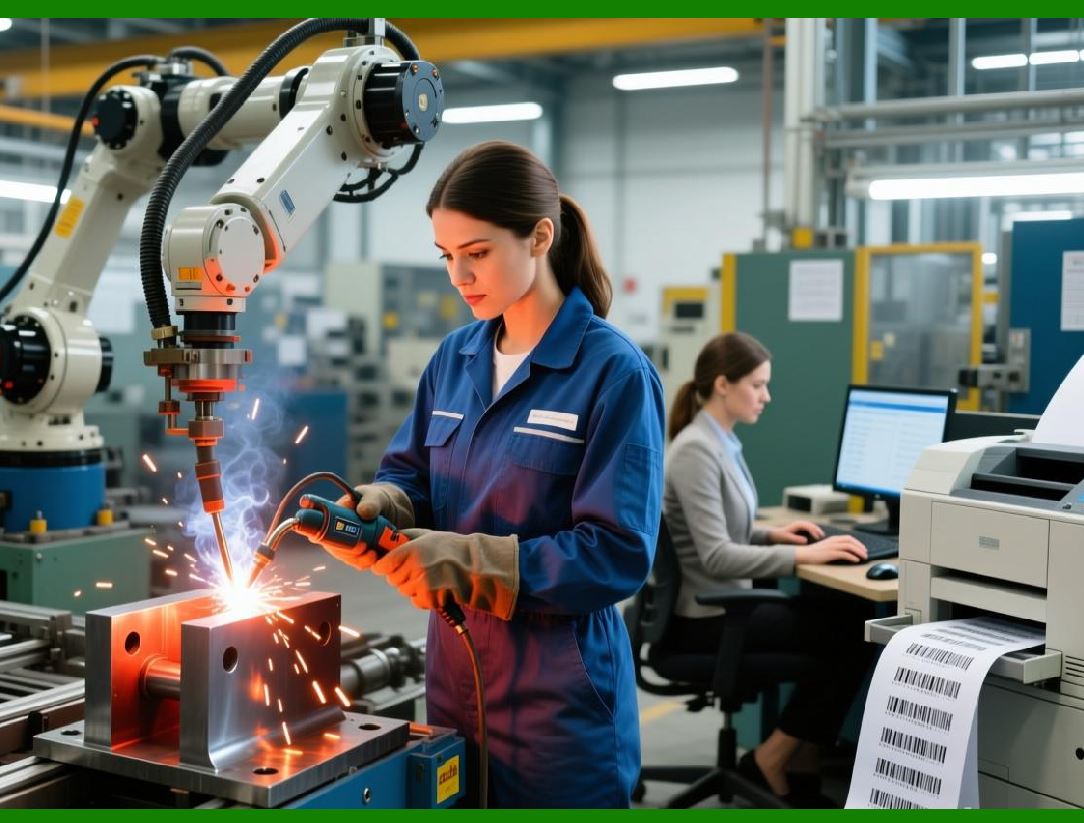
Manufacturing is a complex process with many steps and many handoffs. A single product might contain hundreds or thousands of components, each from a different supplier. The audit trail must track every component from the moment it arrives at the factory to the moment it leaves as part of a finished product. Barcodes and RFID make this possible. |
At the receiving dock, a barcode on each incoming shipment is scanned. This confirms that the shipment arrived and that it matches the purchase order. The components are then moved to the production line. An RFID tag on the container can track the components as they move through the factory. When a component is installed in a product, its barcode is scanned again. This links the component to the finished product. If a defect is found later, the manufacturer can trace it back to the specific component and the specific supplier. |
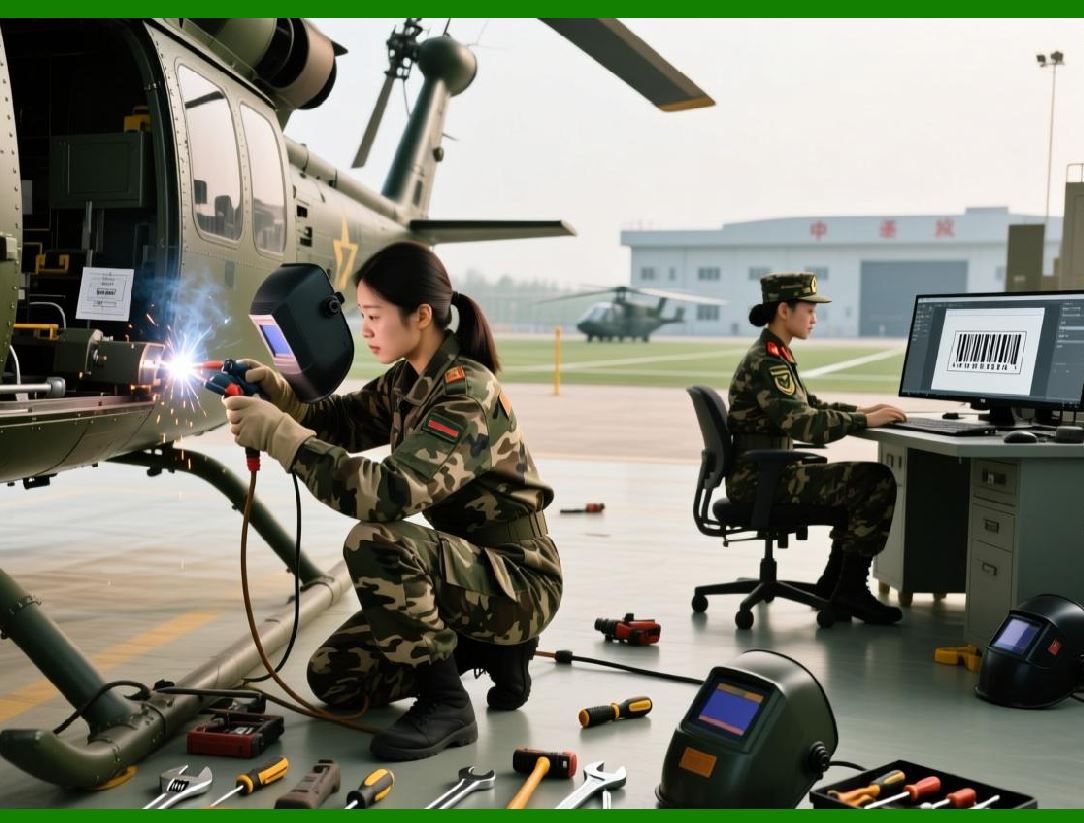
This is called component-level traceability. It is essential in industries where safety is critical, such as aerospace and automotive. In aerospace, every part of an aircraft must be traceable. If a part fails, the manufacturer must be able to identify every aircraft that uses that part. Barcodes and RFID make this possible. A barcode on a turbine blade can be scanned at every step of its production. An RFID tag on a landing gear assembly can record its entire history. The audit trail becomes a legal document that proves the aircraft was built correctly. |
In automotive manufacturing, the audit trail is used to manage recalls. If a defect is found in a specific batch of brakes, the manufacturer needs to know which vehicles have those brakes. A barcode on the brake caliper can be linked to the vehicle identification number of the car it was installed in. If a recall is issued, the manufacturer can contact the owners of the affected vehicles. Without a strong audit trail, the recall would have to cover a much larger number of vehicles, which would be costly and inconvenient for customers. |
The production audit trail is also used for quality control. If a product fails inspection, the manufacturer can check the audit trail to see what went wrong. Was the component defectiveWas the machine out of calibrationWas the worker trainedThe audit trail provides the data needed to answer these questions. This is called root cause analysis. It helps the manufacturer improve its processes and reduce defects. |
RFID is particularly useful in manufacturing because it can be read automatically. A reader on a conveyor belt can record every item that passes. A reader on a forklift can record where items are placed. A reader at the shipping dock can record what is leaving the factory. This creates a continuous record of production without requiring workers to scan each item by hand. The audit trail is more complete and more accurate as a result. |
In the electronics industry, audit trails are used to track components that are subject to export controls. Some electronic components can be used in weapons systems. Governments regulate the export of these components. A manufacturer must be able to prove that it did not sell controlled components to unauthorized buyers. An audit trail can show exactly where each component went. If a component is diverted to an unauthorized buyer, the manufacturer can detect it and report it. |
|
Part Six: Logistics and the Shipment Audit Trail |
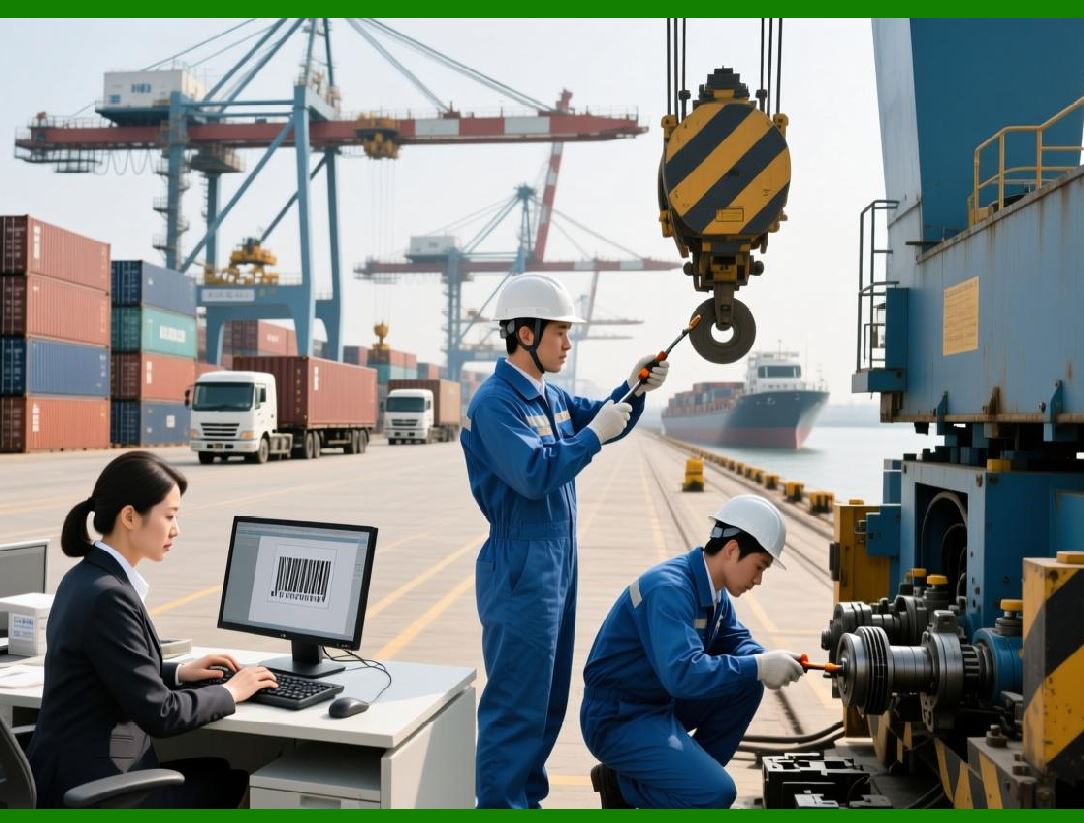
Logistics is the business of moving goods. The audit trail is the heart of logistics. Every shipment must be tracked from origin to destination. Barcodes and RFID are the technologies that make this tracking possible. |
At the origin, a barcode on the shipment is scanned. This creates a record: this shipment was picked up at this time from this location. The shipment then moves through a network of hubs and vehicles. At each hub, the barcode is scanned again. This creates a chain of records that shows the shipment's progress. If a customer asks where their shipment is, the logistics company can check the audit trail and give a precise answer. |
RFID takes this a step further. An RFID tag on a pallet can be read automatically as the pallet moves through a hub. This means the shipment can be tracked without anyone scanning it. The reader can be at the entrance to a dock, on a conveyor belt, or on a forklift. The tag is read, and the record is created. This is faster and more accurate than manual scanning. It also allows for real-time tracking. The logistics company can see exactly where the shipment is at any moment. |
The shipment audit trail is not just about location. It is also about condition. A sensor tag can record the temperature, humidity, and shock that a shipment experiences. If a shipment of vaccines is exposed to high temperatures, the tag records that fact. The receiver can then check the tag to see if the vaccines are still safe to use. If a shipment of electronics is dropped, the tag can record the shock. The receiver can then inspect the shipment for damage. The audit trail provides the evidence needed to resolve disputes. |
In international shipping, the audit trail is used for customs clearance. A barcode or RFID tag on a container can be linked to a digital manifest. When the container arrives at a port, the customs authority can read the tag and check the manifest. This speeds up clearance and reduces the risk of errors. It also helps authorities detect smuggling. If a container's tag does not match its manifest, the container can be flagged for inspection. |
The logistics industry also uses audit trails to improve efficiency. By analyzing the records, companies can identify bottlenecks and delays. They can see which routes are fastest, which hubs are busiest, and which carriers are most reliable. This data is used to optimize the network. The audit trail is not just a record of the past; it is a tool for improving the future. |
|
Part Seven: Healthcare and the Patient Audit Trail |
Healthcare is an industry where audit trails can literally save lives. Every patient interaction must be recorded. Every medication, every procedure, every test result must be documented. Barcodes and RFID are used to create these records automatically and accurately. |
When a patient is admitted to a hospital, they are given a barcode wristband. This wristband identifies the patient. When a nurse administers a medication, they scan the wristband and the medication's barcode. The system checks that the medication is correct for that patient. It also checks that the dose is correct and that the time is correct. If there is a mismatch, an alert sounds. The scan creates a record: this patient received this medication at this time by this nurse. This record is part of the patient's medical audit trail. |
RFID is used to track medical equipment. Hospitals have thousands of pieces of equipment, from wheelchairs to infusion pumps. These items are often misplaced or lost. An RFID tag on each item allows the hospital to track its location. A reader at the entrance to a ward can record when an item enters or leaves. A handheld reader can be used to inventory an entire floor in minutes. This saves time and money. It also ensures that critical equipment is available when it is needed. |
In surgery, audit trails are used to track surgical instruments. A missing instrument can be a serious problem. If an instrument is left inside a patient, it can cause infection or other complications. An RFID tag on each instrument allows the surgical team to verify that all instruments are accounted for before the patient is closed. The audit trail shows exactly which instruments were used and when they were returned. |
Blood banks use audit trails to track blood products. Every unit of blood must be traceable from the donor to the recipient. A barcode on the blood bag identifies the unit. When the blood is tested, the barcode is scanned. When the blood is transfused, the barcode is scanned again. The audit trail shows the complete history of the blood product. If a problem is discovered, the blood bank can trace the blood back to the donor and forward to the recipient. |
Pharmacies use audit trails to track controlled substances. These are drugs that have a high potential for abuse, such as opioids. The law requires pharmacies to keep detailed records of every controlled substance they dispense. A barcode on each bottle can be scanned at every step. The audit trail shows exactly how much of the drug was received, how much was dispensed, and how much remains. If there is a discrepancy, the pharmacy can investigate. |
|
Part Eight: Aerospace and the Maintenance Audit Trail |
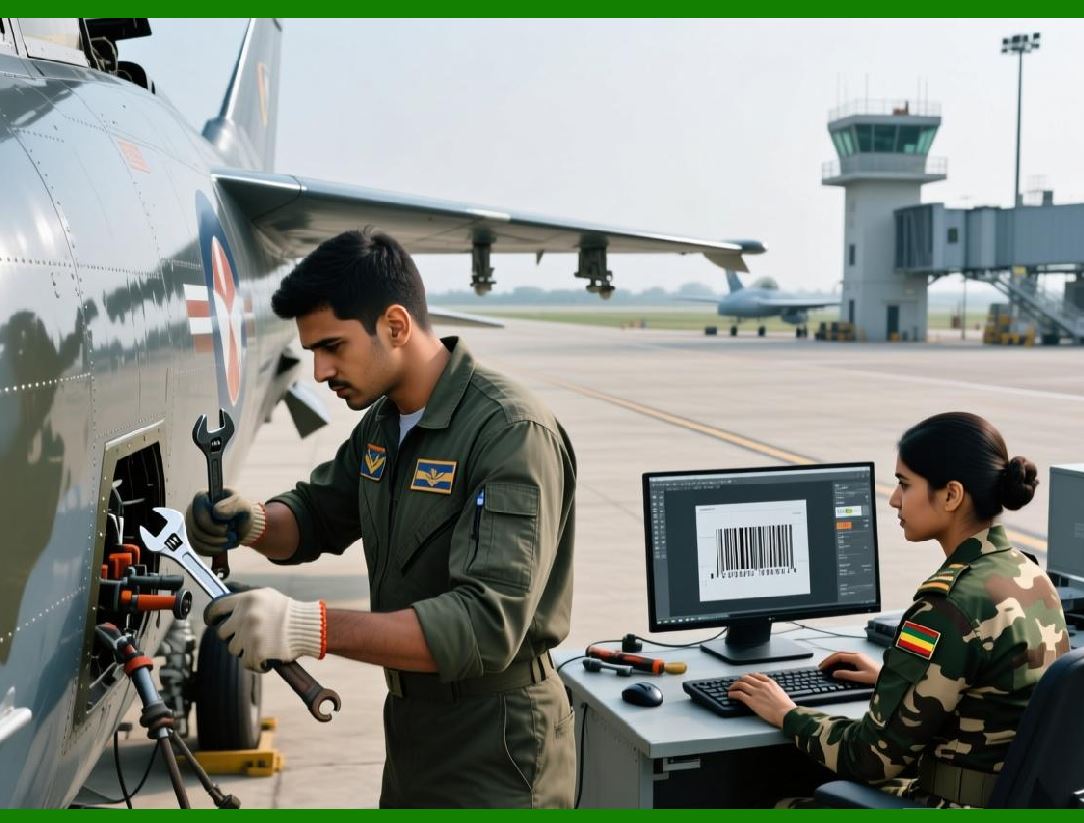
Aerospace is one of the most safety-critical industries in the world. An aircraft contains millions of parts. Every part must be traceable. Every maintenance action must be recorded. Barcodes and RFID are essential tools for building these audit trails. |
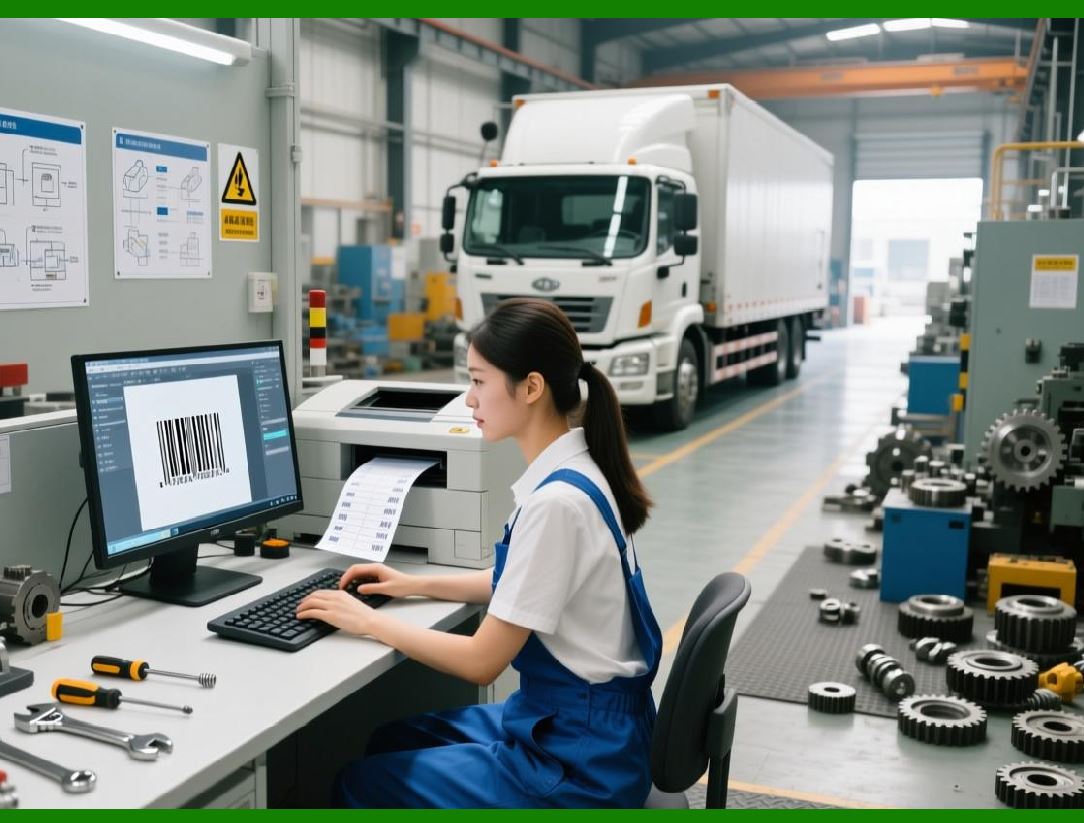
When a part is manufactured, it is given a unique identifier. This identifier is stored in a barcode or RFID tag. The part is then tracked through every step of its life. When it is installed in an aircraft, the identifier is linked to the aircraft's tail number. When the part is inspected, the inspection is recorded. When the part is removed, the removal is recorded. The audit trail shows the complete history of the part. |
This is called lifecycle traceability. It is essential for safety. If a part fails, the manufacturer must be able to identify every aircraft that uses that part. If a part is subject to a recall, the airline must be able to find it quickly. Barcodes and RFID make this possible. |
RFID is particularly useful for tracking parts that are difficult to access. A reader can be used to inventory parts without opening panels or removing covers. This saves time and reduces the risk of damage. It also allows airlines to keep better track of their inventory. A part that is not where it is supposed to be can be found quickly. |
Maintenance audit trails are also used to predict failures. By analyzing the records, airlines can see which parts fail most often and under what conditions. This data is used to schedule maintenance more effectively. It is also used to improve the design of future aircraft. |
|
Part Nine: Automotive and the Vehicle Audit Trail |
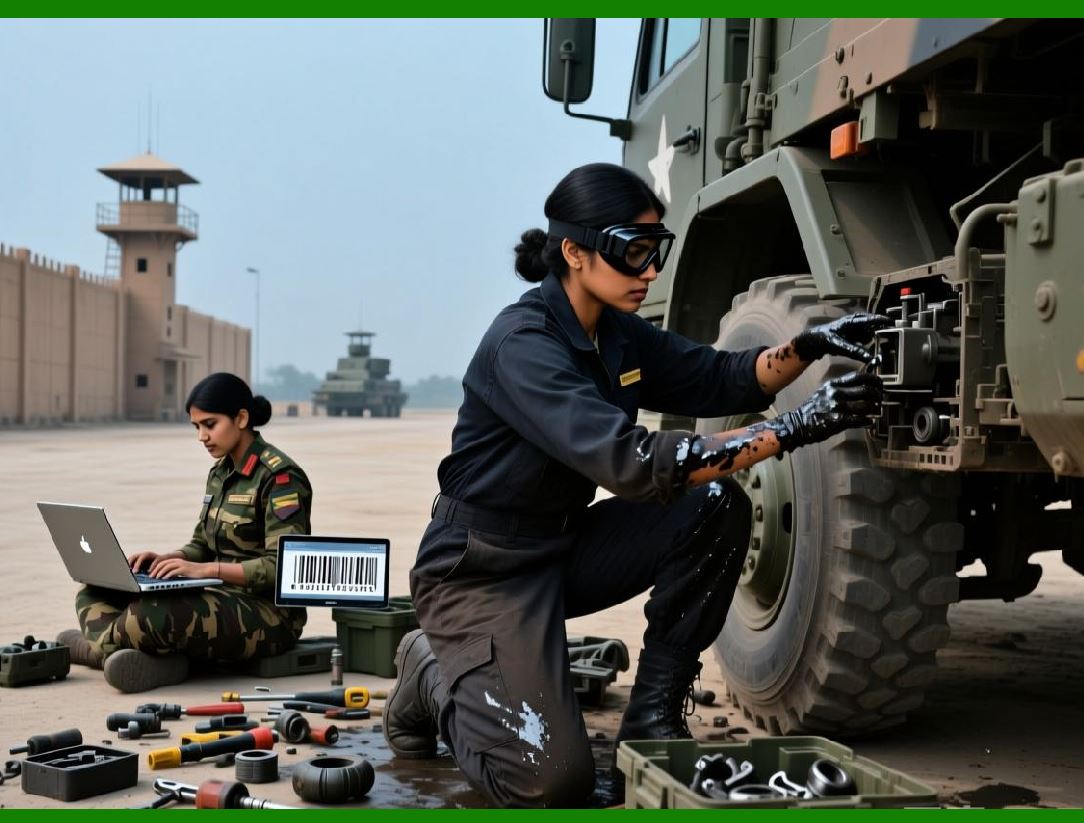
The automotive industry uses audit trails for many of the same reasons as aerospace. Cars are complex machines with thousands of parts. Every part must be traceable. Every repair must be recorded. Barcodes and RFID are used to build these records. |
When a car is manufactured, a barcode on the vehicle identification number is scanned at every station on the assembly line. This creates a record of what was installed at each station. If a defect is found later, the manufacturer can trace it back to the specific station and the specific worker. This is called process traceability. |
RFID is used to track parts as they move through the assembly line. A tag on a component can be read automatically as the component moves past a reader. This creates a continuous record of the component's location. If a component is missing or misplaced, the system can detect it immediately. |
After the car is sold, the audit trail continues. When the car is brought in for service, the mechanic scans the barcode on the vehicle identification number. This pulls up the car's service history. The mechanic can see what repairs have been done and what parts have been replaced. When a new part is installed, its barcode is scanned. This links the part to the car. The audit trail now shows that this car has this part. |
This is important for recalls. If a part is defective, the manufacturer can identify every car that has that part. The manufacturer can then contact the owners and arrange for the part to be replaced. Without a strong audit trail, the recall would have to cover a much larger number of cars. |

|
Part Ten: Public Infrastructure and the Asset Audit Trail |
Public infrastructure includes roads, bridges, water systems, and power grids. These assets are expensive to build and maintain. Audit trails help governments and utilities manage them more effectively. |
A barcode or RFID tag on a bridge component can record its inspection history. When the bridge is inspected, the inspector scans the tag and records the findings. The audit trail shows when the bridge was last inspected and what was found. If a problem is discovered, the inspector can check the history to see if the problem is new or if it has been developing over time. |
RFID is used to track utility assets such as transformers and meters. A tag on a transformer can record its location and its maintenance history. If a transformer fails, the utility can quickly find it and replace it. The audit trail also helps the utility plan for future maintenance. |
In the water industry, audit trails are used to track water quality. A sensor tag can record the temperature, pH, and chlorine levels of water as it moves through the system. If a problem is detected, the utility can trace it back to its source. The audit trail provides the evidence needed to protect public health. |

|
Part Eleven: The Technology Behind the Trail |
To understand how these audit trails work, it helps to know a little about the technology. A barcode is a pattern of lines or squares that encodes data. A scanner shines a light on the barcode and reads the pattern. The scanner then converts the pattern into digital data. The data is sent to a computer, which stores it in a database. |
An RFID tag is a small device that contains a chip and an antenna. The chip stores a unique identifier. When the tag enters the field of a reader, the reader sends out a radio signal. The tag uses the energy from the signal to power its chip and send back its identifier. The reader receives the identifier and sends it to a computer. |
Passive RFID tags do not have a battery. They get their power from the reader. This makes them cheap and long-lasting. Active RFID tags have a battery. They can transmit over longer distances and can include sensors. Sensor tags can record temperature, humidity, shock, and other conditions. |
The choice between barcodes and RFID depends on the application. Barcodes are cheaper and more widely used. They are ideal for situations where a single scan at a checkpoint is sufficient. RFID is more expensive but provides more detail. It is ideal for situations where continuous tracking is needed. |
In many cases, the two technologies are used together. A barcode provides the authoritative checkpoint. An RFID tag provides the continuous trace. The combination creates an audit trail that is both reliable and detailed. |
|
Part Twelve: The Challenges of Building an Audit Trail |
Building an audit trail is not always easy. There are technical challenges, operational challenges, and legal challenges. |
One technical challenge is data integrity. The audit trail must be accurate and complete. If a scan is missed, the trail has a gap. If a tag is read incorrectly, the trail has an error. To prevent this, systems use redundancy and validation. A barcode might be scanned twice. An RFID reader might be placed at multiple locations. The data is checked against other records to ensure it is correct. |
Another technical challenge is data volume. An RFID system can generate millions of records per day. Storing and analyzing this data requires significant computing power. Companies use cloud computing and big data tools to manage the volume. |
An operational challenge is training. Workers must know how to use the scanners and readers. They must understand why the audit trail is important. If they do not, they may skip scans or make mistakes. This can undermine the entire system. |
A legal challenge is privacy. An audit trail can reveal a lot about a person's behavior. In healthcare, the audit trail shows what medications a patient received. In retail, it shows what a customer bought. In the workplace, it shows what a worker did. Laws such as the Health Insurance Portability and Accountability Act in the United States and the General Data Protection Regulation in Europe set rules for how this data can be collected, stored, and used. Companies must comply with these laws. |

|
Part Thirteen: The Future of the Audit Trail |
The future of the audit trail is likely to be shaped by three trends: the Internet of Things, artificial intelligence, and blockchain. |
The Internet of Things means that more and more objects will be connected to the internet. RFID tags are one way to connect objects. As more objects are connected, audit trails will become more detailed and more real-time. A package will not just record where it is; it will record its temperature, its humidity, and its shock. It will communicate with other objects and with the people who manage it. |
Artificial intelligence will be used to analyze audit trails. AI can find patterns that humans cannot see. It can predict when a part will fail. It can detect fraud. It can optimize routes. The audit trail will become not just a record of the past, but a tool for predicting the future. |
Blockchain is a technology for creating tamper-proof records. A blockchain is a distributed ledger that is maintained by many computers. Once a record is added to the blockchain, it cannot be changed. This makes it ideal for audit trails. A blockchain-based audit trail would be trusted by all parties, even if they do not trust each other. This could be particularly useful in international trade, where many parties are involved. |
These trends will make audit trails more powerful and more pervasive. They will also raise new challenges. Privacy and security will become even more important. The balance between transparency and confidentiality will need to be carefully managed. |

|
Detailed Summary |
This chapter has explored the audit trail as a central concept in the physical world. An audit trail is the recorded history of what happened to an object, a shipment, a person, or a transaction. In the past, audit trails were built from paper and manual logs. Today, they are built from barcodes and RFID. Barcodes confirm delivery at the dock door; RFID confirms each box's location inside the warehouse. These are complementary granularities. Barcodes provide the authoritative checkpoint. RFID provides the continuous trace. Together they create a record that is more complete, more accurate, and more useful than either alone. |
We have seen how this works in many industries. In retail, barcodes at the point of sale confirm the transaction, while RFID tags track items from the receiving dock to the sales floor to the exit. In pharmaceuticals, barcodes on vials confirm the dose, while RFID tags on cases confirm the storage conditions. In food and agriculture, barcodes on packages confirm the lot, while RFID tags on pallets confirm the journey from farm to fork. In manufacturing, barcodes on components confirm installation, while RFID tags on containers confirm the flow through the factory. In logistics, barcodes on shipments confirm the handoff, while RFID tags on pallets confirm the route. In healthcare, barcodes on wristbands confirm the patient, while RFID tags on equipment confirm the location. In aerospace and automotive, barcodes on parts confirm the installation, while RFID tags confirm the lifecycle. In public infrastructure, barcodes on assets confirm the inspection, while RFID tags confirm the condition. |
The technology behind these audit trails is relatively simple. A barcode is a pattern that a scanner can read. An RFID tag is a chip that a reader can read remotely. Passive tags are cheap and long-lasting. Active tags can transmit over longer distances and can include sensors. The choice between barcodes and RFID depends on the application. In many cases, the two are used together. |
Building an audit trail is not without challenges. Data integrity, data volume, training, and privacy are all important considerations. Companies must ensure that their systems are accurate and complete. They must comply with laws that protect personal data. They must train their workers to use the technology correctly. |
The future of the audit trail will be shaped by the Internet of Things, artificial intelligence, and blockchain. These trends will make audit trails more detailed, more real-time, and more trustworthy. They will also raise new challenges. Privacy and security will become even more important. The balance between transparency and confidentiality will need to be carefully managed. |

|
In conclusion, the audit trail is a fundamental tool for managing the physical world. Barcodes and RFID are the technologies that make it practical. By combining the checkpoint authority of barcodes with the continuous trace of RFID, organizations can create a record that spans the entire lifecycle of an object. This record improves safety, reduces loss, increases efficiency, and builds trust. As supply chains become more complex and more regulated, the audit trail will only grow more important. The silent network of barcodes and RFID is the foundation of that trail. It is a network that maps the physical world, one scan and one tag at a time. |
 cs@easiersoft.com