Chapter 61: Retail - Walmart's Model |
Summary |
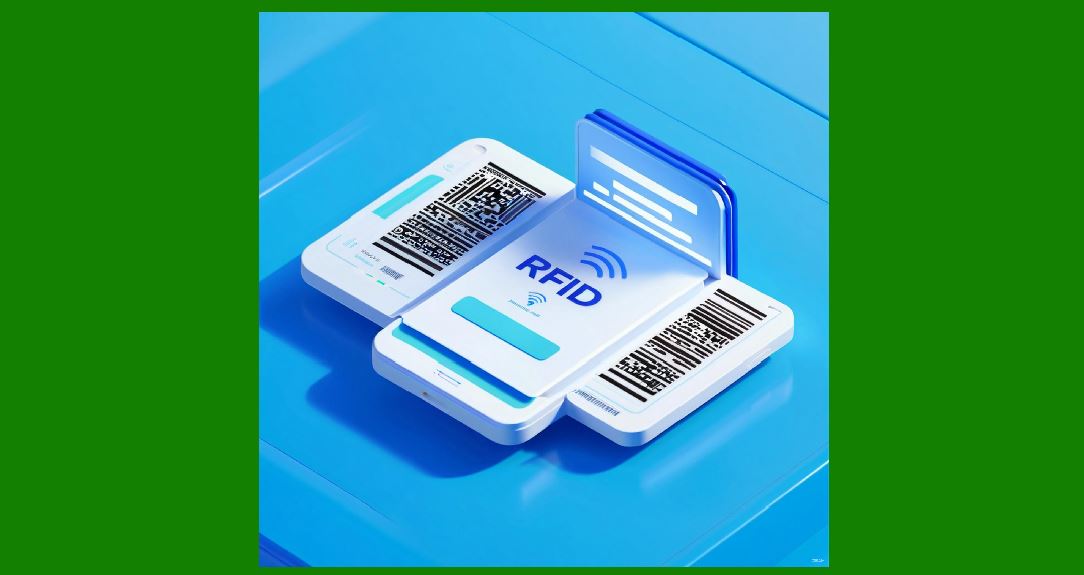
Walmart operates two distinct identification systems side by side: RFID for high-value electronics and general merchandise, and barcodes for grocery checkout speed. These systems are not competitors but complements. RFID tags track individual items through the supply chain and trigger exit alarms when unpaid merchandise crosses store boundaries. Barcodes, meanwhile, remain the workhorse of high-volume checkout, where speed and universality matter more than item-level precision. Both streams of data flow into the same inventory databases, giving Walmart a composite picture of what is on shelves, what has been sold, and what has disappeared. This chapter examines how these two technologies coexist in the world's largest retailer, and what their partnership reveals about the layered architecture of modern commerce. |
|
The Two-Speed Retail Floor |
Walk into any Walmart Supercenter and you are walking through a living demonstration of a fundamental truth about the physical world: not everything needs to be tracked the same way. |
A flat-screen television sits on a shelf in the electronics department. Embedded in its packaging---or affixed as a small label---is a radio frequency identification tag. This tag carries a unique identifier. It can be read from several feet away, without line of sight, by handheld readers or fixed portals. When the television is purchased, the tag is deactivated at the point of sale. If someone attempts to walk out with it without paying, antennas at the exit detect the active tag and trigger an alarm. The tag has done its job: it identified one specific item, protected it from theft, and then quietly retired. |
Twenty feet away, in the grocery aisles, a package of Great Value shredded cheese carries no RFID tag. It has a barcode---or more precisely, an invisible digital watermark that functions like a barcode readable from any angle. When a customer passes it over the self-checkout scanner, the system registers the product instantly. No fumbling to find the barcode. No aligning the package at the correct angle. The scanner reads the item, adds it to the transaction, and the customer moves on. The barcode has done its job: it identified the product type, enabled a fast transaction, and kept the checkout line moving. |
These two systems operate on different principles, serve different purposes, and cost different amounts to implement. Yet they feed into the same inventory database. That shared destination is the key to understanding Walmart's model. RFID and barcodes are not competing technologies fighting for supremacy. They are layers in a single system designed to map the physical world with appropriate precision at appropriate cost. |

|
Why Walmart Uses RFID for High-Value Items |
The Economics of Item-Level Tracking |
RFID tags cost money. A passive ultra-high frequency tag---the kind Walmart uses---typically costs somewhere between a few cents and a quarter, depending on volume, chip complexity, and antenna design. A barcode costs effectively nothing; it is ink printed on packaging. This cost differential explains almost everything about when Walmart chooses one technology over the other. |
For a gallon of milk selling for three dollars, adding a fifteen-cent RFID tag would consume five percent of the revenue from that item. That is not economically viable for a low-margin grocery product. For a two-hundred-dollar tablet computer, a fifteen-cent tag represents less than one-tenth of one percent of the item's value. That is entirely acceptable, especially when the tag enables theft detection, inventory accuracy, and supply chain visibility that the barcode cannot provide. |
Walmart's RFID expansion has followed this logic precisely. The company began its modern RFID push with apparel, where item-level tracking improved size and color availability and reduced out-of-stocks. It then moved to electronics, toys, automotive supplies, and home goods---all categories where individual items are valuable enough to justify the tag cost and where theft or misplacement represents a significant loss. By 2025, Walmart's mandate extended to most of its general merchandise departments, leaving only the lowest-value, highest-volume grocery items outside the RFID perimeter. |

|
Theft Detection and the Exit Portal |
The most visible function of RFID in Walmart stores is theft detection. When a tagged item passes through the exit antennas without having been deactivated at a point-of-sale terminal, the system triggers an alert. This is not new in principle---retailers have used electronic article surveillance for decades. What RFID adds is specificity. |
Traditional electronic article surveillance systems use simple resonant tags that trigger an alarm when they pass through a detection gate. The alarm tells you that something is wrong. It does not tell you what. Staff must then approach the customer, ask to see the receipt, and manually verify the items in the bag. This is awkward for everyone involved and often results in false alarms that erode trust and waste time. |
RFID changes this dynamic. Each tag carries a unique identifier. When an alarm triggers, the system knows exactly which item has crossed the threshold. It can check whether that specific item was included in a recent transaction. If it was not, the alert is confirmed as a genuine discrepancy. If it was, the alarm is a false positive caused by a tag that failed to deactivate properly. |
This specificity transforms the response. Staff approaching the customer already know what item to look for. The interaction is shorter, more respectful, and more likely to end amicably. For stores dealing with high rates of theft in high-value categories, this precision is valuable enough to justify the cost of RFID tags on those items alone. |
|
Beyond Theft: Inventory Accuracy |
Theft prevention is the headline, but inventory accuracy may be the more valuable benefit. A barcode must be scanned by a human being. Someone must find the item on the shelf, pick it up, locate the barcode, and pass it over a scanner. This works for checkout, where the customer or cashier is already handling the item. It does not work for inventory counting, where a human would need to pick up every single item in the store to read its barcode. |
RFID readers can scan hundreds of tags per second from a distance. A single employee walking down an aisle with a handheld reader can inventory an entire shelf without touching a single product. What once took hours of manual counting now takes minutes. Walmart has reported that RFID-based inventory counts have improved accuracy to over ninety percent, compared to sixty percent with barcode-based manual counts. |
This accuracy has cascading benefits. When the system knows exactly what is on the shelf, it can automatically trigger replenishment orders before an item runs out. It can identify misplaced items---a product that should be in aisle seven but is sitting in aisle twelve---and direct staff to return it. It can support buy-online-pickup-in-store services, where a customer orders an item for curbside pickup and the store must locate that specific unit in the back room or on the sales floor. None of this works reliably if the inventory data is wrong. RFID makes the inventory data right. |
|
Why Barcodes Still Rule the Grocery Aisle |
The Speed Imperative |
Grocery checkout is a different problem entirely. The average Walmart Supercenter stocks tens of thousands of grocery items. A single transaction might include fifty or more distinct products. The customer wants to pay and leave. The retailer wants throughput---more customers per hour, shorter lines, less labor cost per transaction. |
Barcodes excel at this because they are fast, universal, and essentially free. Every grocery product already carries a Universal Product Code or European Article Number barcode. Every point-of-sale system in the world is designed to read them. The infrastructure exists. The cost is sunk. |
RFID cannot compete on this ground. Even at ten cents per tag, applying RFID to every grocery item would cost Walmart millions of dollars per day across its thousands of stores. And for whatThe checkout would still require the customer or cashier to pass each item near a reader. The speed advantage of RFID---reading multiple items simultaneously---could theoretically enable a 'scan-free' checkout where a customer simply pushes a cart through a portal and the system reads everything at once. But that technology, while demonstrated in concept, is not yet reliable enough for a store where a single missed item means a lost sale or a security incident. |
Barcodes win on the grocery floor because the problem is not identification precision. The problem is transaction speed at the lowest possible cost. Barcodes solve that problem adequately. RFID solves a different problem---item-level visibility---that grocery does not urgently need. |

|
The Invisible Barcode Innovation |
Walmart has not left the grocery checkout experience untouched. In 2019, the company partnered with Digimarc to introduce invisible barcodes on its Great Value store-brand products. These are not barcodes in the traditional sense---they are digital watermarks printed across the entire surface of the packaging. The pattern is invisible to the human eye but readable by the imaging scanners used at self-checkout stations. |
The effect is subtle but significant. A customer scanning a package of Great Value cheese no longer needs to find the barcode, orient the package correctly, and hold it steady. They can pass the item over the scanner from any angle, at any orientation, and the system reads it. The scanning process becomes faster and less frustrating. More importantly, it becomes harder to fake. |
Self-checkout theft is a persistent problem in grocery retail. A customer might pretend to scan an item, passing it over the scanner without actually registering it. With a traditional barcode, this is easy---if the barcode never faces the scanner, nothing gets scanned. With an invisible barcode covering the entire package, there is no orientation where the item cannot be read. The scanner sees it regardless of how it is presented. |
Walmart's investment in this technology, reported at around three million dollars annually, is justified by both speed and loss prevention. It is a barcode technology, but it borrows a page from RFID's playbook: make identification automatic rather than dependent on deliberate human action. |
|
The Limits of Barcode Data |
Barcodes have a fundamental limitation that RFID overcomes: they identify product types, not individual items. A barcode on a can of soup tells the system 'this is a can of Campbell's Tomato Soup.' It does not tell the system which specific can this is, where it came from, or when it was produced. |
For grocery checkout, this is sufficient. The customer is buying one can of soup. The system adds one can of soup to the transaction. The inventory database decrements the count of that product by one. Everyone is satisfied. |
For other purposes, it is not sufficient. If a customer buys ten identical cans of soup and the inventory system shows only nine cans sold, the discrepancy is invisible. The system cannot tell which can was not scanned. It cannot correlate a specific can with a specific transaction. It cannot track that can through the supply chain from manufacturer to store shelf. |
RFID can do all of these things. That is why Walmart uses it for electronics, where knowing that a specific serial-numbered television was sold---or not sold---matters. For soup, the product-type identification of a barcode is enough. |
The Shared Database: Where Both Streams Converge |

|
One Inventory, Two Inputs |
The critical architectural fact about Walmart's system is that RFID data and barcode data do not live in separate worlds. They feed into the same inventory management platform. The database does not care whether a product was identified by a radio signal or an optical scan. It cares about the product identifier, the quantity, the location, and the timestamp. |
When a cashier scans a barcode at checkout, the point-of-sale system sends a transaction record to the central inventory system. That record says: this product, this quantity, this store, this time. The inventory count for that product decreases accordingly. |
When an RFID reader scans a shelf during a cycle count, it sends a different kind of record to the same system: these specific tag identifiers were detected in this location at this time. The system translates those tag identifiers into product identifiers and updates the inventory count. If the count from the RFID scan differs from the count implied by the transaction history, the system flags a discrepancy. |
This unified approach is what makes Walmart's model powerful. The company does not need to choose between barcode and RFID as a single 'best' technology. It can deploy each where it makes the most sense, and the data from both streams enriches the same operational picture. |

|
The Discrepancy Report |
One of the more sophisticated uses of this shared data is the discrepancy report. The inventory system can compare what was sold---as recorded by point-of-sale transactions---with what was detected on the sales floor---as recorded by RFID scans. If a product was sold but is still detected on the shelf, something is wrong. Perhaps the item was not actually removed from the shelf, or perhaps the sale was recorded incorrectly. If a product is not sold and not on the shelf, it has disappeared. It may have been stolen, misplaced, or lost in the supply chain. |
These discrepancies, when aggregated across thousands of stores and millions of items, become a map of operational failure. They show where theft is concentrated. They reveal which supply chain routes are losing product. They identify which store processes are failing to keep inventory records accurate. For a company operating on Walmart's scale, this visibility is worth far more than the cost of the tags that enable it. |
|
The Barcode as Fallback |
Even in a world increasingly dominated by RFID, barcodes serve an essential role as a universal fallback. Every product Walmart sells has a barcode, even if it also has an RFID tag. When RFID readers fail, when tags are damaged, when a supplier ships product without the required tags, the barcode is still there. The checkout system can still process the transaction. The inventory count can still be updated manually. |
This redundancy is not accidental. It reflects a deliberate design philosophy: use the more capable technology where it adds value, but never remove the baseline technology that everything depends on. RFID enhances the system. It does not replace it. |
|
RFID in the Grocery Aisle: The Expanding Frontier |
The line between 'RFID categories' and 'barcode categories' is not fixed. It moves as RFID costs fall and as the technology improves. Walmart has already pushed RFID into some grocery-adjacent spaces, and the results suggest the frontier will continue to advance. |

|
Fresh Food and the Cold Chain |
In 2025, Walmart announced an expansion of RFID into fresh food categories including bakery, meat, and deli. This was technically challenging. Radio waves behave differently when they encounter water and dense materials---exactly what you find in a package of ground beef or a rotisserie chicken. Early RFID tags struggled to maintain reliable reads in these conditions. |
Avery Dennison, Walmart's partner on the project, developed new tag designs specifically for these environments. The breakthrough was not a single innovation but a combination of improvements in antenna design, adhesive construction, and material science. The resulting tags can survive the cold, damp environment of a meat cooler and still be read reliably by handheld scanners. |
The business case for RFID in fresh food is different from electronics. Theft is less of a concern---few people shoplift steaks by the dozen. The value lies in freshness management. Each RFID tag can carry a digital use-by date. When an associate scans a display of ground beef, the system identifies which packages are approaching their expiration date and should be marked down or removed. This reduces food waste, which is both an environmental goal and a financial one. |
Walmart has committed to cutting its global operational food loss and waste intensity in half by 2030. RFID in fresh categories is one of the tools for achieving that goal. It allows the company to manage inventory at a granularity that barcodes cannot support---tracking not just 'how many packages of ground beef do we have' but 'how many packages of ground beef do we have that are still good for another three days.' |

|
Bakery and Deli: The Technical Hurdles |
Bakery and deli presented their own challenges. Bread and pastries are porous, low-density materials that do not reflect radio waves strongly. Deli meats and cheeses combine the water problem of meat with the irregular shapes and packaging of prepared foods. The Avery Dennison team had to design tags that could be applied to clamshell containers, paper bags, and plastic wrap without interfering with the product or each other. |
The solution involved a combination of tag placement optimization and reader power adjustments. Fixed readers at the deli counter can scan multiple items simultaneously. Handheld readers used for inventory counts can be tuned to avoid reading through shelves and picking up tags from adjacent aisles. These are engineering details, but they determine whether RFID works in practice or only in theory. |
The Broader Retail Ecosystem: Lessons from Walmart's Model |

|
What Other Retailers Are Doing |
Walmart is not alone in pursuing this hybrid approach. Kroger, the largest grocery chain in the United States, has deployed RFID on freshly baked bread and pastries across thousands of stores. The logic is similar: track item-level freshness, reduce waste, and improve inventory accuracy in categories where barcodes provide insufficient visibility. |
Chipotle, the fast-casual restaurant chain, completed a system-wide RFID rollout in 2024, applying tags to food items in its supply chain. The goal is traceability---knowing the origin and movement of ingredients, which matters both for food safety and for operational efficiency. |
Other retailers have taken a more cautious approach. Many department stores use RFID for apparel but rely on barcodes for everything else. Some grocery chains have experimented with RFID in limited categories but have not expanded it broadly. The technology works, but the business case varies by retailer size, product mix, and operational priorities. |

|
The Supplier Side |
Walmart's RFID mandates have significant implications for its suppliers. When Walmart requires RFID tags on a product category, every supplier of that category must comply. They must source tags, apply them at the correct point in their packaging process, encode them with the correct identifiers, and ensure they survive the journey to Walmart's distribution centers. |
For large suppliers, this is manageable. They have engineering teams and packaging lines that can be adapted. For small suppliers, it can be a burden. The cost of tags, the complexity of encoding, and the risk of non-compliance with Walmart's technical specifications can be daunting. |
Walmart has attempted to mitigate this by providing clear specifications and working with tag manufacturers to ensure a supply of compliant products. The company has also phased in mandates over time, giving suppliers months or years to prepare. But the fundamental power dynamic remains: when Walmart says jump, suppliers ask how high. |
|
The Standardization Imperative |
For RFID to work across a supply chain, everyone must use the same standards. A tag encoded by a manufacturer in China must be readable by a reader at a distribution center in Arkansas. The identifier must be interpretable by Walmart's inventory system. Without standards, the system fragments. |
The relevant standards come from two organizations: GS1, which manages the Global Trade Item Number system used in barcodes, and ISO, which develops technical standards for RFID air interfaces and data structures. Walmart's RFID specifications are built on these standards, particularly the SGTIN-96 encoding format, which allows each individual item to be uniquely identified within the GS1 framework. |
This standardization ensures that RFID is not a Walmart-specific technology. It is a global infrastructure that any retailer, manufacturer, or logistics provider can use. A tag applied to a product in a factory in Vietnam can be read by a Walmart distribution center in Texas and then by a store in Ohio. The data is portable, interoperable, and universally meaningful. |
|
The Customer Experience: What Shoppers See and Do Not See |
The Invisible Infrastructure |
Most Walmart customers are unaware that they are shopping in a store where two identification systems operate simultaneously. They do not see the RFID tags on the electronics packaging. They do not know that their Great Value cheese has an invisible barcode. They simply experience the store: products are on the shelves, checkout works, and the exit door does not alarm unless something is wrong. |
This invisibility is a design goal. The best identification technology is the one you never notice. RFID and barcodes succeed when they fade into the background, doing their work without demanding attention or effort from the people they serve. |
|
Friction at the Margins |
There are moments when the systems become visible. The exit alarm that triggers when a tag fails to deactivate. The self-checkout scanner that refuses to read a damaged barcode. The associate who must manually enter a product code because the label is missing. These are the friction points where the technology fails, and they are instructive because they reveal how much we depend on the systems working. |
Walmart and other retailers invest heavily in reducing this friction. Better deactivation technology. More robust tags. More forgiving scanners. Every improvement in reliability translates into a smoother customer experience and lower operational cost. |
|
Detailed Summary |
Walmart's retail model demonstrates a fundamental principle of modern commerce: no single identification technology is optimal for every product, every transaction, and every operational need. The company operates a layered system in which RFID and barcodes serve complementary roles, each deployed where its particular strengths justify its costs. |
RFID excels at item-level identification. Each tag carries a unique identifier, enabling the system to track individual units rather than product types. This capability supports three critical functions: theft detection, inventory accuracy, and supply chain visibility. When a tagged item crosses an exit portal without being deactivated, the system knows exactly which item triggered the alarm and whether it was paid for. When an associate scans a shelf with a handheld reader, the system knows exactly how many units of each product are present. When a product moves through the supply chain, the system knows where it has been and where it is going. |
The cost of RFID tags, while falling, remains higher than barcodes. This economic reality confines RFID to categories where the value of item-level tracking exceeds the tag cost. Walmart's RFID expansion has followed this logic, moving from apparel to electronics, toys, automotive, home goods, and most recently into fresh food categories. Each expansion reflects a judgment that the benefits---reduced theft, improved inventory accuracy, better freshness management---justify the investment. |
Barcodes remain the dominant technology for high-volume, low-value grocery checkout. They are fast, universal, and effectively free. Every grocery product already carries one. Every point-of-sale system reads them. For the purpose of processing a transaction quickly and cheaply, barcodes are not merely adequate---they are optimal. Walmart's invisible barcode innovation, developed with Digimarc, improves the barcode experience by making scanning orientation-independent and harder to fake, but it does not change the fundamental role of the technology. |
|
The power of Walmart's model lies in the integration of these two systems into a single inventory database. Barcode scans at checkout and RFID scans on the sales floor both feed into the same platform. The system can compare transaction data with physical inventory data, identify discrepancies, and surface actionable insights. This unified view is more valuable than either technology could provide alone. |
For other retailers, Walmart's experience offers both a template and a caution. The template is clear: use barcodes for the checkout lane, use RFID where item-level visibility matters, and integrate the data streams. The caution is equally important: RFID mandates impose costs on suppliers, require technical expertise, and depend on global standards that must be carefully implemented. The transition is not trivial, even for a company with Walmart's resources. |
As RFID tag costs continue to fall and reader technology improves, the boundary between RFID categories and barcode categories will continue to shift. Fresh food, once considered too challenging for RFID, is now a frontier of expansion. Other categories will follow. But barcodes will not disappear. They will remain the universal baseline, the fallback that works when nothing else does, the technology that costs nothing and is understood everywhere. |
The physical world is messy. Products come in every shape, size, material, and value. Some are worth tracking individually; some are not. Some move through theft-prone environments; some do not. Walmart's model succeeds because it does not pretend that one technology can solve every problem. It uses the right tool for each job, and it connects the results into a single coherent picture. That is not just a retail strategy. It is a template for mapping the physical world in any industry where the stakes are high enough to justify the investment. |
 cs@easiersoft.com