Chapter 65: Apparel --- Zara & Uniqlo |
Summary |
In the apparel industry, two global giants have quietly rewritten the rules of how clothing moves from factory to fitting room to checkout. Zara and Uniqlo have both embraced radio-frequency identification technology at a scale unmatched by most retailers, yet they have done so in ways that reflect their fundamentally different business philosophies. At Zara, RFID powers a fast-fashion supply chain built for speed, enabling twice-weekly replenishment and self-checkout bins that read an entire basket of clothes at once. At Uniqlo, RFID drives a self-checkout experience that has achieved adoption rates of ninety percent in some markets, alongside inventory accuracy that keeps basic essentials in stock. Meanwhile, the humble barcode---the linear stripes that once represented the pinnacle of retail automation---has not disappeared. It remains embedded in the price tag, ready for the cashier's scanner, a quiet partner in a world increasingly dominated by radio waves. Together, these two technologies illustrate a profound truth about the silent network that maps our physical world: new tools rarely replace old ones completely. Instead, they layer, combine, and specialize, each finding its niche in the complex choreography of modern commerce. This chapter explores how Zara and Uniqlo deploy RFID and barcodes, what the fitting room of the future looks like, and why the coexistence of these technologies reveals more about retail's evolution than any single breakthrough ever could. |
|
Two Philosophies, One Technology |
To understand how Zara and Uniqlo use RFID, one must first understand what kind of companies they are. They are not merely retailers. They are, in the language of the industry, specialty retailers of private label apparel---a cumbersome phrase that obscures a simple idea: they design, manufacture, and sell their own clothing, controlling nearly every step from sketch to hanger. But they control those steps in opposite directions. |
Zara began as a manufacturing operation. Its founder, Amancio Ortega, started in a small workshop producing garments for other distributors. When a distributor canceled a large order and nearly bankrupted him, Ortega opened his own stores to sell the inventory he could no longer move through wholesale channels. From that crisis emerged a philosophy: production serves sales, and speed is the ultimate competitive weapon. Zara's supply chain is built for velocity. Designers in Spain sketch new styles based on trends observed in fashion capitals and on the sales floor. Factories in Galicia and nearby Portugal and Morocco produce small batches quickly. Stores receive new deliveries twice a week. Nothing sits. Nothing waits. The goal is to sell at full price and never be stuck with yesterday's look. |
Uniqlo traveled the opposite path. Its founder, Tadashi Yanai, inherited a men's clothing shop from his father and discovered that without control over manufacturing, he could never guarantee the quality or the price he wanted. So he built backward, establishing relationships with fabric mills and factories in China and Southeast Asia, and designing garments that could be produced in massive volumes at consistent quality. Uniqlo does not chase trends. It perfects essentials---a better t-shirt, a warmer jacket, a softer cashmere---and sells them year after year, constantly refining rather than reinventing. The philosophy is scale and consistency. Where Zara thrives on variety and speed, Uniqlo thrives on uniformity and reliability. |
These differences shape everything about how each company uses RFID. Zara needs to know where every garment is because it moves so fast and in such variety. Uniqlo needs to know where every garment is because its customers expect to find their size in a basic item that should always be in stock. Same technology, different logic, different outcomes. |
|
Zara: RFID as the Nervous System of Fast Fashion |
Zara's parent company, Inditex, began rolling out RFID across all its brands in 2014, embedding chips in the plastic security tags attached to garments. It was one of the earliest and largest deployments of item-level RFID in fashion retail, and it transformed the company's operations in ways both visible and invisible to shoppers. |
The Invisible Revolution: From Factory to Stockroom |
The RFID journey begins not in the store but at the point of manufacture. Every garment receives a tag---first as part of the security device, and more recently sewn directly into the fabric of the label itself. This tag carries a unique electronic product code, a string of numbers that distinguishes this particular black medium sweater from every other black medium sweater ever made. As the garment moves through the supply chain---from factory to distribution center to truck to store---it passes through portals equipped with RFID readers. These readers capture the tag's signal without any human intervention. Boxes of clothing can be scanned without being opened. Trucks can be verified without unloading. The inventory data updates itself, continuously and automatically. |
This matters enormously for a company like Zara, which introduces thousands of new designs each year and replenishes stores twice weekly. With barcode-based systems, receiving a shipment meant opening every box and scanning every item individually. It was labor-intensive, error-prone, and slow---a poor fit for a business built on speed. RFID changed the economics of receiving. A shipment that once took hours to process can now be verified in minutes. The data is more accurate. The staff has more time for customers. |
|
The Visible Revolution: Self-Checkout and the Fitting Room |
For shoppers, the most noticeable manifestation of Zara's RFID investment is the self-checkout station. Visit a Zara in New York's SoHo neighborhood or in any of the chain's thousands of stores worldwide, and you may encounter a long counter with large bins---not the individual scanners of a grocery store self-checkout, but open containers lined with RFID readers. You drop your items into the bin. The system reads every tag at once. The screen displays your total. You pay, remove the security tags, and walk out. |
The experience is startling in its simplicity. There is no beeping, no scanning, no lining up items one by one. The technology is doing the work, and it is doing it invisibly. A sales associate stands nearby not to operate the machine but to help customers with the security tags and answer questions. The checkout process, which once required a cashier to handle every garment individually, has become something closer to setting down a bag and picking it up again. |
This is where the barcode still lives, quietly. Even as Zara eliminates hard security tags in favor of sewn-in RFID chips, the price tag remains. It carries a barcode---the familiar black-and-white stripes---as a backup, a redundancy, a nod to the fact that not every system in every store in every country has made the leap to radio-frequency reading. If the RFID reader fails, or if a particular market still relies on older point-of-sale equipment, the barcode is there. The cashier can still scan it. The transaction can still complete. The old technology serves as a safety net for the new. |
|
The Fitting Room as a Data Source |
The fitting room is the most intimate space in a clothing store. It is where desire meets reality, where a garment either becomes yours or returns to the rack. Zara and other retailers have begun experimenting with ways to make that moment more useful---both for the shopper and for the company. |
Imagine a fitting room equipped with an RFID reader. As you enter with your chosen items, the system automatically registers which garments you have brought in. A screen embedded in the mirror---the interactive mirror---displays information about each item: available sizes, colors, materials, perhaps customer reviews or styling suggestions. If you want a different size, you can request it through the screen, and a sales associate receives the request on their device, fetching the item without you ever leaving the room. If you want to see how a different color would look, the mirror can show you a virtual preview. If you decide to buy, you can pay directly through the mirror, bypassing the checkout entirely. |
This vision is not entirely hypothetical. Mastercard developed a smart mirror using RFID technology embedded in hang tags, designed to recognize products as they enter the fitting room and create a virtual shopping basket. The system was reported to reduce time spent in the fitting room by forty percent and reduce overall time in the store. The mirror could change lighting, offer language options, and even function as a payment terminal. Retailers could receive fitting room requests from anywhere in the store, view occupancy at a glance, and gather product feedback. |
The data generated by such systems is potentially transformative. A patent filing describes a feedback module that could track how long a customer wears a garment, whether they try on other items with it, and whether they ultimately purchase it. If a shirt is tried on for ten seconds and then removed, that signals something very different from a shirt worn for five minutes while combinations are explored. The system could track the percentage of people who try on a particular item and do not buy. It could track average try-on duration. This information, aggregated across thousands of fitting rooms, would give designers and merchandisers an unprecedented view of what happens in the moment of decision---not just what sells, but what almost sells, and why. |
The technology remains expensive, and privacy concerns are real. Cameras and personalization require strict data protection measures. But the direction is clear. The fitting room, once a private and unobserved space, is becoming a sensor. The mirror, once a simple reflective surface, is becoming an interface. And the RFID tag, once merely an inventory tool, is becoming a bridge between the physical garment and the digital information that surrounds it. |
|
Uniqlo: RFID and the Discipline of Essentials |
If Zara's RFID strategy is about managing variety, Uniqlo's is about managing consistency. Uniqlo began introducing RFID tags around 2017 and had applied them to all domestic products by 2018. The company's goals were straightforward: speed up checkout, improve inventory accuracy, and connect online and offline shopping. |
The Self-Checkout That Customers Actually Like |
Self-checkout has a reputation problem. In grocery stores, it is often experienced as a burden---a way for companies to shift labor onto customers who then struggle with unexpected items, age verification, and produce codes. Forrester analysts and business publications have chronicled the backlash, with some retailers removing self-checkout stations entirely. |
|
Uniqlo's version is different. It is not a burden. It is a relief. |
The process is almost absurdly simple. You place your basket or bag of items on the RFID reading surface. The system reads every tag simultaneously---no scanning, no searching for barcodes, no weighing of produce. The screen displays your items and your total. You pay. You leave. Customers who have experienced it describe it as 'smooth' and 'fast,' and the data supports this: in some Uniqlo markets, seventy percent of customers use self-checkout, and in some, the figure reaches ninety percent. The company reports saving customers more than half their waiting time. |
The key difference from grocery self-checkout is that Uniqlo's system does not require the customer to do the work that a cashier would otherwise do. There is no individual scanning. There is no decision tree about whether an item needs to be weighed. The RFID reader does in seconds what a cashier would do in minutes. The technology has absorbed the friction rather than transferring it. |
|
Inventory Accuracy and the Basics Promise |
Uniqlo's brand promise is that you can walk into any store and find your size in a basic item---a heattech undershirt, a cashmere sweater, a pair of jeans. This promise depends on inventory accuracy. If the system says a medium is in stock but the shelf is empty, the promise is broken. If the backroom has a box of mediums that no one can find, the promise is broken. |
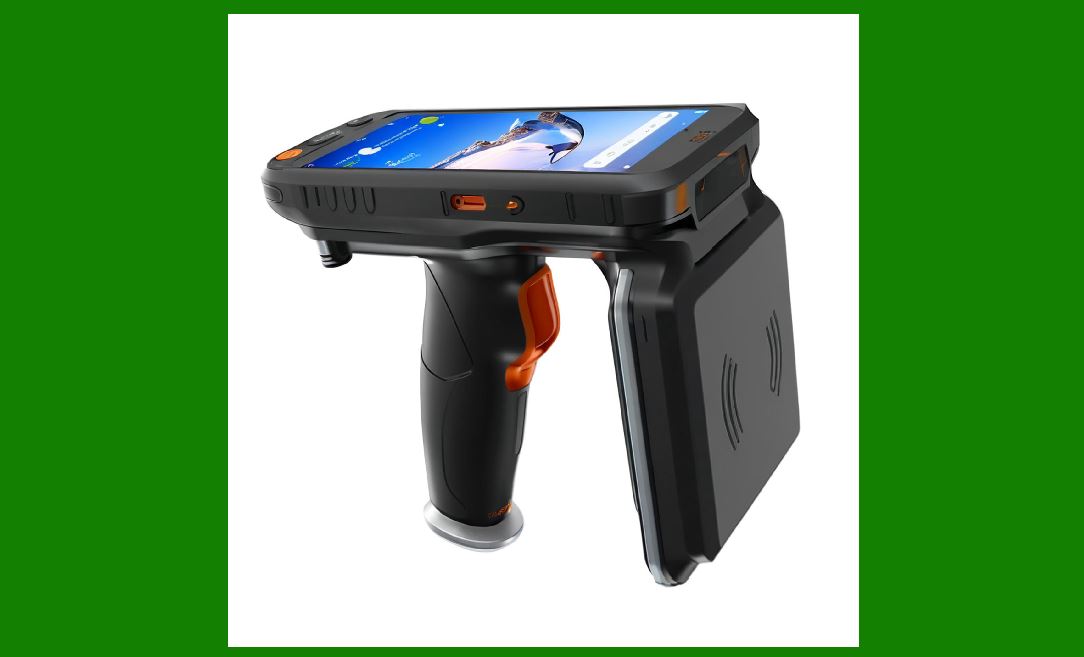
RFID addresses this directly. Store staff can use handheld readers to scan shelves and stockrooms in minutes, comparing physical inventory to system records. The accuracy rate rises to above ninety-nine percent. When a customer asks for a different size or color, the associate can check the device and know immediately whether it is in the store, in a nearby store, or available online. The 'endless aisle' becomes real---not a marketing slogan, but a operational capability. |
The accuracy also enables Uniqlo's approach to replenishment. Because the company knows exactly what has sold and what remains, it can ship replacement stock with confidence. The goal is not constant novelty, as at Zara, but constant availability. The same gray sweater should always be there, in every size, every day. RFID makes that possible. |
|
The Barcode's Quiet Persistence |
Walk into a Uniqlo anywhere in the world, and you will see barcodes. They are on the price tags, just as they are at Zara. They are on the shipping cartons. They are on the receipts. The barcode has not been eliminated. It has been demoted. |
This is not a failure of RFID. It is a recognition of reality. The global retail infrastructure---point-of-sale systems, warehouse management software, supplier labeling requirements---was built over decades around the barcode. Replacing every scanner, every software integration, every supplier process is a project measured in years and billions of dollars. RFID is being layered on top, not substituted for the foundation. |
In practice, this means that a Uniqlo employee at the register can scan a barcode if the RFID system is down. It means that a customer in a market with older equipment can still check out. It means that the price tag serves two masters: the radio waves that read it automatically, and the laser that reads it deliberately. The tag itself is a small monument to technological coexistence. |
The redundancy is not elegant. It costs money to print both a barcode and an RFID inlay on every tag. It creates complexity in the supply chain, where some partners can read one format and some can read the other. But it is pragmatic. And it reflects a broader truth about how technologies actually spread: not by replacing what came before, but by finding a new layer in the stack. |
|
The Fitting Room of the Present and Future |
The interactive mirror is the most visible symbol of RFID's potential in apparel retail. It is also the least standardized. Different retailers and technology vendors have developed different versions, each with its own capabilities and limitations. |
At its most basic, an interactive mirror is a screen that knows what you have brought into the fitting room. RFID readers positioned in the room detect the tags on your garments and display information about them. You can tap the screen to request a different size, see available colors, or view styling suggestions. The mirror might show you how a jacket looks with the jeans you are already wearing, or suggest a belt that would complement the outfit. It might let you change the lighting to see how the color looks in daylight versus evening. |
At its most advanced, the mirror becomes a sales associate, a stylist, and a cashier all in one. It can process payment, eliminating the need to visit a checkout counter. It can communicate with associates elsewhere in the store, summoning help or requesting items. It can connect to a customer's online account, showing past purchases and personalized recommendations. A patent filing describes a social module that would allow friends in different locations to shop together virtually, each trying on garments in their own store while sharing images and feedback in real time. |
The business case for these systems is compelling in theory. Mastercard reported that its smart mirror reduced fitting room time by forty percent and could increase sales by reducing friction and enabling upselling. Market analysts project the global smart mirror market to grow from roughly 1.8 billion dollars in 2024 to 6 billion by 2034, driven by advances in display technology and the demand for personalization. |
The obstacles are equally real. Cost is the most immediate. A single smart mirror installation can run into thousands of dollars, and a store with ten fitting rooms faces a significant investment. Data privacy is another concern. Cameras and personalization require robust security measures and clear policies about what data is collected and how it is used. Maintenance is a third factor. Touchscreens and electronics in a fitting room---a space subject to heavy use, spilled drinks, and curious children---require regular attention. And usability is paramount. If the interface is not intuitive, customers will ignore it, and the investment will be wasted. |
The fitting room of the future, then, is not inevitable. It is a bet. Retailers are betting that the convenience and personalization will outweigh the costs and concerns. Some bets will pay off. Some will not. The stores that get it right will be those that treat the mirror not as a gimmick but as a genuine extension of service---a way to make the shopping experience easier, faster, and more enjoyable, not just more technologically impressive. |
|
The Barcode's Continued Relevance |
It is tempting, in a chapter about RFID, to treat the barcode as a relic. It is old technology. It requires line of sight. It can only be read one at a time. It cannot update itself. By every measure, RFID is superior. |
And yet the barcode endures. It endures because it is cheap, universal, and reliable. A barcode costs a fraction of a cent to print. It can be read by a scanner that costs less than a hundred dollars. It works in every country, in every store, on every point-of-sale system installed in the last forty years. It requires no batteries, no wireless infrastructure, no software integration beyond what already exists. |
In the apparel industry, the barcode's role has shifted from primary to backup, from the main event to the understudy. But it is not obsolete. It remains the language that the global supply chain speaks when RFID is not available. It remains the fallback that ensures a customer can buy a shirt even if the radio waves are not cooperating. |
This coexistence is not unusual in the history of technology. The automobile did not eliminate the bicycle. The telephone did not eliminate the letter. Streaming did not eliminate radio. New tools often do not replace old ones; they redefine the old one's niche. The barcode's niche is now the reliable, universal, low-cost option---the technology that works everywhere, even where RFID does not. |
For Zara and Uniqlo, the barcode is also a hedge. The companies are investing heavily in RFID, but they are not betting the business on it. If a store's RFID readers fail, the barcode ensures the store can still operate. If a supplier cannot yet produce RFID tags, the barcode ensures the supplier can still ship. The price tag carries both, and the checkout system can read either. The customer, in most cases, does not notice. The transaction completes. The garment leaves the store. The inventory updates. The system works. |
This is the quiet genius of the layered approach. RFID provides the speed and accuracy that modern retail demands. The barcode provides the resilience and universality that global operations require. Neither is sufficient alone. Together, they form a network that is greater than the sum of its parts. |

|
The Data Layer |
What does RFID actually produce, beyond faster checkout and more accurate inventoryThe answer, increasingly, is data---vast quantities of data about how products move, how customers behave, and how stores perform. |
At the simplest level, RFID data tells you where things are. This sweater is on this shelf. That pair of jeans is in the backroom. This shipment arrived at 10:14 AM. That return was processed at 3:27 PM. This data is operational. It helps staff find items, replenish shelves, and process transactions. |
At a higher level, RFID data tells you what is happening. This style sold out in two days. That color is languishing. This store needs more of size medium. That store has too many of size extra-large. The data flows back to planners and allocators, who adjust shipments and markdowns accordingly. The goal is to have the right product in the right place at the right time---never too much, never too little. |
At its most ambitious, RFID data tells you why things happen. The fitting room data described earlier---how long someone tries on a garment, whether they try it with other items, whether they ultimately buy it---opens a window into the decision-making process. If a particular style is tried on frequently but rarely purchased, that suggests a problem with fit, price, or perception. If a style is purchased only when tried on with a specific companion item, that suggests a merchandising opportunity. This kind of insight, aggregated across thousands of interactions, is far more valuable than simple sales data. It reveals not just what happened, but what almost happened, and why. |
Zara and Uniqlo are both collecting this data, though they use it differently. Zara, with its fast-fashion model, uses data to decide what to make more of and what to cut. A style that sells quickly in one store can be replenished from a nearby store or rushed into production. A style that stalls can be marked down or pulled. The cycle is measured in days, not weeks. RFID makes it possible. |
Uniqlo, with its basics model, uses data to ensure consistency. The goal is not to chase trends but to maintain availability. If a particular size is selling faster than expected, the system flags it for replenishment. If a store is consistently short on a particular item, the system identifies the problem and routes more stock. The data serves reliability, not responsiveness. |
The customer, in most cases, is unaware of this data layer. They see the faster checkout, the better-stocked shelves, the self-checkout bins that read their purchases instantly. They do not see the algorithms that analyze their behavior, the inventory systems that adjust in real time, the supply chains that respond to their choices. But the data is there, flowing through the silent network, shaping the physical world in ways that are invisible but profound. |
|
The Store as a Sensor |
The broader implication of RFID in apparel is that the store itself is becoming a sensor. Every tagged garment is a data point. Every reader is a signal. Every transaction is an event in a continuous stream of information that describes how physical goods move through space and time. |
This is a significant shift. Historically, stores were opaque to their operators. A retailer knew what it had shipped and what it had sold, but the space in between---the browsing, the trying on, the deliberation---was invisible. The store was a black box. Products went in, and purchases came out, and the relationship between the two was measured only in aggregate. |
RFID, combined with interactive mirrors and other in-store technologies, begins to illuminate the black box. The retailer can see which items are picked up and put down. Which fitting rooms are used most. Which styles are tried on together. How long customers spend in different areas of the store. This visibility is not complete, and it raises important privacy questions. But it is real, and it is growing. |
For Zara and Uniqlo, this visibility serves different strategic ends. Zara uses it to accelerate the fast-fashion cycle---to identify trends earlier, respond faster, and reduce the risk of overproduction. Uniqlo uses it to reinforce its basics promise---to ensure that the essential items are always available, in every size, in every store. Both companies are betting that better data leads to better decisions, and better decisions lead to happier customers and healthier margins. |
The bet is not without risk. Data can be wrong. Systems can fail. Customers can react negatively to what feels like surveillance. The companies that succeed will be those that use data to improve service, not to exploit customers. The technology itself is neutral. How it is used determines whether it builds trust or erodes it. |
|
Conclusion: The Layered Network |
The story of RFID and barcodes at Zara and Uniqlo is a story of coexistence. Two technologies, one old and one new, one simple and one sophisticated, one universal and one specialized, operating side by side in the same stores, on the same products, serving the same customers. |
The barcode is not disappearing. It is retreating to a supporting role, a fallback, a safety net. It remains the cheapest, most universal way to identify a product at the point of sale. It requires no batteries, no infrastructure, no training. It works everywhere. For all these reasons, it will persist for years, perhaps decades, even as RFID becomes the primary technology for inventory management and checkout. |
RFID is not replacing the barcode; it is extending it. It is adding speed, accuracy, and data to a system that already worked. It is making possible things that barcodes could never do---reading an entire basket at once, tracking items without line of sight, generating real-time data about the movement of goods. It is transforming the store from a passive space into an active sensor, and the supply chain from a series of guesses into a continuous flow of information. |
For Zara, this transformation serves speed. The company can design, produce, and deliver new styles in weeks, and RFID ensures that every step in that process is visible and measurable. For Uniqlo, it serves consistency. The company can guarantee that its essential items are always available, in every size, in every store, and RFID ensures that the guarantee is backed by accurate data. |
Both companies are showing the rest of the retail world what is possible. They are showing that RFID is not just a technology for warehouses and logistics---it is a technology for the sales floor, the fitting room, and the checkout counter. They are showing that the barcode, far from being obsolete, remains an essential part of the infrastructure. And they are showing that the real value of these technologies lies not in what they replace, but in what they enable. |
|
The silent network---the invisible web of barcodes, RFID tags, readers, and software that maps the physical world---is not a single technology. It is a layered system, each layer doing what it does best, each layer supporting the others. The barcode identifies. The RFID tag tracks. The mirror displays. The data flows. The customer, ideally, notices none of it, and experiences only a store that works---a store where the shelves are stocked, the checkout is fast, and the clothes, somehow, always seem to be waiting for them. |
That is the promise of the silent network. Not a world without friction, but a world where the friction has been absorbed by the technology, where the complexity is hidden, and where the simple act of buying a shirt is supported by an invisible architecture of radio waves and reflected light. Zara and Uniqlo are building that world, one tag at a time. |
 cs@easiersoft.com