Chapter 66: Automotive --- Just-in-Time |
Summary |
The automotive assembly line represents one of the most demanding environments for automatic identification technology. Every vehicle that rolls off the line is a unique configuration --- a specific combination of engine, transmission, trim level, color, and dozens of optional features. The components that make each vehicle unique often look nearly identical to the untrained eye. A seat belt for a European market vehicle resembles one destined for North America. A mirror housing for a base model differs from a premium variant in ways that are invisible until installation. |
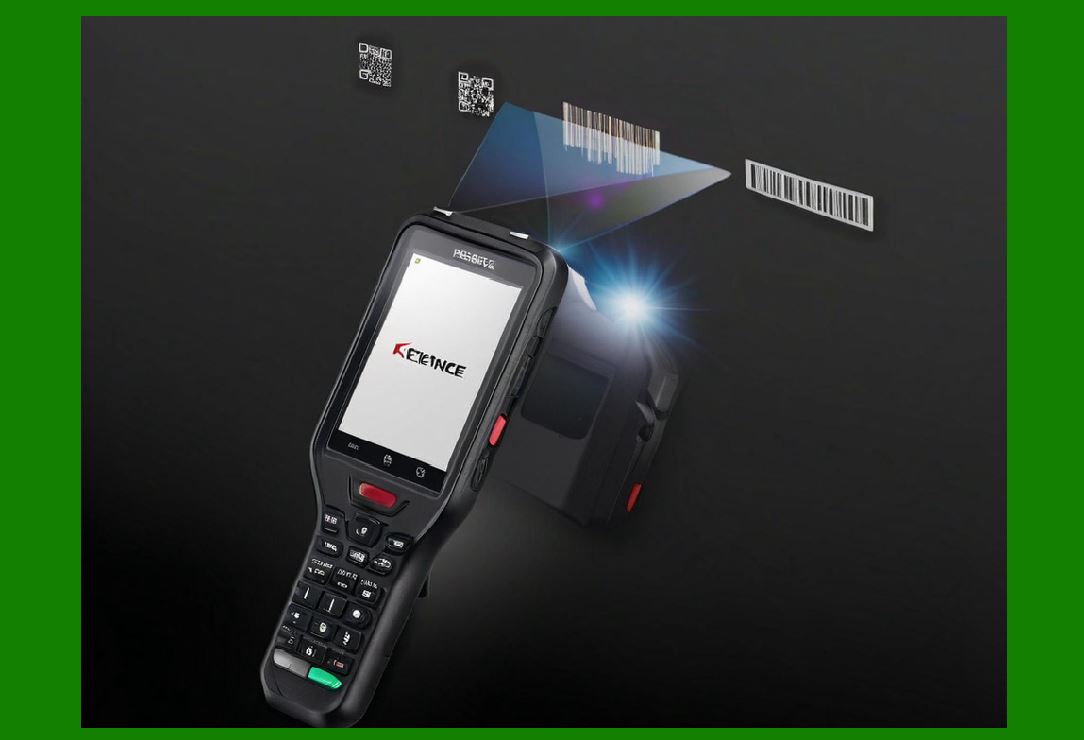
This chapter examines how the automotive industry uses two complementary identification technologies to navigate this complexity: RFID on major assemblies like engine blocks, where the tag guides automated machinery through the assembly process without human intervention, and barcodes on components like seat covers, where a human worker scans a label to confirm the correct part for the specific vehicle in front of them. The choice between these technologies is rarely arbitrary. It follows a clear logic of cost optimization: RFID where the cost of automation and error prevention justifies the higher tag price, barcodes where human judgment is already part of the process and a simple scan provides sufficient verification. |
The result is a hybrid identification architecture that maps the physical world of automotive manufacturing with remarkable precision. Every engine knows which vehicle it belongs to. Every seat cover carries a label that tells a worker exactly where it goes. Together, these technologies enable the just-in-time production model that defines modern automobile manufacturing. |
|
The Problem of Infinite Variation |
To understand why automotive manufacturers invest heavily in identification technology, one must first appreciate the scale of the variation problem they face. A modern automotive assembly plant does not produce identical cars. It produces a continuous stream of uniquely configured vehicles, often in a mixed-model sequence where a compact sedan is followed by a luxury SUV, which is followed by a pickup truck. |
The engine block for each vehicle may be the same basic casting, but the components bolted to it --- the turbocharger, the fuel injection system, the exhaust manifold --- vary by model and market. The seat covers are cut and stitched in different colors and materials depending on the interior package selected. The wiring harnesses differ by hundreds of individual circuits depending on which options the customer ordered. |
At the point of assembly, many of these components appear virtually indistinguishable to a human worker. A seat belt for a German market vehicle looks remarkably similar to one destined for a non-European market. The difference may be a few centimeters of length, a different mounting bracket, or a sensor that triggers a different airbag deployment profile. Installing the wrong one is not merely an inconvenience. It is a safety defect that may not be discovered until the vehicle is involved in a collision. |
This is the fundamental challenge that drives the entire identification ecosystem in automotive manufacturing. The system must ensure that the right part goes onto the right vehicle at the right time, every time, at a rate that may exceed one vehicle per minute. |

|
RFID on the Engine Block: Where Automation Meets Identification |
The engine block occupies a special place in automotive assembly. It is the first major component to begin its journey through the assembly process, and it accumulates value with each station it passes. By the time an engine is complete, it represents thousands of dollars in components and labor, and it carries a unique identity that must be preserved for warranty tracking and quality analysis. |
The Redundant Identification System |
In a typical automotive assembly workshop, the vehicle body or major assembly travels on a conveyor through a series of stations. At each station, the control system needs to know which vehicle is present so that the correct parts and tools are available. The traditional approach uses barcode labels attached to the body or carrier. A scanner reads the barcode as the vehicle enters the station, and the control system configures itself accordingly. |
This approach works --- most of the time. The problem is that barcode labels degrade. They become covered with paint overspray, dust from welding operations, or dirt from the assembly floor. The barcode itself may be printed at insufficient resolution. The scanner lens may become contaminated. In a high-volume assembly plant, even a one percent failure rate translates into dozens of production interruptions per shift. |
Automotive manufacturers have responded by implementing redundant identification systems. The primary identification may remain a barcode for backward compatibility, but an RFID tag is added as a secondary identification layer. If the barcode fails to read, the RFID system provides the vehicle identity without requiring human intervention. |
The redundancy is not merely a backup. It is an opportunity to improve the entire control architecture. The RFID system can store more information than a simple barcode. It can be written to as well as read, allowing the assembly process itself to update the tag with completed operations, detected faults, or rework instructions. |

|
Guiding Assembly Robots |
The most significant advantage of RFID over barcodes in engine assembly is the ability to identify without line of sight. A barcode requires a clear optical path between scanner and label. The label must be facing the scanner. It must be clean. The scanner must be properly positioned and focused. |
An RFID tag, by contrast, can be read through paint, through plastic, through the human body, and through the metal of the engine block itself if the tag is designed for metal mounting. A reader antenna positioned near the conveyor can detect the tag as the engine passes, regardless of the tag's orientation or the presence of intervening materials. |
This capability transforms the assembly process. Consider a station where a robot must install a specific bracket onto the engine block. The bracket varies by engine variant. The robot needs to know which bracket to pick from its supply. With a barcode system, a scanner must successfully read the label before the robot can proceed. If the read fails, the line stops. |
With RFID, the reader detects the engine as it approaches the station. The control system retrieves the engine's identity and transmits the correct bracket type to the robot. By the time the engine arrives at the station, the robot has already selected the correct bracket and is ready to install it. The cycle time is reduced because no scanning step is required. The reliability is improved because no optical path is required. |
A 1991 patent from Japan describes an early version of this concept: an unmanned carrier vehicle transporting engine blocks through assembly stations, with an ID tag mounted on the vehicle that is read by readers at each station. Based on the information read from the tag, the system indicates which parts the worker should select from the parts shelf, using indicator lamps to prevent errors. The patent captures the essential logic that still governs automotive assembly today: identification drives correct part selection, whether the selector is a robot or a human. |

|
The E-Paper Tag Solution |
One of the more innovative RFID applications in engine assembly replaces not just the barcode but the entire paper-based work instruction system. At a Detroit Diesel manufacturing facility, each engine block was accompanied by a 'build book' --- forty-two to sixty pages of instructions and checklists specific to that engine's configuration. |
The plant produced a new engine every two and a half minutes. Matching the correct build book to each engine, ensuring that the book traveled with the engine through all fifty-five to sixty assembly stations, and preventing books from being misplaced or swapped was a significant source of cost and error. |
The solution was an RFID system with an e-paper display tag attached to the engine carrier. The tag stores the engine's identity and configuration data. As the engine moves through the assembly line, the e-paper display updates automatically to show the current station's instructions. Workers no longer need to flip through a paper book to find the correct procedure. The system ensures that the correct instructions are displayed for the specific engine at the specific station. |
The RFID tag provides the automatic identification that eliminates manual scanning. The e-paper display provides the human-readable instructions that the worker needs. The combination replaces an entire paper-based information system with a single reusable tag that travels with the engine from start to finish. |

|
Tracking Through Hostile Environments |
The engine assembly environment is hostile to identification technology. Metal shavings from machining operations can cover barcode labels. Coolant and oil mists settle on surfaces. Welding operations produce electromagnetic interference. The temperature can vary from ambient to several hundred degrees depending on proximity to heat treatment or testing operations. |
RFID tags designed for these environments use specialized packaging. The antenna may be tuned for mounting on metal surfaces, which would otherwise detune a standard RFID tag and render it unreadable. The tag may be encapsulated in a rigid plastic or ceramic housing that protects it from impact and chemical exposure. The attachment method may use rivets or high-temperature adhesive rather than the pressure-sensitive adhesive used for barcode labels. |
The readers are similarly hardened. Industrial RFID readers with IP67 ratings are designed to operate in environments with oil mist, coolant spray, and metal dust. The antenna may be integrated into the reader housing or mounted separately at the optimal position for reading tags on passing carriers. |
The result is an identification system that operates reliably in conditions where barcode labels would be unreadable within hours. The RFID tag on an engine block carrier may survive hundreds of assembly cycles before requiring replacement. |

|
Barcodes on Seat Covers: Where Human Judgment Meets Identification |
The seat cover occupies a different position in the automotive value chain than the engine block. It is not the first component to enter assembly, and it does not accumulate the same level of identity that must be preserved through the entire manufacturing process. But it shares one critical characteristic with the engine block: the correct seat cover for a given vehicle is not visually obvious to the worker who must install it. |
The Seat Cover Identification Problem |
A seat cover is a fabric or leather assembly that fits over the foam cushion of a vehicle seat. The cover determines the appearance of the interior and, in some cases, contributes to safety features such as side airbag deployment. Different trim levels use different materials, different stitching patterns, and different colors. |
At the assembly station, the worker receives a seat frame and must select the correct cover from a rack or conveyor. In a mixed-model assembly line, the next seat frame may require a completely different cover. Selecting the wrong cover means that the seat must be disassembled and rebuilt, consuming labor and materials, or that the vehicle must be reworked downstream when the error is discovered. |
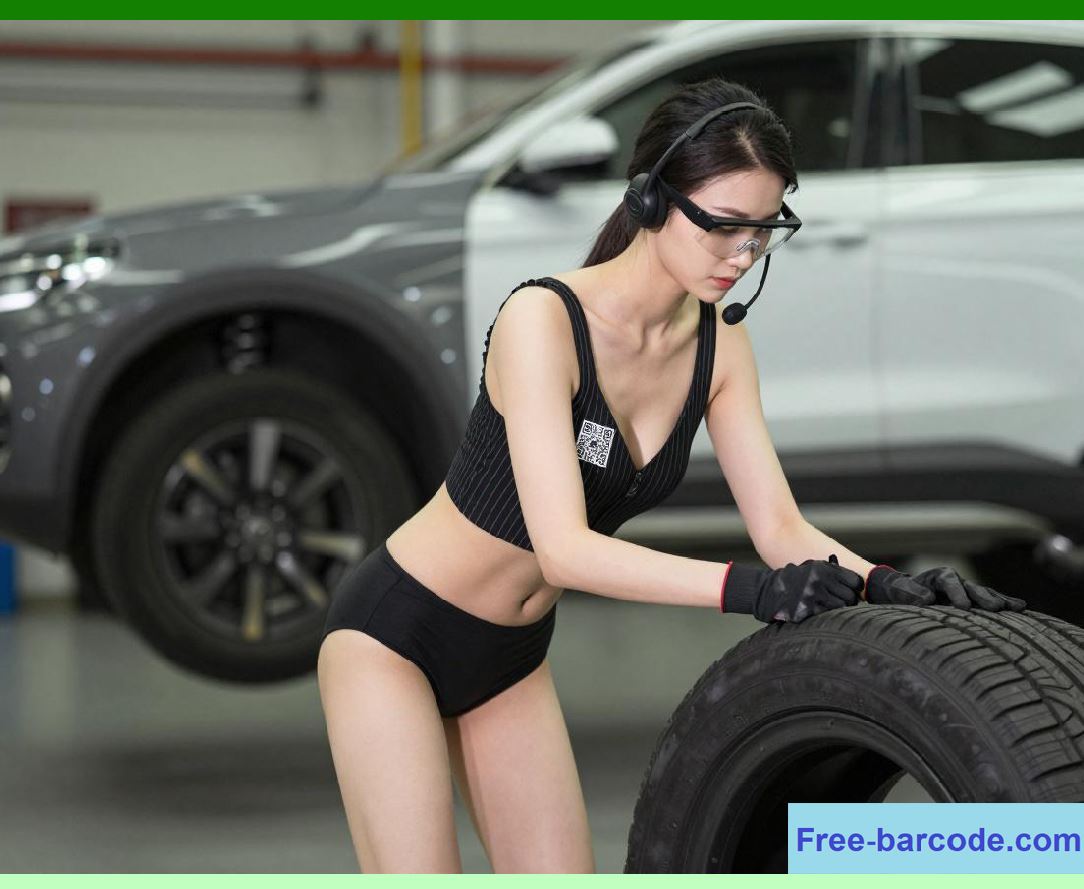
The barcode on the seat cover solves this problem at minimal cost. A label printed with a barcode encoding the part number is attached to the cover, often with a tag that also includes a human-readable description. The worker scans the barcode before installing the cover, and the system verifies that the cover matches the seat frame's requirements. |

|
The Cost Logic of Barcode |
Why use a barcode here instead of RFIDThe answer lies in the economics of the application and the nature of the assembly task. |
A barcode label costs a fraction of a cent. An RFID tag, even a simple passive UHF tag, costs several cents. For an automotive manufacturer producing millions of vehicles per year, each with multiple seat covers, the difference in tag cost is substantial. If the barcode provides sufficient identification for the task, paying more for RFID is difficult to justify. |
More importantly, the seat cover installation task already involves a human worker who must visually inspect the cover, position it on the seat frame, and secure it. Adding a barcode scan to this task adds perhaps one or two seconds to the cycle. The worker is already handling the cover. Scanning a label attached to it is a natural extension of the motion. |
The barcode scan also serves a verification function that is inherently human-centered. The worker sees the cover. The worker sees the seat frame. The worker scans the barcode. The system confirms that the cover matches the frame. If the system rejects the cover, the worker knows immediately that a mistake has been made --- either the wrong cover was delivered to the station, or the wrong seat frame is present. |

|
The Conveyor System at the Seat Manufacturer |
A French automotive seat manufacturer provides a clear example of how barcodes integrate with material handling systems. The manufacturer operates a multi-level production facility. Seat covers are sewn on the upper floor and must be transported to the assembly area on the ground floor. |
The conveyor system uses a simple but effective identification protocol. When a sewer completes a batch of three seat covers, they scan the barcode on the batch and place the covers on a carrier. They then scan the carrier's barcode to associate the batch with that carrier. The carrier moves to the conveyor and travels to the assembly area. |
When an assembler needs a set of covers, they scan a work order that triggers a request to the conveyor system. The conveyor delivers the requested carrier to the assembler's station. The assembler scans the barcode on the covers to verify that they match the work order before installation. |
If a cover has a defect, the assembler scans a request for an empty carrier, scans the barcode on the defective batch, and places the covers on the carrier. The conveyor automatically transports them back to the sewing area for repair. The barcode travels with the covers throughout this process, maintaining the link between the physical material and its identity in the manufacturing execution system. |
This system is entirely barcode-based. RFID would offer faster reading and the ability to read multiple tags simultaneously, but the barcode provides sufficient function at lower cost. The workers are already handling the covers and scanning labels. The conveyor system moves one carrier at a time to each station, so there is no need to identify multiple carriers simultaneously. The barcode is the right tool for this application. |
|
The Cockpit Module: A Hybrid Case |
The cockpit module --- the assembled dashboard, instrument panel, steering column, and associated components --- illustrates how RFID and barcodes can work together in a single assembly process. |
Researchers studying a mixed-model cockpit module assembly line implemented a dual-identification system: an RFID tag on the cockpit module carrier, and barcodes on individual parts. The RFID tag identifies which vehicle the module is destined for. The barcodes on individual parts identify which parts should be installed. |
At each station, the worker scans the RFID tag on the module to confirm the vehicle identity. The system then displays the correct part numbers for that vehicle. The worker picks the parts and scans their barcodes to confirm that the correct parts have been selected. |
The RFID tag is reusable. It stays with the carrier and is rewritten for each new cockpit module. The barcodes are disposable. They are printed on the part packaging or on the parts themselves and are discarded after installation. The cost of the RFID tag is amortized over hundreds of cycles. The cost of each barcode is negligible. |
This hybrid architecture --- RFID for the carrier that persists through the process, barcodes for the parts that are consumed --- represents an optimization of identification cost against identification value. The carrier's identity must be maintained through the entire assembly process and must be readable without line of sight to facilitate automated control. The parts' identities are needed only at the moment of installation, and the worker is already handling the parts, so a simple scan is sufficient. |

|
Cost Optimization Across the Vehicle |
The logic that determines whether RFID or barcode is used for a particular component can be understood as a cost optimization problem. The manufacturer seeks to minimize the total cost of identification, which includes the cost of the tags themselves, the cost of the readers and infrastructure, the cost of errors that slip through the system, and the cost of the labor required to operate the system. |

|
When RFID Wins |
RFID becomes the economically rational choice when the value of automatic identification exceeds the higher tag cost. This occurs in several situations. |
When the identification must occur without human intervention. If a robot or automated guided vehicle needs to know the identity of a component or carrier, RFID provides that identity without requiring a worker to scan a barcode. The cost of the RFID tag is justified by the elimination of the scanning labor and the reduction in cycle time. |
When the identification must occur in a hostile environment. If barcode labels would become unreadable due to contamination, damage, or environmental exposure, RFID provides reliable identification where barcodes cannot. The cost of the RFID tag is justified by the elimination of line stoppages and manual data entry. |
When multiple items must be identified simultaneously. If a pallet contains multiple components that must all be identified, RFID can read all the tags in the read zone without requiring each tag to be scanned individually. The cost of the RFID tags is justified by the reduction in scanning labor. |
When the tag must persist through multiple process steps. If the identification tag must survive painting, welding, heat treatment, or other manufacturing processes, RFID tags designed for those environments can survive where barcode labels would be destroyed. The cost of the RFID tag is amortized over the entire process. |

|
When Barcode Wins |
Barcode remains the economically rational choice in other situations. |
When a human worker is already handling the item. If the worker must pick up the component to install it, adding a barcode scan to that motion is a minimal additional cost. The barcode label is inexpensive, and the scanning labor is a small fraction of the installation labor. |
When the identification is needed at a single point. If the component's identity is only needed at the moment of installation, and the component does not need to be tracked through subsequent processes, a barcode provides sufficient identification at lower cost than RFID. |
When the component is small and inexpensive. For fasteners, clips, small brackets, and other low-cost components, the cost of an RFID tag would represent a significant fraction of the component's total cost. A barcode label, or even a simple part number without automatic identification, may be sufficient. |
When the environment is clean and controlled. If the component is stored and handled in an environment where barcode labels remain readable, the reliability advantage of RFID does not justify its cost. |

|
The Engine Block and Seat Cover Revisited |
The engine block falls clearly into the RFID category. It is a major assembly that begins its journey at the start of the production line and must be tracked through dozens of stations. The identification must occur automatically, without human intervention, to allow the conveyor and robots to function. The environment is hostile to barcode labels. The cost of the RFID tag, while significant compared to a barcode label, is small compared to the value of the engine block and the cost of a line stoppage. |
The seat cover falls clearly into the barcode category. It is a component that a human worker installs. The identification is needed at a single point in the process. The environment is relatively clean. The barcode label is inexpensive and provides sufficient reliability. |
|
Error Prevention and Traceability |
The identification technologies serve two related but distinct functions: error prevention in the moment, and traceability after the fact. Both functions are essential to automotive quality management. |
Preventing Errors at the Point of Assembly |
The most immediate function of identification is to prevent the wrong part from being installed. This is the 'poka-yoke' principle --- mistake-proofing --- implemented through digital technology. |
A patent application from a Chinese automotive manufacturer describes a barcode-based error prevention system for critical safety parts. The system receives the vehicle's basic data list from the manufacturing execution system, including the standard identification information for the parts that should be assembled. When a worker scans a part's barcode, the system compares the parsed identification information from the barcode with the standard identification information. If they match, the system generates an assembly allow instruction. If they do not match, the system generates an assembly interception instruction. |
The patent specifically addresses the problem of barcode misreading --- the phenomenon where a barcode scanner reads a code incorrectly due to environmental factors such as lighting or contamination. The system includes a verification calculation that checks the barcode's internal structure to detect misreads. If the verification fails, the system does not allow assembly, even if the parsed information appears to match. |
This dual verification --- identity comparison plus barcode integrity verification --- reduces the risk that a misread barcode will allow a wrong part to be installed. The system is designed to catch errors that would otherwise pass through a simple barcode scan. |

|
Automated Inspection During Assembly |
RFID enables a different kind of error prevention: automatic verification that the correct parts have been installed, without requiring the worker to scan anything. |
Researchers at the Fraunhofer Institute for Factory Operation and Automation, working with Mercedes-Benz Vans, implemented an RFID system where safety-critical parts such as mirrors and seats are tagged with RFID labels. The tags store not just the part type but the specific vehicle for which the part is intended. |
The key advantage of RFID in this application is that the tags can be read automatically even after the parts have been installed. During the assembly of the front or rear axle, the system can verify that all the required parts have been installed correctly. Previously, this verification did not occur until final inspection, where employees conducted visual inspections and checked paper lists. |
The RFID system provides real-time verification. If a wrong part has been installed, or if a required part is missing, the system can detect the error at the point of assembly rather than at the end of the line. The cost of correcting the error at the point of assembly is far lower than the cost of reworking a completed vehicle. |
The researchers identified up to forty parts that could benefit from RFID tagging. The initial focus was on mirrors and seats, but the approach is extensible to any component where the cost of an assembly error justifies the cost of the RFID tag. |
|
Full Chain Traceability |
Beyond error prevention, identification technologies provide the traceability that automotive manufacturers need to meet regulatory requirements and manage warranty claims. |
The IATF 16949 quality management standard, which governs automotive supply chains, requires that manufacturers be able to provide traceability reports within twenty-four hours of a quality issue. This means that if a defect is discovered in a vehicle after it has been delivered to a customer, the manufacturer must be able to identify which specific components were installed in that vehicle, when they were installed, and by which operator. |
An RFID system deployed on an engine assembly line can meet this requirement. The engine block is tagged with an RFID label at the start of assembly. As it moves through the line, each station's reader records the operations performed, the parts installed, the operator, and the timestamp. When the engine is complete, the tag contains a complete record of its assembly. |
If a quality issue arises later, the manufacturer can retrieve the engine's assembly record from the database and identify exactly what was done. If a particular component is found to be defective, the manufacturer can search the database for all engines that received that component and trace them to the vehicles in which they were installed. |
The traceability extends beyond the engine. The vehicle's identification number, which is assigned during body assembly, links to the engine's identity, which links to the components installed on the engine. The complete chain of identification connects the raw materials to the finished vehicle. |
|
The Bosch Diesel Example |
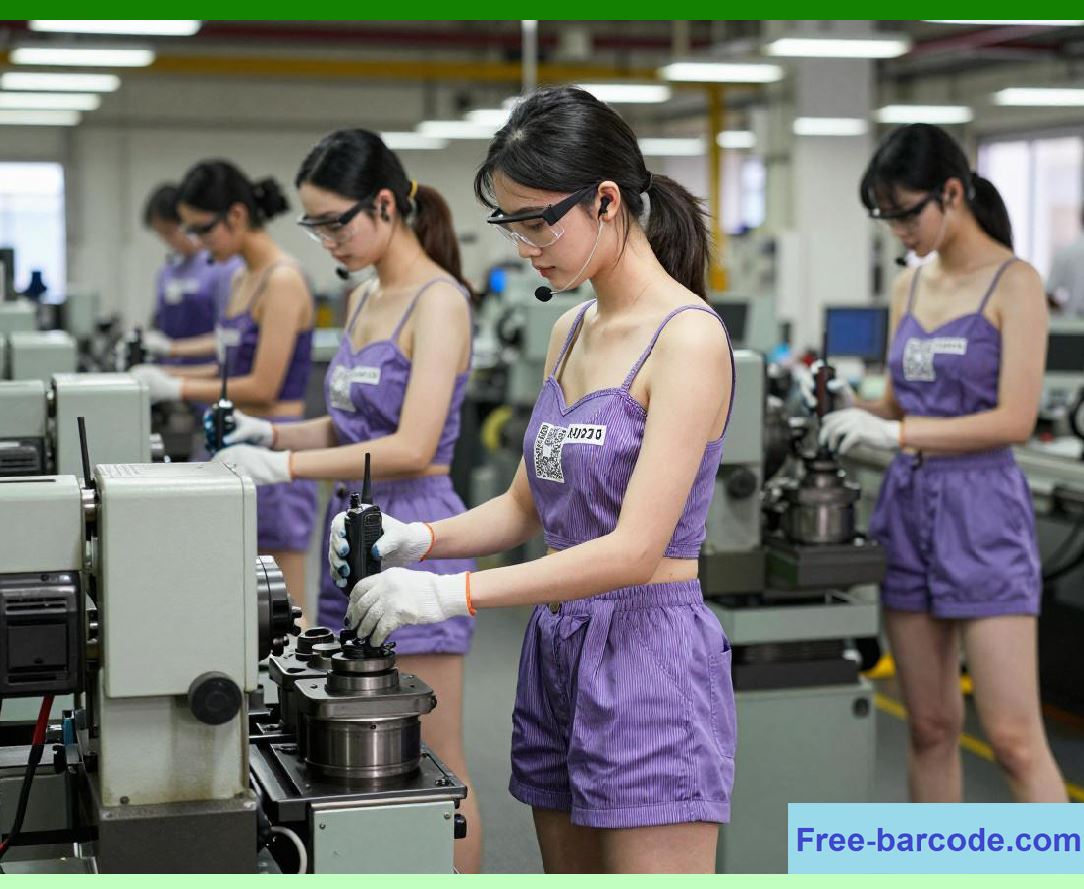
An example from Bosch Diesel in the Czech Republic illustrates how automatic identification supports quality improvement. The plant manufactures diesel pump bodies and uses machine vision systems and code readers to control production. |
The identification system tracks the pump bodies through twelve production sections. At each section, the system records the operation time, the worker's name, the machine and spindle used, the code quality of the Data Matrix code, and the body status. If a defect is detected, the system identifies the source of the error and prevents the defective product from moving to the next station. |
The error catch rate improved from eighty-five percent before the system was installed to ninety-nine to one hundred percent after. The system also enables back-searching using recorded images from production operations. If a quality issue is discovered later, the manufacturer can retrieve the image of the specific operation that caused the problem. |
The identification system in this case uses Data Matrix codes rather than RFID. The pump bodies are small, and the codes are imprinted directly on the metal surface. The reading occurs at fixed stations as the parts move through the production line. The cost of RFID tags would be difficult to justify for these small, low-cost components, but the barcode-based traceability provides the quality data that the manufacturer needs. |

|
Beyond the Assembly Line: Identification in Logistics |
The just-in-time production model depends on materials arriving at the assembly line in the correct sequence and at the correct time. Identification technologies play a critical role in the logistics operations that feed the assembly line. |
Just-in-Sequence Delivery |
In a just-in-sequence (JIS) delivery model, the supplier delivers parts in the exact order in which they will be consumed on the assembly line. If the assembly line is producing vehicles in a specific sequence, the parts must arrive in that same sequence. A single sequencing error can cause a line stoppage or a wrong part installation. |
A study of General Motors Korea's rear-axle inbound logistics process implemented an RFID-based sequencing-error-proofing system. The system provides real-time traceability and control of part supply from the supplier's production lines to the car manufacturer's assembly line. The RFID tags on the axle carriers allow the system to verify that the axles are in the correct sequence before they enter the assembly line. |
The system achieved significant cost savings by preventing sequencing errors and part shortages, and by reducing manual operations. The study's cost-benefit analysis demonstrated the economic feasibility of RFID for just-in-sequence inbound logistics in automotive manufacturing. |
The economic logic here differs from the engine block application. The RFID tags are not attached to the vehicle itself but to the carriers or containers that transport the parts. The tags are reusable and travel back and forth between the supplier and the manufacturer. The cost of the RFID tags is amortized over many trips, reducing the per-part identification cost. |

|
Automatic Goods Receipt |
RFID also enables automatic goods receipt at the manufacturing plant. When a truck arrives with a delivery of components, an RFID gate at the receiving dock can read all the tags on the pallets or containers as they are unloaded. The system compares the received items against the expected shipment and automatically records the receipt in the warehouse management system. |
This process eliminates the manual scanning that would otherwise be required to receive each pallet individually. The time savings can be substantial, particularly for high-volume deliveries with many pallets. The accuracy improvement is also significant: the automated system does not miss items or record incorrect quantities. |

|
Returnable Container Tracking |
Automotive manufacturers use large numbers of returnable containers --- pallets, racks, and specialty carriers --- to move parts between suppliers and assembly plants. These containers represent a significant capital investment, and managing their return and reuse is a logistical challenge. |
RFID tags on the containers enable automatic tracking of their movements. When a container is loaded with parts at the supplier, the RFID tag is associated with the parts it contains. When it arrives at the assembly plant, the tag is read at the receiving dock. When it is emptied and returned to the supplier, the tag is read again, confirming that the container is in transit. |
The system provides visibility into the container pool. The manufacturer can see how many containers are at each supplier, how many are in transit, and how many are available at the assembly plant. This visibility reduces the number of containers that must be purchased and prevents shortages that could disrupt production. |

|
The Human Factor in Hybrid Identification |
The automotive industry's use of both RFID and barcodes reflects a nuanced understanding of the relationship between technology and human work. The goal is not to eliminate human workers but to give them the information they need to perform their tasks correctly and efficiently. |
Barcodes as a Human-Centered Technology |
Barcodes are fundamentally human-centered in a way that RFID is not. The barcode label is visible to the worker. The worker can read the human-readable text on the label. The worker can see that the scan has occurred. The worker understands the relationship between the physical object and its digital identity. |
This visibility has value. When a worker scans a barcode, they are actively confirming the identity of the object. They are engaged in the process of verification. The scan is a deliberate act that focuses attention on the task at hand. |
RFID, by contrast, is invisible. The tag is read automatically, without the worker's awareness. The worker may not know that the tag has been read, or that the system has confirmed the identity of the object. If the system fails to read the tag, the worker may not notice. |
In applications where human judgment is part of the process, the barcode's visibility can be an advantage. The worker who scans the seat cover's barcode is confirming that the cover is correct for the vehicle. The scan is a checkpoint that prevents the worker from installing the wrong cover. |

|
RFID as an Automation Enabler |
RFID's invisible nature is an advantage in applications where human intervention is not desired. The engine block that moves past an RFID reader without stopping is being identified without human involvement. The assembly line continues to move. The robot receives the information it needs without waiting for a worker to scan a barcode. |
This automation capability is what enables the high throughput of modern automotive assembly. The line can move continuously because the identification happens automatically. The workers can focus on the tasks that require human judgment --- positioning the seat cover, routing the wiring harness, tightening the bolts --- rather than on data entry. |

|
Training and Acceptance |
The introduction of RFID in automotive assembly requires attention to the human factors. Workers must understand what the RFID tags do and what they do not do. They must trust that the system will alert them if something is wrong, and they must know what to do when the system does alert them. |
Fraunhofer researchers working with Mercedes-Benz Vans emphasized the importance of thinking through the different roles in the production process. A project manager needs different information than a technician. The system must provide the right information to the right person at the right time. |
The researchers also identified the need to reduce blind spots in production scheduling. With RFID, a project manager can see where the bottlenecks are in the process and ask the right questions at the right time. This transparency improves the manager's ability to support the production workers. |

|
The Economic Argument for Hybrid Identification |
The automotive industry's adoption of both RFID and barcodes is not a compromise or a transitional state. It is a deliberate optimization of identification cost against identification value. |
The cost of identification includes the tag, the reader infrastructure, the system integration, and the labor to operate the system. The value of identification includes the errors prevented, the labor saved, the throughput increased, and the traceability enabled. |
For each component and each process step, the manufacturer evaluates whether the value of RFID exceeds its incremental cost over barcode. Where the answer is yes, RFID is deployed. Where the answer is no, barcode remains. |
The result is a hybrid architecture where RFID and barcodes coexist, each serving the applications for which it is best suited. The engine block carries an RFID tag because the value of automatic identification justifies the tag cost. The seat cover carries a barcode because the worker is already handling it and the barcode provides sufficient identification at lower cost. |
This hybrid architecture maps the physical world with a resolution that neither technology could achieve alone. RFID provides the automatic, persistent, non-line-of-sight identification that automation requires. Barcodes provide the inexpensive, human-visible, scan-on-demand identification that human tasks require. |

|
The Broader Context: Automotive as a Model |
The automotive industry's approach to identification has influenced other manufacturing sectors and continues to evolve as new technologies emerge. |
Lessons for Other Industries |
The automotive model --- hybrid identification optimized by component and process --- is applicable to any manufacturing environment with high product variation and mixed-model assembly. Aerospace, heavy equipment, and electronics manufacturing face similar challenges: ensuring that the right components go into the right products, and maintaining traceability for safety and warranty purposes. |
The key lesson is that identification technology should be matched to the application. There is no single best technology for all situations. RFID and barcodes each have strengths and weaknesses. The optimal solution often uses both. |
|
The Future of Automotive Identification |
Several trends are shaping the future of identification in automotive manufacturing. |
The cost of RFID tags continues to decline, making RFID economically viable for an expanding range of applications. As the tag cost approaches the cost of a printed barcode label, the economic calculations that favor barcodes in some applications may shift. |
The capability of barcodes is also improving. Two-dimensional codes such as Data Matrix and QR codes can store more information than traditional linear barcodes. They can be read even when partially damaged. They can be imprinted directly on metal surfaces using laser marking, eliminating the need for a label. |
The integration between identification systems and manufacturing execution systems continues to deepen. The data collected by RFID and barcode readers is increasingly used not just for error prevention and traceability but for process optimization, predictive maintenance, and quality analytics. |
The automotive assembly line of the future may use RFID for every component, with tags so inexpensive that the cost calculation always favors RFID. Or it may use advanced barcodes that provide sufficient functionality at lower cost. The most likely outcome is a continued hybrid approach, with each technology serving the applications for which it is best suited. |
|
Conclusion |
The automotive industry's use of RFID and barcodes illustrates a fundamental principle of technology deployment: the right tool for the right job, at the right cost. |
The engine block carries an RFID tag because it is a high-value assembly that must be tracked automatically through a hostile environment and a complex process. The tag guides assembly robots, enables automated inspection, and provides the traceability that quality management requires. The cost of the tag is justified by the value of the identification. |
The seat cover carries a barcode because it is a component that a human worker installs in a relatively clean environment at a single point in the process. The barcode provides sufficient identification at minimal cost. The scan is a natural extension of the installation motion, adding verification without adding significant time. |
Together, these technologies map the physical world of automotive manufacturing with a precision that neither could achieve alone. Every engine knows which vehicle it belongs to. Every seat cover carries a label that tells a worker where it goes. The hybrid identification architecture is what makes just-in-time production possible at the scale and complexity of the modern automobile. |
The automotive industry's experience offers a model for other manufacturing sectors facing similar challenges. The lesson is not that RFID is better than barcodes, or that barcodes are better than RFID. The lesson is that identification technology should be optimized for the application, and that the optimal solution often involves both. |
|
Detailed Summary |
This chapter has examined the role of RFID and barcode technologies in automotive just-in-time manufacturing, using the engine block and seat cover as representative applications that illustrate a broader pattern of cost-optimized hybrid identification. |
The Engine Block and RFID. The engine block is a high-value assembly that begins its journey at the start of the production line and accumulates value through dozens of assembly stations. RFID is the identification technology of choice for this application because: automatic identification without human intervention enables continuous line movement and robot guidance; the tag can be read through paint, plastic, and metal, unlike barcodes that require clear line of sight; the tag survives the hostile assembly environment where barcode labels would become unreadable; and the tag can store and update information, providing a complete assembly record for traceability. |
The 1991 patent for an unmanned carrier with ID tags guiding engine assembly workers established the basic logic that still governs automotive assembly: identification drives correct part selection. The Detroit Diesel e-paper tag system replaced forty-two to sixty pages of paper instructions per engine with a reusable RFID tag that updates automatically as the engine moves through fifty-five to sixty assembly stations. The Fraunhofer/Mercedes-Benz Vans RFID system enables automatic verification of safety-critical parts during assembly rather than at final inspection. |
The Seat Cover and Barcode. The seat cover is a component installed by a human worker at a specific point in the assembly process. Barcode is the identification technology of choice because: the worker is already handling the cover, so adding a scan is a minimal additional cost; the identification is needed at a single point, not throughout the process; the environment is relatively clean; and the barcode label is inexpensive compared to an RFID tag. The French seat manufacturer's conveyor system illustrates how barcodes integrate with material handling, with workers scanning batches of covers and carriers to maintain the link between physical material and digital identity. |
|
The Cost Optimization Logic. The choice between RFID and barcodes follows a cost optimization calculation. RFID is favored when identification must occur without human intervention, in hostile environments, for multiple items simultaneously, or for tags that must persist through multiple processes. Barcode is favored when a human worker is already handling the item, identification is needed at a single point, the component is small and inexpensive, or the environment is clean and controlled. The engine block and seat cover are archetypes of these two categories. |
Error Prevention and Traceability. Identification technologies serve two functions: preventing errors at the point of assembly and providing traceability after the fact. Barcode-based error prevention systems compare scanned part identities against the expected part list and can verify barcode integrity to detect misreads. RFID enables automatic verification of installed parts, detecting errors at the point of assembly rather than at final inspection. For traceability, identification systems link the vehicle's identity to the identities of all its components, enabling manufacturers to meet regulatory requirements for rapid traceability reporting. |
Logistics Applications. Just-in-time production depends on logistics operations that feed the assembly line. RFID enables just-in-sequence delivery verification, automatic goods receipt, and returnable container tracking. General Motors Korea's RFID-based sequencing-error-proofing system for rear-axle inbound logistics demonstrated significant cost savings from prevented sequencing errors and reduced manual operations. The economic logic for RFID in logistics differs from assembly line applications because the tags are often on reusable carriers rather than on the parts themselves. |
The Human Factor. The automotive industry's hybrid approach reflects a nuanced understanding of the relationship between technology and human work. Barcodes are human-centered: visible, deliberate, and confirmatory. RFID is automation-enabling: invisible, automatic, and unobtrusive. The choice between them depends on whether human judgment is part of the process or whether the goal is to minimize human intervention. |
|
Economic Viability. The automotive model demonstrates that identification technology deployment is fundamentally an economic calculation. The cost of the tag, the reader infrastructure, and the labor to operate the system must be weighed against the value of errors prevented, labor saved, throughput increased, and traceability enabled. The result is a hybrid architecture where RFID and barcodes coexist, each serving the applications for which it is best suited. |
Broader Implications. The automotive industry's approach to identification offers a model for other manufacturing sectors facing similar challenges of high product variation and mixed-model assembly. The lesson is that identification technology should be matched to the application, and that the optimal solution often involves both RFID and barcodes rather than a single technology. As RFID costs decline and barcode capabilities improve, the balance between the two technologies may shift, but the principle of cost-optimized hybrid identification is likely to remain the foundation of automotive manufacturing for the foreseeable future. |
 cs@easiersoft.com