Chapter 67: The Next Frontier - Ambient Intelligence |
Summary |
Identification will not be a separate act; objects will announce their presence continuously in an 'Internet of Things' environment. This chapter explores how RFID and barcode technologies are converging to create ambient intelligence, a world where everyday objects quietly communicate their identity, status, and context. We examine practical applications across retail, healthcare, manufacturing, logistics, agriculture, smart homes, transportation, and public infrastructure. The goal is to show how continuous, automatic identification moves from a technical curiosity to an invisible layer of daily life. |

|
Introduction: From Scanning to Sensing |
For decades, identification was something you did. You picked up a product, turned it over, and looked for a barcode. You stood in line at a warehouse and aimed a scanner at a label. You waved a badge at a door. Identification was an action, a moment, a deliberate step. |
That era is ending. In the emerging world of ambient intelligence, identification becomes something that happens around you, without your conscious effort. Objects do not wait to be scanned. They announce themselves. They broadcast their presence, their condition, and their relationships to other objects. The network is silent, invisible, and continuous. |
This shift is not the result of a single breakthrough. It is the convergence of two mature technologies: barcodes and RFID. Barcodes gave us cheap, universal, line-of-sight identification. RFID gave us wireless, batch, and increasingly continuous identification. Together, they are building a map of the physical world that updates itself in real time. |
This chapter is about that map. It is about the next frontier, where identification is not a separate act but a background condition of modern life. We will look at how ambient intelligence works, what makes it possible, and where it is already changing industries. We will avoid formulas and tables. Instead, we will focus on concrete examples from retail, healthcare, manufacturing, logistics, agriculture, smart homes, transportation, and public infrastructure. |

|
What Is Ambient Intelligence |
Ambient intelligence is a term that describes environments that are sensitive and responsive to the presence of people and objects. The idea is simple: technology should fade into the background and serve us without demanding our attention. Instead of typing commands, we should be able to live, work, and move naturally, while the environment adapts. |
In the context of identification, ambient intelligence means that objects are continuously identifiable. A carton of milk knows it is in the refrigerator. A surgical instrument knows it has been sterilized. A pallet of goods knows it has passed through a specific dock door. A pair of running shoes knows how many miles they have covered. |
This is not science fiction. It is the logical extension of existing systems. Barcodes already identify billions of items every day. RFID already tracks millions of assets in real time. The next step is to make these systems pervasive, inexpensive, and interconnected. When that happens, identification becomes ambient. |

|
The Building Blocks: Barcodes and RFID |
Before we explore applications, it is worth understanding the two core technologies. Barcodes are optical labels. They store a small amount of data, usually a number that points to a database. They are extremely cheap, often less than a cent. They require line of sight. A scanner must see the barcode to read it. |
RFID tags are electronic. They store data on a microchip and communicate via radio waves. They do not require line of sight. They can be read in batches, through packaging, and at a distance. They can be passive, meaning they harvest energy from the reader's signal, or active, meaning they have their own battery. Passive RFID tags are now cheap enough, often a few cents, to be attached to individual items. |
The two technologies are complementary. Barcodes are perfect for low-cost, high-volume, line-of-sight identification. RFID is perfect for automation, bulk reading, and continuous monitoring. Together, they cover almost every identification scenario. |
In an ambient intelligence environment, both technologies coexist. A pallet might have an RFID tag for automated inventory. The individual items on the pallet might have barcodes for checkout. A smart shelf might use RFID to detect when items are removed. A customer might use a smartphone to scan a barcode for product information. The network blends both. |

|
The Internet of Things as the Backbone |
The Internet of Things, or IoT, is the infrastructure that makes ambient intelligence possible. IoT devices are connected to the internet. They can send and receive data. They can be sensors, actuators, or both. In the context of identification, IoT devices are the readers, the tags, and the software that ties them together. |
An RFID reader is an IoT device. It can report tag reads to a cloud system. A barcode scanner is an IoT device. It can send transaction data to a point-of-sale system. A smart shelf is an IoT device. It can detect inventory levels and trigger replenishment orders. |
The key is interoperability. For ambient intelligence to work, devices from different manufacturers must be able to communicate. They must use common standards. They must share data securely. This is where standards like EPCglobal, ISO, and GS1 come in. They define how tags are structured, how readers communicate, and how data is exchanged. |
When these standards are in place, the physical world becomes a data source. Every object with a tag or a barcode becomes a node in the network. The network is silent because it does not require human input. It is continuous because the objects are always identifiable. |
|
Retail: The Store That Knows |
Retail is one of the most visible areas for ambient intelligence. Consider a modern supermarket. Today, barcodes are scanned at checkout. That is an act of identification. In an ambient intelligence future, the store knows what is on the shelves, what is in your cart, and what you have taken off the shelf. |
RFID tags on individual items can enable this. Smart shelves with RFID readers can detect when an item is removed. The shelf can update inventory in real time. It can trigger a restock request. It can even display a digital price tag that changes based on demand. |
When you walk out of the store, an RFID gate can read the tags in your bag. The system can automatically charge your account. There is no checkout line. There is no scanning. The identification is ambient. |
Barcodes still play a role. Many items, especially low-cost goods, will continue to use barcodes. A hybrid approach is likely. High-value items get RFID. Low-value items get barcodes. The store's systems combine both. |
Apparel is a leader in this area. Many clothing retailers already use RFID tags on individual garments. They use them for inventory accuracy. They use them to find items in the back room. They use them to enable self-checkout. The tag is not just a label. It is a sensor that reports its location and status. |
|
Healthcare: The Hospital That Watches |
Healthcare is another sector where ambient intelligence is transforming identification. Hospitals are complex environments. They have thousands of assets, from infusion pumps to surgical instruments. They have patients who need to be identified correctly. They have medications that must be tracked. |
RFID wristbands are already used to identify patients. They can be read automatically when a patient enters a room. They can be linked to electronic health records. They can prevent medication errors by ensuring the right patient gets the right drug. |
Surgical instruments are often tagged with RFID. They are tracked through sterilization. They are counted before and after surgery. If an instrument is missing, the system can alert the staff. This reduces the risk of retained surgical items. |
Barcodes are used on medication packaging. They are scanned before administration. This provides a double check. In an ambient intelligence environment, the medication cabinet itself can read the barcodes or RFID tags. It can track what is taken and when. It can automatically reorder. |
The hospital becomes a network of identifying objects. Patients, staff, equipment, and medications all announce their presence. The system uses this data to improve safety and efficiency. Identification is no longer a manual task. It is a continuous background process. |

|
Manufacturing: The Factory That Adapts |
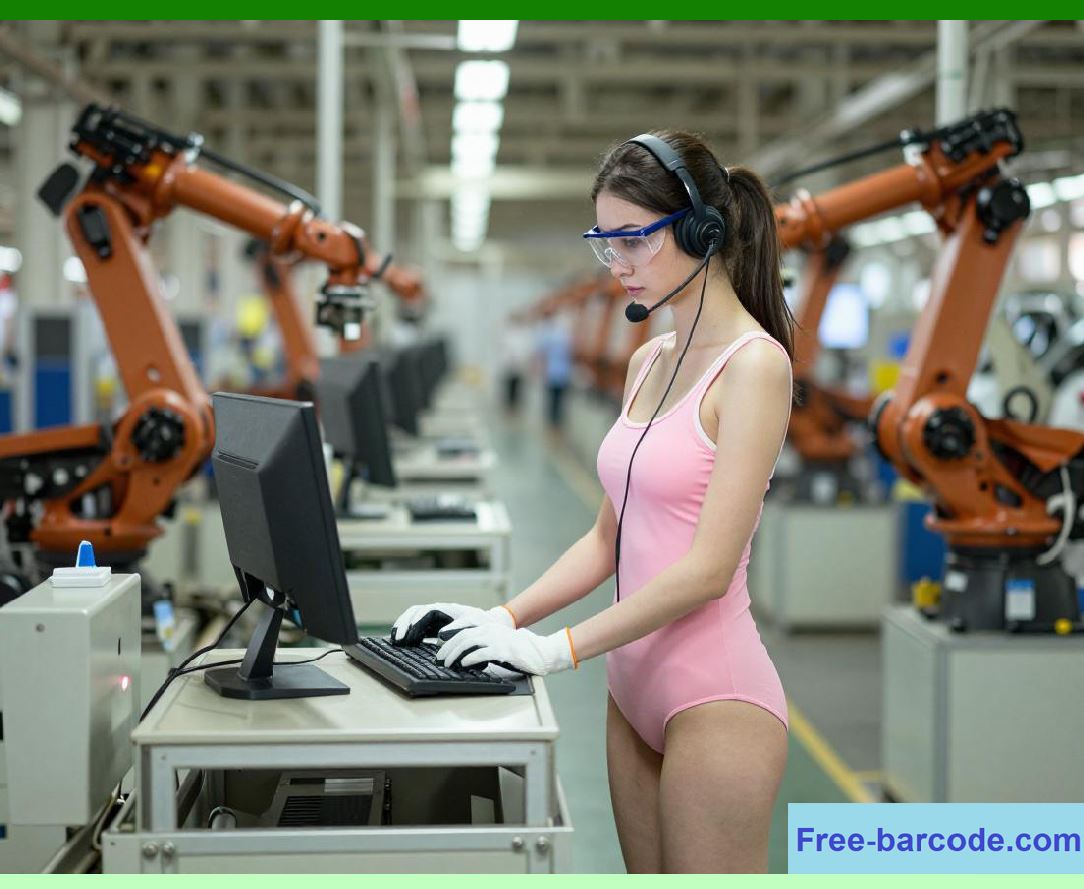
Manufacturing has long used barcodes and RFID for tracking. In an ambient intelligence factory, every workpiece, tool, and machine is identifiable. The production line knows what it is making and where it is. |
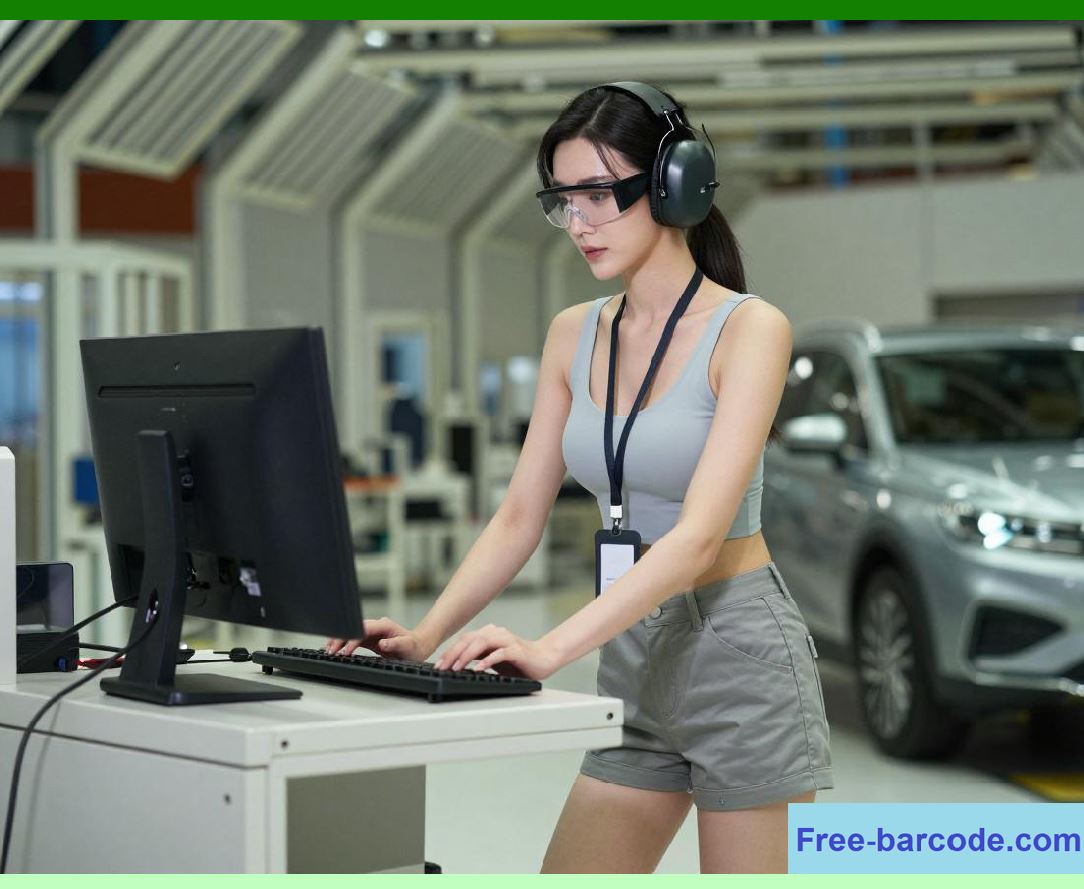
Consider a car factory. A chassis might have an RFID tag. As it moves down the line, readers at each station identify it. The station knows which model it is. It knows which options are required. It can automatically adjust its tools. It can retrieve the correct parts. |
Tools can also be tagged. A torque wrench can report its calibration status. It can report how many times it has been used. It can alert maintenance when it needs service. This reduces downtime and improves quality. |
Barcodes are still used for consumables and packaging. They are scanned when materials are received. They are scanned when they are used. This provides traceability. If a defect is found, the manufacturer can trace it back to a specific batch. |
The factory floor becomes a self-aware system. Identification is not a separate step. It is embedded in every movement. The result is greater flexibility, higher quality, and lower cost. |
|
Logistics: The Supply Chain That Thinks |
Logistics is the backbone of global trade. It is also a natural fit for ambient intelligence. A shipment moving through the supply chain passes through many hands. It is loaded, unloaded, sorted, and stored. Each step requires identification. |
RFID tags on pallets and cases can automate this. A reader at a dock door can read all the tags on a truck as it arrives. It can compare the shipment to the manifest. It can flag discrepancies. It can update the inventory system. |
Barcodes on individual items provide granularity. They are scanned when a case is opened. They are scanned when an item is picked. They are scanned when it is packed for final delivery. |
In an ambient intelligence supply chain, the shipment knows where it is. It knows if it has been opened. It knows if it has been exposed to extreme temperatures. It knows if it has been dropped. This is possible with sensor tags that combine RFID with environmental monitoring. |
The result is a supply chain that can respond to disruptions. If a shipment is delayed, the system can reroute it. If a product is recalled, the system can trace it. If a customer wants to know where their package is, the system can tell them without human intervention. |

|
Agriculture: The Farm That Feels |
Agriculture is increasingly data-driven. Farmers use sensors to monitor soil, weather, and crops. Identification plays a key role. RFID tags on livestock can track their health and movement. Barcodes on produce can trace it from farm to table. |
Consider a dairy farm. Each cow has an RFID tag. The milking robot reads the tag. It knows which cow is being milked. It can measure milk production. It can detect signs of illness. It can adjust feed rations. |
In crop farming, barcodes on seed bags provide traceability. They tell the farmer which variety is planted and when. They help with crop rotation and yield analysis. |
In an ambient intelligence farm, the entire operation is connected. Sensors in the field report soil moisture. Drones capture images. RFID tags track equipment. The farmer can see everything on a dashboard. Identification is automatic. The farm feels its own state. |

|
Smart Homes: The House That Knows |
The smart home is a consumer-facing example of ambient intelligence. Today, many homes have smart speakers, smart lights, and smart thermostats. These devices are connected, but they are not always aware of the objects around them. |
RFID and barcodes can change that. A smart refrigerator with an RFID reader can track what is inside. It can tell you when you are out of milk. It can suggest recipes based on what you have. It can even order groceries. |
A smart pantry can use barcodes. When you bring home a new item, you scan it. The pantry updates its inventory. It can remind you when something is about to expire. |
A smart closet can use RFID tags on clothes. It can suggest outfits. It can tell you when something needs cleaning. It can help you pack for a trip. |
The home becomes a network of identifying objects. The identification is not a chore. It is a convenience. The house knows what it has, and it uses that knowledge to serve you. |

|
Transportation: The Road That Talks |
Transportation is another area where ambient intelligence is emerging. Vehicles are increasingly connected. They have sensors, cameras, and GPS. Identification technologies are part of this. |
Electronic toll collection is an early example. A transponder in the car identifies it at the toll booth. The toll is deducted automatically. This is RFID in action. |
In an ambient intelligence transportation system, vehicles communicate with each other and with infrastructure. Traffic lights can adjust based on traffic flow. Parking spaces can report when they are free. Buses can report their location. |
Barcodes are used for ticketing. A passenger can show a barcode on their phone. It is scanned by a reader. This is identification at a point in time. |
RFID tags on vehicles can enable automatic parking. The car identifies itself to the parking garage. The gate opens. The fee is charged to the driver's account. The identification is seamless. |
The road becomes a network of identifying objects. The car, the toll booth, the parking meter, and the traffic light all communicate. The result is a smoother, safer, and more efficient transportation system. |
|
Public Infrastructure: The City That Senses |
Cities are complex systems. They have utilities, waste management, public safety, and more. Ambient intelligence can make them more efficient. |
Consider waste management. Bins can be equipped with RFID tags or sensors. They can report when they are full. The collection truck can read the tags. It can optimize its route. It can reduce fuel consumption. |
Consider water management. Pipes can have sensors that detect leaks. Valves can have RFID tags that identify them. Maintenance crews can use handheld readers to locate and identify assets. |
Consider public safety. Emergency responders can use RFID to track equipment. They can use barcodes to identify patients at a disaster scene. They can use drones with sensors to map an area. |
The city becomes a network of identifying objects. The identification is continuous. The city senses its own state and responds. |
|
The Role of Standards and Privacy |
For ambient intelligence to reach its potential, standards are essential. Without common standards, devices cannot communicate. Data cannot be shared. The network cannot function. |
GS1 is a key organization. It maintains the barcode standards. It also maintains the EPC standard for RFID. These standards ensure that a tag from one manufacturer can be read by a reader from another. They ensure that data is structured consistently. |
Privacy is a major concern. If objects announce their presence, who can hear themWho can link them to individualsWhat happens to the data |
These are not trivial questions. They require thoughtful regulation and design. Ambient intelligence should be built with privacy in mind. Data should be encrypted. Access should be controlled. Individuals should have transparency and choice. |
The goal is not a surveillance state. The goal is a responsive environment. The difference lies in how the technology is deployed and governed. |
|
Challenges and Limitations |
Ambient intelligence is not without challenges. Cost is one. While RFID tags are cheap, they are not free. For low-margin goods, the cost can be prohibitive. Barcodes are cheaper, but they require line of sight. |
Technical challenges exist. RFID can be affected by metal and liquid. Readers can interfere with each other. Data volumes can be enormous. Systems must be designed to handle this. |
Social challenges exist. Some people are uncomfortable with the idea of objects tracking them. They worry about job displacement. They worry about loss of control. |
These challenges are real. They must be addressed. But they are not insurmountable. As technology improves and costs fall, adoption will grow. As standards mature, interoperability will improve. As society debates the issues, policies will evolve. |

|
The Future: A Silent Network |
The future of identification is a silent network. It is a world where objects announce their presence continuously. It is a world where the physical world is mapped in real time. It is a world where identification is not a separate act but a background condition. |
This does not mean that barcodes will disappear. They will remain the workhorse of identification for many items. It does not mean that RFID will replace everything. It will complement barcodes in many scenarios. |
The key is convergence. Barcodes and RFID together create a layered identification system. Barcodes provide low-cost, line-of-sight identification. RFID provides automated, wireless, continuous identification. Together, they cover the spectrum. |
In this world, the store knows what is on its shelves. The hospital knows where its equipment is. The factory knows what it is making. The supply chain knows where its shipments are. The farm knows the state of its crops. The home knows what it has. The city knows its own infrastructure. |
This is the next frontier. It is not a distant dream. It is already happening, piece by piece. The silent network is being built. It will map the physical world in ways we are only beginning to understand. |
|
Detailed Summary |
This chapter has explored the next frontier of identification: ambient intelligence. The central idea is that identification will no longer be a separate, deliberate act. Instead, objects will announce their presence continuously in an Internet of Things environment. This shift is made possible by the convergence of barcodes and RFID, two mature technologies that together provide cheap, universal, and increasingly continuous identification. |
We began by defining ambient intelligence as environments that are sensitive and responsive to the presence of people and objects. In the context of identification, this means that objects are continuously identifiable. A carton of milk knows it is in the refrigerator. A surgical instrument knows it has been sterilized. A pallet knows it has passed through a dock door. This is not science fiction. It is the logical extension of existing systems. |
We then examined the building blocks. Barcodes are optical labels that store a small amount of data. They are extremely cheap and require line of sight. RFID tags are electronic and communicate via radio waves. They do not require line of sight and can be read in batches. Passive RFID tags are now cheap enough to attach to individual items. The two technologies are complementary. Barcodes are perfect for low-cost, high-volume, line-of-sight identification. RFID is perfect for automation, bulk reading, and continuous monitoring. |
We discussed the Internet of Things as the backbone of ambient intelligence. IoT devices are connected to the internet. They can send and receive data. In the context of identification, IoT devices are the readers, the tags, and the software that ties them together. Interoperability is key. Standards like EPCglobal, ISO, and GS1 define how tags are structured, how readers communicate, and how data is exchanged. When these standards are in place, the physical world becomes a data source. |
We then explored applications across multiple industries. In retail, smart shelves with RFID readers can detect when items are removed. They can update inventory in real time. They can trigger restocks. They can enable automatic checkout. Apparel is a leader, with many retailers using RFID tags on individual garments for inventory accuracy and self-checkout. Barcodes still play a role for low-cost goods, and a hybrid approach is likely. |

|
In healthcare, RFID wristbands identify patients. They can be read automatically and linked to electronic health records. Surgical instruments are tagged and tracked through sterilization. Medication cabinets can read barcodes or RFID tags to track what is taken and when. The hospital becomes a network of identifying objects, improving safety and efficiency. |
In manufacturing, every workpiece, tool, and machine can be identifiable. A car chassis with an RFID tag can be read at each station. The station knows which model it is and which options are required. Tools can report their calibration status. Barcodes provide traceability for consumables. The factory floor becomes a self-aware system. |
In logistics, RFID tags on pallets and cases automate receiving and inventory. Barcodes on individual items provide granularity. Sensor tags can monitor temperature and shock. The result is a supply chain that can respond to disruptions and provide real-time visibility. |
In agriculture, RFID tags on livestock track health and movement. Barcodes on produce trace it from farm to table. Sensors in the field report soil moisture. The farm feels its own state. |
In smart homes, a refrigerator with an RFID reader can track its contents. A pantry can use barcodes to manage inventory. A closet can use RFID tags to suggest outfits. The home becomes a network of identifying objects, providing convenience. |
In transportation, electronic toll collection uses RFID. Vehicles communicate with each other and with infrastructure. Barcodes are used for ticketing. RFID enables automatic parking. The road becomes a network of identifying objects. |
In public infrastructure, waste bins can report when they are full. Water pipes can detect leaks. Emergency responders can track equipment. The city senses its own state. |

|
We discussed the role of standards and privacy. Standards are essential for interoperability. GS1 maintains barcode and EPC standards. Privacy is a major concern. Data should be encrypted. Access should be controlled. Individuals should have transparency and choice. The goal is a responsive environment, not a surveillance state. |
We acknowledged challenges. Cost is one. Technical challenges exist, such as interference from metal and liquid. Social challenges exist, such as concerns about tracking and job displacement. These challenges are real but not insurmountable. As technology improves and costs fall, adoption will grow. |

|
Finally, we looked to the future. The future of identification is a silent network. It is a world where objects announce their presence continuously. Barcodes and RFID together create a layered identification system. The store knows what is on its shelves. The hospital knows where its equipment is. The factory knows what it is making. The supply chain knows where its shipments are. The farm knows the state of its crops. The home knows what it has. The city knows its own infrastructure. |
This is the next frontier. It is already happening, piece by piece. The silent network is being built. It will map the physical world in ways we are only beginning to understand. Identification will not be a separate act. It will be a background condition of modern life. |
 cs@easiersoft.com