Chapter 69: Chipless RFID |
A Summary at the Outset |
Imagine a world where every apple, every pill bottle, every pair of socks carries its own unique identity---not a printed number that must be scanned by hand, but a hidden electromagnetic fingerprint that can be read instantly, from a distance, without line of sight. This is the promise of chipless RFID: radio frequency identification without the silicon chip. |
For decades, the barcode has reigned as the cheapest way to tag a product. For just a fraction of a cent, a printed label can carry a number that any scanner can read. But the barcode has a fundamental limitation: it requires line of sight, precise alignment, and human or robotic effort to present each item individually. RFID solves these problems, but traditional RFID tags contain silicon microchips that cost far more than a barcode---often tens of cents---making item-level tagging economically impossible for low-value goods. |
Chipless RFID offers a third path. By encoding information not in a silicon circuit but in the physical geometry of conductive patterns---resonant structures that reflect specific frequencies when illuminated by radio waves---these tags can be manufactured with the same printing presses that produce barcodes, at a cost approaching or even falling below one cent. They can be read without line of sight, at distances up to a meter, and in bulk: hundreds or thousands simultaneously. They cannot store vast amounts of data, and they cannot be rewritten. But for the vast majority of products that simply need a unique identity and a reliable read, that is more than enough. |
This chapter explores the technology, its limitations, and---most importantly---the many industries where chipless RFID is already finding a home, from retail shelves to pharmaceutical supply chains to the food on your plate. |
|
The Problem with Silicon |
To understand why chipless RFID matters, one must first understand the economics that have held RFID back. |
A conventional passive RFID tag contains a silicon integrated circuit, an antenna, and a substrate. The silicon chip is the expensive part. It must be manufactured in a semiconductor fabrication facility, tested, and then assembled with the antenna---a process that adds labor and complexity. Even at massive volumes, the cost of a passive UHF RFID tag rarely drops below ten cents, and often sits considerably higher. For tagging a television or a shipping pallet, that cost is trivial. For tagging a can of soda, a candy bar, or a single apple, it is prohibitive. |
The barcode, by contrast, costs almost nothing. It is ink on paper. It can be printed directly onto packaging at the same time the packaging is printed. Its cost is measured in hundredths of a cent. The barcode's weakness is its requirement for line of sight: a scanner must see the barcode, and each barcode must be presented individually. This is why checkout at a grocery store involves a human dragging each item across a glass window. |
Chipless RFID attacks this problem from a different direction. If the expensive part is the silicon chip, what if we eliminate it entirelyWhat if the tag is nothing more than a pattern of conductive material---ink, foil, or film---that reflects radio waves in a distinctive wayThe cost would then be determined only by the materials and the printing process, both of which are already optimized for producing barcodes. The result is a tag that behaves more like an RFID tag than a barcode---it can be read without line of sight, in bulk, from a distance---but costs closer to a barcode. |
The trade-off is encoding capacity. Without a silicon chip, a chipless tag cannot store kilobits of data. It cannot be rewritten. It cannot perform cryptographic authentication. Its unique identity comes from the physical dimensions of its resonant elements: a set of slots, strips, or other shapes, each of which reflects a specific frequency. The presence or absence of those frequencies constitutes the tag's 'signature.' The number of bits that can be reliably encoded is typically in the range of ten to forty---enough for a unique item identifier, but not enough for a detailed product description or a chain of custody record. |
For many applications, that is precisely the right trade-off. The question is not whether chipless RFID can do everything a chipped tag can do. It cannot. The question is whether the applications that require only a unique identity---and that are currently served by barcodes or by nothing at all---can be better served by a tag that costs almost nothing and can be read automatically. |

|
How Chipless RFID Works: Fingerprints in the Electromagnetic Spectrum |
The operating principle of chipless RFID is elegantly simple, even if the engineering is not. |
Imagine a tag made of a thin conductive patch with several narrow slots cut into it. Each slot has a specific length. When a radio wave of the appropriate frequency strikes the slot, the slot resonates, re-radiating energy at that frequency. The length of the slot determines the frequency: shorter slots resonate at higher frequencies, longer slots at lower ones. By placing multiple slots of different lengths on a single tag, one creates a tag that reflects a unique combination of frequencies---an electromagnetic signature . |
This is the frequency-domain approach, and it is the most common. A reader transmits a broadband signal across a range of frequencies. The tag responds with peaks at the frequencies determined by its slot dimensions. The reader detects those peaks and decodes the pattern as a binary number: a resonance at a particular frequency means a '1,' absence means a '0.' |
The complexity lies in making this reliable in the real world. The reflected signal from a chipless tag is weak, and it competes with reflections from everything else in the environment---metal shelves, liquids, the human body. Early chipless tags suffered from unreliable reads in cluttered environments. Research has since produced solutions: cross-polarized tags that twist the polarization of the reflected signal so that it can be distinguished from background clutter , and nonlinear tags that respond at a different frequency than the interrogation signal, effectively filtering out environmental noise. |
A second approach uses the time domain. Instead of resonating at specific frequencies, a time-domain chipless tag contains a delay line with reflectors at precise positions. The tag responds to a short pulse with a series of echoes, and the spacing of those echoes encodes the identity. This approach can be faster to read, but it requires either very large tags or very precise timing, and the encoding capacity is generally lower than frequency-domain approaches . |
Most commercial and near-commercial chipless RFID systems use the frequency-domain approach, often combined with techniques to increase encoding density. By using multiple resonators with carefully chosen dimensions, and by exploiting both the frequency position and the phase of each resonance, researchers have demonstrated tags with thirty or more bits of encoding capacity on a single thin label . |

|
The Cost Curve: Why One Cent Changes Everything |
The significance of chipless RFID is not merely technological. It is economic. |
A tag that costs one cent can be applied to a product that costs one dollar. A tag that costs ten cents cannot. This simple arithmetic explains why RFID has remained confined to higher-value goods and reusable assets, while barcodes dominate the vast territory of consumer packaged goods, produce, and disposables. |
Chipless tags are manufactured using the same processes as printed electronics: conductive inks printed onto paper or plastic substrates using inkjet, screen, or roll-to-roll printing. No semiconductor fabrication, no chip assembly, no wire bonding. The tag is essentially a printed pattern, and its cost scales with the cost of ink and substrate, not with the cost of silicon . |
Recent announcements illustrate how far this cost curve has already fallen. In early 2026, a company called Idyllic Technology unveiled a chipless RFID tag measuring just twenty-four by twenty-four millimeters---small enough to apply to individual pieces of fruit or cosmetics---with a production cost of less than one cent per unit . The tag is fully printable, contains no silicon, and can be read at high speed: the company claims its readers can process up to four thousand tags per second. |
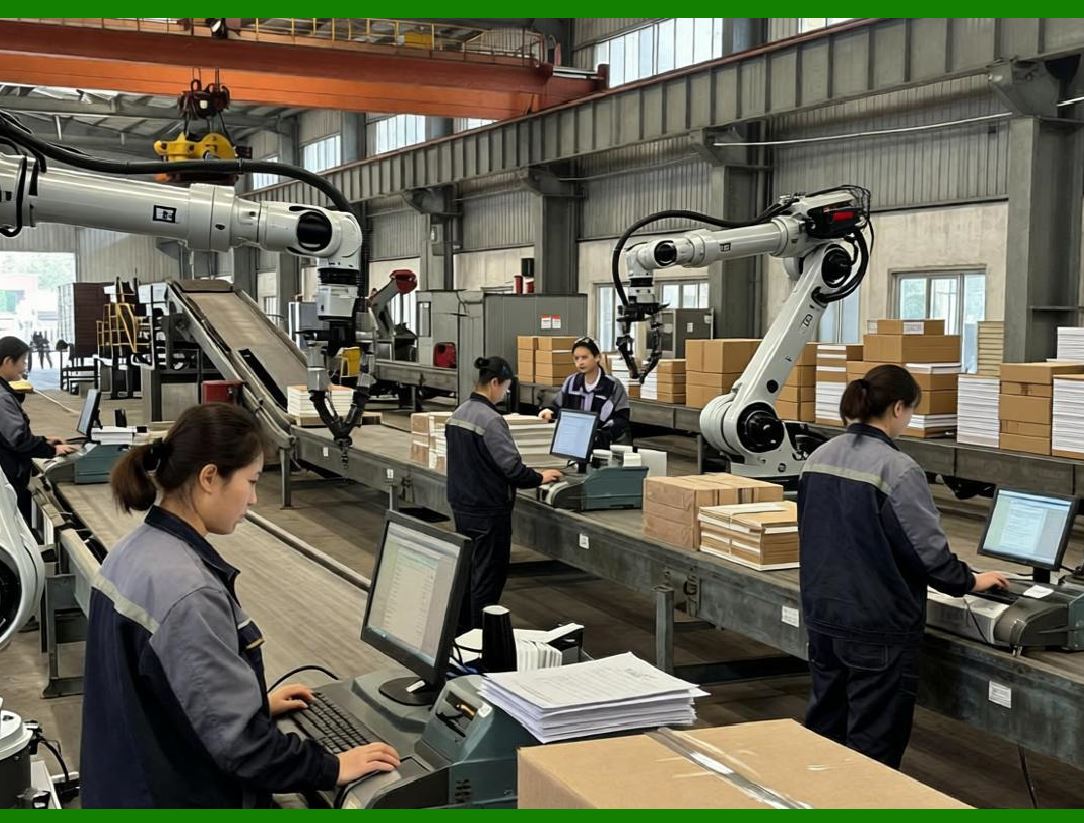
At that price point, the calculus changes. A retailer can afford to tag every item on the shelf, not just the pallet or the case. A pharmaceutical company can tag individual blister packs. A farmer can tag individual produce items at the point of harvest. The barcode's cost advantage disappears, and its line-of-sight limitation becomes the deciding factor. |
|
Applications: Where Chipless RFID Is Already Working |
The theoretical advantages of chipless RFID---low cost, no line of sight, bulk reading---translate into concrete benefits across a surprising range of industries. In each case, the value proposition is slightly different, but the underlying logic is consistent: where a unique identity must be attached to a physical object at very low cost, and where the limitations of barcodes impose real operational costs, chipless RFID offers a compelling alternative. |

|
Retail and Apparel |
Retail is the most obvious and most active market for chipless RFID. The industry's persistent problem is inventory accuracy: knowing what is on the shelf, in the back room, and in the supply chain. Barcodes require manual scanning, which is labor-intensive and error-prone. Chipped RFID tags solve the accuracy problem but cost too much for most apparel and consumer goods. |
Chipless RFID threads this needle. A tag that costs less than a cent can be attached to a T-shirt, a pair of shoes, or a cosmetic product. A reader at the fitting room or the stockroom door can automatically count every item that passes, updating inventory in real time. A handheld reader can sweep a shelf and identify every item on it without removing a single product. The result is inventory accuracy approaching one hundred percent, reduced stockouts, and less shrinkage . |
The market data reflects this potential. Retail and logistics enterprises are the largest adopters of chipless RFID, accounting for nearly half of the market's growth contribution, according to one industry analysis . The motivation is straightforward: cost-effective tracking at scale. When a tag costs a penny, the business case for item-level tagging extends beyond high-value goods to the entire product range. |

|
Pharmaceuticals: From Pallet to Pill |
The pharmaceutical supply chain is a special case. It is high-value, heavily regulated, and vulnerable to counterfeiting and theft. Chipped RFID tags are already used for case- and pallet-level tracking, but the ultimate goal---pill-level traceability---has been economically out of reach. |
Chipless RFID changes that calculation. Researchers have developed unclonable chipless tags that can be applied to individual pharmaceutical tablets or blister packs, enabling traceability from the manufacturing line to the patient . The 'unclonable' aspect is crucial: because the tag's signature depends on precise physical dimensions and material properties, it is extremely difficult to duplicate, providing a layer of anti-counterfeiting protection that a printed barcode cannot match. |
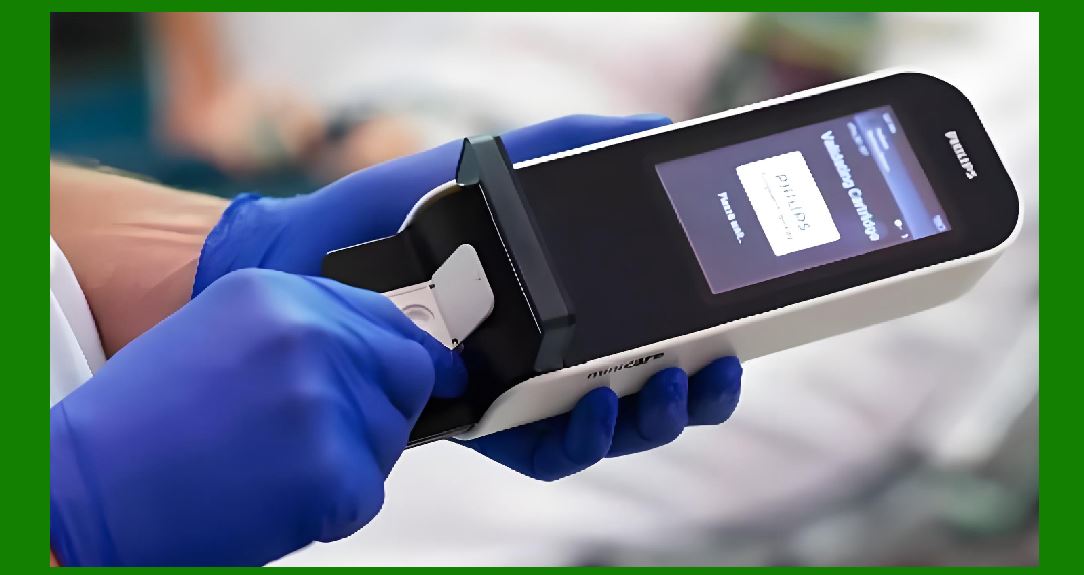
The pharmaceutical industry's interest in chipless RFID extends beyond anti-counterfeiting. In a hospital setting, chipless tags on medication packages could enable automated inventory management, reducing the time nurses spend counting pills and the risk of medication errors. In a clinical trial, they could provide a tamper-evident record of a drug's journey from factory to patient. |

|
Food Safety and Smart Packaging |
The food industry operates on thin margins and is acutely sensitive to waste. A significant portion of food spoilage occurs because consumers and retailers cannot accurately assess freshness; they rely on printed date labels that are imprecise and often ignored. |
Chipless RFID sensors offer a solution. By integrating a sensing element into the tag---a material that changes its electrical properties in response to temperature, humidity, or specific gases associated with spoilage---the tag can report not just identity but condition . A chipless tag on a package of cheese or yogurt could indicate whether the product has experienced a temperature excursion during transport, or whether it is beginning to spoil. |
The technical challenge is making such sensors cheap enough to be disposable and reliable enough to be trusted. Research projects are exploring laser-induced graphene on biodegradable plastics as a substrate for chipless RFID sensors, aiming to create tags that are both functional and environmentally benign . The potential impact is significant: a sensor that costs a fraction of a cent and can be read wirelessly could transform how food quality is monitored from farm to fork. |

|
Aerospace and Industrial Monitoring |
Not all chipless RFID applications require the lowest possible cost. Some require robustness in extreme conditions. |
Silicon chips have limits. They degrade at high temperatures. They are vulnerable to radiation, corrosion, and mechanical stress. In aerospace, industrial manufacturing, and other harsh environments, a tag without a chip can survive where a chipped tag would fail . |
Chipless RFID sensors are being developed for structural health monitoring: detecting cracks, corrosion, or stress in aircraft components, pipelines, and industrial equipment. Because the tag has no active electronics, it can be embedded in materials or placed in locations that would destroy a conventional RFID tag. The read range is shorter and the data capacity lower, but the ability to function at all in these environments is the primary requirement. |

|
Document Authentication and Brand Protection |
A chipless RFID tag can be embedded in paper or a label, making it invisible to the naked eye but detectable by a reader. This capability has attracted interest from industries concerned with authentication: luxury goods, pharmaceuticals, and government documents. |
The advantage over a hologram or a printed security feature is that a chipless tag can encode a unique, verifiable signature that is extremely difficult to replicate. Unlike a barcode, which can be photographed and reprinted, a chipless tag's electromagnetic signature depends on physical dimensions and material properties that are not easily reproduced. For high-value goods, this provides a means of verifying authenticity at the point of sale or during customs inspection . |

|
Agriculture and Livestock |
The agricultural sector presents a different set of challenges. Produce is often harvested, packed, and shipped in bulk, with little or no individual identification. Traceability from farm to table is increasingly demanded by regulators and consumers, but the cost of tagging individual items has been prohibitive. |
Chipless RFID's low cost and ability to be read without line of sight make it a candidate for tagging individual produce items---apples, avocados, tomatoes---at the packing house. A reader on a conveyor belt could identify and sort each item, recording its origin, harvest date, and destination. For livestock, chipless tags could supplement or replace ear tags, providing automated identification as animals move through gates or feeders. |
The technology is not yet deployed at scale in agriculture, but the research is active and the economics are compelling. When a tag costs less than a cent, the question shifts from 'can we afford to tag every item' to 'what would we do with the data if we could' |

|
Healthcare and Patient Monitoring |
Hospitals are environments where misidentification can have fatal consequences. Medications, blood products, and surgical instruments must be tracked with certainty. Barcodes are used extensively but require manual scanning at each step, consuming nursing time and introducing opportunities for error. |
Chipless RFID tags could enable automated tracking: a medication cart equipped with a reader could inventory its contents as it moves through the ward; a surgical tray could be scanned as a unit, with each instrument identified individually. The challenge is regulatory: any technology used in patient care must meet stringent standards for safety and reliability, and chipless RFID's read reliability in the presence of liquids and metals is an ongoing area of research. |

|
The Limitations That Remain |
Chipless RFID is not a universal replacement for either barcodes or chipped RFID. Its limitations are real and, in some cases, fundamental. |
The most significant is encoding capacity. A chipless tag typically encodes ten to forty bits, compared to ninety-six bits or more for a standard chipped RFID tag . This is sufficient for a unique serial number but not for a detailed data record. The tag is an identifier, not a database. |
Read range is another constraint. Chipless tags generally operate at distances of a few centimeters to a meter, compared to several meters for passive UHF RFID . This is adequate for many applications---a handheld reader sweeping a shelf, a gate reader at a doorway---but not for the long-range tracking that some supply chain applications require. |
The tags are also read-only. They cannot be updated or rewritten. For applications that require writing data to the tag---recording a temperature excursion, for example---a chipped tag is necessary. |
Finally, the physics of chipless RFID make reliable reading in cluttered environments an ongoing engineering challenge. The reflected signal is weak, and distinguishing it from background reflections requires careful antenna design and signal processing . Early deployments have sometimes fallen short of expectations, and the technology's commercial success will depend on whether readers can deliver the reliability that users expect from barcodes. |

|
The Road Ahead |
The trajectory of chipless RFID is being shaped by several converging trends. |
Printing technology continues to improve. Conductive inks are becoming more affordable and more precise, enabling smaller tags with higher encoding density. Roll-to-roll printing processes, already optimized for packaging, can produce chipless tags at volumes measured in billions. |
Reader technology is also advancing. Faster processors and more sophisticated signal processing algorithms are improving read rates and reliability. The development of readers that can scan thousands of tags per second opens applications in high-throughput environments---conveyor belts, sorting facilities, checkout lanes---that were previously out of reach . |
Standards are slowly emerging. A technology without standards struggles to achieve interoperability, and chipless RFID has historically lacked the kind of formal standardization that drove adoption of chipped RFID. As the technology matures, standards for encoding, communication protocols, and reader interfaces will become essential. |
The most intriguing possibility is the integration of chipless RFID with sensing. A tag that can report not just identity but condition---temperature, humidity, the presence of specific chemicals---opens applications that neither barcodes nor chipped RFID can address. Smart packaging that monitors food freshness, medical devices that verify sterilization, infrastructure that reports corrosion: these are applications where the value of the information far exceeds the cost of the tag . |

|
A Detailed Summary |
Chipless RFID represents a distinct approach to automatic identification, one that sacrifices the data capacity and flexibility of silicon-based RFID in exchange for a cost structure that approaches that of printed barcodes. The technology encodes identity in the physical geometry of conductive patterns---resonant slots, strips, or other structures---that reflect a unique combination of frequencies when illuminated by a radio signal. A reader detects this electromagnetic signature and decodes it as a binary identifier. |
The economic significance of chipless RFID lies in its cost. By eliminating the silicon chip and its associated assembly costs, chipless tags can be manufactured using standard printing processes at a cost of less than one cent per unit. This price point transforms the economics of item-level tagging, making it feasible to tag individual products that were previously excluded from RFID on cost grounds. |
The applications span a wide range of industries. In retail and apparel, chipless tags enable accurate inventory management and automated checkout at a cost that makes item-level tagging viable for low-value goods. In pharmaceuticals, they provide pill-level traceability and anti-counterfeiting protection. In food safety, chipless RFID sensors can monitor freshness and temperature, reducing waste and improving quality assurance. In aerospace and industrial settings, the absence of a silicon chip makes these tags more robust in harsh environments. In document authentication, they offer a difficult-to-replicate security feature. In agriculture and healthcare, they promise automated tracking and identification in sectors where barcode limitations impose real costs. |
The technology's limitations are equally important to understand. Chipless tags encode only ten to forty bits, sufficient for a unique identifier but not for detailed data storage. Their read range is typically less than a meter. They are read-only and cannot be updated. And reliable reading in cluttered electromagnetic environments remains an engineering challenge. |

|
Despite these limitations, the trajectory of chipless RFID is upward. Market forecasts project strong growth, driven by demand for low-cost tracking in retail, logistics, healthcare, and manufacturing . Advances in printing technology, reader design, and sensor integration are expanding the technology's capabilities. The barcode will not disappear, but for the vast middle ground of products that need a unique identity and can benefit from automated, bulk reading at a cost approaching zero, chipless RFID offers something that neither barcodes nor chipped RFID can provide: the economics of ink and the capability of radio. |
 cs@easiersoft.com