Chapter 75: The End of 'Scanning' |
Summary |
For decades, the act of scanning has been a deliberate, human-driven gesture. A worker lifts a handheld laser gun, aims it at a barcode, and pulls the trigger. A cashier drags a product across a glass plate. A warehouse associate walks aisle by aisle with a ruggedized mobile computer, clicking a trigger for every pallet and shelf label. This gesture, repeated billions of times a day across the global economy, has been the fundamental bridge between the physical world and its digital record. But that bridge is disappearing. Not because identification is going away, but because it is becoming ambient. Drones, fixed overhead readers, smart shelves, robotic arms, and embedded antennas are quietly replacing the human hand and eye. The result is a real-time digital twin of every warehouse, store, home, and factory floor. Identification is no longer an event. It is a condition. This chapter explores how the end of scanning is unfolding across industries, what it means for workers and businesses, and why the invisible network of readers and tags is the true foundation of the physical internet. |
|
The Gesture That Built Modern Commerce |
To understand where we are going, we must first appreciate where we have been. The barcode, born in the early 1970s, was a revolutionary compression of information. A series of black and white stripes could encode a product number, a price, a batch code, or a shipment identifier. But the barcode itself is silent. It is a passive pattern of ink. It only speaks when a human or a machine actively reads it. That act of reading, the scan, became the defining labor ritual of the information age. |
Consider the modern supermarket. In 1974, a single pack of chewing gum became the first item scanned at a retail checkout. By the 1980s, scanning was ubiquitous. By the 2000s, self-checkout lanes asked customers to become their own scanners. Each scan is a tiny moment of translation: light hits a sensor, a pattern is decoded, a database is updated, a price is displayed, inventory is decremented. Multiply that by trillions of scans per year, and you have the nervous system of global retail. |
But the scan has always been a bottleneck. It requires a person. It requires line of sight. It requires the item to be presented at a specific angle and distance. It requires time. A warehouse worker might scan hundreds of items per shift. A cashier might scan a thousand. A drone, by contrast, can read thousands of tags in a single pass without stopping. A fixed reader above a doorway can log every item that passes beneath it without anyone lifting a finger. The end of scanning is not the end of identification. It is the end of identification as a separate, conscious act. |

|
From Explicit to Ambient: The Spectrum of Invisibility |
The shift from scanning to ambient identification is not a single leap. It is a spectrum. At one end, we have the familiar handheld scanner. At the other end, we have a room that simply knows what is inside it. Along the way, there are many intermediate stages. |
The first stage is the fixed reader. Instead of a person aiming a device, a device is mounted in a doorway, on a ceiling, or on a conveyor belt. As tagged items pass by, they are read automatically. This is already common in retail loss prevention and warehouse shipping lanes. The human no longer scans, but the human still moves the item past the reader. |
The second stage is the mobile reader. This could be a robot, a drone, or a vehicle. The reader moves through the space, and the space is identified. A drone flies down a warehouse aisle and reads every pallet location. A robot rolls through a store aisle after hours and takes inventory. The human is removed from the loop entirely. |
The third stage is the embedded reader. Here, the readers are built into the environment itself. Shelves have antennas. Doorways have mats. Ceilings have grids. The space is continuously aware of what is present. This is the digital twin in its fullest sense: a living, updating model of the physical world. |
The fourth stage is the passive tag revolution. As tags become cheaper, smaller, and more capable, they can be attached to more and more items. Eventually, every item of value, every asset, every piece of inventory, and even every person in a work environment could be tagged. The network of readers then becomes a continuous layer of awareness, like a nervous system for a building. |
|
The Technology Behind the Invisible Network |
The end of scanning is made possible by a convergence of technologies. The most important is RFID, or radio frequency identification. Unlike a barcode, an RFID tag does not need line of sight. It can be read through cardboard, plastic, and even walls. It can be read in bulk. A single reader can interrogate hundreds of tags per second. Passive RFID tags, which have no battery, harvest their power from the reader's radio waves. They are cheap enough to be disposable on high-value items and durable enough to last for years on reusable assets. |
But RFID is not the only technology. There are also active tags with batteries, which can transmit over longer distances and at higher data rates. There are Bluetooth low energy beacons, which are useful for proximity detection. There are ultra-wideband tags, which provide precise location. There are computer vision systems, which can identify items by their shape, color, or text. And there are barcodes themselves, which are still the cheapest and most ubiquitous form of identification. The future is not one technology replacing another. It is a layered network where different technologies complement each other. |
The key enabler is the reader infrastructure. Fixed readers are becoming cheaper, smaller, and more power-efficient. They can be powered over Ethernet, meaning a single cable provides both data and electricity. They can be networked together into a mesh that covers an entire building. They can be managed in the cloud, with software that filters, aggregates, and interprets the flood of data. The reader is no longer a peripheral. It is a building block of the physical internet. |

|
The Digital Twin: A Living Model of the Physical World |
The phrase digital twin has been used in manufacturing for years. It refers to a virtual replica of a physical asset, process, or system. In the context of ambient identification, the digital twin is not just a static model. It is a real-time, continuously updated representation of everything that is happening in a physical space. |
Imagine a warehouse. Every pallet, every case, every item has a tag. Fixed readers at the receiving dock, at each aisle entrance, at the packing stations, and at the shipping dock track every movement. Drones fly periodic inventory sweeps. The warehouse management system is not a database that is updated manually. It is a live map that shows exactly where everything is, in real time. If a pallet is moved, the system knows. If an item is picked, the system knows. If a shipment is short, the system knows before the truck leaves the dock. |
Now imagine a retail store. Smart shelves have embedded readers. When a customer picks up a shirt, the shelf knows. When they put it back in the wrong place, the shelf knows. When the last unit of a popular item is sold, the shelf knows and triggers a replenishment order. The store manager does not need to walk the floor with a scanner. The store is self-aware. |
Now imagine a home. A pantry with embedded readers knows what food is inside. A refrigerator knows when the milk expires. A closet knows what clothes are there. A tool chest knows what tools are missing. The home becomes a participant in inventory management, not just a container. |
This is the digital twin: not a static snapshot, but a living, breathing model that mirrors the physical world in near real time. And it is built on a foundation of ambient identification, where scanning is no longer a human task but an environmental condition. |
|
Industry by Industry: The End of Scanning in Action |
Retail: The Self-Aware Store |
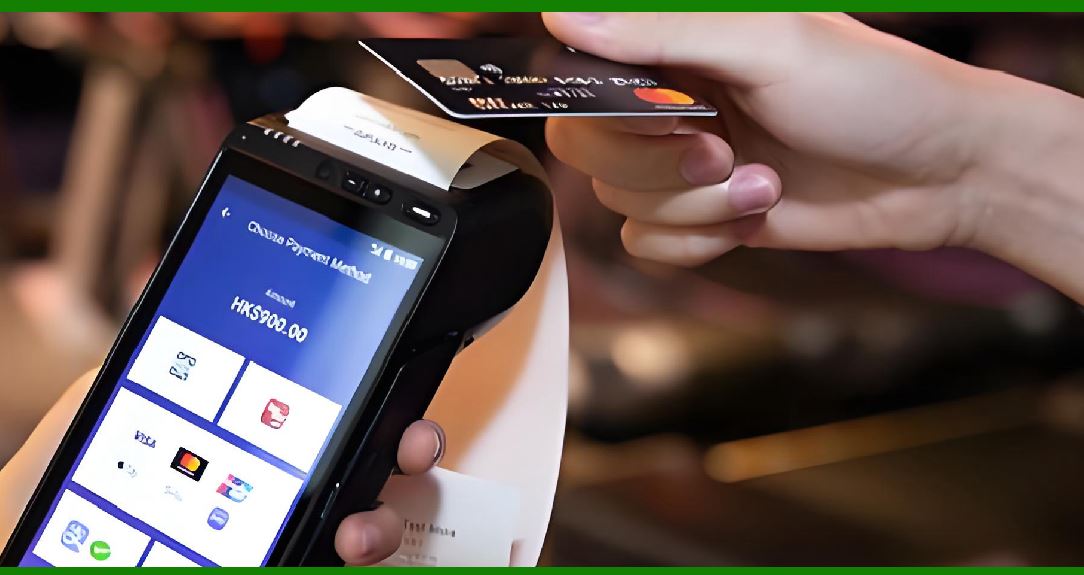
Retail is the most visible battleground for the end of scanning. For decades, the checkout lane has been the symbol of retail technology. But the checkout lane is disappearing. Amazon Go pioneered the concept of a store with no checkout at all. Customers walk in, take what they want, and walk out. The store uses a combination of computer vision, shelf sensors, and RFID to track what is taken. The receipt appears on the customer's phone. No scanning. No lines. No cashiers. |
But Amazon Go is just the beginning. RFID is being used in apparel stores to track every item from the stockroom to the fitting room to the point of sale. Smart shelves can detect when an item is removed and can display a digital advertisement for that item. Fitting rooms can read the tags of the clothes a customer brings in and suggest matching items. The store becomes a responsive environment, not a passive warehouse. |
In grocery, the challenge is different. Liquids and metals interfere with RFID. But even here, progress is being made. Some stores are testing RFID tags on high-value items like wine and spirits. Others are using computer vision to identify produce at self-checkout. The goal is the same: remove the scan from the customer journey. The customer should be able to walk in, pick up what they need, and walk out. The store should know what happened without being told. |
|
Warehousing and Logistics: The Autonomous Inventory |
Warehousing is where the end of scanning is most advanced. The modern warehouse is a ballet of moving parts: forklifts, pallets, conveyor belts, and robots. In the past, every movement was accompanied by a scan. A worker scanned a pallet before putting it away. A worker scanned a case before picking it. A worker scanned a box before shipping it. These scans were necessary to keep the warehouse management system accurate. But they were also slow, error-prone, and expensive. |
Today, fixed readers are mounted at every chokepoint. As a forklift passes through a doorway, the pallet is read automatically. As a case moves down a conveyor, it is read automatically. As a robot picks an item, it is read automatically. The warehouse management system is updated in real time, without any human intervention. The result is a dramatic reduction in errors. Inventory accuracy goes from 95 percent to 99 percent or higher. Labor costs drop. Throughput increases. |
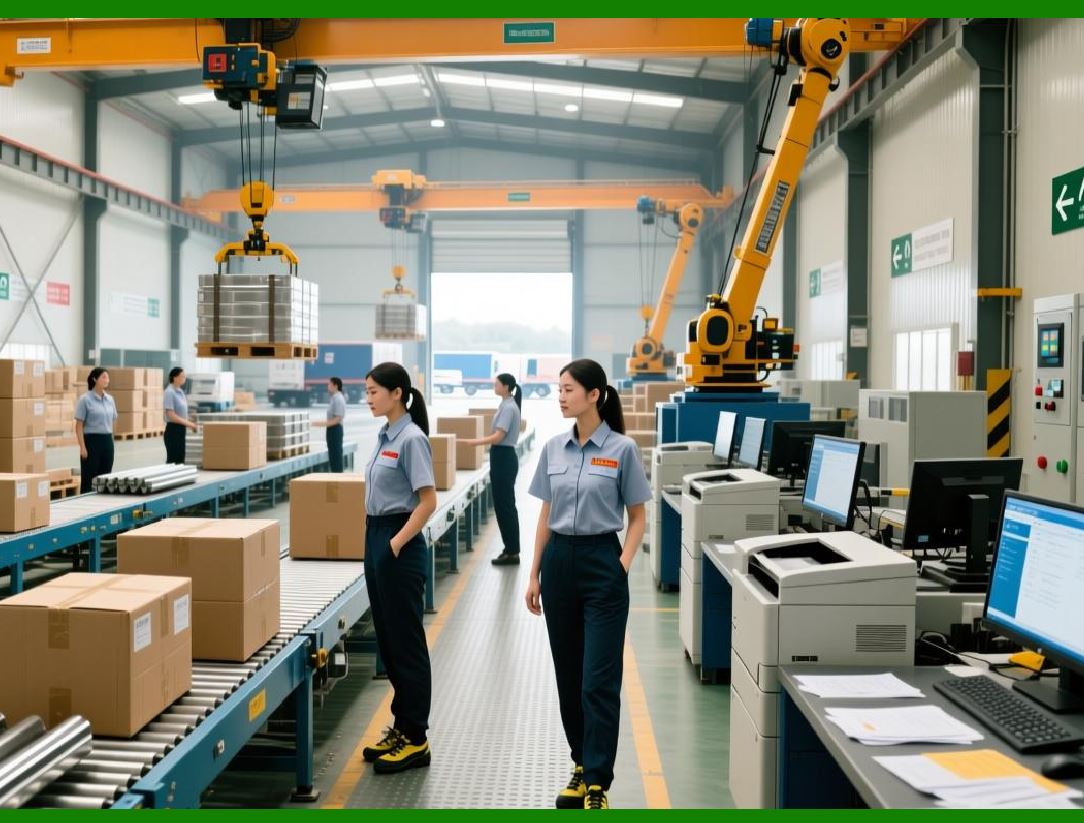
Drones are the next frontier. A drone can fly down an aisle and read every pallet location in minutes. It can take inventory at night, when the warehouse is empty. It can reach places that are difficult for humans to reach. It can operate in cold storage, where humans cannot stay for long. The drone is not just a flying scanner. It is an autonomous inventory agent, capable of updating the digital twin without any human guidance. |
|
Manufacturing: The Self-Correcting Factory |
In manufacturing, the end of scanning means the end of manual tracking. Every component, every subassembly, every finished good can be tagged. Fixed readers at each workstation can verify that the right parts are being used. Robots can read tags to confirm that they are picking the right item. Conveyors can route items automatically based on their tags. The factory becomes a self-correcting system. If a wrong part is introduced, the system knows immediately. If a process step is skipped, the system knows. If a machine is running low on a consumable, the system knows and orders more. |
This is not just about efficiency. It is about quality. In aerospace, automotive, and pharmaceuticals, traceability is a regulatory requirement. Every component must be traceable from raw material to finished product. Ambient identification makes this traceability continuous and automatic. There is no need to manually record batch numbers or serial numbers. The system knows. |
|
Healthcare: The Ambient Hospital |
Hospitals are complex, high-stakes environments. Every year, thousands of patients are harmed by medication errors, lost equipment, and misidentified specimens. Ambient identification can help. RFID tags on wristbands can ensure that the right patient gets the right medication. Tags on surgical instruments can ensure that nothing is left inside a patient after surgery. Tags on specimens can ensure that they are not mixed up in the lab. Tags on wheelchairs, infusion pumps, and other mobile equipment can ensure that they are available when needed. |
The end of scanning in healthcare means that nurses do not have to stop and scan every medication before administering it. The system knows. Doctors do not have to manually log every instrument. The system knows. The hospital becomes a safer, more efficient environment, where identification is a background condition rather than a foreground task. |
|
Agriculture and Food: From Farm to Fork |
The food supply chain is long and complex. A single head of lettuce might pass through a dozen hands before it reaches a consumer. Each step is an opportunity for contamination, spoilage, or fraud. Ambient identification can provide end-to-end traceability. RFID tags on pallets and cases can track food from the farm to the distribution center to the store. Sensors can monitor temperature and humidity, alerting if conditions go out of range. If a recall is necessary, the system can identify exactly which products are affected and where they are. |
In the field, drones can survey crops and read tags on individual plants or rows. This allows farmers to track growth, detect disease, and optimize harvest schedules. In the grocery store, smart shelves can monitor stock levels and freshness. The consumer can scan a QR code to see the entire history of the product. The end of scanning does not mean the end of information. It means that information is generated automatically, without anyone having to ask for it. |
|
Smart Homes: The Self-Aware Living Space |
The smart home has been a promise for decades. But most smart home devices are still isolated gadgets: a smart thermostat, a smart light bulb, a smart doorbell. The end of scanning could finally make the home truly smart. Imagine a pantry that knows what you have and what you need. A refrigerator that knows when the milk is about to expire and adds it to your shopping list. A closet that knows what clothes you have and suggests outfits. A tool chest that knows when a tool is missing. |
This is not about surveillance. It is about convenience. The home becomes a participant in your life, not just a container for your things. It can help you reduce waste, save money, and save time. It can also help you find things when you lose them. The end of scanning in the home means that you never have to manually inventory your possessions again. The home knows. |

|
Transportation and Automotive: The Connected Vehicle |
Modern vehicles are already computers on wheels. They have dozens of sensors, cameras, and processors. But they are also part of a larger network. RFID tags on parts can track them through the supply chain. Tags on tolls and parking meters can automate payments. Tags on tires can monitor pressure and wear. In the future, vehicles will communicate with the infrastructure around them. A car will know when it is approaching a toll booth, a parking space, or a charging station. It will pay automatically, without the driver having to do anything. |
In logistics, the end of scanning means that shipments can be tracked in real time without any manual intervention. A truck can be loaded with tagged pallets, and the system knows exactly what is on board. As the truck travels, readers at weigh stations, border crossings, and distribution centers can read the tags automatically. The shipment is tracked from origin to destination, with no human scanning required. |
|
Libraries and Archives: The Quiet Revolution |
Libraries were among the first adopters of barcodes. Every book has a barcode, and every checkout involves a scan. But libraries are also early adopters of RFID. An RFID tag in a book can be read through the cover, without opening it. A librarian can check out a stack of books in seconds. A patron can self-checkout without any staff assistance. And a librarian can take inventory by simply walking down the aisle with a handheld reader, or by using a fixed reader that covers an entire shelf. |
The end of scanning in libraries means that inventory can be continuous rather than annual. The library always knows what it has and where it is. Missing books are detected immediately. Misplaced books are flagged. The library becomes a more efficient, more responsive institution. |
|
Museums and Cultural Heritage: The Invisible Guide |
Museums are increasingly using RFID and other ambient technologies to enhance the visitor experience. A tag on an exhibit can trigger an audio guide or a digital display when a visitor approaches. A tag on a ticket can track visitor movement through the museum, helping curators understand which exhibits are most popular. A tag on an artifact can monitor temperature and humidity, ensuring that it is preserved properly. |
The end of scanning in museums means that visitors do not have to point a device at a label to get information. The information comes to them. The museum becomes an interactive, responsive environment, where the physical and digital worlds are seamlessly integrated. |

|
The Human Dimension: What Happens to the Workers |
The end of scanning is not just a technological shift. It is a human shift. Millions of people around the world are employed in jobs that involve scanning. Cashiers, warehouse pickers, inventory clerks, librarians, and nurses all spend a significant portion of their day scanning. What happens to them when scanning goes away |
The answer is not simple. Some jobs will be eliminated. A store that does not need cashiers will not hire cashiers. A warehouse that does not need inventory clerks will not hire inventory clerks. But other jobs will be created. Someone has to install and maintain the readers. Someone has to manage the data. Someone has to handle the exceptions that the system cannot resolve. Someone has to design the workflows that make the system work. |
The more important shift is in the nature of work. Scanning is a repetitive, low-skill task. It is also a task that is prone to error and injury. Repetitive strain injuries are common among cashiers and warehouse workers. The end of scanning could free humans to do more interesting, more valuable work. A warehouse worker who no longer has to scan every item can focus on quality control, problem-solving, and customer service. A cashier who no longer has to scan every product can focus on helping customers and building relationships. |
But this transition is not automatic. It requires investment in training and education. It requires a social safety net that supports workers who are displaced. It requires a cultural shift that values human skills over mechanical ones. The end of scanning is not just a technical challenge. It is a social challenge. |

|
The Privacy Question: Who Knows What |
Ambient identification raises profound privacy questions. If every item in a store is tagged, and every reader is always on, then the store knows exactly what you picked up, what you put back, and what you bought. If every item in your home is tagged, and your home has readers, then your home knows exactly what you have and what you do. If every item in your workplace is tagged, then your employer knows exactly where you are and what you are doing. |
This is not a hypothetical concern. It is a real and present danger. RFID tags can be read from a distance, without your knowledge or consent. They can be used to track your movements, your purchases, and your habits. They can be correlated with other data to build a detailed profile of your life. The end of scanning could become the end of privacy. |
There are technical solutions. Tags can be encrypted. Readers can be authenticated. Data can be anonymized. But technology alone is not enough. We need laws and regulations that protect individuals from unwanted surveillance. We need social norms that respect privacy. We need a public conversation about what is acceptable and what is not. The end of scanning is not just a question of what is possible. It is a question of what is right. |
|
The Infrastructure Challenge: Building the Invisible Network |
The end of scanning requires a massive infrastructure investment. Every warehouse, every store, every home, every hospital, every factory needs to be equipped with readers. Every item needs to be tagged. The data needs to be transmitted, stored, and processed. The systems need to be integrated. This is not a trivial undertaking. |
The good news is that the cost of RFID tags has fallen dramatically. A passive tag that cost a dollar in 2000 now costs a few cents. A reader that cost thousands of dollars now costs hundreds. The technology is mature and reliable. The standards are in place. The business case is compelling. The transition is already underway. |
The bad news is that the transition is uneven. Large companies with deep pockets can afford to invest in ambient identification. Small businesses cannot. This could create a two-tier economy, where large companies have a significant advantage over small ones. It could also create a digital divide, where some communities have access to the benefits of ambient identification and others do not. |
Bridging this divide will require public investment, public-private partnerships, and a commitment to equitable access. The end of scanning should not be a privilege for the few. It should be a benefit for the many. |

|
The Data Deluge: Managing the Flood |
Ambient identification generates an enormous amount of data. A single warehouse with thousands of tags and dozens of readers can generate millions of reads per day. A retail store with smart shelves can generate billions of reads per year. This data is valuable, but it is also overwhelming. How do you store itHow do you process itHow do you make sense of it |
The answer is edge computing. Instead of sending all the data to the cloud, you process it at the edge, close to where it is generated. A reader can filter out duplicate reads, aggregate data, and only send what is relevant. This reduces bandwidth, reduces latency, and reduces cost. It also improves privacy, because sensitive data can be processed locally and never leave the premises. |
The other answer is artificial intelligence. AI can sift through the data, identify patterns, and make predictions. It can detect anomalies, such as a missing item or an unexpected movement. It can optimize workflows, such as routing a robot to the most efficient path. It can learn and improve over time. The end of scanning is not just about collecting data. It is about turning data into insight. |
|
The Standards Battle: Who Will Rule the Invisible Network |
Standards are the foundation of any network. Without standards, devices cannot communicate. Without standards, data cannot be shared. Without standards, the invisible network cannot exist. There are several standards competing for dominance in the world of ambient identification. |
The most important is the EPC Gen2 standard for RFID. It defines how tags and readers communicate. It is an open standard, supported by a wide range of vendors. It is used in retail, logistics, healthcare, and many other industries. It is the de facto standard for passive RFID. |
But there are other standards. There is ISO 18000, which covers a broader range of RFID frequencies. There is Bluetooth Low Energy, which is used for proximity detection. There is Ultra-Wideband, which is used for precise location. There is Zigbee, which is used for mesh networking. There is also the emerging standard for the Internet of Things, which aims to connect everything to everything. |
The standards battle is not just a technical question. It is a business question. Companies that control standards can control markets. Companies that adopt the wrong standard can be locked out. The end of scanning will be shaped by the outcome of this battle. |
|
The Environmental Impact: The Cost of Invisibility |
Ambient identification has an environmental cost. Every tag is a small piece of plastic, metal, and silicon. Every reader is a device that consumes power. Every data center that stores the data consumes energy. The end of scanning could lead to a mountain of electronic waste. |
But it could also lead to environmental benefits. Better inventory management means less waste. Less waste means fewer resources consumed. Fewer resources consumed means a smaller environmental footprint. In food supply chains, ambient identification can reduce spoilage and improve freshness. In manufacturing, it can reduce defects and rework. In retail, it can reduce overstock and markdowns. |
The key is to design for sustainability. Tags should be made from recyclable materials. Readers should be energy-efficient. Data centers should be powered by renewable energy. The end of scanning should not be a burden on the planet. It should be a benefit. |
|
The Future: What Comes After the End of Scanning |
If the end of scanning is the beginning of ambient identification, what comes nextThe answer is a fully connected physical world, where every object is aware of its location, its condition, and its relationships. This is sometimes called the Internet of Things, but that phrase is too narrow. It is not just about things. It is about the spaces between things. It is about the context in which things exist. |
In this future, a warehouse is not just a building with shelves. It is a living organism that knows what it has, what it needs, and what it is doing. A store is not just a place to buy things. It is a responsive environment that adapts to the needs of each customer. A home is not just a place to live. It is a partner in daily life, helping you manage your possessions and your time. A hospital is not just a place to heal. It is a safe, efficient, patient-centered environment. |
This future is not inevitable. It depends on choices we make today. It depends on the standards we adopt, the laws we pass, the investments we make, and the values we hold. The end of scanning is not just a technological milestone. It is a fork in the road. One path leads to a more efficient, more convenient, more sustainable world. The other leads to a more surveilled, more unequal, more wasteful world. The choice is ours. |
|
Conclusion: The Invisible Network |
The end of scanning is not the end of identification. It is the end of identification as a separate, conscious act. In the past, we had to point a device at a label to know what something was. In the future, the world will know what everything is, all the time, without anyone having to ask. This is the invisible network: a mesh of readers, tags, and software that maps the physical world in real time. |
This network is already being built. It is in the warehouse, where drones and fixed readers track every pallet. It is in the store, where smart shelves and RFID tags track every item. It is in the hospital, where wristbands and instrument tags ensure patient safety. It is in the home, where smart appliances and embedded readers manage daily life. It is in the factory, where robots and sensors optimize production. It is in the library, the museum, the farm, and the highway. |
The invisible network is not a single technology. It is a convergence of technologies: RFID, barcodes, computer vision, Bluetooth, ultra-wideband, and more. It is not a single industry. It is a layer that cuts across every industry. It is not a single company. It is an ecosystem of vendors, standards bodies, and users. It is not a single vision. It is a shared direction. |
The end of scanning is a profound shift. It changes how we work, how we shop, how we live, and how we relate to the physical world. It raises questions about privacy, equity, and sustainability. It offers opportunities for efficiency, convenience, and safety. It is not a destination. It is a journey. And it is just beginning. |
|
Detailed Summary |
This chapter has explored the end of scanning as a defining trend in the evolution of identification technology. The central argument is that the deliberate, human-driven act of scanning is being replaced by ambient, continuous, and invisible identification. This shift is enabled by a convergence of technologies, including RFID, fixed readers, drones, computer vision, and embedded sensors. The result is a real-time digital twin of physical spaces, where every object is known and tracked without any human intervention. |
The chapter began by tracing the history of scanning, from the first barcode scan in 1974 to the billions of scans that occur daily in retail, logistics, healthcare, and other industries. It explained why scanning has been a bottleneck: it requires human labor, line of sight, and time. It then introduced the spectrum of ambient identification, from fixed readers to mobile robots to embedded antennas, and described the technology behind the invisible network, including passive and active RFID, Bluetooth, ultra-wideband, and computer vision. |
The concept of the digital twin was explained as a living, real-time model of a physical space, continuously updated by ambient identification. The chapter then surveyed industry-specific applications. In retail, the self-aware store uses RFID and computer vision to eliminate checkout lines and optimize inventory. In warehousing and logistics, fixed readers and drones create autonomous inventory systems with near-perfect accuracy. In manufacturing, ambient identification enables self-correcting factories with continuous traceability. In healthcare, it improves patient safety and equipment management. In agriculture and food, it provides farm-to-fork traceability and reduces waste. In smart homes, it creates responsive living spaces that manage inventory and reduce waste. In transportation, it enables connected vehicles and real-time shipment tracking. In libraries and museums, it transforms inventory and visitor experiences. |
The chapter also addressed the human dimension, including the impact on jobs and the need for training and social support. It discussed privacy concerns, emphasizing the need for legal and social safeguards. It examined the infrastructure challenge, including the cost of tags and readers and the risk of a digital divide. It explored the data deluge and the role of edge computing and artificial intelligence in managing it. It considered the standards battle and its implications for market power. It assessed the environmental impact, both negative and positive, and the importance of sustainable design. Finally, it looked to the future, describing a fully connected physical world and the choices that will shape it. |
|
The end of scanning is not just a technological change. It is a social, economic, and ethical change. It promises a world where identification is ambient, continuous, and invisible. It promises a world where the physical and digital are seamlessly integrated. But it also raises profound questions about privacy, equity, and sustainability. The invisible network is being built. The question is not whether it will exist, but what it will look like, who it will serve, and what values it will embody. The end of scanning is the beginning of a new chapter in the relationship between humans and the physical world. It is a chapter we are writing together, one reader, one tag, one choice at a time. |
 cs@easiersoft.com