Chapter 77: The Human Factor |
Summary |
The most sophisticated tracking network in the world is worthless if the people who use it cannot trust it, understand it, or benefit from it. This chapter examines how barcodes and RFID technology succeed or fail based on their relationship with human workers. The central argument is straightforward: the best technology is not the one that replaces human judgment, but the one that augments it. Across industries as varied as healthcare, aviation, construction, agriculture, and retail, the pattern repeats itself. When automatic identification systems are designed to reduce cognitive burden, eliminate tedious verification tasks, and surface information exactly when and where it is needed, adoption flourishes and error rates plummet. When they are imposed without regard for existing workflows, or when they create new forms of opacity rather than eliminating old ones, resistance grows and the promised benefits fail to materialize. The chapter explores specific deployment scenarios where the human factor proved decisive, from medication administration in hospitals to tool checkout on construction sites, from baggage handling in airports to beef traceability on family farms. Each example reveals a common truth: technology that respects the worker is technology that works. |
The barcode scanner at a supermarket checkout counter is perhaps the most familiar interface between automatic identification technology and the human hand. A cashier picks up a can of soup, sweeps it across a glass window, hears a soft beep, and moves on. The entire interaction takes less than a second. It is easy to overlook the complexity hidden beneath this mundane gesture. Somewhere in that fraction of a second, a laser or camera has decoded a pattern of bars and spaces, matched it against a database of product information, retrieved a price, decremented an inventory count, and logged a sales record. The cashier does not need to know any of this. The cashier only needs to know where to point the can. |
This is the essence of what good technology does for human workers. It takes a task that would otherwise require attention, memory, or calculation, and it makes that task disappear. The worker's cognitive resources are freed for other things: greeting the customer, bagging the groceries carefully, watching for the person who seems to be having a medical emergency in aisle four. The technology does not replace the cashier. It augments the cashier. It makes the cashier faster, more accurate, and less exhausted at the end of a shift. |
But this relationship between worker and technology is not automatic. It must be designed. It must be earned. And when it is neglected, the consequences can be severe. The history of automatic identification in the workplace is littered with well-intentioned systems that failed because they ignored the humans who were supposed to use them. The stories of success are equally instructive. They share a common thread: the technology was shaped around the worker, not the other way around. |
|
The Cognitive Load Problem |
Before examining specific industries, it is worth understanding why the human factor matters so much in the context of tracking technology. The fundamental problem that barcodes and RFID solve is not a technology problem. It is a human problem. Humans are terrible at tracking things. We forget. We confuse similar-looking items. We lose focus after hours of repetitive work. We take shortcuts when we are tired or rushed. We assume that the last step was done correctly because we did it ourselves yesterday and it was fine then. |
In a supply chain context, these ordinary human limitations have extraordinary consequences. A single mislabeled pallet can delay a shipment by days. A medication given to the wrong patient can kill someone. A missing tool on an aircraft maintenance hangar can ground a plane. The entire apparatus of barcodes, RFID tags, scanners, databases, and network protocols exists because human beings cannot reliably perform the kind of meticulous, repetitive, detail-oriented tracking that modern supply chains demand. |
But here is the paradox: the same human limitations that make tracking technology necessary also make it difficult to implement. Workers who are already overloaded with tasks do not welcome a new procedure, even one that promises to make their lives easier in the long run. The learning curve is real. The resistance to change is real. And the technology itself can become a new source of cognitive burden if it is poorly designed. |
Consider a hospital nurse at the end of a twelve-hour shift. She needs to administer medication to a patient. The old way: check the patient's wristband, check the medication label, check the doctor's order, verify the dose and time, document the administration. The new way: scan the patient's wristband, scan the medication, wait for the system to verify the match, document. On paper, the new way is faster and more accurate. In practice, it depends on whether the scanner works reliably, whether the barcode is readable, whether the system responds quickly, and whether the nurse has been trained to understand what the system is checking and why. |
If any of these elements fail, the technology becomes an obstacle rather than an aid. The nurse may develop workarounds. She may scan the patient's wristband and the medication at the same time without verifying that the system actually processed both. She may memorize the override codes. She may revert to the old manual checks 'just to be safe' and then document in the new system anyway, creating a record that looks compliant but is not. None of these behaviors indicate that the nurse is careless or resistant to technology. They indicate that the technology has not respected the conditions under which the nurse actually works. |
This is why the human factor is not a secondary consideration in the design of tracking systems. It is the primary consideration. The technology must fit into the workflow, not the other way around. It must reduce cognitive load, not add to it. It must be reliable enough that workers trust it. And it must provide value that workers can perceive, not just value that appears on a management dashboard. |

|
Healthcare: When Scanning Saves Lives |
Nowhere is the human factor more consequential than in healthcare. Medication errors are among the most common and most preventable causes of patient harm. The World Health Organization has estimated that medication errors contribute to millions of adverse events annually, with significant costs in both human suffering and healthcare expenditure. Barcode medication administration systems were developed specifically to address this problem, and they have become one of the most successful applications of automatic identification technology in any industry. |
The principle is elegantly simple. A patient wears a wristband with a unique barcode. Every medication dose is labeled with a barcode that encodes the drug, dose, and other relevant information. Before administering medication, the nurse scans both barcodes. The system compares the scan against the physician's order. If there is a mismatch, an alert appears. The nurse cannot proceed without acknowledging the alert and, in many systems, documenting a reason for overriding it. |
The technology does not make the nurse unnecessary. It does not make clinical judgment obsolete. What it does is catch the errors that human beings inevitably make when they are tired, rushed, interrupted, or distracted. A nurse who has been on shift for ten hours, who has been called away from the medication cart three times, who has three other patients waiting for pain relief, may not notice that the pill in her hand is 10 milligrams instead of the 5 milligrams ordered. The barcode scanner will notice. It never gets tired. It never gets distracted. It never assumes that yesterday's dose was correct so today's must be too. |
But the success of barcode medication administration depends entirely on whether nurses use it correctly. And that depends on whether the system is designed to support their work rather than complicate it. Hospitals that have implemented these systems successfully have learned several lessons. The scanners must be readily available and in good working order. The barcodes must be printed clearly and placed where they can be easily scanned. The wireless network must be reliable enough that the system responds quickly. The alerts must be meaningful, not so frequent that nurses develop 'alert fatigue' and learn to ignore them. And the training must help nurses understand not just how to use the system, but why it matters. |
One study of barcode medication administration implementation found that the most common cause of workarounds was not resistance to technology but failure of the technology itself. When scanners were missing or broken, when the wireless connection dropped, when the wristband barcode was smeared or the medication label was poorly printed, nurses had no choice but to bypass the system. The solution was not to exhort nurses to try harder. It was to fix the infrastructure so that the technology worked reliably enough to be trusted. |
RFID is extending the reach of automatic identification in healthcare beyond medication administration. Hospitals are using RFID tags to track medical equipment, from infusion pumps to wheelchairs to surgical instruments. A nurse looking for an IV pump at 2 AM no longer needs to search from room to room. A simple query on a mobile device shows where the nearest available pump is located. This is a small thing, but it saves time and reduces frustration, and in a hospital, time and frustration can have real consequences for patient care. |
The human factor in these applications is subtle but important. RFID asset tracking works because it answers a question that humans actually have: 'Where is the thing I need right now' It does not ask workers to perform additional tasks for the benefit of management. It does not create new documentation burdens. It simply makes visible information that was previously invisible. This is the kind of technology that workers embrace rather than resist. |

|
Aviation: Trusting the Bag to the Network |
The aviation industry presents a particularly clear case study in the relationship between automatic identification technology and human trust. Every year, millions of bags are mishandled by airlines, meaning they fail to arrive at the destination with their owner. The cost is enormous, not just in dollars spent on reuniting passengers with their luggage, but in passenger frustration and damage to airline brands. The industry has long recognized that better tracking is the key to reducing mishandling rates. |
Traditional barcode-based baggage tracking has served the industry for decades, but it has a fundamental limitation: the barcode must be visible to the scanner. A baggage handler must orient the bag correctly, position the scanner appropriately, and wait for the beep. In a busy airport, with hundreds of bags moving through a transfer point in a short window, this is a recipe for missed reads. Industry data suggests that barcode read rates in baggage handling average around eighty-five percent, meaning that fifteen percent of bags pass through a checkpoint without being registered. Those unregistered bags are the ones that get lost. |
RFID changes this equation fundamentally. An RFID tag does not need to be visible. A reader can capture the tag's signal through the bag, through the conveyor belt, through the container. Multiple bags can be read simultaneously. The read rate for RFID in baggage handling has been shown to reach ninety-nine percent or higher in some deployments. The difference between eighty-five percent and ninety-nine percent may not sound dramatic, but when applied to millions of bags, it represents a massive reduction in mishandled luggage. |
The human factor in this context is about trust. A baggage handler who has spent years relying on barcode scanners knows exactly how unreliable they can be. The scanner fails to beep. The bag moves past the read zone before the scan registers. The handler has to stop, back up the conveyor, and try again. This creates frustration and, over time, a habit of not fully trusting the system. When RFID is introduced, the handler's first reaction may be skepticism. The bag passes through the read zone, and there is no visible confirmation that the tag was read. The handler cannot see the scan happen. The technology is invisible, which paradoxically makes it harder to trust. |
Successful RFID deployments in aviation have addressed this challenge by making the system's operation visible in ways that matter to the handler. A green light on the reader. A count on a nearby display showing how many bags have been read in the current batch. A subtle audio confirmation that is distinct from the old barcode beep. These small design choices build trust incrementally. The handler learns, over days and weeks, that the RFID system actually works. The bags are being tracked. The system is reliable. The handler stops worrying about whether the scan happened and focuses on the physical task of moving bags. |
Airports that have implemented RFID baggage handling at scale, such as McCarran International in Las Vegas and Hong Kong International, have reported significant improvements in tracking accuracy and corresponding reductions in mishandled bags. The technology works. But it works because the humans in the system have learned to trust it, and because the system was designed with their trust in mind. |

|
Construction: The Tool That Knows Where It Is |
Construction sites are chaotic environments. Tools, materials, and equipment move constantly. Workers from multiple trades come and go. What was in the storage container yesterday may be on the third floor today, or in a truck headed to another site, or simply lost. The Bureau of Labor Statistics has estimated that construction workers spend a significant portion of their day searching for tools and materials. This is not just inefficient. It is dangerous. A worker who cannot find the right tool may improvise with the wrong one, leading to accidents. |
Traditional tool tracking on construction sites has relied on sign-out sheets, whiteboards, and institutional memory. These methods work about as well as one might expect. The sign-out sheet gets lost. The whiteboard gets erased. The person who knew where the tool was got laid off last week. In the best case, these methods create a rough approximation of where things might be. In the worst case, they create a false sense of order that collapses when a critical tool cannot be found. |
Barcode-based tool tracking represents a significant improvement. Each tool gets a durable barcode label. Workers scan tools in and out using a mobile device or a fixed station at the tool crib. The data flows to a cloud database that can be accessed from anywhere. The foreman can check the system from a tablet and see exactly which tools are on site and who checked them out. This is a dramatic improvement over the sign-out sheet, and it requires relatively little behavior change from workers. Scanning a tool is not much different from writing your name on a clipboard. |
RFID takes this a step further. Instead of scanning each tool individually, a worker can pass a handheld reader over a tool bag or a storage rack and capture every tagged item in range. At the end of the day, a supervisor can walk through the site and perform a quick inventory without opening a single container. For high-value tools that are frequently lost or stolen, this capability pays for itself quickly. |
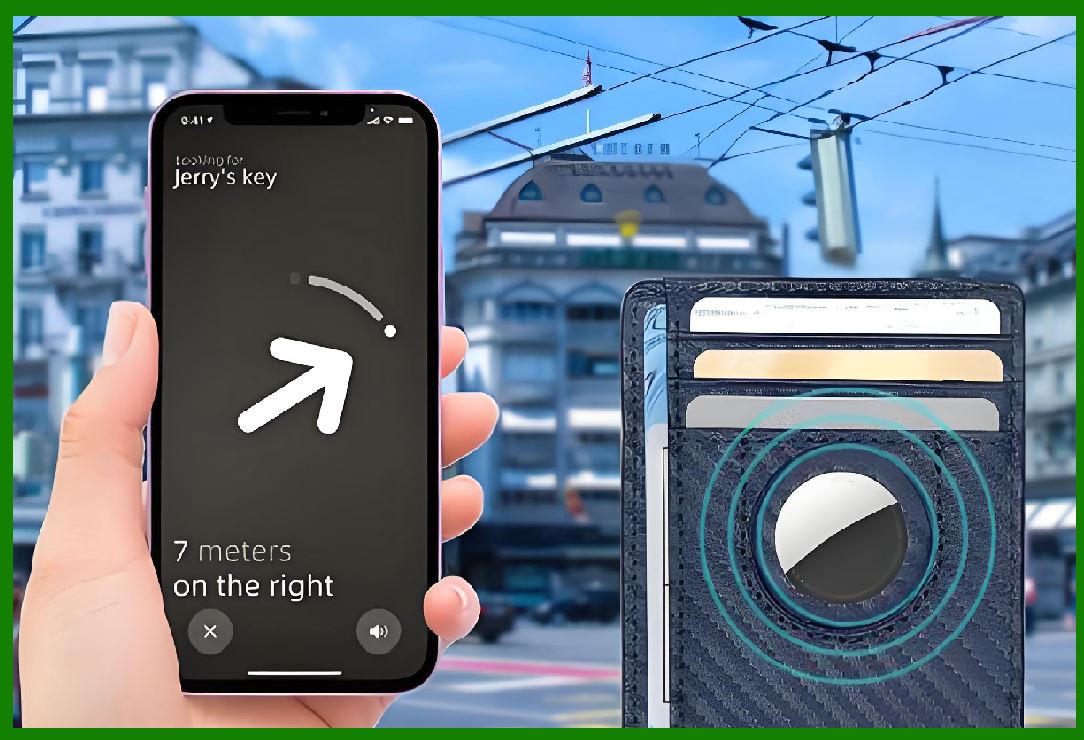
Bluetooth Low Energy tags represent the next evolution. A BLE tag on a tool or a vehicle can be automatically detected when it passes through a gateway at the site entrance. The worker does not need to scan anything. The tool is logged in or out simply by moving past a fixed point. This is the ultimate expression of the human factor principle: the technology does its work without requiring the human to do anything at all. The worker's only job is to show up and do the actual construction work. The tracking happens silently in the background. |
Of course, none of this works if the tags fall off, the readers run out of battery, or the software is too complicated to use. Construction is a harsh environment. Labels get scraped, tags get crushed, devices get dropped. The technology must be rugged enough to survive the conditions of the job site, and simple enough that a worker who has never used a computer can operate it without frustration. When these conditions are met, tool tracking systems become genuinely useful to the workers themselves, not just to management. A worker who can find the tool she needs in two minutes instead of twenty is a worker who will support the system. |
|
Agriculture and Food: From Farm to Fork, With Confidence |
The human factor in food traceability operates on two levels. On one level, there are the farmers, ranchers, and processors who must use the technology. On another level, there are the consumers who ultimately benefit from it. The two are connected by a chain of information that begins in a pasture or a field and ends on a dinner plate. |
Consider the beef industry. A consumer walks into a grocery store and sees two packages of ground beef. One is labeled with a barcode that, when scanned, reveals the farm where the animal was raised, the date of processing, and perhaps even a photograph of the farmer. The other package has no such information. The consumer is willing to pay more for the first package because the traceability system has created value where before there was only a commodity product. |
For this system to work, the farmer must participate. And the farmer will only participate if the system serves the farmer's interests. The old model, in which large processors extracted information from farms without providing anything in return, created no incentive for farmers to invest time in record-keeping. The new model, in which traceability creates a premium product that commands a higher price, changes the calculus. The farmer who tags each animal with an RFID ear tag and records its history is not doing extra work for the benefit of someone else. The farmer is building a product identity that can be marketed directly to consumers. |
Research on beef traceability systems has shown that when consumers are given the opportunity to scan a barcode and learn about the origin of their food, a significant minority will actually do so. In one study, sixteen percent of consumers who received a flyer with a QR code linking to farm-of-origin information scanned the code. Sixteen percent may not sound like a large number, but it represents a meaningful market segment, one willing to pay a premium for transparency. For midsized farms that cannot compete on price with industrial operations, this is a lifeline. Traceability allows them to compete on story, on values, on the relationship between producer and consumer. |
The human factor here is about connection. The technology does not just track a product through a supply chain. It connects a person who eats food with a person who grows it. That connection is the product. The barcode is just the mechanism. |
Similar dynamics are at work in the seafood industry, where illegal, unreported, and unregulated fishing has depleted stocks and undermined legitimate fishermen. A digital traceability system that tracks fish from the moment of catch to the point of sale can verify that the fish was caught in a licensed area at a permitted time by an authorized vessel. Consumers who care about sustainability can scan a QR code at the fish counter and see the entire history of the product they are about to buy. The fishermen who comply with the rules can command a price premium. The fishermen who do not are excluded from the market. |

|
Retail: The Frontline of Adoption |
Retail is where most people encounter automatic identification technology for the first time, and it is where the human factor has been studied most intensively. The checkout scanner is a mature technology, refined over decades to be fast, accurate, and easy to use. But the retail environment is changing, and new technologies are placing new demands on both workers and shoppers. |
Two-dimensional barcodes, capable of encoding far more data than traditional linear barcodes, are beginning to appear on product packaging. These codes, often in the form of QR codes, can carry expiration dates, batch numbers, serial numbers, and links to digital content. At the point of sale, a 2D barcode can trigger automatic checks, such as preventing the sale of an expired product. For consumers, the same code can be scanned with a smartphone to access nutritional information, recipes, sustainability certifications, or promotional offers. |
The transition to 2D barcodes is not without challenges. Checkout systems must be upgraded to read the new codes. Product packaging must accommodate both the old linear barcode and the new 2D code during the transition period, which can be difficult on small or curved surfaces. Retail workers must be trained to handle scanning issues that may not have occurred with the old system. And there is a security concern known as 'quishing,' in which malicious actors create fake QR codes that direct users to fraudulent websites. |
RFID is also transforming retail, particularly in apparel and footwear. An RFID tag on a garment allows a store associate to take inventory in minutes rather than hours. It allows a shopper to check on a mobile app whether a particular size and color is available at a nearby store. It allows a self-checkout station to ring up an entire basket of items instantly, without the shopper having to scan each one individually. The friction of shopping is reduced. The accuracy of inventory is improved. The time that associates spend counting items is freed for customer service. |
But RFID in retail also raises the human factor question in a particularly acute form. If a shopper can walk out of a store with items that are automatically charged to her account, what happens to the role of the cashierIf inventory can be taken automatically by a robot roaming the aisles, what happens to the associates who used to do that workThese are legitimate concerns, and they cannot be dismissed with assurances that 'technology creates new jobs.' The transition may be painful for the individuals affected, even if the net effect on employment is positive. |
The most thoughtful retailers have approached this transition by emphasizing the augmentation aspect of the technology. The RFID-enabled store associate is not replaced. She is equipped with a mobile device that tells her exactly which items need restocking, where they are located, and what sizes are running low. She spends less time counting and more time helping customers. The technology does not eliminate her job. It changes her job, ideally for the better. |

|
The Trust Equation |
Across all these industries, a common theme emerges. Technology succeeds when it earns the trust of the people who use it. That trust is not granted automatically. It must be built through reliable performance, thoughtful design, and demonstrated value. |
The first element of trust is reliability. A barcode scanner that usually works but occasionally fails is worse than no scanner at all, because it teaches workers to expect failure and to develop workarounds. A nurse who has been burned by a scanner that did not read correctly will hesitate to trust the next scan. A baggage handler who has seen bags slip past a reader without being registered will not believe the system's data. Reliability is the foundation. Without it, nothing else matters. |
The second element is relevance. The technology must answer questions that workers actually have. A tool tracking system that tells a foreman where a wrench was three days ago is less useful than one that tells him where it is right now. A medication administration system that alerts a nurse to a potential error is useful. One that generates a report for management about error rates is less so, at least from the nurse's perspective. The value proposition must be clear to the person doing the scanning, not just to the person reading the dashboard. |
The third element is respect. Technology that treats workers as potential sources of error to be monitored and corrected will be resisted. Technology that treats workers as skilled professionals whose judgment is augmented by better information will be embraced. The difference is subtle but profound. A system that says 'we don't trust you to count the inventory correctly, so we're going to track every item' creates a different relationship than a system that says 'we know you're busy, so we've made it easier for you to find what you need.' |
The fourth element is simplicity. The best tracking technology disappears into the background. A barcode scan that takes half a second is invisible. An RFID read that happens automatically as a pallet passes through a portal is invisible. A BLE tag that logs a tool's location without anyone doing anything is invisible. The more the technology requires conscious attention from the worker, the more likely it is to be perceived as a burden rather than an aid. |

|
The Future of Augmentation |
The technologies discussed in this book, barcodes and RFID, are often described in terms of what they replace. Barcodes replaced manual price marking. RFID is replacing manual inventory counting. But the more interesting framing is what they enable. They enable human workers to do things that were previously impossible or impractical. |
A warehouse worker with an RFID-enabled handheld can locate a specific pallet in a ten-thousand-square-meter facility in seconds. Without RFID, that task might take twenty minutes of walking up and down aisles. The technology does not replace the worker. It gives the worker a superpower. |
A pharmacist with a barcode-verified medication management system can fill prescriptions with a level of accuracy that was previously unattainable. She can spend less time on verification and more time counseling patients. The technology does not replace her expertise. It amplifies it. |
A construction foreman with a real-time tool tracking system can know, at any moment, exactly what equipment is on site and where it is. He can plan the day's work with confidence instead of hoping that the tools he needs will be available. The technology does not replace his judgment. It informs it. |
This is the promise of augmentation. It is not about eliminating human workers. It is about making human workers more effective, more confident, and less stressed. It is about reducing the cognitive burden of tracking things so that humans can focus on the things that humans do best: judgment, creativity, empathy, and adaptation. |
The silent network of barcodes and RFID tags that maps the physical world is not a substitute for human intelligence. It is a complement to it. The network sees what humans cannot see: the location of every tagged item, the history of every scanned event, the pattern that emerges from millions of data points. The human sees what the network cannot see: the context, the exception, the opportunity. Together, they create a system that is more accurate than either could achieve alone. |

|
Conclusion: The Best Technology |
The chapters of this book have explored the many ways that barcodes and RFID have transformed the physical world. We have seen how a simple pattern of black and white lines became the nervous system of global commerce. We have seen how radio waves can track a pallet through a warehouse or a patient through a hospital. We have seen how these technologies combine to create a silent network that maps the movement of things with a precision that was unimaginable a generation ago. |
But all of this technology, all of this precision, all of this data, depends on a single factor that is often overlooked in discussions of automatic identification. It depends on people. The best barcode scanner in the world is useless if no one scans. The most sophisticated RFID system is worthless if workers develop workarounds to avoid using it. The most comprehensive traceability database is meaningless if no one trusts the data enough to act on it. |
The technology that succeeds is the technology that respects the human factor. It is reliable enough to be trusted. It is relevant enough to be valued. It respects the worker's time and judgment. It is simple enough to disappear into the background of daily work. |
This is not a lesson that applies only to barcodes and RFID. It applies to any technology that is meant to be used by human beings in the course of their work. The history of workplace technology is full of systems that were technically brilliant and practically disastrous because they ignored the people who were supposed to use them. The lesson is old and simple: technology serves people, not the other way around. |
The silent network will continue to grow. New sensors, new tags, new methods of capturing data will extend its reach into corners of the economy that are not yet connected. The volume of data will increase. The speed of analysis will increase. The precision of tracking will increase. Through all of this change, the human factor will remain. The workers who scan the barcodes, who attach the RFID tags, who interpret the data, who make decisions based on what the network tells them, will remain the essential element. Technology that augments them, that reduces their errors, saves their time, and earns their trust, will succeed. Technology that ignores them will fail. |
The best technology is not the most advanced. It is not the fastest. It is not the one with the most features. The best technology is the one that makes human workers more capable of doing the work that matters. That is the standard by which every tracking system should be judged. It is the standard by which the silent network has been built. And it is the standard by which its future will be determined. |
 cs@easiersoft.com