PDF417, a 2D barcode symbology, has found wide-ranging applications across various industries due to its robustness, data capacity, and versatility. Initially developed by Symbol Technologies in 1991, PDF417 has evolved into a critical tool for both commercial and government organizations. This detailed exploration will delve into the diverse applications of PDF417 barcodes, showcasing its importance in sectors such as postal services, aviation, government identification, and beyond. | 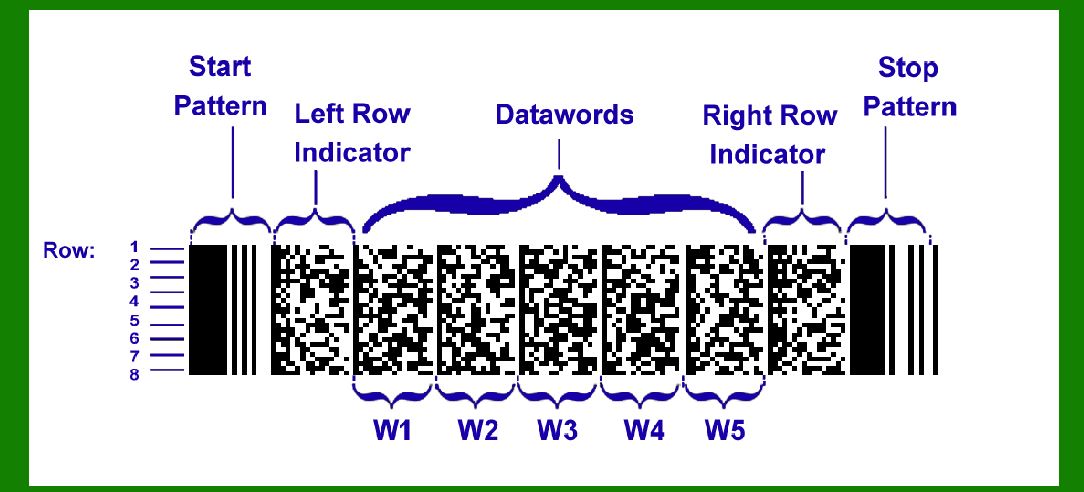
| Postal Services | One of the foundational applications of PDF417 is in postal services, where it plays a crucial role in facilitating efficient mail management and tracking. The United States Postal Service (USPS) utilizes PDF417 barcodes extensively for printing postage labels. These barcodes encode a significant amount of data related to the sender, recipient, package weight, destination ZIP code, and other relevant shipping details. This capability not only enhances the speed and accuracy of mail sorting and delivery but also supports tracking services that provide customers with real-time information on the status and location of their parcels. | 
| Aviation Industry | In the aviation sector, PDF417 is adopted as the standard for Bar Coded Boarding Passes (BCBP). This application enables airlines worldwide to streamline the check-in process, enhance security measures, and improve overall operational efficiency. Boarding passes containing PDF417 barcodes encode passenger information such as name, flight details, seat assignment, and security data, ensuring smooth and secure passenger boarding procedures at airports. | 
| Government Identification | PDF417 has garnered significant recognition and adoption in the realm of government-issued identification documents. Notably, it is the technology chosen by the Department of Homeland Security (DHS) for RealID compliant driver licenses and state-issued identification cards in the United States. These IDs incorporate PDF417 barcodes to store essential personal information, including biometric data where applicable, facilitating secure identity verification and validation processes. | Similarly, PDF417 barcodes are employed on visas and border crossing cards issued by various governments, including the State of Israel. These documents encode detailed information about the visa holder or cardholder, such as passport details, visa type, validity dates, and issuing authority. The use of PDF417 enhances border control operations by enabling quick and accurate scanning of travel documents at checkpoints, ensuring stringent security checks while expediting processing times for travelers. | 
| Healthcare and Pharmaceuticals | In healthcare and pharmaceutical industries, PDF417 barcodes are utilized for a range of applications aimed at enhancing patient safety, improving medication management, and ensuring regulatory compliance. Pharmaceutical companies often employ PDF417 barcodes on drug packaging to encode critical information such as drug identification numbers (DINs), expiration dates, batch numbers, dosage instructions, and manufacturer details. These barcodes support efficient inventory management, counterfeit prevention, and rapid retrieval of medication information in clinical settings. | Moreover, PDF417 barcodes are integral to medical laboratory operations, where they are used on specimen containers to encode patient identification data, test types, collection dates, and laboratory accession numbers. This application aids in accurately tracking and tracing specimens throughout the testing process, minimizing errors, and ensuring timely and precise diagnostic results. | 
| Retail and Inventory Management | PDF417 barcodes play a vital role in retail and inventory management systems, offering enhanced data storage capabilities compared to traditional 1D barcodes. Retailers utilize PDF417 barcodes on product labels to encode extensive information such as item descriptions, pricing, SKU numbers, batch numbers, and expiration dates. This enables efficient stock control, rapid checkout processes, and accurate tracking of merchandise from storage facilities to point-of-sale (POS) terminals. | In warehouse and logistics operations, PDF417 barcodes are applied on shipping labels and inventory tags to encode comprehensive details about shipments, including origin and destination addresses, carrier information, package contents, and handling instructions. The use of PDF417 facilitates automated sorting, inventory tracking, and seamless integration with supply chain management systems, thereby optimizing operational efficiency and reducing shipping errors. | 
| Ticketing and Access Control | PDF417 barcodes are widely adopted in ticketing systems for events, public transportation, and entertainment venues. These barcodes are embedded in tickets to encode event details, seat assignments, admission times, and ticket holder information. The implementation of PDF417 enables rapid ticket validation, entry processing, and crowd management at venues, enhancing the overall customer experience while minimizing queuing times and ensuring security. | Additionally, PDF417 barcodes are utilized in access control systems for buildings, campuses, and restricted areas. Access cards and badges containing PDF417 barcodes encode user credentials, access permissions, and biometric data, enabling secure authentication and monitoring of entry and exit activities. This application supports comprehensive security protocols and regulatory compliance measures across diverse institutional and commercial environments. | 
| Financial Services and Payment Systems | In the realm of financial services, PDF417 barcodes are employed for various applications aimed at enhancing transaction security, customer authentication, and document processing efficiency. Financial institutions utilize PDF417 on checks, deposit slips, and financial documents to encode account numbers, transaction details, routing information, and legal endorsements. This enables automated processing of financial transactions, accurate record-keeping, and fraud prevention measures. | Moreover, PDF417 barcodes are integrated into mobile payment solutions and electronic tickets for public transportation, enabling convenient and secure transactions using smartphones and mobile devices. The adoption of PDF417 supports interoperability between different payment platforms and enhances the accessibility and efficiency of digital payment systems in urban and rural communities. | 
| Legal and Regulatory Compliance | PDF417 barcodes are instrumental in facilitating compliance with legal and regulatory requirements across various industries. Government agencies and regulatory bodies mandate the use of PDF417 on official documents, licenses, permits, and certificates to encode verified information, expiration dates, and regulatory endorsements. This ensures authenticity, traceability, and adherence to established standards and guidelines, thereby fostering transparency and accountability in regulatory processes. | 
| Emerging Applications | Beyond traditional uses, PDF417 barcodes continue to find new applications in emerging fields such as mobile commerce, digital identity verification, supply chain transparency, and Internet of Things (IoT) ecosystems. Innovations in barcode scanning technologies, mobile applications, and cloud-based data analytics are expanding the capabilities of PDF417 to support real-time information sharing, personalized customer experiences, and sustainable business practices in a digitally interconnected world. | 
| Conclusion | In conclusion, PDF417 barcodes represent a versatile and indispensable tool across a diverse range of industries and applications. From enhancing operational efficiency in postal services and aviation to ensuring secure identification in government and healthcare sectors, PDF417 continues to redefine standards for data storage, accessibility, and reliability in barcode technology. As technological advancements and global connectivity drive further innovation, the role of PDF417 barcodes is poised to expand, offering new opportunities for streamlining processes, enhancing security measures, and improving user experiences in both commercial and public sectors worldwide. |
|
 cs@easiersoft.com