Data Matrix Barcode Applications |
The most popular application for Data Matrix is marking small items, due to the code's ability to encode fifty characters in a symbol that is readable at 2 or 3 mm2 (0.003 or 0.005 sq in) and the fact that the code can be read with only a 20% contrast ratio. The US Electronic Industries Alliance (EIA) recommends using Data Matrix for labeling small electronic components. |
Data Matrix barcodes are two-dimensional codes that offer several advantages, making them ideal for various applications, particularly where space is a constraint. |
|
Here are some detailed applications of Data Matrix barcodes:. |
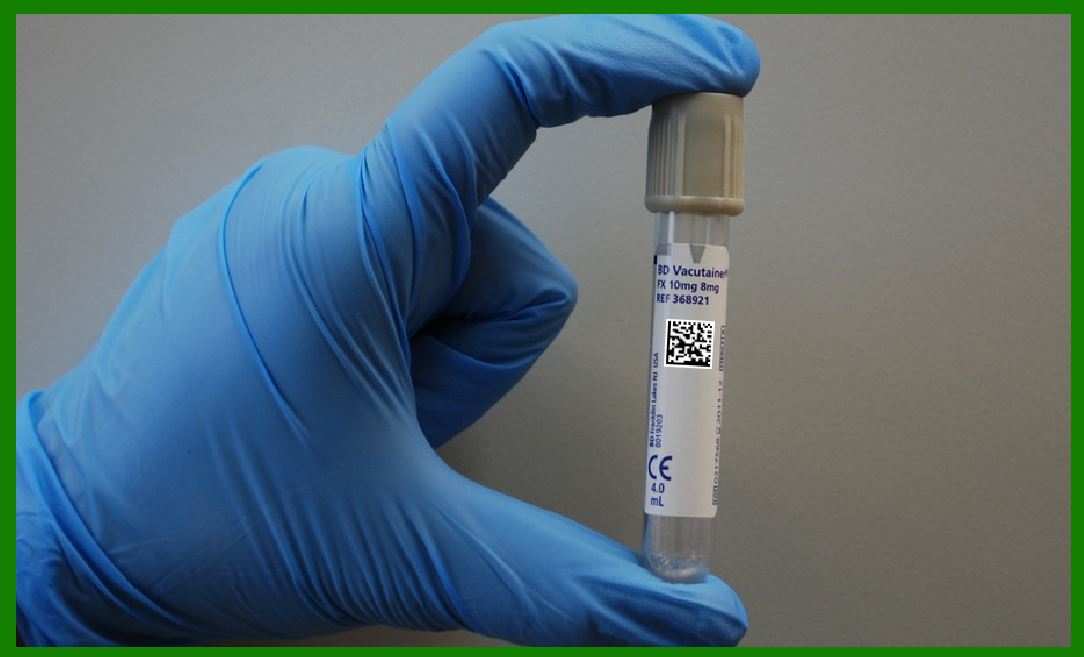
1.Small Item Marking: Electronics: Commonly used for marking small electronic components like resistors, capacitors, and integrated circuits. Their small size allows encoding significant information on tiny surfaces. Medical Devices: Used on surgical instruments and medical devices to track usage and sterilization cycles, ensuring compliance with safety standards. |
2.Aerospace and Automotive Industries: Parts and components are often marked with Data Matrix codes to track manufacturing, maintenance, and lifecycle data. This helps in maintaining stringent quality control and traceability. |
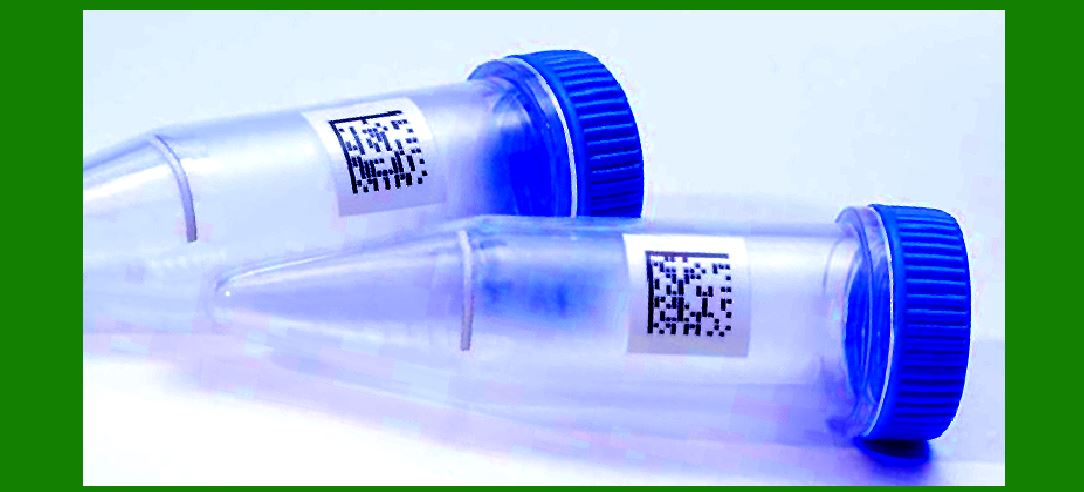
3.Retail and Consumer Goods: Packaging: Data Matrix codes on packaging help in inventory management, counterfeit detection, and providing product information. Product Labels: Often used on product labels for authentication and anti-counterfeiting measures. |
4.Pharmaceuticals: Used to track and trace medications throughout the supply chain, from manufacturing to the end consumer, ensuring safety and compliance with regulations like the FDA's Drug Supply Chain Security Act (DSCSA). |
5.Logistics and Supply Chain: Used for tracking packages and pallets in warehouses and during shipping, providing real-time data for inventory management and reducing errors in shipment handling. |
6.Postal Services: Used by postal services for tracking mail and packages, improving sorting efficiency and delivery accuracy. |
7.Industrial Manufacturing: Component Tracking: Each part of an assembly can be marked with a Data Matrix code, making it easier to track its origin, production batch, and quality control status. Tool Identification: Tools used in manufacturing processes can be marked to monitor usage, maintenance schedules, and prevent loss. |
|
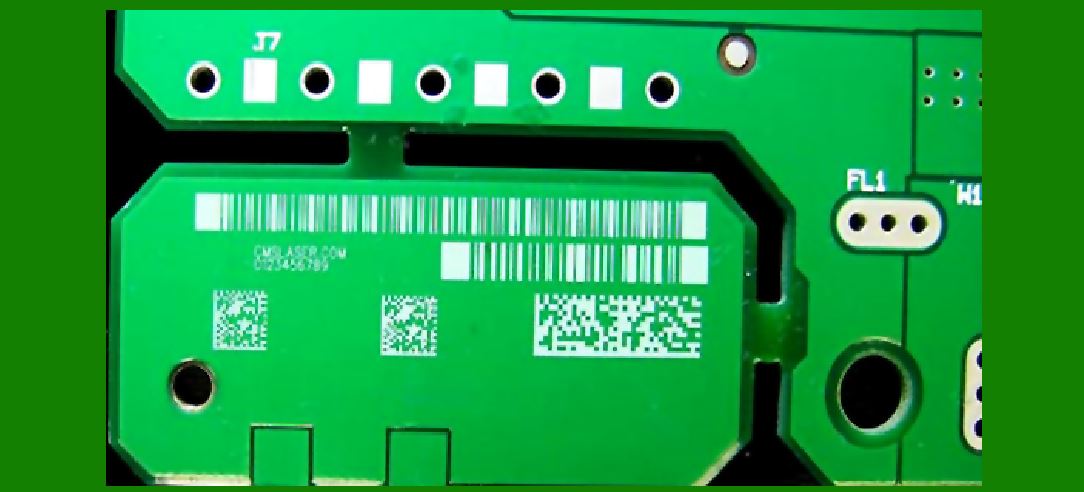
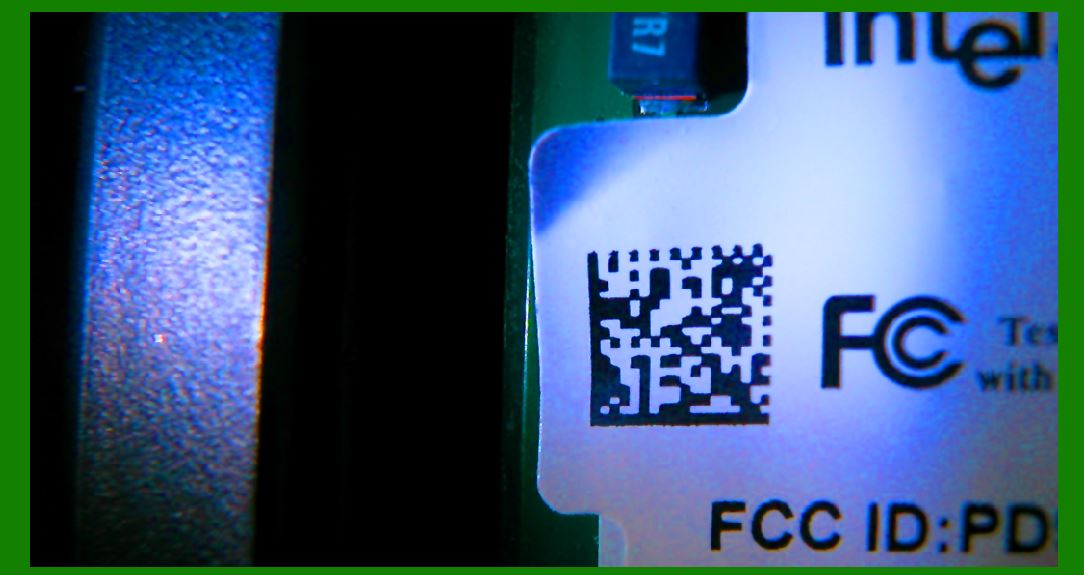
Example: Data Matrix on a Mini PCI Card |
Consider a Mini PCI card with a Data Matrix barcode encoding the serial number 15C06E115AZC72983004. This barcode serves several functions: |
Identification: The unique serial number helps in identifying the specific card among many, ensuring traceability. Inventory Management: Simplifies tracking the card in inventory systems. Quality Control: Assists in monitoring manufacturing batches, performance data, and maintenance records. |
|
Key Features and Advantages |
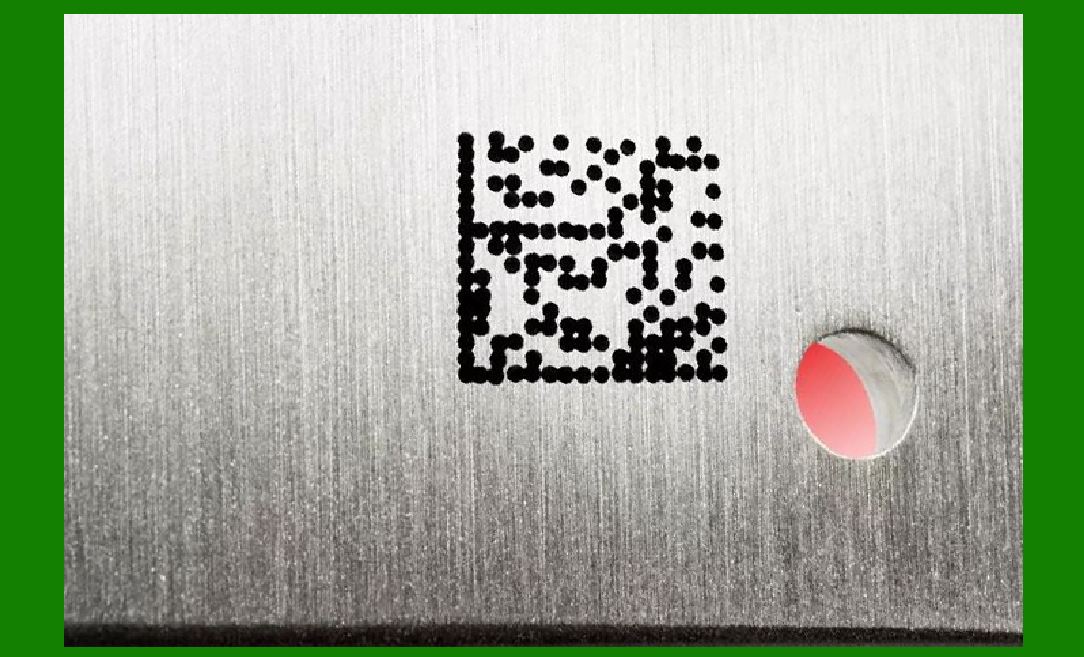
1.High Data Density: Capable of encoding large amounts of data in a very small area. A 2-3 mm? Data Matrix can encode fifty characters, making it ideal for applications where space is limited. 2.Readability: Can be read even with a low contrast ratio of 20%, making it reliable in various conditions. 3.Scalability: Can be scaled from very small (300 micrometres) to very large (1 meter), depending on the application needs. For instance, laser-etched codes on silicon devices or large painted codes on industrial objects like boxcars. 4.Durability: |
Resistant to damage and can remain readable even if partially obscured or damaged, ensuring reliability in harsh environments. |
|
Recommendations by US Electronic Industries Alliance (EIA) |
The EIA recommends the use of Data Matrix codes for labeling small electronic components due to their high data density and readability, even on small surfaces. This endorsement underlines the importance of Data Matrix codes in maintaining detailed records and ensuring traceability in the electronics industry. |
|
Conclusion |
Data Matrix barcodes are versatile and robust, making them suitable for a wide range of applications, especially where space is at a premium and high data density is required. Their ability to remain readable under various conditions and their scalability from micro to macro applications make them a valuable tool in modern industrial, medical, and logistical operations. |
 cs@easiersoft.com