Outline for Cauzin Softstrip Barcode Detailed Description |
1. Introduction to Cauzin Softstrip Barcode |
Overview of barcode technology |
Importance of 2D barcodes in modern applications |
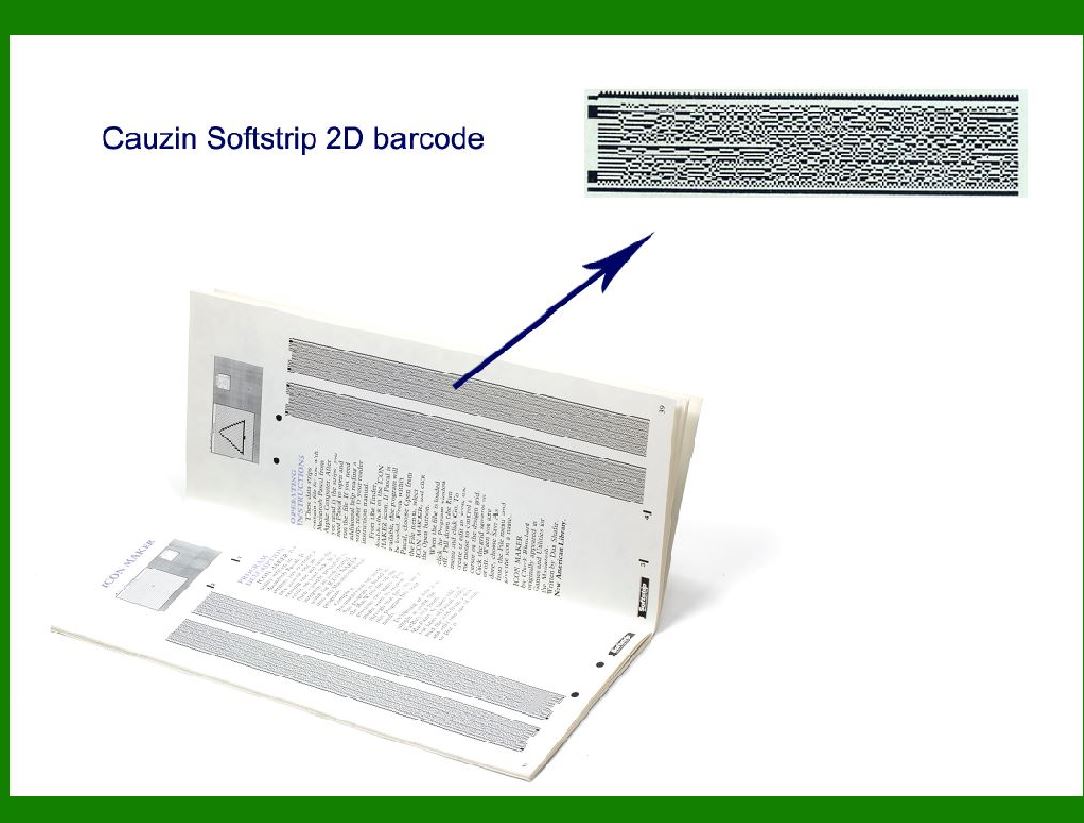
Introduction to Cauzin Softstrip barcode |
History and evolution of the barcode |
2. Technical Specifications of Cauzin Softstrip Barcode |
Physical characteristics and design |
Structure and layout |
Key technical features of the Softstrip barcode |
Comparison with other 2D barcodes like QR Code and DataMatrix |
|
3. Encoding Process of Cauzin Softstrip Barcode |
Explanation of the encoding method used |
Data density and capacity of the Softstrip barcode |
Types of data that can be encoded |
Examples of encoding procedures |
4. Decoding Process of Cauzin Softstrip Barcode |
How decoding works with the Softstrip barcode |
Decoding software and hardware requirements |
Accuracy and speed of decoding |
Factors affecting the quality of decoding |
|
5. Applications of Cauzin Softstrip Barcode |
Use in industries such as pharmaceuticals, logistics, and retail |
Case studies of its use in supply chain management |
Benefits in terms of data accuracy and speed |
Specific examples of product or item tracking |
6. Advantages and Limitations of Cauzin Softstrip Barcode |
Advantages over traditional 1D barcodes |
Specific benefits for various industries |
Limitations and challenges of using Softstrip barcode |
Areas of improvement for future versions |

|
7. Comparisons with Other Barcode Technologies |
Comparison with QR Codes, DataMatrix, and PDF417 |
Use cases where Softstrip barcode outperforms others |
When to choose Cauzin Softstrip barcode over other formats |
8. Future Developments and Trends |
Possible enhancements in encoding and decoding efficiency |
Integration with emerging technologies like RFID and IoT |
The future of Cauzin Softstrip barcode in global markets |

|
9. Real-World Case Studies and Success Stories |
Examples from various industries where the Softstrip barcode is used |
Success stories of its implementation |
Lessons learned and best practices |
10. Conclusion |
Recap of key points |
Future potential of the Cauzin Softstrip barcode |
Final thoughts on its impact on industries and logistics |

|
Let's dive in! I'll begin with the first section and progressively elaborate on each part. Since you're looking for a highly detailed breakdown, I'll ensure to expand on every aspect thoroughly. We¡¯ll start with Introduction to the Cauzin Softstrip Barcode. |
1. Introduction to Cauzin Softstrip Barcode |
1.1 Overview of Barcode Technology |
Barcodes are an essential part of modern commerce and logistics, used for a wide variety of applications ranging from inventory management to tracking shipments and simplifying point-of-sale (POS) transactions. Barcodes encode information in a graphical format that can be easily scanned and interpreted by machines, which has revolutionized industries like retail, logistics, healthcare, and manufacturing. |
At a high level, there are two main categories of barcodes: |
1D (One-dimensional) Barcodes: These barcodes store data in a single dimension (horizontal) using parallel lines and spaces. The most well-known 1D barcode is the UPC (Universal Product Code), typically seen on retail products. |
2D (Two-dimensional) Barcodes: Unlike their 1D counterparts, 2D barcodes store data in both horizontal and vertical dimensions. This allows for significantly more information to be encoded within the same space. Examples of 2D barcodes include QR Codes, DataMatrix, and PDF417. |
Cauzin Softstrip barcode falls into the 2D barcode category, which can store a higher volume of information than traditional 1D barcodes. It is especially well-suited for applications where dense data storage and quick scanning are required. |
1.2 Importance of 2D Barcodes in Modern Applications |
The increasing demand for efficient data capture and real-time tracking in industries such as logistics, healthcare, and retail has made 2D barcodes indispensable. Compared to 1D barcodes, 2D barcodes like the Cauzin Softstrip offer: |
Higher Data Density: 2D barcodes can hold significantly more data than 1D barcodes, allowing for the encoding of information such as URLs, product specifications, and even multimedia files. |
Error Correction: Advanced error correction capabilities in 2D barcodes help ensure that even if part of the code is damaged, it can still be decoded. |
Scalability: With 2D barcodes, data can be encoded in a small space, making them ideal for applications with space constraints or where a large amount of data needs to be stored. |
Cauzin Softstrip, as a 2D barcode, plays an important role in these applications, offering a specialized design tailored for both small and large-scale uses. |
1.3 Introduction to Cauzin Softstrip Barcode |
The Cauzin Softstrip barcode is a relatively specialized form of 2D barcode technology that was designed to address specific requirements in industries like logistics and pharmaceuticals. The 'Softstrip' name likely derives from the idea that the barcode can be applied to flexible materials (like strips of fabric or plastic) while maintaining its readability even on deformable surfaces. |
The Softstrip barcode uses a matrix-based encoding system that enables it to store significant amounts of data while still being small enough to be practical for a variety of applications. Unlike traditional 1D barcodes, which store data only in one direction, the Cauzin Softstrip stores data in both horizontal and vertical directions, thereby increasing its capacity. |
1.4 History and Evolution of the Barcode |
The invention of barcodes dates back to the late 1940s and 1950s when Norman Woodland and Bernard Silver were granted patents for an early version of barcode technology. However, it wasn¡¯t until 1974 that the first commercial use of barcodes began, with the famous UPC barcode used on grocery store items. |
The transition to 2D barcodes began in the 1990s with the development of technologies like QR Codes and DataMatrix, which could store more data and offer higher flexibility than 1D barcodes. As 2D barcode technology evolved, new formats such as Cauzin Softstrip emerged to meet the growing demands for more complex data encoding, higher durability, and adaptability across diverse surfaces. |
1.5 Current State of Barcode Technology |
Today, barcode technology continues to evolve, with applications in nearly every industry. From QR codes used for marketing and DataMatrix codes used in manufacturing to Cauzin Softstrip barcodes used in logistics and pharmaceuticals, each barcode format is developed to serve specific needs. |
One of the ongoing trends is the integration of barcode technology with IoT (Internet of Things), RFID (Radio Frequency Identification), and cloud-based data systems, allowing for a more seamless and automated exchange of information. |

|
2. Technical Specifications of Cauzin Softstrip Barcode |
2.1 Physical Characteristics and Design |
The Cauzin Softstrip barcode is designed for maximum flexibility and efficiency. Its design features typically include: |
Matrix Layout: Like most 2D barcodes, the Softstrip barcode uses a matrix layout with rows and columns, where each cell (square or rectangle) can represent a unit of data. |
Small and Compact: Softstrip barcodes are designed to be compact and adaptable to a variety of surfaces, even flexible ones like polymeric strips, clothing, or packaging. |
Durable and Resilient: One of the defining characteristics of the Softstrip barcode is its ability to maintain readability even in challenging environments. This includes durability in outdoor conditions, resistance to smudging, and resilience to damage caused by handling. |
The barcode may be printed in various formats, including monochrome and multicolor, depending on the application. |
2.2 Structure and Layout |
The barcode typically consists of the following elements: |
Quiet Zone: The space around the barcode that ensures proper scanning. This area is free from any graphics or text. |
Encoding Region: The area where the actual data is stored. In the case of Cauzin Softstrip, this region uses matrix patterns to represent the encoded data. |
Error Correction Area: Similar to other 2D barcodes, the Softstrip incorporates error correction codes to ensure that the barcode can be scanned and decoded even if part of the code is obscured or damaged. |
The layout of the Softstrip barcode is optimized for quick scanning, with the matrix structure designed to balance data density and scanning speed. |
2.3 Key Technical Features of the Softstrip Barcode |
Data Density: The Cauzin Softstrip barcode can store a large amount of data in a small physical space. Depending on the design, it can encode alphanumeric data, URLs, and even multimedia files in some cases. |
Scalability: Softstrip barcodes are scalable in size, meaning they can be printed on everything from tiny labels to large signage. |
Fast Scanning: The barcode is designed for quick and reliable scanning, even in environments where speed is critical, such as warehouses and distribution centers. |
Error Correction: Built-in error correction features ensure data integrity, even in cases of minor damage or distortion to the barcode. |

|
3. Encoding Process of Cauzin Softstrip Barcode |
3.1 Explanation of the Encoding Method Used |
The encoding of a Cauzin Softstrip barcode is based on a matrix-based system, where data is represented as a grid of small modules (typically squares or rectangles) arranged in a two-dimensional matrix. This allows for the storage of a large amount of information within a relatively small space, which is a significant advantage over traditional 1D barcodes. |
Each module in the matrix corresponds to a specific binary value¡ªeither a 0 or 1. These binary values are grouped together to represent alphanumeric characters, numerical digits, or even more complex data like URLs, product specifications, or multimedia information. The encoding process typically follows these steps: |
Data Input: The first step is inputting the data that needs to be encoded. This could be text, numeric data, or any other format that the barcode is designed to support. |
Data Compression: In some cases, especially when large amounts of data need to be encoded, compression algorithms may be applied to reduce the size of the data before encoding. This step helps to maximize the efficiency of the barcode and ensures that data can be stored even in the smallest of spaces. |
Data Encoding: The data is then converted into binary form, where each character or piece of information is mapped to a specific binary pattern. This binary data is arranged within the matrix of the barcode. The matrix may be square or rectangular, depending on the design of the barcode and the amount of data it needs to store. |
Error Correction Code Generation: To ensure that the barcode remains readable even if part of it is damaged or obscured, an error correction code is generated. This code adds redundant data to the barcode in a way that allows the decoder to reconstruct missing or corrupted parts of the code. This is typically done using algorithms like Reed-Solomon error correction, which is common in 2D barcodes. |
Barcode Generation: Finally, the binary data, along with the error correction codes, are used to generate the final barcode image. The modules in the matrix are printed or displayed in a specific arrangement, creating the Cauzin Softstrip barcode. |
3.2 Data Density and Capacity of the Softstrip Barcode |
The Cauzin Softstrip barcode is specifically designed to accommodate a high data density, meaning that it can store more information in a smaller space than many other 2D barcodes. This is one of the reasons it is favored for use in logistics, pharmaceuticals, and retail applications, where a large amount of information needs to be encoded within a compact barcode. |
Character Capacity: The barcode's capacity can vary based on its size, but it can encode anywhere from 100 to 2000 characters of data, depending on the version used. |
Data Types: The Softstrip can encode a wide range of data types, including text, numeric values, URLs, and binary data (such as multimedia content or encrypted information). |
Small Physical Footprint: The ability to encode a large amount of data in a small physical space makes the Softstrip barcode especially useful for applications where physical space is limited, such as on small product labels or parts tracking in manufacturing. |
3.3 Types of Data That Can Be Encoded |
The Cauzin Softstrip barcode is versatile and capable of encoding various types of data, making it suitable for a range of industries. The types of data that can be encoded include: |
Alphanumeric Data: This can include product IDs, batch numbers, serial numbers, and other alphanumeric strings that are critical for tracking products throughout the supply chain. |
URLs: For applications in marketing or consumer interaction, the barcode can encode URLs that lead to online resources, websites, or product pages. |
Numeric Data: Softstrip barcodes can store numeric data, which is particularly useful in industries like pharmaceuticals and logistics where batch numbers, inventory levels, and other numerical values need to be encoded. |
Multimedia Data: In some advanced applications, the Softstrip barcode can encode multimedia content, such as images, audio files, or videos, enabling a seamless way to deliver content to consumers via barcode scanning. |
3.4 Examples of Encoding Procedures |
Here are a few examples of how encoding might work for different applications: |
Product Tracking: A manufacturer may use the Softstrip barcode to encode a product¡¯s serial number, manufacturing date, and batch number. This information is crucial for product tracking, especially if there is a recall or warranty claim. |
Retail Application: A retailer could encode product price, product description, and URL to an online store. This could allow a customer to scan the barcode and get immediate access to a product's detailed information and purchase options. |
Pharmaceuticals: A pharmaceutical company might use the Softstrip barcode to encode critical information like drug name, lot number, and expiration date to ensure accurate inventory management and regulatory compliance. |

|
4. Decoding Process of Cauzin Softstrip Barcode |
4.1 How Decoding Works with the Softstrip Barcode |
Decoding a Cauzin Softstrip barcode is the reverse of the encoding process, where the scanner reads the matrix of black and white (or colored) modules and converts them back into usable data. The steps involved in decoding are as follows: |
Barcode Scanning: A scanner, typically a 2D image scanner or camera-based scanner, captures the image of the barcode. The scanner may use a laser or a camera to capture the image, depending on the type of scanner used. |
Image Processing: The captured image is processed by the scanner¡¯s software, which isolates the barcode from the surrounding environment and enhances the image for better readability. |
Data Extraction: The software identifies the matrix structure of the barcode and reads the binary values represented by the black and white modules. Each module represents a bit of data, either a 0 or a 1. These bits are then grouped to form characters or other types of data. |
Error Correction: If part of the barcode is obscured or damaged, the error correction codes built into the barcode allow the scanner to reconstruct the missing data. The error correction process ensures that the barcode can still be read accurately, even if a portion of it is unreadable. |
Data Interpretation: Once the barcode is decoded, the data is sent to a connected system (e.g., a computer, warehouse management system, or POS terminal), where it can be processed and used for its intended purpose (such as retrieving product information, updating inventory, etc.). |
4.2 Decoding Software and Hardware Requirements |
Decoding the Cauzin Softstrip barcode requires specialized software and hardware. The basic requirements include: |
Scanning Hardware: |
2D Barcode Scanners: These scanners are specifically designed to read matrix barcodes like the Softstrip. They typically use either laser scanning or image capture to scan the barcode. |
Smartphones or Tablets: Many modern smartphones are equipped with camera-based barcode scanners that can decode the Softstrip barcode through software applications. |
Decoding Software: |
The barcode must be interpreted by decoding software that is capable of reading matrix barcodes and handling the error correction algorithms used in the Softstrip. This software is often built into barcode scanning apps or integrated into larger systems like enterprise resource planning (ERP) or warehouse management systems (WMS). |
4.3 Accuracy and Speed of Decoding |
The Cauzin Softstrip barcode is designed for fast and accurate decoding, even in challenging environments. Key factors that affect decoding accuracy and speed include: |
Scanner Quality: The quality of the scanning device plays a major role in the speed and accuracy of decoding. High-quality 2D scanners can read barcodes quickly, even in less-than-ideal conditions. |
Error Correction: The error correction features of the Softstrip barcode help ensure that data can be decoded accurately, even if part of the barcode is damaged or obscured. |
Environmental Factors: Lighting, barcode printing quality, and the surface on which the barcode is applied can all influence the decoding process. Softstrip barcodes are designed to be resilient, but optimal conditions improve performance. |
4.4 Factors Affecting the Quality of Decoding |
Several factors can affect how well a Cauzin Softstrip barcode is decoded: |
Print Quality: If the barcode is printed poorly, with low contrast or distorted modules, it may become difficult or impossible for a scanner to read. |
Surface Conditions: Barcodes printed on flexible or irregular surfaces (such as clothing or product packaging) may be harder to scan, but the Softstrip barcode is specifically designed to work well in these conditions. |
Scanner Calibration: Scanners need to be calibrated for optimal performance. Poorly calibrated scanners may have difficulty reading certain types of barcodes. |

|
5. Applications of Cauzin Softstrip Barcode |
The Cauzin Softstrip barcode is specifically designed to address the needs of industries that require high data density, durability, and versatility. The barcode¡¯s matrix-based encoding allows it to store a large amount of data in a small physical space, making it ideal for tracking, identification, and data management across various sectors. Below are some of the key applications where the Cauzin Softstrip barcode excels. |
5.1 Logistics and Supply Chain Management |
The logistics industry is heavily reliant on barcode technologies for tracking and managing products throughout the supply chain. The Cauzin Softstrip barcode offers significant advantages in this area due to its compact size, high data density, and durability. |
Inventory Tracking: Softstrip barcodes can encode product details, serial numbers, and batch information, allowing for efficient tracking of products from warehouse to retail shelf. |
Shipping Labels: In shipping, Softstrip barcodes are used to store detailed shipping information, such as destination addresses, tracking numbers, and shipment status updates. This reduces the risk of human error and speeds up the sorting and delivery process. |
Real-time Updates: With real-time scanning, Softstrip barcodes enable the continuous monitoring of goods as they move through the supply chain. This data can be integrated with warehouse management systems (WMS) to ensure accurate inventory levels and efficient operations. |
5.2 Pharmaceutical Industry |
In the pharmaceutical industry, the need for accurate tracking and regulation is paramount. The Cauzin Softstrip barcode addresses these needs effectively by ensuring product authenticity, safety, and compliance with regulatory requirements. |
Batch and Lot Tracking: Each batch of pharmaceutical products can be assigned a unique Softstrip barcode containing vital information, including batch numbers, manufacturing dates, expiration dates, and storage conditions. This helps ensure product safety and traceability throughout the supply chain. |
Counterfeit Prevention: The barcode¡¯s ability to store complex data (including product IDs, serial numbers, and other identifying information) helps prevent counterfeiting by ensuring that the right product reaches the right location. |
Regulatory Compliance: Pharmaceutical companies can encode regulatory information, such as FDA approval numbers and product labeling data, to ensure compliance with local and international standards. |
5.3 Retail Industry |
The retail industry is another significant sector where Cauzin Softstrip barcodes are employed, especially in applications where data needs to be quickly accessed or processed. |
Product Identification: Retailers use the Softstrip barcode to encode detailed product information, such as item descriptions, prices, and stock quantities. This allows for quick POS scanning and inventory management. |
Customer Engagement: Softstrip barcodes can also be used in marketing materials, allowing customers to scan the barcode to access product details, promotions, and personalized offers. This enhances the customer shopping experience and fosters brand loyalty. |
Barcode Promotions: Retailers can utilize Softstrip barcodes for promotional campaigns, offering customers discounts or access to exclusive deals when the barcode is scanned. |
5.4 Asset Tracking and Management |
Asset tracking is crucial for businesses that need to monitor the location, condition, and status of valuable assets, such as equipment, machinery, and tools. The Cauzin Softstrip barcode is ideal for this application because of its ability to store rich data while being durable enough to withstand harsh environments. |
Equipment Maintenance: Softstrip barcodes can be attached to machinery or tools to track maintenance schedules, repair histories, and part replacements. This helps companies manage the lifecycle of their assets effectively. |
Inventory Management: Organizations can use Softstrip barcodes to keep track of physical assets, ensuring that they are always accounted for and easily accessible when needed. |
5.5 Manufacturing and Quality Control |
In manufacturing, where precision and quality control are critical, the Cauzin Softstrip barcode can help streamline operations and ensure quality standards are met. |
Product Tracking: Softstrip barcodes can track each stage of the production process, from raw material inventory to final product assembly. This ensures traceability and accountability throughout the manufacturing process. |
Quality Assurance: By encoding detailed specifications and inspection data within the barcode, manufacturers can ensure that each product meets the required standards before it leaves the factory floor. |
Traceability: In the event of product defects or recalls, Softstrip barcodes provide a robust way to trace the affected products back to their point of origin, minimizing the risk and impact of product recalls. |
5.6 Healthcare and Patient Identification |
In the healthcare sector, the Cauzin Softstrip barcode plays a critical role in patient identification, medication tracking, and hospital logistics. |
Patient Identification: Hospitals and clinics can assign Softstrip barcodes to patient wristbands, enabling quick and accurate identification. These barcodes can store patient information, including medical history, allergies, and treatment plans. |
Medication Tracking: Softstrip barcodes are used to label medication bottles and medical supplies. By scanning the barcode, healthcare providers can ensure that the correct medication is administered to the right patient. |
Hospital Logistics: Hospitals can use Softstrip barcodes for asset management, tracking medical equipment, and supplies in real-time, ensuring that items are always available when needed. |

|
6. Advantages and Limitations of Cauzin Softstrip Barcode |
6.1 Advantages Over Traditional 1D Barcodes |
The Cauzin Softstrip barcode offers several advantages over traditional 1D barcodes, making it a superior choice for applications that demand more data and versatility. |
Higher Data Capacity: Softstrip barcodes can store significantly more data than 1D barcodes due to their 2D matrix structure. This is especially beneficial for industries that need to encode detailed information, such as product specifications, serial numbers, and regulatory compliance data. |
Better Error Correction: Softstrip barcodes are designed with error correction algorithms that allow them to be read even if part of the barcode is damaged. This ensures that the data remains intact and accessible, even under less-than-ideal conditions. |
Versatility: Unlike 1D barcodes, which are typically limited to linear data representation, Softstrip barcodes can encode a variety of data types, including alphanumeric data, URLs, and multimedia content. |
6.2 Specific Benefits for Various Industries |
Logistics and Supply Chain: Softstrip barcodes enable real-time tracking of products across the supply chain, reducing the chances of loss and improving operational efficiency. |
Pharmaceuticals: Softstrip barcodes improve product safety and traceability, ensuring compliance with industry regulations and preventing counterfeiting. |
Healthcare: Softstrip barcodes help improve patient safety by ensuring accurate medication delivery and patient identification, reducing the risk of medical errors. |
6.3 Limitations and Challenges of Using Softstrip Barcode |
While the Cauzin Softstrip barcode offers numerous benefits, there are some challenges and limitations: |
Cost of Implementation: The initial cost of implementing Softstrip barcode systems, including scanners and software, can be higher than traditional 1D barcode systems. |
Environmental Sensitivity: While Softstrip barcodes are designed to be durable, factors like extreme temperatures, moisture, or abrasion can still affect their readability, especially if the barcode is poorly printed or damaged. |
Compatibility Issues: Older systems or barcode scanners may not be compatible with Softstrip barcodes, requiring upgrades to both hardware and software. |

|
7. Comparison with Other Barcode Technologies |
The Cauzin Softstrip barcode shares similarities with other 2D barcode formats, such as QR Codes, DataMatrix, and PDF417, but also offers distinct advantages depending on the application. |
7.1 Comparison with QR Code |
Data Capacity: While QR Codes are popular for storing URLs and smaller amounts of data, the Cauzin Softstrip barcode can store much more information due to its higher data density. |
Error Correction: Both formats use error correction algorithms, but the Softstrip barcode is optimized for durability and may offer more robust error correction in industrial applications. |
Flexibility: Softstrip barcodes are often used on flexible surfaces, such as clothing or packaging, while QR Codes are typically used in static applications like advertising or product labeling. |
7.2 Comparison with DataMatrix |
Design: Both DataMatrix and Cauzin Softstrip barcodes use matrix-based encoding, but Softstrip is optimized for use in more specialized applications, such as logistics and pharmaceuticals, where environmental conditions and data density are key factors. |
Error Correction: Both formats have strong error correction capabilities, but Softstrip¡¯s design may offer better performance in more challenging environments, such as when printed on flexible or deformable surfaces. |
7.3 Comparison with PDF417 |
Data Storage: PDF417 is a stacked linear barcode, which can store large amounts of data, similar to Softstrip. However, Cauzin Softstrip barcodes have the advantage of being compact and adaptable to smaller surfaces. |
Usage: PDF417 is often used for applications like boarding passes or identification cards, while Softstrip barcodes are more commonly used in industries that need quick, real-time scanning and high data density. |

|
Conclusion |
The Cauzin Softstrip barcode represents a versatile, durable, and data-dense barcode solution designed for modern industries that demand high-performance tracking, identification, and data storage. From logistics and pharmaceuticals to retail and asset management, the Softstrip barcode offers superior capabilities compared to traditional 1D barcodes and even some other 2D barcodes. |
While there are challenges in terms of cost and environmental sensitivity, the advantages of Softstrip barcodes in terms of data capacity, error correction, and flexibility make them a valuable tool for many industries. As the technology continues to evolve, the Cauzin Softstrip barcode will likely become an increasingly important part of the global data management and tracking landscape. |
|
Practical examples |
Here are some practical examples of how the Cauzin Softstrip barcode is used in various industries. These examples will showcase the barcode's versatility and application in real-world scenarios. |
1. Logistics and Supply Chain Management |
Example 1: Package Tracking in a Distribution Center |
A large distribution center that handles thousands of packages daily uses the Cauzin Softstrip barcode for efficient package tracking. Each package receives a Softstrip barcode containing information such as: |
Product ID: A unique identifier for the product. |
Destination Address: The address where the package will be delivered. |
Batch Number: The batch from which the product originated. |
Shipping Date: The date when the package was dispatched from the warehouse. |
As packages move through the distribution center, workers use handheld scanners to scan the barcode. The data is automatically fed into the central Warehouse Management System (WMS), updating the location of each package in real time. This system allows the company to track the progress of each package from the time it leaves the warehouse until it reaches its destination. Additionally, the Softstrip barcode¡¯s high data density ensures that even if there are multiple products in a package, each product can be identified individually. |
Example 2: Real-Time Inventory Updates |
In a logistics hub, the Cauzin Softstrip barcode is used to track inventory levels. Each product, container, or pallet receives a Softstrip barcode that encodes information about the: |
Product Name |
Quantity Available |
Location in Warehouse |
Date of Arrival |
As products are moved around the warehouse, the barcode is scanned, and the inventory is updated instantly in the Inventory Management System. This helps warehouse managers avoid stockouts and reduce the time spent manually checking stock. The use of the Softstrip barcode speeds up stocktaking processes, allowing for more accurate and timely reporting of inventory levels. |

|
2. Pharmaceutical Industry |
Example 1: Tracking Pharmaceutical Batches |
In the pharmaceutical industry, tracking drug batches is critical to ensure safety and compliance with regulatory standards. A pharmaceutical manufacturer uses the Cauzin Softstrip barcode to track the lifecycle of each batch of medicine from production to distribution. Each drug bottle receives a barcode that encodes the following information: |
Drug Name: Identifies the product. |
Batch Number: Ensures traceability in case of a recall. |
Manufacturing Date: Helps monitor the shelf life of the product. |
Expiration Date: Crucial for regulatory compliance. |
As the medicine moves from the production line to the distribution center, and eventually to retail pharmacies, the barcode is scanned at each step. This allows the manufacturer and distributors to track and trace the product throughout its journey, ensuring it reaches the right pharmacy and is used before its expiration date. |
Example 2: Preventing Counterfeit Drugs |
The Cauzin Softstrip barcode is also used to combat counterfeit drugs. In many countries, counterfeit drugs pose a significant public health risk. A pharmaceutical company uses the Softstrip barcode to encode unique identifiers for each bottle or package. These identifiers are used to confirm the authenticity of the product as it moves through the supply chain. |
Pharmacies and consumers can scan the barcode with a smartphone app or handheld scanner to verify whether the drug is legitimate or potentially counterfeit. If the barcode doesn't match the company¡¯s database or contains tampered information, the product is flagged as suspicious. This system helps prevent counterfeit products from reaching the market and ensures that patients receive the correct medication. |

|
3. Retail Industry |
Example 1: Product Information and Price Scanning |
A supermarket uses the Cauzin Softstrip barcode to label high-end products such as electronics, gourmet food items, and luxury items. These products have detailed descriptions, prices, and warranty information encoded in the barcode. |
For example, a smartphone on display has a Softstrip barcode that encodes the following: |
Brand Name: iPhone |
Model Number: iPhone 13 Pro |
Price: $999.99 |
Product Features: Display size, camera specifications, etc. |
Warranty Information: 2-year manufacturer warranty |
When a customer scans the barcode with their smartphone or a retail scanner, they can access all the relevant information about the product, including pricing, features, and even customer reviews. This improves the shopping experience by providing consumers with more information at their fingertips. |
Example 2: Promotional Offers |
A retail store runs a promotional campaign where customers can scan the Cauzin Softstrip barcode on product labels to receive discounts or coupons for their next purchase. For instance, a storewide discount is encoded into the Softstrip barcode, allowing customers to scan items on sale. |
When a customer scans a barcode from a product they want to purchase, the system automatically checks if it¡¯s part of the promotion and applies the discount to the total bill. This helps streamline the checkout process and eliminates manual coupon verification. |

|
4. Asset Tracking and Management |
Example 1: Tracking Hospital Equipment |
In a hospital setting, the Cauzin Softstrip barcode is used to track medical equipment such as portable X-ray machines, ventilators, and defibrillators. Each piece of equipment is tagged with a Softstrip barcode that encodes: |
Equipment ID Number: A unique identifier for each device. |
Maintenance Schedule: Dates when the equipment was last serviced or calibrated. |
Location: Where the equipment is located within the hospital. |
Condition: Any notes regarding the condition or repairs needed. |
Hospital staff can scan the barcode whenever they need to check out or return equipment, ensuring that it is always accounted for and properly maintained. This minimizes equipment loss and ensures that all devices are in working order when they are needed. |
Example 2: Tool Management in Manufacturing |
A manufacturing company uses Cauzin Softstrip barcodes to track tools and machinery. Each tool has a barcode attached to it that stores information such as: |
Tool ID |
Last Used Date |
Location: Where the tool is stored. |
Maintenance History: When the tool was last serviced or repaired. |
As workers check out tools for use on the factory floor, they scan the barcode to update the tool¡¯s status and location in the system. This system helps ensure tools are returned to the correct storage area, maintenance schedules are followed, and the company can easily track which tools are being used most frequently or need to be replaced. |

|
5. Healthcare and Patient Identification |
Example 1: Patient Identification and Medication Administration |
A hospital uses the Cauzin Softstrip barcode to improve patient safety and medication administration. Each patient is given a wristband with a Softstrip barcode containing: |
Patient ID: A unique identifier for the patient. |
Medical History: Information about allergies and previous conditions. |
Current Medications: Details on the medications the patient is currently taking. |
When a nurse administers medication, they scan the barcode on the patient¡¯s wristband and the medication package. The system checks to ensure the right patient receives the correct medication at the right dosage, preventing medication errors and improving patient safety. |
Example 2: Tracking Medical Supplies and Equipment |
Hospitals use Cauzin Softstrip barcodes to manage and track medical supplies such as surgical instruments, diagnostic tools, and personal protective equipment (PPE). The barcode on each item encodes critical data such as: |
Supply Name |
Lot Number |
Expiration Date |
Quantity in Stock |
When supplies are used during a procedure, the barcode is scanned to update inventory levels in real time. This ensures that the hospital always has the necessary supplies on hand and allows for more accurate inventory management. |

|
6. Manufacturing and Quality Control |
Example 1: Tracking Products on the Assembly Line |
A car manufacturer uses Cauzin Softstrip barcodes to track each car¡¯s components as they move through the assembly line. Each car receives a barcode that contains information about: |
Model and Specifications: Car model, color, and custom features. |
Parts Used: Parts list used during assembly (e.g., engine type, wheels, electronics). |
Inspection Results: Details of quality control inspections performed at various stages. |
By scanning the barcode at each checkpoint, the manufacturer ensures that the correct parts are used, and that each vehicle undergoes a thorough inspection process. This enhances production efficiency and ensures high-quality products. |
Example 2: Product Defects and Recall Management |
If a defect is found in a batch of products, such as a batch of electronics with a faulty battery, the Cauzin Softstrip barcode makes it easy to identify and recall the affected units. The barcode stores data about the batch number and production date, so when a product is scanned, the company can determine whether it belongs to the faulty batch. This allows for quick identification of defective products and helps to reduce the impact of product recalls. |
These examples illustrate the wide-ranging and practical uses of the Cauzin Softstrip barcode across various industries. From logistics and pharmaceuticals to retail and healthcare, Softstrip barcodes help improve data accuracy, inventory control, product tracking, and customer safety. |
 cs@easiersoft.com