Introduction to PDF417 Barcodes in Financial Services and Payment Systems |
In the fast-evolving landscape of financial services and payment systems, the utilization of PDF417 barcodes has become increasingly prevalent. These two-dimensional barcodes offer significant advantages over traditional linear barcodes, particularly in terms of data capacity and versatility. This detailed exploration will delve into the specific applications, benefits, and technological implications of PDF417 barcodes within the realm of financial services. |
Understanding PDF417 Barcodes |
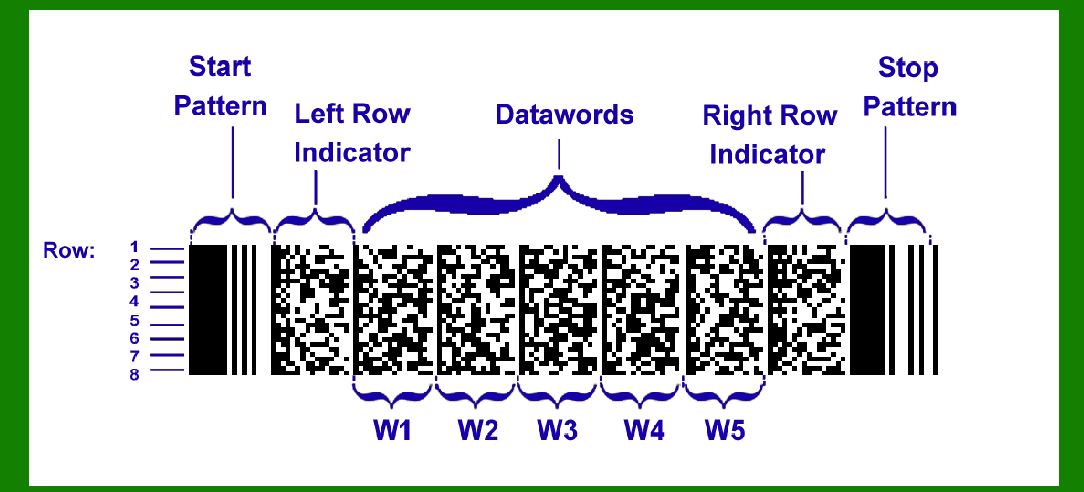
PDF417 (Portable Data File 417) is a stacked linear barcode symbology capable of encoding large amounts of data within a relatively compact space. Unlike traditional linear barcodes that encode data only horizontally, PDF417 can encode data both vertically and horizontally, allowing for significantly increased storage capacity. This makes PDF417 ideal for applications where extensive information needs to be conveyed in a limited physical area, such as on financial documents, identification cards, and electronic tickets. |
|
Applications in Financial Services |
1. Financial Document Processing |
PDF417 barcodes are extensively used in financial document processing to encode crucial information such as account numbers, transaction details, routing information, and legal endorsements. Financial institutions utilize PDF417 on checks, deposit slips, and other financial forms to facilitate automated data capture and processing. This automation enhances operational efficiency, reduces errors, and supports faster transaction processing times. |
a. Checks and Deposit Slips In the context of checks, PDF417 barcodes are employed to encode essential information printed on the check itself, including the account number, routing number, check number, and other relevant details. This encoding allows for seamless integration with automated check processing systems used by banks and financial institutions. When a check is deposited via ATM or mobile banking, the PDF417 barcode facilitates automatic reading and verification of the deposited amount and account information. |
b. Legal and Financial Documents Beyond checks, PDF417 is used on legal and financial documents to encode information such as contract details, payment terms, and client-specific data. This ensures that documents are securely linked to corresponding electronic records, facilitating efficient document retrieval and audit processes. |

|
2. Payment Systems |
PDF417 barcodes play a pivotal role in modern payment systems, enabling secure and efficient transactions across various platforms. |
a. Mobile Payments One of the prominent applications of PDF417 in payment systems is within mobile payments. PDF417 barcodes can be embedded in mobile payment solutions, enabling users to make payments directly from their smartphones or mobile devices. This functionality is particularly beneficial in environments where traditional point-of-sale (POS) terminals may not be readily available, such as outdoor markets or temporary retail setups. By scanning the PDF417 barcode displayed on a mobile screen, payment processors can securely capture payment details and complete transactions in real-time. |
b. Electronic Tickets PDF417 is also widely used for electronic ticketing, especially in sectors such as public transportation and events. Electronic tickets often contain detailed information about the journey or event, including ticket class, date and time, seat assignment (if applicable), and other relevant data. PDF417 barcodes on electronic tickets facilitate quick and reliable scanning at entry points, ensuring smooth and efficient access control. |

|
3. Security and Fraud Prevention |
In addition to enhancing operational efficiency, PDF417 barcodes contribute significantly to security and fraud prevention measures within financial services. |
a. Authentication and Verification PDF417 barcodes can incorporate encrypted data for enhanced security. For example, financial institutions may encode digital signatures or authentication tokens within PDF417 barcodes to verify the authenticity of transactions or documents. This helps mitigate the risk of unauthorized alterations or counterfeit activities. |
b. Fraud Detection By integrating PDF417 barcodes into transactional documents and payment systems, financial institutions can implement sophisticated fraud detection algorithms. These algorithms analyze barcode data patterns to detect anomalies indicative of fraudulent activities, such as unauthorized account access or counterfeit transactions. Early detection facilitated by PDF417 barcode technology enables prompt intervention and minimizes potential financial losses. |

|
Technological Advancements and Integration |
1. Interoperability and Compatibility |
PDF417 barcodes are designed to support interoperability across different platforms and systems. This compatibility is essential in the financial services sector, where diverse stakeholders, including banks, payment processors, and regulatory authorities, must seamlessly exchange and process information. The standardized format of PDF417 ensures that encoded data can be accurately interpreted and utilized by authorized parties, regardless of the specific software or hardware used. |
2. Mobile Integration |
The proliferation of smartphones and mobile devices has further accelerated the adoption of PDF417 barcodes in financial services. Mobile applications developed by banks and payment providers leverage PDF417 technology to enable customers to perform a wide range of financial transactions remotely. Whether depositing checks via mobile banking apps or making purchases with mobile wallets, users benefit from the convenience and security offered by PDF417 barcode scanning capabilities. |
3. Data Encryption and Privacy |
To address concerns regarding data security and privacy, PDF417 barcodes support encryption techniques that safeguard sensitive information from unauthorized access or interception. Financial institutions can implement encryption protocols to protect customer data embedded within PDF417 barcodes, ensuring compliance with regulatory requirements and industry standards for data protection. |

|
Future Trends and Innovations |
1. Enhanced Data Capacity |
As financial transactions become increasingly complex and data-intensive, there is a growing demand for barcode technologies capable of accommodating larger data sets. Future advancements in PDF417 barcode technology may focus on further enhancing data capacity without compromising readability or scanning efficiency. This evolution will support the implementation of more sophisticated financial services and payment solutions that require extensive data encoding capabilities. |
2. Blockchain Integration |
The integration of PDF417 barcodes with blockchain technology represents a promising avenue for enhancing transaction transparency and security in financial services. By embedding blockchain identifiers or digital signatures within PDF417 barcodes, financial institutions can facilitate immutable record-keeping and audit trails for transactions conducted via barcode-enabled payment systems. This synergy between PDF417 barcodes and blockchain technology may redefine standards for transactional transparency and accountability within the financial sector. |
3. Artificial Intelligence and Machine Learning |
Advancements in artificial intelligence (AI) and machine learning (ML) are poised to revolutionize the capabilities of PDF417 barcode technology in detecting and preventing fraudulent activities. AI-powered algorithms can analyze vast amounts of barcode data in real-time, identifying suspicious patterns or deviations from expected transactional norms. This proactive approach to fraud detection enhances the overall security posture of financial institutions and reinforces customer confidence in barcode-enabled payment systems. |

|
Conclusion |
In conclusion, PDF417 barcodes play a critical role in enhancing the efficiency, security, and accessibility of financial services and payment systems. From automating document processing to facilitating secure mobile payments, PDF417 barcodes offer a versatile solution that meets the evolving needs of modern financial institutions and consumers alike. As technology continues to advance, the integration of PDF417 barcodes with emerging innovations such as blockchain and artificial intelligence promises to further elevate the capabilities and reliability of barcode-enabled financial solutions. By leveraging the inherent strengths of PDF417 barcodes, financial stakeholders can navigate the complexities of a digital economy with confidence, ensuring seamless transaction experiences and robust fraud prevention measures. |
 cs@easiersoft.com