PDF417 barcodes play a crucial role in ensuring legal and regulatory compliance across a spectrum of industries and applications. These barcodes are designed to store and transmit large amounts of data efficiently, making them ideal for encoding detailed information required by governmental bodies, regulatory agencies, and other entities responsible for enforcing compliance standards. This detailed exploration will delve into the significance of PDF417 barcodes, their applications in various regulatory frameworks, and how they contribute to transparency, traceability, and adherence to established standards. | 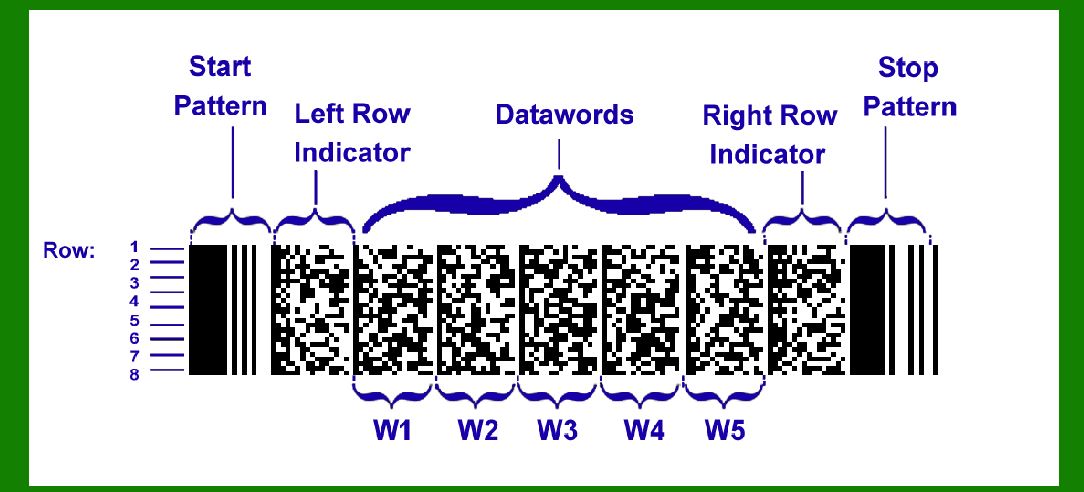
| Understanding PDF417 Barcodes | PDF417 is a two-dimensional barcode symbology capable of encoding large amounts of data within a small physical area. Developed by Symbol Technologies (now part of Zebra Technologies), PDF417 barcodes consist of stacked rows and columns of compactly arranged codewords. Unlike traditional linear barcodes that can only store limited alphanumeric characters, PDF417 can encode up to 1850 text characters or 2710 numeric digits, offering unparalleled versatility in data storage. | The structure of PDF417 includes start and stop patterns, error correction codewords, data codewords, and optional macro PDF control blocks. These features make PDF417 robust against data corruption, allowing for accurate data retrieval even if the barcode is partially damaged. | 
| Applications in Legal and Regulatory Compliance | 1. Government Identification and Documentation: | PDF417 barcodes are extensively used in government-issued identification cards, such as driver's licenses, passports, and national ID cards. These barcodes encode essential information about the cardholder, including name, date of birth, address, and license or document expiration dates. Regulatory bodies mandate the use of PDF417 to ensure that these documents comply with security standards and facilitate rapid verification by law enforcement officers and other authorized personnel. Example: In the United States, PDF417 barcodes are utilized on driver's licenses to encode detailed information and comply with the REAL ID Act requirements, enhancing security and standardization across states. | 
| 2. Healthcare and Medical Compliance: | PDF417 barcodes are employed in healthcare settings to encode patient information on medical ID cards, prescription labels, and laboratory test requisitions. These barcodes ensure compliance with health regulations by securely storing patient demographics, allergy information, medication history, and other critical health data. Healthcare providers rely on PDF417 to streamline patient identification processes and comply with stringent privacy laws, such as HIPAA (Health Insurance Portability and Accountability Act). Example: Prescription drug labels often feature PDF417 barcodes containing detailed information about the medication, dosage instructions, and patient-specific data to ensure accurate dispensation and regulatory compliance. | 
| 3. Transportation and Logistics Compliance: | PDF417 barcodes are integral to compliance in transportation and logistics sectors. They are used on shipping labels, air waybills, and freight manifests to encode shipment details, including sender and recipient information, package contents, and tracking numbers. Regulatory bodies require the use of PDF417 to facilitate efficient tracking, customs clearance, and compliance with international trade regulations, such as those enforced by customs authorities and transportation safety agencies. Example: The International Air Transport Association (IATA) mandates the use of PDF417 barcodes on air waybills to ensure compliance with global air cargo regulations and enhance traceability across international borders. | 
| 4. Financial and Banking Compliance: | PDF417 barcodes are utilized in financial documents, such as checks, money orders, and payment cards, to encode transactional data, account numbers, and security features. Regulatory bodies and financial institutions adopt PDF417 to enhance fraud prevention, comply with anti-money laundering (AML) regulations, and facilitate secure data transmission between banking systems and customers. Example: European Union regulations require PDF417 barcodes on cross-border bank transfers to ensure compliance with SEPA (Single Euro Payments Area) standards and facilitate efficient processing of international payments. | 
| 5. Legal and Judicial Compliance: | PDF417 barcodes are employed in legal documents, court filings, and judicial records to encode case numbers, hearing dates, legal citations, and other pertinent information. Legal professionals rely on PDF417 to ensure document authenticity, facilitate case management, and comply with electronic filing requirements mandated by court systems and regulatory authorities. Example: Electronic filing systems in federal courts in the United States use PDF417 barcodes on legal documents to streamline case management processes and ensure compliance with the federal rules of civil procedure. | 
| Benefits of PDF417 Barcodes in Regulatory Compliance | PDF417 barcodes offer several key benefits that enhance regulatory compliance across diverse industries: | Data Integrity and Security: PDF417 barcodes employ error correction techniques that ensure data integrity and enable reliable data retrieval, even in the presence of minor damage or obstruction. Efficiency and Accuracy: By encoding large volumes of data in a compact format, PDF417 barcodes streamline data entry processes, reduce manual errors, and enhance operational efficiency in compliance-related activities. Interoperability and Standardization: PDF417 barcodes adhere to international standards (ISO/IEC 15438) and are widely recognized and supported across different industries and regulatory frameworks, promoting interoperability and ensuring compliance with global best practices. Auditable Traceability: PDF417 barcodes facilitate auditable traceability by encoding comprehensive information about regulatory compliance, product origin, and transaction histories, thereby supporting regulatory audits and investigations. | 
| Regulatory Standards and Guidelines | Various regulatory bodies and standards organizations prescribe the use of PDF417 barcodes to ensure compliance with specific regulations and industry standards: | ISO/IEC Standards: The International Organization for Standardization (ISO) and the International Electrotechnical Commission (IEC) have established standards (ISO/IEC 15438) that define the symbology, encoding rules, and decoding techniques for PDF417 barcodes, ensuring consistency and interoperability. Industry-Specific Regulations: Different industries, such as healthcare (HIPAA), transportation (IATA), and finance (SEPA), enforce regulations that mandate the use of PDF417 barcodes to comply with data security, privacy, and transactional transparency requirements. Governmental Mandates: Government agencies and regulatory bodies worldwide mandate the use of PDF417 barcodes on official documents, licenses, permits, and certificates to encode verified information, expiration dates, and regulatory endorsements, ensuring compliance with legal and administrative requirements. | 
| Future Trends and Innovations | The future of PDF417 barcodes in legal and regulatory compliance is marked by ongoing advancements in technology and regulatory frameworks: | Enhanced Security Features: Continued innovation in barcode technology will lead to the integration of advanced security features, such as encrypted data encoding and digital signatures, to enhance protection against counterfeiting and fraud. Integration with Digital Platforms: PDF417 barcodes are increasingly integrated with digital platforms, such as mobile applications and cloud-based services, to facilitate real-time data access, update compliance status, and enhance regulatory transparency. Blockchain Integration: Emerging applications explore the integration of PDF417 barcodes with blockchain technology to establish immutable records of regulatory compliance, enhance supply chain transparency, and streamline regulatory reporting processes. Global Harmonization: Efforts to harmonize regulatory requirements across jurisdictions will drive the adoption of standardized PDF417 barcode solutions that facilitate cross-border trade, compliance with international agreements, and seamless regulatory interactions. | 
| Conclusion | PDF417 barcodes are indispensable tools for achieving legal and regulatory compliance across diverse industries. Their ability to encode large volumes of data securely, facilitate efficient data retrieval, and ensure interoperability with global standards makes them essential for regulatory bodies, government agencies, and businesses striving to uphold transparency, accountability, and regulatory adherence. As technology continues to evolve and regulatory frameworks evolve, PDF417 barcodes will play a pivotal role in enhancing compliance processes, securing sensitive information, and enabling seamless interactions within the global regulatory landscape. |
|
 cs@easiersoft.com