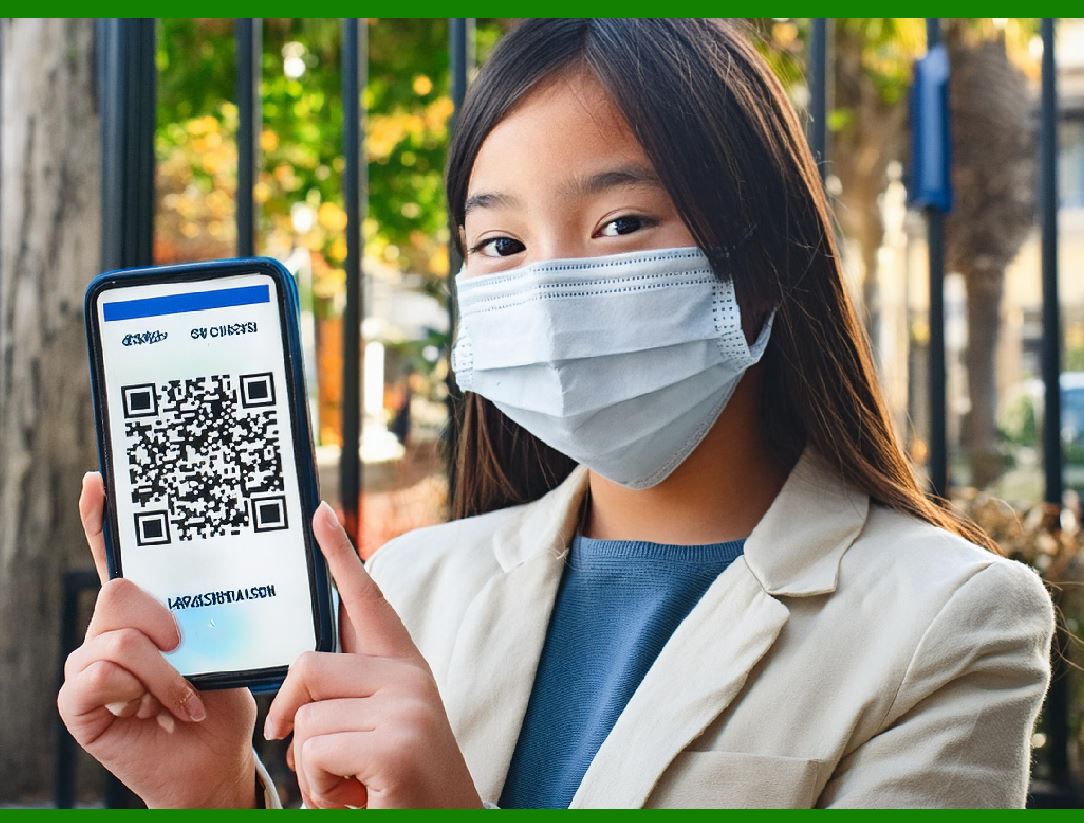
During the COVID-19 pandemic, QR codes were widely adopted for contact tracing and other purposes to minimize physical contact and enhance public health efforts. |
Germany implemented a similar system using QR codes to facilitate contact tracing through their official contact tracing app, the Corona-Warn-App. |
After the COVID-19 pandemic began spreading, QR codes began to be used as a 'touchless' system to display information, show menus, or provide updated consumer information, especially in the hospitality industry. Restaurants replaced paper or laminated plastic menus with QR code decals on the table, which opened an online version of the menu. This prevented the need to dispose of single-use paper menus, or institute cleaning and sanitizing procedures for permanent menus after each use. |
|
Here's a detailed description of two QR codes that would link to German contact tracing app check-ins during this period: |
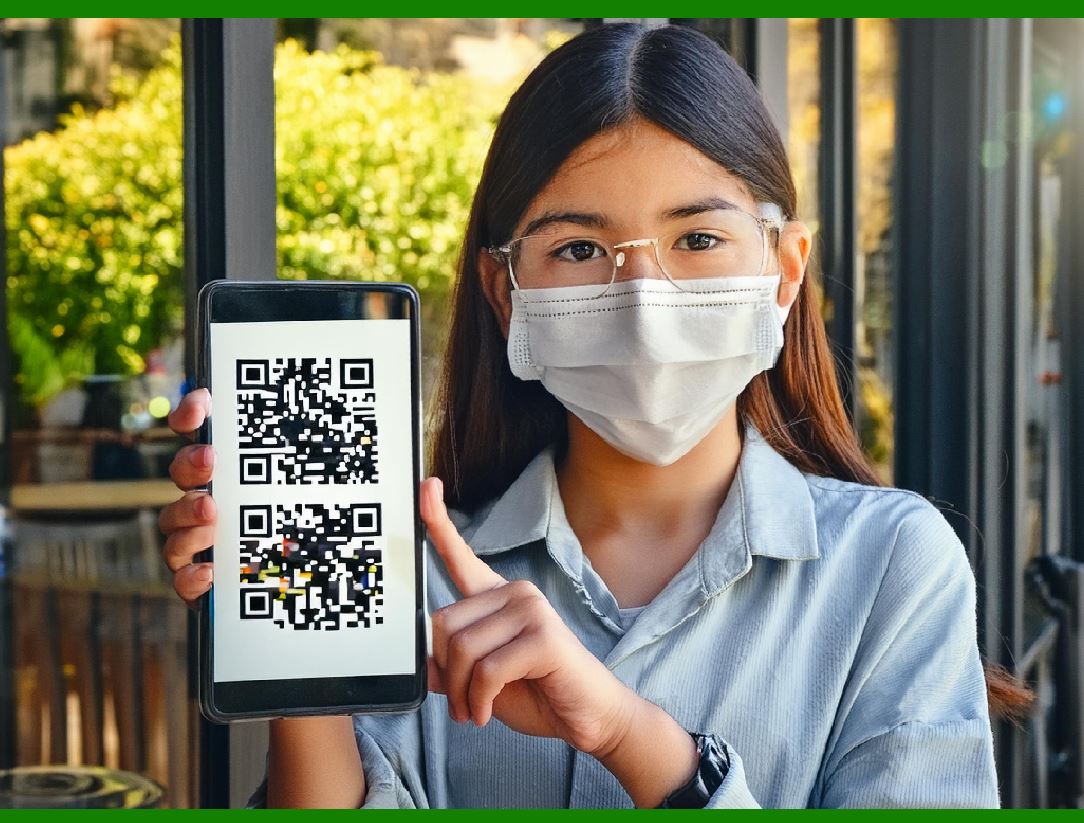
QR Code 1: Restaurant Check-In |
Context: A restaurant in Berlin has implemented a contactless check-in system using QR codes to comply with health regulations and ensure the safety of patrons and staff. |
Description: |
Location: Displayed prominently at the entrance and on each table. Functionality: When a patron scans the QR code using the Corona-Warn-App, it logs the check-in time and location. This information is encrypted and stored on the user's device. Data Captured: The app captures the location (the specific restaurant) and the time of the check-in. It does not store personal data such as names or contact information on a central server, preserving user privacy. |
Process: |
1.Scan: Patrons use their smartphones to scan the QR code with the Corona-Warn-App. 2.Check-In: The app automatically records the visit, noting the time and location. 3.Notification: If another app user who was at the same location reports a positive COVID-19 test, all users who checked in at the same time will receive a notification of potential exposure. |
Benefits: Reduces the need for manual record-keeping, ensures timely notifications for potential exposures, and enhances user privacy through data encryption. |
|
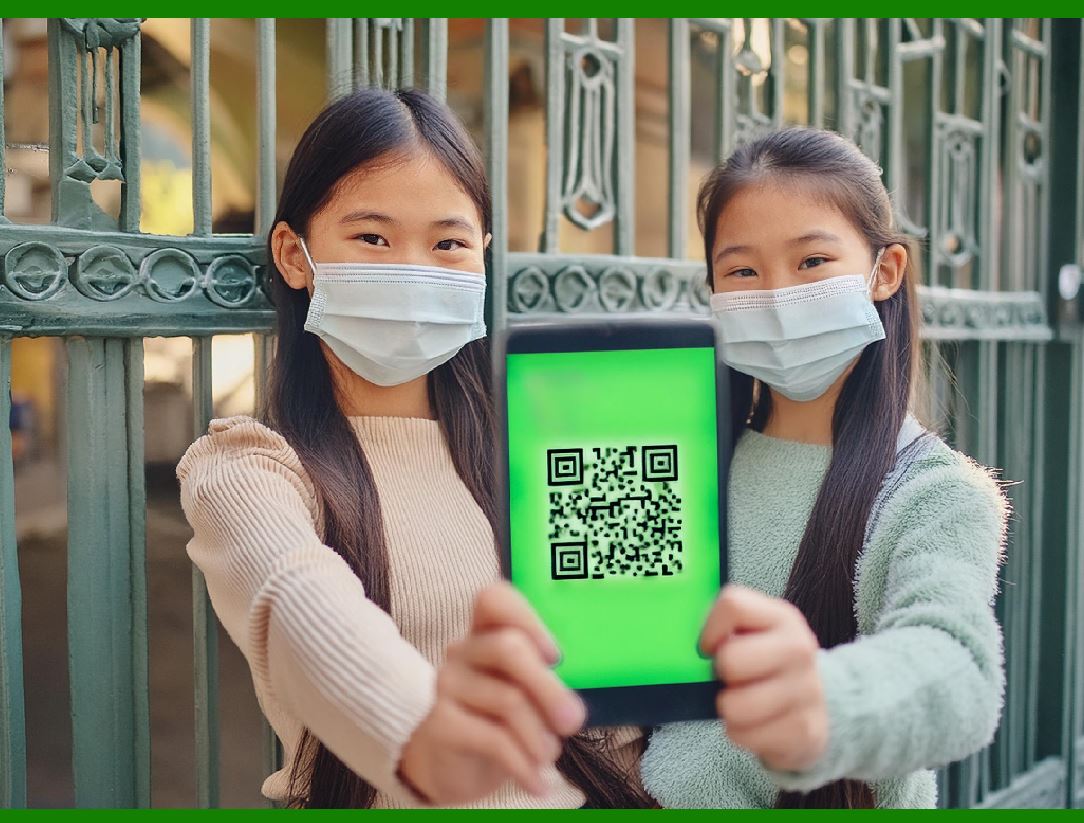
QR Code 2: Event Check-In |
Context: A cultural event in Munich, such as a concert or an art exhibition, uses QR codes for attendee check-ins to facilitate contact tracing and comply with public health guidelines. |
Description: |
Location: Placed at the entrance of the event venue and at various key points within the venue (e.g., entrance to exhibition halls, seating areas). Functionality: Similar to the restaurant check-in, the QR code, when scanned, logs the user's presence at the event through the Corona-Warn-App. Data Captured: Logs the time of entry and specific areas visited within the event venue. All data remains on the user's device and is encrypted. |
Process: |
1.Scan: Attendees scan the QR code upon entry and at various checkpoints within the venue using the Corona-Warn-App. 2.Check-In: Each scan creates a log entry on the user's app, recording the specific location within the venue and the time. 3.Notification: If an attendee tests positive for COVID-19 and reports it via the app, others who checked in at overlapping times and locations receive exposure notifications. |
Benefits: Enhances the safety of large gatherings by providing a reliable method for contact tracing, supports quick notifications to potentially exposed individuals, and respects user privacy through local data storage and encryption. |
|
General Benefits of QR Code Check-Ins in Germany: |
Touchless Interaction: Minimizes physical contact, reducing the risk of virus transmission. Efficient Contact Tracing: Automates the process, ensuring timely and accurate data collection. User Privacy: Uses encrypted data stored locally on devices, protecting user information. Compliance and Safety: Helps businesses and event organizers comply with public health regulations while safeguarding patrons' health. |
|
Conclusion: |
The adoption of QR codes for contact tracing in Germany during the COVID-19 pandemic exemplifies how technology can be leveraged to enhance public health efforts while maintaining user privacy and minimizing disruptions to everyday activities. The Corona-Warn-App and its QR code check-in system played a crucial role in enabling efficient and effective contact tracing in various settings, from restaurants to cultural events. |
 cs@easiersoft.com