Text Modes of Data Matrix Codes |
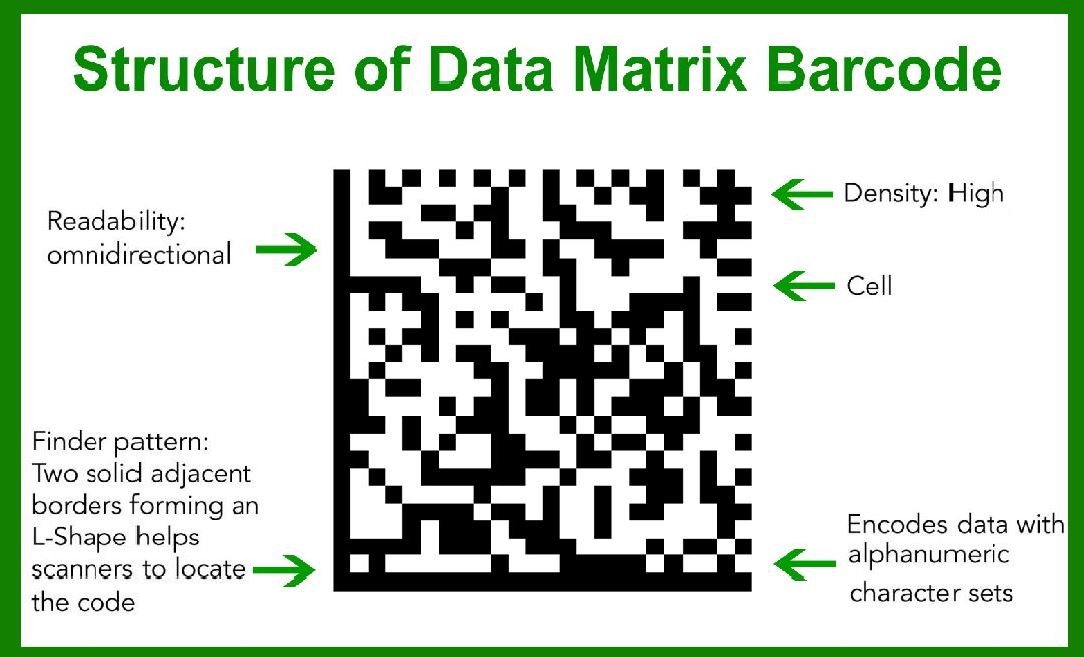
Data Matrix codes are two-dimensional (2D) barcodes widely used in various industries for encoding information in a compact form. Among the multiple encoding modes, the C40, Text, and X12 modes are particularly noteworthy for their efficiency in storing text messages. These modes are designed to optimize the encoding of alphanumeric characters and certain special symbols, leveraging a compact representation similar to the DEC Radix-50 encoding system. |
|
C40 and Text Modes |
Both C40 and Text modes utilize character codes ranging from 0 to 39, where each character is represented by a unique code within this range. The primary difference between these two modes is the default set of characters: C40 mode is biased towards upper-case letters, while Text mode is biased towards lower-case letters. |
Encoding Mechanism |
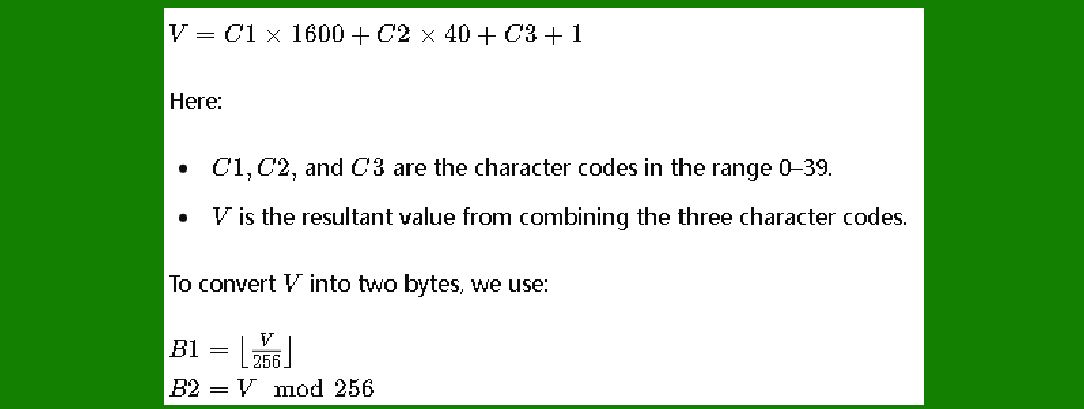
The resulting value of B1B1B1 is in the range 0-250, ensuring efficient use of the byte space. A special value of 254 for B1B1B1 is reserved to indicate a switch back to ASCII encoding mode. |
|
Character Code Sets |
C40 and Text modes each have four character sets, which allow the encoding of a wide variety of characters, including upper-case letters, lower-case letters, digits, and punctuation marks. The character sets are as follows: |
1.Set 0 (Default Set): C40: Primarily upper-case letters. Text: Primarily lower-case letters. |
2.Set 1: Contains ASCII control codes. |
3.Set 2: Contains punctuation symbols. |
4.Set 3: C40: Lower-case letters. Text: Upper-case letters. |
Characters from one set can temporarily switch to another set using specific codes. This allows efficient representation of mixed-case text and other symbols without needing to switch modes frequently. |

|
Compactness of Encoding |
The compactness of C40 and Text modes comes from their ability to pack three characters into two bytes. Given that each byte can store 256 distinct values (0-255), packing three characters (with a combined maximum value of 64000) into two bytes (which can store values up to 65536) is highly efficient. This method reduces the number of bytes needed to store text, especially when the text contains a mix of characters from the supported sets. |

|
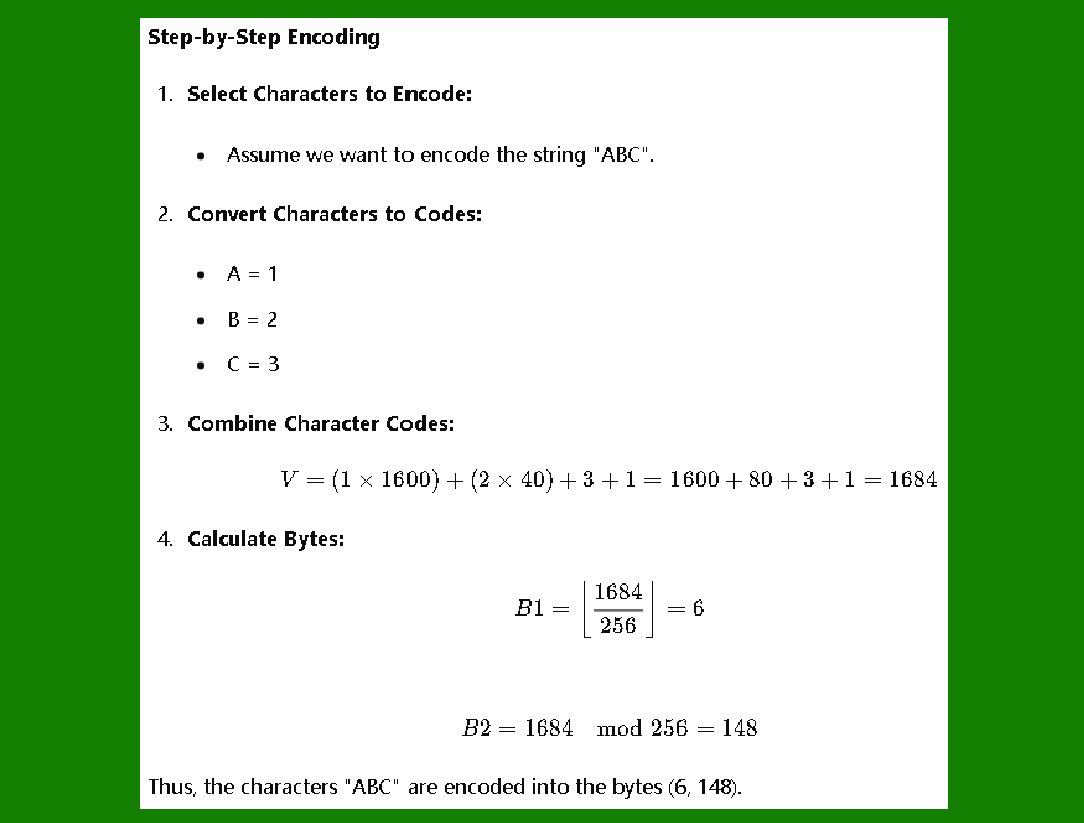
Example Encoding Process Let's consider an example to illustrate the encoding process using C40 mode: |
|
Special Cases and Mode Switching |
The value of 254 in B1B1B1 is used to switch back to ASCII mode, which allows for the encoding of characters that do not fit within the C40 or Text mode character sets. This flexibility ensures that Data Matrix codes can handle diverse textual content efficiently. |
X12 Mode |
The X12 mode is another efficient text encoding mode, tailored specifically for encoding data adhering to the X12 Electronic Data Interchange (EDI) standards. It operates similarly to the C40 and Text modes but uses a slightly different character set optimized for EDI transactions. X12 mode character codes also range from 0 to 39 and follow the same formula for combining three character codes into two bytes. |

|
Character Code Interpretation |
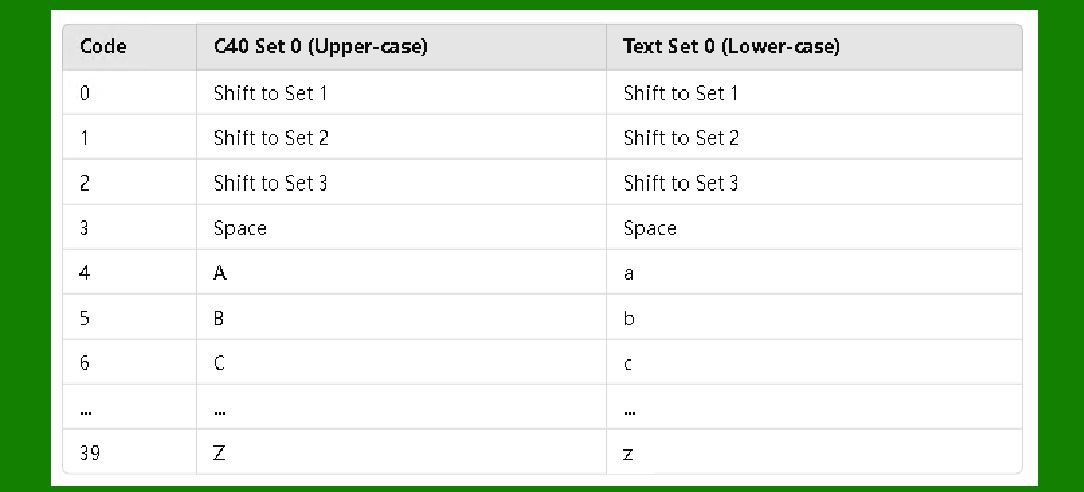
The following table provides an interpretation of the character codes for C40 and Text modes: |
|
Sets 1 and 2 contain identical characters in both modes: Set 1: ASCII control codes (e.g., NUL, SOH, STX, etc.) Set 2: Punctuation symbols (e.g., !, ', #, $, %, &, etc.) |
Set 3 Differences: C40 Set 3: Lower-case letters (a to z) Text Set 3: Upper-case letters (A to Z) |

|
Conclusion |
C40, Text, and X12 modes in Data Matrix codes provide a highly efficient means of encoding textual information by leveraging compact character representations and efficient byte-packing techniques. These modes are particularly useful for applications requiring dense storage of alphanumeric data, ensuring that Data Matrix codes remain compact while retaining a high data capacity. Understanding these modes' encoding mechanisms and character sets is essential for optimizing the use of Data Matrix codes in various industrial and commercial applications. |
 cs@easiersoft.com