Core Electronic Components of Barcode Label Printers: Stepper Motors |
1. Introduction |
Barcode label printers are essential devices used for generating labels that often include product information, pricing, and barcodes for inventory management. These printers are found in various industries, including retail, logistics, healthcare, and manufacturing. While many elements contribute to the functionality and precision of a barcode label printer, stepper motors are integral to their operation. A stepper motor is a type of electric motor that divides a full rotation into multiple, precise steps, ensuring accurate movements of the print head and media feed. This level of control is critical for achieving the precision necessary to produce high-quality, scannable barcodes. |
This detailed description aims to provide an in-depth understanding of the core role of stepper motors in barcode label printers. We will explore their function, types, characteristics, and how they contribute to the overall performance and precision of the printer. |
|
2. Overview of Barcode Label Printers |
Before delving into the specifics of stepper motors, it is essential to understand the basic working mechanism of a barcode label printer. The printer's primary task is to generate labels by printing images, text, and barcodes onto label stock, which can be adhesive-backed paper or synthetic materials. Barcode label printers typically use one of two printing technologies: thermal transfer or direct thermal printing. Regardless of the printing method, the accurate and controlled movement of the print head and the label stock is vital to ensure proper alignment, print quality, and accuracy. |
In a typical barcode label printer, there are several core components that work together to ensure high-quality print output: |
Print Head: The print head is responsible for transferring the image or barcode onto the label stock. It is either a thermal print head or a thermal transfer print head, depending on the printing method. |
Stepper Motors: These are the primary components for moving the print head and feeding the media through the printer. |
Media Roll: The label stock, often a roll of labels, is fed through the printer for printing. |
Control Electronics: This includes the microcontroller or processor that manages the entire printing process, including motor control. |
Sensors: These monitor the position of the print head and the label stock, ensuring proper registration of the print and preventing errors. |
The stepper motor plays a critical role in the movement and positioning of the print head, ensuring that the labels are fed with precision. It also helps to synchronize the timing between the movement of the media and the activation of the print head, which is crucial for accurate printing. |
|
3. Stepper Motors Explained |
A stepper motor is an electromechanical device that converts electrical pulses into precise mechanical movements. Unlike traditional DC motors, which rotate continuously, stepper motors move in distinct steps, making them ideal for applications requiring high precision and controlled motion. The key feature of a stepper motor is its ability to divide a full rotation into a set number of steps, allowing for fine adjustments and accurate positioning. This feature is what makes stepper motors particularly suitable for driving both the print head and media feed in barcode label printers. |
The basic operation of a stepper motor involves a sequence of electrical pulses being sent to the motor's coils. Each pulse moves the rotor (the moving part of the motor) by a specific angle, typically ranging from 0.9¡ã to 1.8¡ã per step, although finer resolutions can be achieved with microstepping techniques. The precision and repeatability of stepper motors make them indispensable in barcode printers, where even the slightest deviation can lead to poor print quality or misaligned labels. |
|
4. Role of Stepper Motors in Barcode Label Printers |
The primary role of stepper motors in barcode label printers is to drive two critical functions: |
1.Print Head Movement: Stepper motors control the lateral movement of the print head across the media. As the print head moves back and forth, it applies heat or ink to the label stock, creating the image or barcode. |
2.Media Feed: Stepper motors also control the forward movement of the label stock, ensuring that the labels are fed correctly and aligned with the print head for proper printing. |
In both functions, stepper motors are used to achieve precise and repeatable movements, which are crucial for ensuring high-quality, readable barcodes and images on the labels. |
4.1 Print Head Movement |
In most barcode label printers, the print head is designed to move horizontally across the label stock. The stepper motor driving the print head is typically mounted on a carriage or frame, and it moves the print head from left to right (or vice versa) to print the label. The accuracy of the print head movement is critical because even a slight misalignment can result in blurry or unreadable barcodes, making the labels unusable. |
Stepper motors are well-suited for this task because they can move in precise increments, which allows the printer to position the print head accurately over the media. By controlling the number of pulses sent to the stepper motor, the printer's control system can dictate the exact position of the print head and ensure that it moves smoothly across the label stock. This precision is especially important for printing barcodes, as barcodes must be printed with a high degree of accuracy to ensure they can be scanned correctly. |
4.2 Media Feed Control |
The second key role of stepper motors in barcode label printers is controlling the movement of the label stock. The media feed is responsible for moving the labels from the roll to the print head and then advancing them after each label is printed. The stepper motor drives the media feed mechanism, which can consist of rollers or other feeding mechanisms that grip the label stock and move it through the printer. |
In this case, the stepper motor ensures that the labels advance by the correct amount after each print cycle. This is critical for maintaining the spacing between individual labels, preventing overlapping or misaligned printing. If the media feed is not accurately controlled, the printer might misplace the labels, resulting in wasted material and time. |
|
5. Types of Stepper Motors Used in Barcode Label Printers |
There are several types of stepper motors, each with unique characteristics that make them suitable for different applications. In barcode label printers, the most commonly used stepper motors are permanent magnet stepper motors (PM motors), variable reluctance stepper motors (VR motors), and hybrid stepper motors. Each type has its advantages, but hybrid stepper motors are the most widely used in barcode label printers due to their combination of performance, efficiency, and cost-effectiveness. |
5.1 Permanent Magnet Stepper Motors (PM) |
Permanent magnet stepper motors are characterized by the use of a permanent magnet in the rotor. These motors are relatively simple and offer good torque at low speeds, making them suitable for applications where the motor must move in discrete steps with a low risk of overheating. However, their performance tends to degrade at higher speeds, which limits their use in applications requiring rapid motion. |
In barcode label printers, PM stepper motors may be used for media feed mechanisms where precise but not rapid motion is required. |
5.2 Variable Reluctance Stepper Motors (VR) |
Variable reluctance stepper motors operate based on the principle of changing magnetic reluctance. These motors do not use permanent magnets but instead rely on a soft iron rotor and electromagnetic coils. VR motors offer good performance at higher speeds compared to PM motors, but they are less efficient and tend to produce more vibration. |
While VR motors offer precise control, they are generally not as commonly used in barcode label printers as hybrid stepper motors. |
5.3 Hybrid Stepper Motors |
Hybrid stepper motors combine the features of both permanent magnet and variable reluctance motors. They offer the best of both worlds: high torque at low speeds and good performance at higher speeds. The rotor of a hybrid stepper motor is typically constructed with a permanent magnet and soft iron, resulting in superior efficiency and reduced vibration. |
Hybrid stepper motors are the most widely used in barcode label printers due to their excellent performance in driving both the print head and media feed with high precision and reliability. |

|
6. Key Characteristics of Stepper Motors in Barcode Label Printers |
Several key characteristics make stepper motors ideal for use in barcode label printers. These characteristics ensure that the printers can perform accurately, reliably, and efficiently over extended periods of time. |
6.1 Precision and Accuracy |
One of the most important features of stepper motors is their ability to move in precise steps. Each electrical pulse sent to the motor moves the rotor by a fixed angle, ensuring that the motor can be controlled with great accuracy. This is particularly important in barcode label printers, where the exact positioning of the print head and label stock is crucial for printing accurate, scannable barcodes. |
6.2 High Torque at Low Speeds |
Stepper motors provide high torque at low speeds, which makes them ideal for tasks that require precision movement without the risk of losing power. This characteristic is essential for controlling the movement of the print head and media feed in barcode printers, as the motors must exert enough force to move the label stock smoothly without causing jams or misalignment. |
6.3 Reliability and Durability |
Stepper motors are known for their reliability and long lifespan. Since barcode label printers often operate continuously or in high-demand environments, having motors that can withstand prolonged use is crucial. Stepper motors are durable and can provide consistent performance over time, ensuring that the printer continues to produce high-quality labels without frequent maintenance or failure. |
6.4 Low Cost and Efficiency |
Stepper motors are generally cost-effective compared to other types of motors, making them an attractive option for barcode label printer manufacturers. Despite their low cost, stepper motors deliver high performance, making them an efficient solution for driving both the print head and media feed in barcode printers. |
|
7. Conclusion |
Stepper motors are integral to the functionality and precision of barcode label printers. These motors provide the controlled movements necessary for accurate print head positioning and media feed, ensuring high-quality, scannable labels. The precision, reliability, and efficiency of stepper motors make them the ideal choice for driving the key components of barcode label printers, contributing to their overall performance and longevity. By understanding the role of stepper motors in barcode printers, manufacturers can better design and optimize these devices to meet the growing demands of modern industries. |
|
8. Manufacturing Technology of Stepper Motors |
The manufacturing of stepper motors, particularly the types used in barcode label printers, involves a combination of mechanical engineering, electrical engineering, and materials science. The process requires precision to ensure that the motor's components, such as the rotor, stator, and coils, are built to exacting specifications. Let's break down the key stages of manufacturing technology and how it applies to stepper motors used in barcode label printers. |
8.1 Design and Development |
The manufacturing of a stepper motor begins with the design phase. Engineers develop the motor's specifications, considering factors such as: |
Step resolution: The number of steps per revolution determines the precision of the motor. For barcode label printers, high-resolution motors are required for precise print head and media feed control. |
Torque and speed requirements: The motor must provide sufficient torque at low speeds to drive the print head and media feed, ensuring reliable operation without overheating. |
Size and form factor: Motors for barcode printers are typically compact, so their dimensions must align with the design specifications of the printer. |
Once the design is finalized, the choice of materials becomes a critical aspect of the motor's performance. The rotor is often made from a permanent magnet or soft iron, while the stator is composed of wound copper wire. These materials are selected based on their electrical and magnetic properties to ensure optimal performance in terms of torque, efficiency, and durability. |
|
8.2 Manufacturing the Motor Components |
Stator and Rotor Production |
Stator Windings: The stator of a stepper motor is constructed using coils of copper wire. The copper wire is wound around a laminated iron core to create the electromagnetic field that drives the motor's operation. The winding process requires precision to ensure uniformity in coil turns, as irregular windings can lead to inefficient motor performance. |
Rotor Fabrication: The rotor, which can be made from either a permanent magnet or a soft iron core, is crafted to match the motor's design. In permanent magnet stepper motors, magnets are carefully positioned in the rotor to create a consistent magnetic field. In variable reluctance motors, the rotor is often a toothed iron core, designed to create magnetic reluctance when passing over the stator's coils. |
Magnetic Circuit Assembly |
The assembly of the motor's magnetic circuit is a key part of the manufacturing process. In hybrid stepper motors, for example, the rotor combines features from both permanent magnet and variable reluctance designs. This requires precise machining and assembly to ensure the rotor's magnets and the soft iron parts are aligned correctly. Any misalignment could cause issues like vibration, reduced torque, or motor failure. |
Coil Insulation and Windings |
To prevent short circuits and ensure the motor's electrical components are insulated properly, each coil is coated with a layer of insulation material. This insulation must be thin enough to allow for high winding density but thick enough to prevent electrical leakage or shorts. The windings are then carefully placed in the stator, and additional layers of insulation may be added. |
Housing and Bearings |
The housing of a stepper motor is generally made from durable materials like aluminum or steel to provide structural integrity and dissipate heat. Bearings are used to allow the rotor to rotate smoothly inside the housing with minimal friction. The bearings must be precisely placed to prevent wobbling or inefficiencies in motion, which could affect the motor's performance. |
|
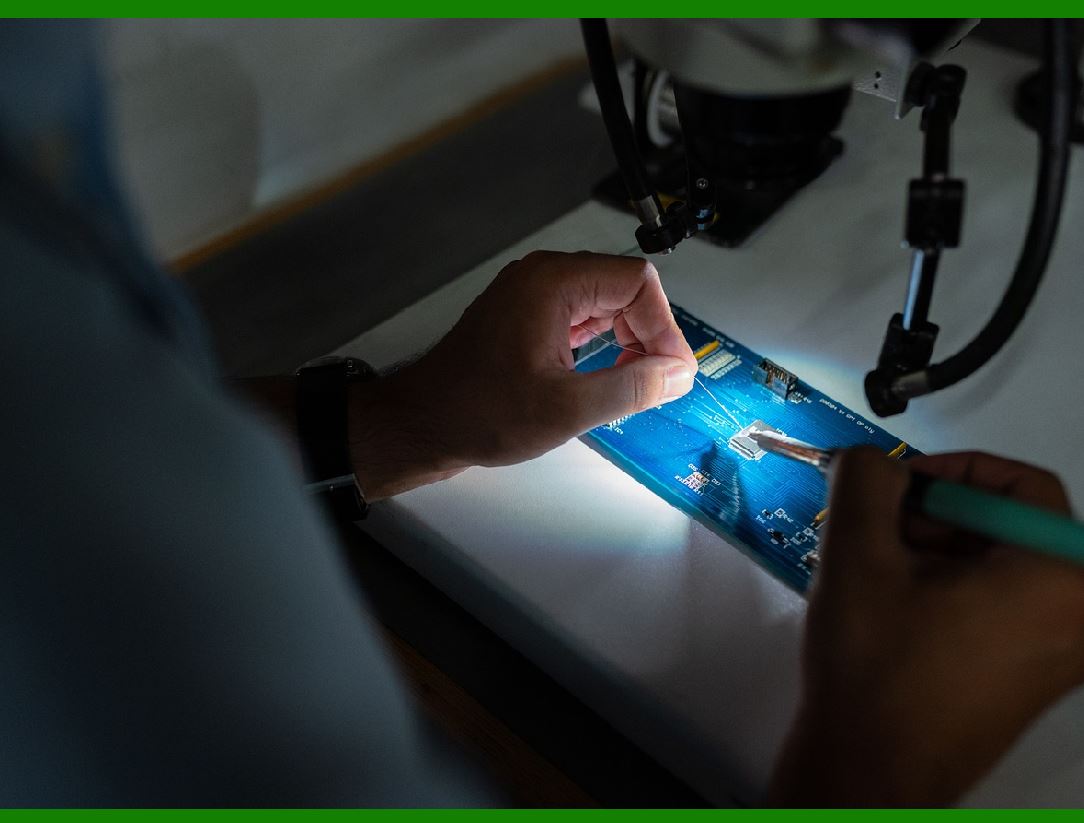
8.3 Motor Testing and Quality Control |
Once the motor is assembled, it undergoes a series of rigorous tests to ensure its functionality and performance: |
Electrical Testing: The motor's resistance, inductance, and current draw are measured to ensure the coils are wound properly and the motor performs as expected. |
Mechanical Testing: The motor is tested for smoothness of rotation, vibration, and noise. Any irregularities in mechanical movement could indicate issues with the rotor or bearings. |
Precision Testing: Since stepper motors are used in applications requiring high precision, each motor is tested for its step accuracy. The motor's ability to move in exact increments must meet stringent tolerances. |
Environmental Testing |
In some cases, stepper motors are also subjected to environmental tests, such as temperature cycling or exposure to dust, to simulate the conditions they may face in real-world applications. For barcode label printers, this is especially important in environments where the printers may be exposed to high heat or dirty conditions, such as warehouses or manufacturing floors. |
|
8.4 Final Assembly and Packaging |
Once all components have been tested and verified, the motors are sent for final assembly, where they are integrated with other mechanical and electronic components of the printer. The assembled stepper motors are then packaged with anti-static materials to prevent damage during shipping and handling. |
|
9. Main Manufacturers of Stepper Motors |
Several companies specialize in the production of stepper motors for a variety of applications, including those used in barcode label printers. These manufacturers combine advanced manufacturing techniques with cutting-edge technology to deliver motors that meet the rigorous performance requirements of modern printers. Some of the most prominent manufacturers include: |
9.1 Nidec Corporation |
Nidec is a global leader in motor manufacturing, and it produces a wide range of motors, including stepper motors. The company is known for its high-quality, reliable motors used in various applications, including barcode label printers. Nidec's stepper motors are designed to provide high precision, durability, and low power consumption, making them ideal for use in barcode label printers. |
Nidec offers a variety of stepper motors with different step resolutions and torque capabilities, allowing printer manufacturers to select the most appropriate motor for their specific printing technology and speed requirements. |

|
9.2 SANYO Denki Co., Ltd. |
SANYO Denki is another leading manufacturer of stepper motors, particularly known for its high-performance products in the industrial automation sector. The company produces stepper motors that are widely used in printers, scanners, and other precise motion control systems. SANYO Denki's stepper motors are highly regarded for their low vibration, minimal noise, and high reliability, making them ideal for barcode label printers, where quiet and smooth operation is crucial. |
SANYO Denki's motors are available in a variety of configurations, including both unipolar and bipolar designs, which allow for flexibility in the type of printer they are used with. |

|
9.3 Oriental Motor Co., Ltd. |
Oriental Motor is a prominent Japanese manufacturer of stepper motors and other motion control products. The company has a long history of providing stepper motors for use in precision applications, including barcode label printers. Oriental Motor's stepper motors are known for their high torque output, smooth motion, and compact size, making them ideal for use in small form-factor barcode label printers. |
Oriental Motor's products also include motor drivers and controllers that complement their stepper motors, providing a complete solution for motion control in printing systems. Their advanced stepper motors are available in a wide range of step angles, from low-resolution motors to ultra-high-resolution options. |
|
9.4 Moons' Industries |
Moons' Industries is a global manufacturer of stepper motors, stepper drivers, and other motion control products. The company's stepper motors are widely used in various industries, including printing, robotics, and medical equipment. Moons' Industries focuses on providing energy-efficient motors with high precision, making their products highly suitable for applications such as barcode label printing, where consistent and reliable movement is necessary. |
Moons' stepper motors come in various sizes and configurations, including high-torque and low-backlash models, offering flexibility for different printer designs. The company also offers integrated solutions, such as stepper motors with built-in drivers, simplifying the integration process for printer manufacturers. |
|
9.5 Lin Engineering |
Lin Engineering is a leading manufacturer of high-precision stepper motors, serving a wide range of industries, including printing, automation, and medical devices. Lin Engineering focuses on producing stepper motors that offer high performance and durability, which are essential qualities for barcode label printers. |
The company's stepper motors are designed to operate efficiently in environments requiring high precision and reliability. Lin Engineering offers motors with various step resolutions, torque ratings, and sizes, making them adaptable for different types of barcode printers, from desktop models to industrial-grade systems. |
|
9.6 Delta Electronics, Inc. |
Delta Electronics is a global player in the field of electronic components and motors. While the company is well-known for its power supplies and energy-efficient products, it also manufactures stepper motors used in a variety of applications, including barcode label printers. Delta Electronics' stepper motors are renowned for their high energy efficiency, low noise, and precision, which are key factors for ensuring smooth and reliable performance in label printers. |
Delta offers a variety of stepper motor models that are used in both low-volume desktop printers and high-speed industrial printers. Their motors are designed for long-term reliability and are often chosen for use in high-demand applications. |
|
10. Conclusion |
Stepper motors play a crucial role in the precise operation of barcode label printers, contributing significantly to print head movement and media feed control. The manufacturing of these motors involves a complex process, including design, assembly, and testing, to ensure that they meet the stringent requirements of the printing industry. Leading manufacturers like Nidec, SANYO Denki, Oriental Motor, Moons' Industries, Lin Engineering, and Delta Electronics have established themselves as key players in the market, offering high-quality motors that support the ever-increasing demand for precise and reliable barcode printing. With ongoing advancements in motor technology, we can expect even greater performance, efficiency, and reliability in future generations of barcode label printers. |
 cs@easiersoft.com