1. Introduction to Data Centers and Cloud Computing |
The rise of data centers and cloud computing has fundamentally transformed how businesses and individuals interact with digital technologies. Data centers, which are large facilities housing numerous servers, storage systems, and networking equipment, serve as the backbone for cloud computing services. Cloud computing, in turn, allows users to access computing resources such as storage, processing power, and software via the internet, instead of relying on local hardware. This model offers scalability, flexibility, and cost-effectiveness, making it particularly appealing to both businesses and consumers. |
Over the past two decades, the explosive growth of digital data has driven the demand for more powerful, efficient, and scalable infrastructure. As services such as social media, streaming, online shopping, and enterprise applications generate an enormous amount of data, cloud service providers like Amazon Web Services (AWS), Google Cloud, and Microsoft Azure have been under increasing pressure to expand their data center operations. This has resulted in significant advances in hardware, particularly in the semiconductor industry, which plays a critical role in enabling the efficient processing and storage of data. |
|
2. The Role of Data Centers in Cloud Computing |
Data centers are the heart of cloud computing, providing the physical infrastructure needed to run cloud-based applications and services. A typical data center consists of rows of servers connected by high-speed networks, with redundant systems to ensure reliability. These data centers are often located in purpose-built facilities around the world, designed to handle vast amounts of data traffic, storage requirements, and computational workloads. |
Cloud computing relies on the concept of virtualization, where resources like storage and processing power are abstracted from the physical hardware and made available on demand. This allows businesses and consumers to scale their computing resources without needing to maintain their own data centers. Major cloud providers use large-scale data centers to deliver services such as: |
Compute resources: Servers with high processing power for tasks like running applications, managing databases, and handling large-scale computations. |
Storage: Systems designed to store vast amounts of data securely, ranging from files and documents to multimedia content and backup data. |
Networking: High-bandwidth networks that connect users to the data center, ensuring fast and reliable access to services. |
Security: Sophisticated encryption and monitoring systems to protect data from unauthorized access and ensure compliance with regulations. |
The vast scale of modern data centers, combined with the rapid expansion of cloud services, has increased the demand for highly efficient and powerful hardware, including semiconductor chips that can handle large amounts of data processing while minimizing energy consumption. |

|
3. Growing Demand for Semiconductor Chips in Data Centers |
As the cloud computing industry continues to grow, so does the need for more advanced semiconductor chips. These chips are the core components of data center hardware, powering everything from processors (CPUs) to memory (RAM) and storage devices (SSDs). They must meet the increasing demand for higher performance, scalability, and energy efficiency. |
The semiconductor industry is responding to these challenges by developing next-generation chips that offer more computing power and greater energy efficiency. For data centers, this means designing chips that can handle increasingly complex workloads, such as machine learning, big data analytics, and real-time processing of vast amounts of information. |
Two key drivers of the demand for advanced chips in data centers are the explosion of data generated by users and the increasing complexity of cloud-based applications. As services like artificial intelligence (AI), machine learning (ML), and natural language processing (NLP) become more prevalent in the cloud, data centers must process and analyze large volumes of data in real-time. This requires specialized chips that can perform parallel computations efficiently. |
|
4. Advances in Semiconductor Technology: 3nm and 2nm Process Nodes |
To meet the growing demands of data centers and cloud computing, semiconductor manufacturers have been advancing their process technology, specifically shrinking the size of transistors on chips. The process node refers to the size of the individual transistors, which is measured in nanometers (nm). Smaller process nodes allow for more transistors to be packed into a given area, resulting in chips that are faster, more power-efficient, and capable of handling more complex workloads. |
Currently, the most advanced semiconductor chips are being manufactured using 3nm and 2nm process nodes. These chips are expected to play a critical role in the next generation of data centers, offering significant improvements in computational power and energy efficiency. |
3nm Process Node: The 3nm node represents a significant leap forward in semiconductor technology. By shrinking the size of transistors to 3nm, manufacturers can increase the density of transistors on a chip, allowing for more processing power in the same physical space. This enables faster data processing, reduced latency, and lower power consumption. For data centers, the 3nm chips will be particularly valuable in applications requiring high throughput and real-time data processing, such as machine learning and AI-based services. |
2nm Process Node: The 2nm process node takes this even further, pushing the boundaries of Moore's Law, which predicts that the number of transistors on a chip will double approximately every two years. While 2nm chips are still in the early stages of development, they promise even greater energy efficiency and performance improvements. As cloud providers continue to expand their operations, these chips will be critical in ensuring that data centers can handle increasingly complex workloads without sacrificing performance or energy efficiency. |
The adoption of 3nm and 2nm chips will allow data centers to process more data with less energy consumption, ultimately reducing their operational costs and carbon footprint. This is especially important as companies and governments around the world aim to reduce greenhouse gas emissions and address climate change. |
|
5. Specialized Chips for AI and Machine Learning |
One of the key trends in modern data centers is the increasing use of specialized chips designed for specific workloads. In particular, AI accelerators have become a critical component of cloud data center infrastructure. These chips are optimized for machine learning tasks, which involve training and running complex models on large datasets. |
Traditional CPUs are general-purpose processors, capable of performing a wide range of tasks but not optimized for specific applications like AI. In contrast, specialized chips like Graphics Processing Units (GPUs), Tensor Processing Units (TPUs), and Field-Programmable Gate Arrays (FPGAs) are specifically designed to accelerate tasks like matrix multiplication and parallel computations, which are common in AI and machine learning algorithms. |
Graphics Processing Units (GPUs): Originally developed for rendering graphics in video games, GPUs have evolved into powerful processors for AI and machine learning. They excel at handling parallel processing tasks, making them ideal for training and running AI models. Companies like NVIDIA have become leaders in the GPU market, with their chips being used in everything from autonomous vehicles to data center infrastructure. |
Tensor Processing Units (TPUs): Developed by Google, TPUs are custom-designed chips optimized for machine learning workloads, particularly those based on TensorFlow, Google's open-source machine learning framework. TPUs provide significant performance improvements over traditional CPUs and GPUs for AI tasks, particularly in data centers where large-scale machine learning models need to be trained and deployed. |
Field-Programmable Gate Arrays (FPGAs): FPGAs are programmable chips that can be customized for specific tasks. In data centers, they are used for applications that require high-speed processing and low-latency responses. FPGAs are particularly useful for applications such as video streaming, data analytics, and real-time decision-making in cloud services. |
The growing use of AI in cloud services has driven the demand for these specialized chips, which enable data centers to run machine learning algorithms more efficiently. As the demand for AI-powered services continues to rise, the need for even more advanced AI accelerators will only increase. |
|
6. Energy Efficiency and Sustainability in Data Centers |
Energy efficiency has become a top priority for both data center operators and semiconductor manufacturers. Data centers consume massive amounts of electricity to power their servers, cooling systems, and other infrastructure. According to some estimates, data centers account for around 1-2% of global electricity consumption, a figure that is expected to grow as cloud computing continues to expand. |
As data centers scale up to meet the growing demand for cloud services, energy efficiency has become a critical factor in reducing operational costs and minimizing the environmental impact of these facilities. Semiconductor companies are responding to this challenge by designing chips that consume less power while maintaining high performance. |
Several factors contribute to energy efficiency in semiconductor chips: |
Smaller Process Nodes: As mentioned earlier, chips built on 3nm and 2nm process nodes are inherently more energy-efficient due to their smaller transistor size. These chips can perform the same amount of work as larger chips but consume less power. |
Low-Power Design: Many modern chips are designed with energy-saving features that reduce power consumption when the chip is idle or under light load. This is especially important in data centers, where thousands of chips are running simultaneously. |
Advanced Cooling Techniques: In addition to energy-efficient chips, data centers are employing advanced cooling techniques to reduce the amount of energy required for temperature control. Techniques such as liquid cooling, free-air cooling, and heat recycling are helping to lower the environmental impact of data centers. |
The push for energy efficiency is not just about reducing operational costs-it is also driven by sustainability goals. Many cloud providers and semiconductor manufacturers are working to achieve net-zero carbon emissions, which has led to increased investment in green technologies, including renewable energy sources and energy-efficient chip designs. |
|
7. Conclusion: The Future of Data Centers and Cloud Computing |
The future of data centers and cloud computing will be shaped by advancements in semiconductor technology, particularly in the areas of chip performance, energy efficiency, and specialization. As data centers continue to scale up to meet the growing demand for cloud services, the need for more powerful and efficient semiconductor chips will only increase. |
Next-generation chips, including those built on the 3nm and 2nm process nodes, will enable data centers to achieve unprecedented levels of computational power while reducing their environmental impact. Specialized chips like AI accelerators will become more common in data centers, supporting the growing use of machine learning and other AI-driven services in the cloud. |
At the same time, the semiconductor industry will continue to focus on energy efficiency and sustainability, ensuring that the data centers powering the cloud computing revolution can operate in an environmentally responsible manner. |
As cloud computing continues to reshape industries and societies, the role of data centers and the semiconductor industry in enabling this transformation will remain crucial. By developing faster, more efficient, and more sustainable chips, the semiconductor industry will help ensure that the cloud can scale to meet the needs of future generations. |
|
8. Case Studies in Data Centers, Cloud Computing, and Semiconductor Advancements |
The rapid expansion of cloud computing and data centers has given rise to several innovative case studies that highlight how advancements in semiconductor technology, AI, and energy efficiency are transforming the industry. These case studies illustrate the growing demand for next-generation chips and the role they play in improving the performance and sustainability of data centers. |
Case Study 1: Google and Tensor Processing Units (TPUs) |
Background: |
Google is one of the largest cloud service providers globally, operating some of the most advanced data centers in the world. With an ever-growing demand for machine learning (ML) and artificial intelligence (AI) workloads, Google realized that traditional general-purpose processors, such as CPUs and GPUs, were not fully optimized for these types of tasks. |
Challenge: |
Google needed a solution that could accelerate machine learning tasks in its data centers, which were becoming increasingly resource-intensive. Specifically, training large-scale AI models such as deep neural networks (DNNs) required a great deal of computational power. The use of GPUs helped to some extent but was not as efficient as needed for certain ML workloads. |
Solution: |
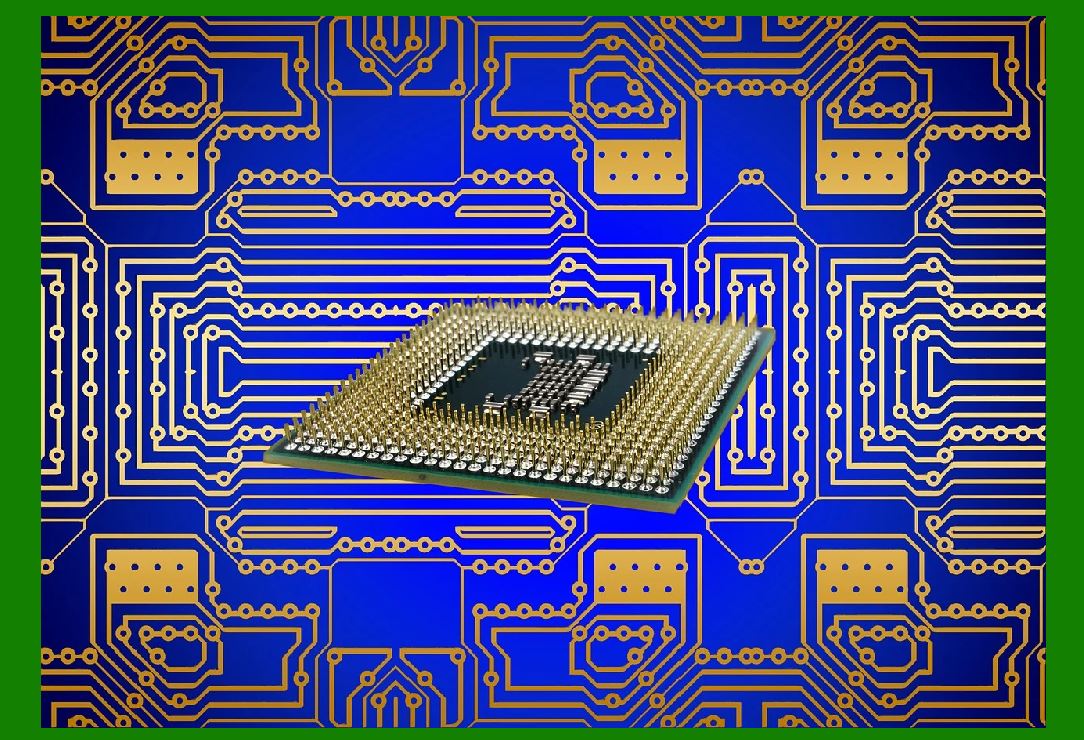
In response to this challenge, Google developed its custom-designed Tensor Processing Units (TPUs)-specialized chips optimized for the computational requirements of machine learning. TPUs are designed specifically for the matrix operations that are central to deep learning algorithms. By optimizing hardware for these tasks, Google was able to achieve significant improvements in performance and efficiency. |
The first-generation TPU was released in 2016, followed by the second generation in 2017, and the third generation in 2018. These chips are used across Google's cloud infrastructure to accelerate machine learning tasks, from natural language processing to image recognition. TPUs are now available to external customers through Google Cloud, allowing developers to run AI models more efficiently and cost-effectively. |
Impact: |
Performance: TPUs deliver up to 15-30 times more processing power for AI workloads compared to traditional GPUs. |
Energy Efficiency: The specialized design of TPUs allows Google to reduce the energy consumption of its data centers significantly, optimizing for both performance and power usage. |
Scalability: By using TPUs in its data centers, Google has been able to scale its machine learning services to meet the growing demand for AI-powered solutions in the cloud. This has enabled applications like Google Search, Google Translate, and Google Photos to function more efficiently. |
Lessons Learned: |
Specializing hardware to specific workloads can drastically improve both performance and energy efficiency. |
Custom silicon development, such as TPUs, is becoming increasingly important for tech giants like Google to maintain a competitive edge in AI and cloud computing. |
|
Case Study 2: Microsoft and Energy-Efficient Data Centers |
Background: |
Microsoft Azure is one of the leading cloud platforms in the world, hosting millions of workloads from organizations of all sizes. As the demand for cloud services has grown, so has Microsoft's need for data center infrastructure that can handle high-performance computing while being sustainable and energy-efficient. |
Challenge: |
Microsoft faces the dual challenge of managing the increasing demand for cloud services while addressing the environmental impact of its data centers. Traditional data centers consume large amounts of electricity, and with global initiatives to reduce carbon footprints, it became clear that energy efficiency would be a key consideration in the design of future infrastructure. |
Solution: |
To address this, Microsoft has made significant strides in both the physical design of its data centers and in the development of energy-efficient semiconductors. |
1.Custom Silicon: Microsoft introduced Project Olympus, an initiative that focuses on developing custom server designs optimized for its Azure cloud platform. This involves developing custom processors and other components, allowing Microsoft to fine-tune the hardware for its specific workloads and improve power efficiency. For example, Microsoft has collaborated with Intel to design chips optimized for AI and machine learning workloads in the cloud. |
2.Sustainable Energy Practices: Microsoft has committed to achieving carbon neutrality across its entire supply chain by 2030. This includes powering its data centers with renewable energy sources. Microsoft has also pioneered the use of liquid cooling technologies to reduce the need for energy-intensive air conditioning, which is a significant contributor to the high energy consumption of traditional data centers. |
3.AI for Energy Efficiency: Microsoft has also integrated AI and machine learning into the operation of its data centers. By using AI-driven systems to predict energy demand and optimize cooling systems, Microsoft is able to reduce energy usage without compromising performance. |
Impact: |
Energy Efficiency: Microsoft has reduced its data center energy consumption by over 30% in recent years through the implementation of AI and advanced cooling systems. |
Carbon Neutrality: By 2020, Microsoft achieved its goal of becoming carbon neutral. In 2021, it pledged to remove more carbon from the atmosphere than it has emitted since its founding. |
Innovation: The development of custom silicon and integration of AI into data center management has helped Microsoft maintain its competitive edge in providing efficient, scalable cloud services. |
Lessons Learned: |
Energy-efficient hardware, coupled with AI-based optimization, can substantially reduce the carbon footprint of data centers. |
Custom silicon and server designs are increasingly critical for companies aiming to reduce operational costs and improve performance. |
|
Case Study 3: Amazon Web Services (AWS) and the Graviton Processor |
Background: |
Amazon Web Services (AWS) is one of the largest and most comprehensive cloud service providers in the world. AWS offers a wide array of services, ranging from compute power to storage and machine learning capabilities. However, as AWS has grown, so has the need to optimize both performance and energy consumption to keep operating costs competitive. |
Challenge: |
AWS traditionally used x86-based processors from Intel and AMD in its data centers. However, as the company's cloud services continued to expand, the cost and energy consumption of these general-purpose processors became a significant issue. AWS needed a way to reduce both the cost and power consumption of its infrastructure, while still meeting the high demands of its customers. |
Solution: |
In 2018, AWS introduced the Graviton Processor, a custom-designed ARM-based chip. Graviton processors were specifically designed for workloads commonly used in cloud environments, such as web servers, containerized applications, and microservices. By designing its own processors, AWS was able to optimize the hardware for these workloads, resulting in both better performance and reduced power usage. |
The second generation of Graviton processors, known as Graviton2, was launched in 2020. These chips are built using a 7nm process node and offer a significant performance boost over the first-generation chips, while maintaining a focus on energy efficiency. Graviton2 processors are available for a variety of AWS EC2 (Elastic Compute Cloud) instances and are a popular choice for customers looking to optimize costs. |
Impact: |
Cost Savings: AWS reports that Graviton2-based instances can deliver up to 40% better price/performance compared to equivalent x86-based instances. |
Energy Efficiency: The custom ARM architecture of Graviton processors allows AWS to optimize both performance and power efficiency, reducing the energy consumption of its data centers. |
Customer Adoption: Many AWS customers have adopted Graviton-based instances for their cloud workloads, leading to a growing shift toward ARM-based architectures in cloud computing. |
Lessons Learned: |
Custom chip design can significantly improve both cost and energy efficiency in large-scale cloud infrastructure. |
As the demand for specialized workloads in the cloud grows, the adoption of custom-designed chips will likely become more widespread across the industry. |

|
Case Study 4: Facebook (Meta) and Sustainable Data Centers |
Background: |
Meta (formerly Facebook) operates one of the largest social media platforms in the world, with billions of active users. With such a vast user base, Meta needs to manage a massive amount of data, which requires the operation of large-scale data centers. The company has increasingly focused on sustainability and energy efficiency to reduce its environmental impact. |
Challenge: |
As Meta's data center footprint grows, so does the energy required to support its services. Meta has recognized the need to innovate not only in terms of performance but also in terms of sustainability. The company needed a way to continue scaling its infrastructure while reducing the environmental impact of its data centers. |
Solution: |
Meta has made several advancements in the design of its data centers and semiconductor technology to meet its sustainability goals: |
1.Custom Servers: Meta has developed its own Wedge switches and Scorpio servers to optimize the performance and energy efficiency of its data centers. These custom designs, which are part of the Open Compute Project (OCP), enable Meta to meet its specific computing needs while minimizing energy consumption. |
2.Sustainable Data Center Designs: Meta has also pioneered the use of open-source hardware for data center design, allowing for better efficiency and flexibility. In addition to energy-efficient hardware, Meta's data centers are designed to use renewable energy sources and are built with advanced cooling systems to reduce the need for traditional air conditioning. |
3.AI for Cooling: Meta has integrated AI-based cooling systems in its data centers to optimize energy use. By using AI to predict temperature fluctuations and adjust cooling accordingly, the company can significantly reduce the energy required to keep its servers cool. |
Impact: |
Carbon Neutrality: Meta has committed to achieving net-zero carbon emissions across its global operations by 2030. |
Energy Efficiency: Meta's data centers now operate at a much higher level of energy efficiency, with many of its data centers being powered by renewable energy sources. |
Cost Reduction: By optimizing server designs and cooling systems, Meta has been able to reduce operational costs while scaling its data centers. |
Lessons Learned: |
Open-source hardware and custom chip designs can play a key role in enhancing the efficiency and sustainability of data centers. |
AI-driven systems can provide significant gains in energy efficiency, helping companies meet both performance and sustainability targets. |
|
Conclusion |
These case studies underscore the pivotal role that next-generation semiconductor technologies, specialized chips, and sustainability initiatives are playing in the evolution of cloud computing and data centers. From Google's TPUs accelerating AI workloads to Amazon's Graviton processors reducing costs and energy usage, the industry's focus on custom silicon, energy efficiency, and sustainability is shaping the future of data infrastructure. |
As cloud services continue to grow, the importance of optimizing hardware and operational practices to meet both technical and environmental challenges will remain a key driver of innovation across the semiconductor and data center industries. |
 cs@easiersoft.com