Scaling AI Workloads and Data Center Demands |
The rapid advancement of artificial intelligence (AI) and machine learning (ML) technologies has triggered a significant transformation in the demands placed on computing hardware, data centers, and semiconductor technologies. As these workloads scale, data centers must evolve in response to the increasing computational power, efficiency, and specific requirements of AI workloads. This article explores in detail the complex challenges posed by scaling AI workloads and the corresponding demands on data centers, specifically focusing on AI and high-performance computing (HPC), the rise of edge computing, and the specialized hardware required to meet these challenges. |
|
1. The Growth of AI Workloads |
The demand for AI processing power has skyrocketed in recent years. Deep learning, which underpins much of modern AI, relies on complex models that require massive datasets and substantial computational resources. AI systems, especially those utilizing deep neural networks, must process vast amounts of data in real time. This has led to the need for ever more powerful and specialized hardware. |
1.1 Deep Learning and Data Demands |
Deep learning models such as convolutional neural networks (CNNs) and transformers are the backbone of many AI applications, including image recognition, natural language processing, and autonomous driving. These models are composed of millions, sometimes billions, of parameters, and require significant computational resources to both train and infer. The training phase is particularly resource-intensive, as it involves processing large volumes of data through multiple layers of neurons. |
Training large models involves both memory and processing power. For example, a single training pass of a model like GPT-3 requires thousands of teraflops of processing power and petabytes of data storage. This level of complexity necessitates the use of specialized hardware that can handle such computationally demanding workloads. As models scale up, so too must the data infrastructure supporting them. |
1.2 Scaling AI Models and Data Centers |
As AI models grow in size, the infrastructure that supports them must scale accordingly. A key challenge is the management of computational resources, including the number of processing units, memory capacity, and network bandwidth, within data centers. AI workloads cannot be efficiently handled by traditional CPUs alone due to their inability to process parallel operations at the required scale. This has led to the widespread adoption of specialized accelerators like graphics processing units (GPUs), tensor processing units (TPUs), and field-programmable gate arrays (FPGAs), which are specifically designed to handle the heavy parallelism required by AI tasks. |
1.3 AI and Data Center Hardware Evolution |
The evolution of data center hardware is being driven by the need for parallel processing capabilities, which is at the heart of scaling AI workloads. GPUs, originally designed for graphics rendering, have become the preferred choice for AI workloads due to their high degree of parallelism and ability to process multiple operations simultaneously. TPUs, developed by Google, are another type of specialized accelerator designed specifically for AI tasks like matrix multiplication, which is fundamental to many machine learning algorithms. Similarly, FPGAs, with their customizable hardware architecture, allow for highly optimized computations tailored to specific workloads. |
With these specialized chips in place, data centers must also evolve in their physical and operational structures to accommodate the scale and complexity of AI workloads. This includes not only increasing computational power but also addressing issues like heat dissipation and power consumption, which become critical as workloads grow larger. |

|
2. AI and High-Performance Computing (HPC) |
High-performance computing (HPC) has traditionally been associated with scientific research and large-scale simulations in fields such as physics, engineering, and climate modeling. However, AI has increasingly become an integral part of HPC due to the computational similarities between the two fields. Both require vast amounts of parallel processing and massive data throughput, making the lines between traditional HPC and AI workloads increasingly blurred. |
2.1 The Role of HPC in AI |
AI tasks such as training large neural networks share many characteristics with traditional HPC workloads. Both involve processing vast amounts of data and performing complex mathematical operations across multiple nodes in a distributed system. For example, deep learning algorithms often involve matrix operations and vector processing, which are similar to the tasks required in scientific simulations. |
To effectively scale AI workloads, HPC systems need to evolve. Traditional HPC systems, which often rely on CPUs and large memory hierarchies, struggle with the extreme parallelism required by modern AI workloads. In contrast, AI systems benefit from GPUs and other accelerators that can efficiently manage the high volume of parallel computations. This has led to a convergence of AI and HPC hardware, with GPUs and specialized accelerators becoming essential components in both fields. |
2.2 Integration of AI Accelerators in HPC |
AI accelerators are increasingly being integrated into HPC systems to enhance computational efficiency. GPUs, for instance, are now a critical part of many modern HPC clusters. Their high throughput capabilities allow them to handle a variety of AI-specific operations, from matrix multiplication to backpropagation in neural networks. By integrating GPUs into HPC clusters, organizations can accelerate AI training and inference processes, driving significant improvements in computational performance. |
Another emerging technology in the convergence of AI and HPC is the use of TPUs. These accelerators, designed specifically for AI workloads, are optimized for tensor operations, which are central to deep learning models. Their integration into HPC systems allows for even greater performance gains, particularly for large-scale AI model training. As AI and HPC converge, data centers must adapt their infrastructures to support the unique requirements of both fields. |
2.3 Challenges in Scaling HPC for AI |
Scaling HPC systems to meet the demands of AI involves several challenges. One of the primary issues is the need for high bandwidth and low latency interconnects between nodes in a distributed computing environment. AI workloads often require frequent communication between processing units, and traditional interconnects used in HPC systems may not be fast enough to keep up with the demands of AI. |
Moreover, data centers must consider the cost-effectiveness of scaling HPC for AI. The integration of specialized hardware such as GPUs and TPUs into existing HPC systems can drive up costs, not only in terms of hardware acquisition but also in terms of energy consumption and cooling requirements. AI accelerators are power-hungry, and ensuring that data centers can handle the increased power draw and heat dissipation is critical for maintaining system performance and reliability. |
|
3. The Rise of Edge Computing |
While cloud computing and centralized data centers remain dominant, there is a growing shift towards edge computing, where data processing occurs closer to the source of data. This shift is driven by the need for faster processing times, reduced latency, and improved bandwidth efficiency, particularly for applications such as autonomous vehicles, industrial IoT (Internet of Things), and smart cities. |
3.1 The Importance of Edge Computing for AI |
Edge computing involves the distribution of computational resources closer to where data is generated, as opposed to relying on a centralized cloud data center. In AI applications, this means that data from sensors, cameras, and other devices is processed locally or at nearby edge servers, reducing the need for constant communication with remote data centers. |
For example, autonomous vehicles generate massive amounts of data from cameras, LiDAR, and other sensors, all of which need to be processed in real-time to ensure safe driving. Sending this data to a centralized cloud for processing introduces latency, which could be catastrophic in time-sensitive situations. Edge computing allows for immediate processing at the vehicle itself or at a nearby edge node, reducing latency and improving overall system performance. |
3.2 Hardware Requirements for Edge AI |
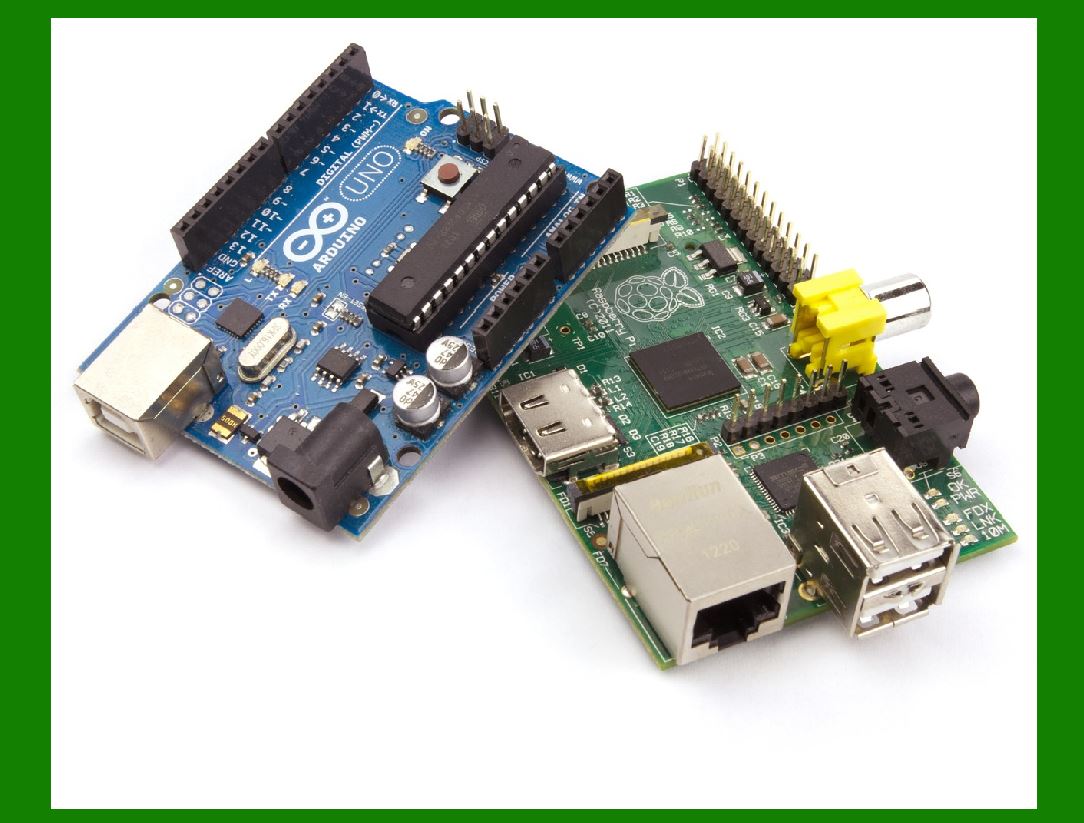
Edge AI devices face several unique challenges when compared to traditional data center environments. These devices must balance computational power with energy efficiency and compact form factors. Unlike large-scale data centers, edge devices often operate in environments with limited space, power, and cooling capabilities. Therefore, edge AI hardware needs to be optimized for low power consumption while still delivering sufficient computational capabilities to handle the specific AI tasks. |
To achieve this, edge devices typically rely on specialized chips such as low-power GPUs, ASICs (Application-Specific Integrated Circuits), and FPGAs. These chips are designed to perform AI computations with minimal energy consumption, making them suitable for battery-powered or thermally constrained devices. For example, NVIDIA's Jetson series and Google's Coral Edge TPU are both designed to deliver efficient AI inference at the edge. |
3.3 Scaling Edge AI |
One of the major challenges in scaling edge AI is the need for distributed computing. While individual edge devices may be capable of processing AI workloads, in many cases, these devices must collaborate with other edge devices or with centralized cloud infrastructure to share data and resources. This introduces the need for sophisticated orchestration and network management to ensure that edge devices can communicate effectively without creating bottlenecks. |
Moreover, edge computing requires real-time data processing with low latency, which puts pressure on both hardware and software architectures. Ensuring that edge devices can operate efficiently in a distributed environment while maintaining low latency and high throughput is a critical aspect of scaling edge AI. This is particularly important in scenarios where the number of edge devices is large, such as in smart cities or industrial IoT applications. |
|
4. Power, Cooling, and Efficiency Considerations |
As AI workloads scale and new hardware is integrated into data centers and edge devices, power consumption and cooling become significant challenges. AI accelerators, particularly GPUs and TPUs, are known for their high power requirements, which can create heat dissipation issues in data centers. Managing this heat, especially in large-scale deployments, is critical to maintaining performance and reliability. |
4.1 Power Efficiency in AI Data Centers |
As AI and HPC workloads increase in complexity, the power demands of data centers rise substantially. GPUs and TPUs, which are designed to accelerate AI tasks, often require more power than traditional CPUs. For instance, a high-end GPU may consume upwards of 300 watts, whereas a CPU may consume between 100-150 watts. As more of these accelerators are integrated into data center infrastructure, managing power consumption becomes increasingly critical. |
Energy efficiency is also an important consideration. Data centers are large consumers of electricity, and as AI workloads scale, the power demands can increase exponentially. Implementing energy-efficient hardware and optimizing cooling systems are key strategies for mitigating the environmental impact of large-scale AI deployments. Technologies such as liquid cooling, which involves circulating a coolant directly over the chips, are gaining popularity as an efficient way to dissipate the significant heat generated by AI accelerators. |
4.2 Cooling Challenges for AI Hardware |
With the increasing number of specialized accelerators being deployed in data centers and edge devices, cooling has become a major challenge. Traditional air-cooled systems may no longer be sufficient to maintain optimal operating temperatures, particularly in high-performance computing environments where large numbers of GPUs and TPUs are used in parallel. |
To address these challenges, advanced cooling techniques such as immersion cooling are being explored. In immersion cooling, servers are submerged in a thermally conductive liquid that efficiently transfers heat away from the hardware. This method allows for higher densities of computing power and more efficient heat dissipation compared to traditional air-cooled systems. |
|
Conclusion |
Scaling AI workloads presents a host of challenges, from the need for more powerful and specialized hardware to the demands of distributed computing and energy efficiency. Data centers must evolve to support the increasing computational needs of AI and HPC applications, integrating specialized AI accelerators such as GPUs, TPUs, and FPGAs to handle the parallelism required by modern AI models. Edge computing further complicates the landscape, requiring efficient, low-power chips that can handle AI tasks at the source of data. The rapid evolution of AI technologies continues to push the boundaries of what is possible, and the hardware and infrastructure supporting these technologies must scale in tandem to meet the growing demands of this transformative field. |
|
What new technologies will improve this issue? |
The increasing demand for scaling AI workloads and managing data center requirements has catalyzed the development of several new and emerging technologies. These innovations aim to address issues related to computational power, energy efficiency, cooling, and network communication. Below are some of the key technologies that will improve the ability to scale AI workloads and meet the growing demands of modern data centers: |
1. AI-Specific Hardware Innovations |
As AI workloads continue to grow in complexity, the development of specialized hardware tailored to AI-specific tasks is critical. Several new technologies are being designed to address the unique demands of AI, machine learning, and high-performance computing (HPC). |
1.1 Quantum Computing |
Quantum computing holds significant promise for solving certain types of AI and computational problems much faster than classical computers. Quantum computers leverage quantum bits (qubits), which can represent and process a much larger amount of data compared to traditional binary bits. Quantum computers can potentially speed up processes like optimization, simulation, and machine learning, enabling breakthroughs in AI models that would otherwise take years of classical computing to solve. |
While quantum computing is still in the experimental stage, its future applications in scaling AI workloads, especially in areas like drug discovery, material science, and cryptography, are highly anticipated. Companies like IBM, Google, and startups like Rigetti Computing are pushing quantum computing into more practical realms, including hybrid systems where quantum and classical computing systems work together. |
1.2 Application-Specific Integrated Circuits (ASICs) |
ASICs are custom-designed chips optimized for specific tasks. In the context of AI, ASICs like Google's Tensor Processing Units (TPUs) are designed to handle the matrix operations that are core to machine learning. These chips provide superior efficiency compared to general-purpose processors like CPUs and GPUs, as they are purpose-built for tasks such as deep learning. |
Future ASIC designs will continue to be optimized for various AI workloads, improving performance per watt and per dollar. ASICs can be developed for specific domains such as natural language processing (NLP) or image recognition, providing greater energy efficiency and performance gains than generalized processors. |
1.3 Neuromorphic Computing |
Neuromorphic computing mimics the architecture and functioning of the human brain. This technology uses spiking neural networks (SNNs) that operate in a manner more similar to biological neurons, enabling highly efficient computations for tasks like pattern recognition and sensory processing. Neuromorphic systems can process information in a more biologically inspired way, potentially allowing AI models to be run with far lower power consumption. |
Companies like Intel with its Loihi chip, and IBM with its TrueNorth chip, are leading efforts in neuromorphic computing. These technologies could significantly improve energy efficiency in data centers running AI applications. |
1.4 FPGAs (Field-Programmable Gate Arrays) |
FPGAs are versatile chips that can be customized after manufacturing to perform specific tasks. They have been increasingly integrated into AI workloads due to their flexibility and ability to provide high performance in specific tasks like data filtering, feature extraction, and pattern recognition. Their ability to be reprogrammed allows for the rapid adaptation to evolving AI models, making them ideal for applications where algorithms change frequently. |
FPGAs are already being used by companies like Microsoft and Amazon for specific AI acceleration tasks. As FPGA technology continues to evolve, their performance and efficiency for AI workloads will improve. |
|
2. Advanced Cooling Technologies |
With the rising computational demands of AI accelerators such as GPUs, TPUs, and FPGAs, managing heat dissipation has become a critical challenge. As more specialized accelerators are integrated into data centers, cooling systems must evolve to handle the increasing heat generated. |
2.1 Immersion Cooling |
Immersion cooling is a technology where electronic components are submerged in a thermally conductive, non-electrically conductive liquid, which absorbs heat directly from the components. This method has several advantages over traditional air cooling systems, including higher cooling efficiency, reduced noise, and the potential for higher density server configurations. |
Immersion cooling allows for the deployment of more compute power in a smaller space, making it especially attractive for AI workloads, which require large-scale, high-performance computing clusters. The technology is being explored by companies like Intel, Microsoft, and LiquidCool Solutions to improve the cooling of AI-driven data centers. |
2.2 Direct-to-Chip Liquid Cooling |
Direct-to-chip liquid cooling involves circulating coolant directly over chips, such as GPUs, TPUs, or CPUs, to absorb the heat they generate. This approach offers superior thermal performance over air cooling, enabling data centers to run more energy-efficiently. By reducing the need for large amounts of air conditioning, direct-to-chip cooling technologies also lower operational costs. |
The cooling systems are being optimized for higher power densities and are already being tested in advanced AI data centers, where high-performance processors generate significant amounts of heat. |
2.3 Two-Phase Immersion Cooling |
This technology involves the use of a liquid that evaporates at a low temperature and then condenses back into liquid form. The evaporation process removes heat from the processors. The condensed liquid is then cycled back to the evaporator, making this process very efficient. Two-phase immersion cooling offers improved cooling for high-density data centers where GPUs and other AI accelerators are densely packed. |
This technology could significantly reduce the operational costs of running AI-powered data centers and is seen as a future-proof solution for handling the heat produced by increasingly powerful chips. |
|
3. Energy-Efficient Data Center Infrastructure |
Energy consumption is one of the most significant concerns when scaling AI workloads in data centers. With AI hardware such as GPUs, TPUs, and ASICs consuming large amounts of energy, it is essential to improve the overall energy efficiency of the data center infrastructure. |
3.1 Renewable Energy Integration |
Data centers are increasingly moving toward the use of renewable energy sources such as solar, wind, and hydroelectric power. Tech giants like Google, Microsoft, and Amazon have made substantial investments in renewable energy to power their data centers. The integration of renewable energy reduces the carbon footprint of AI workloads and helps address concerns about the environmental impact of data centers. |
AI-powered smart grids and renewable energy storage solutions can further optimize energy consumption in data centers, ensuring that power is used efficiently and that AI workloads are processed with minimal environmental impact. |
3.2 AI-Powered Power Management |
AI itself is being used to optimize power consumption in data centers. AI-powered systems can dynamically adjust the energy usage of servers, cooling systems, and other infrastructure based on real-time data about workload demands. For example, AI systems can predict and balance the energy needs of various components, ensuring that resources are allocated efficiently and that energy consumption peaks are avoided. |
This approach can reduce energy costs significantly while ensuring that AI workloads are processed at scale. Companies like Microsoft and NVIDIA are incorporating AI into their data center management systems to improve operational efficiency. |
3.3 Edge-AI and Micro-Data Centers |
Edge AI enables processing closer to the source of data, which can reduce the reliance on large, centralized data centers. By placing computational resources at the edge, data transfer times are reduced, and local processing can be more energy-efficient compared to transmitting data to a centralized cloud server. This reduces the burden on large-scale data centers, lessening their energy consumption and cooling demands. |
Micro-data centers are small, decentralized data centers that can be deployed near the data source, facilitating faster processing and reducing the need for long-distance data transmission. As AI continues to move toward real-time, low-latency applications, edge AI and micro-data centers will become essential for scaling workloads efficiently. |
|
4. High-Bandwidth and Low-Latency Communication Technologies |
Scaling AI workloads, especially in distributed data centers or edge computing environments, requires ultra-fast communication networks that can handle large data volumes with minimal latency. |
4.1 5G and 6G Networks |
The rollout of 5G networks and the upcoming 6G networks will provide the necessary high bandwidth and low-latency connectivity to scale AI workloads across distributed environments. 5G's ultra-reliable low-latency communication (URLLC) capabilities will enable real-time AI inference at the edge, ensuring that AI-driven applications such as autonomous vehicles and smart cities can function with minimal delay. |
As 6G technology emerges, even faster data transfer rates and greater bandwidth will be available, enabling more seamless integration of AI at the edge and across global data centers. |
4.2 Optical Interconnects |
Optical interconnects, which use light to transmit data, are gaining popularity for high-speed data transfer between AI accelerators and other components in data centers. Compared to traditional copper-based interconnects, optical fibers can transmit data at much higher speeds and over longer distances without degradation of signal quality. |
Optical interconnects are expected to be crucial for the high-bandwidth, low-latency communication needs of AI workloads in data centers, especially as the size and scale of AI models continue to grow. |
4.3 Software-Defined Networking (SDN) |
Software-defined networking (SDN) allows for more flexible and efficient management of network resources. By decoupling the control plane from the data plane, SDN enables dynamic and real-time reconfiguration of network traffic based on AI workloads. This allows for optimized routing, load balancing, and bandwidth management, ensuring that AI models can be trained and deployed efficiently in distributed environments. |
SDN's ability to manage data traffic dynamically and intelligently will help meet the growing demands of AI data centers and edge networks. |

|
Conclusion |
The challenges of scaling AI workloads and managing data center demands are being addressed by a wide range of emerging technologies. AI-specific hardware innovations, such as quantum computing, ASICs, and neuromorphic chips, offer enhanced performance and energy efficiency. Advanced cooling technologies, such as immersion cooling and direct-to-chip liquid cooling, are being developed to manage the heat produced by high-performance AI accelerators. Additionally, energy-efficient data center infrastructure, powered by renewable energy and AI-driven power management, is helping to reduce the environmental impact of large-scale AI workloads. |
The future of AI computing will also rely on high-speed, low-latency networks, such as 5G and optical interconnects, to handle the massive data throughput requirements of AI systems. With these technologies working in tandem, the demands of scaling AI workloads and data center infrastructure can be met in an efficient, sustainable, and cost-effective manner. |
 cs@easiersoft.com