The Cost of Sitting Still - Why Inventory is a Liability and How AI Turns It into an Asset | Short Opening Summary | Inventory is often counted as a company's treasure, but in physical reality, every box, pallet, and drum sitting on a warehouse floor is a sleeping cost. It consumes space, ties up cash, and slowly decays toward obsolescence. This article explains the core philosophy behind modern AI-driven inventory management. We explore why traditional stockkeeping fails, how the humble barcode becomes the eyes of an intelligent system, and how predictive algorithms, computer vision, and reinforcement learning work together to shrink storage footprints and eliminate waste. The six chapters in this part lay the foundation for understanding that inventory is not a static count but a dynamic flow, and that the true cost of sitting still is far greater than most managers realise. | 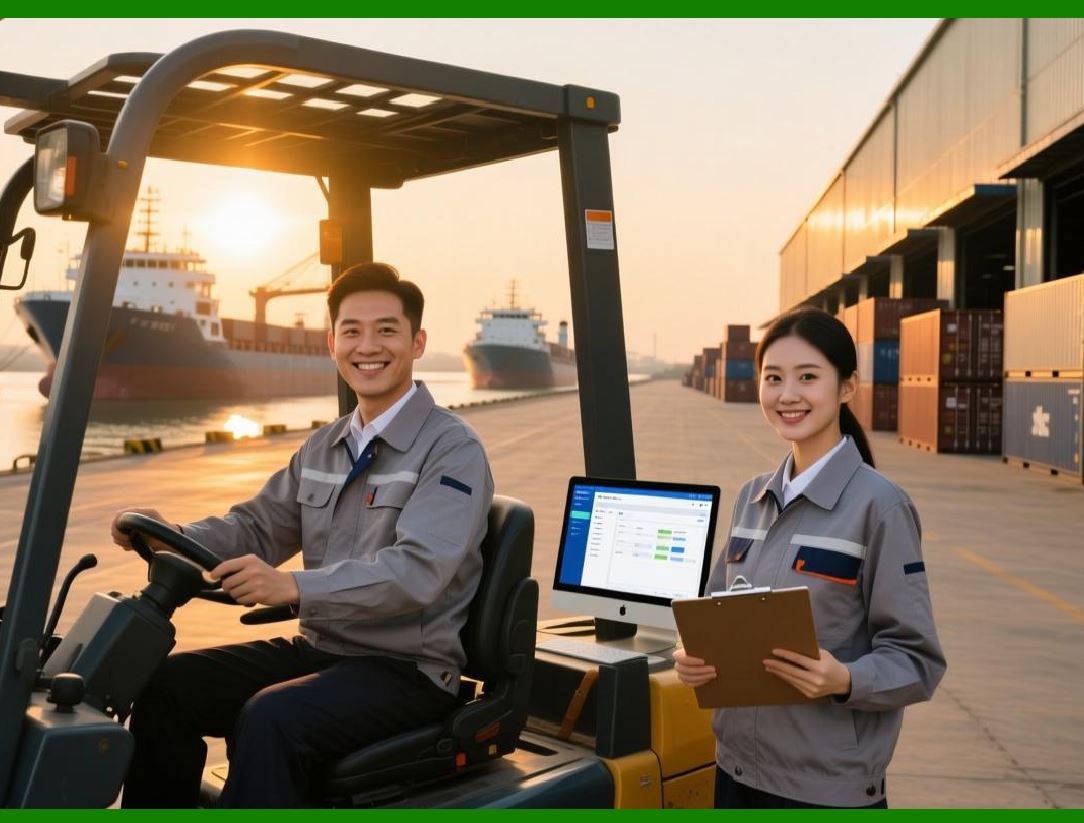
| Chapter 1: The Cost of Sitting Still | Imagine a massive warehouse, stretching as far as the eye can see. Rows upon rows of metal racks rise to the ceiling. On each shelf sit pallets wrapped in plastic, cardboard boxes stacked neatly, and drums labelled with product codes and dates. To the casual observer, this scene represents wealth, readiness, and industrial power. To a financial officer, it represents millions of dollars of capital that cannot be used elsewhere. To an operations manager, it represents a ticking clock. And to an environmental scientist, it represents potential waste that will eventually end up in a landfill or an incinerator. | This is the paradox of inventory. We hold it to serve customers quickly, to buffer against supply chain shocks, and to take advantage of bulk purchasing discounts. But holding inventory comes with a price that is often hidden in plain sight. The cost of sitting still is not just the obvious expense of renting warehouse space or paying forklift drivers. It is a multidimensional burden that affects profitability, agility, and sustainability. In this opening chapter, we will dissect every layer of that cost, so that we can truly appreciate why artificial intelligence is not a luxury but a necessity for modern inventory management. | Let us begin with the most tangible cost: storage space. A warehouse is not free. Whether owned or leased, every square metre carries a monthly charge. That charge includes rent, property taxes, insurance, utilities, and maintenance. When a pallet sits in the middle of a rack, it occupies a volume that could have been used for faster-moving goods. In many warehouses, utilisation rates hover around only 60 to 70 percent during peak seasons, but fall much lower during off-peak periods. The wasted air and empty cubic metres are still paid for. If you could shrink the required space by 20 or 30 percent, you could either sublease the extra area or postpone building a new facility. That saving goes straight to the bottom line. Yet most companies treat warehouse space as a fixed cost and never question whether every square foot is truly necessary. | 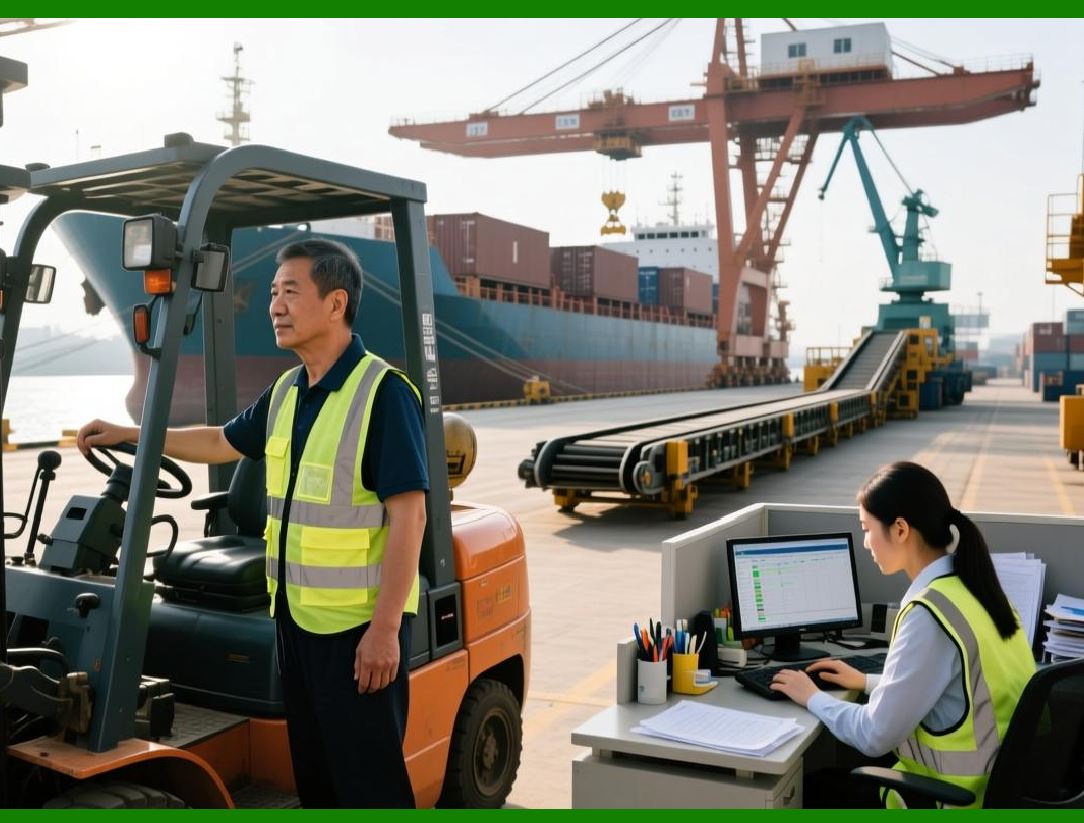
| Beyond the floor space, there is the cost of material handling equipment. Forklifts, conveyor belts, pallet jacks, and automated guided vehicles all have purchase prices, depreciation schedules, and maintenance budgets. The more inventory you hold, the more you have to move it around. You receive it, put it away, pick it, pack it, and ship it. Each touch adds labour cost and wear on machines. If you reduce the average time an item spends in the warehouse, you reduce the number of touches per unit. This is not a small saving. In high-volume distribution centres, labour can account for more than half of total operating expenses. Every unnecessary movement of a pallet is a direct drain on operational efficiency. | Then comes the financial cost of the inventory itself. When a company buys raw materials or finished goods, it pays its suppliers within a certain number of days, typically 30 to 60. Until those goods are sold to end customers, the company's cash is trapped in physical form. This is called working capital. The opportunity cost of that capital is the interest that could have been earned if the money were in the bank, or the return that could have been generated if it were invested in new machinery, marketing, or research. For a large retailer, a reduction of inventory by just 10 percent can free up hundreds of millions of dollars. That is real money that can be used to grow the business, pay down debt, or weather economic downturns. | But the financial cost does not stop at opportunity cost. There is also the risk of obsolescence. In industries like consumer electronics, fashion, and pharmaceuticals, products have lifecycles that are measured in months, not years. A smartphone model that is cutting-edge today will be outdated in 18 months. A winter coat that does not sell by February will be heavily discounted in March. A batch of antibiotics that expires next month is worthless after its expiry date. When inventory becomes obsolete, the company must write down its value, taking a direct hit to earnings. Even if the goods are eventually sold at a deep discount, the gross margin suffers. This is the cost of guessing wrong about demand, and it is a cost that accumulates silently in the back corners of every warehouse. | 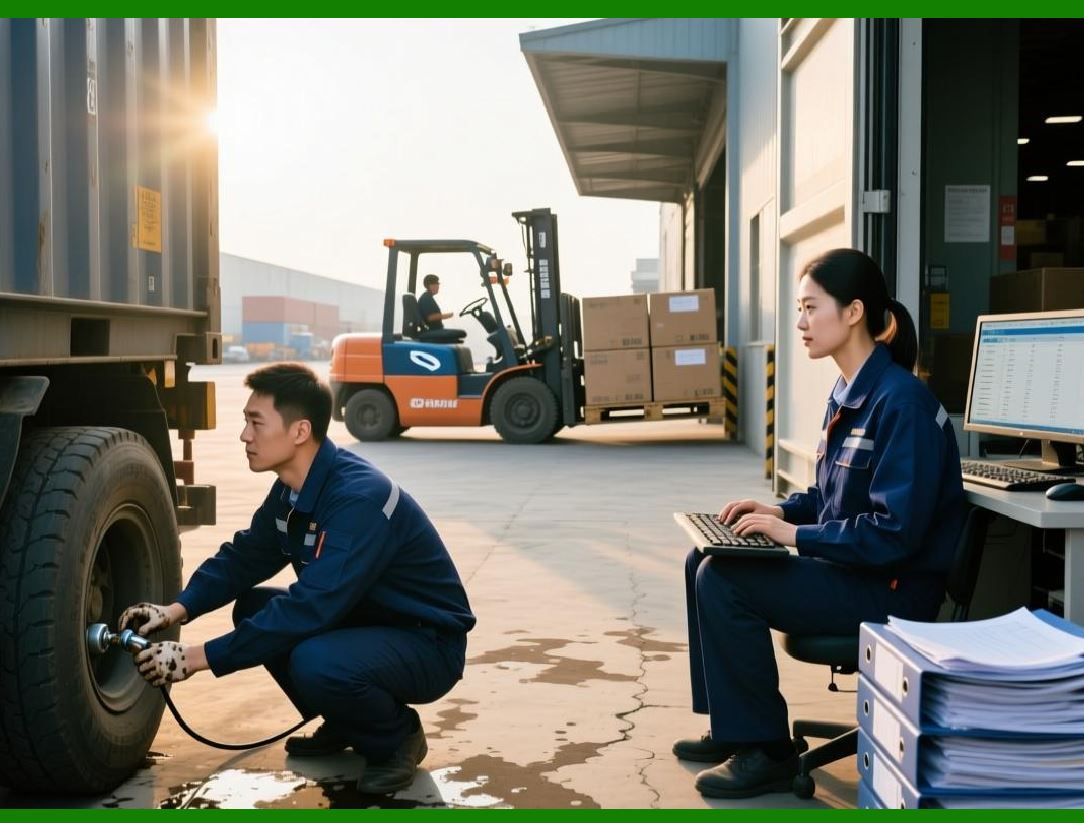
| There is also the cost of damage and deterioration. Not all products are sturdy. Cardboard boxes can be crushed. Glass bottles can break. Fresh produce can bruise. Electronic components can suffer from electrostatic discharge. Chemicals can separate or polymerise. Over time, even the best-packaged goods degrade. Humidity, temperature fluctuations, and vibration all take their toll. The longer an item stays in storage, the higher the probability that it will be damaged before it reaches the customer. This is not just a monetary loss; it is also a reputational loss, because damaged goods lead to returns, complaints, and lost goodwill. | Now consider the hidden cost of complexity. As inventory grows, so does the number of stock-keeping units, or SKUs. More SKUs mean more locations to manage, more labels to print, more cycle counts to perform, and more training for staff. Complexity breeds errors. A picker might grab the wrong item because two boxes look similar. A receiving clerk might misread a handwritten label and put a pallet in the wrong zone. These errors trigger costly corrective actions: return-to-stock, re-picking, expedited shipping, and customer service calls. Each error also consumes management attention, diverting focus from strategic improvement to daily firefighting. | The cost of sitting still also includes the cost of expiry and spoilage, which we will explore in depth in later chapters, but it is worth mentioning here because it is the most visceral form of waste. Food, beverages, pharmaceuticals, and many chemicals have finite shelf lives. When they pass their expiry dates, they cannot be sold, donated, or even used internally in most cases. They become hazardous waste that requires special disposal, often at a high cost. In the food industry alone, global waste is estimated at over one billion tons per year, and a significant portion of that waste occurs at the warehouse stage, not at the consumer level. This is a tragedy because the resources used to produce those goods, water, energy, land, and labour, are also wasted. | 
| Let us look at a concrete example to make these costs real. Consider a mid-sized grocery distributor that holds about 5,000 pallets of dry goods, chilled items, and frozen foods. The average value per pallet is roughly 2,000 dollars. That means 10 million dollars of inventory at any given time. If the distributor can reduce that inventory by 15 percent through better forecasting, it frees 1.5 million dollars. At an annual interest rate of 5 percent, that is 75,000 dollars in opportunity cost saved per year. Additionally, the warehouse space required drops by 15 percent, potentially allowing the company to avoid a 2-million-dollar expansion project. Labour hours for put-away and picking also drop proportionally, saving perhaps 100,000 dollars annually in overtime pay. Spoilage rates, which might be 3 percent of total inventory value, or 300,000 dollars per year, could be cut in half to 150,000 dollars. The total annual saving easily exceeds half a million dollars, all from simply holding less stock. Yet many companies continue to over-order and over-store because they are afraid of stockouts, which are also costly but often overestimated. | This brings us to the psychological cost of sitting still. Managers often equate high inventory with safety. They feel more comfortable when there is a buffer. This is a natural human bias toward loss aversion. The pain of a stockout, a lost sale, or an unhappy customer is immediate and visible. The pain of excess inventory is gradual and invisible. It does not show up on the daily dashboard. It does not trigger an alarm. It only appears as a footnote in the quarterly financial statement, buried under cost of goods sold. This asymmetry of visibility leads to a systematic over-accumulation of inventory across industries. It is the invisible drag that slows down economic growth and accelerates environmental degradation. | The true cost of sitting still, therefore, is not a single number. It is a portfolio of costs: storage, handling, capital, obsolescence, damage, complexity, spoilage, and psychological inertia. Each of these costs is amplified by the passage of time. The longer an item sits, the more it costs. This is why inventory turnover is such a critical metric. Turnover measures how many times per year a company sells and replaces its inventory. A turnover of 4 means that, on average, each item sits for three months. A turnover of 12 means each item sits for only one month. The difference in carrying costs between these two scenarios is staggering. Yet most companies operate at turnover rates below 6, meaning their inventory sits for more than two months on average. That is a lot of sitting still. | 
| Now, you might ask: why not simply reduce inventory to zeroThat is the theoretical ideal of just-in-time manufacturing, but in practice it is impossible. Supply chains have variability. Suppliers may be late. Transport may be delayed. Demand may spike unexpectedly. Quality issues may require rework. Without some buffer, even a small disruption can bring production to a halt. So the goal is not zero inventory, but optimal inventory. The optimal level balances the cost of holding against the cost of stockout. Finding that balance is the central challenge of inventory management. | Traditional approaches to this challenge rely on historical averages, fixed reorder points, and simple formulas like economic order quantity. These methods assume that demand is stable and that lead times are constant. In reality, both are variable and often correlated. A pandemic, a port closure, a labour strike, or a sudden change in consumer preference can render historical data useless. This is where traditional methods fail. They are reactive, not predictive. They look backward, not forward. They treat every SKU independently, ignoring the interplay between different products, seasons, and promotions. | Artificial intelligence changes this equation fundamentally. AI does not replace the need for inventory, but it replaces guesswork with evidence. It learns from patterns that are too subtle for human analysts to detect. It can process millions of data points: past sales, weather forecasts, social media trends, supplier performance, shipping lane congestion, and even local holidays. It can update its predictions daily, hourly, or even minute by minute. This means that the safety stock, the buffer that protects against uncertainty, can be dynamically reduced. When the AI sees that a particular supplier has been on time for the last 30 shipments, it lowers the buffer. When it sees that a storm is approaching a port, it increases the buffer temporarily for that specific lane. This agility is what allows AI to minimise inventory without increasing stockout risk. | 
| But AI cannot work in a vacuum. It needs data. And the most reliable, cost-effective source of item-level data is the barcode. The barcode is the digital identity of every physical unit. It tells the system what the product is, when it was manufactured, which batch it belongs to, and often its expiry date. When a barcode is scanned at reception, at put-away, at picking, and at shipping, the AI builds a digital twin of that physical item. This digital twin ages in real time, just like the physical item. It knows how many days are left until expiry. It knows how many times the item has been moved. It knows its exact location in the warehouse. This information is the fuel for every AI decision. Without barcodes, AI would be blind. With barcodes, AI becomes the most precise inventory manager imaginable. | In the following chapters of this part, we will expand on these concepts. Chapter 2 will dive deep into the barcode, explaining how it evolves from a simple label to a sensor-enabled gateway. Chapter 3 will introduce the three pillars of AI inventory control: predictive analytics, computer vision, and reinforcement learning. Chapter 4 will address the perishability paradox, showing how time is the enemy of value and how AI converts expiry dates into dynamic priorities. Chapter 5 will focus on space as a premium resource, exploring how AI compresses storage footprints through intelligent slotting and dynamic reconfiguration. Chapter 6 will bring everything together under the zero-waste mandate, connecting inventory efficiency to environmental stewardship and corporate responsibility. | But before we move on, let us summarise the central lesson of Chapter 1. Inventory is not an inert asset. It is a living, breathing cost centre. Every hour that a pallet remains untouched, it consumes money, space, labour, and energy. It increases the probability of damage, obsolescence, and expiry. It hides opportunities for investment and innovation. The cost of sitting still is the sum of all these drains, and it is far larger than most financial statements reveal. Recognising this cost is the first step toward a more intelligent, sustainable, and profitable supply chain. The second step is to embrace the tools that can reduce that cost without sacrificing service. That is where AI and barcodes come together, as we will see in the chapters ahead. | 
| Chapter 2: The Barcode - The AI's Digital Eye | If AI is the brain of modern inventory management, then the barcode is its eye. Without vision, the brain cannot act. Without barcodes, AI would have no reliable way to distinguish one item from another, no way to track its journey through the supply chain, and no way to verify its age or condition. The barcode is often taken for granted, a simple pattern of black and white stripes that we scan at the supermarket checkout. But in the context of AI-driven inventory, the barcode is a sophisticated data carrier that enables a level of granularity and accuracy that would be impossible with human reading alone. | To understand the power of the barcode, we need to appreciate its evolution. The first barcodes appeared in the 1970s, primarily for grocery checkout. They encoded a simple numeric product identifier, the Universal Product Code, or UPC. That code told the cash register the price and the product name, but nothing else. Over time, barcodes became more capable. The Code 128 standard allowed alphanumeric characters. The Data Matrix and QR codes allowed two-dimensional patterns that could hold hundreds of characters, including batch numbers, serial numbers, manufacturing dates, and expiry dates. Today, a single QR code on a pharmaceutical vial can contain the entire pedigree of that drug, from the factory floor to the pharmacy shelf. This is the data richness that AI craves. | But the barcode is not just a static data label. It is the anchor for a dynamic digital record. When a barcode is scanned at a receiving dock, the system records the exact time, the temperature of the truck, the humidity level, and the condition of the packaging. This information becomes part of the item's digital twin. As the item moves through the warehouse, each scan updates its location and status. If the item is picked for an order, the system notes the time and the picker. If it is returned, the system logs the reason. All of this history is attached to the barcode's unique identifier. This means that when the AI makes a decision about that item, it has a complete biography, not just a one-dimensional snapshot. | 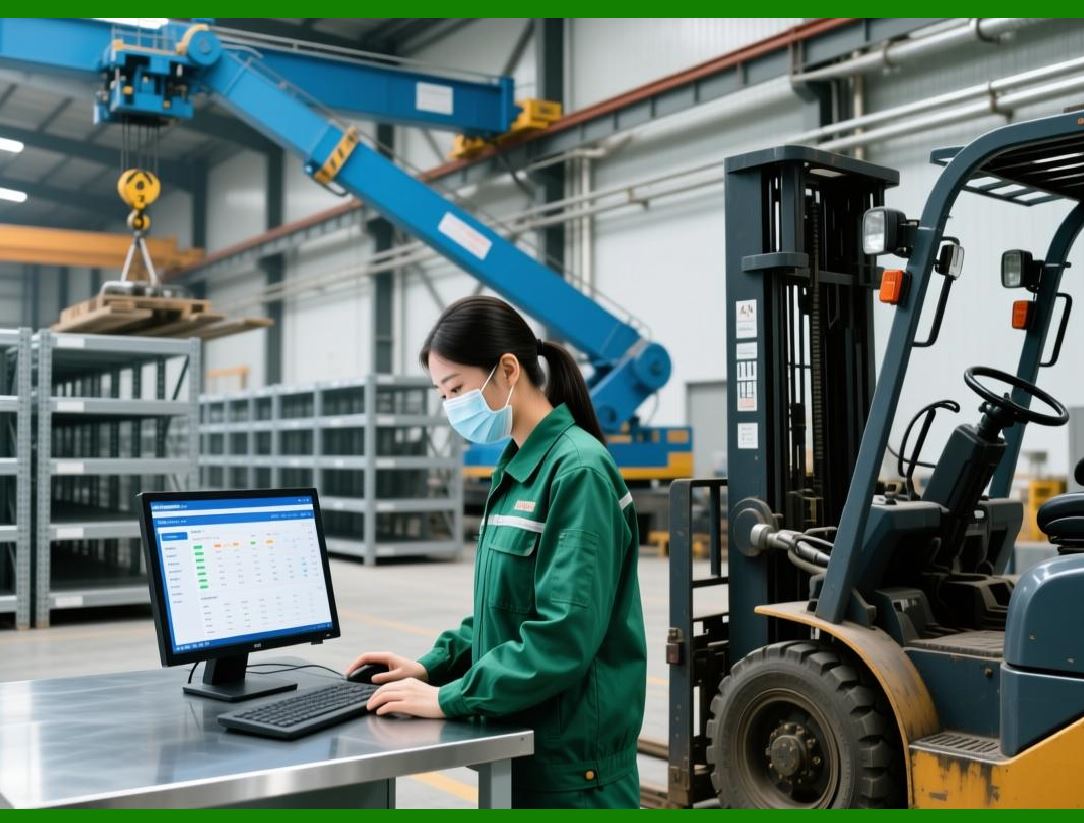
| The barcode also enables scalability. Barcodes can be printed on cheap paper or plastic labels. They can be read with inexpensive handheld scanners, fixed-mount readers, or even smartphone cameras. They do not require batteries, network connectivity, or maintenance. This is in stark contrast to RFID tags, which are more expensive and require specialised readers, or IoT sensors, which need power and communication modules. For the vast majority of inventory items, especially low-cost consumables, barcodes are the most economical and reliable identification method. This is why they remain the backbone of warehouse management systems worldwide. | Now, how does AI enhance the barcodeThe AI does not replace the barcode; it augments it. When the AI receives a barcode scan, it does not merely look up the product name. It performs a series of intelligent calculations. First, it checks the current date against the expiry date encoded in the barcode. If the remaining shelf life is less than a certain threshold, the AI flags the item for immediate use or discount. Second, it correlates that barcode with all previous scans of the same batch. If other items from that batch have shown a higher than normal defect rate, the AI assigns a risk score to this item. Third, it evaluates the demand forecast for that product in the next few days. If demand is expected to surge, the AI might move the item to a forward pick area. If demand is low, it might keep it in deep storage. All of these decisions happen in milliseconds, triggered by the simple act of scanning a barcode. | One of the most powerful applications is the dynamic expiry management enabled by barcodes. Traditional systems rely on a fixed expiry date printed on the label. The AI, however, treats that expiry date as a baseline. It adjusts the effective expiry based on environmental conditions. For example, a drug that is supposed to last two years at 25 degrees Celsius might degrade faster if it was exposed to 30 degrees during transport. The AI, using temperature data linked to the barcode scan, can shorten the remaining shelf life accordingly. This is called a dynamic shelf-life model. It ensures that the AI never treats all items of the same batch identically, because they may have experienced different temperature histories. This is a level of precision that human operators cannot achieve. | 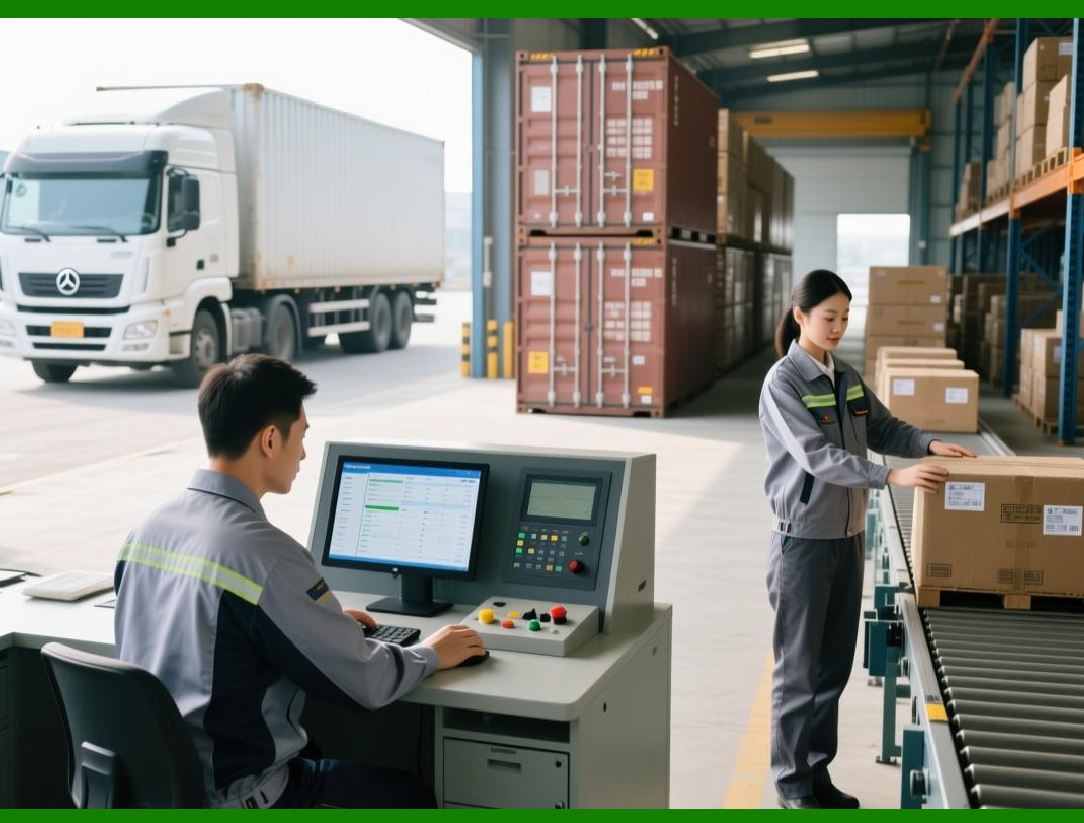
| Another key role of the barcode is in cycle counting. Traditional cycle counting involves manually selecting a subset of items and physically counting them to verify system records. This is time-consuming and error-prone. With AI and barcodes, the process becomes continuous. Every time an item is scanned for picking, receiving, or shipping, the system confirms that the physical count matches the digital count. If discrepancies arise, the AI can trigger a targeted recount for that specific location or SKU. This reduces the need for large-scale physical inventories, which are expensive and disruptive. The AI can even prioritise which items to recount based on scan frequency, item value, or expiry proximity. This is a smarter, leaner approach to accuracy. | The barcode also enables traceability, which is essential for recalls and quality investigations. If a batch of food is found to be contaminated, the AI can trace every single item from that batch using its barcode history. It knows which warehouses received the batch, which orders were fulfilled from it, and which customers received those orders. This allows for rapid, precise recalls that minimise the scope of the problem and protect public health. Without barcodes, the recall would have to be much broader, destroying many more items and damaging the brand's reputation. | In the context of minimising inventory, barcodes support the AI's ability to consolidate and rationalise. By analysing scan data, the AI can identify which SKUs are truly fast-moving and which are slow-moving. It can recommend discontinuing slow-movers or reducing their order quantities. It can also identify which items are frequently ordered together and suggest placing them in adjacent locations to reduce travel time. This is all based on real transaction data, not on managerial intuition. | 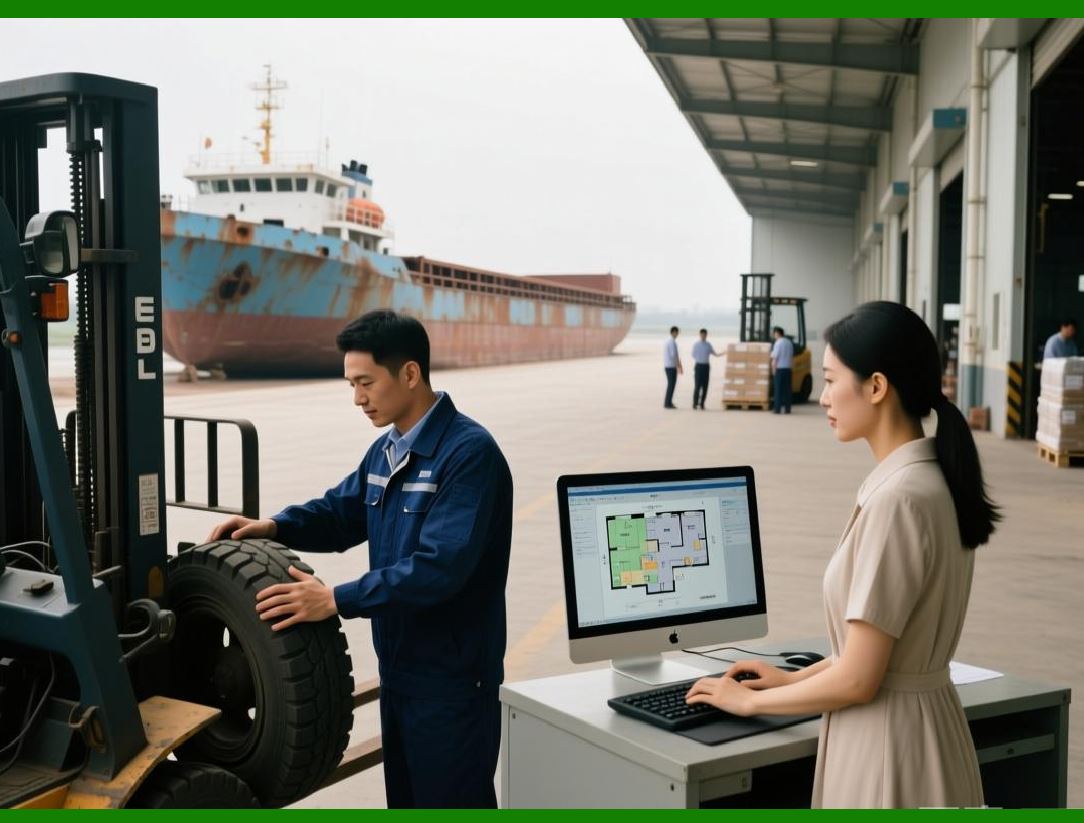
| We should also consider the human factor. Warehouse workers interact with barcodes constantly. They scan labels, confirm quantities, and record movements. This is a repetitive task that can lead to fatigue and errors. AI can help by providing visual cues. For example, a worker scanning a pallet might see a green light on their handheld device if the item is within its optimal usage window, a yellow light if it is approaching expiry, and a red light if it is already expired. This simple colour-coding, driven by the AI's analysis of the barcode data, turns a mundane scan into a decision support moment. The worker becomes an extension of the AI, executing its recommendations with confidence. | The future of barcodes is even more exciting. We are seeing the emergence of barcodes that incorporate cryptographic signatures, making them tamper-proof and resistant to counterfeiting. We are also seeing barcodes that are printed with special inks that change colour when exposed to temperature or light, providing a visual indicator of degradation. These advanced barcodes can be read by standard scanners, but the AI can interpret the colour changes as additional data points. This bridges the gap between passive identification and active sensing, all without adding expensive electronics to each item. | In summary, the barcode is the AI's digital eye because it provides the structured, reliable, and affordable data that the AI needs to make intelligent decisions. It is not a relic of the past; it is a foundational technology that is evolving alongside AI. Every scan is a heartbeat of the supply chain, and AI listens to that heartbeat to diagnose problems, predict outcomes, and prescribe actions. Without the barcode, inventory management would revert to guesswork and averages. With the barcode, it becomes a precise, responsive, and continuously learning system. In the next chapter, we will look at the three core AI capabilities that process this barcode data: predictive analytics, computer vision, and reinforcement learning. | 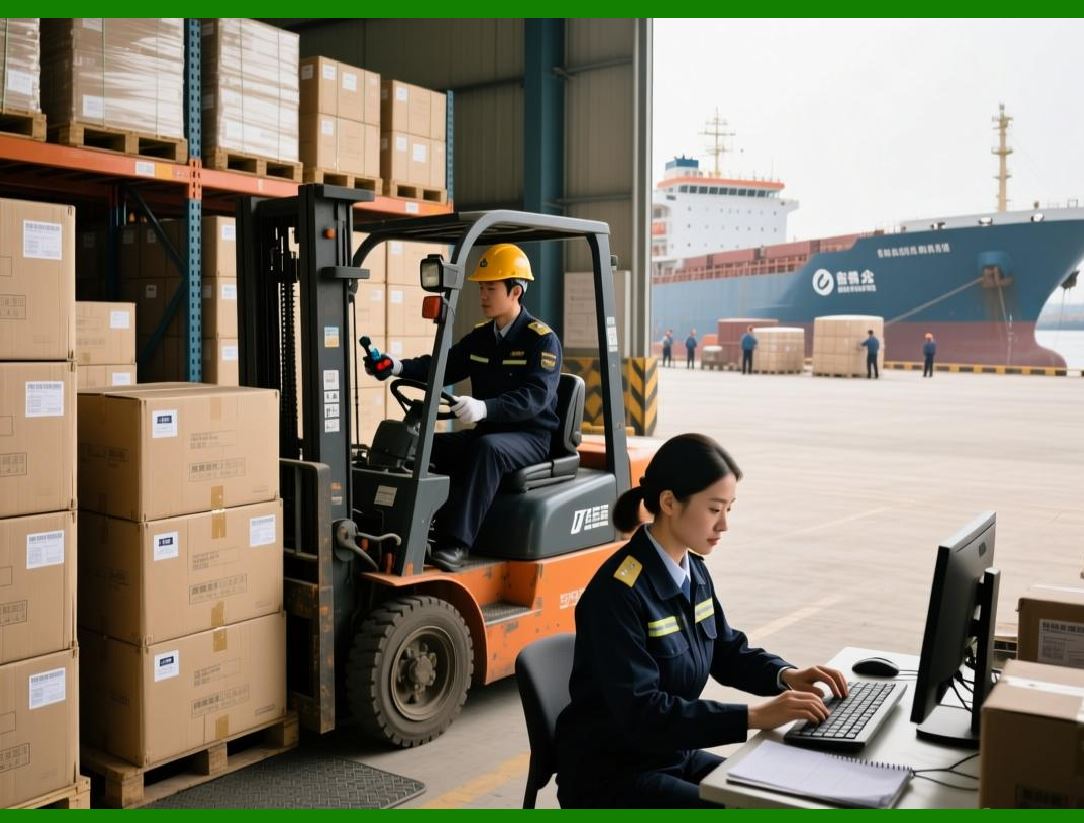
| Chapter 3: The Three Pillars of AI Inventory Control | Artificial intelligence in inventory management is not a single monolithic algorithm. It is a suite of complementary technologies, each addressing a different aspect of the problem. Together, they form a robust framework that can sense, decide, and act. We call these the three pillars: predictive analytics, computer vision, and reinforcement learning. Each pillar relies on barcode data in a distinct way, and each contributes to the overarching goal of minimising stock and waste. | Let us start with predictive analytics. This is the most widely known AI capability in supply chain. Predictive analytics uses historical data to forecast future demand, supplier lead times, and seasonal fluctuations. The core idea is that the past, when properly analysed, can reveal patterns that repeat. For example, sales of ice cream increase in summer, but the exact increase depends on local weather, tourism, and promotions. Predictive analytics uses machine learning models, such as gradient boosting or neural networks, to capture these complex, nonlinear relationships. The output is a probability distribution of future demand, not just a single point estimate. This distribution allows the AI to calculate the optimal safety stock level, balancing the cost of holding against the cost of stockout. | What makes predictive analytics powerful in the barcode context is that it can operate at the SKU-location-day level. It does not just forecast aggregate demand for a product category; it forecasts demand for a specific item in a specific warehouse for a specific future date. This granularity is possible because the barcode scans provide a rich history of exactly when and where each item was sold or used. The AI can see that a certain flavour of yoghurt sells faster in the north-eastern region than in the south-western region. It can see that a particular spare part is ordered more frequently after rainy days. These micro-patterns are invisible to traditional forecasting methods, but they are gold for AI. By incorporating them, the AI can reduce safety stock significantly, often by 20 to 40 percent, without increasing stockouts. | 
| Predictive analytics also handles the problem of intermittent demand. Many industrial spare parts have sales that are infrequent and unpredictable. Traditional forecasting methods struggle with such series, often recommending high safety stock to cover the worst-case scenario. AI models, however, can identify underlying drivers, such as machine age, maintenance schedules, or production cycles, that trigger demand. They can also use similarity learning, where the demand pattern of a new part is inferred from a similar older part. This reduces the need for excessive buffers, freeing up valuable warehouse space. | The second pillar is computer vision. While predictive analytics looks at time-series data, computer vision looks at the physical world through cameras. In a modern warehouse, cameras are mounted on drones, on fixed poles, on robotic arms, and even on forklifts. These cameras continuously capture images of pallets, shelves, and individual items. The computer vision algorithms detect anomalies, such as damaged packaging, misaligned labels, or collapsed stacks. They also read barcodes automatically, without requiring a human to point a scanner. This is called automatic identification and data capture, or AIDC. The camera can scan dozens of barcodes in a single frame, dramatically speeding up receiving and inventory audits. | But computer vision does more than read barcodes. It estimates the volume and occupancy of storage spaces. It can tell how full a bin is, whether items are stacked properly, and whether there is any leakage or spillage. This information is fed back to the AI, which updates the digital twin in real time. If a pallet is visibly tilted, the AI might flag it for inspection before it collapses. If a shelf is underutilised, the AI might suggest re-slotting to improve density. This spatial awareness is crucial for minimising the footprint of inventory. You cannot optimise what you cannot see. | 
| Computer vision also enables automatic counting. Instead of doing a manual cycle count, a drone can fly through the aisles, capture images of all barcodes, and compare the counts with the system records. This is not only faster but also more accurate, because cameras do not get tired or distracted. The AI can even perform this count overnight, so it does not interfere with daily operations. This continuous verification means that discrepancies are caught early, preventing the accumulation of errors that lead to lost items and wasted space. | The third pillar is reinforcement learning. This is the least familiar but perhaps the most transformative. Reinforcement learning is a type of machine learning where an agent learns to make decisions by interacting with an environment and receiving rewards or penalties. In inventory management, the environment is the supply chain, and the agent is the AI. The AI proposes actions, such as how much to order, when to order, and where to store items. The environment responds with outcomes, such as stockout occurrences, spoilage rates, and storage utilisation. The AI adjusts its policy to maximise cumulative reward, which is defined as a combination of high service level, low inventory cost, and low waste. | Reinforcement learning is particularly effective because inventory management is a sequential decision problem. Today's order affects tomorrow's inventory, which affects next week's sales, and so on. Traditional optimisation methods, like linear programming, assume that the system is static and known. Reinforcement learning, on the other hand, learns from experience and adapts to changing conditions. It can handle non-stationary demand, supplier disruptions, and seasonal shifts. It also learns from its mistakes, gradually improving its policy over time. | 
| One of the most impressive applications of reinforcement learning is in dynamic replenishment. The AI does not use a fixed reorder point. Instead, it continuously evaluates the current inventory level, the forecasted demand, the remaining shelf life of each batch, and the lead time from suppliers. Based on these inputs, it decides whether to order now, delay, or even cancel an existing order. This is a multi-objective optimisation that balances conflicting goals. Reinforcement learning discovers policies that often outperform human experts because it can test thousands of scenarios in simulation before applying them in reality. | Another application is in dynamic slotting. Slotting is the process of assigning items to specific storage locations. Good slotting reduces travel time and increases picking efficiency. Reinforcement learning can optimise slotting by treating it as a game. The AI tries different configurations in a digital twin of the warehouse and observes the resulting travel distances and congestion. Over many iterations, it learns a configuration that is near-optimal for the current product mix. When the product mix changes, the AI relearns and re-slots the warehouse. This is done autonomously, without requiring a team of industrial engineers. | The three pillars work together in a virtuous cycle. Predictive analytics tells the AI what to expect in terms of demand and supply. Computer vision tells the AI what is actually in the warehouse, in what condition, and where. Reinforcement learning tells the AI what actions to take, based on the predictions and the observations. Barcodes are the common thread that connects all three. They provide the identity and the history of each item, ensuring that the predictions are item-specific, the vision is item-specific, and the actions are item-specific. Without barcodes, each pillar would operate on aggregate data, losing the granularity that makes AI so effective. | 
| Let us consider a concrete scenario. A pharmaceutical distributor receives a shipment of 100 boxes of a new antibiotic. Each box has a barcode with a batch number and an expiry date. The predictive analytics pillar forecasts that demand for this antibiotic will be 20 boxes per week, but with a spike in the third week due to a known seasonal flu pattern. The computer vision pillar scans the boxes upon arrival, confirms that all are intact, and notes that the pallet is placed in the middle of the receiving bay. The reinforcement learning pillar calculates that the optimal reorder point is 15 boxes, and the optimal safety stock is 5 boxes. It also decides to store the boxes in the forward pick area because the product is fast-moving. As the weeks pass, the barcode scans at each pick update the AI. If demand is lower than forecast, the AI might reduce the next order. If a box is returned because of a damaged label, the computer vision pillar detects the damage and the AI flags the box for quality check. At every step, the three pillars collaborate seamlessly. | This integration is what distinguishes AI inventory management from traditional systems. Traditional systems have separate modules for forecasting, warehouse management, and order optimisation. They do not talk to each other in real time. AI systems, by contrast, are built on a unified data layer where all information is shared instantly. The barcode is the key that unlocks this unity. It ensures that every module is working on the same data, the same items, and the same timestamps. | In summary, the three pillars of predictive analytics, computer vision, and reinforcement learning provide the brain, the eyes, and the hands of AI inventory control. They enable the system to see the future, see the present, and act accordingly. Each pillar is powerful on its own, but together they are unstoppable. And they all depend on the humble barcode to provide the item-level granularity that makes their predictions and decisions relevant. In the next chapter, we will confront the most urgent challenge in inventory management: perishability and the ticking clock of expiry. | 
| Chapter 4: The Perishability Paradox - Why Time is the Enemy of Value | All inventory perishes, but not all inventory perishes at the same rate. A can of beans might last for three years. A carton of milk might last for three days. A semiconductor chip might last for ten years in a sealed bag, but only two years in terms of technological relevance. The common denominator is that every item has a finite useful life. This is the perishability paradox: the value of an item decreases over time, but the cost of holding it increases. The longer you keep an item, the less it is worth, yet the more you have spent on storing it. This inverse relationship is the fundamental driver of waste in inventory management. | Perishability is not just about food. It applies to chemicals that degrade, to adhesives that dry out, to batteries that lose charge, to cosmetics that separate, and to fashion that goes out of style. Even durable goods like machinery parts have an economic shelf life because newer, better models replace them. In every case, time is the enemy. The challenge is to recognise that expiry is not a binary event, a date on a label, but a continuous process of value erosion. AI addresses this by converting the static expiry date into a dynamic risk score that changes with each passing day and each environmental condition. | Traditional inventory systems treat expiry as a hard cutoff. Before the date, the item is good. After the date, it is bad. This is simplistic and wasteful. In reality, many items remain usable for a period after their labelled expiry, especially if they have been stored under ideal conditions. Conversely, some items degrade before their expiry date if they have been exposed to heat, light, or humidity. The AI's approach is to model the degradation curve for each product, not just its end point. For example, a vitamin C tablet might lose 10 percent of its potency after six months, 20 percent after twelve months, and 50 percent after eighteen months. The official expiry might be set at 80 percent potency, but the tablet is still sellable, perhaps at a discount, until it falls below a minimum quality threshold. By tracking the degradation curve, the AI can decide when to promote, discount, or donate the product, rather than simply throwing it away on the expiry date. | 
| The barcode is essential for this dynamic modelling. When the barcode is scanned, the AI retrieves the manufacturing date, the batch-specific test results, and the storage conditions recorded for that batch. It also pulls in the environmental data from the warehouse sensors: temperature, humidity, light exposure, and vibration. Combining all these inputs, the AI calculates a remaining useful life, or RUL, for that specific unit. This RUL is updated every time the unit is scanned or every time the sensor data changes. It is a living number that reflects the true condition of the item, not a calendar-based guess. | Now, consider the operational implications. If the AI knows the RUL of every item, it can prioritise the use of items with the shortest RUL. This is dynamic FIFO, or first-in-first-out, but with a twist. Traditional FIFO simply ships the oldest item first, regardless of its condition. Dynamic FIFO ships the item with the highest risk of degradation, which may not be the oldest if storage conditions varied. For instance, a batch that was stored near the door, which experienced temperature swings, might have a shorter RUL than an older batch stored in a climate-controlled core. The AI would instruct pickers to take the warmer batch first, even if it arrived later. This subtle adjustment can reduce spoilage dramatically. | Another application is in markdown optimisation. Retailers often discount products as they approach expiry. The AI can calculate the optimal discount curve. Too early, and you lose margin unnecessarily. Too late, and you lose the product entirely. The AI balances the probability of sale at full price, the probability of sale at discount, and the probability of no sale. It recommends the best time to start the discount, the best discount level, and the best channel, for example, online versus in-store, or outlet versus premium. This is a complex optimisation problem that AI solves daily, using barcode scan data to calibrate the demand response to past discounts. | 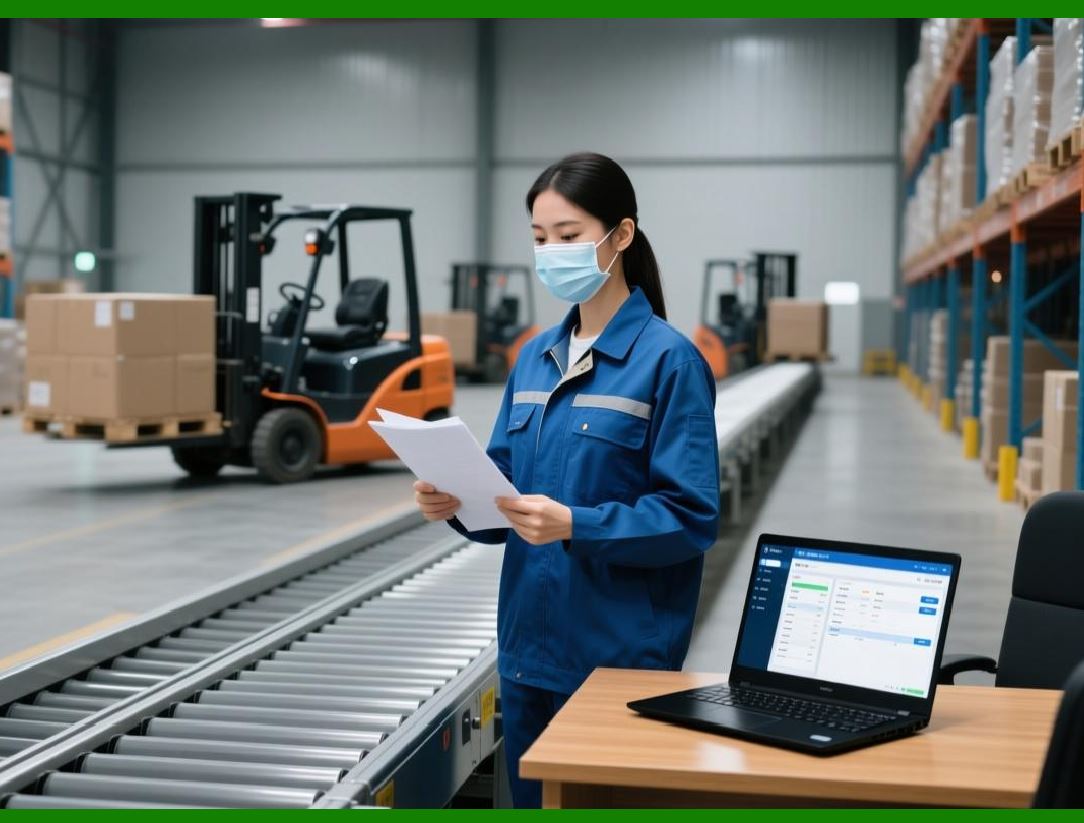
| In the context of waste reduction, the perishability paradox is the biggest opportunity. According to industry studies, more than 30 percent of food waste occurs at the distribution and retail stage, not at the consumer level. A significant portion of that waste is due to over-ordering and poor rotation. AI can directly address this by integrating expiry data into the ordering process. Instead of ordering based on average weekly sales, the AI orders based on the net expected sales before expiry. If the forecast shows that only 80 percent of a batch will sell before its expiry, the AI either reduces the order quantity or requests a newer batch from the supplier. This proactive approach prevents the waste from happening in the first place. | Let us look at a specific industry example: fresh seafood. Seafood has a very short shelf life, measured in days. A distributor receives shipments daily. Each box of fish has a barcode with a catch date. The AI predicts demand for each type of fish for the next three days, based on historical sales, day of the week, weather, and local events. It then compares the predicted demand with the available inventory, sorted by catch date. If the inventory exceeds the predicted demand by a certain margin, the AI automatically sends an alert to the sales team to promote that fish, perhaps through a special offer on the website. If the inventory is insufficient, the AI adjusts the next order. This closed-loop system ensures that fish is sold while it is still fresh, minimising both waste and disappointed customers. | But perishability is not just about the product itself; it is also about packaging and logistics. The packaging protects the product from environmental factors, but packaging also degrades over time. A cardboard box that absorbs moisture from the air becomes weak and may collapse. A plastic film that loses its elasticity may fail to seal properly. The AI can factor in the condition of the packaging, as detected by computer vision, into the RUL. A box with a crushed corner might have a lower RUL because it offers less protection. This holistic view ensures that all aspects of the item's lifecycle are considered. | 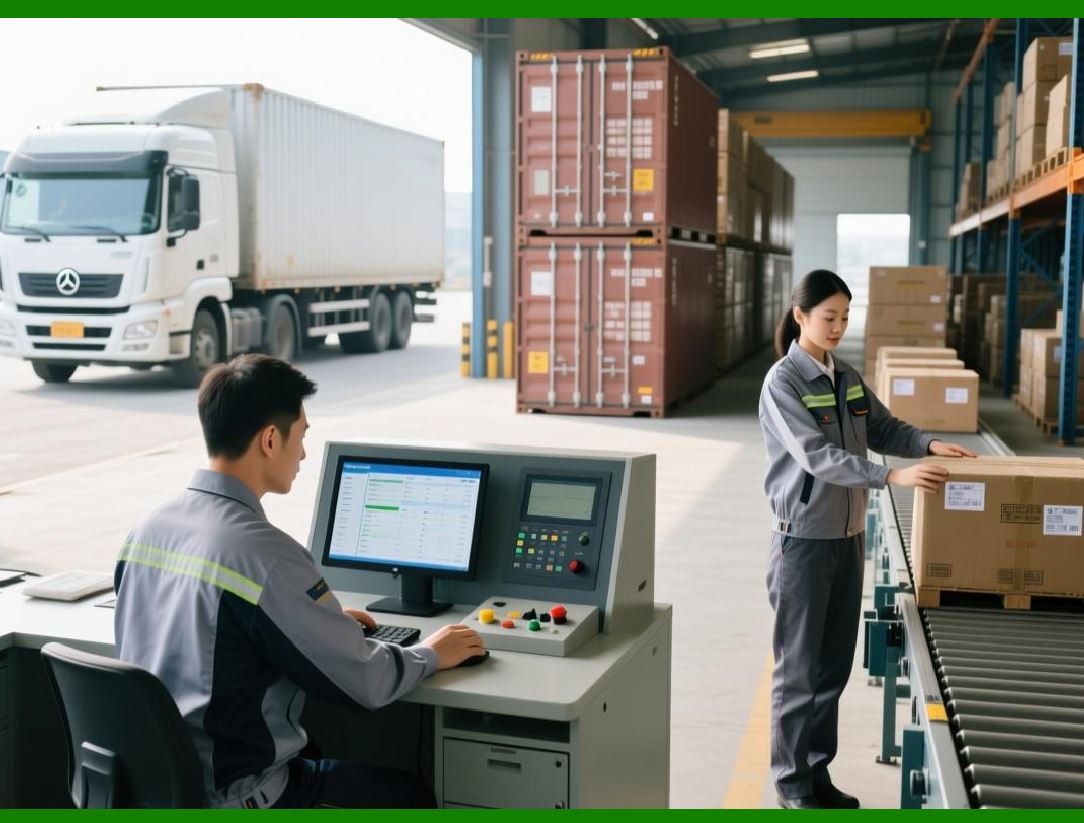
| The psychological aspect of perishability is also worth noting. Human operators tend to overestimate the risk of expiry. They often order too much to avoid running out, not realising that the excess will expire. They also tend to ignore the early signs of degradation, hoping that the product will be sold before it goes bad. AI has no such biases. It treats each item as a statistical entity, not as a hope or a fear. This objectivity is its greatest strength in managing perishable goods. | In summary, the perishability paradox teaches us that time is the ultimate enemy of inventory value. Every moment that an item sits in a warehouse, its value diminishes and the risk of waste increases. AI's answer to this paradox is to measure and monitor the degradation process continuously, using barcode data as the anchor and environmental data as the modifier. By calculating a dynamic remaining useful life for each unit, AI can prioritise, discount, and rotate inventory with surgical precision. This transforms expiry from a dreaded deadline into a manageable variable. In the next chapter, we will examine how AI optimises the physical space where all this inventory sits, turning storage from a cost centre into a competitive advantage. | 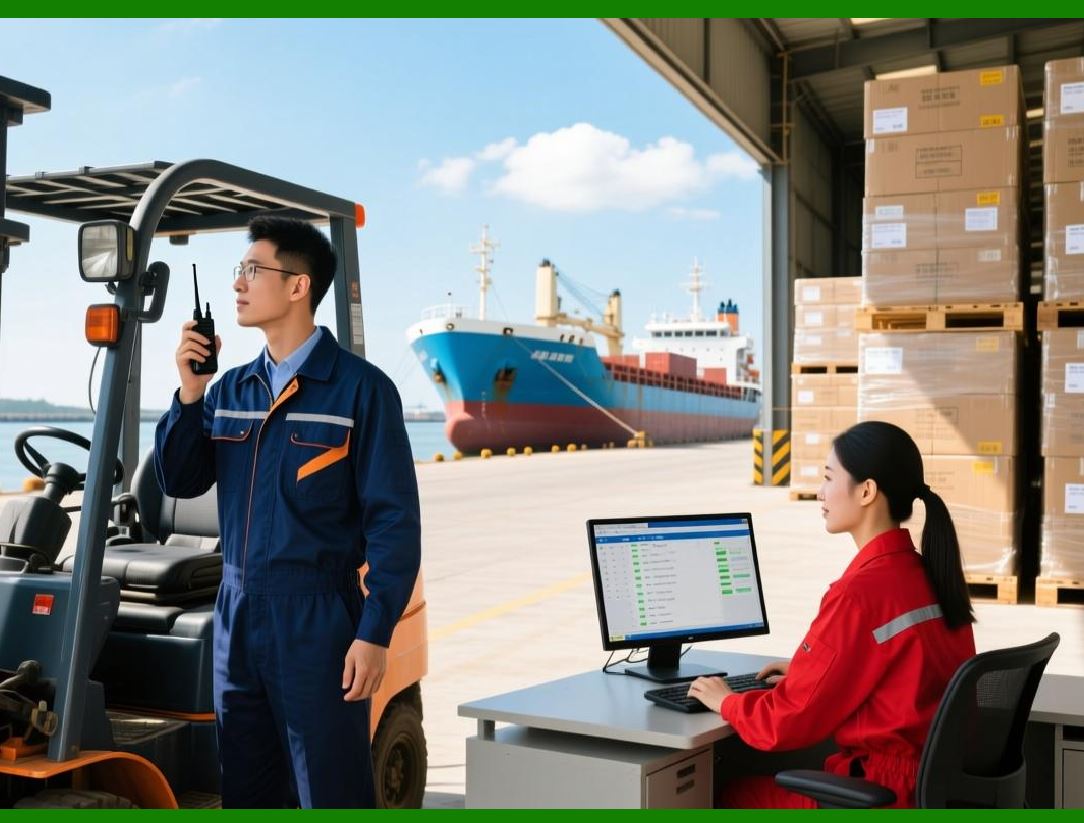
| Chapter 5: Space as a Premium Resource - Squeezing Every Cubic Metre | Warehouse space is not just a container for inventory; it is a resource that must be allocated as carefully as capital. In many industries, the cost of real estate, construction, and utilities represents a significant portion of operational expenses. Yet, in traditional warehouses, space is often used inefficiently. Aisles are too wide. Racks are too short. Vertical space is underutilised. Items are stored in random locations, leading to wasted travel and poor density. AI addresses these inefficiencies through intelligent space management, which we call dynamic spatial optimisation. | The first principle of spatial optimisation is that every item should occupy the smallest possible volume that still allows safe and efficient handling. This sounds obvious, but in practice, many items are stored in oversized bins or on large pallets that are only half full. The AI analyses the dimensions of each item, its packaging, and its weight to recommend the ideal storage medium. It might suggest that small, lightweight items be stored in carton-flow racks rather than pallet racks, increasing density by a factor of two or three. It might suggest that items with similar size be grouped together to minimise wasted cubic volume. These recommendations are based on the barcode data, which tells the AI which items are physically present and in what quantities. | The second principle is that the location of an item should be determined by its velocity and its perishability. Fast-moving items should be placed in the most accessible locations, close to the shipping dock, to minimise travel time. Slow-moving items can be placed in deeper, less convenient locations. Highly perishable items should be placed in the forward pick area, where they are likely to be selected soon. This is called velocity-based slotting. The AI recomputes slotting recommendations weekly or even daily, because product velocities change over time. A product that was fast-moving in summer might be slow-moving in winter. The AI adapts the slotting accordingly. | 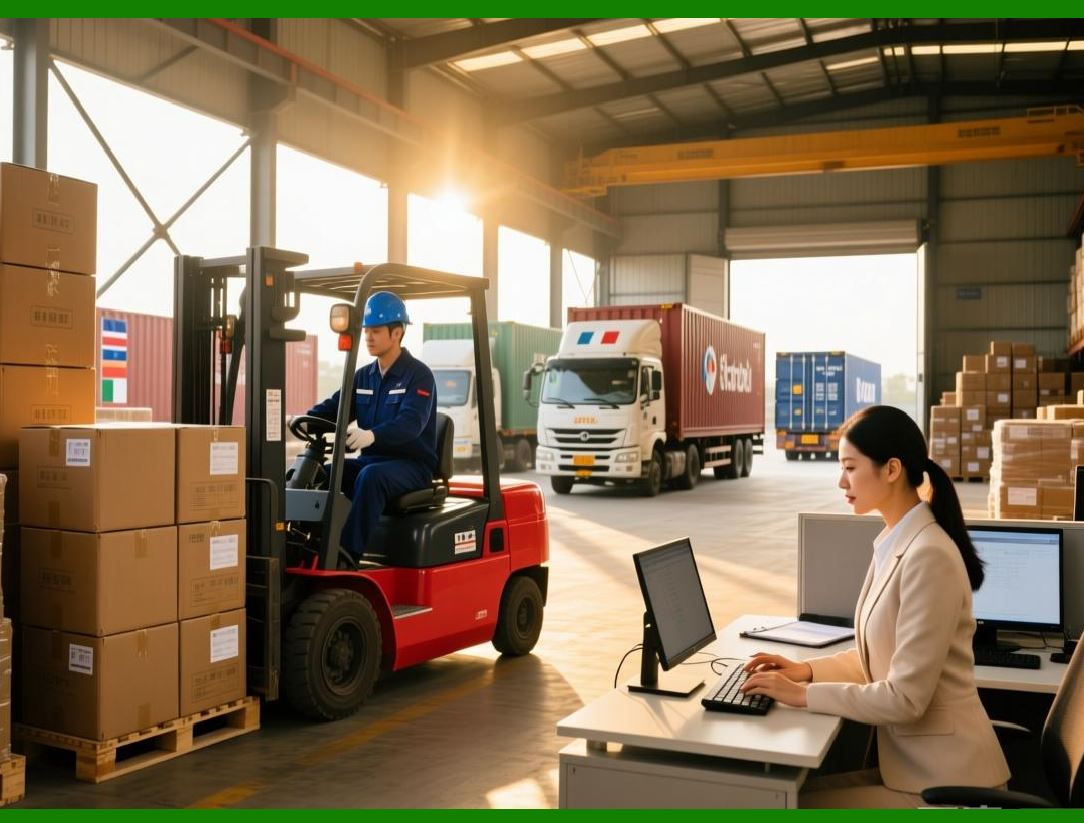
| Third principle: vertical space should be exploited to the maximum. Many warehouses have ceilings that are 10 metres high but racks that are only 6 metres tall. The AI, using computer vision, can measure the actual available height and recommend taller racking, or it can suggest the use of vertical carousels that bring items down to the operator. For very light items, the AI might suggest automated storage and retrieval systems, or ASRS, that can stack bins up to 20 metres high. The trade-off is that taller storage requires more robust equipment and longer retrieval times. The AI balances these factors by simulating different configurations and selecting the one that minimises total cost, including both space and labour. | Fourth principle: the layout of aisles and zones should minimise congestion. In a busy warehouse, multiple pickers and forklifts compete for the same aisles. This leads to delays, collisions, and inefficiency. The AI models the traffic flow and proposes a layout that separates receiving, put-away, picking, packing, and shipping into distinct zones. It also suggests one-way aisles and designated passing areas. These changes can reduce travel time by 15 to 20 percent, which in turn reduces the need for extra space, because the warehouse can process more orders in the same footprint. | Now, how does the barcode fit into spatial optimisationEvery barcode scan updates the AI about the current location of each item. The AI maintains a digital map of the warehouse, showing exactly which slots are occupied and which are empty. When a new shipment arrives, the AI selects the best available location based on the item's velocity and perishability. It then guides the put-away operator to that location, either through a handheld device or through voice picking instructions. This eliminates the guesswork and ensures that the item is placed in the most suitable spot from day one. | 
| The barcode also enables the AI to monitor space utilisation in real time. If a particular zone has many empty slots, the AI might consolidate items from a nearby zone to free up an entire aisle. This consolidation can be done gradually, during routine picking operations, without disrupting the workflow. The freed aisle can then be repurposed for a new product line or closed off to save lighting and heating costs. This is called dynamic storage reorganisation, and it is a powerful tool for shrinking the warehouse footprint. | We should also consider the concept of shared storage. In traditional warehouses, each SKU has its own dedicated location. This is simple but wasteful, because many SKUs are only partially occupying their locations. The AI can implement shared storage, where multiple SKUs are placed in the same bin or on the same shelf, as long as they are compatible, for example, not cross-contaminating, and as long as they have different demand peaks. This increases density dramatically. The AI tracks which SKUs are in which part of the shared bin using barcode scans, so there is no confusion. When a picker needs a particular SKU, the AI directs them to the exact sub-location within the bin. | Another advanced technique is the use of mobile racking. Instead of fixed racks, the warehouse uses racks that can be moved by remote-controlled shuttles. These shuttles compact the racks together, eliminating aisles entirely when no picking is happening. When a picker needs an item, the AI instructs the shuttle to open an aisle at the required location. This is called a goods-to-person system. It reduces the warehouse footprint by up to 50 percent because there are no permanent aisles. The barcode is essential here because the AI must know exactly which rack contains which items, and it must verify the item's identity when it is retrieved. | 
| Space optimisation is not just about reducing the floor area; it is also about reducing the environmental impact. A smaller warehouse consumes less energy for lighting, heating, cooling, and ventilation. It requires less concrete and steel for construction. It generates less runoff and less habitat disruption. These are important sustainability benefits that align with the zero-waste mandate we will discuss in the next chapter. Every square metre saved is a square metre of land that can remain natural or be used for other productive purposes. | Let us look at a case study. A large electronics distributor had a warehouse of 50,000 square metres. Its inventory turnover was 5 times per year. By implementing AI-driven slotting and dynamic reorganisation, it increased turnover to 8 times per year. This allowed it to reduce its storage requirement to 35,000 square metres. The freed 15,000 square metres were subleased to a neighbouring business, generating additional revenue. The energy bill dropped by 20 percent because the smaller area required less cooling for heat-sensitive components. The company also reduced its picking travel by 18 percent, saving labour costs. All of these benefits were achieved without changing the product mix or the customer service level. The AI simply used the existing space more intelligently. | In summary, space is a premium resource that is often squandered in traditional warehouses. AI changes this by optimising the storage medium, the location, the vertical utilisation, and the layout, all based on real-time data from barcode scans. The result is a warehouse that holds more inventory in less space, with lower operating costs and lower environmental impact. But the ultimate goal is not just to save space; it is to eliminate waste entirely. That is the subject of our final chapter in this part. | 
| Chapter 6: The Zero-Waste Mandate - From Cost Saving to Corporate Responsibility | The journey from recognising the cost of sitting still to optimising storage space converges on a single, powerful imperative: zero waste. This is not just an environmental slogan; it is a business strategy that aligns profit with planet. Zero waste means that no inventory item should ever be discarded due to expiry, damage, or obsolescence without a deliberate and unavoidable reason. It means that every item that is produced and shipped should eventually fulfil its purpose, whether that is being consumed, used, or recycled. AI is the most effective tool we have to achieve this goal, because it attacks waste at its root causes: overproduction, overstocking, poor rotation, and delayed action. | The economic case for zero waste is compelling. The waste that ends up in landfills represents lost raw materials, lost labour, lost energy, and lost transportation. The cost of disposing of waste, especially hazardous waste, is also significant. By reducing waste, companies can improve their gross margins, lower their disposal costs, and enhance their brand image. Consumers are increasingly choosing brands that demonstrate environmental responsibility, so waste reduction is also a marketing advantage. In many industries, regulators are imposing stricter rules on waste disposal and even taxing waste generation. Proactive waste reduction is therefore a hedge against future regulation. | The environmental case is even more urgent. The production of goods consumes natural resources and emits greenhouse gases. When those goods are wasted, all that environmental burden is incurred for nothing. It is a double loss. According to the United Nations, food waste alone accounts for about 8 percent of global greenhouse gas emissions. If food waste were a country, it would be the third-largest emitter after China and the United States. Reducing waste in inventory, especially perishable inventory, is therefore a direct contribution to climate change mitigation. It is also a way to conserve water, land, and biodiversity. | 
| So how does AI deliver zero wasteIt does so through a holistic approach that combines all the concepts we have discussed. First, predictive analytics reduces overproduction by aligning supply with actual demand. The AI does not just forecast the mean demand; it forecasts the entire demand distribution, so that the company can set production and procurement targets that minimise the probability of surplus. Second, dynamic expiry management ensures that items with a shorter remaining useful life are prioritised for sale or use, reducing spoilage. Third, intelligent slotting and space optimisation reduce damage and misplacement, lowering the chance of items being lost or forgotten. Fourth, reinforcement learning continuously adjusts order policies to respond to real-time changes, preventing both shortages and surpluses. | But zero waste also requires a cultural shift. The AI can provide the data and recommendations, but the human organisation must act on them. This means that warehouse managers, buyers, and sales teams must trust the AI and be willing to change their habits. For example, a buyer might be tempted to order a large quantity to get a volume discount. The AI might advise against it, because the additional units are unlikely to sell before expiry. The buyer must accept that the discount is not worth the waste. This is a difficult decision for many, but the AI can provide a clear cost-benefit analysis, showing the total cost including disposal and holding, not just the purchase price. Over time, as the organisation sees the positive results, trust builds. | Another cultural aspect is transparency. The AI can generate dashboards that show waste metrics by product, by supplier, by warehouse, and by season. These dashboards make waste visible, which is the first step to reducing it. They also allow benchmarking, so that different facilities can learn from each other. If one warehouse has a spoilage rate of 1 percent while another has 5 percent, the AI can help identify the root causes, such as different temperature control or different rotation practices. This fosters a culture of continuous improvement. |
| The barcode plays a critical role in zero waste because it provides the granular data needed to measure waste accurately. Without barcodes, it is hard to know exactly how much of each product is wasted, when it was wasted, and why. With barcodes, every waste event can be traced to a specific batch and a specific storage location. This traceability allows the AI to identify patterns, for example, that products stored near a certain door spoil faster, or that products from a certain supplier have shorter effective shelf lives. These insights drive corrective actions that prevent future waste. | Let us consider a practical example of zero waste in action. A large supermarket chain implements AI inventory management across all its distribution centres. The AI integrates with the point-of-sale systems and the supplier ordering systems. It predicts demand for each fresh produce item for each store, taking into account local promotions, weather, and even school holidays. It then determines the optimal order quantity for each distribution centre, ensuring that each store receives just enough to meet demand until the next delivery. The produce items are barcoded with harvest dates. The AI tracks their remaining shelf life and prioritises the oldest items for the stores that have the highest turnover. At the end of each day, the AI identifies any surplus items that are approaching expiry. It automatically lists them on a discount platform and also suggests donation to local food banks, with a tax credit calculation. Over a year, this system reduces produce waste by 45 percent, saving millions of dollars and preventing thousands of tons of CO2 equivalent emissions. | In the pharmaceutical industry, zero waste has an additional ethical dimension. Expired drugs are not just a financial loss; they are a public health concern if they are improperly disposed of or if they enter the black market. AI helps by ensuring that drugs are distributed to the clinics and hospitals that need them most, when they need them. The AI also monitors the usage patterns of each hospital and adjusts the delivery schedules accordingly. If a particular hospital consistently uses only 80 percent of its ordered antibiotics, the AI reduces the next order and suggests alternative arrangements for the surplus. This prevents the accumulation of expired drugs that require costly incineration. |
| In the chemical industry, zero waste is often about preventing hazardous reactions. Many chemicals become dangerous after their shelf life because they form peroxides or other unstable compounds. The AI's dynamic expiry management ensures that these chemicals are used or stabilised before they become hazardous. It also coordinates with the production planning system to schedule batches that use the oldest chemicals first. This not only reduces waste but also enhances safety. | The ultimate vision of zero waste is a circular economy, where the waste of one process becomes the input of another. AI can facilitate this by identifying by-products and surpluses that can be sold to other industries. For example, a brewery produces spent grain that can be used as animal feed. The AI can match the brewery's surplus with nearby farms, using barcode-tracked quantities and quality data. This turns a waste disposal problem into a revenue stream. Similarly, a food processor's off-cuts can be used for compost or biogas. The AI can optimise these secondary supply chains, ensuring that as little as possible goes to landfill. | Of course, zero waste is an aspirational goal. In practice, there will always be some waste due to unforeseeable events, such as a sudden power outage that spoils a freezer full of food. But the AI's role is to drive waste toward zero asymptotically, making it as rare as possible. Each improvement, no matter how small, contributes to the overall sustainability of the supply chain. And because the AI learns from every event, it becomes better over time, continuously closing the gap between theory and reality. |
| In summary, the zero-waste mandate is the moral and business justification for AI inventory management. It transcends cost saving and embraces environmental stewardship, social responsibility, and long-term viability. The AI, powered by barcode data and the three pillars of predictive analytics, computer vision, and reinforcement learning, is the engine that drives this transformation. It reduces waste at every stage, from procurement to distribution to consumption. It also changes the mindset of the organisation, making waste visible, measurable, and actionable. This is the true promise of AI in inventory management: not just a leaner warehouse, but a more sustainable world. |
| Detailed Closing Summary | We have travelled through six chapters, each building on the last to form a coherent philosophy of modern inventory management. Let us now synthesise everything into a comprehensive conclusion. | We began by establishing that inventory is fundamentally a liability. The cost of sitting still includes storage, handling, capital, obsolescence, damage, complexity, spoilage, and psychological inertia. These costs are often hidden but they add up to a significant drag on profitability and sustainability. We learned that the goal is not zero inventory, but optimal inventory, a balance between holding costs and stockout risks. Traditional methods fail because they rely on historical averages and fixed rules, while the real world is variable and unpredictable. | We then introduced the barcode as the essential data anchor. The barcode is the AI's digital eye, providing item-level identity, batch traceability, and environmental history. We saw that barcodes are evolving from simple identifiers to rich data carriers, capable of holding expiry dates, serial numbers, and even cryptographic signatures. The barcode enables the AI to build a digital twin for every physical unit, a twin that ages in real time and reflects the true condition of the item. Without barcodes, AI would be blind; with them, it becomes the most precise inventory manager possible. | Next, we explored the three pillars of AI inventory control: predictive analytics, computer vision, and reinforcement learning. Predictive analytics forecasts demand and lead times at a granular level, using machine learning to capture complex patterns. Computer vision provides real-time awareness of the physical warehouse, reading barcodes automatically, detecting damage, and measuring space utilisation. Reinforcement learning makes sequential decisions, such as when to order, how much to order, and where to store items, optimising multiple objectives simultaneously. These three pillars work in concert, sharing data and updating each other continuously. |
| We then confronted the perishability paradox, the reality that all inventory loses value over time. We learned that expiry is not a binary event but a continuous degradation process. AI addresses this by calculating a dynamic remaining useful life for each unit, based on its manufacturing date, storage conditions, and environmental history. This allows dynamic FIFO, optimal markdowns, and proactive ordering that prevents waste from occurring in the first place. We saw examples from food, pharmaceuticals, and chemicals, where AI dramatically reduced spoilage. | We turned our attention to space as a premium resource. We learned that warehouse space is often underutilised, with wide aisles, short racks, and poor slotting. AI optimises space through intelligent storage media, velocity-based slotting, vertical utilisation, and congestion-reducing layouts. The barcode provides the location data that feeds the AI's spatial model. We saw how dynamic reorganisation and shared storage can shrink the warehouse footprint, saving energy and costs. | Finally, we elevated the discussion to the zero-waste mandate. We argued that waste reduction is not just a cost-saving measure but a corporate responsibility that aligns profit with environmental and social goals. AI delivers zero waste by integrating all the previous techniques, creating a closed loop where surplus is minimised, surplus is repurposed, and disposal is a last resort. We discussed the cultural shift required, the importance of transparency, and the role of barcodes in measuring and tracing waste. We ended with a vision of a circular economy enabled by AI. |
| Across all six chapters, a single thread runs consistently: the transformation of inventory from a static stockpile to a dynamic flow. In the old model, inventory is a buffer against uncertainty, held in large quantities and managed with rigid rules. In the new AI-driven model, inventory is a responsive system, continuously adjusting to real-time signals and optimising for multiple outcomes. The old model is reactive and wasteful. The new model is proactive and sustainable. | The practical implications are immense. Companies that adopt AI inventory management can expect to reduce their average inventory levels by 20 to 40 percent, lower their spoilage rates by 30 to 50 percent, and free up substantial warehouse space. They will also improve customer service levels because they will have the right products at the right time, not just more products. The return on investment in AI systems is often measured in months, not years, because the savings are so immediate and substantial. | But we must also acknowledge the challenges. Implementing AI requires investment in hardware, software, and training. It requires clean and consistent data, which many organisations lack. It requires a willingness to change processes and to trust algorithmic recommendations. It also requires ongoing monitoring and maintenance, because the supply chain environment is always evolving. However, these challenges are surmountable, and the competitive advantage gained by early adopters is significant. |
| Looking forward, we can expect AI inventory management to become standard practice in all industries. The cost of computing and sensors is falling, while the availability of data is rising. The algorithms are becoming more robust and more interpretable. We will see greater integration with blockchain for traceability, with IoT for environmental sensing, and with autonomous robots for physical execution. The barcode will remain the foundational identifier, but it will be supplemented by other technologies, such as RFID and computer vision, for even faster and more automated data capture. | In conclusion, the cost of sitting still is the starting point of our journey. It is the wake-up call that inventory is not an asset to be hoarded but a liability to be managed. The barcode is the eye that gives the AI visibility. The three pillars, predictive analytics, computer vision, and reinforcement learning, give the AI the intelligence to act. The perishability paradox gives the AI the urgency to prioritise. Space optimisation gives the AI the means to shrink the physical footprint. And the zero-waste mandate gives the AI the moral purpose to eliminate waste entirely. Together, these elements form a philosophy that is both practical and profound: inventory is not a pile of things; it is a flow of value, and AI is the flow controller. | The ultimate metric of success is inventory turnover. By increasing turnover from 6 to 12 times per year, companies can halve their inventory investment and their waste, while doubling their responsiveness. This is not a dream; it is a reality being achieved today by leading companies in every sector. The technology is available. The data is accessible. The only missing ingredient is the will to change. And once that will is present, the cost of sitting still becomes a cost of the past, and the future becomes a world where every product finds its purpose, and nothing is wasted. |
|
 cs@easiersoft.com