The Barcode - The AI's Digital Eye - How a Simple Striped Label Became the Foundation of Intelligent Inventory | Short Opening Summary | The barcode is often dismissed as a mundane, decades-old technology, a relic of the 1970s supermarket checkout. Yet today, this simple pattern of black and white stripes is the single most important data source for artificial intelligence in inventory management. Without barcodes, AI would be blind, unable to distinguish one item from another, track its journey, or assess its condition. This article explains why the barcode is not just a label but a digital identity, a sensor gateway, and a continuous data stream. We explore its evolution, its integration with AI, its role in dynamic expiry management, its use in cycle counting and traceability, and its future in an era of smart supply chains. By the end, you will see that the barcode is the quiet hero of the AI revolution, enabling machines to see, understand, and act upon the physical world with unprecedented precision. | 
| Chapter 2: The Barcode - The AI's Digital Eye | Imagine walking into a massive warehouse that stretches over several football fields. Hundreds of thousands of boxes, pallets, and drums are stacked on towering shelves. Each item looks almost identical to its neighbour. How does anyone know which box contains which product, when it was made, where it came from, and when it will expireIn the past, workers relied on handwritten tags, colour-coded stickers, and their own memory. This system was slow, error-prone, and impossible to scale. Today, the answer is printed on every single package in the form of a barcode. This unassuming pattern of parallel lines or tiny squares is the key that unlocks the digital world for every physical item. It is the AI's digital eye. | To appreciate the role of the barcode, we must first understand what it is and how it works. A barcode is a machine-readable representation of data. The most common type is the one-dimensional, or 1D, barcode, which consists of a series of black bars and white spaces of varying widths. A laser or camera scans these bars, and the pattern is decoded into a string of numbers or letters. The Universal Product Code, or UPC, found on almost every consumer good, is a classic example. It encodes a 12-digit number that identifies the manufacturer and the product. The two-dimensional, or 2D, barcode, such as the QR code, encodes data in both horizontal and vertical directions, allowing it to hold much more information, such as a web address, a serial number, or even a paragraph of text. | 
| The barcode's genius lies in its simplicity. It costs only a fraction of a cent to print. It requires no battery, no memory chip, and no wireless connection. It can be read with a cheap laser scanner, a camera on a mobile phone, or a fixed reader mounted on a conveyor belt. It works in almost any lighting condition, on almost any surface, from glossy plastic to rough cardboard. This combination of low cost, high reliability, and universal readability has made the barcode the default identification method for billions of items worldwide. | But the barcode is far more than an identification tag. In the context of AI inventory management, it is the anchor for a digital twin, a virtual replica of the physical item that lives in the computer system. When a barcode is scanned, the AI retrieves all the data associated with that unique code: the product name, the batch number, the manufacturing date, the expiry date, the weight, the dimensions, the supplier, the purchase order, and the storage history. This data is not static; it is updated every time the item is scanned. Each scan adds a new timestamp, a new location, and sometimes a new condition, such as temperature or humidity reading. Over time, the digital twin accumulates a complete biography of the physical item's journey through the supply chain. | This biography is what enables the AI to make intelligent decisions. Consider a simple example: a pallet of canned tomatoes arrives at a distribution centre. The barcode on each case is scanned at the receiving dock. The AI checks the digital twin and sees that this batch has an expiry date six months from now, that the supplier has a good track record, and that the current inventory of canned tomatoes is already sufficient for the next two weeks. The AI then decides to store this pallet in a deeper, less accessible location, because it is not urgent. A month later, when the inventory level drops, the AI will remember this pallet and recommend it for picking, ensuring that the older stock is used first. This is a simple but powerful example of dynamic inventory management driven by barcode data. | 
| The evolution of the barcode from a simple product identifier to a rich data carrier is a story of continuous innovation. The original UPC codes were introduced in the 1970s primarily to speed up grocery checkout. They contained only a manufacturer ID and a product ID, with no expiry or batch information. This was sufficient for the cash register, but not for warehouse management. In the 1980s, the Code 39 and Code 128 standards emerged, allowing alphanumeric characters. This meant that a barcode could now contain a batch number or a serial number in addition to the product ID. In the 1990s, two-dimensional codes like Data Matrix and QR codes appeared, dramatically increasing the data capacity. A single QR code can hold up to 4,296 alphanumeric characters, enough to encode the entire history of a pharmaceutical product, including its manufacturing line, quality test results, and shipping destination. | Today, we are seeing even more advanced barcodes. Some incorporate colour to encode additional data. Others use special inks that change colour when exposed to heat, light, or oxygen. These are called indicator barcodes. When scanned, the AI reads not only the pattern but also the colour, which provides information about the item's environmental exposure. For example, a barcode on a vaccine vial might turn from blue to red if the vial has been exposed to temperatures above the recommended range. The AI can interpret this colour change and adjust the remaining shelf life accordingly. This is a giant leap from the static black-and-white labels of the past. | The integration of barcodes with AI is a symbiotic relationship. The barcode provides the data, and the AI provides the intelligence to act on it. But the AI also enhances the barcode's value. Traditionally, a barcode was read once or twice in its lifecycle: at receiving and at shipping. With AI, every scan is an opportunity to learn. The AI can correlate barcode scans with sales data, weather data, and social media sentiment to improve its forecasts. It can detect anomalies, such as an unusually high number of scans for a particular item, which might indicate a pricing error or a promotional opportunity. It can also identify patterns that were previously invisible, such as that a certain batch of products tends to be returned more often than others, suggesting a hidden quality issue. | 
| One of the most practical applications of the barcode-AI combination is in dynamic shelf-life management. As we discussed in the previous chapter, expiry is not a fixed date but a continuous degradation process. The barcode provides the manufacturing date and the batch-specific initial quality. But the AI can adjust the effective expiry based on environmental conditions recorded at each scan. For instance, if a barcode scan at a secondary warehouse shows that the item has been stored at a slightly higher temperature than ideal, the AI can shorten the remaining shelf life by a certain percentage. This is far more accurate than using the printed expiry date alone. It also allows the AI to prioritise items that have suffered the most environmental stress, ensuring they are used before they degrade further. | Another vital role of the barcode is in cycle counting and inventory accuracy. Traditional physical inventory counts are labour-intensive and disruptive. The AI can use barcode scan data to perform continuous cycle counting. Every time an item is scanned for picking, receiving, or moving, the system confirms that the physical count matches the digital count. If there is a discrepancy, the AI can flag it immediately and even trigger a targeted recount of that specific location or SKU. This reduces the need for full physical inventories, which often require shutting down operations for a day or more. The barcode makes cycle counting not only more efficient but also more accurate, because it eliminates human transcription errors. | Traceability is another area where the barcode shines. In regulated industries like food, pharmaceuticals, and aerospace, traceability is not optional; it is a legal requirement. If a batch of contaminated food is discovered, the company must be able to recall every single unit from that batch within hours. The barcode is the tool that makes this possible. Each item carries a unique batch or serial number. When the AI receives a recall alert, it searches its database for all barcode scans associated with that batch. It knows which warehouses received the batch, which customers received shipments, and even which specific orders were fulfilled. This allows for a precise, targeted recall that minimises waste and protects public health. Without barcodes, the recall would have to be much broader, destroying many more items and damaging the brand's reputation. | 
| The barcode also enables reverse logistics, the process of handling returned items. When a customer returns a product, the barcode is scanned at the return centre. The AI checks the product's history, its condition, and its remaining shelf life. It then decides whether the item can be restocked, whether it needs to be repackaged, whether it should be sent to a discount outlet, or whether it should be disposed of. This decision is based on the digital twin, not on a generic rule. For example, a returned electronic device with a barcode showing that it was manufactured only two months ago might be restocked as new, while a device that is nine months old might be sent to a refurbishing centre. This optimises the value recovery from returns and reduces the amount of waste sent to landfills. | Now, let us consider the human element. Warehouse workers are the ones who scan barcodes, often hundreds or thousands of times per day. This is a repetitive task that can lead to boredom and mistakes. AI can help by making the scanning process more intuitive and less error-prone. For example, a handheld scanner can be equipped with a visual display that shows the worker the next action based on the scanned barcode. If the item is approaching expiry, the screen might show a yellow warning light and suggest that the item be placed in a priority bin. If the item is already expired, the screen might show a red light and instruct the worker to segregate it for disposal. This transforms a mundane scan into a decision-support moment, empowering the worker with real-time intelligence. | Furthermore, AI can use barcode scan data to optimise the workflow. By analysing the frequency and timing of scans, the AI can identify bottlenecks, such as a particular picking zone that is consistently slow, or a receiving dock that is overloaded at certain hours. It can then recommend adjustments, such as reassigning staff, changing the layout of the zone, or shifting receiving hours to off-peak times. These improvements are not based on guesses but on hard evidence collected through barcode scans. | 
| The barcode also facilitates integration with other technologies. In a smart warehouse, barcodes are read by fixed cameras as items pass by on conveyor belts, by drones that fly through the aisles, and by robotic arms that pick items from bins. These automated scanners feed data directly into the AI, without any human intervention. This is the vision of the fully automated supply chain, where the barcode is the common language that allows humans, robots, and computers to coordinate seamlessly. | 
| Let us look at a few concrete industry examples to see the barcode-AI synergy in action. | In the automotive industry, every engine, transmission, and major component carries a barcode that contains its serial number, manufacturing date, and test results. When a vehicle is assembled, the AI records which components are used in which vehicle. This creates a complete bill of materials for each vehicle, down to the individual parts. If a component is found to be defective, the AI can trace every vehicle that contains that component, enabling a rapid and accurate recall. This traceability is not only a safety feature but also a way to minimise inventory. The AI knows exactly how many spare parts are needed for each vehicle model, based on real failure rates, and orders only that quantity, reducing warehouse stock. | In the pharmaceutical industry, the barcode is a life-saving tool. Each bottle of medicine has a unique barcode that encodes the batch number, expiry date, and manufacturing site. The AI uses these barcodes to monitor the flow of drugs from the factory to the pharmacy. It predicts which drugs will be in high demand based on epidemiological data and adjusts the distribution accordingly. It also ensures that drugs are used in the order of their expiry dates, reducing the chance of expired medicines being sold. In many countries, this is a regulatory requirement, but the AI goes beyond compliance by optimising the entire supply chain to minimise waste and maximise availability. | 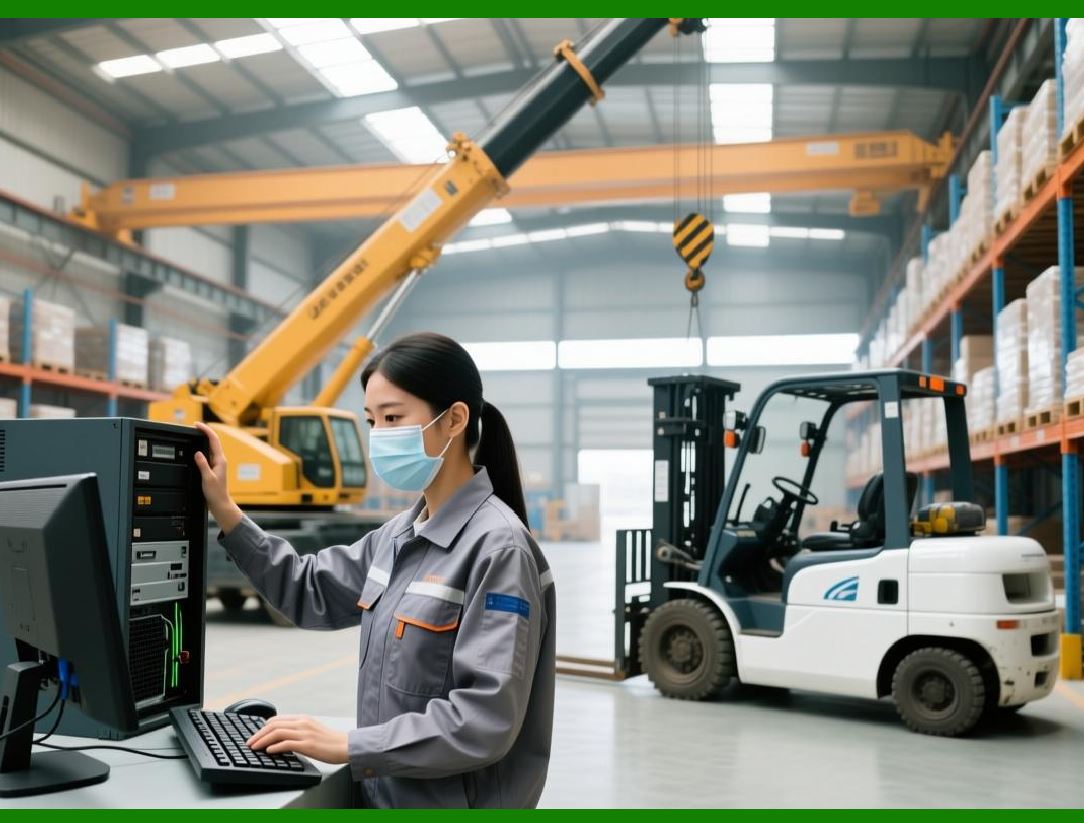
| In the food and beverage industry, the barcode is central to freshness management. Perishable items like meat, dairy, and produce have very short shelf lives. The AI uses the barcode to track the exact harvest or production date and the temperature history. It then calculates the remaining shelf life for each individual unit. This allows the retailer to price items dynamically, offering discounts on items that are approaching expiry. The AI can also suggest recipe changes or menu adjustments in a restaurant setting, to use the items that are closest to expiring. This has been shown to reduce food waste by 20 to 30 percent, a significant contribution to sustainability. | In the electronics industry, the barcode is used to manage component obsolescence. A microprocessor might have a five-year shelf life from a storage perspective, but it becomes technologically obsolete within two years. The AI uses the barcode to track the manufacturing date of each component. It then forecasts the demand for that component over its useful life. If the forecast shows that some components will not be used before they become obsolete, the AI can suggest design changes, substitutions, or promotions to clear the stock. This avoids the costly write-off of obsolete inventory. | In the chemical industry, barcodes are used to manage hazardous materials. Each drum of chemical has a barcode that contains safety data, such as the flash point, the reactivity, and the disposal requirements. The AI uses this information to store chemicals safely, segregating incompatible substances. It also tracks the age of the chemicals, because many become unstable over time. When a chemical is approaching its safe storage limit, the AI schedules its use or disposal, preventing a potentially dangerous situation. | 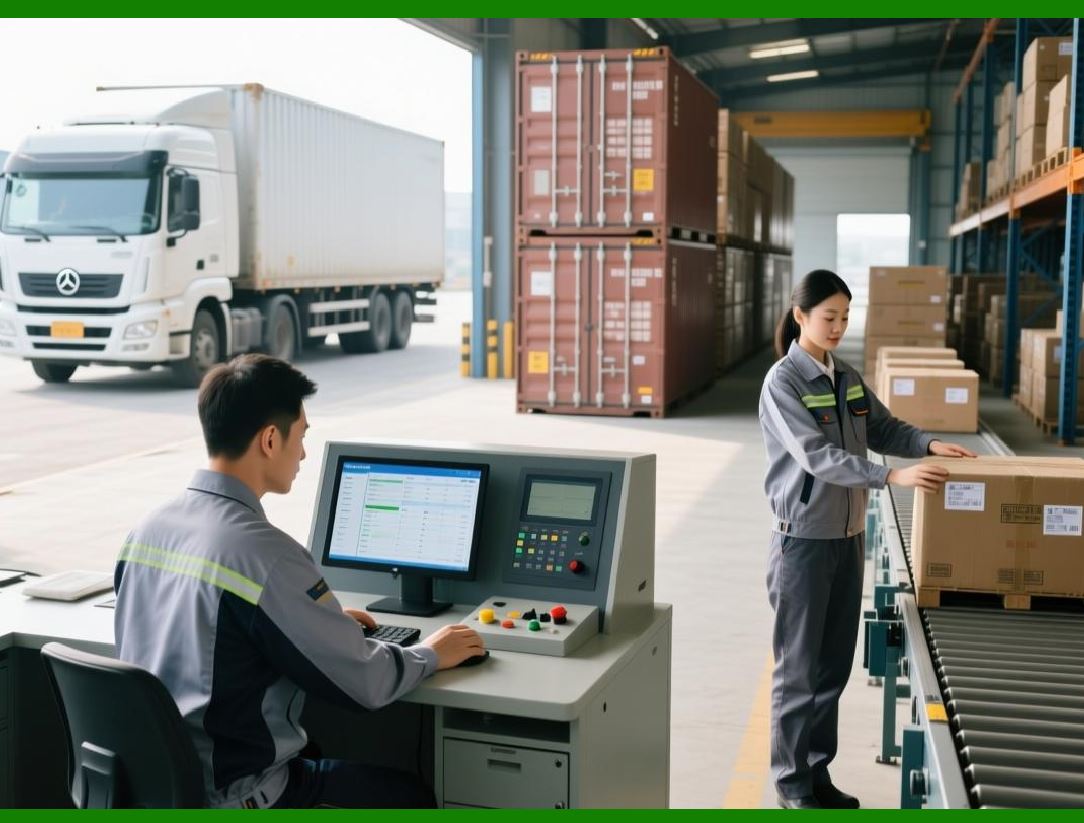
| Now, let us address the common misconception that barcodes are being replaced by more advanced technologies, such as radio-frequency identification, or RFID. While RFID tags offer the advantage of being readable without line-of-sight, they are significantly more expensive, require a power source or a reader with a strong electromagnetic field, and are not as universally compatible with existing systems. Barcodes, on the other hand, are cheap, passive, and readable by billions of existing devices. In practice, we see a complementary relationship. RFID is used for high-value or high-turnover items where the extra cost is justified, while barcodes remain the workhorse for the vast majority of inventory. AI can integrate both data sources, using the barcode as the primary identifier and the RFID as an additional layer of location and condition information. | The future of the barcode is bright and full of innovation. One emerging trend is the use of invisible barcodes that are printed with fluorescent or infrared inks. These barcodes are not visible to the human eye but can be read by special cameras. This allows packaging to remain aesthetically clean while still carrying digital information. Another trend is the integration of barcodes with blockchain technology. Each barcode can serve as a pointer to a blockchain record that contains the complete, immutable history of the item. This is particularly valuable for luxury goods, pharmaceuticals, and food, where authenticity and provenance are critical. The AI can query this blockchain record through the barcode, ensuring that the digital twin is tamper-proof. | 
| We are also seeing the emergence of barcodes that are dynamically generated on electronic displays, such as e-paper labels on reusable containers. These labels can change their barcode to reflect a new product or a new batch number, without requiring a physical label replacement. This is highly efficient for returnable packaging and reduces waste from label disposal. | Another exciting development is the use of barcode data in predictive maintenance. In a factory, the barcode on a machine part can be scanned during routine inspections. The AI logs the condition of the part, such as wear and tear, and combines this with the part's age and usage history. It can then predict when the part is likely to fail and schedule a replacement before that happens. This prevents unplanned downtime and ensures that spare parts are ordered only when needed, again reducing inventory. | The barcode also plays a role in the sharing economy and circular economy. When a product is rented or shared, its barcode is scanned by each user. The AI tracks who has the product, where it is, and how long it has been in use. This allows for optimised utilisation, ensuring that the product is not sitting idle when others need it. At the end of the product's life, the barcode can be scanned for recycling, and the AI can provide information about the material composition, facilitating proper sorting and processing. This turns waste into a resource and reduces the overall environmental footprint. | Despite all these advances, the barcode faces challenges. One is the issue of counterfeit barcodes. Criminals can copy or generate fake barcodes and apply them to inferior or dangerous products. This is a serious problem in pharmaceuticals, automotive parts, and luxury goods. The AI can help detect counterfeit barcodes by analysing patterns in scan data. For example, if a barcode claims to be from a particular factory but is scanned in a location that is inconsistent with the supply chain, the AI can flag it as suspicious. Additionally, cryptographic barcodes, which contain a digital signature that cannot be forged, are becoming more common. These barcodes can be verified by the AI using a public key, ensuring authenticity. | 
| Another challenge is the readability of damaged or dirty barcodes. In a rough warehouse environment, barcodes can be scratched, smudged, or partially torn. This leads to scan failures, which slow down operations and create errors. AI can help here too. Advanced computer vision algorithms can reconstruct missing parts of a barcode using pattern recognition. They can also read barcodes that are distorted, curved, or poorly printed. This robustness is a major advantage over traditional scanners, which require near-perfect alignment and clarity. | Data integration is yet another challenge. Barcodes only provide a reference number. The AI must have access to a database that maps that number to all the relevant attributes. If the database is incomplete, outdated, or siloed across different systems, the AI's decisions will be flawed. Therefore, the implementation of barcode-AI systems requires a significant investment in data governance and system integration. This is often the most difficult part of the transformation, but it is also the most rewarding. | 
| In summary, the barcode is the AI's digital eye because it provides the structured, reliable, and affordable data that the AI needs to perceive the physical world. It is not a legacy technology to be replaced, but a foundational layer that is continuously evolving. From its humble beginnings as a grocery checkout tool, it has become the universal identity system for physical items, carrying not just product codes but batch numbers, expiry dates, serial numbers, and environmental histories. When integrated with AI, the barcode enables dynamic shelf-life management, continuous cycle counting, precise traceability, intelligent reverse logistics, and workflow optimisation. It is the bridge between the physical and digital realms, the translation layer that turns atoms into bits. | Looking ahead, the barcode will become even more powerful as it incorporates cryptographic security, colour indicators, dynamic displays, and integration with blockchain. It will work alongside other technologies like RFID and computer vision, but it will remain the most cost-effective and ubiquitous data carrier. The AI will become more sophisticated, but it will always depend on the barcode for its primary source of truth. In a world where data is the new oil, the barcode is the pump that brings it to the surface. | 
| Detailed Closing Summary | We have explored Chapter 2 in depth, unpacking the critical role that barcodes play in modern AI-driven inventory management. Let us now recap the key insights and expand on their implications. | We began by establishing that the barcode is not a trivial label but a digital identity that anchors a complete digital twin for each physical item. This digital twin stores the item's attributes, history, and environmental conditions, and it is updated with every scan. The barcode's low cost, high reliability, and universal readability make it the ideal data carrier for billions of items across all industries. | We traced the evolution of barcodes from simple UPC codes to complex 2D codes and indicator barcodes. This evolution has dramatically increased the data capacity and functionality, allowing barcodes to hold not just product IDs but batch numbers, serial numbers, test results, and even colour-based environmental exposure indicators. The modern barcode is a rich data source that feeds AI with granular, real-time information. | We explored the symbiotic relationship between barcodes and AI. The barcode provides the data, and the AI provides the intelligence. The AI enhances the barcode's value by interpreting its data in context, correlating with other data sources, and making predictions and recommendations. The barcode, in turn, enables the AI to operate at the item level, not just the aggregate level, which is essential for reducing waste and optimising space. | 
| We examined several practical applications where barcodes and AI work together. Dynamic shelf-life management uses barcodes to calculate remaining useful life based on manufacturing date and environmental history, adjusting expiry dates dynamically. Continuous cycle counting uses barcode scans to verify inventory accuracy without disruptive physical counts. Traceability uses barcodes to enable rapid, precise recalls and to support regulatory compliance. Reverse logistics uses barcodes to determine the disposition of returned items, maximising value recovery and minimising waste. | We also looked at industry-specific examples. In automotive, barcodes enable component traceability and efficient spare parts management. In pharmaceuticals, barcodes ensure drug authenticity and optimal distribution. In food, barcodes support freshness management and dynamic pricing. In electronics, barcodes manage component obsolescence. In chemicals, barcodes enhance safety and prevent hazardous degradation. These examples illustrate the universal applicability of barcode-AI integration. | We addressed the human element, showing how AI can assist warehouse workers by making barcode scans more informative and less error-prone. We also discussed the integration of barcodes with automated systems, such as conveyor cameras, drones, and robotic pickers, creating a fully automated data capture environment. | 
| We countered the misconception that barcodes are outdated by showing how they are evolving and complementing newer technologies like RFID. We highlighted emerging trends such as invisible barcodes, blockchain integration, dynamic e-paper labels, and predictive maintenance. We also discussed the challenges of counterfeit barcodes, damaged labels, and data integration, and how AI and advanced algorithms are addressing these issues. | The central takeaway is that the barcode is the fundamental enabler of AI inventory management. Without it, AI would be blind, unable to perceive the physical world with the granularity required for precision optimisation. With it, AI becomes a powerful decision-making engine that can see every item, know its condition, and act accordingly. The barcode is not a relic; it is a foundation stone, and it is being continuously improved to meet the demands of an increasingly digital and sustainable supply chain. | In the broader context of the six-chapter philosophy, Chapter 2 serves as the technical underpinning for all the later chapters. Predictive analytics requires item-level historical data, which comes from barcode scans. Computer vision reads barcodes to identify and locate items. Reinforcement learning uses barcode data to evaluate the outcomes of its decisions. Perishability management depends on barcode-scanned manufacturing dates and environmental history. Space optimisation relies on barcode-scanned locations and dimensions. And zero-waste mandates depend on barcode-scanned traceability and expiry management. Every pillar of AI inventory control rests on the data provided by the barcode. | 
| Therefore, any organisation seeking to implement AI inventory management must first ensure that its barcode system is robust, consistent, and integrated. This means standardising barcode formats across suppliers, maintaining accurate master data, deploying reliable scanning hardware, and establishing a data governance framework. The investment in barcodes is relatively small compared to the potential savings, but it is the prerequisite for all subsequent gains. A company with a poor barcode system will find that its AI is guessing, not seeing. | Looking forward, we can expect barcodes to become even more intelligent. They will incorporate more environmental sensing capabilities, such as temperature, humidity, and shock indicators. They will communicate with AI systems through multiple channels, not just optical scans but also near-field communication. They will be part of a larger ecosystem of sensors, RFID tags, and cameras, each providing a different layer of information. But the barcode will remain the primary anchor because of its simplicity and cost-effectiveness. | In conclusion, the barcode is the AI's digital eye. It is the window through which the machine sees the physical world. It is the voice that each item uses to tell its story. And it is the thread that weaves together the fabric of the intelligent supply chain. By understanding and investing in this humble technology, businesses can unlock the full potential of AI, transforming inventory from a cost centre into a strategic asset, and moving closer to the zero-waste future that our planet urgently needs. |
|
 cs@easiersoft.com