Over-the-Counter - Dynamic Safety Stock - The Shield Against Uncertainty |
Short Opening Summary |
Over-the-counter, or OTC, medicines are the backbone of everyday healthcare. They treat minor ailments, from headaches to allergies to indigestion, and they are available to consumers without a prescription. The supply chain for OTC medicines is vast and complex, with thousands of products, hundreds of retailers, and millions of customers. The challenge is to ensure that the right product is on the shelf when the customer needs it, without overstocking and creating waste. Traditional safety stock, the buffer inventory held to protect against demand variability, is often set using simple formulas that are either too high, leading to waste, or too low, leading to stockouts. Artificial intelligence now offers a solution: dynamic safety stock. By using predictive analytics to forecast demand with high accuracy, and by continuously updating the safety stock levels based on real-time data, AI ensures that the inventory is optimised for both service level and waste reduction. |

|
Chapter 26: Over-the-Counter - Dynamic Safety Stock |
Imagine you have a headache. You walk into a pharmacy, and you head to the pain relief aisle. You see a row of boxes: ibuprofen, acetaminophen, aspirin. You reach for your usual brand. But the shelf is empty. There is a gap. The store is out of stock. You are annoyed. You might try another brand, or you might go to another store. The pharmacy has lost a sale, and you have been inconvenienced. Now imagine a different scenario. The pharmacy has plenty of stock. In fact, it has so much stock that some of the boxes are nearing their expiry date. They have to be discounted or discarded. The pharmacy has tied up its capital in inventory that it could not sell. |
These two scenarios illustrate the central tension of inventory management: balancing service level against cost. The safety stock is the buffer that protects against the uncertainty. If the demand is higher than expected, the safety stock covers the gap. If the demand is lower than expected, the safety stock is not used, and it becomes waste. The traditional approach to setting safety stock is to use a formula that considers the average demand, the demand variability, and the lead time. This formula, often based on a normal distribution, is a useful starting point. But it is also static. It assumes that the demand variability is constant, and that the lead time is constant. |
|
In the real world, the demand for OTC medicines is anything but constant. It is affected by the season. Cough and cold medicines sell more in the winter. Allergy medicines sell more in the spring. It is affected by the weather. A sudden heatwave can increase the demand for sunburn relief. It is affected by promotions. A retailer might run a 'buy one, get one free' offer, creating a temporary spike. It is affected by public health events, such as a flu outbreak. The lead time is also variable. The supplier might have a production delay. The shipping might be delayed by a storm. The warehouse might be backed up. |
AI solves this by replacing the static safety stock with a dynamic safety stock. The AI continuously monitors the demand and the supply, and it adjusts the safety stock levels in real time. It uses predictive analytics to forecast the demand for each product, for each store, for each day. It uses the forecast, along with the forecast error, to calculate the optimal safety stock. The forecast error is the uncertainty. The AI uses the actual demand data to update the model, so that the uncertainty is more accurately estimated. |
|
Let us look at the factors that the AI considers. The first is the demand forecast. This is the most important factor. The AI uses a machine learning model that incorporates the historical sales data, the seasonality, the weather data, the promotional calendar, and the public health data. The forecast is a probability distribution, not just a point estimate. The AI knows the most likely demand, and it also knows the range of possible demands. |
The second factor is the lead time. The AI uses data from the suppliers to estimate the lead time distribution. It knows the average lead time, and it also knows the variability. A supplier with a consistent lead time has less uncertainty, so the safety stock can be lower. |
The third factor is the service level target. The service level is the probability that the store will not stock out. A pharmacy might have a target of 95 percent, meaning that it expects to be in stock 95 percent of the time. The AI uses this target to set the safety stock. A higher service level requires a higher safety stock. |
The fourth factor is the product's shelf life. A product with a short shelf life, such as a probiotic, cannot be held in large quantities. The AI incorporates the shelf life into the optimisation. It will not recommend a safety stock that would exceed the shelf life. |
The fifth factor is the cost of the product. An expensive product has a higher holding cost, so the safety stock should be lower. A cheap product has a lower holding cost, so the safety stock can be higher. |

|
Now, let us look at how this works in practice. A large pharmacy chain operates hundreds of stores. Each store has its own inventory of OTC medicines. The chain uses an AI system to manage the safety stock. The system receives the daily sales data from each store. It also receives the weather data, the promotional calendar, and the public health data. The AI forecasts the demand for each product in each store for the next 30 days. It calculates the optimal safety stock, considering the forecast error, the lead time, the service level, the shelf life, and the cost. |
The AI generates a replenishment order for each store. The order includes the quantity to be shipped, based on the forecast and the safety stock. The order is sent to the warehouse, and the products are shipped to the stores. The AI also updates the safety stock levels dynamically. If the sales are higher than expected, the AI might increase the safety stock for the next few days. If the sales are lower than expected, it might decrease the safety stock. |

|
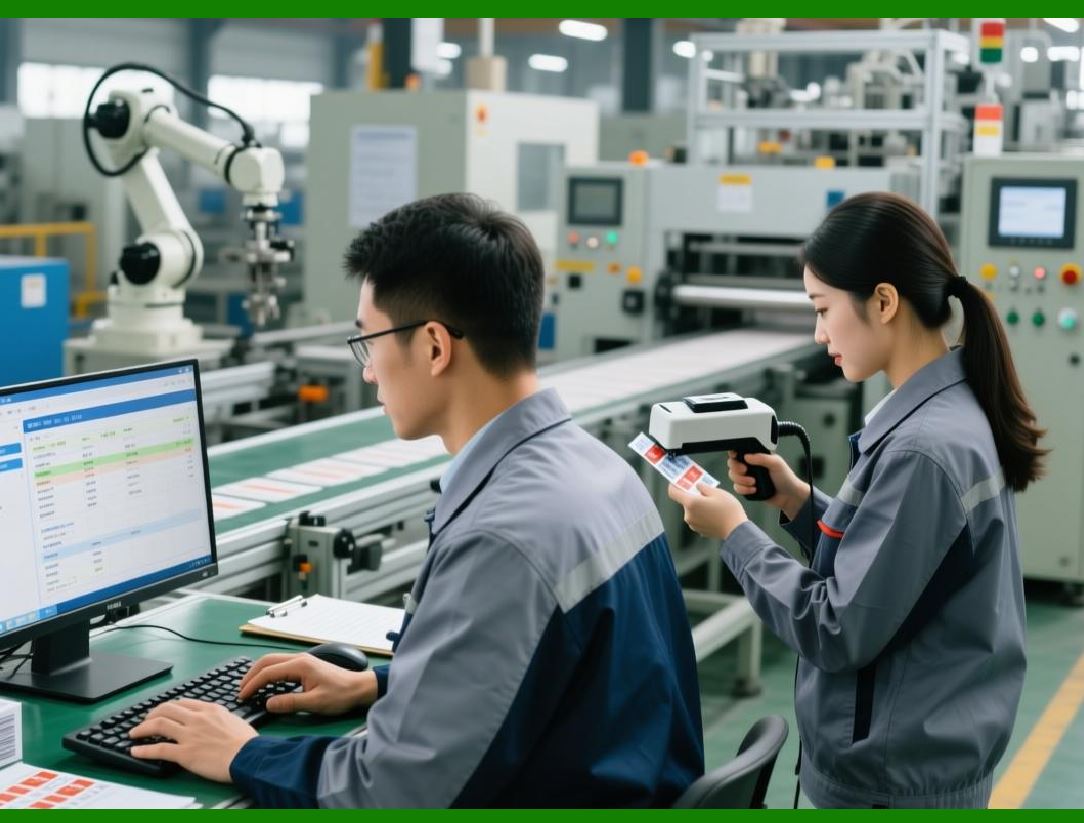
Now, let us consider the role of the barcode. Each product has a barcode that encodes the product code, the batch number, and the expiry date. The barcode is scanned at the warehouse, at the store, and at the point of sale. The AI uses these scans to track the inventory in real time, to monitor the sales velocity, and to manage the expiry dates. The barcode is the data anchor. |
Now, let us look at the financial and operational impact. The traditional approach to safety stock often leads to overstocking or understocking. Overstocking ties up capital and leads to waste. Understocking leads to lost sales and dissatisfied customers. The AI's dynamic safety stock can reduce the total inventory by 20 to 30 percent, while maintaining or even improving the service level. This represents a significant saving in working capital. It also reduces the waste of expired products. |

|
Let us look at a real-world example. A large pharmacy chain in the United States implemented an AI system for its OTC inventory management. The system used machine learning to forecast the demand for each product in each store. It also used a dynamic safety stock model that adjusted the levels based on the forecast error and the lead time. The chain reported a 25 percent reduction in its OTC inventory, a 15 percent reduction in stockouts, and a 30 percent reduction in waste due to expiry. The annual savings were estimated at 50 million dollars. |
Another example is a regional pharmacy chain that used the AI system to manage its allergy medicines. The demand for these medicines is highly seasonal and weather-dependent. The AI system was able to predict the demand spikes and to adjust the safety stock accordingly. The chain reported a 40 percent reduction in waste and a 20 percent increase in sales. |
|
Now, let us look at the future of OTC inventory management. One trend is the use of real-time point-of-sale data. The AI can use the data from the cash registers to update the demand forecast in near real-time. This allows the system to respond to sudden changes in demand. |
Another trend is the integration with the supplier's system. The AI can share the forecast with the supplier, enabling the supplier to plan its production and its logistics. This reduces the lead time and the variability. |
Another trend is the use of machine learning for product substitution. If a product is out of stock, the AI can recommend a suitable substitute to the customer, or to the pharmacy staff. This reduces the lost sales. |
|
Now, let us address the human factors. The pharmacy managers are responsible for the inventory. They might be wary of an AI that makes decisions about the safety stock. The AI must provide clear visualisation and simple recommendations. It should also provide the rationale, such as 'The safety stock for this product has been increased because the forecast shows a higher demand due to a flu outbreak.' This builds trust. |
The pharmacy staff also need to be trained to use the system and to follow the AI's recommendations. |

|
Now, let us discuss the environmental impact. By reducing waste, the AI reduces the environmental footprint. It also reduces the need for production, which saves resources. |
Now, let us look at the broader context of the OTC supply chain. The same principles can be applied to other consumer health products, such as vitamins, supplements, and personal care items. |
In summary, OTC medicines are a vital part of everyday healthcare, but their supply chain is complex and variable. Traditional safety stock is static and often leads to waste or stockouts. AI solves this by using predictive analytics and real-time data to calculate a dynamic safety stock that adjusts to the changing conditions. It ensures that the right product is available at the right time, with minimal waste. The barcode is the data anchor. The future is real-time POS data, supplier integration, and substitution, ensuring that every shelf is stocked, and every customer is satisfied. |
|
Detailed Closing Summary |
We have now completed an in-depth exploration of Chapter 26, Over-the-Counter - Dynamic Safety Stock. Let us synthesise all the key points into a comprehensive closing summary. |
We began by establishing that OTC medicines are the backbone of everyday healthcare, with a vast and variable supply chain. The central tension is balancing service level against cost, and safety stock is the buffer that protects against uncertainty. Traditional safety stock formulas are static and often lead to overstocking or understocking. |
We introduced the AI-driven solution: dynamic safety stock. The AI uses predictive analytics to forecast demand for each product in each store, incorporating seasonality, weather, promotions, and public health data. It then calculates the optimal safety stock, considering the forecast error, the lead time, the service level, the shelf life, and the cost. The safety stock is continuously updated based on real-time sales data. |
We detailed the five main factors the AI considers: the demand forecast (with probability distribution), the lead time distribution, the service level target, the product's shelf life, and the product's cost. |
We described the practical workflow. The AI receives daily sales data, weather data, and promotional data. It forecasts demand, calculates the optimal safety stock, and generates replenishment orders for each store. The orders are shipped, and the AI updates the safety stock dynamically based on actual sales. |
|
We highlighted the role of the barcode as the anchor for the digital twin, enabling real-time inventory tracking and expiry management. |
We looked at the financial and operational impact, showing that AI can reduce OTC inventory by 20 to 30 percent, reduce stockouts, and reduce waste due to expiry. We provided a real-world example of a large chain that saved 50 million dollars annually, and a regional chain that reduced waste by 40 percent. |
We explored future trends, including real-time POS data for near-real-time updates, supplier integration for reduced lead time variability, and machine learning for product substitution to reduce lost sales. |
We addressed the human factors, noting the need for clear visualisation, rationales, and training. |
We discussed the environmental impact, highlighting the reduction in waste and resource consumption. |
We placed this in the broader context of consumer health products, noting that the same principles apply to vitamins, supplements, and personal care items. |
The key takeaway from Chapter 26 is that safety stock is not a fixed number but a dynamic variable that should be continuously optimised. AI provides the precision and intelligence to do this, ensuring that OTC medicines are available when needed, with minimal waste. |

|
To summarise the practical recommendations for a pharmacy chain or OTC distributor: |
1. Implement a barcode system for every product, encoding the product code, batch, and expiry date. |
2. Integrate the AI with your point-of-sale system, your warehouse system, and your supplier systems. |
3. Collect and digitise several years of daily sales data, as well as weather, promotional, and public health data. |
4. Develop or purchase a predictive model that forecasts daily demand for each product in each store. |
5. Develop or purchase a safety stock model that calculates the optimal buffer, considering the forecast error, lead time, service level, shelf life, and cost. |
6. Implement an AI engine that generates daily replenishment orders for each store, based on the forecast and the safety stock. |
7. Use the AI to continuously update the safety stock based on the actual sales. |
8. Train your store managers and pharmacy staff to use the system and to follow the AI's recommendations. |
9. Monitor the results, measuring inventory levels, stockouts, waste, and customer satisfaction. |
10. Explore advanced technologies, such as real-time POS integration and supplier collaboration, to further improve the system. |

|
By following these steps, any OTC supply chain can transform its safety stock from a static, wasteful buffer into a dynamic, intelligent shield. The right product on the right shelf at the right time is not a compromise; it is a guarantee, and AI makes it possible. |
 cs@easiersoft.com