The Perishability Paradox - Why Time is the Enemy of Value and How AI Turns the Tide | Short Opening Summary | Every item in a warehouse has a finite useful life. For fresh food, that life may be measured in days. For pharmaceuticals, it may be months. For electronics, it may be years in terms of physical stability but only months in terms of technological relevance. This universal truth, that value decays with time, is the perishability paradox. Traditional inventory systems treat expiry as a fixed date, a binary switch from good to bad. This simplistic view leads to massive waste, because many items degrade gradually, and many could be saved with smarter management. Artificial intelligence offers a revolutionary alternative. It models degradation as a continuous process, calculates a dynamic remaining useful life for each individual unit, and uses this information to prioritise, rotate, discount, and dispose of inventory with surgical precision. This chapter explores the science of degradation, the limits of traditional expiry dating, and the practical ways AI minimises waste across food, drugs, chemicals, and beyond. We will see that time is indeed the enemy, but with AI, we can turn that enemy into an ally. | 
| Chapter 4: The Perishability Paradox - Why Time is the Enemy of Value | Imagine a world where every product in your kitchen, your medicine cabinet, and your workshop had a timer on it, counting down to the moment it becomes useless. That timer is always ticking, but you cannot see it. You only know the printed expiry date, a single number that is supposed to tell you when the timer reaches zero. But what if that timer is wrongWhat if your milk expires three days earlier because your fridge door was left openWhat if your vitamins lose half their potency long before the printed date because they were stored in a warm, humid garageWhat if your favourite perfume changes its scent after only a few months, even though the bottle says it is good for three yearsThis is the reality of perishability: the degradation of value over time is not a simple, uniform process. It is influenced by temperature, humidity, light, oxygen, vibration, and even the history of the item before it reached you. The perishability paradox is that we have always known time destroys value, but we have never been able to measure it accurately or act on it intelligently. Until now. | The concept of perishability is as old as commerce itself. Ancient merchants knew that spices lost their aroma, grains attracted weevils, and wines turned to vinegar. They used rotation systems, such as placing newer goods at the back and older goods at the front, to ensure that the oldest stock was sold first. This is the classic first-in, first-out, or FIFO, rule. FIFO is simple and effective, but it is also crude. It assumes that all items of the same product age at the same rate, regardless of their individual history. It also assumes that the difference between 'good' and 'bad' is a sharp line drawn on a calendar. In reality, degradation is a gradual curve, and the line is blurry. | 
| To understand why FIFO is insufficient, we must first understand the science of degradation. Everything decays. The second law of thermodynamics tells us that order tends toward disorder. In chemical terms, molecules react with each other, with oxygen, with water, and with light. These reactions change the composition, the structure, and the properties of the material. For food, this means browning, softening, off-flavours, and the growth of microorganisms. For drugs, it means reduced potency, changed solubility, and the formation of harmful by-products. For electronics, it means oxidation of contacts, migration of metals, and breakdown of insulators. For cosmetics, it means separation of emulsions, evaporation of volatile components, and colour fading. The rate of these reactions is highly temperature-dependent. As a rule of thumb, the rate doubles for every 10 degrees Celsius increase in temperature. This is the Arrhenius principle, named after the Swedish chemist, and it is the foundation of accelerated stability testing. | This principle is crucial because it means that two identical items from the same batch can have very different remaining useful lives if they have experienced different temperatures. A box of antibiotics that was left on a hot tarmac for an hour during shipping will degrade faster than one that was kept in a refrigerated truck. The printed expiry date, which is based on the average storage condition in a controlled laboratory, does not account for this real-world variability. Therefore, by the time the boxes reach the pharmacy, one might have lost 20 percent of its potency, while the other has lost only 2 percent. The pharmacist, however, sees the same expiry date on both boxes and treats them identically. This is a massive source of waste and a potential safety risk. | 
| Traditional inventory systems try to manage perishability through batch tracking and date-based rotation. They record the manufacturing date or the expiry date for each batch. They use rules such as 'use the oldest batch first' and 'discard all items after their expiry date.' These rules are better than nothing, but they are far from optimal. They do not account for the fact that some items from an older batch might still be in better condition than some items from a newer batch, if the older batch was stored more carefully. They also do not account for the fact that an item just before its expiry date might still be perfectly safe and effective, while an item that has just passed its expiry date might still be usable for a short period. The arbitrary binary cutoff is a major contributor to waste. | Now, enter artificial intelligence. AI transforms the management of perishability by shifting from a calendar-based view to a condition-based view. Instead of asking, 'What is the expiry date', the AI asks, 'What is the remaining useful life of this specific unit, given its individual history' This remaining useful life, or RUL, is a continuous number, measured in days, hours, or even minutes. It is updated every time the item is scanned or every time a sensor reading is received. It is the AI's best estimate of how much longer the item can be used before it falls below an acceptable quality threshold. | The calculation of RUL is a sophisticated machine learning task. The AI starts with a baseline degradation curve for the product, which is derived from laboratory stability studies. This curve shows the expected loss of quality over time under standard storage conditions. But the AI does not stop there. It adjusts the curve using real-world data from the supply chain. Each barcode scan provides a timestamp and often an associated environmental reading, such as temperature, humidity, or shock. The AI uses this data to shift the degradation curve forward or backward along the time axis. For example, if the item was stored at a higher temperature for a certain period, the AI accelerates the degradation for that period. If it was stored at a lower temperature, it decelerates. The result is a personalised RUL for that specific item. | 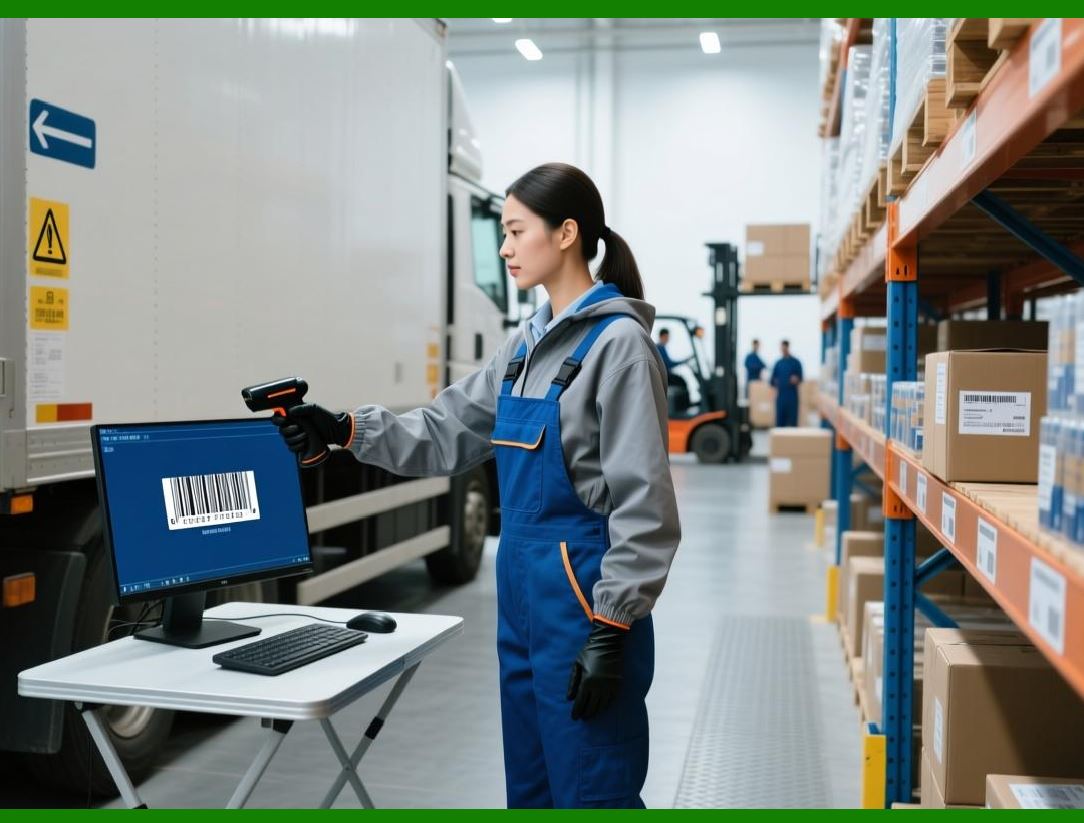
| This personalised RUL is not a static number. It changes as the item moves through the supply chain. When the item arrives at a distribution centre, the AI calculates its RUL based on its journey so far. If the item is then placed in a cold room, the degradation slows, and the RUL increases, or at least decreases more slowly. If it is moved to a warm picking area, the degradation accelerates, and the RUL drops faster. The AI continuously recalculates, ensuring that the most up-to-date estimate is always available. This is dynamic shelf-life management. | Now, let us see how this dynamic RUL is used in practice. The most obvious application is in prioritisation. When an order comes in, the AI does not just pick the oldest item in the system, as FIFO would. It picks the item with the shortest RUL, regardless of its age. This is called dynamic FIFO, or more precisely, 'remaining-life-first-out.' It ensures that the items that are most at risk of expiring are used first. This might seem like a small change, but its impact is huge. Consider a warehouse with 1,000 units of a product, all with the same nominal expiry date but with different temperature histories. Some have been stored at the back of the warehouse near a heater, some in the middle, and some near the cooler. The AI knows which are which. When orders arrive, it directs pickers to take the warmest units first, even if they are not the physically oldest. This can reduce spoilage by 20 to 30 percent, simply by rotating based on condition rather than calendar age. | The second application is in dynamic pricing. As an item's RUL decreases, its value decreases. The AI can calculate the optimal price for each item based on its current RUL and the forecasted demand. For example, a carton of milk with 5 days of RUL might sell at full price. With 3 days, it might be discounted by 10 percent. With 1 day, it might be discounted by 50 percent or marked for donation. The AI can set these prices automatically, either on electronic shelf labels in a retail store or on a promotional website for a distributor. This not only reduces waste by stimulating demand before the item expires, but it also captures value that would otherwise be lost. | The third application is in procurement. When the AI orders new stock, it considers not just the forecasted demand but also the expected degradation of the incoming and existing stock. It might order a smaller quantity if the existing stock is still fresh and the demand is moderate. It might order a larger quantity if the existing stock is aging and the demand is expected to spike. It can also specify the desired remaining shelf life of the incoming shipment. For example, it might tell the supplier, 'We need product with at least 80 percent of its original shelf life remaining at the time of delivery.' This ensures that the incoming stock does not arrive already half-degraded. | The fourth application is in allocation. The AI can decide which channel or which customer should receive which items. Items with shorter RUL can be sent to local stores or to customers who will consume them quickly. Items with longer RUL can be sent to distant stores or to customers who will store them for a while. This is called shelf-life-based allocation, and it is particularly valuable for global supply chains where transit times vary widely. For example, a batch of fresh berries might be allocated to a nearby market within the same region, while a batch with a longer RUL might be allocated to an export market with a 10-day shipping time. | The fifth application is in waste prediction and prevention. The AI can forecast, with a certain probability, which items are likely to expire before they are sold. It can generate a 'waste watchlist' that shows which batches or units are at risk. The operations team can then take proactive measures, such as increasing the discount, changing the display location, or donating to a food bank. The AI can also automatically trigger these actions if the risk exceeds a certain threshold. This transforms waste from an inevitable consequence to a manageable risk. | 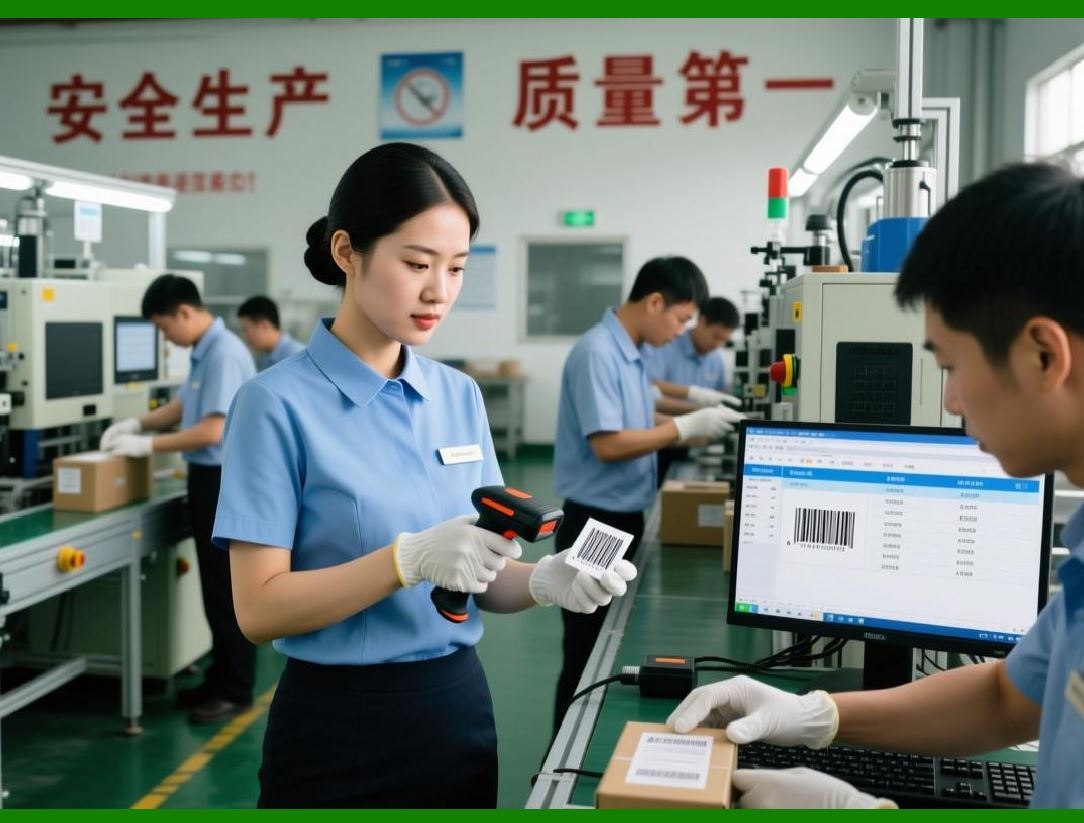
| Let us now look at some industry-specific examples to see the perishability paradox in action and how AI resolves it. | In the dairy industry, fresh milk has a shelf life of about 5 to 7 days when refrigerated. The degradation is primarily due to bacterial growth, which is highly temperature-sensitive. A dairy processor receives raw milk from farms, pasteurises it, and ships it to distribution centres. The AI tracks the temperature of each tanker truck from the farm to the plant. It also tracks the temperature of each pallet of finished products in the warehouse. When the AI calculates the RUL of a particular pallet, it uses the entire temperature history, not just the current temperature. It then allocates the pallet to a store based on the store's historical sales velocity. A high-volume store in a city centre will receive pallets with shorter RUL, because they will sell quickly. A low-volume store in a rural area will receive pallets with longer RUL. This reduces spoilage at both ends. | In the pharmaceutical industry, the stakes are even higher. Drugs can lose potency, which is a critical safety issue. The AI tracks the temperature and humidity of each shipment. It calculates the RUL not just for the product as a whole but for each individual dose, if the packaging permits. For example, a bottle of 100 tablets might have a barcode with a unique serial number. The AI knows when each bottle was manufactured, when it left the factory, when it arrived at the distributor, and when it was dispensed to a hospital. If the hospital requests a specific quantity, the AI can select the bottles with the longest RUL to ensure maximum shelf life for the patient. Conversely, if the hospital is a high-turnover facility, it might receive bottles with shorter RUL, which are still perfectly effective. This optimisation reduces the risk of expired drugs being discarded and ensures that patients receive medicines that are within their potency specifications. | In the chemical industry, many compounds polymerise or oxidise over time. This can lead to hazardous conditions, such as pressure build-up in containers or the formation of explosive peroxides. The AI's dynamic RUL is not just a value metric but a safety metric. It can alert the warehouse manager when a chemical is approaching its safe storage limit. It can also suggest the order in which chemicals should be used in production, prioritising those with the shortest safe storage period. This reduces the risk of accidents and the cost of hazardous waste disposal. | 
| In the food processing industry, ingredients like flour, oil, and spices all degrade. Flour loses its gluten strength, oil becomes rancid, and spices lose their volatile oils. The AI tracks the age and storage conditions of each ingredient. When a production planner creates a recipe, the AI can suggest which batch of each ingredient to use, based on their RUL. It might say, 'Use flour from batch 2024-05-10, because it has only 30 days of RUL left, while batch 2024-06-15 has 90 days. Save the newer batch for a later production.' This ensures that ingredients are consumed in the optimal order, reducing waste at the manufacturing stage. | In the retail sector, the perishability paradox is most visible on the shelves. Supermarkets throw away billions of dollars of food every year. AI-powered dynamic pricing can help. Electronic shelf labels can be updated in real time, reflecting the current RUL of each item. A customer might see a price that decreases as the item approaches its expiry. This encourages customers to buy items that are closer to expiry, reducing waste. Some retailers have implemented this with great success, achieving waste reductions of 30 to 40 percent. | 
| Now, let us dive deeper into the technical aspects of RUL calculation. The AI uses a combination of physics-based models and data-driven models. The physics-based models are derived from the Arrhenius equation and other kinetic principles. They provide a scientific baseline for how the product degrades under various conditions. The data-driven models are trained on historical data, including laboratory stability test results, real-world scan data, and sensor readings. They learn the deviations from the baseline that occur in the real world. For example, they might learn that a certain packaging type provides better protection against humidity than another, or that a certain shipping route is particularly bumpy, causing more physical damage. The AI combines these two types of models using a technique called Bayesian updating. It starts with the physics-based prior and updates it with the data-driven evidence, producing a posterior distribution of the RUL. This approach is robust and interpretable. | The AI also accounts for the fact that degradation is not always linear. Some products have a lag phase, where little degradation occurs, followed by an exponential phase, where degradation accelerates rapidly. Others have a reverse sigmoid curve. The AI can fit various curve shapes to the data and choose the one that best describes the product. This is called flexible degradation modelling. It ensures that the RUL is accurate across the entire lifecycle of the product. | Another important concept is the concept of 'effective temperature.' Instead of using the raw temperature reading, the AI calculates the cumulative thermal dose, which is the integral of temperature over time, weighted by the Arrhenius factor. This cumulative dose is a better predictor of degradation than the average temperature. The AI uses this dose to adjust the RUL. For example, a product that spent one hour at 30 degrees Celsius experiences the same thermal dose as a product that spent ten hours at 25 degrees Celsius. The AI can convert all temperature histories into a single equivalent time at a reference temperature, making it easy to compare and prioritise items. | 
| The AI also integrates with the barcode system. The barcode is not just an identifier; it is a pointer to a database that contains the product's degradation model, its manufacturing date, its batch-specific parameters, and its entire environmental history. When the barcode is scanned, the AI retrieves all this information and calculates the RUL in milliseconds. This is why the barcode is the digital eye; it gives the AI access to the data it needs to see the item's true condition. | Now, let us consider the practical implementation challenges. The first challenge is data collection. The AI needs accurate temperature, humidity, and shock data throughout the supply chain. This requires sensors on trucks, in warehouses, and sometimes on individual pallets. The cost of these sensors has decreased dramatically, but integrating them into existing supply chains is still a significant project. The second challenge is calibration. The degradation models must be calibrated for each product, each packaging type, and each supplier. This requires laboratory testing and field validation. The third challenge is the handling of uncertainty. The RUL is an estimate, not a certainty. The AI must communicate this uncertainty to the decision-makers. For example, it might say, 'The RUL is 10 days, with a 90 percent confidence interval of 8 to 12 days.' This allows the human to make a risk-informed decision. | The fourth challenge is the handling of 'use-by' versus 'best-before' dates. In many jurisdictions, there is a legal distinction between the two. Use-by dates are safety dates, and products cannot be sold after them. Best-before dates are quality dates, and products can be sold after them if they are still of acceptable quality. The AI must respect these legal boundaries. It can use the RUL to determine if a product is still safe and of acceptable quality, and it can make decisions accordingly. For example, a product past its best-before date might still have a RUL of several months, and the AI might discount it or donate it, but it cannot sell it after the use-by date. | Despite these challenges, the benefits of AI-driven perishability management are so compelling that many industries are adopting it rapidly. The return on investment is often measured in months, because the savings from reduced waste and increased sales are immediate and substantial. Moreover, the environmental benefits are significant. Reducing waste reduces the carbon footprint of production, packaging, and disposal. This aligns with the growing consumer and regulatory demand for sustainability. | 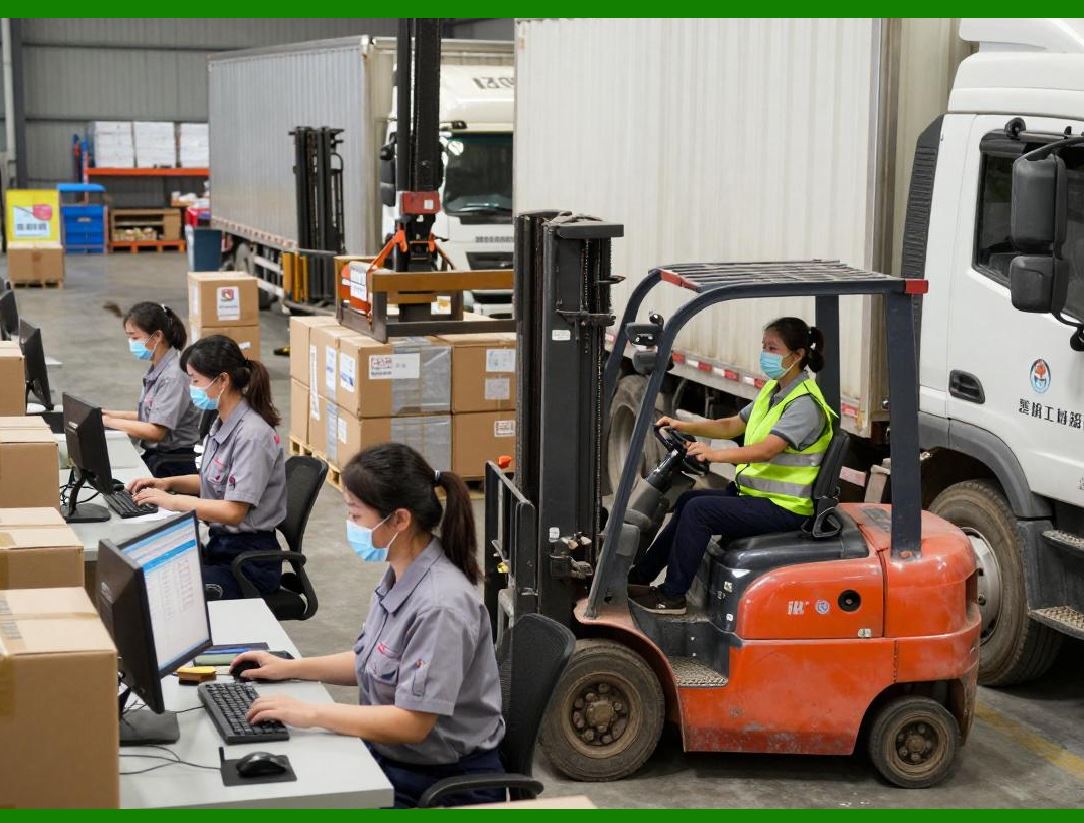
| Let us now look at a few more advanced applications. In the food service industry, AI can manage the perishability of ingredients in a commercial kitchen. The system tracks the RUL of all ingredients in the walk-in cooler. When a chef plans the menu for the next day, the AI suggests recipes that use the ingredients with the shortest RUL. This reduces food waste in restaurants, which is a major cost centre. It also ensures that the food is freshest when served. | In the healthcare industry, AI can manage the perishability of blood products, tissues, and organs. These have extremely short shelf lives, measured in hours or days. The AI can predict the demand for each blood type in a hospital network, based on upcoming surgeries and historical usage. It can then allocate the blood units with the shortest RUL to the most urgent cases, minimising wastage of this precious resource. The barcode on each blood bag contains the donation date and the type. The AI tracks the storage temperature continuously. This is a life-saving application of the same principles. | In the cosmetics industry, AI can manage the perishability of active ingredients. Many anti-ageing creams contain vitamins and antioxidants that degrade on exposure to light and air. The AI tracks the production date and the packaging integrity of each batch. It can suggest that older batches be used for sample sizes or for promotions, while newer batches be sold at full price. This reduces the number of products that are returned or discarded because they have changed colour or smell. | 
| In the manufacturing of electronics, AI can manage the perishability of solder paste and adhesives. Solder paste has a limited working life after it is exposed to air, because the flux evaporates and the solder particles oxidise. The AI tracks the opening date and the exposure time of each solder paste jar. It suggests that the oldest jar be used first and that it be used within a certain window. This reduces defects in printed circuit board assembly, which is a significant cost saver. | Now, let us consider the future of perishability management. We are moving toward the concept of the 'intelligent package.' This is a package that has a printed sensor, such as a time-temperature indicator, that changes colour over time. The AI can read this colour change with a camera and use it to estimate the RUL, without needing a separate temperature logger. This is a cheaper and more scalable solution. We are also seeing the development of 'digital twins' that are not just virtual replicas but predictive models that can simulate the future degradation of an item under different scenarios. For example, the AI can simulate what would happen if the item were stored at 5 degrees instead of 10 degrees, and how much that would extend its RUL. This allows for what-if analysis and better decision-making. | Another trend is the integration of perishability data with blockchain. The blockchain provides an immutable record of every temperature reading and every scan. This creates a tamper-proof audit trail that can be used for regulatory compliance and for building consumer trust. If a consumer can scan a QR code on a package and see the complete temperature history of that item, they can be confident about its freshness. This is already being piloted in high-end food and pharmaceutical supply chains. | Let us also address the human side. The shift from calendar-based to condition-based management requires a change in mindset. Warehouse staff, buyers, and store managers need to trust the AI's RUL estimates. This trust is built through education and transparency. The AI should provide explanations for its decisions, such as 'This batch has a shorter RUL because it was stored at a higher temperature for 3 days during transport.' When people understand the reasoning, they are more likely to follow the recommendations. Training programs should be developed to help staff interpret the AI's outputs and integrate them into their daily work. | 
| In summary, the perishability paradox is the observation that time destroys value, but traditional systems are blind to the variability of that destruction. AI solves this by creating a dynamic, item-specific measure of remaining useful life, using barcode data and environmental sensors. This RUL is used to prioritise, price, allocate, and procure inventory, reducing waste dramatically. The applications span every industry that deals with degradable products, from food to drugs to chemicals to electronics. While implementation challenges exist, they are outweighed by the economic, environmental, and social benefits. The future of perishability management is intelligent, transparent, and sustainable, and AI is the key that unlocks it. | 
| Detailed Closing Summary | We have now completed a thorough exploration of Chapter 4, the Perishability Paradox. Let us synthesise all the key points into a comprehensive closing summary. | We began by establishing the fundamental truth that all inventory loses value over time. This loss is not uniform; it depends on the product's composition, packaging, and environmental history, especially temperature, humidity, and light. Traditional inventory management treats expiry as a fixed date and uses FIFO and fixed cutoffs. This approach is wasteful because it ignores the variability in degradation rates and the gradual nature of quality loss. | We introduced the concept of remaining useful life, or RUL, as a dynamic, item-specific measure that replaces the static expiry date. The AI calculates the RUL using a combination of physics-based degradation models, derived from the Arrhenius principle, and data-driven models, trained on historical scan and sensor data. The RUL is updated with every barcode scan and sensor reading, ensuring it reflects the item's true condition. | We explored five practical applications of the RUL. First, prioritisation: the AI directs pickers to use items with the shortest RUL first, which we called dynamic FIFO. Second, dynamic pricing: the AI sets prices based on the RUL, discounting items as they age to stimulate demand. Third, procurement: the AI orders quantities that account for the expected degradation of both incoming and existing stock, and it specifies a minimum remaining shelf life for incoming shipments. Fourth, allocation: the AI sends items with shorter RUL to fast-turnover channels and items with longer RUL to slow-turnover or distant channels. Fifth, waste prediction: the AI forecasts which items are at risk of expiry and triggers proactive measures such as discounts or donations. | We then looked at industry-specific examples. In dairy, the AI tracks temperature histories to allocate fresh milk to the right stores. In pharmaceuticals, it ensures that drugs are used within their potency specifications, improving safety and reducing waste. In chemicals, it manages safe storage limits. In food processing, it optimises the use of ingredients. In retail, it enables dynamic pricing on electronic shelf labels. | 
| We delved into the technical details of RUL calculation, including Bayesian updating, flexible degradation modelling, and the use of cumulative thermal dose. We also discussed the role of the barcode as the anchor that provides the item's history and degradation model. We addressed implementation challenges, such as sensor integration, model calibration, handling uncertainty, and complying with legal use-by and best-before dates. | We looked at advanced applications in food service, healthcare (blood products), cosmetics, and electronics manufacturing. We also explored future trends, including intelligent packaging with printed sensors, digital twins for what-if simulation, and blockchain integration for immutable traceability. We emphasised the importance of change management and building trust in the AI's recommendations. | The key takeaway from Chapter 4 is that the perishability paradox is solvable. It is not an inevitable law of nature that we must accept, but a problem of information asymmetry. We have the data to know how each item is degrading, and we have the AI to act on that data. By shifting from a calendar-based to a condition-based view, we can reduce waste by 30 to 50 percent, save money, and protect the environment. This is not just a theoretical improvement; it is a practical, proven approach that is being deployed in leading companies around the world. | In the broader context of our six-chapter philosophy, Chapter 4 is the urgent call to action. Chapter 1 explained the cost of sitting still. Chapter 2 introduced the barcode as the data anchor. Chapter 3 gave us the three pillars of AI control. Now, Chapter 4 applies those pillars to the most time-sensitive problem in inventory: perishability. The principles of dynamic RUL and continuous degradation modelling are not optional for industries with short shelf lives; they are essential for survival. And even for industries with long shelf lives, the same principles apply to obsolescence and technological relevance. Time is always the enemy, but AI is the weapon that can defeat it. | 
| To summarise the practical recommendations for a manager: | 1. Start by identifying the products with the highest waste rates and the most variable degradation conditions. | 2. Install temperature, humidity, and shock sensors at critical points in your supply chain, and link them to your barcode system. | 3. Develop or purchase degradation models for your key products, using both laboratory data and field data. | 4. Implement a dynamic RUL calculation in your inventory management system. | 5. Use the RUL to prioritise picking, set dynamic prices, and guide procurement decisions. | 6. Train your staff to understand and trust the RUL, and provide them with clear visual indicators, such as colour-coded screens. | 7. Monitor the results, measure the reduction in waste, and continuously refine the models. | By following these steps, any organisation can turn the perishability paradox into a competitive advantage. Waste will decrease, margins will improve, and sustainability will be enhanced. The enemy of value is time, but with AI, time becomes a friend that we can measure, understand, and manage. |
|
 cs@easiersoft.com