The Application of Barcode Technology in Electronic Factory Material Management - A Deep Dive into Chapter 14: Rework and Repair Loop |
Executive Summary (Chapter 14 Preview) |
When a printed circuit board fails test, its journey does not end - it enters the rework and repair loop. This is one of the most critical, and historically one of the most chaotic, phases of electronics manufacturing. A board that fails must be diagnosed, repaired, retested, and returned to the production flow, all while maintaining complete traceability of the components used, the repairs performed, and the personnel involved. Without rigorous tracking, rework becomes a source of hidden defects, untraceable quality issues, and regulatory non-compliance. This chapter explores how barcode technology transforms the rework loop from a 'black hole' of lost traceability into a structured, auditable process. We will examine how scanning the board's unique barcode at the rework station retrieves its complete production history, guides the repair process, records all changes, and links the repaired board back to its original record. Real-world examples from Sony, BB Electronics, and historical case studies from the EMCO factory will illustrate the principles and consequences of rework traceability. We will also examine the emerging role of automated rework workstations and the patent-pending technologies that integrate barcode-driven repair with component placement and soldering. |

|
Chapter 14: Rework and Repair Loop |
14.1 The Inevitability of Rework |
No matter how sophisticated the SMT line, how accurate the feeder verification, or how robust the first-piece inspection, a certain percentage of boards will fail test. This is the reality of electronics manufacturing. Components may be defective, solder joints may be marginal, or the board may have been damaged during handling. These failures are not a sign of failure in the process; they are a normal part of high-volume production. The difference between a world-class factory and an average one lies not in whether failures occur, but in how they are managed. |
Rework is the process of repairing a failed board and returning it to the production flow. It is a critical capability for any electronics manufacturer. Without rework, failed boards would be scrapped, leading to unacceptable yield losses and cost overruns. But rework is also a source of risk. A poorly performed repair can introduce new defects, damage the board, or compromise its reliability. And if the rework process is not tracked, the board's history becomes fragmented, making it impossible to trace failures back to their root cause. |
This chapter explores how barcode technology addresses the challenges of rework. By scanning the board's barcode at the rework station, the system retrieves its complete production history, guides the repair process, records all changes, and links the repaired board back to its original record. We will examine real-world implementations, historical lessons, and the emerging technologies that are making rework more systematic and auditable. |

|
14.2 The Rework Workflow: From Failure to Return |
The rework process in a barcode-enabled factory follows a structured workflow. While specifics vary, the core steps are consistent across most electronics manufacturers. |
14.2.1 Detection and Segregation |
The first step is detection. A board fails at the Automated Optical Inspection (AOI) station, the In-Circuit Test (ICT) station, or the Functional Test station. The test system records the failure mode - a missing component, a misaligned part, a short circuit, or a functional failure - and links it to the board's barcode. The board is segregated from the good boards and sent to the rework area. |
14.2.2 Diagnosis |
At the rework station, the operator scans the board's barcode. The system retrieves the board's production history: which work order, which BOM version, which components were used (with their lot numbers), and the test results. This history is critical for diagnosis. If a component is suspected to be defective, the operator can trace it back to its specific lot and supplier. |
The system may also display the schematic, the placement diagram, and any special rework instructions. This guided approach reduces the reliance on operator memory and ensures that repairs are performed correctly. |
14.2.3 Repair Execution |
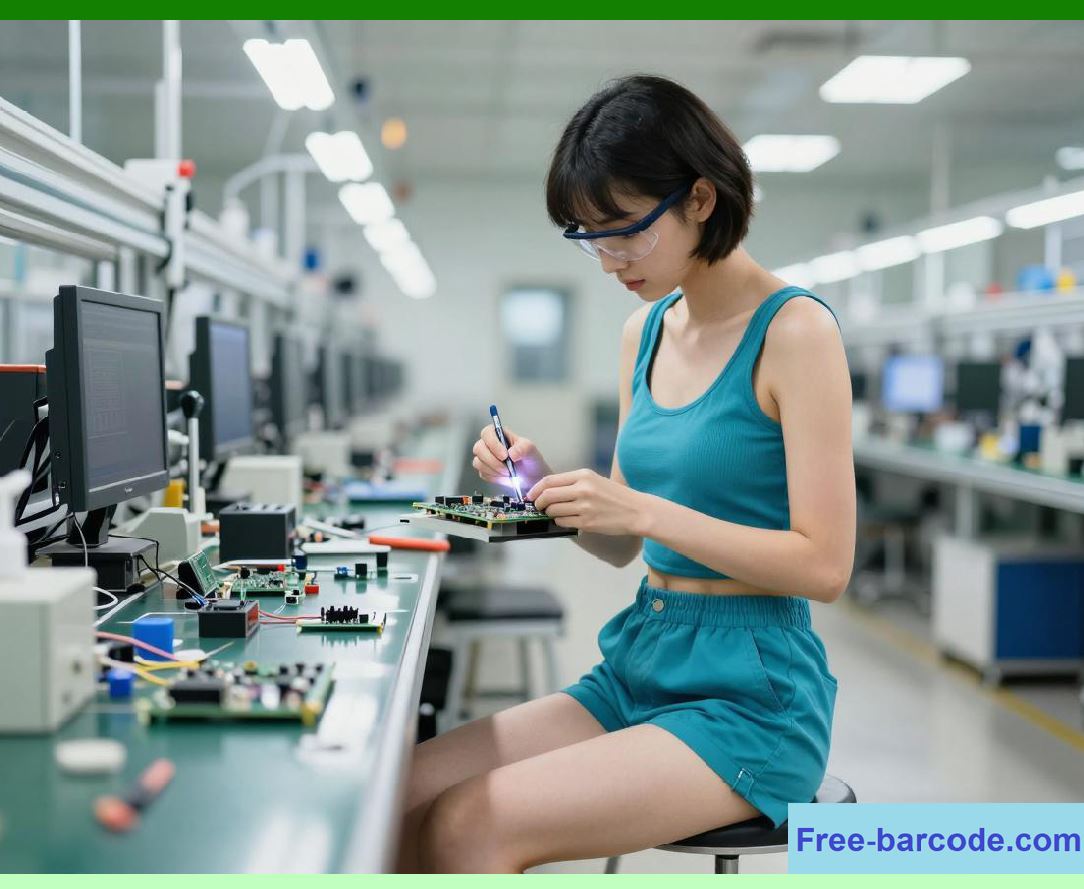
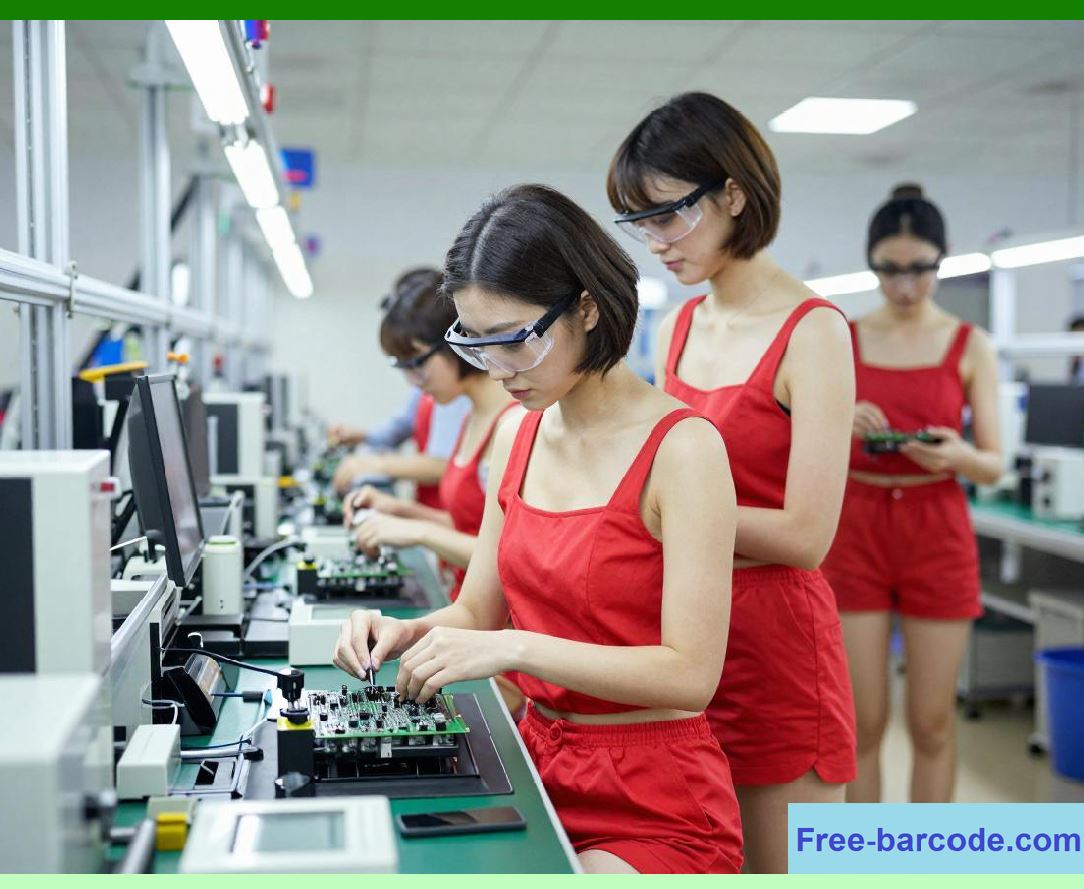
The operator performs the repair: removing a defective component, replacing it with a new one, adding a jumper wire, or repairing a damaged trace. In modern rework stations, the process may be semi-automated, with the system guiding the operator through each step. |
14.2.4 Recording the Repair |
This is the critical step for traceability. The operator records the repair in the system. This includes: |
- The component removed (if any), with its lot number and serial number (if tracked). |
- The replacement component installed, with its lot number and serial number. |
- The nature of the repair (replaced component, added jumper, re-soldered joint, etc.). |
- The operator ID and timestamp. |
- Any special notes or observations. |
This record becomes part of the board's digital history. If the board fails again later, the rework record provides critical context for diagnosis. |
14.2.5 Retest |
After the repair, the board is sent back to test. The system knows that this board has been reworked, so it may apply modified test parameters or perform additional tests. If the board passes, it is released to the next stage of production. If it fails again, it may go through another rework cycle or be scrapped. |
14.2.6 The Rework Cycle |
Boards that fail test may go through multiple rework cycles. Each cycle is recorded in the system. If a board undergoes too many rework cycles, the system may flag it for scrap, as repeated heating and handling can compromise its reliability. |

|
14.3 The Historical Lesson: When Rework Traceability Fails |
To understand the importance of barcode-driven rework traceability, it is useful to examine a historical case study where it failed. This case study, documented by researchers studying the EMCO electronics factory, provides a sobering lesson on the consequences of losing traceability in rework . |
14.3.1 The Scenario |
EMCO, a contract electronics manufacturer, received a batch of thirty-five printed circuit boards returned from a customer for modifications. These boards, each worth about $600, represented five or six different versions of the same board, each manufactured at different points in the design process. The boards had to be reworked to bring them up to current specifications . |
14.3.2 The Process |
The process engineer examined each board individually, sorted them into categories, and created handwritten instructions for the line workers. The rework involved adding jumper wires, replacing integrated circuits, and other modifications. One critical step was the application of a new date code label . |
14.3.3 The Mistake |
The workers performing the rework made a threefold mistake on three particularly complex 'mother boards.' They removed and discarded the original label. They generated a whole new date code label with a new serial number. And they changed the version number on this new label from A to B . |
14.3.4 The Consequence |
When the process engineer discovered the error, he was alarmed. 'Now we've lost traceability on these boards,' he explained. 'Basically I don't know how I can identify them now.' He described it as 'kind of serious because it's an irretrievable thing that you can't really fix' . |
The problem was that the boards had been removed from particular systems, and the customer expected to replace each board accordingly. Without the original serial numbers, the boards could no longer be linked to the specific customer systems they came from. The company briefly considered 'faking it' - creating new serial numbers to match the records - but quickly rejected the idea: 'We could fake it, but that would come back to haunt us' . |
14.3.5 The Lesson |
This case illustrates the critical importance of barcode-based rework traceability. In a manual, paper-based system, a simple labeling error can destroy traceability, leading to lost boards, customer dissatisfaction, and potentially regulatory violations. In a barcode-driven system, the board's barcode is the unique identifier that is never removed. Every rework operation is recorded against that barcode, ensuring that the board's identity and history are preserved throughout the repair process. |
|
14.4 Real-World Example: Sony and the Cost of Rework Misreads |
A more recent and quantitatively compelling example comes from Sony's manufacturing facility in Penang, Malaysia, which produces printed circuit boards for their MPx consumer electronics players. While this is not an American company, Sony's global operations and the principles illustrated are directly applicable to electronics manufacturing in both the United States and China . |
14.4.1 The Challenge |
Each PCB passed along a conveyor on 9 production lines and was marked with a Data Matrix code containing product information in 10 characters, measuring only 1 mm by 1 mm. The production volume was very high - 40,000 units per day . |
Sony's existing code reading system was failing to read the Data Matrix codes reliably. The average rejection rate was 10,000 units per week - a 5% failure rate. These units required manual intervention and rework, costing Sony money and delaying time to market. The board rejection due to bad reads necessitated stopping the line for product repositioning or focus adjustment . |
14.4.2 The Solution |
Sony tested different readers available on the market and selected the Cognex In-Sight vision system with ID Tools. The system outperformed competitors in several key areas: superior read rate, support for perspective distortion, adaptive reading using multiple exposure values, and no need for reader retraining on product changes . |
14.4.3 The Results |
The results were dramatic: |
- Code reading time dropped from 10 seconds to 2 seconds per read - an 80% improvement . |
- Code reading success rate increased from 95% to 100% . |
- The elimination of line stops for repositioning and focus adjustment saved about $5,000 per week . |
The return on investment was achieved in just 10 months. TK Tan, Staff Engineer at Sony Penang, stated: 'The fact that we have improved our code reading times and increased our success rate to 100% saves us valuable time and boosts our production efficiency - we hope to implement these vision solutions elsewhere for other OCR applications' . |
14.4.4 The Rework Connection |
While Sony's case focuses on the initial read reliability, the connection to rework is direct. When a code is not read correctly, the board cannot be traced, and it must be manually processed. This manual processing is a form of rework - it requires human intervention to determine the board's identity and route it correctly. By achieving 100% read reliability, Sony eliminated this source of rework, reducing costs and improving throughput. |
|
14.5 Real-World Example: BB Electronics' Component and Process Traceability |
BB Electronics, a contract manufacturer with facilities in Denmark and Suzhou, China, provides a comprehensive example of how barcode-based traceability supports rework and repair operations . |
14.5.1 The Traceability Concept |
BB Electronics implemented a standard traceability concept that encompasses component traceability and PCB rework data. The system marks PCBs with a 2D Data Matrix barcode in the solder mask to provide a unique PCB ID . |
14.5.2 Process Data Integration |
Process data from BB Electronics' inline solder paste inspection equipment and automated optical inspection equipment is linked to each individual PCBA and stored. This means that when a board arrives at the rework station, the operator can see not just its BOM and work order history, but also the specific process parameters that were used during its original assembly . |
14.5.3 Rework Data Capture |
The traceability concept explicitly includes PCB rework data. When a board is reworked, the repair is recorded in the system, linking it to the board's unique ID. This provides a complete history for quality investigations and regulatory compliance . |
14.5.4 Future Plans |
BB Electronics planned to implement inline laser marking on all SMT production lines, further automating the creation of the unique Data Matrix codes. They also planned to integrate more processes, including data from soldering equipment and automatic monitoring of PCB IDs to ensure that correct soldering profiles are always used . |

|
14.6 Real-World Example: The TRW Multi-Function Rework Workstation |
A patent from TRW Inc., a U.S. defense and aerospace contractor, describes a multi-function workstation for assembly and repair of printed wiring board assemblies . This patent, filed in 1992, provides an early example of the concept of barcode-driven rework automation. |
14.6.1 The Concept |
The workstation uses product code markings - in the form of a barcode - on the PWBA to unambiguously identify the product. This identification permits product data to be retrieved from a factory or depot database. The retrieved product data controls the various operations to be performed, such as positioning and soldering of surface-mounted components, inspection for defects, desoldering of defective components, and reinstallation of replacement components . |
14.6.2 Key Features |
The workstation integrates several operations into a single site: inspection, removal of defective components, positioning of replacement components, and soldering. All operations are driven by the retrieved product data, reducing the dependence on operator skill . |
14.6.3 Relevance |
This patent demonstrates that the concept of barcode-driven rework is not new, but its principles remain relevant. By using the board's barcode to retrieve its data and guide the repair process, the workstation reduces the potential for errors and ensures that the correct repair is performed. This is the same principle that underlies modern automated rework systems. |

|
14.7 Emerging Technology: Automated Rework and the 'Closed Loop' |
The future of rework is moving toward increasing automation and integration. Several trends are emerging. |
14.7.1 Automated Rework Stations |
Automated rework stations, such as those described in the TRW patent, are becoming more sophisticated. These stations can automatically position replacement components, apply solder paste, and perform soldering and desoldering, all guided by the board's barcode and the retrieved product data. This reduces the reliance on operator skill and improves consistency. |
14.7.2 Integration with MES and Traceability |
The rework station is increasingly integrated with the MES and traceability system. When a board enters the rework station, its barcode is scanned, and the system downloads the specific repair instructions. The system records each repair operation, creating a complete record that is linked to the board's history. |
14.7.3 The 'Closed-Loop' Approach |
Some manufacturers are adopting a 'closed-loop' approach, where the rework process is linked to the test system. If a board fails test, the test system automatically identifies the likely cause and generates a rework instruction. The rework station reads the instruction, performs the repair, and the board is retested. This closed loop reduces the time between failure detection and repair, improving overall yield and reducing the risk of repeated failures. |

|
14.8 Comparing American and Chinese Approaches |
Both American and Chinese electronics manufacturers have embraced barcode-driven rework traceability, though with some differences. |
14.8.1 American Emphasis: Automation and Compliance |
American manufacturers, particularly those serving defense, aerospace, and medical markets, often emphasize the compliance and audit-readiness aspects of rework traceability. The TRW patent is an early example of the drive toward automation. The focus is on reducing operator dependence, improving consistency, and providing irrefutable records for regulatory audits. |
14.8.2 Chinese Emphasis: Integration with MES |
Chinese manufacturers, as exemplified by BB Electronics' Suzhou facility, emphasize the integration of rework traceability with the broader MES and process control infrastructure. The goal is to create a seamless flow of data from incoming inspection to final test, with rework as an integral part of the process. |

|
14.9 The Benefits of Barcode-Driven Rework Traceability |
The benefits of implementing barcode-driven rework traceability are substantial: |
14.9.1 Preserved Traceability |
The board's identity and history are preserved throughout the rework process, eliminating the 'lost traceability' problem illustrated in the EMCO case study. |
14.9.2 Guided Repair |
The system retrieves the board's history and displays the correct repair instructions, reducing the risk of incorrect repairs. |
14.9.3 Complete Records |
Every repair is recorded, providing a complete history for quality investigations and regulatory compliance. |
14.9.4 Reduced Rework Time |
With guided repair and automated record-keeping, the rework cycle is faster and more efficient. |
14.9.5 Improved Quality |
By ensuring that repairs are performed correctly and recorded, barcode-driven rework reduces the risk of repeated failures and latent defects. |

|
Detailed Summary of Chapter 14 |
This chapter has provided a comprehensive examination of the rework and repair loop in electronics manufacturing, focusing on the critical role of barcode technology in maintaining traceability and process control. |
We began by establishing that rework is an inevitable part of electronics manufacturing. A certain percentage of boards will fail test and require repair. The difference between a world-class factory and an average one lies in how rework is managed - whether it is a structured, auditable process or a chaotic, untraceable one. |
We described the structured rework workflow in a barcode-enabled factory: detection and segregation, diagnosis (including retrieval of the board's production history via barcode scan), repair execution, recording of the repair, and retest. This systematic approach ensures that every repair is documented and linked to the board's history. |
We examined a historical case study from the EMCO electronics factory, where a simple labeling error during rework destroyed traceability on three high-value boards. The boards could no longer be linked to their original customer systems, and the company faced a choice between admitting the error or 'faking it' - a path they wisely rejected. This case illustrates the grave consequences of losing traceability in rework and the critical importance of barcode-driven systems. |
We then profiled real-world implementations. Sony's facility in Penang, Malaysia, achieved a 100% read rate on 1mm Data Matrix codes using Cognex In-Sight vision systems, reducing code reading time from 10 seconds to 2 seconds and saving $5,000 per week. BB Electronics implemented component and process traceability in its Danish and Chinese facilities, linking process data and rework records to each PCBA's unique 2D Data Matrix code. The TRW patent from 1992 described a multi-function rework workstation that uses barcode identification to retrieve product data and drive automated repair operations. |
We explored emerging trends, including automated rework stations, deeper integration with MES and traceability systems, and the 'closed-loop' approach where test failures automatically generate repair instructions. |
We compared American and Chinese approaches. American manufacturers often emphasize automation and compliance, while Chinese manufacturers emphasize integration with MES and process control infrastructure. |

|
Finally, we summarized the key benefits of barcode-driven rework traceability: preserved traceability, guided repair, complete records, reduced rework time, and improved quality. |
The bottom line is that barcode-driven rework is essential for maintaining product quality, traceability, and regulatory compliance in electronics manufacturing. When a board is repaired, its history must be preserved, and the repair must be documented. Barcode technology - by linking the physical board to its digital record - makes this possible, transforming rework from a source of risk into a controlled, auditable process. |
 cs@easiersoft.com