The Application of Barcode Technology in Electronic Factory Material Management - A Deep Dive into Chapter 16: Consigned Material Handling |
Executive Summary (Chapter 16 Preview) |
In the electronics manufacturing ecosystem, not all materials come from the factory's own procurement department. Many customers choose to supply critical components themselves - a practice known as consigned material. These components may be proprietary, sourced from preferred suppliers, or represent leftover stock from previous production runs. While consignment offers customers cost control and quality assurance, it introduces significant complexity for the contract manufacturer. How do you segregate customer-owned inventory from factory-owned stockHow do you track components that arrive with their own barcode formats, sometimes incompatible with the factory's systemHow do you maintain full traceability when the customer's lot numbers are different from your internal trackingThis chapter explores how barcode technology addresses these challenges. We will examine the concept of cross-referencing - mapping external supplier barcodes to internal part numbers while preserving the original lot information. We will explore how American and Chinese contract manufacturers implement systems to manage consigned materials, from receipt and storage to issuance and return. Real-world examples from Epoch International, EST, Newonics, and SmartMSCA implementations in PCTEL's U.S. and China facilities will illustrate the practical solutions deployed to handle this critical supply chain interface. |

|
Chapter 16: Consigned Material Handling |
16.1 The Customer's Parts, The Manufacturer's Responsibility |
Imagine a contract manufacturer in California preparing to build a complex medical device for a major healthcare company. The customer, seeking to protect its proprietary intellectual property, has decided to supply the custom ASIC chips and the specialized sensors itself. These components arrive at the factory in sealed reels, each bearing the customer's own part numbers, lot codes, and barcode labels. The contract manufacturer must receive these components, store them securely, track them through the SMT line, and account for every single unit - all while maintaining strict segregation from the factory's own inventory. |
This is the reality of consigned material handling. Consigned materials are components owned by the customer but physically stored and managed by the contract manufacturer . These materials may be proprietary parts that the customer does not want to share with the factory's procurement system, or they may be components sourced from a specific supplier that the customer has pre-qualified. In either case, the contract manufacturer is responsible for receiving, storing, tracking, and issuing these parts, all without commingling them with the factory's own inventory . |
This chapter explores how barcode technology is applied to manage the unique challenges of consigned material handling. We will examine the concept of cross-referencing, the process of mapping the customer's part numbers and barcodes to the factory's internal identification system. We will explore the segregation strategies that keep consigned and factory-owned inventory separate. And we will look at real-world implementations that demonstrate how American and Chinese contract manufacturers successfully manage the complexity of consigned materials. |

|
16.2 The Challenges of Consigned Material Management |
Consigned material handling introduces a set of challenges that are not present with factory-owned inventory. These challenges are fundamentally about data management and physical segregation . |
16.2.1 The Cross-Referencing Problem |
The most immediate challenge is the mismatch between the customer's part numbering system and the factory's internal system . A customer may use its own part number - say, 'CUST-1234-REV-A' - for a component that the factory knows as its internal part number 'CAP-0107-001.' When the component arrives, its barcode encodes the customer's part number, not the factory's. The receiving system must be able to map one to the other. This is the cross-referencing problem. |
Additionally, the supplier's barcode format may not be compatible with the factory's scanning infrastructure. The customer may use Code 39 while the factory primarily uses Code 128. The customer may encode the lot number in a different data field than the factory expects. The system must be configured to read and interpret these external barcodes correctly, translating them into the factory's internal data format. |
16.2.2 Segregation of Inventory |
Consigned materials must be physically and logically separated from factory-owned inventory. If consigned and non-consigned components are mixed, it becomes impossible to know which units belong to which customer. This is not just a logistical issue; it is a financial one. The contract manufacturer only 'owns' the consigned materials when they are consumed in production; until then, they remain the customer's property . Physical segregation is typically achieved through designated storage areas, dedicated bins, or clear labeling. Logical segregation is achieved through the inventory system, which tracks consigned and non-consigned quantities separately . |
16.2.3 Traceability and Lot Integrity |
Even though the components are consigned, the factory must maintain full traceability. Each consigned component must be traceable from receiving through production to the final assembly . If a quality issue arises, the factory must be able to identify which consigned lots were used in which products. This requires linking the customer's lot numbers to the factory's internal tracking records. |
16.2.4 Consumed vs. On-Hand Tracking |
The contract manufacturer is typically only paid for consigned components when they are consumed in production . This means that the inventory system must track not only the total quantity on hand, but also the quantity consumed, the quantity on hand, and the quantity reserved for future work orders. Accurate consumption tracking is essential for billing and inventory reconciliation. |

|
16.3 The Barcode Solution: Cross-Referencing and Unified Tracking |
Barcode technology provides the solution to these challenges by creating a digital bridge between the customer's identification system and the factory's internal infrastructure. |
16.3.1 Cross-Reference Tables and External Part Number Mapping |
The core of the solution is a cross-reference table in the factory's ERP or MES. This table maps the customer's part number (and any associated barcode data) to the factory's internal part number . When a consigned component is received, the operator scans the barcode. The system looks up the external part number in the cross-reference table, finds the matching internal part number, and processes the receipt accordingly. |
The cross-reference table can also map barcode formats. The system can be configured to expect a specific data format for each customer. For example, the system might know that Customer A encodes the lot number in the second data field of their barcode, while Customer B encodes it in the third field. The system parses the barcode accordingly, extracting the data and storing it in the correct database fields. |
16.3.2 Segregation Through Inventory Status and Location |
Inventory systems typically use an 'inventory status' or 'location' field to segregate consigned and non-consigned materials . Consigned materials are assigned a specific status, such as 'Vendor Consigned,' which distinguishes them from factory-owned materials with a status of 'On Hand.' This status is used to filter inventory views, prevent commingling, and ensure that only the correct materials are issued to work orders. |
Physical segregation can be reinforced by scanning location barcodes. Consigned materials are stored in designated bins with their own location barcodes. When a component is put away, the operator scans both the component barcode and the location barcode. The system verifies that the component is being placed in the correct location - a consigned bin for consigned materials, a factory-owned bin for factory-owned materials. |
16.3.3 Preserving Original Lot Information |
Even when cross-referencing is used, it is essential to preserve the original supplier lot number and date code . These fields are critical for traceability. The factory's system stores both the internal tracking number and the original external lot number, linking them in the database. If a quality issue is later traced to a specific lot, the factory can identify all products that used that external lot, even if they were cross-referenced to different internal part numbers. |
16.3.4 Consumption Tracking and Billing |
The barcode system also enables accurate consumption tracking. When a consigned component is issued to the production line, the operator scans its barcode. The system records the consumption, updating both the on-hand quantity and the consumed quantity. This data can be used to generate consumption reports for billing purposes, ensuring that the customer is only charged for components that were actually used . |

|
16.4 Real-World Example: Epoch International's Cross-Border Consigned Inventory Management |
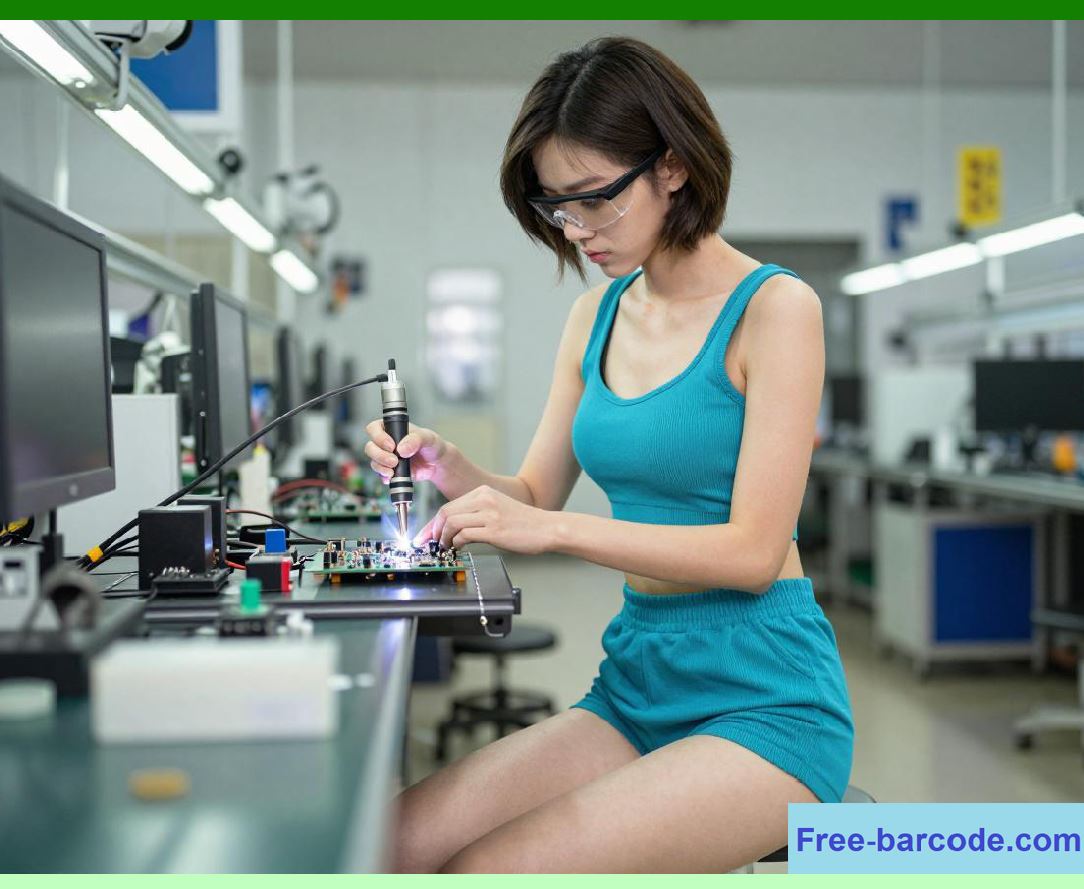
Epoch International, an electronics manufacturing services provider with facilities in Fremont, California, and Dalian, China, provides a compelling example of how barcode technology is used to manage consigned materials across multiple locations . |
16.4.1 The Unified Oracle System |
Epoch implemented Oracle E-Business Suite as its unified ERP and MRP system. Every material, regardless of whether it is factory-owned or consigned from a customer, is assigned a unique ID code that is recognized across both facilities . This is the foundation of cross-referencing. The unique ID code maps to the customer's external part number, allowing the system to track consigned materials consistently. |
16.4.2 Barcoding and Receiving |
Many of Epoch's suppliers apply barcodes to their materials, and some even apply Epoch's own barcode labels on behalf of the factory . When a consigned shipment arrives, the operator scans the barcode. The system automatically processes the receipt through the IQC (Incoming Quality Control) system, and the material is then transferred to a storage cabinet via the barcode system . |
16.4.3 Integrated Storage Cabinets |
Epoch uses storage cabinets - automated inventory management systems - that are connected to the Oracle ERP . These cabinets control all materials going in and out. The cabinets are aware of which materials are consigned and which are factory-owned. They enforce segregation and track all movements automatically. The system can see the status of every consigned component in real time. |
16.4.4 Cross-Location Visibility |
One of the key benefits of the unified system is cross-location visibility. The Fremont plant in the United States and the Dalian plant in China can see each other's inventory . This is particularly useful for consigned materials. If a customer has components in both locations, the system can track the total available quantity across both sites, enabling better planning and reducing the risk of shortages. |
16.4.5 The Lean Benefits |
Foad Ghalili of Epoch International explained the impact of the system: 'Without an electronic system, we would not be able to survive with the 250 different components per board... The system also makes our inventory management more efficient. We have about $2.5 million in inventory. If we had to manage it manually, we would have to maintain about $10 million in inventory to be able to accurately meet production needs' . |
|
16.5 Real-World Example: EST's Consigned and Turnkey Models |
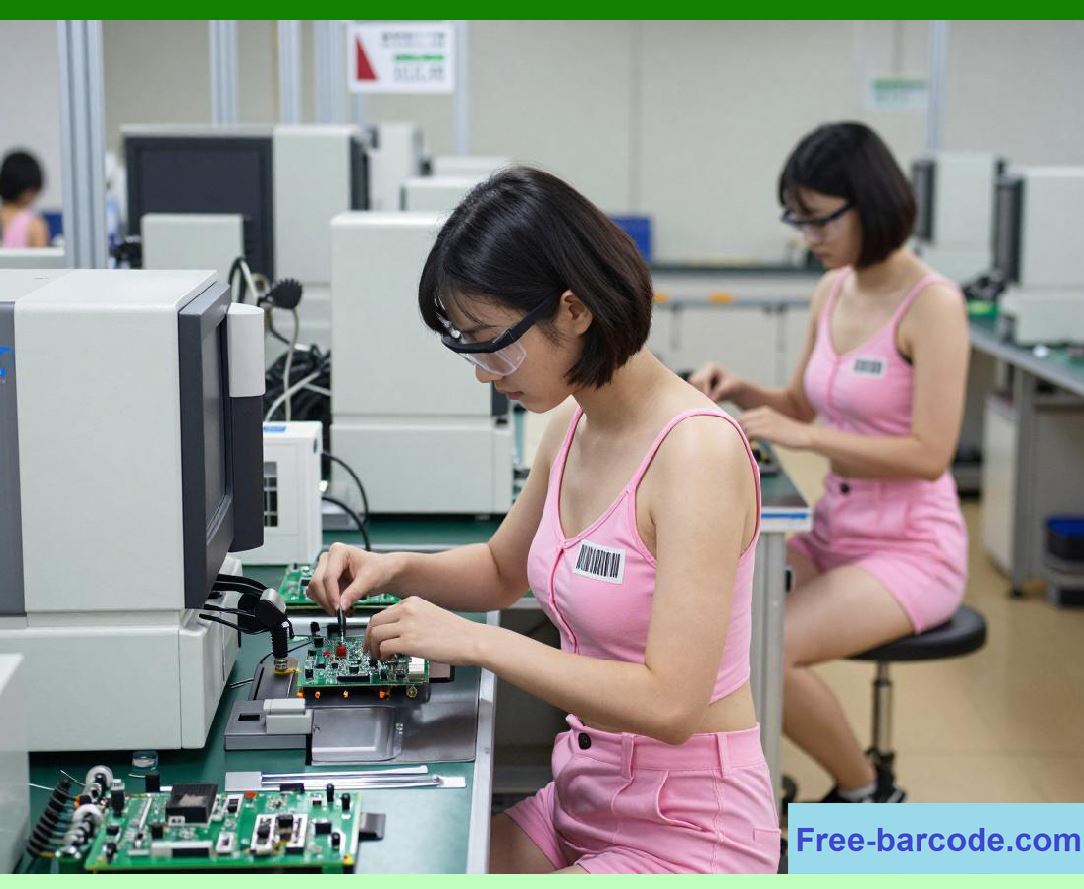
EST (Electro Surface Technologies), an American electronics manufacturing services provider, offers both consigned and turnkey materials management options. Their approach to consigned material handling is integrated with their broader supply chain and traceability systems . |
16.5.1 Dual-Cycle Model |
EST's dual-cycle model allows clients to choose between consigned materials (the customer supplies the components) and turnkey sourcing (EST manages procurement). This flexibility requires a system that can handle both inventory models seamlessly . |
16.5.2 Consigned Materials Management |
For consigned materials, EST provides 'oversight and accountability for client-supplied components' . This includes receiving, inspection, storage, and tracking. The system ensures that customer-owned components are not commingled with EST-owned inventory. |
16.5.3 ERP, Barcoding, and Traceability |
EST's ERP system supports barcoding, serialization, and comprehensive traceability, meeting the stringent requirements of FDA and ITAR standards . This means that consigned components are tracked with the same level of rigor as factory-owned components. The system provides 'full tracking from material sourcing to finished product' and 'detailed records supporting regulatory adherence and change management' . |
|
16.6 Real-World Example: Newonics' Consigned Inventory Management |
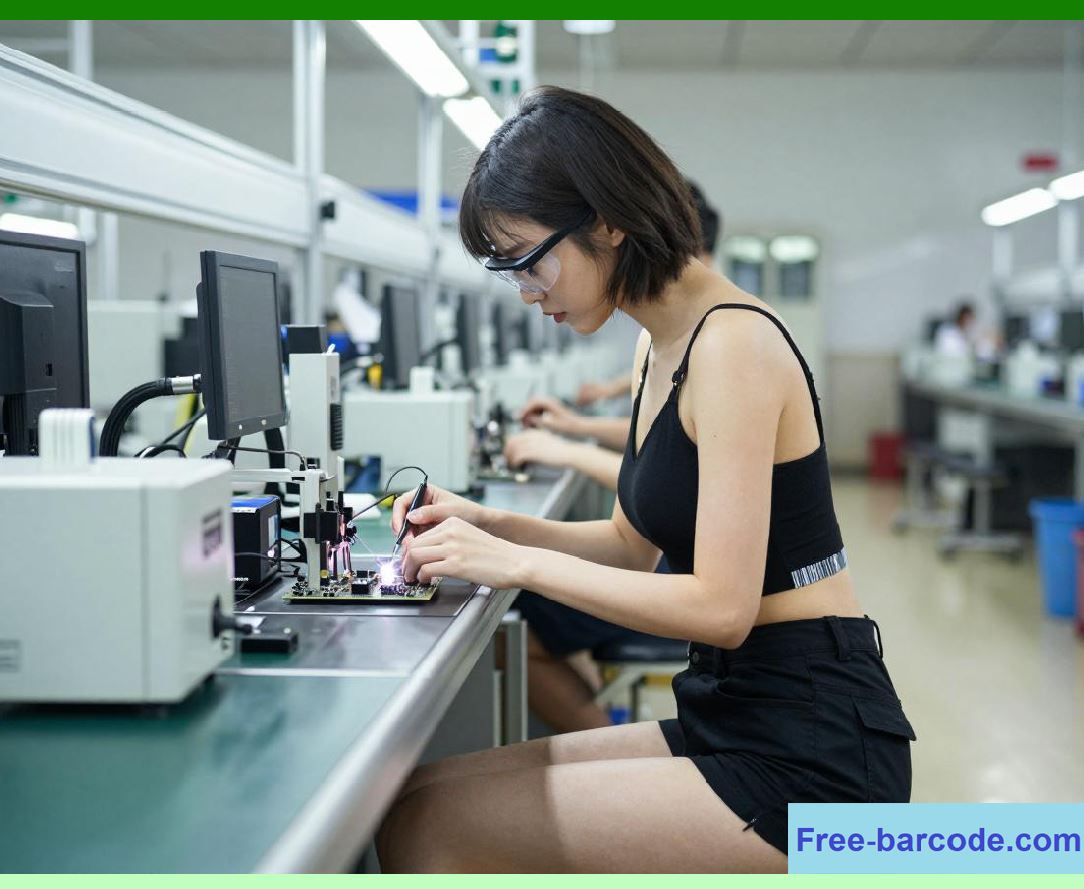
Newonics, an electronics manufacturing services provider, offers a detailed description of their consigned inventory management process, providing insight into the practical requirements . |
16.6.1 Barcoding System for Customer Inventory |
Newonics uses a barcoding system to catalog all customer-supplied inventory . This enables them to pull spreadsheets and keep customers updated on their inventory status upon request. The barcoding system is the key that links the physical consigned materials to the customer's records. |
16.6.2 Customer Requirements for Consigned Materials |
Newonics provides specific requirements for customers supplying materials : |
SMT Components: These must be provided on tape and reel or a strip of cut tape. A 6% attrition rate is allowed. |
Integrated Circuits: Provided in original packaging, or tubes and trays must have pin 1 consistently oriented. |
Moisture-Sensitive Parts: Must be in sealed bags to prevent quality issues. |
Sockets and Connectors: Provided in original packaging to prevent bent or damaged leads. |
These requirements are designed to ensure that consigned components are received in a condition that allows barcode scanning and error-free handling. |
16.6.3 Audit and Returns |
Newonics allows customers to choose whether to have their consigned kit audited for a count or returned directly. This flexibility requires the barcode system to support both audit and return workflows . |
|
16.7 Real-World Example: PCTEL's SmartMSCA Implementation in the U.S. and China |
PCTEL, a U.S.-based communications equipment manufacturer with facilities in Chicago, Illinois, and Tianjin, China, implemented the SmartMSCA barcode-based inventory management system across both its American and Chinese operations . This case provides a direct American-China comparison in consigned material handling. |
16.7.1 The U.S. Implementation (Chicago) |
PCTEL's Chicago facility implemented SmartMSCA for warehouse material picking, inventory movement, work order issuance, kit picking, process pull management, automatic batch control, and QR code printing . The system supports consigned materials management, ensuring that customer-supplied components are tracked through the same workflows as factory-owned materials. |
16.7.2 The China Implementation (Tianjin) |
PCTEL's Tianjin facility, which produces electronic communications products, implemented a similar SmartMSCA project covering the same core functions: warehouse picking, inventory movement, work order issuance, kit picking, process pull management, automatic batch control, and QR code printing . The Chinese system is integrated with the U.S. headquarters, with data transmitted in real time to the Chicago server. |
16.7.3 Cross-Border Data Visibility |
A key feature of the PCTEL implementation is that the SmartMSCA system runs on scanning devices, and data is transmitted in real time to the U.S. headquarters server . This provides cross-border visibility into consigned material inventory and usage. The American headquarters can see what consigned materials are available in the Tianjin facility and vice versa. |
16.7.4 Multi-Language Support |
The Tianjin implementation was developed with multi-language support to meet the needs of the Chinese operators, while the American implementation was optimized for U.S. user habits . This demonstrates that the same barcode-based system can be adapted to different language and cultural environments. |

|
16.8 Comparing American and Chinese Approaches to Consigned Material Handling |
Both American and Chinese contract manufacturers have developed sophisticated barcode-based systems for consigned material handling, though some differences are apparent. |
16.8.1 American Emphasis: Flexibility and Compliance |
American EMS providers, as illustrated by EST and Newonics, often emphasize flexibility in offering both consigned and turnkey models, with a strong focus on compliance with FDA and ITAR standards . The systems are designed to provide 'audit-ready' records that satisfy rigorous regulatory inspections. |
16.8.2 Chinese Emphasis: Integration and Efficiency |
Chinese implementations, as illustrated by Epoch International's Dalian facility and PCTEL's Tianjin facility, emphasize integration with the broader ERP/MES infrastructure and cross-border visibility . The focus is on achieving high efficiency in high-volume production while maintaining accurate tracking of consigned materials. |

|
16.9 The Role of the Lowest Common Denominator Principle |
A key principle in designing consigned material tracking systems is focusing on the 'lowest common denominator' - the individual reel, tray, or tube of components . If the system can track each individual unit of material, it can handle any type of consigned inventory. |
16.9.1 Data on Each Reel |
As Inovaxe Corp. explains, 'each reel has an identifier on it indicating its part number, quantity, lot number, RoHS-compliance status, and moisture-sensitivity level. If this lowest common denominator forms the basis of a data-collection system, one system can be created to handle all tracking requirements' . This includes consigned materials, which are simply another type of inventory with a specific status. |
16.9.2 Single-System Solution |
The 'lowest common denominator' principle allows the development of a single system that handles all inventory types - factory-owned, consigned, RoHS-compliant, MSD-sensitive, and customer-supplied . The system captures data at the reel level, enabling tracking, reporting, and analysis across all material categories. |

|
16.10 The Benefits of Barcode-Driven Consigned Material Handling |
The benefits of implementing barcode-driven consigned material handling are substantial : |
Accurate Cross-Referencing: The system automatically maps customer part numbers to internal part numbers, eliminating manual lookups and data entry errors. |
Segregation and Accountability: Consigned and factory-owned materials are physically and logically segregated, ensuring accurate inventory tracking and financial accounting. |
Complete Traceability: Consigned components are tracked from receiving to final assembly, providing the audit trail required for quality investigations and regulatory compliance . |
Efficient Consumption Tracking: The system automatically tracks consumption, enabling accurate billing and inventory reconciliation . |
Cross-Border Visibility: Unified systems provide visibility into consigned inventory across multiple locations, improving planning and reducing shortages . |
Reduced Inventory Costs: Accurate tracking reduces the need for safety stock, lowering inventory carrying costs . |

|
16.11 The Future of Consigned Material Handling |
The future of consigned material handling is moving toward greater automation and integration. |
16.11.1 AI-Powered Cross-Referencing |
AI can automate the cross-referencing process. When a new consigned component arrives, the system can automatically search for a matching internal part number based on the component's description, specifications, or even an image of the label. This reduces the manual effort required to set up cross-references. |
16.11.2 Automated Segregation |
Automated storage and retrieval systems can enforce segregation automatically. The system knows which components are consigned and which are factory-owned, and it automatically stores them in the correct zones of an automated warehouse. This eliminates the risk of human error in segregation. |
16.11.3 Blockchain-Based Provenance |
Blockchain technology can provide an immutable record of consigned material ownership and usage. Each transfer of ownership - from customer to factory, from factory to consumption - is recorded on the blockchain, creating an auditable trail that cannot be altered. |
16.11.4 Integration with Customer Systems |
In the future, consigned material handling systems may integrate directly with the customer's own inventory and billing systems. When a consigned component is consumed, the factory's system automatically notifies the customer's system, triggering a billing event and updating the customer's inventory records. This creates a fully automated, transparent supply chain. |

|
Detailed Summary of Chapter 16 |
This chapter has provided a comprehensive examination of consigned material handling in electronics manufacturing, focusing on how barcode technology addresses the unique challenges of managing customer-owned components. |
We began by establishing that consigned materials are customer-supplied components that the contract manufacturer must receive, store, track, and issue, while maintaining strict segregation from factory-owned inventory. The challenges are: cross-referencing between customer and internal part numbers, segregation of consigned and non-consigned inventory, maintaining traceability of consigned lots, and accurate consumption tracking for billing. |
We described the barcode solution: a cross-reference table that maps customer part numbers and barcode data to internal part numbers, inventory status and location barcodes for segregation, preservation of original lot information in the database, and consumption scanning for billing and inventory reconciliation. This solution creates a digital bridge between the customer's identification system and the factory's internal infrastructure. |
We profiled real-world implementations. Epoch International (with facilities in California and China) uses a unified Oracle ERP system with unique ID codes for every material, barcoding on receiving, integrated storage cabinets, and cross-border inventory visibility. The system allows the American and Chinese plants to see each other's consigned inventory, enabling efficient planning. EST (U.S.) offers both consigned and turnkey models with ERP, barcoding, and serialization meeting FDA and ITAR requirements. Newonics (U.S.) uses a barcoding system to catalog customer inventory, with specific requirements for consigned components. PCTEL (U.S. and China) implemented SmartMSCA barcode-based inventory management in both Chicago and Tianjin, with real-time data transmission to the U.S. headquarters and multi-language support. |
We explored the 'lowest common denominator' principle - focusing on the individual reel, tray, or tube as the unit of tracking. This principle enables a single system to handle all inventory types, including consigned materials. |
We compared American and Chinese approaches. American EMS providers emphasize flexibility and compliance with FDA and ITAR standards. Chinese implementations emphasize integration with broader ERP/MES and cross-border visibility. |

|
Finally, we looked to the future of AI-powered cross-referencing, automated segregation, blockchain-based provenance, and integration with customer systems. |
The bottom line is that barcode-driven consigned material handling is essential for modern contract manufacturing. It enables accurate cross-referencing, segregation, traceability, consumption tracking, and cross-border visibility. Without these capabilities, the factory would be unable to manage the complexity of customer-supplied components, leading to inventory errors, billing disputes, quality issues, and regulatory non-compliance. The real-world examples in this chapter demonstrate that barcode technology, combined with robust ERP/MES integration, provides the solution to these challenges, enabling contract manufacturers to serve their customers with confidence and accountability. |
 cs@easiersoft.com