The Application of Barcode Technology in Electronic Factory Material Management - A Deep Dive into Chapter 17: Reel Splice and Leftover Management |
Executive Summary (Chapter 17 Preview) |
In the relentless rhythm of a Surface Mount Technology (SMT) production line, the moment a reel runs out is a moment of both crisis and opportunity. If an operator misjudges the remaining components, they risk a costly line stoppage. If they splice a new reel prematurely or incorrectly, they waste valuable materials and risk quality defects. This chapter explores how barcode technology transforms reel splice and leftover management from a source of guesswork and waste into a precise, data-driven, and traceable operation. We will examine the concept of 'splicing' - the act of joining a new component reel to an existing one to maintain continuous production - and explore how barcode scanning ensures that this process is performed with the correct parts, at the correct time, and with complete accountability. We will explore how systems track the consumption of each unique reel and update the parent-child database, converting a once-chaotic event into a controlled operation that reduces scrap and improves yield. Real-world examples from FactoryLogix, ASYS Group, Neotel, Scienscope, and SIPLACE will illustrate how American and global manufacturers are using barcode technology to manage reels, minimize waste, and maintain line productivity. |

|
Chapter 17: Reel Splice and Leftover Management |
17.1 The Unseen Drama of the Empty Reel |
Picture the inside of a high-speed SMT machine. The placement head is racing back and forth at incredible speeds, placing thousands of tiny components per hour. To feed this beast, dozens of reels are mounted on feeders, their tapes slowly unwinding as components are consumed. The supervisor looking at the production dashboard knows exactly which reels are in use. But what they don't know is which reel will run out next, and whether the remaining material will last until the end of the shift. |
When a reel runs out, the line stops. If there's no spare reel ready to be spliced, the line stays down while the operator scrambles to find one. This waiting time, known as 'downtime,' is one of the most expensive costs in electronics manufacturing. Worse, if the operator makes a mistake and splices the wrong part, an entire batch of boards may have to be scrapped. |
This is the crisis of the empty reel. But it is also an opportunity. If the factory knows exactly how many components are on every reel, and if it can provide a replacement just in time, the line never stops, and no parts are wasted. This is the promise of barcode-based reel management. This chapter explores how barcode technology makes this possible, managing the ebb and flow of reels, splices, and leftover materials with precision and intelligence. |

|
17.2 The Anatomy of a Splice |
'Splicing' is the process of joining the end of one component reel to the beginning of a new one, creating a continuous tape that can feed through the pick-and-place machine without interruption. The splice is typically performed using a specialized splicing tape that adheres to the carrier tape, ensuring a strong and precise connection. |
17.2.1 The Why: Continuity and Efficiency |
The primary driver for splicing is continuity. In high-volume production, stopping the SMT machine to change a reel is a major source of lost time. Splicing allows the machine to continue running while the reel is being changed, eliminating this downtime. The earlier you can prepare a splice, the more continuity you maintain. |
17.2.2 The Risk: Quality and Scrap |
The splice itself is a point of risk. If the splice is not performed correctly, the tape can jam in the feeder, causing a line stoppage or damaging the machine. If the wrong component is spliced, the resulting boards are defective. Quality checks, such as visual inspection or LCR measurements, can be performed at the splicing station to ensure the new reel is identical to the old one. |

|
17.3 The Barcode Solution: Unique Identification and Tracking |
The key to managing splices is the unique identification (UID) of each reel. When a reel is first received, it is assigned a UID label. This UID is the 'digital twin' of the physical reel, and it carries with it all the relevant data: part number, quantity, lot number, supplier, date code, and moisture sensitivity level. This digital identity is the foundation for all subsequent management activities, including splicing. |
17.3.1 The Splice Transaction |
When an operator needs to splice a new reel onto an old one, they follow a barcode-driven workflow. In a typical system, the operator scans the UID of the leading reel (the one currently feeding the machine) and the UID of the trailing reel (the one being spliced in). The system then performs several critical functions: |
Verification: It confirms that both reels contain the same part number and revision. If they don't match, the system blocks the splice and alerts the operator, preventing a costly mistake. |
Validation: It checks that the new reel is not expired and is within its moisture sensitivity floor life. |
Transaction Logging: It creates a digital record of the splice, logging the operator ID, the time, and the UIDs of both reels. This provides a complete audit trail of the process. |
Inventory Update: It updates the inventory database. The leading reel's remaining quantity is updated. The trailing reel's UID is marked as 'spliced' and its remaining quantity is added to the leading reel's record. The trailing reel is then effectively 'consumed' from an inventory perspective. |
17.3.2 Leftover Management and Partial Reels |
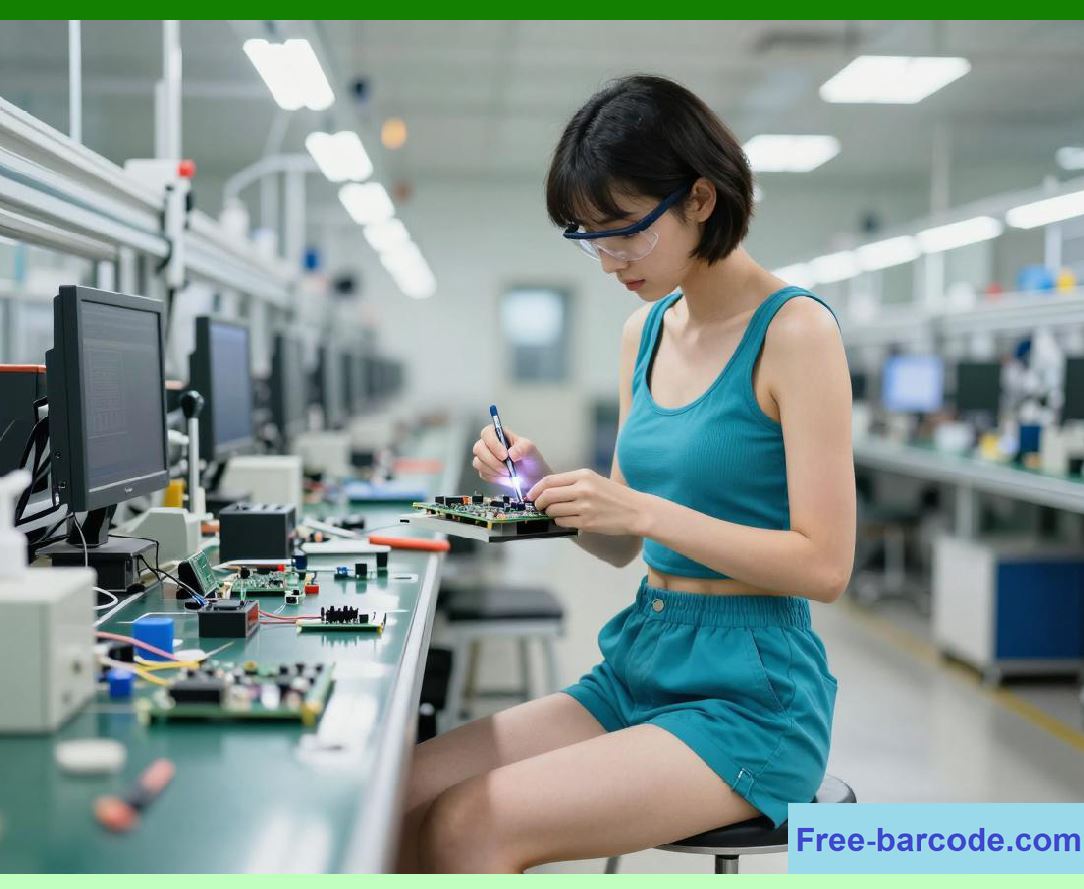
Once a splice is completed, the remaining components on the new reel are consumed as the line runs. When a reel is finally empty, it can be scanned as 'consumed,' providing accurate real-time inventory data. This eliminates the guesswork of how many components are on a 'partial' reel. The system knows exactly how many components were consumed from each UID, making leftover management a precise science. |
|
17.4 Real-World Example: ASYS Group and the Pick-by-Light System |
The ASYS Group, a global leader in SMT material logistics, offers a prime example of how barcode and smart technologies are used to streamline the splice process. |
17.4.1 The Reel-Magazine and RFID |
ASYS uses a 'Reel-Magazine' container, equipped with an RFID tag for automatic identification, to transport component reels to the production line. This RFID tag acts as a mobile barcode, linking the entire magazine to its contents in the MES. |
17.4.2 Pick-by-Light for Splicing |
At the SMT line, the ASYS 'M-Station Pick-by-Light' provides visual guidance for the operator during the splicing process. The system, integrated with the production schedule, knows exactly which reels will be needed next. When an operator approaches the magazine, an LED light strip illuminates the specific slot containing the required reel, eliminating the time spent searching. This visual cue, driven by barcode and inventory data, reduces downtime and ensures that the operator is splicing the correct part at the correct time. |

|
17.5 Real-World Example: FactoryLogix and the Splice UID Function |
FactoryLogix, a leading MES provider, illustrates the software side of splice management. Their 'Splice UID' function provides a clear workflow for linking reels. |
17.5.1 The Transaction in Detail |
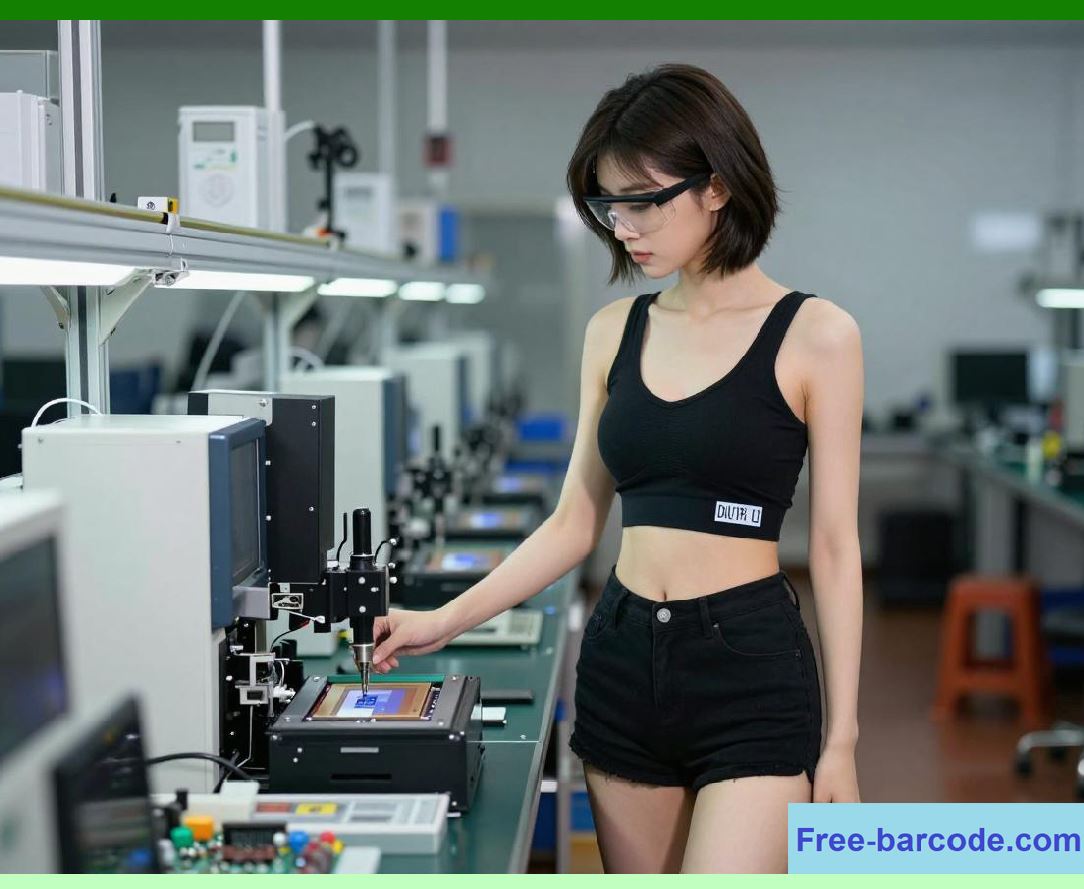
In the FactoryLogix system, an operator scans or enters the 'Leading UID' (the current reel) and the 'Trailing UID' (the new reel). The system validates the operation and then makes the trailing UID invalid, adding its remaining quantity to the leading reel's record. This complete handshake ensures that the data is accurate and that a single, up-to-date UID represents the combined, spliced material. This approach allows the system to know, with certainty, that the reel currently on the line has a specific UID and a specific quantity, regardless of how many spliced reels it represents. |
|
17.6 Real-World Example: Neotel's Automated Splice and MSD Tracking |
Neotel Technology, a Korean company with a strong presence in the global SMT market, provides a more automated approach to reel management, with a heavy focus on preventing MSD-related waste. |
17.6.1 Full MSD Automation |
Neotel's SMD BOX system handles MSD floor life tracking with full automation. When a reel is retrieved from the controlled environment of the SMD BOX, the floor-life clock automatically starts. When the reel is returned (perhaps after a partial run), the clock pauses. This cumulative tracking ensures that the MES knows exactly how much time a reel has been exposed to the factory environment. |
17.6.2 Splicing and FEFO |
For splicing, this data is critical. The system applies a 'First Expired, First Out' (FEFO) logic, suggesting the reel with the *least* remaining floor life for the next splice. This minimizes MSD-related waste by ensuring that older materials are used before they expire, rather than scrapped after a splice. |

|
17.7 Real-World Example: Scienscope's Smart Rack and Real-Time Inventory |
Scienscope International, a California-based manufacturer, offers the IMS-100 intelligent storage system and Smart Rack for Reels, which use barcodes and real-time tracking to manage reels and splices. |
17.7.1 Automated Storage and Retrieval |
The IMS-100 is a compact, intelligent storage and retrieval solution that holds up to 720 reels in a small footprint. It uses high-speed automatic loading and retrieval, with full barcode traceability for each reel. When a production line needs a specific part for a splice, the IMS-100 can retrieve the correct reel in under 10 seconds. This dramatically reduces the time an operator spends searching for a replacement reel. |
17.7.2 The Smart Rack for Reels |
Scienscope's next-generation Smart Rack for Reels provides automated reel detection and multi-color LED indicators that guide the operator to the correct reel for kitting or splicing. This further accelerates the splice process and reduces the risk of picking the wrong part. |

|
17.8 The Splice as a Data Point |
The splash transaction is more than just a logistics event. It's a critical data point for the entire manufacturing ecosystem. |
17.8.1 Traceability and Counterfeit Prevention |
Every splice is recorded, creating a digital chain of custody for the material. If a field failure is later traced to a specific component, the manufacturer can trace the component back to the specific reels that were spliced together, identifying the supplier, lot, and date code of the defective part. This traceability is a vital defense against counterfeit components and is essential for regulatory compliance. |
17.8.2 Waste Reduction |
By providing accurate, real-time data on reel quantities, barcode systems eliminate a major source of waste. Operators no longer need to scrap partial reels because they don't know the remaining quantity. The system knows, and it can prioritize the use of partial reels to ensure they are consumed before a new reel is opened. The ASYS Group's 'Pick-by-Light' system, for example, optimizes the flow to ensure that the correct reels are provided at the right time, minimizing waste. |

|
17.9 The Human Factor: From Guesswork to Guided Operation |
One of the most significant benefits of barcode-based splice management is its impact on the operator's role. In a traditional system, operators relied on memory, visual inspection, and guesswork. They might have to physically check multiple setups to find a missing reel. They would have to estimate the remaining components on a partial reel, leading to either premature reel changes (wasting material) or line stoppages (wasting time). |
17.9.1 Empowerment Through Data |
Barcode systems empower the operator with data. They provide a clear, system-guided workflow. The operator scans barcodes and follows prompts, eliminating the need for guesswork. They know exactly which reel to pick, when to splice it, and how many components remain. |
17.9.2 The Human Error Trap |
The old way was fraught with risk. As one SMT professional noted, they had a 'genius' who spliced an 0603 capacitor tape to an SOT23 tape. This is a costly mistake that is almost impossible to catch visually, but would be instantly prevented by a barcode-based validation system that checks part numbers before allowing the splice. These systems significantly reduce the cognitive load on the operator, allowing them to focus on quality rather than memory. |

|
17.10 Comparing American and Global Approaches |
Both American and global technology providers are at the forefront of barcode-driven reel management. American companies like Scienscope emphasize integrated, user-friendly systems like the IMS-100 and Smart Rack, designed to be easily adopted by SMT lines of all sizes. Scienscope, founded in the U.S. with a global reach, emphasizes practical automation that brings immediate efficiency gains and connects to existing MES/ERP systems. |
Global companies like Neotel (South Korea) and ASYS (Germany) often provide more comprehensive, automated material logistics solutions that cover the entire supply chain, from receiving to splicing to line replenishment. These systems often include advanced features like automated storage towers, AGV integration, and seamless IPC-CFX communication. |

|
17.11 The Future of Splice Management |
The future of splice management is moving toward total automation and predictive intelligence. |
AI-Powered Predictions: MES will use AI to predict exactly when a reel will run out based on its current consumption rate, generating a 'splice request' and sending a reel to the line via AGV before the line even stops. |
Automated Splice Machines: The manual splicing process will be automated with specialized equipment that can perform the splice with perfect precision and without human intervention. Youngpool Technology's automatic splicing machine, which can optionally include LCR measurement for error-proofing, points in this direction. |
The 'Self-Healing' Line: In the ultimate vision, a line will be able to manage its own material flow. It will know when it's about to run out of a part, request a new reel, have it delivered and spliced by a robot, and continue running without any manual intervention. |

|
17.12 Splice Management and the Closed-Loop System |
A truly modern SMT line treats splicing as just one part of a closed-loop material management system. The cycle is continuous: |
1. Receiving: Materials are scanned and assigned a UID. |
2. Storage: They are stored in an intelligent system, with FIFO/FEFO logic and environmental controls. |
3. Kitting: Materials are picked for production based on a work order. |
4. Line Use: They are placed on the line, and their consumption is tracked. |
5. Splicing: When a reel runs low, a new one is spliced in, and the UID is updated. |
6. Returns/Scrapping: Partial reels are returned to storage, or empty reels are scrapped, with the database updated accordingly. |
This closed loop, enabled by barcodes, UIDs, and intelligent MES, ensures complete visibility, accuracy, and accountability for every component in the factory. |

|
Detailed Summary of Chapter 17 |
This chapter has provided a comprehensive examination of reel splice and leftover management, a critical but often-overlooked aspect of SMT production that directly impacts line uptime, material waste, and product quality. |
We began by introducing the challenge: the moment a component reel runs out, a costly line stoppage is imminent unless a replacement is ready to be spliced. Splicing is the act of joining a new reel to an old one to maintain continuous production. The risk is that a splice can be performed incorrectly, leading to a jammed feeder or, worse, the wrong part being placed on the board. |
We explained the barcode solution: the unique identification (UID) of every reel. Through a structured workflow, operators scan the UID of the leading and trailing reels. The system verifies the part numbers, validates the moisture sensitivity, logs the transaction, and updates the inventory, effectively transferring the remaining quantity from the trailing reel to the leading reel. This turns a risky manual operation into a controlled, auditable data transaction. |
We profiled real-world examples of how the industry addresses this challenge. The ASYS Group offers Pick-by-Light systems that use RFID-tagged magazines and LED indicators to visually guide the operator to the correct reel, eliminating search time and preventing picking errors. FactoryLogix provides a clear 'Splice UID' function in its MES, demonstrating the software logic that validates and logs each transaction. Neotel Technology emphasizes full MSD automation, where the MES automatically tracks cumulative floor life and applies FEFO logic to ensure that reels with the least remaining shelf life are used for the next splice, minimizing waste. Scienscope offers intelligent storage systems like the IMS-100 and Smart Rack that provide rapid retrieval and visual guidance to accelerate the splice process. |
We discussed the benefits of barcode-driven splice management: complete traceability for quality investigations, significant waste reduction by eliminating guesswork, and the empowerment of operators who no longer need to rely on memory. |
We compared American and global approaches. American companies like Scienscope focus on user-friendly, integrated systems that bring immediate gains, while global providers like Neotel and ASYS offer more comprehensive, automated material logistics solutions. |
|
Finally, we looked to the future of AI-powered predictions, automated splice machines, and the vision of the 'self-healing' SMT line, and we concluded that a closed-loop material management system - enabled by barcodes, UIDs, and intelligent MES - is essential for achieving the visibility, accuracy, and efficiency required for modern, high-volume electronics manufacturing. |
 cs@easiersoft.com