The Application of Barcode Technology in Electronic Factory Material Management - A Deep Dive into Chapter 26: Environmental Durability |
Executive Summary (Chapter 26 Preview) |
A barcode label in an electronics factory is not a passive sticker; it is a data carrier that must survive a gauntlet of extreme conditions. It must endure the searing heat of the reflow oven, the chemical assault of isopropyl alcohol cleaning, the mechanical abrasion of automated handling, and years of field exposure. This chapter explores the science and engineering behind label durability, examining how material selection---polyimide versus polyester, acrylic versus silicone adhesives, resin versus wax ribbons---determines whether a label remains readable through the production process and the product's lifecycle. We will explain the critical 85C/85% RH humidity test, the IPC-TM-650 solvent resistance test, and the practical requirements of SMT assembly. Real-world examples from IDENTCO, Brady, and Panduit will illustrate how American and global manufacturers develop and deploy ultra-durable labels that ensure traceability from the factory floor to the field. |
|
Chapter 26: Environmental Durability |
26.1 The Gauntlet of Electronics Manufacturing |
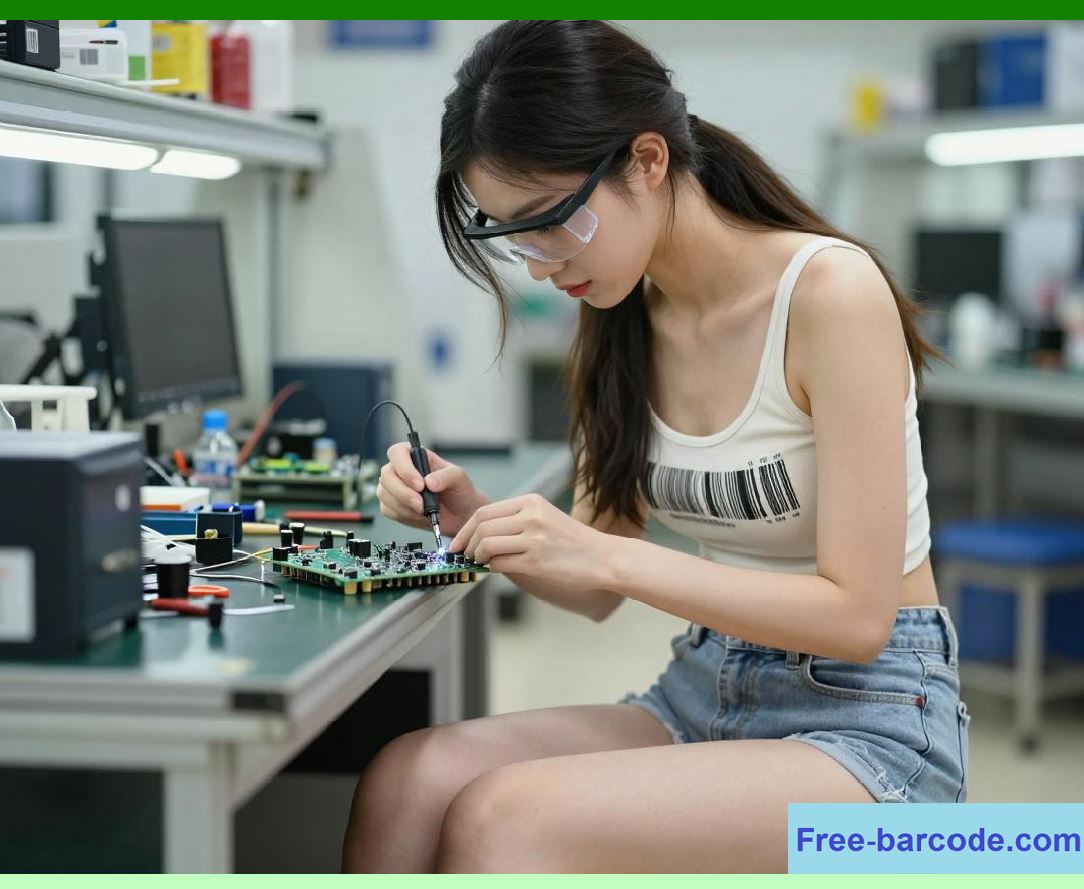
Imagine a barcode label on a printed circuit board. It is applied at the start of the assembly process, when the board is still a bare laminate. Over the next few hours, it will be subjected to a punishing sequence of environmental stresses. |
First, the board passes through a solder paste printer, where the label may be exposed to flux and paste residues. Then it enters the pick-and-place machine, where automated nozzles and handling equipment may rub against it. Then comes the reflow oven---the most severe challenge. The board is heated to over 250 degrees Celsius, melting the solder and permanently attaching components. The label must survive this heat without delaminating, discoloring, or losing adhesion. |
After reflow, the board enters the cleaning stage. It is washed with isopropyl alcohol and other solvents to remove flux residues. The label must resist these chemicals without smudging, fading, or peeling. Then comes wave soldering for through-hole components, more cleaning, and finally, functional test. Throughout this process, the label must remain perfectly readable---its barcode contrast, edge sharpness, and quiet zones intact. |
If the label fails at any point---if it peels off, smudges, or becomes unreadable---the board loses its digital identity. It cannot be traced back to its components or its production history. It becomes a 'orphan' in the system, a quality and compliance risk. |
This chapter explores the engineering that makes durable barcode labels possible. We will examine the materials---polyimide and polyester substrates, acrylic and silicone adhesives, resin and wax ribbons---and the testing that validates their performance. We will look at real-world examples from American manufacturers who have developed labels specifically for the electronics industry. |
|
26.2 The Temperature Challenge: Reflow and Wave Soldering |
The most extreme thermal challenge for a label is the reflow oven. In surface-mount technology (SMT) assembly, the board is heated to temperatures that melt the solder paste---typically between 240C and 260C, with peak temperatures sometimes reaching 270C. The board is held at this peak temperature for a short period, then cooled. The entire thermal profile may last several minutes, with the board experiencing a rapid rise and fall in temperature. |
26.2.1 Polyimide: The High-Temperature Champion |
For labels that must survive reflow, polyimide is the material of choice. Polyimide (often sold under brand names like Kapton) is a high-performance polymer that can withstand continuous temperatures up to 260C and short-term exposure up to 400C. It is chemically inert, resistant to solvents, and mechanically robust. Polyimide labels are the industry standard for PCB tracking labels that must go through the full assembly process. |
Panduit, a global manufacturer based in the United States, offers polyimide component labels that can withstand temperatures from -40F to +350F (-40C to 177C) . Brady, another American leader in identification solutions, offers the B-727 glossy white THT polyimide material, specifically created for the printed circuit board manufacturing industry. It is ultra-durable and proven to last through wave solder environments, extreme wash protocols, and cleaning chemicals . |
26.2.2 Polyester: The Cost-Effective Alternative |
For applications that do not require reflow survival, polyester is a cost-effective alternative. Polyester labels can withstand temperatures up to 302F (150C) and offer good resistance to moisture and mild chemicals . However, they are not suitable for reflow applications and are typically used for warehouse labels, shipping labels, and other less demanding applications. |

|
26.3 The Chemical Challenge: IPA and Other Solvents |
After reflow, the board enters the cleaning stage. The most common cleaning agent is isopropyl alcohol (IPA), a powerful solvent that dissolves flux residues and other contaminants. IPA is safe for most plastics, seals, ceramics, and printed circuit board components . However, it can be aggressive to some label materials and adhesives. |
Isopropyl alcohol is a high-purity, multipurpose cleaner and solvent that is fully miscible in water and most organic fluids, making it effective at dissolving dirt, light organic contaminants, and ionic flux residues . It is used heavily in the electronics industry for cleaning screens, stencils, fiber optics, cables, keypads, and particularly printed circuit board components . It effectively removes light greases, oils, and flux without adding additional residues to contacts, relays, and circuit board connectors . |
A label that is not resistant to IPA will smudge, fade, or delaminate. The printed information---the barcode, the human-readable text---will become unreadable. This is why thermal transfer printing with resin ribbons is essential for electronics labels. Resin ribbons produce prints that are highly resistant to abrasion, chemicals, and heat. They are specifically designed for demanding environments where the printed information must remain readable under harsh conditions. |
|
26.4 The Mechanical Challenge: Abrasion and Handling |
Throughout the assembly process, the label is subjected to mechanical abrasion. It may be rubbed by automated handling equipment, scraped by feeders, or bumped by operators. The label must resist this abrasion without losing its readability. |
Abrasion resistance is tested using standardized methods. Taber Abraser equipment is commonly used, with CS-10 grinding wheels and weighted arms. A label that passes this test can withstand 100 cycles of abrasion without losing legibility . |
Adhesion is equally important. The label must adhere firmly to the PCB surface---whether it is bare FR-4, solder mask, or a metallic finish---throughout the assembly process. Pressure-sensitive acrylic adhesives are commonly used for electronics labels. They provide strong adhesion to stainless steel and epoxy PC boards and resist harsh chemicals and high temperatures . |
|
26.5 The Environmental Challenge: 85C/85% RH Testing |
The 85C/85% RH test is a standard accelerated aging test for electronic components and materials. It simulates the effects of long-term exposure to high temperature and high humidity. The test is performed at 85 degrees Celsius and 85 percent relative humidity, conditions that accelerate the degradation of materials. If a label can survive this test for 1,000 hours or more, it is considered suitable for demanding applications. |
This test is particularly important for polyimide labels, which are used in applications where long-term reliability is critical. Research on polyimide exposed to environmental stress has shown that high temperature and humidity exposure can affect the dielectric properties of the material . While this research focuses on the electrical properties of polyimide as an insulator, it highlights the importance of environmental testing for materials used in electronics applications. |
For labels, the 85C/85% RH test verifies that the label substrate, adhesive, and printed information will remain intact and readable after extended exposure to harsh conditions. This is essential for products that may be deployed in tropical climates, automotive environments, or other demanding applications. |

|
26.6 Real-World Example: IDENTCO - Durable Labels for Extreme Applications |
IDENTCO International, a U.S.-based manufacturer of high-performance labels, is a leader in track and trace labeling for printed circuit boards and electronic components . The company offers a full range of blank polyimide and polyester labels, printers, and ribbons, all fully tested to withstand the extremes of heat and cleaning chemistries found in the board assembly process . |
26.6.1 TT413 Series: Polyimide for PCB Applications |
In 2023, IDENTCO introduced the TT413 series of labels specifically for printed circuit board applications . The TT413 portfolio is designed for on-demand thermal transfer printing of variable information . It features a 2.4mm gloss white polyimide substrate that provides resistance against smudges, solvent, heat, and abrasion . The labels feature a 2mm permanent acrylic adhesive that offers resistance to harsh chemicals and high temperatures . |
Victor Holbein, Chief Operating Officer for IDENTCO, stated: 'Featuring a substrate developed specifically for Identco, the new TT413 series is designed to meet the type of demanding durable labelling requirements inherent to various PCB applications and electronics components production. Its special polyimide allows it to provide exceptional levels of durability and functionality at an exceedingly cost-effective price point' . |
26.6.2 Automated Application Support |
IDENTCO's labels are available in release liners composed of 55glassine or 1.5mm polyester, each suitable for automated or manual application processes . The company also offers the PPL Series of miniature polyimide labels and ILP Series SMT label feeder for use in popular pick-and-place machines, enabling automated label application directly on the SMT line . |

|
26.7 Real-World Example: Brady - Ultra-Durable Labels for PCB Manufacturing |
Brady Corporation, a global manufacturer of identification solutions headquartered in the United States, offers the B-727 glossy white THT polyimide material, specifically created for the printed circuit board manufacturing industry . The material is ultra-durable and proven to last through wave solder environments, extreme wash protocols, and cleaning chemicals . |
26.7.1 Key Performance Attributes |
The B-727 material demonstrates key performance attributes essential for electronics manufacturing. It exhibits abrasion resistance, with the print still legible after 100 cycles on a Taber Abraser . It withstands high heat, with resistance to 212F (100C) for 1,000 hours with no visible effect . It also withstands low temperatures down to -94F (-70C) for 1,000 hours . The label adheres to both stainless steel and epoxy PC boards . |
26.7.2 Regulatory Compliance |
The B-727 material is UL Recognized to UL969 Labeling and Marking Standard when printed with the Brady Series R6000 halogen-free ribbon . It is RoHS compliant to RoHS Directive 2011/65/EU and is dibutyl and dioctyl tin free . These certifications ensure that the labels meet safety and environmental requirements for electronics products. |

|
26.8 Real-World Example: Panduit - Polyester and Polyimide Component Labels |
Panduit, a global manufacturer of electrical and network infrastructure solutions headquartered in the United States, offers polyester and polyimide component labels for electronics identification . |
26.8.1 Material Options |
Panduit created two types of labels to ensure all environments are covered. Polyester labels withstand temperatures from -40F to 302F (-40C to 150C), while polyimide labels withstand temperatures from -40F to 350F (-40C to 177C) . Both materials resist high temperatures, harsh solvents, oils, and chemicals without the use of over-lamination . |
26.8.2 Adhesive and Safety Features |
The labels feature pressure-sensitive acrylic adhesive that keeps labels on equipment . They are halogen-free and meet UL 969 requirements for safety . The labels come in white to provide clear visibility in hard-to-see areas . |

|
26.9 The Science of Label Durability: Substrate, Adhesive, and Ribbon |
The durability of a barcode label depends on three interdependent components: the substrate, the adhesive, and the printing ribbon. A failure in any one component can render the label unreadable. |
26.9.1 Substrate: Polyimide vs. Polyester |
Polyimide is the high-temperature champion, capable of surviving reflow temperatures up to 350F (177C) and short-term exposure to even higher temperatures . It is chemically inert, resistant to solvents, and mechanically robust. Polyimide is the standard for PCB tracking labels that must go through the full assembly process. |
Polyester is a cost-effective alternative for less demanding applications. It withstands temperatures up to 302F (150C) and offers good resistance to moisture and mild chemicals . It is typically used for warehouse labels, shipping labels, and other applications that do not involve reflow. |
26.9.2 Adhesive: Acrylic vs. Silicone |
Pressure-sensitive acrylic adhesives are the standard for electronics labels. They provide strong adhesion to a wide range of surfaces, including stainless steel and epoxy PC boards . They resist harsh chemicals and high temperatures . Some labels use silicone-based adhesives for even higher temperature resistance, but acrylic adhesives are more common due to their cost-effectiveness and broad compatibility. |
26.9.3 Ribbon: Resin vs. Wax-Resin |
Thermal transfer printing is the standard for electronics labels. The choice of ribbon is critical for durability. Resin ribbons produce prints that are highly resistant to abrasion, chemicals, and heat. They are specifically designed for demanding environments where the printed information must remain readable under harsh conditions. |
Wax-resin ribbons offer a balance of cost and durability. They are more resistant to smudging and chemicals than wax ribbons and are used for applications like shipping labels and warehouse bin labels. However, they are not suitable for reflow applications. Wax ribbons are the least durable and are not used in electronics manufacturing. |

|
26.10 DPM: Direct Part Marking for Extreme Environments |
For applications where labels are not feasible---because the component is too small, too hot, or too chemically exposed---direct part marking (DPM) is the solution. DPM involves marking the component itself with a Data Matrix code using laser etching, dot peening, or chemical etching. |
26.10.1 DPM Durability |
DPM codes are exceptionally durable. Laser-etched codes are permanent and can survive extreme temperatures, chemical exposure, and mechanical abrasion. They are used for components that will be exposed to harsh environments in the field. |
26.10.2 DPM Challenges |
DPM codes present unique reading challenges. The codes are often small, with modules measuring less than a millimeter. They may be on curved or reflective surfaces. The contrast between the code and the substrate may be low, especially on dark components. Advanced image-based readers with specialized lighting and decoding algorithms are required to read DPM codes reliably. |
|
26.11 The Future of Label Durability |
The future of label durability is moving toward even more robust and intelligent solutions. As electronic devices become smaller and more powerful, the demands on labels increase. Reflow temperatures are rising, cleaning chemistries are becoming more aggressive, and the need for 20-year traceability is growing. |
26.11.1 Smart Tags and Digital Product Passports |
Emerging research is exploring 'smart tags' that combine visual barcodes with environmental sensing functions, such as humidity monitoring . These smart tags could be used to monitor the lifecycle conditions of electronic products, providing dynamic data about environmental exposure. This data could inform circular economy decisions---repair, reuse, remanufacture, or recycle---at end-of-life . |
26.11.2 New Substrate Technologies |
Polyimide remains the standard for high-temperature labels, but research continues into new substrate materials that offer even better performance at lower cost. The TT413 series from IDENTCO is an example of a proprietary substrate developed specifically for PCB applications . |
26.11.3 Improved Adhesives |
Adhesive technology continues to improve, with new acrylic formulations offering better performance at high temperatures and in aggressive chemical environments. |
26.11.4 Integration with Automated Handling |
Labels are becoming more tightly integrated with automated handling systems. Some factories are using labels that can be read by vision systems regardless of orientation or damage, reducing the number of 'no-read' events. Others are using smart labels that combine a barcode with an RFID chip, allowing both manual scanning and automated bulk reading. |
|
Detailed Summary of Chapter 26 |
This chapter has provided a comprehensive examination of the environmental durability of barcode labels in electronics manufacturing, focusing on the materials and testing that ensure readability through the harshest production conditions. |
We began by describing the gauntlet of environmental stresses a label must survive: the extreme heat of the reflow oven (over 250C), the chemical assault of isopropyl alcohol cleaning, the mechanical abrasion of automated handling, and years of field exposure. A label that fails at any point loses its digital identity, breaking the traceability chain and creating quality and compliance risks. |
We explained that polyimide is the high-temperature champion for reflow applications, withstanding temperatures from -40F to 350F (-40C to 177C) . Polyester is a cost-effective alternative for less demanding applications, withstanding temperatures up to 302F (150C) . We described the importance of acrylic adhesives and resin ribbons for chemical and abrasion resistance. |
We discussed the 85C/85% RH humidity test as an accelerated aging test that verifies label durability under high temperature and high humidity, and the IPC-TM-650 solvent resistance test as the standard for verifying chemical resistance. |
We profiled real-world examples. IDENTCO (U.S.) introduced the TT413 series of polyimide labels specifically for PCB applications, featuring a proprietary substrate and permanent acrylic adhesive that withstands smudges, solvent, heat, and abrasion . Brady (U.S.) offers the B-727 glossy white THT polyimide material, tested to 100 cycles of abrasion resistance, 1,000 hours at 212F (100C), and adhesion to stainless steel and epoxy PC boards . Panduit (U.S.) offers both polyester and polyimide component labels, with polyimide resisting temperatures up to 350F (177C) and resisting harsh solvents, oils, and chemicals . |
We also discussed direct part marking (DPM) as an alternative for applications where labels are not feasible, noting that DPM codes are exceptionally durable but present reading challenges. |
|
Finally, we looked to the future of smart tags with environmental sensing functions , new substrate technologies, improved adhesives, and integration with automated handling. |
The bottom line is that label durability is not an afterthought; it is a critical engineering requirement for electronics manufacturing. Labels must survive the reflow oven, the chemical wash, and the handling equipment to maintain traceability from the factory floor to the field. The examples from IDENTCO, Brady, and Panduit demonstrate that American manufacturers are at the forefront of developing and deploying ultra-durable labels that meet the demanding requirements of the electronics industry. |
 cs@easiersoft.com